
22 min 13 sec
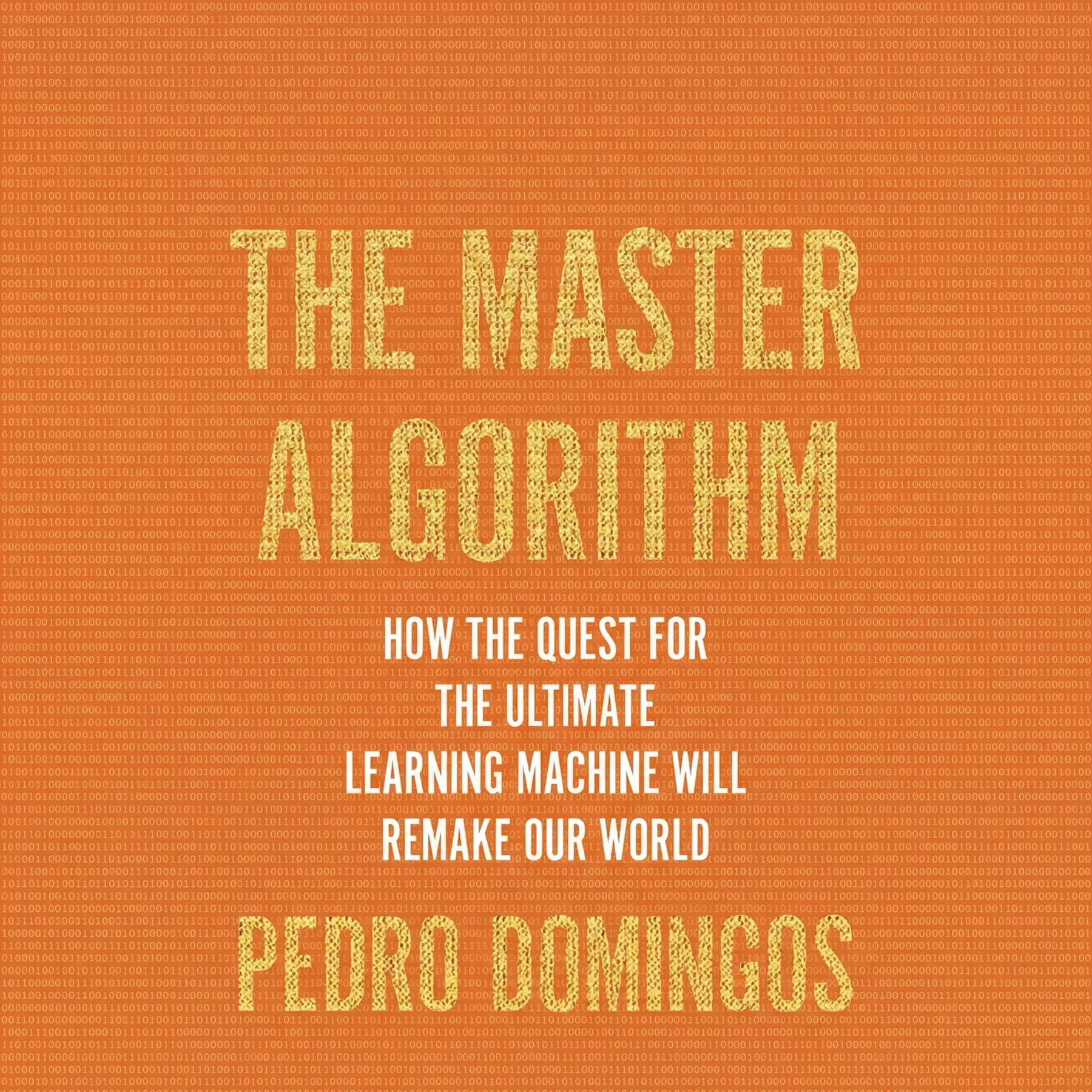
The Master Algorithm: How The Quest For The Ultimate Learning Machine Will Remake Our World
Explore the revolutionary quest to build a single learning algorithm capable of solving any problem, from curing diseases to managing your daily life by synthesizing the diverse branches of machine learning.
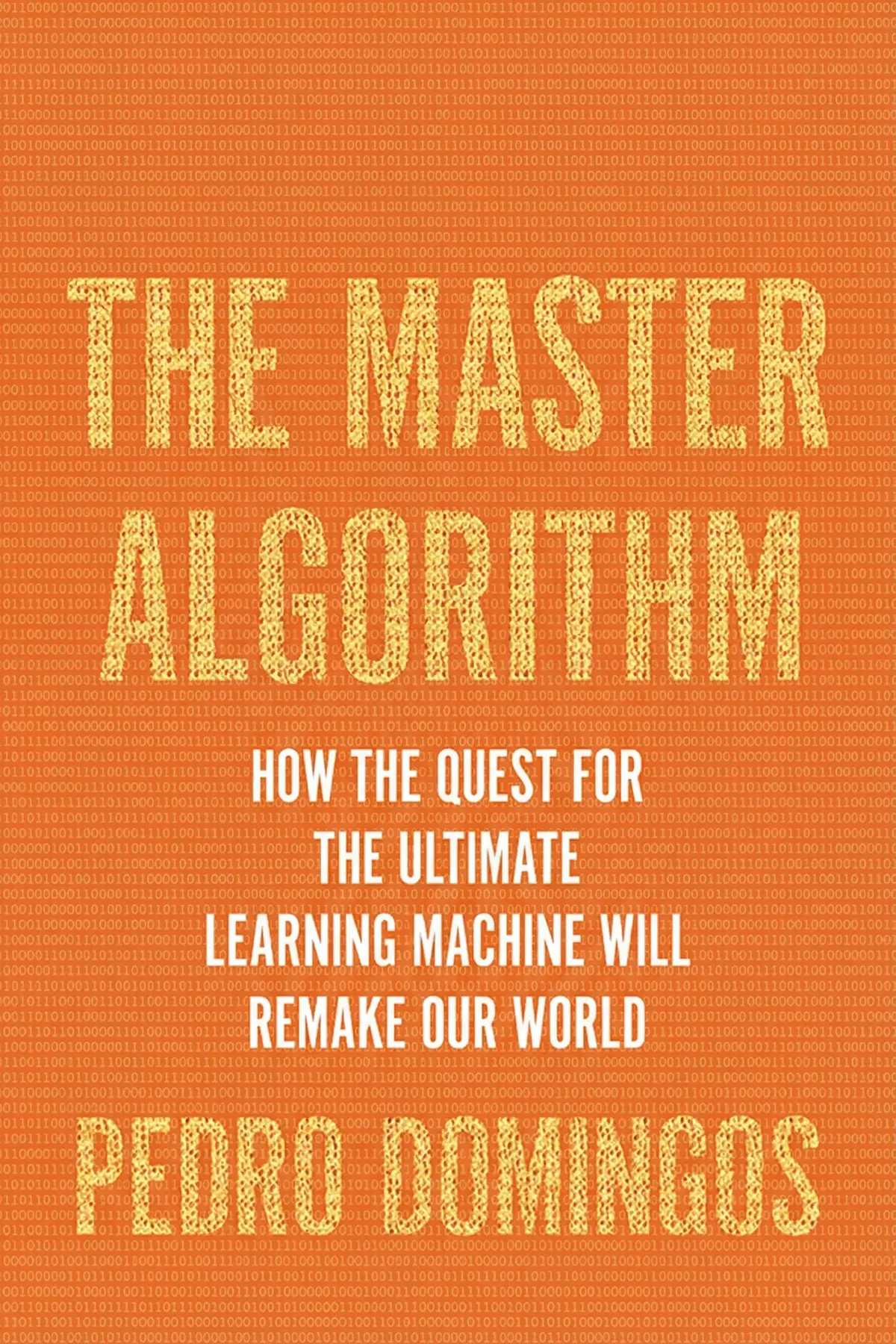
Table of Content
1. Introduction
2 min 18 sec
Every time a child is born, one of nature’s most profound miracles begins to unfold. Within that tiny infant is a small amount of biological material—a pound or so of gray matter—that starts with almost no knowledge of the world. Yet, in just a few years, that brain transforms into a conscious mind capable of language, abstract thought, and complex social interaction. Perhaps the most stunning part of this process is how little formal instruction the brain actually requires to make this leap. It learns primarily by existing, observing, and processing the torrent of information coming through its senses. For centuries, this ability was the exclusive domain of biological life. No tool or machine ever built by human hands could come close to that kind of flexible, autonomous learning.
But we are currently standing at a historical crossroads where that is no longer true. We are entering an era where our machines are beginning to mimic that gray matter, learning to decipher the world not because they were told the rules, but because they have analyzed the data. This is the heart of machine learning, and it points toward a singular, world-changing goal: the discovery of a Master Algorithm. This is the theoretical ‘ultimate learner,’ a single piece of code capable of deriving all knowledge from data. If it exists, it would be the final invention humans ever need to make, because the machine itself would take over the process of discovery.
In this exploration, we are going to look at the different ways machines are being taught to think. We will see how they navigate the fine line between finding a genuine insight and merely imagining a pattern that isn’t there. We will look at the different ‘tribes’ of researchers who are each trying to build this Master Algorithm from a different perspective—some using logic, others using the laws of probability. We will also consider the practical side of this revolution: how data has become a new form of currency and how, in the very near future, you might possess a digital version of yourself that handles the mundane complexities of modern life. As we move through these ideas, the throughline is clear: the quest for the ultimate learning machine is not just a technical challenge; it is a quest to understand the very nature of intelligence itself.
2. The Shift from Coded Instructions to Learning Systems
2 min 26 sec
Traditional software follows rigid rules, but machine learning flips the script by allowing computers to write their own programs based on the data they observe.
3. The Danger of Overfitting and False Patterns
2 min 27 sec
Your algorithm can hallucinate just like your brain. Discover why raw computing power is dangerous without guardrails—and the simple trick that separates real patterns from statistical mirages.
4. Symbolists and the Power of Logical Deduction
2 min 28 sec
The oldest school of AI, the Symbolists, believes that intelligence can be mastered through the manipulation of symbols and the application of rigid logic.
5. Bayesians and the Science of Uncertainty
2 min 16 sec
The Bayesian school approaches learning like a scientist, constantly updating its beliefs as new evidence comes in rather than relying on absolute rules.
6. Learning Without Labels through Clustering and Neural Networks
2 min 13 sec
Your machine doesn’t need a teacher to learn. Discover how algorithms find hidden patterns in raw data—the same way you recognize a face in a crowd without being told what to look for.
7. The Quest for the One True Algorithm
2 min 10 sec
If we can find a single algorithm that solves the most fundamental problems in computer science, we could unlock solutions to humanity’s biggest challenges.
8. The Economics and Ethics of the New Data Oil
2 min 10 sec
Your data is worth $1,200 a year—but you’re giving it away for free. Discover how the next economic revolution hinges on who controls the algorithms that control us.
9. The Future of the Digital Twin
2 min 05 sec
Soon, the Master Algorithm will allow you to create a digital version of yourself that can automate your life, from filing taxes to finding your next job.
10. Conclusion
1 min 40 sec
As we look back at the landscape of machine learning, it becomes clear that we are living through a transformation as significant as the Industrial Revolution. We are moving from an era where we had to tell computers exactly what to do, to an era where they can learn to do almost anything on their own. The search for the Master Algorithm is the ultimate expression of this shift. While we haven’t found that single, unifying ‘learner’ yet, the pieces are falling into place. Whether it’s the logic of the Symbolists or the neural networks that mimic our own brains, we are getting closer to a machine that can solve problems we once thought were impossible.
But as these algorithms become more integrated into our lives, the most important thing to remember is that they are powered by data—specifically, your data. Every digital interaction you have is a teaching moment for a machine. This is why the most actionable piece of advice for the modern world is to be aware of your digital footprint. Recognize that your data is a valuable asset. It is the fuel for the algorithms that will shape your future, from the products you are shown to the jobs you are offered.
You can take control of this today. When you want to search for something without having it influence your future recommendations, use incognito mode. If you share a computer with your family, make sure everyone has their own account so the machine doesn’t get confused about who it’s learning from. By being an active participant in how your data is used, you ensure that as we move toward the era of the Master Algorithm, the technology remains a tool that serves you, rather than the other way around. The future of intelligence is being written right now, one data point at a time.
About this book
What is this book about?
The Master Algorithm takes listeners on a deep dive into the world of machine learning, revealing the underlying logic of the systems that already dominate our digital lives. It explains how different schools of thought—from the logic-driven Symbolists to the probability-focused Bayesians—each hold a piece of the puzzle. The book’s core promise is the eventual discovery of a single, unifying algorithm that can learn anything from data, effectively becoming the ultimate problem-solver for humanity. You will learn how these systems avoid 'hallucinating' patterns in noise, why your personal data is becoming the most valuable resource on Earth, and how the future might involve a digital twin that handles your chores and career. It is a look at the history, the current competition, and the future potential of artificial intelligence, framed through the search for a singular learning machine that could remake every aspect of our existence.
Book Information
About the Author
Pedro Domingos
Pedro Domingos is a professor of computer science at the University of Washington and a recognized authority in the field of data science. His contributions have earned him the SIGKDD Innovation Award, which is the most prestigious honor in his discipline. Additionally, he is a fellow of the Association for the Advancement of Artificial Intelligence, marking him as a leading figure in the global quest for more sophisticated machine learning systems.
Ratings & Reviews
Ratings at a glance
What people think
Listeners find that this work offers a superb look at machine learning concepts, with one listener pointing out how thoroughly it covers the field. Furthermore, the content is approachable for educated general readers and provides valuable perspectives, as one listener specifically notes the exploration of psychological and philosophical implications. On the other hand, opinions on the prose and readability are varied; while some enjoy the narrative, others feel it presents a challenge for those without a technical background, and while some laud the writing style, others describe it as verbose. Finally, listeners are divided regarding its difficulty level, as some value the balanced depth of information while others perceive it as being too dense for a layperson.
Top reviews
Weera
As someone who works in data, I think this is one of the most ambitious and comprehensive overviews of machine learning ever written for the public. Domingos isn't just explaining code; he’s exploring the philosophical and psychological implications of a world where machines can induce knowledge from raw information. His breakdown of the five tribes is a masterpiece of simplification that doesn't sacrifice the core integrity of the science. The book touches on everything from curing cancer to the privacy trade-offs we make every day, making the stakes feel incredibly high and personal. While some critics find his tone a bit too optimistic, I found his passion for the 'Master Algorithm' to be quite contagious and thought-provoking. It is rare to find a book that handles the math of Markov chains and the ethics of big data with equal grace. This is essential reading.
Show moreAlice
This book provides a truly mind-expanding look at how machine learning is not just a tool, but a fundamental shift in how we discover knowledge. Domingos argues that the 'Master Algorithm' is the ultimate invention, because once we have it, it can invent everything else for us. It’s a bold premise, and he defends it by showing how different schools of thought are slowly converging toward a unified model. I loved the historical context he provided for each of the 'tribes,' making the development of AI feel like a grand human epic. The discussion on the P=NP problem was particularly sharp, highlighting the thin line between what is computable and what remains a mystery. While it's true the book lacks deep mathematical proofs, that's exactly what makes it such a great read for a non-expert. It’s about the big ideas, the philosophical shifts, and the radical future that awaits us.
Show moreSirinat
Finally got around to reading this foundational text on machine learning, and I found it surprisingly enlightening. Domingos breaks down the field into five distinct 'tribes'—symbolists, connectionists, evolutionaries, Bayesians, and analogizers—which helps categorize the chaos of modern AI. While the prose occasionally leans toward the overly dramatic, the conceptual mapping is invaluable for a literate general audience trying to make sense of the algorithmic world. I particularly appreciated the discussion on how these different philosophies might eventually merge into a single, unified 'master algorithm' that learns everything from data. Some sections are definitely a bit wordy, but the payoff for understanding the underlying logic of big data is worth the effort. It's a solid bridge between technical papers and pop-science fluff.
Show moreChamp
Ever wonder how Netflix actually knows what you want to watch or how a computer can suddenly learn to play chess better than a grandmaster? This book offers a deep dive into those questions, exploring the quest for a universal learner that can solve any problem given enough data. Domingos does a great job of explaining complex ideas like inverse deduction and genetic algorithms without relying on heavy equations. I found the chapter on the 'evolutionary' tribe particularly interesting, as it connects biological principles to software development in a way that feels very intuitive. To be fair, the book gets a bit dense in the middle, and the author’s 'Lord of the Rings' style metaphors can be a bit much. However, the insights into the future of privacy and the 'personal model' of our digital lives are genuinely chilling and necessary. It’s an excellent, if slightly long-winded, look at the technology.
Show moreTaweesak
Pedro Domingos manages to take a very dry, technical subject and turn it into a compelling narrative about the search for the 'Theory of Everything' in computer science. I particularly enjoyed the section on the 'Connectionists' and how neural networks are modeled after the human brain, which helped me visualize these abstract systems. The book is very accessible for a literate general audience, though it does require a fair bit of concentration during the more theoretical chapters. My only real gripe is that the author’s writing style can be a bit cheesy at times, especially when he tries to be poetic about algorithms. Still, the way he relates Bayesian inference to everyday life is one of the best explanations I have seen in a popular science book. It provides a great bird's-eye view of a field that usually feels impenetrable to outsiders. If you can get past the occasional wordiness, there is a lot of wisdom here.
Show moreNiramai
After hearing several experts recommend this, I dove in hoping to finally understand the 'black box' of AI, and I wasn't disappointed. The book is at its best when it deals with the practicalities of big data, like the trade-off between losing privacy and gaining a more personalized world. Domingos offers a very sober and relevant discussion on how we can control our digital twins rather than letting corporations own our data. However, the readability is hit or miss; some chapters flow beautifully, while others feel like a slog through dense, repetitive lists of potential AI applications. I found the 'Tower of Support Vectors' section particularly bizarre and unnecessary for a book that is supposed to be grounded in science. Despite the cheesy prose and the occasional 'fawning' over technology, the book's comprehensive scope makes it a valuable resource. It’s a 4-star read that would have been a 5-star one with a stricter editor.
Show moreYaowares
It is a struggle to rate this book because the content is fascinating, but the delivery is so incredibly inconsistent. On one hand, you get a brilliant primer on Bayesian statistics and how they apply to real-world scenarios like self-driving cars. On the other hand, the author frequently drifts into weirdly specific Silicon Valley anecdotes that feel disconnected from the average person's life. He talks about how algorithms will soon predict stock market 'black swans,' yet he offers very little empirical evidence to back up these grand, sweeping claims. For a scientist who champions data over intuition, his conclusions about the future of AI feel ironically rooted in pure, unadulterated intuition. It’s a good overview for a total novice, but if you have any background in math, the lack of technical detail will drive you crazy. Stick with it for the broad strokes.
Show moreChee
Truth is, the author is clearly a brilliant mind in the field, but he isn't exactly a natural storyteller. The book jumps from topic to topic with a frantic energy that left me feeling more confused than enlightened in several chapters. He has a habit of mentioning complex terms like 'kernels' or 'S curves' without giving them the thorough explanation they deserve for a general reader. While I appreciated the overview of the different machine learning communities, the way he separates them into rigid 'tribes' felt a bit superficial and forced. It ignores the fact that many of the top scientists in the field work across multiple disciplines and don't fit into his neat little boxes. The final chapter, which delves into a 'Selfish Gene' style rant about human nature, felt like it belonged in a different book entirely. It's a decent primer, but it's hampered by an author who tries too hard to be a novelist.
Show morePannipa
The writing in this book is, frankly, some of the most frustrating I have ever encountered in a non-fiction work. I wanted to learn about the mechanics of AI, but instead, I was forced to wade through pages of bizarre, trippy allegories like the 'Tower of Support Vectors.' This kind of 'educational' fiction doesn't explain the concepts; it just obscures them behind a layer of cringeworthy, novelist-wannabe prose that feels totally out of place. Domingos is clearly a brilliant scientist, but he fails to recognize that a general reader needs clear definitions, not long-winded metaphors about magical towers and guards. He name-drops concepts without sufficient grounding, assuming the reader will just follow his 'messianic' fervor for the future of learning machines. If you actually want to understand how a neural network or a Bayesian classifier functions, you are better off looking at a textbook.
Show moreCharles
Not what I expected at all, and I was deeply disappointed by the smug, condescending tone the author adopts toward anyone who disagrees with his vision. Domingos dismisses giants like Minsky and Chomsky with a wave of his hand, acting as if his specific brand of machine learning is the only path forward. The book is filled with inane verbiage and endless lists of applications that feel like a marketing brochure rather than a serious scientific inquiry. He spends so much time fawning over the potential of algorithms that he forgets to actually explain how they work to a layperson. The writing is incredibly tiresome, filled with 'in-jokes' and references that are never explained, leaving the reader feeling like an outsider to an elite geek club. It’s an acid trip of a book that mixes complex concepts together without any discernible structure or educational value. Save your time and money; there are much better introductions to AI.
Show moreReaders also enjoyed
AUDIO SUMMARY AVAILABLE
Listen to The Master Algorithm in 15 minutes
Get the key ideas from The Master Algorithm by Pedro Domingos, plus 5,000+ more titles in English and Thai.
- 5,000+ titles
- Listen as much as you want
- 7-day free trial
- Cancel anytime







