
24 min 10 sec
Available in:English
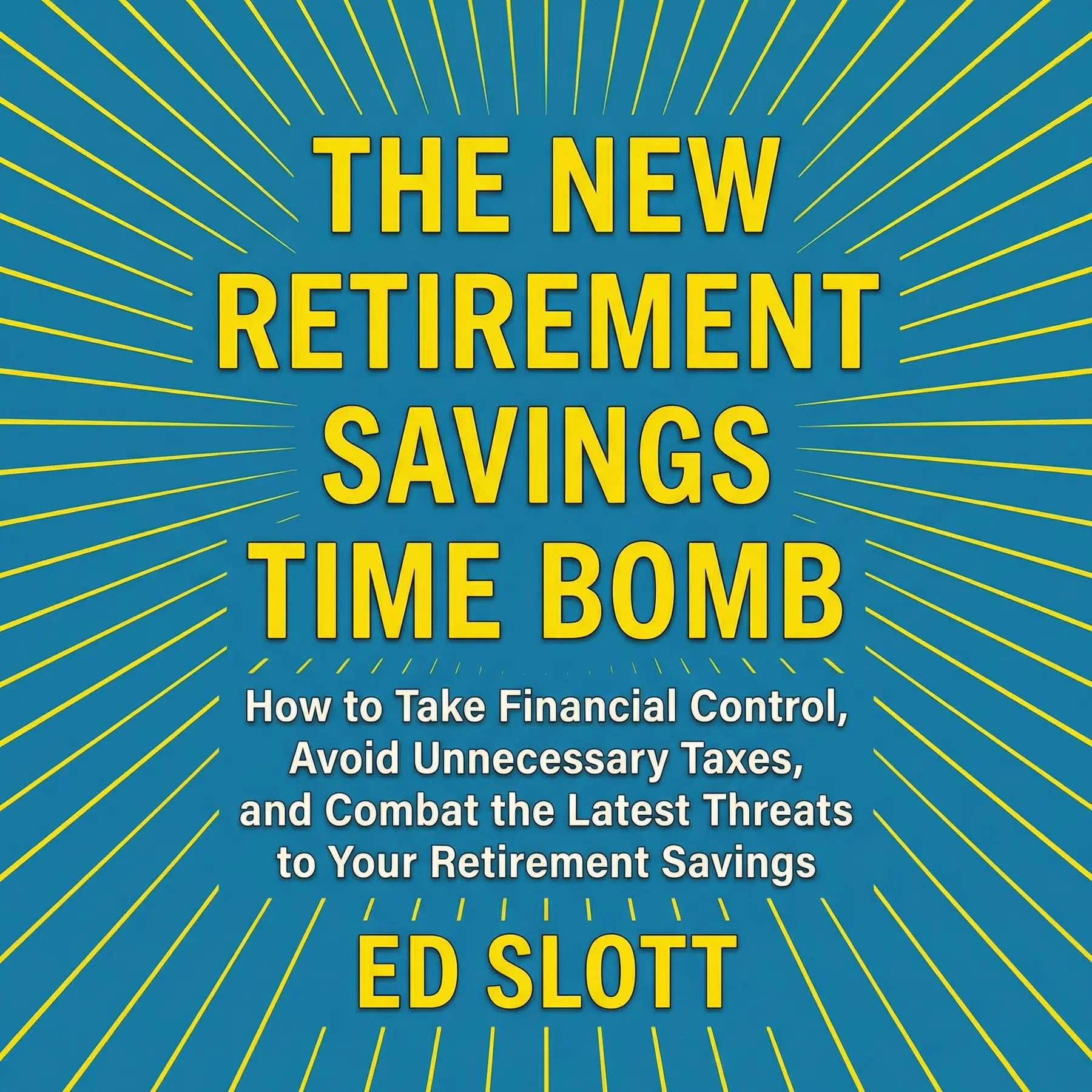
The New Retirement Savings Time Bomb: How to Take Financial Control, Avoid Unnecessary Taxes, and Combat the Latest Threats to Your Retirement Savings
By Ed Slott
Explore strategies to safeguard your retirement savings from shifting tax laws. This guide reveals how to navigate the complexities of IRAs, Roth conversions, and estate planning to protect your financial legacy.
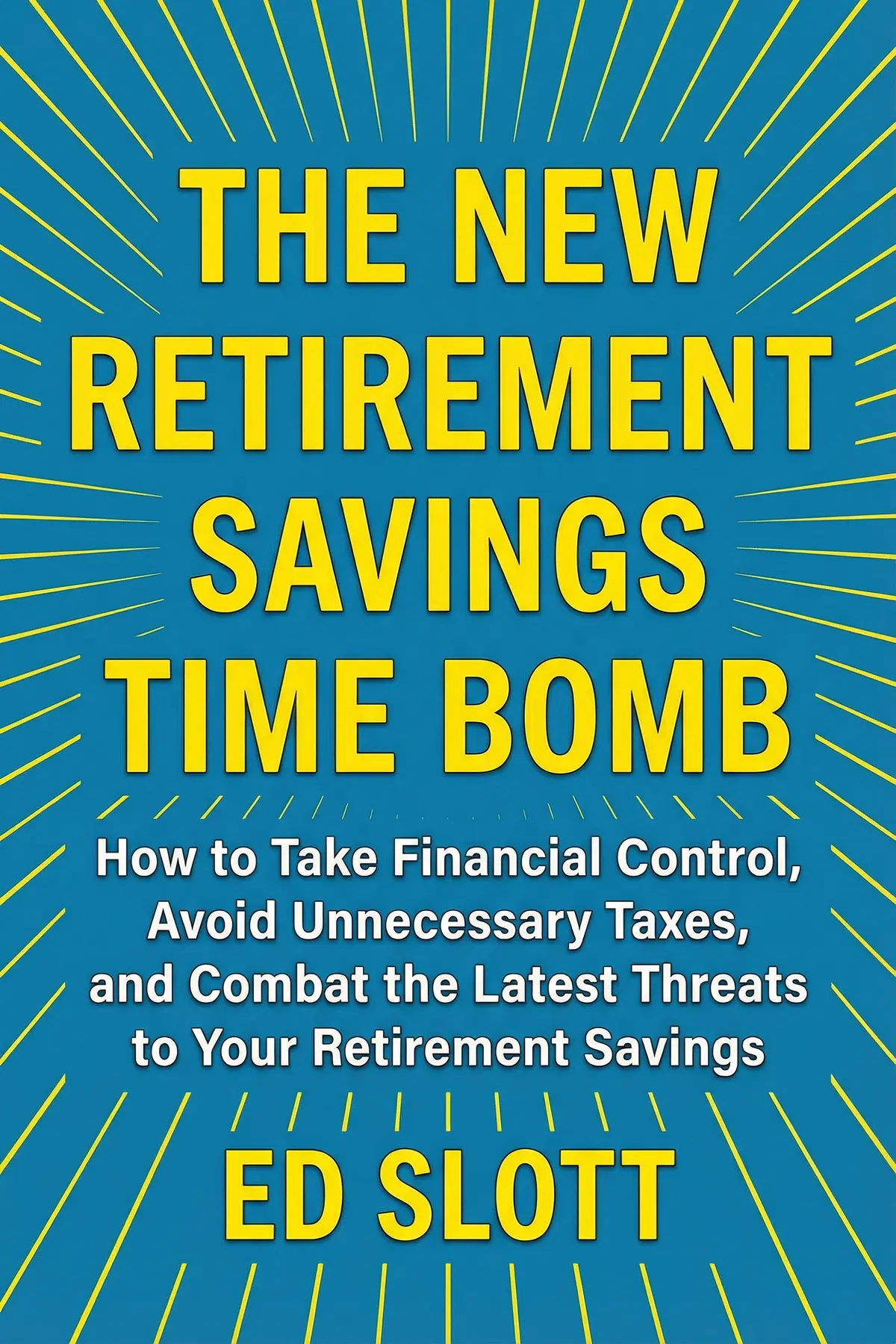
Table of Content
1. Introduction
1 min 44 sec
Imagine spending forty years of your life diligently setting aside a portion of every paycheck. You’ve followed the rules, skipped the luxuries, and watched your retirement balance grow into a substantial nest egg. You feel secure, assuming that this money is yours to enjoy in your golden years. But there is a silent partner in your account who has been waiting decades to collect their share: the Internal Revenue Service.
For many Americans, traditional retirement accounts like IRAs and 401(k)s are not just savings vehicles; they are financial time bombs. Because these accounts are tax-deferred, you haven’t actually paid the bill on that money yet. The government has essentially granted you a loan on your taxes, and they have the power to change the interest rate whenever they please. As tax laws shift and new legislation like the SECURE Act takes effect, the amount you truly own can shrink overnight, leaving your family with far less than you intended.
In the following sections, we are going to explore a strategic blueprint for taking control of your financial destiny. We will move through the history of how our current system was built, examine the specific choices you face when moving money between accounts, and dive deep into the math that determines your mandatory withdrawals. We’ll also look at how to protect your children’s inheritance from being decimated by rapid taxation and how to use tools like life insurance and Roth conversions to create a tax-free future.
Retirement should be a time of peace, not a period spent worrying about legislative whims. By understanding the mechanics of the retirement savings time bomb, you can learn how to disarm it before it’s too late. The goal isn’t just to save money—it’s to keep it. Let’s look at how you can navigate the modern tax landscape to ensure your hard-earned wealth serves you and your loved ones, rather than simply padding the national treasury.
2. The Evolution of Tax Liability
2 min 23 sec
Discover how the history of American taxation and the birth of the IRA created a complex environment where your retirement security is tied to the whims of legislative change.
3. Strategies for Managing Employer-Based Savings
2 min 43 sec
When you leave a job, your retirement nest egg faces a critical juncture. Learn the four primary options for your savings and the tax implications of each choice.
4. The Critical Mathematics of Retirement Income
2 min 39 sec
Retirement income isn’t just about how much you spend; it’s about when you take it. Understand the rules governing withdrawals to avoid heavy penalties.
5. Protecting Heirs from the Vanishing Stretch IRA
2 min 46 sec
Recent changes in legislation have made it much harder to leave a lasting legacy. Learn how to navigate the new rules for beneficiaries.
6. The Strategic Advantages of the Roth IRA
2 min 39 sec
Paying taxes today might be the best investment you ever make. Explore why the Roth IRA is the ultimate tool for disarming the retirement tax bomb.
7. Using Life Insurance as a Wealth Shield
2 min 31 sec
Life insurance isn’t just for protection; it’s a sophisticated tax-planning tool. Learn how to use it to move your wealth beyond the reach of the IRS.
8. Navigating the Hazards of the Estate Tax
2 min 36 sec
The estate tax can be a silent thief of your family’s inheritance. Understand the current limits and the tools available to protect your legacy.
9. Recovering from Financial Mistakes
2 min 22 sec
Even the best-laid plans can go awry. Learn how to fix common retirement errors, from missed distributions to early withdrawal penalties.
10. Conclusion
1 min 47 sec
As we look back at the strategies we’ve explored, the central theme is clear: your retirement savings are currently under threat from an invisible but very real enemy—unnecessary taxation. The traditional IRA, once the gold standard of saving, has been transformed by legislative changes like the SECURE Act into a vehicle that can burden your heirs and shrink your own purchasing power.
But you are not powerless. By understanding the timeline of distributions and the specific milestones of age fifty-nine and a half and seventy-two, you can avoid the most aggressive penalties the IRS has to offer. By embracing the Roth IRA, you can trade the uncertainty of future tax rates for the security of tax-free growth. And by looking beyond traditional accounts to tools like life insurance and strategic trusts, you can ensure your legacy is preserved for the people who matter most.
Disarming the retirement savings time bomb isn’t about a single magical move; it’s about a series of intentional, informed decisions. It starts with a simple audit of your current accounts. Take a look at your balances and remember that you don’t actually own the whole number you see on the screen. Ask yourself: what will tax rates look like in ten or twenty years? If you suspect they might be higher, then today is the day to start shifting your strategy toward tax-free vehicles.
Finally, remember that the laws of the land are always in flux. Stay engaged, keep learning, and don’t be afraid to seek professional guidance to navigate the shifting sands of the tax code. Your retirement should be the reward for a lifetime of effort. With the right planning and a proactive mindset, you can ensure that your golden years are spent enjoying your wealth rather than watching it evaporate. The time to act is now, while you still have the power to control the fuse.
About this book
What is this book about?
The New Retirement Savings Time Bomb addresses the looming financial crisis facing many retirees: the tax-deferred nature of traditional retirement accounts. While these accounts were designed to help workers save, changing legislation and fluctuating tax rates have turned them into potential liabilities for both account holders and their heirs. This summary provides a comprehensive roadmap for disarming this fiscal threat. It explores the transition from traditional IRAs to Roth accounts, the strategic use of life insurance to shield assets, and the nuances of the SECURE Act. By understanding the timing of distributions and the mechanics of estate transfers, you can learn how to keep more of your hard-earned money and minimize the portion that goes to the government.
Book Information
About the Author
Ed Slott
Ed Slott is a professional CPA, tax advisor, and a Professor of Practice at The American College of Financial Services. He publishes the hit newsletter Ed Slott's IRA Advisor and his writing on finance has appeared in the Wall Street Journal, the New York Times, and USA Today.
Ratings & Reviews
Ratings at a glance
What people think
Listeners find the book to be a superb resource for retirement preparation, commending its in-depth material and wide-ranging coverage of IRA management. The text is straightforward and simple to grasp, and one listener even mentions finding it a pleasure to read from beginning to end. Additionally, the witty and well-crafted prose is appreciated, and one listener draws attention to the book’s clear breakdown of tax planning methods. However, views on the price vary; while some feel it is a worthwhile investment, others disagree.
Top reviews
Ingrid
Finally got around to reading the latest edition of Ed Slott’s guide, and it really lives up to the hype for anyone worried about their 401k. Slott has this unique ability to take incredibly dry IRS regulations and turn them into something that doesn’t just put you to sleep immediately. He focuses heavily on the "time bomb" aspect—the idea that taxes will eventually eat your savings if you don't act now. I particularly loved the section on the SECURE Act changes; it’s scary how much has shifted recently without the general public noticing. While some of the estate planning advice feels like it’s geared toward the wealthy, the core message about moving from tax-deferred to tax-free is universal. It’s rare to find a finance book with this much personality and actual humor. It’s an essential roadmap for anyone within ten years of retirement who wants to keep what they've earned.
Show moreSoontorn
Ed Slott is a master at making tax-infested retirement accounts understandable for the average person on the street. I’ve followed his work for years, but this updated version is crucial because of the massive legislative shifts we've seen lately. He makes a compelling case for the Roth IRA being a gift from Congress, though he warns that you have to do it correctly to avoid a tax disaster. The book is long on substance but remains readable, which is a difficult balance to strike in the financial genre. You get the sense that he’s really on your side, trying to help you avoid the "gotcha" moments that the IRS thrives on. If you are sitting on a large IRA and don't have a plan for the RMDs, you are essentially leaving your front door unlocked for the government. Buy this book before you make a mistake you can't undo.
Show moreLucas
This book should be mandatory reading for every fiduciary and financial professional working today, but it’s also accessible enough for the clients themselves. As an advisor, I’m always looking for ways to explain "tax-forward" planning, and Slott provides the perfect vocabulary to do just that. He doesn't just report on the history of tax bills; he provides a proactive action plan to minimize what you owe the IRS. The "at a glance" updates regarding recent legislation are particularly helpful for those of us who need to stay current on the fly. I’ve seen so many people lose 30% or more of their life savings to avoidable taxes simply because they didn't know these rules. Slott’s expertise is unmatched in this space, and his advice on protecting retirement accounts is both timely and essential. Truly a five-star resource.
Show moreYindee
Ever wonder why the government makes retirement accounts so complicated? After reading this, it’s clear they are hoping you’ll make a mistake so they can take a bigger cut of your hard-earned savings. Slott does a phenomenal job of exposing these traps and providing clear, actionable steps to avoid them. I loved the "at a glance" summaries and the way he uses humor to keep the narrative moving through what could have been very dry material. This is more than just a book; it’s a comprehensive action plan for anyone who wants to retire with dignity and financial security. Whether you are dealing with a separation from service or just trying to figure out your RMD schedule, this guide has you covered. It’s easily the best investment I’ve made in my financial education this year.
Show moreAubrey
As someone who is just starting to take retirement planning seriously, this book felt like a crash course I didn't know I needed. Slott breaks down the differences between traditional and Roth accounts in a way that finally clicked for me, even if the math gets a little heavy in the middle sections. I really appreciated the "What’s new in this edition" summary right at the start because it saved me from having to cross-reference older laws. My only real gripe is that I wish there was more specific guidance on Social Security timing to complement the IRA withdrawal strategies. Sometimes the narrative gets a bit repetitive, but maybe that's necessary to hammer home these complex tax concepts. It’s a solid resource that makes me feel much more confident about talking to my financial advisor next month.
Show moreWyatt
The chapter on Roth conversions was the main reason I picked this up, and it didn't disappoint in terms of detail and logic. Slott argues that paying the tax now is better than waiting for potentially higher future rates, which is a bold but well-supported stance. However, I think he occasionally glosses over the risk of being wrong about your future tax bracket—if you're in the 0% bracket later, that upfront tax was a waste. Aside from that debate, the sections on estate planning and beneficiary rules were incredibly enlightening and worth the price of admission alone. The writing is snappy and clear, avoiding the typical jargon that makes most business books feel like a chore. It’s a comprehensive guide, but you should definitely bring a calculator and your own tax returns to get the most out of it.
Show moreOak
Not what I expected from a book about tax planning, mostly because I didn't expect to actually laugh while reading it. Slott has a relatable, "recovering CPA" voice that makes you feel like you’re getting advice from a smart friend over coffee. He is very opinionated about the benefits of Roth conversions, which I found helpful even if I didn't agree with every single point he made regarding the math. The book covers everything from RMDs to the nuances of naming beneficiaries, which is often where the real "time bomb" lies for most families. It’s a bit of a thick read, and some parts felt more relevant to high-net-worth individuals than the average worker. Still, the peace of mind you get from understanding how these accounts actually function is well worth the time spent reading.
Show moreAndrei
Look, if you have an IRA or a 401k and you’re over the age of 50, you simply cannot afford to ignore the strategies in this book. Personally, I found the breakdown of the SECURE Act to be the most valuable part, as it completely changed the game for how we leave money to our kids. Slott’s writing is clear and he avoids the trap of using too much industry shorthand, which I really appreciated as a non-expert. I do wish the book had a better index for quick searching, as I found myself flipping through chapters to find that one specific rule about inherited IRAs. The focus on proactive planning rather than just reactive tax filing is a mindset shift that everyone needs to make. It’s an investment in your future that will likely pay for itself a hundred times over in tax savings.
Show moreSomkid
To be fair, there is an incredible amount of technical knowledge packed into these pages, but it often feels like it was written for a CPA rather than a retiree. I found myself having to re-read entire sections just to grasp the implications of a specific IRA rule, which was a bit exhausting. While I appreciate the humor Slott tries to inject, the material remains inherently dense and, at times, quite dry. I was also disappointed to find that my copy seemed to have some repetitive sections that could have been edited down for a more concise read. It’s certainly a valuable reference tool to have on the shelf, but it’s not exactly the "page-turner" some other reviewers are claiming it to be. If you aren't already somewhat familiar with tax law, you might find this a bit overwhelming.
Show moreWararat
I'm going to be the contrarian here and say that this book is a bit of a mixed bag, primarily because it pushes Roth conversions so aggressively. The truth is, Slott fails to properly assess the risk of being wrong about future tax rates, which could lead some readers to pay way more in tax now than they ever would have in retirement. If you end up in a lower bracket later, your "goose is cooked" because you can't undo those conversion taxes once they are paid. Additionally, my physical copy had a glaring printing error where several pages in the middle were either missing or out of order. While there is definitely good information in here regarding IRA rules, the narrow focus on "tax-free" at any cost feels a bit like a sales pitch. Be careful and run your own numbers before following every piece of advice in here.
Show moreReaders also enjoyed
AUDIO SUMMARY AVAILABLE
Listen to The New Retirement Savings Time Bomb in 15 minutes
Get the key ideas from The New Retirement Savings Time Bomb by Ed Slott, plus 5,000+ more titles in English and Thai.
- 5,000+ titles
- Listen as much as you want
- 7-day free trial
- Cancel anytime







