
Emotional: How Feelings Shape Our Thinking
Leonard Mlodinow
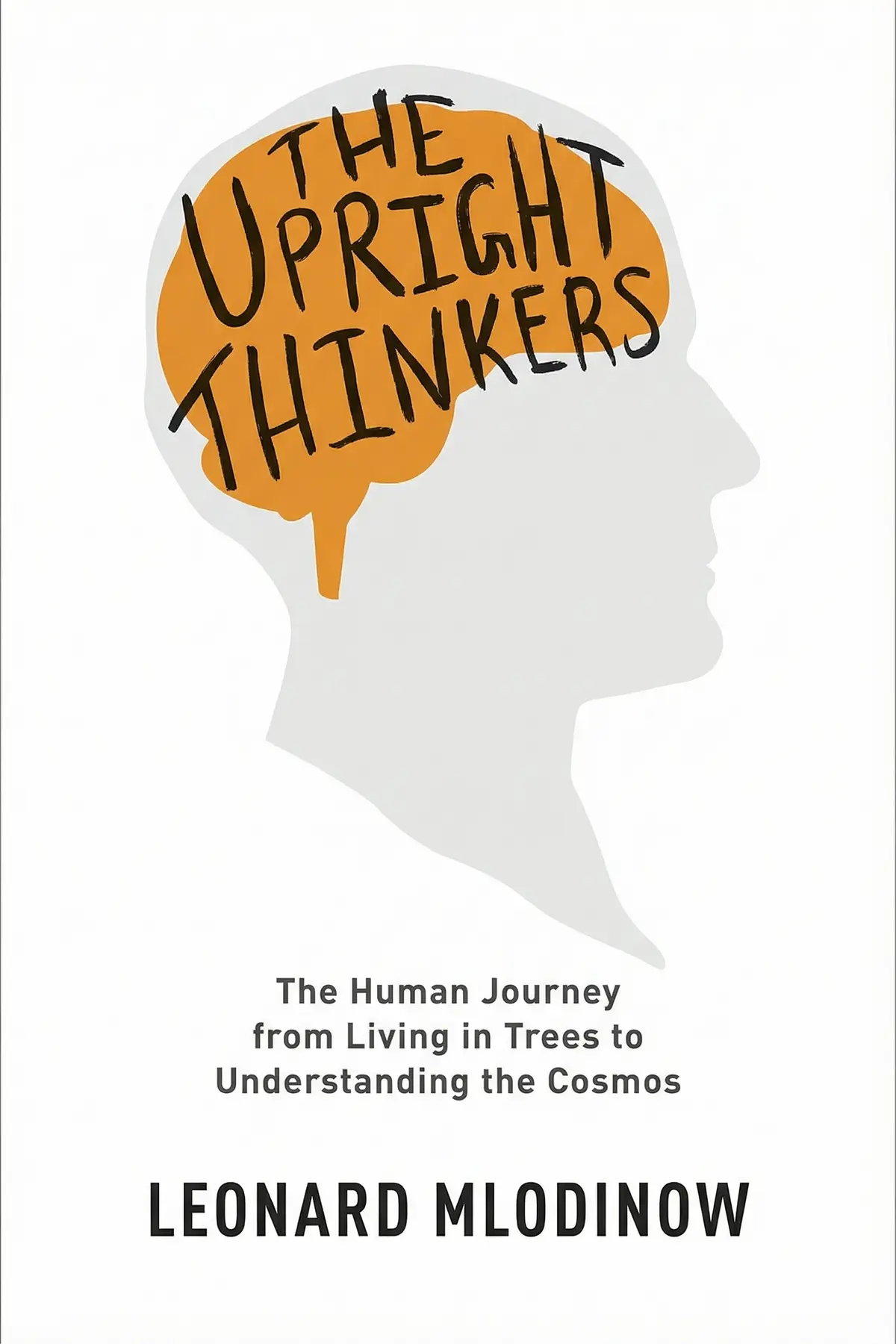
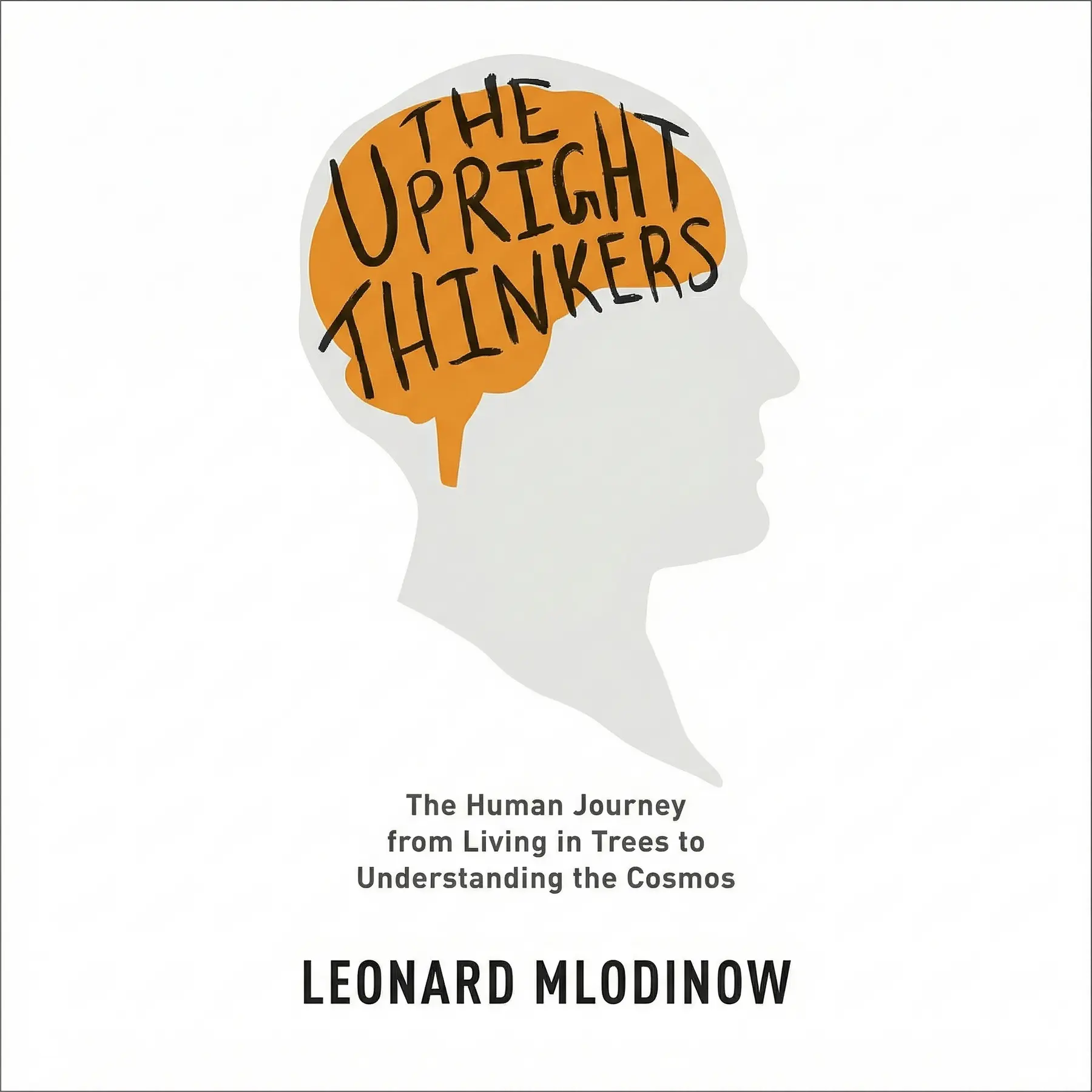
The Upright Thinkers explores the grand narrative of human discovery, from our first steps on the savanna to the complexities of quantum physics, revealing how curiosity redefined our species and the universe.
1 min 49 sec
Have you ever stopped to wonder why humans are the only species on Earth that builds telescopes, writes symphonies, or wonders about the edge of the universe? It is a question that goes back millions of years, rooted in a series of biological and intellectual accidents that transformed us from simple scavengers into the masters of the planet. In the story of our development, there is a clear line that connects the first upright steps of our ancestors to the sophisticated equations of modern physics. This journey is not just a list of inventions; it is a profound shift in the way we perceive reality itself.
At its heart, this is a look at the history of the human mind. It asks how we moved from a state of pure instinctual survival to a state where we can contemplate our own existence. We will explore the pivotal moments where the human trajectory changed forever—moments when we stopped asking how to survive and started asking why the world works the way it does. From the birth of language and the invention of mathematics to the discovery of the invisible laws of the quantum world, we are going to trace the path of the upright thinkers who built the modern world.
Throughout this narrative, we will see that progress is rarely a straight line. It is a messy, beautiful process filled with errors, lucky guesses, and the relentless courage of individuals who dared to look at the world differently. As we walk through this history, you’ll find that our current scientific understanding is just the latest chapter in an ongoing epic. By understanding where our ideas came from, we gain a much clearer perspective on who we are and where we might be heading next. Let’s begin where it all started: on the open plains of Africa, with the physical change that made everything else possible.
2 min 29 sec
Discover how the simple act of standing on two legs triggered a biological chain reaction that eventually led to the development of the complex human brain.
2 min 16 sec
Explore the moment in ancient Greece when thinkers stopped blaming the gods for natural events and began searching for rational, underlying causes.
2 min 31 sec
Learn how Pythagoras and his followers discovered that the universe is written in the language of numbers, bridging the gap between abstract thought and the physical world.
2 min 26 sec
Follow the winding path of knowledge through the Middle Ages, as scholars preserved ancient wisdom and slowly began to prioritize observation over dogma.
2 min 30 sec
See how the courage to challenge authority and the genius to unify earthly and celestial physics gave birth to the modern scientific method.
2 min 28 sec
Travel from the vastness of the cosmos to the minuscule world of microbes and molecules, where the building blocks of life and matter were finally revealed.
2 min 31 sec
Witness the collapse of the clockwork universe as Einstein and the pioneers of quantum mechanics discovered a reality that defies common sense.
2 min 26 sec
Turn the scientific lens inward to explore the biological seat of thought itself, where neuroscience is finally beginning to decode the mystery of the mind.
2 min 15 sec
As we look back on the long trajectory of human thought, from the first upright steps in Africa to the complex simulations of quantum computers, a clear theme emerges: we are a species defined by our curiosity. We are not content to simply exist; we have an innate drive to explain, to categorize, and to master the world around us. This journey has taken us from a world dominated by myth and superstition to one governed by natural laws and mathematical precision. We have learned to look beyond the visible, discovering worlds of microbes, atoms, and distant galaxies that our ancestors could never have imagined.
But perhaps the most important lesson from this history is that our understanding of reality is always a work in progress. Every ‘final’ theory of the past eventually became a stepping stone for something deeper and more accurate. Newton didn’t make Galileo obsolete; he built upon him. Einstein didn’t destroy Newton’s world; he showed us its limits and expanded our horizons. This tells us that we should remain humble about what we think we know today. Our current scientific models are incredibly powerful, but they are likely just a glimpse into a much larger and more complex reality that we have yet to fully grasp.
The throughline of the ‘upright thinkers’ is the courage to ask questions and the willingness to let go of old ideas when the evidence demands it. It is a story of persistence, ingenuity, and a refusal to be limited by the biological constraints of our ancestors. As you move forward, consider that you are a part of this ongoing legacy. Every time you seek a rational explanation, challenge a preconceived notion, or marvel at the complexity of the natural world, you are participating in the grand tradition of human inquiry. The tools we use may change—from flint axes to particle accelerators—but the spirit of the upright thinker remains the same. The universe is a vast puzzle, and we are the only ones on this planet who have decided to try and solve it. That is a responsibility and a privilege that defines what it truly means to be human.
This exploration follows the transformative journey of the human intellect, beginning with the evolutionary shifts that allowed our ancestors to stand tall and observe the stars. It traces the transition from primitive survival to the birth of abstract thought, showing how early tool-making and the development of language set the stage for the first philosophers. The narrative moves through the rigorous logical foundations laid in ancient Greece, the revolutionary breakthroughs of the scientific age, and the startling revelations of modern physics and neuroscience. By examining the lives and breakthroughs of history’s most influential minds, from Newton to Einstein, the book promises to reveal how our understanding of reality has shifted from mythological explanations to empirical laws. It is a story of how a species of wandering primates became a global force capable of decoding the secrets of atoms and galaxies, ultimately asking what our history of inquiry says about our future as thinkers.
Leonard Mlodinow, PhD, is an American physicist, author and a leading researcher in the field of quantum theory. He has written books alongside colleagues such as Stephen Hawking, and is the author of The Drunkard's Walk: How Randomness Rules Our Lives, which was a New York Times notable book of the year and one of Amazon’s choices for best science book of 2008.
Leonard Mlodinow
Leonard Mlodinow
Stephen Hawking
Listeners find this an extremely enjoyable read, featuring well-crafted prose that translates difficult scientific concepts for laypeople. They admire the historical narrative and the author’s talent for humanizing historical figures, while one listener specifically mentions the deep dive into personal life stories alongside scientific breakthroughs. The book is well-regarded for its approachability, with one listener remarking on the author's use of everyday English.
This book is a masterclass in how to make the intimidating history of science feel like a series of compelling fireside stories. Mlodinow has this gift for stripping away the dry, textbook layers of discovery to reveal the messy, often eccentric humans underneath. I was particularly struck by the portrait of Isaac Newton, who apparently was quite a difficult character to be around. It’s refreshing to see these geniuses portrayed as flawed people rather than just names on a page. The narrative arc from our early ancestors to the complexities of quantum mechanics is seamless. While some might find his humor a bit much, I thought it kept the pacing lively. It’s rare to find a science book that is both intellectually stimulating and genuinely funny. Frankly, it’s the most accessible overview of human thought I’ve encountered in years.
Show moreWow. I didn't expect a book about the history of science to be such an emotional rollercoaster. The way Mlodinow weaves his father’s experiences as a Holocaust survivor into the narrative of human discovery is nothing short of beautiful. It gives a profound weight to the idea of the 'thirst for knowledge' that defines our species. The science itself is explained in everyday English, which I appreciated. I finally feel like I have a grasp on why the transition to quantum mechanics was such a shock to the system for people like Einstein. Look, some people might find the tone too casual, but for me, it made the information stick. It’s not just a book about facts; it’s a book about the spirit of inquiry. Highly recommended for anyone who feels like they missed out on the 'big picture' during school.
Show moreAfter hearing a podcast interview with Mlodinow, I had to grab this. It’s a phenomenal journey through the evolution of the human mind. He does a great job of explaining how our ancestors moved from basic survival to asking 'why' the stars move the way they do. The book is divided into three sections, and I honestly think the first part on early civilization is the strongest. It’s where his unique perspective really shines. I also loved the personal touch he adds by talking about his own education, like the story of building a radio that only worked upside down. It makes the whole subject feel less like a lecture and more like a shared experience. If you’re a geek for history and science, this is like pure dopamine. It’s fast-paced, insightful, and genuinely inspiring.
Show moreMlodinow manages to bridge the gap between prehistoric ingenuity and the weird world of subatomic particles with incredible grace. This isn't just a dry list of dates and discoveries. It’s a story about people. I loved learning about the 'total dicks' of science, like Newton and Paracelsus; it makes the history feel so much more vibrant and real. The author’s sense of humor is a major plus for me, as it breaks up the more technical explanations. Even when he gets into the murky waters of quantum mechanics, his use of everyday English keeps the reader from getting lost. It’s a big-picture book that reminds us how far we’ve come as a species. Personally, I found it to be a very stimulating and enjoyable read. Perfect for a summer vacation or a long flight.
Show moreEver wonder how we went from sharpening flint in caves to launching satellites into the cosmos? Mlodinow attempts to answer that by tracking the 'upright thinkers' who dared to ask odd questions. The first section on the development of early culture and mathematics was the highlight for me; it felt truly original. Truth is, the middle section where he covers the usual suspects like Galileo and Newton felt a bit like a repeat of every other science history book. However, he brings it back with a strong finish on quantum mechanics. To be fair, he does try a bit too hard to be witty at times—the jokes about chicken thighs in Styrofoam felt a little out of place. Despite the occasional groan-worthy pun, the book is incredibly readable. It’s a solid pick for anyone who wants to understand the 'why' behind our species' progress.
Show morePicked this up on a whim after enjoying Mlodinow's collaborations with Stephen Hawking. It was fascinating to see his solo voice shine through here. He has a very slick, light style that makes complex physics feel like casual conversation. I especially loved the anecdotes about the scientists' personal lives, like Darwin’s constant illness or Mendeleev’s stubbornness with the periodic table. It makes the science feel more 'lived in.' My only real gripe is that he glosses over some of the modern astrophysics I was hoping for. Still, the way he explains the transition from hands-on experimentation to the theoretical world of Heisenberg is brilliant. It’s a great 'entry-level' book for people who might be intimidated by hard science. You don't need a PhD to appreciate the journey he maps out.
Show moreThe chapter on quantum physics alone is worth the price of admission. Mlodinow manages to take the bizarre, counterintuitive world of Bohr and Heisenberg and make it feel almost logical. I’ve read a lot of books on this topic, but his approach is uniquely conversational. He focuses on the 'upright thinkers' as rebels who weren't afraid to look like fools. It’s a very humanizing take on a field that usually feels cold and mathematical. My only complaint is that the middle part of the book—covering the Renaissance and the Enlightenment—drags a little bit compared to the prehistoric and modern sections. It felt a bit like a 'plod' through well-trodden ground. Regardless, the writing is slick and the insights into how we shifted from observing nature to predicting it through math are top-notch. A very pleasant read.
Show moreFinally got around to reading this and I must say, it's a very easy gallop through some very dense topics. Mlodinow's style is light and engaging, which is exactly what you want when you're tackling things like the laws of motion or atomic structure. I was particularly fascinated by the section on chemistry and how it evolved from the 'magic' of alchemy into a rigorous science. Mendeleev comes across as such a badass for predicting elements that hadn't even been discovered yet. My only real issue is the lack of focus on modern astronomy and the cosmos, despite what the subtitle promises. It’s much more of a physics and biology book than a space book. But for what it is—a history of how we think—it’s excellent. It’s the kind of book that makes you feel smarter without making you work too hard for it.
Show moreAs someone who devours popular science, I found this to be a bit of a mixed bag. On one hand, Mlodinow is an excellent storyteller. The opening story about his father in the concentration camp trading bread for a math riddle is one of the most moving things I’ve read in a non-fiction book. It perfectly sets up the theme of human curiosity. On the other hand, the historical accuracy is sometimes a bit loose. He repeats the old myth about Giordano Bruno being burned specifically for his solar system theories, which most historians now dispute. Also, the humor is very hit-or-miss. Sometimes it’s charming, but other times it feels like he’s trying too hard to be the 'cool' teacher. It’s a decent overview, but I’d recommend Steven Weinberg if you want something with more intellectual meat.
Show moreNot what I expected given the glowing reviews. While I appreciate Mlodinow's attempt to make science accessible, the 'jokiness' of the writing really grated on me after the first fifty pages. There are constant attempts at wit that just feel forced and distracting. For instance, the recurring jokes about prehistoric people and modern conveniences like cellophane wrap just aren't as funny as he seems to think they are. More importantly, I found several historical oversimplifications that bothered me. Claiming Max Born introduced the term 'photon' is just factually incorrect. If you're looking for a rigorous history of science, this isn't it. It feels more like a collection of trivia and 'fun facts' held together by a thin narrative. It might work for a total beginner, but for me, it was a bit of a disappointment.
Show more

James Shapiro
Charles C. Mann

Pankaj Mishra
J. Craig Venter
Andrew Ross Sorkin

Ben Macintyre

Carl Zimmer

Fay Bound Alberti
AUDIO SUMMARY AVAILABLE
Get the key ideas from The Upright Thinkers by Leonard Mlodinow, plus 5,000+ more titles in English and Thai.







