
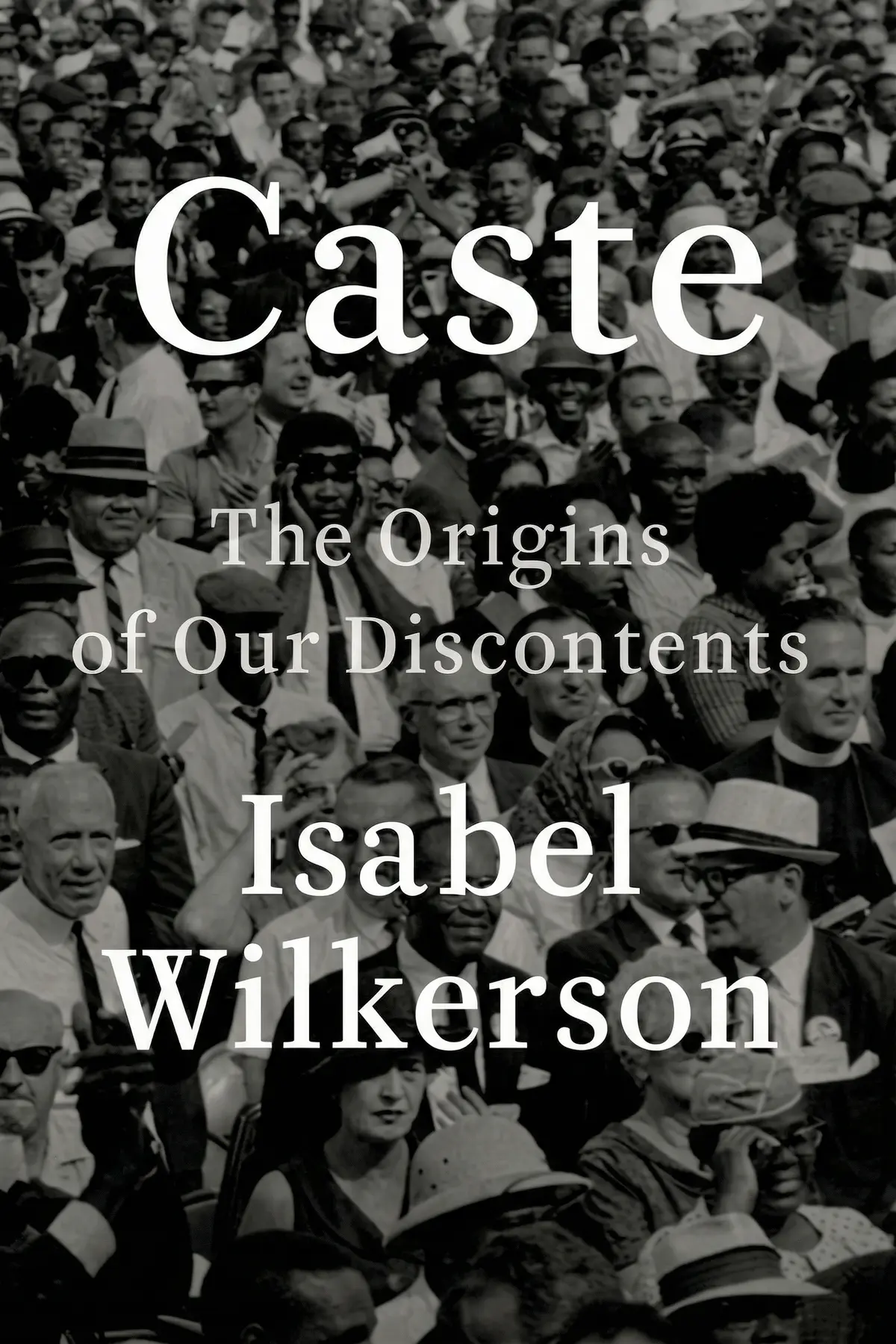
Caste: The Origins of Our Discontents
Isabel Wilkerson
Explore the monumental journey of six million African Americans who fled the South between 1915 and 1970, reshaping the American North and West in pursuit of freedom, dignity, and a better life.
1 min 51 sec
For much of the twentieth century, a massive, silent revolution was taking place across the American landscape. It didn’t involve an invading army or a government decree. Instead, it was fueled by millions of individual decisions made by people who were tired of living in the shadows of a system designed to keep them down. Between 1915 and 1970, roughly six million African Americans left the South, heading toward the bustling cities of the North and the West. This movement, known as the Great Migration, was a seismic shift that fundamentally altered the country’s demographics, its culture, and its soul.
While history books often focus on the broad strokes of politics and war, the true story of the Great Migration lives in the personal experiences of those who packed their bags and boarded Northbound trains. In this summary, we are going to walk in the footsteps of three people who represent different decades and different destinations of this exodus. There is Ida Mae Gladney, who fled the cotton fields of Mississippi for the industrial grit of Chicago in the 1930s. We’ll meet George Starling, whose activism in the Florida citrus groves forced him to flee to New York in the 1940s. And we will follow Robert Foster, an ambitious surgeon who drove across the desert to Los Angeles in the 1950s to find the professional respect he was denied in Louisiana.
Their stories aren’t just about moving from one place to another; they are about the search for the “warmth of other suns”—a phrase used to describe the hope for a life where one is judged by their character and skill rather than the color of their skin. As we explore their journeys, we will see how the crushing weight of the Jim Crow South pushed them away, how the promise of the North pulled them forward, and how their presence in cities like Chicago and New York created a new American identity. This is a story of resilience, the pursuit of freedom, and the quiet courage it takes to start over in an unknown land.
2 min 32 sec
Uncover why the Great Migration was unlike any other mass movement in history, driven not by a central leader, but by millions of independent acts of courage.
2 min 23 sec
Step into the world of the South after the Civil War to understand the systemic barriers and physical dangers that forced families to abandon their homes.
2 min 40 sec
Follow the journey of a young mother from the cotton fields of Mississippi to the industrial heart of Chicago, driven by the need for a safer future.
2 min 28 sec
See how a young man’s attempt to organize fruit pickers in Florida led to a life-threatening confrontation and a narrow escape to Harlem.
2 min 33 sec
Discover the story of a brilliant surgeon who had to travel across the country just to be allowed to practice his craft with the dignity he deserved.
2 min 35 sec
Explore why the cities of the North and West were often complicated destinations, offering freedom from Jim Crow but introducing new forms of segregation.
2 min 29 sec
Understand how the movement of millions of people didn’t just change their own lives, but also reshaped the music, politics, and soul of the entire nation.
2 min 23 sec
Witness how the three protagonists reconciled their Southern pasts with their Northern presents, proving that the migration was as much a psychological journey as a physical one.
2 min 23 sec
Examine the debate over the legacy of the Great Migration, contrasting the cold statistics of social scientists with the deeply personal triumphs of the migrants themselves.
1 min 42 sec
The Great Migration was far more than a simple movement of people across a map. It was a profound reshuffling of the American identity, a fifty-year exodus that saw six million souls flee the oppressive weight of the Jim Crow South for the promise of the North and West. Through the lives of Ida Mae Gladney, George Starling, and Robert Foster, we have seen that this wasn’t a unified political movement, but a series of individual leaps of faith. These people weren’t just looking for better-paying jobs; they were looking for the right to exist with dignity, to vote, and to live without the shadow of violence looming over their families.
We’ve learned that the North was not a perfect sanctuary. It presented its own cold realities, from housing segregation to economic competition. Yet, despite these challenges, the migration was a monumental success in the eyes of those who lived it. It allowed a formerly enslaved people to finally claim their status as American citizens. It gave birth to new forms of music, transformed the political landscape, and integrated the Southern experience into the very heart of the nation’s greatest cities.
As we reflect on this journey, the takeaway is clear: the history of a nation is written in the private decisions of its people. The Great Migration teaches us that when individuals decide they will no longer tolerate oppression, they have the power to change the world. It is a story of resilience that continues to resonate today, reminding us that the search for freedom and the warmth of a better life is a fundamental human drive that can overcome even the most daunting obstacles. The map of America today is a testament to those six million people who, with nothing but hope and a train ticket, chose to write a new chapter for themselves and for their country.
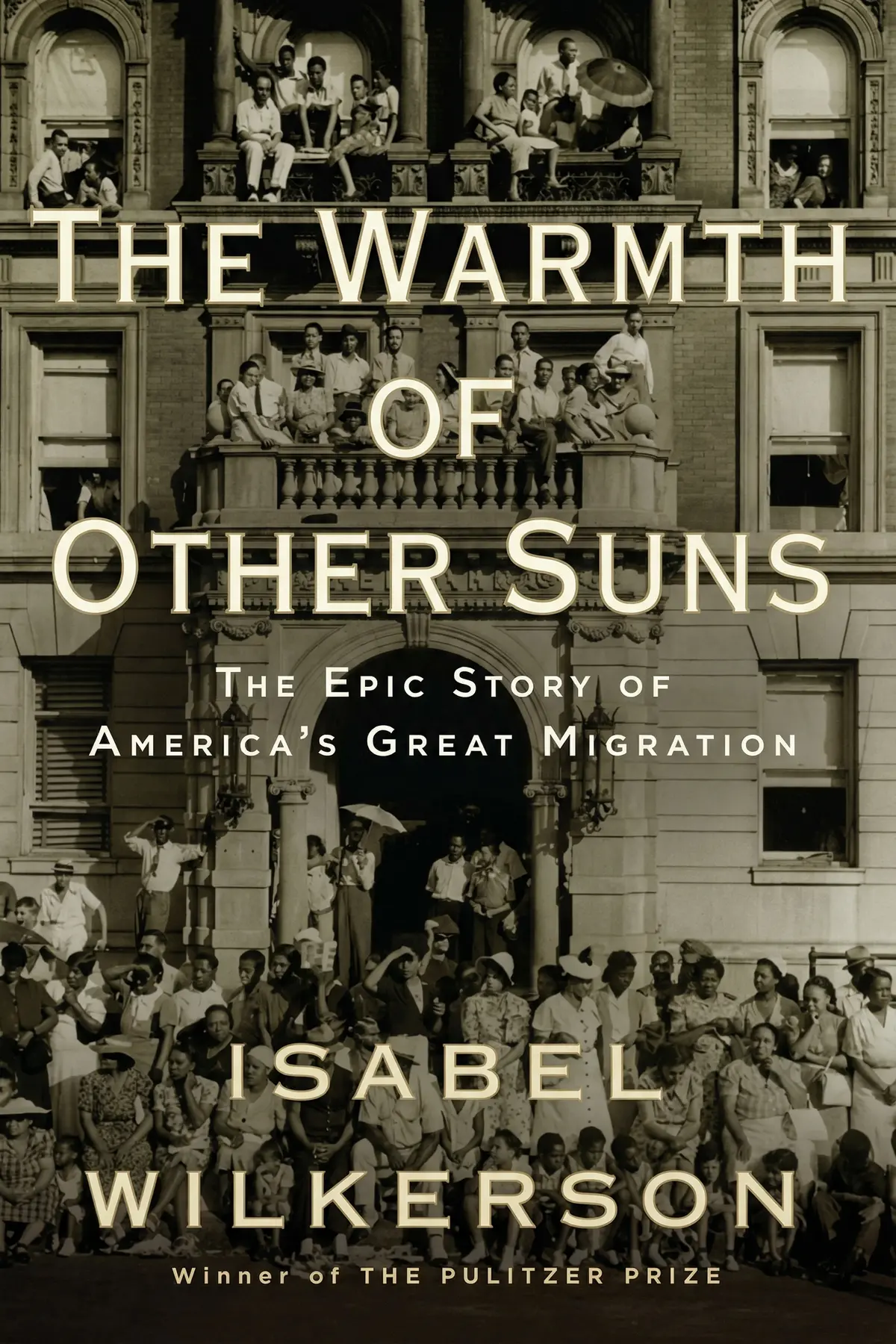
The Warmth of Other Suns provides an expansive and deeply personal look at the Great Migration, the largest internal movement of people in United States history. Through the meticulously reconstructed lives of three individuals—Ida Mae Gladney, George Starling, and Robert Foster—this narrative history examines why millions of Black Americans chose to leave the Jim Crow South for the cities of the North and West. This account goes beyond mere statistics to capture the emotional and social weight of these decisions. It reveals the harsh realities of the sharecropping system, the constant threat of violence, and the systemic oppression that fueled the exodus. Furthermore, it explores the complicated reality of life in the North, where migrants faced new forms of discrimination even as they found opportunities to vote, work, and build new communities. Ultimately, the book is a testament to the courage of those who dared to seek a more just existence, illustrating how their collective courage fundamentally transformed the demographic and cultural landscape of modern America.
Isabel Wilkerson is a highly acclaimed American author and journalist who has dedicated her career to exploring deep social structures. In 1994, she made history as the first African American woman to receive the Pulitzer Prize for journalism. Following her groundbreaking work on the Great Migration, she published her second book in 2020, titled Caste: The Origins of Our Discontents, which further examines the invisible hierarchies that shape society.
Isabel Wilkerson
Listeners consider this work captivating and expertly composed, featuring a compelling storyline rooted in authentic individual accounts. It is remarkably well-researched and offers precise historical records, establishing it as essential reading for anyone interested in the American past. Listeners characterize the experience as both devastating and profoundly moving, with one listener mentioning that it fundamentally altered their viewpoint.
This is a sweeping masterpiece that manages to make 600 pages feel like a quick read. Wilkerson breathes life into the Great Migration by focusing on three distinct souls: Ida Mae, George, and Robert. You feel the humidity of the cotton fields and the cold bite of a Chicago winter right along with them. Truth is, I had no idea that millions of people moved in such specific patterns based on train routes. The storytelling is so intimate that it feels more like a classic American novel than a history text. My only tiny gripe is some of the repetitive phrasing, but the emotional weight of their journeys more than makes up for it. This should be required reading in every high school across the country.
Show moreWow, what a punch to the gut this was. I went into this book expecting dry facts and statistics but found myself weeping for Ida Mae and her family instead. The description of the Jim Crow South is visceral—it’s not just about the laws, but the constant, suffocating fear of the unknown. Wilkerson describes the North as a "field of landmines," and that imagery stuck with me throughout the entire second half. It’s a sobering reminder that moving to a new city doesn't automatically mean finding freedom. The way she weaves in quotes from Richard Wright and Langston Hughes adds a poetic layer to the gritty reality. This book changed the way I look at my own city’s history.
Show morePicked this up for a book club and was surprised by how much it gripped me from the first chapter. Wilkerson has this incredible ability to make sociological shifts feel personal and urgent. I was particularly fascinated by the story of George Starling and his escape from the Florida citrus groves. His struggle to find dignity in New York reflects a broader American tragedy that many of us were never taught in school. The writing style is elegant and rhythmic, almost like she's composing a symphony of these six million lives. Look, it’s a long book, but you need that length to understand the sheer scale of this seventy-year exodus. This is history written with a heart.
Show moreFinally got around to this after seeing it on every "must-read" list for years, and it absolutely lives up to the hype. The "Warmth of Other Suns" isn't just a title; it represents the hope that drove millions to risk everything for a better life. Wilkerson’s decision to follow three specific families across different decades was a stroke of genius. It allows you to see the evolution of the movement from the 1910s all the way to the 1970s. The struggle for a simple hotel room or a fair wage becomes an epic battle in her hands. You realize that these weren't just "migrants"—they were refugees in their own country. It’s a heavy, essential piece of American scholarship.
Show moreTo be fair, I don't usually enjoy non-fiction, but this read like a multi-generational epic that I couldn't put down. The amount of detail Wilkerson includes about the daily lives of her subjects makes them feel like people you’ve known forever. I was struck by the "midwives of the migration"—the railroad porters who helped spread news of a better life. The book does an amazing job of debunking the stereotypes of the time, showing how hard-working and family-oriented these migrants actually were. It’s a beautiful, tragic, and ultimately triumphant story of human resilience against impossible odds. Not gonna lie, I’ll be thinking about Robert Foster’s Vegas experience for a long time.
Show moreIt is rare for a history book to feel this urgent and alive, but Isabel Wilkerson has managed it here. She takes a massive statistical shift and breaks it down into the heartbeat of three individuals. I loved how she used snippets of poetry and literature to frame the chapters, grounding the history in Black culture. The "Warmth of Other Suns" serves as both a historical record and a deeply affecting human drama. Frankly, it’s embarrassing how little of this I was taught in my formal education. This book doesn't just fill in the gaps; it builds an entire foundation for understanding modern America. If you haven't read this yet, you are missing a vital piece of the puzzle.
Show moreEver wonder why the demographics of our major cities shifted so drastically during the 20th century? Wilkerson provides a meticulously researched answer that is both illuminating and deeply uncomfortable. She dismantles the myth that migrants were less educated or "destabilizing," proving they were often the most ambitious members of their communities. I found the sections on Robert Foster’s lonely drive to California particularly haunting because they highlight how the North wasn't always the "Promised Land" it claimed to be. Frankly, the middle section drags a bit as she circles back to the same themes, but the depth of the 1,000+ interviews is undeniable. It’s a dense, heavy volume that requires patience but pays off in perspective.
Show moreAs someone who grew up in the South, I thought I knew this history, but Wilkerson showed me how much I had missed. She captures the "silent" nature of the migration perfectly—how it happened in ripples rather than one big wave. The distinction between the government-sanctioned cruelty of the South and the casual, systemic racism of the North was eye-opening. I appreciated the specific details about how people from Mississippi ended up in Chicago while those from Florida headed to Harlem. It makes the geography of the US make so much more sense. My only issue was that the author's emotional attachment to her subjects sometimes blurred the lines of objective history. Still, it’s a profoundly moving achievement.
Show moreThe sheer amount of research that went into this volume is mind-blowing. When you realize Wilkerson interviewed over a thousand people to distill these stories, the weight of the book starts to make sense. She doesn't shy away from the horrific—the lynchings and the riots are described with a stark, unflinching honesty. At times, the transition between the three main narratives felt a bit disjointed, and I found myself wanting more of Ida Mae while I was reading about Robert. However, the way she connects these personal lives to the "Big Picture" of American demographics is masterful. It’s an educational journey that feels like a personal conversation with the past.
Show moreIsabel Wilkerson is undoubtedly a gifted researcher, but this book was a bit of a marathon for me. While the stories of the three main individuals are compelling, the narrative often gets bogged down in repetitive anecdotes and redundant explanations. I felt like the author made her primary points in the first two hundred pages and then spent the next four hundred driving them home with a sledgehammer. To be fair, the historical documentation is flawless and the focus on "immigration" within our own borders is a unique lens. However, the pacing suffered significantly in the final third as it transitioned into more anecdotal territory. It is an important work, certainly, but I think a tighter edit would have made it a much stronger read.
Show more
William J. Bernstein

Ben Macintyre


Charles C. Mann

James Shapiro
AUDIO SUMMARY AVAILABLE
Get the key ideas from The Warmth of Other Suns by Isabel Wilkerson, plus 5,000+ more titles in English and Thai.







