
17 min 44 sec
The Web That Has No Weaver: Understanding Chinese Medicine
This summary explores the foundational logic of traditional Chinese medicine, contrasting its holistic, pattern-based approach to health with the cause-and-effect focus of Western medical science to provide a comprehensive view of wellness.
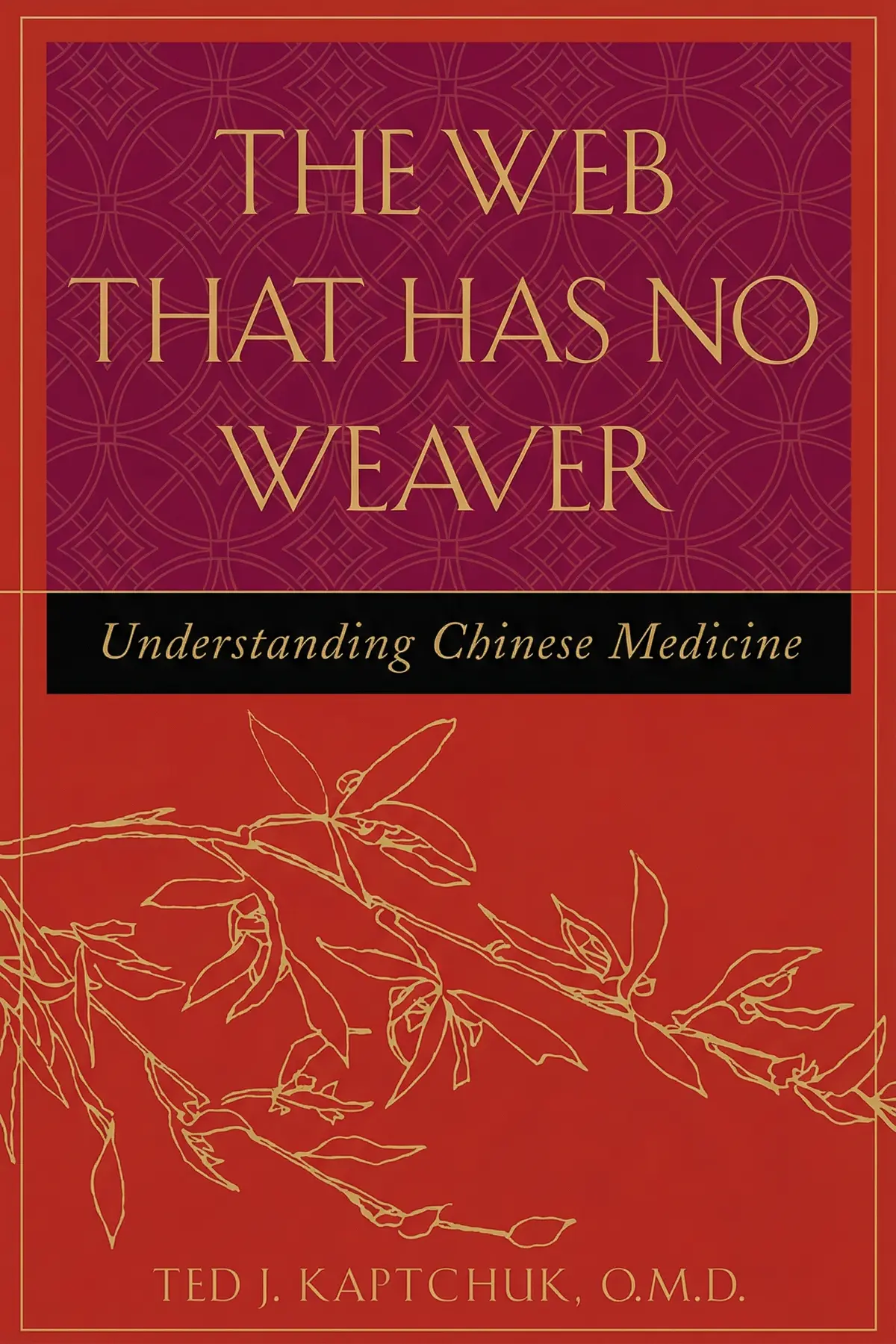
Table of Content
1. Introduction
2 min 05 sec
In the early 1970s, a young American named Ted Kaptchuk set out on a journey that would change his life and, eventually, the way many in the West perceive healing. Having just finished his undergraduate degree, he felt a pull toward something beyond the familiar boundaries of Western thought. He traveled to China, not just as a tourist, but as a student of a tradition that seemed, at first glance, to be shrouded in mystery and exoticism. What he found there, however, wasn’t a collection of magical secrets or inexplicable rituals. Instead, he discovered a rigorous, logical, and ancient system of medicine that had been refined over thousands of years.
Kaptchuk’s central realization—the core throughline of his work—is that the extraordinary is often just the ordinary that we haven’t yet learned to understand. He realized that Traditional Chinese Medicine, or TCM, isn’t trying to be a less-effective version of Western science. It is a completely different way of mapping the human experience. While Western medicine is like a scalpel, designed to cut through layers to find a single, hidden cause of trouble, Chinese medicine is like a loom. It seeks to weave together all the various threads of a person’s life—their physical symptoms, their emotional state, their habits, and even the weather—into a single, coherent picture.
This summary will guide you through that loom. We will explore why a Chinese physician might look at your tongue or feel your pulse in ways that seem strange to a Western doctor, and why they are more interested in the ‘pattern’ of your life than the ‘name’ of your disease. We’ll delve into the famous concepts of Yin and Yang, not as abstract symbols, but as practical tools for identifying balance. Finally, we will see how this ancient system offers a unique perspective on chronic issues that modern medicine sometimes struggles to explain. By looking at the web that has no weaver, we begin to see the human body not as a machine to be fixed, but as a landscape to be tended.
2. Patterns Versus Causes
2 min 48 sec
What if the secret to health wasn’t finding the single thing that is wrong, but understanding how everything is working together in a specific, unique moment?
3. The Dynamic Logic of Yin and Yang
2 min 47 sec
Explore the ancient thinking tool that views the entire world as a shifting relationship between opposites, where health is found in the fluid middle ground.
4. The Body as a Microcosm of Nature
2 min 26 sec
Imagine the human body not as a collection of parts, but as a musical instrument that must stay in tune with the grander rhythm of the natural world.
5. The Physician as a Careful Gardener
2 min 54 sec
If a Western doctor is a mechanic fixing a car, a Chinese doctor is a gardener tending a landscape—pruning, watering, and watching the weather.
6. Bridging Functional and Organic Medicine
2 min 56 sec
Discover how the two great medical traditions of the world can complement each other, with one focusing on the structure of the body and the other on its vitality.
7. Conclusion
1 min 48 sec
The journey into the world of traditional Chinese medicine reveals a system that is as logical as it is ancient. We have seen that while Western medicine focuses on the ‘why’—searching for the isolated causes of disease—Chinese medicine focuses on the ‘what,’ weaving a patient’s symptoms into a comprehensive pattern of disharmony. By using the framework of Yin and Yang, we can identify where our internal scales have tipped, and by viewing our bodies as landscapes rather than machines, we can learn to tend to our health with the care of a gardener.
This approach reminds us that health is not a destination we reach once and for all, but a dynamic state of balance that requires constant attention. It teaches us that our emotions, our environment, and our physical sensations are all part of the same interconnected web. When we stop trying to isolate our problems and start looking at how they fit into the larger pattern of our lives, we open the door to a more holistic and sustainable form of healing.
The next time you feel out of sync, perhaps you can look beyond the simple search for a ’cause’ and ask yourself about the ‘pattern.’ Are you too Yang—rushing through your days without a moment of Yin-like rest? Is your internal environment feeling ‘windy’ and unsettled, or ‘damp’ and heavy? By adopting the perspective of the web that has no weaver, you gain the power to recognize the subtle shifts in your own harmony long before they turn into a crisis. In the end, understanding this ancient tradition isn’t about rejecting modern science, but about adding a new set of tools to our kit—allowing us to live more balanced, attuned, and vibrant lives.
About this book
What is this book about?
The Web That Has No Weaver serves as a bridge between two seemingly incompatible worlds: the analytical, mechanical approach of Western medicine and the holistic, landscape-oriented philosophy of traditional Chinese healing. It demystifies ancient practices by explaining them through their own logical framework rather than trying to force them into a Western scientific mold. The book promises to broaden your understanding of health by introducing the concept of patterns of disharmony. Instead of looking for a single isolated disease, you will learn how practitioners view the body as a dynamic system where every symptom, emotion, and environmental factor is interconnected. By the end, you’ll understand how harmony and balance serve as the ultimate goals of this ancient tradition and how it addresses conditions that often baffle modern diagnostic tools.
Book Information
About the Author
Ted J. Kaptchuk
Ted J. Kaptchuk is a prominent figure in the study of cross-cultural medicine, serving as the associate director of the Center for Alternative Medicine Research and Education at the Beth Israel Deaconess Medical Center in Boston. He also holds the position of assistant professor of medicine at Harvard Medical School. Kaptchuk’s extensive contributions to the field have been recognized with three Lifetime Achievement Awards, specifically honoring his pioneering research into the complexities of Chinese medicine and the physiological impacts of the placebo effect.
Ratings & Reviews
Ratings at a glance
What people think
Listeners find this book very educational and well-crafted, with one listener noting it serves as a fantastic introduction to TCM. They like how it breaks down Chinese Medicine, and one review emphasizes its comparison of Western and Eastern health philosophies. Feedback on pacing and depth is divided; some find the material engaging, while others feel it is too technical.
Top reviews
Sai
Finding this text felt like discovering a map for a territory I had lived in but never truly understood. I read this while soul-searching after becoming disillusioned with a medical system that seems to have abandoned the Hippocratic Oath in favor of insurance codes. The book beautifully illustrates how Eastern medicine is woven from cosmology and centuries of observation, offering a compassionate alternative to our modern 'sick system.' Kaptchuk doesn't just explain herbs and needles; he explains a different way of being in the world. Even if you have an irreconcilable bias toward Western science, the philosophical depth here is enough to make you pause. It is a thoughtful, elegant, and deeply humanizing look at what it means to heal.
Show moreDivya
If you want a definitive guide to the philosophy of the East, start right here. I’ve been curious about Chinese medicine for years, but most books are either too 'woo-woo' or too simplistic to be useful. This one is different. Kaptchuk writes with the authority of an expert but keeps the prose accessible enough for a dedicated layman to follow. The way he describes the Spleen extracting nutritive essences and how that impacts our ability to make decisions was a total lightbulb moment for me. It’s a thick book with a lot of detail to digest, so take your time with it. This isn't just a book; it's a paradigm shift that will change how you view your own body.
Show moreNathan
During my first year of naturopathic school, this was essentially our bible for understanding the meridian system. Revisiting it now, over a decade later, I am struck by how well Kaptchuk’s philosophical explanations hold up against the test of time. He manages to demystify the 'mystical' elements of TCM, like the wetness or color of the tongue, and turns them into logical clinical observations. Look, it’s a technical read that requires focus, but the payoff is a much deeper empathy for the patient’s experience. The case studies comparing Western and Eastern modalities are particularly brilliant. It’s a perfect refresher for practitioners and a challenging but rewarding intro for anyone else. Highly recommended for any serious student of the healing arts.
Show moreDome
Believe me, I was the biggest skeptic in the room until a major surgery left me with chronic pain that my regular doctors couldn't explain. In desperation, I turned to this book to understand why an acupuncturist was suddenly able to fix what a surgeon couldn't. Kaptchuk provides the 'creds' necessary to satisfy a Western skeptic, explaining the art and science behind these ancient practices without being dismissive of modern medicine. The truth is, our Western system has often lost its way in an overly mechanized medical establishment, and this book offers a reliable anchor in a different paradigm. It is thorough, no-nonsense, and incredibly illuminating for anyone who feels let down by standard care. A must-read for the open-minded.
Show morePop
The chapter on tongue and pulse diagnosis alone is worth the price of admission. It’s absolutely fascinating to learn how a low-status healer in ancient China had to develop such keen observational skills because they couldn't ask their high-status patients personal questions. This book isn't just about medicine; it’s about history, culture, and a unique way of interpreting the human body's signals. I found the sections on Spleen Qi particularly relevant to my own life, as it explained my constant worry and mental fog in a way no GP ever could. While it certainly leans toward the technical side, the insights gained are far broader than just 'how to use herbs.' It’s an amazing, illuminating work.
Show moreEye
As a healthcare professional trained strictly in biomedicine, I found Kaptchuk's breakdown of Traditional Chinese Medicine absolutely vital for my own understanding. The way he compares the 'techno-pharmaceutical' approach of the West with the holistic, pattern-seeking nature of the East is masterfully handled. To be fair, some sections on pulse reading and tongue diagnosis felt a bit mystical at first glance, but the author’s credentials at Harvard provide a level of grounding that most 'alternative' health books lack. My only real gripe is that the book can feel a bit dated in its presentation of certain case studies. Still, it remains a foundational text for anyone looking to bridge the gap between these two disparate paradigms of healing.
Show moreNatchaya
After my third acupuncture session for chronic migraines, I finally decided to figure out what was actually happening on that table. This book was recommended as the 'gold standard' for Westerners, and for the most part, it lives up to the hype. Kaptchuk explains the concept of the body as a landscape rather than a machine, which really helped me reframe my own health struggles. I especially loved the details about how a red or pale tongue indicates Heat or Deficiency in the Blood. It’s not a quick read by any means, and I had to reread several sections on the Zang-Fu organs to really grasp the theory. It's an essential resource, though it requires a lot of mental heavy lifting.
Show morePakinee
Can we really apply rigorous scientific inquiry to something as fluid as Qi or the Eight Landscapes? Kaptchuk tackles this question head-on, particularly in his fascinating discussion of randomized controlled trials and the placebo effect. I appreciated his honesty about the limitations of mapping Western diagnoses—like high blood pressure—onto Chinese ones, showing that there is rarely a one-to-one correspondence. The book is dense and occasionally repetitive, but the sheer amount of information on the Spleen’s role in nutrition and mental clarity is worth the effort. It’s a bit more academic than I usually prefer for my personal reading, yet the depth of research is undeniably impressive. Truly a bridge between two very different worlds.
Show moreSiraporn
This book acts as a dense bridge between two worlds that rarely speak the same language. It’s certainly comprehensive, yet I found the pacing to be quite uneven, swinging from beautiful philosophical insights to mind-numbing technical data. Kaptchuk does a great job explaining why a Western diagnosis like gastroenteritis might manifest as 'Deficient Spleen Qi' in the Eastern paradigm, which was eye-opening. However, the lack of practical application for the average person is a bit of a letdown if you aren't already working in the field. It serves as a solid introduction to the 'how' and 'why' of Chinese medicine, but don't expect it to be a light weekend read.
Show moreKom
Not what I expected based on the glowing recommendations from my yoga teacher. Frankly, the writing is so academic that I struggled to get past the first few chapters without my eyes glazing over. While I appreciate the effort to bring Traditional Chinese Medicine to a Western audience, the 'Web' metaphor felt more like a tangled mess of jargon and obscure definitions. I tried skipping ahead to the part about the Spleen and Qi, but even the case studies felt dry and detached from actual human experience. It might be a masterpiece for someone studying to be an O.M.D., but for a casual reader looking for a health guide, it’s just too technical and, well, boring.
Show moreReaders also enjoyed
AUDIO SUMMARY AVAILABLE
Listen to The Web That Has No Weaver in 15 minutes
Get the key ideas from The Web That Has No Weaver by Ted J. Kaptchuk, plus 5,000+ more titles in English and Thai.
- 5,000+ titles
- Listen as much as you want
- 7-day free trial
- Cancel anytime







