
21 min 05 sec
Truth: How the Many Sides to Every Story Shape Our Reality
Explore how reality is shaped by competing truths. Hector MacDonald reveals how facts are selected and framed by leaders and media to influence our perceptions, teaching us to see the full picture.
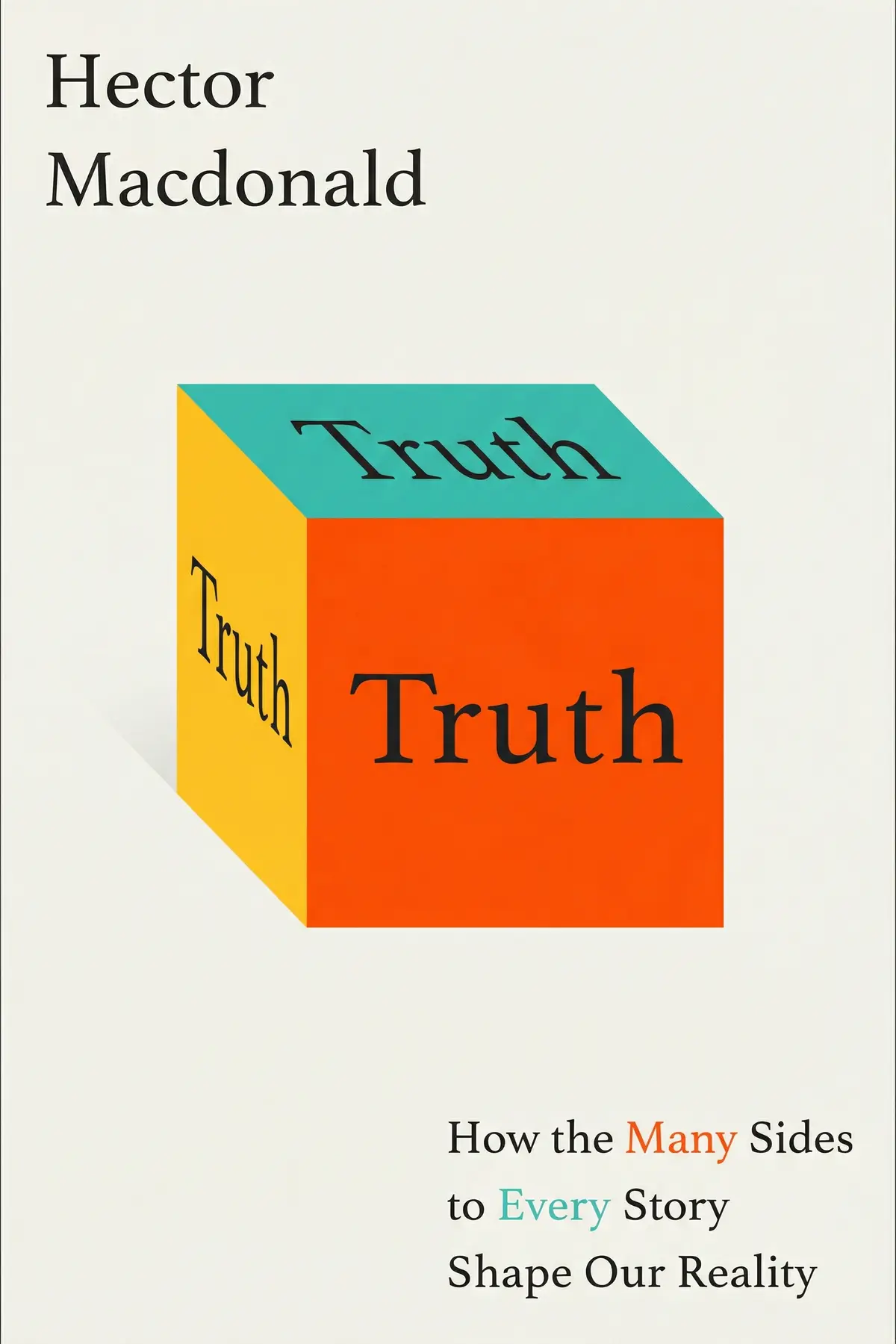
Table of Content
1. Introduction
1 min 41 sec
In our modern era, we are constantly bombarded with claims of absolute certainty. Whether we are scrolling through social media, listening to a political debate, or reading a corporate press release, everyone seems to have the “truth” on their side. But if everyone is telling the truth, why does it feel like we are living in such different realities? The answer lies in the fact that truth is rarely a single, solid object. Instead, it is more like a diamond with many facets. Depending on which side you look at, you see a completely different reflection.
Hector MacDonald’s exploration of this concept takes us deep into the world of “competing truths.” These are statements that are factually accurate but, when presented in isolation, tell a very specific and often one-sided story. We often assume that the opposite of a truth is a lie, but in many cases, the opposite of a truth is simply another truth. This realization is both empowering and a bit unsettling. It means that the way our world is built—our laws, our history books, and even our personal opinions—is often the result of someone choosing which facts to highlight and which to ignore.
Throughout this summary, we will examine how these competing truths function in our daily lives. We’ll see how they can be used as tools for inspiration, helping a doctor guide a patient or a CEO motivate a workforce. But we will also see their darker side, where they are weaponized to spread division or rewrite history to hide uncomfortable secrets. By the end of this journey, you’ll have a clearer understanding of the three main types of people who use these truths: those who want to help, those who are confused, and those who want to mislead you. In a world of “fake news” and overwhelming data, understanding the many sides of the truth is our strongest defense.
2. The Multiplicity of Reality
2 min 20 sec
Discover why the same person or company can be viewed as both a hero and a villain depending on which facts you choose to emphasize.
3. The Influence of Selective Narratives
2 min 11 sec
Explore how the first piece of information you receive sets the stage for all your future beliefs and actions.
4. Ethical and Unethical Uses of Choice
2 min 18 sec
Learn how the same technique of omitting facts can be used by a caring doctor or a manipulative politician.
5. The Three Types of Communicators
2 min 21 sec
Understand the difference between those who simplify for good, those who make mistakes, and those who aim to trick you.
6. The Revision of the Past
2 min 12 sec
See how corporations and governments edit history by leaving out the parts that don’t fit their preferred narrative.
7. The Fluidity of Moral Truth
2 min 06 sec
Understand how what is considered ‘right’ or ‘wrong’ changes across different cultures and eras.
8. The Illusion of Certainty in Numbers
2 min 03 sec
Learn why statistics and big numbers are often the most effective way to hide the truth in plain sight.
9. Constructive Truth in Leadership
2 min 07 sec
Discover how the right choice of words and history can turn a struggling company into a visionary leader.
10. Conclusion
1 min 46 sec
As we have seen, the truth is rarely a simple, one-sided affair. It is a complex landscape of competing facts, and the ones we choose to focus on define our understanding of ourselves and the world around us. We’ve explored how these truths can be used by advocates to help us, by misinformers who make honest mistakes, and by misleaders who try to manipulate our perceptions for their own benefit. Whether it is in the way we interpret history, the way we read statistics, or the way we judge the moral standards of others, we are always interacting with a selective version of reality.
The most important takeaway is that we have the power to be more than just passive consumers of information. We can choose to look deeper. The next time you encounter a story that seems too simple, or a statistic that seems designed to scare you, remember that there is likely another side—another truth—that is being left out. This doesn’t mean we should become cynical and believe nothing. Rather, it means we should become curious and seek out the missing pieces of the puzzle.
A powerful way to start this practice in your own life is to make a conscious effort to listen to the other side. When you find yourself in a heated disagreement, or when you read an opinion that makes you angry, try to step back and ask: what truths are they seeing that I am missing? What facts have shaped their worldview? You don’t have to agree with them, but by understanding the competing truths they are operating from, you can bridge the gap of misunderstanding. This simple act of intellectual empathy is the best way to combat division and ensure that the truths we live by are as close to the full, nuanced reality as possible. The truth is a tool—and like any tool, its value depends entirely on how we choose to use it.
About this book
What is this book about?
We usually think of truth as a simple binary: either something is a fact, or it is a lie. However, Hector MacDonald argues that reality is much more complex. In almost any situation, there are multiple, equally accurate ways to describe what is happening. These are "competing truths," and the ones we choose to highlight can change how people think, feel, and act. This book explores the mechanics of communication across politics, business, history, and daily life. It demonstrates how "partial truths" are used not just to deceive, but also to inspire, motivate, and simplify. By understanding how information is framed, we can become more critical consumers of news and more effective communicators ourselves. MacDonald provides a roadmap for navigating a world where statistics can be misleading, histories can be rewritten, and morality is often a matter of perspective. Ultimately, the book promises to equip us with the tools to look past selective narratives and grasp the nuanced reality of our modern world.
Book Information
About the Author
Hector Macdonald
Hector MacDonald is a strategic communications consultant who has advised some of the world’s top corporations in the areas of financial services, telecommunications, technology and healthcare. He has also written four novels, including the best-selling thriller The Mind Game.
Ratings & Reviews
Ratings at a glance
What people think
Listeners find the material both absorbing and thought-provoking, as one listener points out how the charming illustrations convey a potent message. They value the caliber of the content, with one listener observing that it assists in broadening the scrutiny of numerically based factoids.
Top reviews
Thitiwan
This book changed how I consume news almost overnight. MacDonald explains that "competing truths" aren't necessarily lies; they are just different angles of the same story. The writing is incredibly clear and effectively highlights how one specific fact can be used to lead you toward two completely different conclusions. I found the section on how context changes everything particularly profound. To be fair, some might find the examples simple, but they serve as charismatic illustrations that deliver a heavy message. We often think we’re being lied to by the media, but the reality is much more subtle and dangerous. It’s an essential guide for anyone who wants to navigate the modern media landscape without getting swept up in partisan divides. Highly recommended for those who want to widen their perspective on the world.
Show moreAkosua
After hearing about this in a podcast, I decided to give it a go, and I’m glad I did. This isn't just another book about "alternative facts." Instead, it acts as a lexicon for how language shapes our very mindset. MacDonald uses charismatic illustrations and stories—from art forgers to Humphrey the cat at Downing Street—to show how we are led by our beliefs. The truth is often a collection of individual meanings that we piece together. This book teaches you how to deconstruct those pieces. It’s profound, engaging, and genuinely helps you think more critically about the information you’re bombarded with. It’s a must-read for anyone interested in the intersection of psychology, communication, and modern society.
Show morePalm
Ever wonder why two people can look at the same data and see different things? MacDonald’s exploration of numerically based factoids is a real eye-opener. He shows how statistics can be technically "true" while being completely misleading in practice. I especially liked the bit about kidnapping rates in Sweden and Canada—it’s all about how you define the term. Personally, I think this book provides a much-needed toolkit for the digital age. It’s not just about debunking lies; it’s about understanding the "partial truths" that politicians and marketers throw at us every day. The tone is engaging, and the pacing is generally good, even if a few sections feel a bit repetitive. It's a solid four stars for the statistical clarity alone.
Show moreIce
The chapter on context, particularly the Guardian advert with the skinhead, is worth the price of admission alone. It perfectly illustrates MacDonald’s thesis: the angle you choose determines the reality you see. His writing style is sharp and accessible, making complex psychological insights feel like common sense. I found the analysis of "competing truths" to be a powerful message for our polarized times. In my experience, we spend too much time shouting about what’s "fake" instead of looking at the selective facts being used to manipulate our emotions. My only gripe is that it occasionally feels a bit shallow when touching on deeper historical or social constructs like Human Rights. Still, it’s a very solid and enlightening read.
Show moreJoseph
As someone who works in communications, I found the section on "reframing" to be incredibly practical. MacDonald understands that truth isn't just about facts; it's about the narrative you build around them. He provides an illuminating look at how morality, numbers, and history are used as tools to shape our reality. The book is well-written and delivers its information in an interesting, almost conversational manner. Gotta say, it really makes you question your own biases. We all like to think we see the "whole picture," but we’re usually just looking at the slice that makes us feel comfortable. It’s a great reminder to keep digging deeper into the contexts we’re presented with by those in power.
Show moreKiattisak
Truth is a slippery concept, and Hector MacDonald does a fantastic job of pinning down its various facets. I loved the examples involving statistics—like the "pirates causing global warming" graph—which highlight how easily we can be fooled by correlation. The writing is clear, and the charismatic illustrations throughout the book make the heavy concepts much easier to digest. While some of the political examples felt a bit lopsided, the general framework for analyzing "competing truths" is brilliant. It’s a helpful guide for widening your examination of the news and staying skeptical of catchy headlines. It definitely gave me a lot to think about during my daily commute and I've recommended it to several friends already.
Show moreYuwadee
Wow. This was a lot more engaging than your average non-fiction book about linguistics. MacDonald explores how historical omission and propaganda function not just through lies, but through the selective use of facts. The story about Dunkirk versus the "Century of Humiliation" in China was especially eye-opening. It shows how nations use different "truths" to build their identities. Truth is, I found the book's focus on how communicators mislead us with technical truths to be its strongest point. It’s not always what they say, but what they leave out. A few chapters dragged a little with irrelevant padding, but overall, it’s a very enlightening and important read for today's world. Worth the time.
Show moreJiraporn
Picked this up hoping for a deep dive into misinformation, but it felt a bit like a corporate training manual. MacDonald is clearly a consultant, and it shows in the way the book is structured. There’s a lot of irrelevant padding that could have been trimmed down to make it a punchier read. That being said, the core idea—that there is rarely one "True" truth—is food for thought. Look, the examples are interesting, but the author sometimes gets lost in the weeds of his own definitions. It’s a decent primer, but I’ve read more rigorous academic works on the subject that don’t feel so tailored for a business audience. It's okay, just not revolutionary or as groundbreaking as the marketing suggests.
Show moreSue
Finally got around to finishing this, and I’m torn. On one hand, MacDonald is a good writer and presents some fascinating case studies. On the other hand, he sometimes veers into what I’d call "squishy logic." By validating "competing truths," he risks making everything feel relative, which is a bit dangerous in an era of actual misinformation. Truth be told, he tries to distance himself from postmodernism, but the line is thin. There’s a lot of padding here, too. I felt like the same point was being made over and over with different anecdotes. If you can get past the corporate tone and the repetitive nature of the middle chapters, there’s some value here, but it wasn’t as incisive as I’d hoped.
Show moreSuthida
Not what I expected at all. While I appreciate the author's attempt to analyze the "multitude of truths," he fails to remain evenhanded throughout the text. Frankly, it’s distasteful how he ascribes noble intentions to progressive causes while labeling similar tactics by conservatives as nefarious. It’s the same old political bias dressed up as intellectual inquiry. If you’re going to write about the manipulation of truth, you should probably avoid being so transparently partisan yourself. The book starts by stating the obvious and then descends into a lecture that felt more like an opinion piece than a neutral study. I couldn’t get past the hypocrisy of the "well-intentioned" versus "evil" dichotomy. Disappointing.
Show moreReaders also enjoyed
AUDIO SUMMARY AVAILABLE
Listen to Truth in 15 minutes
Get the key ideas from Truth by Hector Macdonald, plus 5,000+ more titles in English and Thai.
- 5,000+ titles
- Listen as much as you want
- 7-day free trial
- Cancel anytime







