
18 min 13 sec
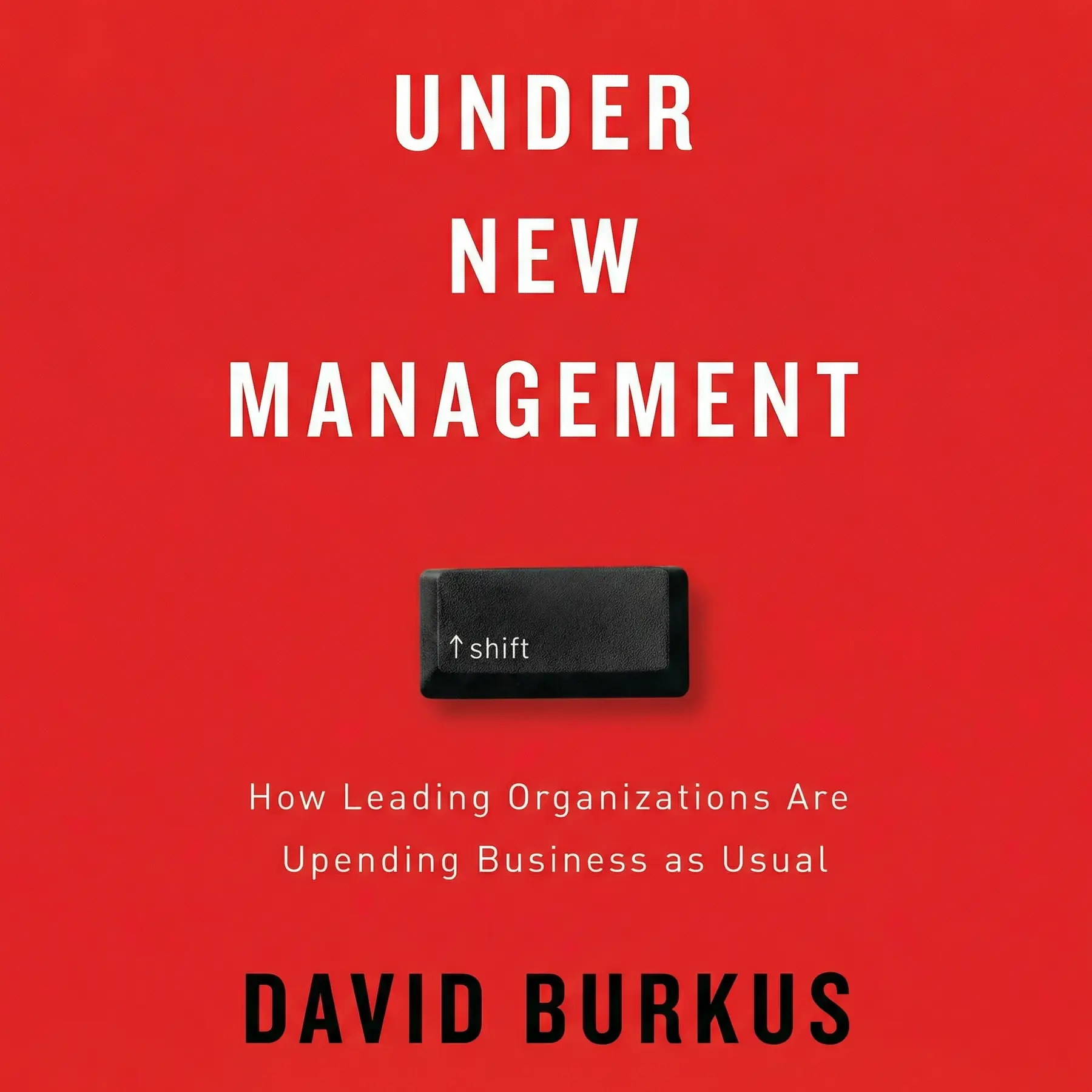
Under New Management: How Leading Organizations Are Upending Business as Usual
By David Burkus
David Burkus challenges traditional management myths, arguing that outdated industrial-age practices hinder modern knowledge work. This summary explores revolutionary strategies like ditching email, paying employees to quit, and prioritizing team members over customers.
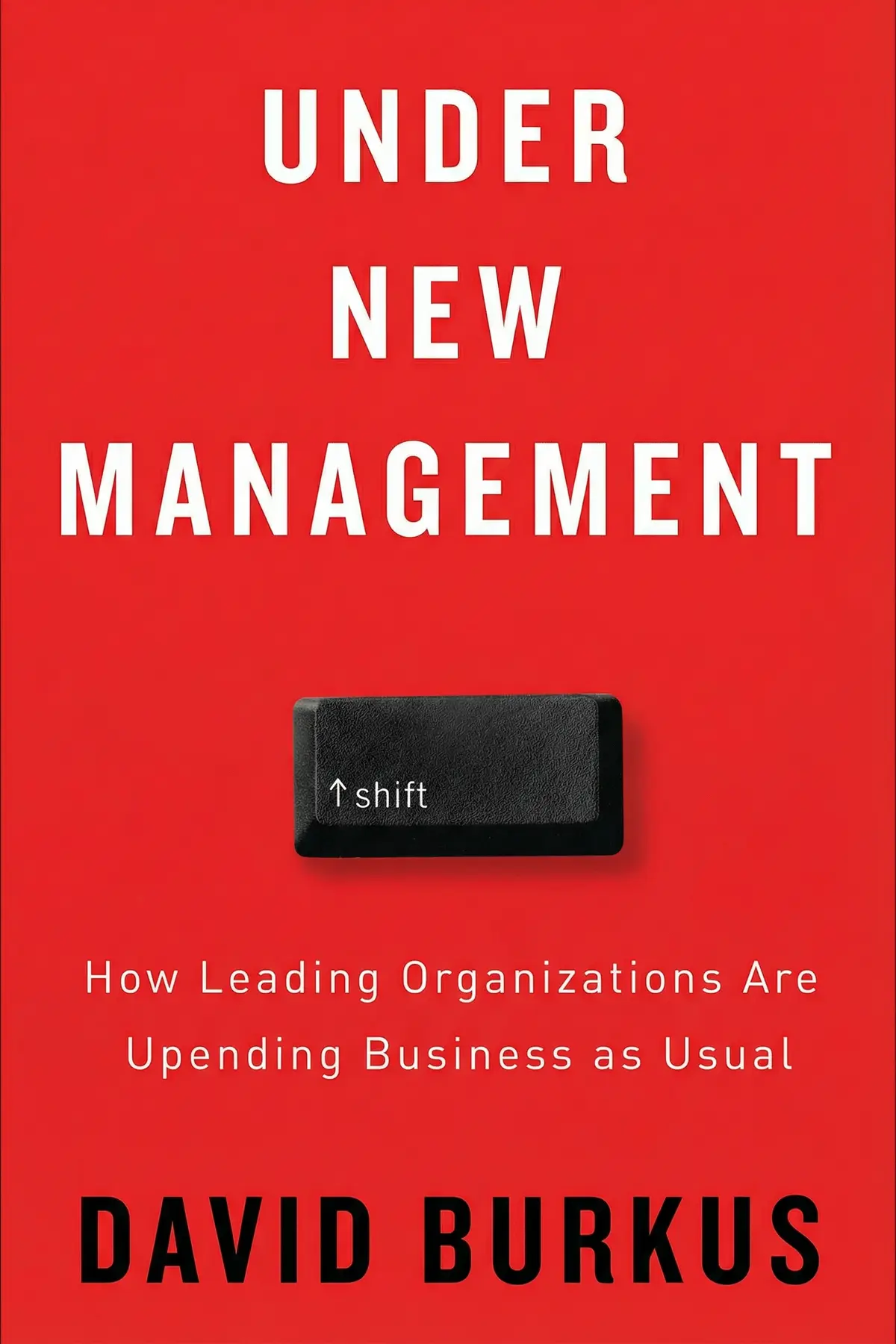
Table of Content
1. Introduction
1 min 55 sec
Think about the tools you use every day. If you tried to fix a modern, high-tech laptop with a primitive stone chisel, you would not only fail to repair the machine—you’d likely destroy it. The chisel was a masterpiece of its time, perfectly suited for the tasks of the Stone Age, but it is fundamentally incompatible with the digital age. This analogy serves as a perfect metaphor for the current state of business management. Most of the leadership strategies used in offices today were forged during the Industrial Revolution. They were designed for factories, where the goal was to standardize manual labor and ensure that every worker performed like a predictable cog in a giant machine.
But we don’t live in that world anymore. Over the past several decades, the very nature of what we call “work” has undergone a radical transformation. The tasks that can be easily planned and repeated are increasingly handled by software and robotics. What is left for humans is knowledge work—tasks that require creativity, empathy, complex problem-solving, and the manipulation of ideas rather than physical objects. Because knowledge work is unpredictable and deeply personal, it cannot be governed by the same rigid rules that once controlled a textile mill or an assembly line.
In this summary of David Burkus’s insights, we are going to explore why so many of our standard operating procedures are now obsolete. We will dive into a series of counterintuitive management strategies that are being adopted by the world’s most forward-thinking organizations. You will see why the traditional hierarchy is being dismantled in favor of self-organizing teams, why some companies actually benefit from their competitors’ success, and why the most effective way to keep your best people might be to offer them a pile of cash to leave. By the end of this journey, you’ll understand that the secret to thriving in the modern economy isn’t about working harder under the old rules—it’s about writing an entirely new playbook for how people work together.
2. Prioritizing the Workforce Over the Consumer
2 min 29 sec
Discover why the age-old mantra of the customer being king is actually flawed and how focusing on your team first creates a chain reaction of success.
3. Collaborative Hiring and the Logic of the Quit Bonus
2 min 31 sec
Hiring a superstar isn’t enough if they don’t fit the culture. Learn how letting the team choose their peers and paying the unmotivated to leave can save your company.
4. Dismantling Hierarchies for Knowledge-Based Work
2 min 13 sec
Strict job descriptions are relics of the past. Explore how self-organizing teams and project-based structures are replacing the traditional corporate ladder.
5. Optimizing the Physical and Digital Workspace
2 min 28 sec
Open offices aren’t the universal solution everyone thought they were. See how balancing workspace options and controlling digital noise can skyrocket focus.
6. The Power of Open Innovation and Networks
2 min 33 sec
Is keeping secrets hurting your business? Learn why collaborating with competitors and maintaining ties with former employees is the new secret to growth.
7. Transparency and Timely Feedback Systems
2 min 24 sec
Standard performance reviews are dying. See how radical honesty about pay and real-time feedback loops can transform a competitive culture into a collaborative one.
8. Conclusion
1 min 40 sec
The world of work has moved on from the factory floor, and it is time for our management practices to catch up. Throughout this exploration of David Burkus’s work, we have seen a consistent theme: the shift from control to empowerment. The old methods were built on the idea that workers needed to be watched, managed, and motivated by external rewards or the fear of punishment. But in a world where our greatest value comes from our ideas and our ability to collaborate, those old methods have become toxic.
As we’ve discussed, the most successful modern organizations are those that treat their employees as their most important stakeholders. They build environments based on trust rather than surveillance. They replace rigid hierarchies with flexible, project-based teams. They choose transparency over secrecy, and they value the health of the entire industry ecosystem over the short-term hoarding of information. Whether it’s paying people to quit, ditching the annual performance review, or opening up the company’s salary data, these strategies all point toward a more human-centric way of doing business.
If you want to apply these ideas today, start by looking at your own organizational structure. Is it a permanent, unchangeable chart, or is it a living document? Think of your company as a collection of talents that can be rearranged to meet the challenges of the moment. Don’t be afraid to experiment with giving your team more autonomy. You might find that when you stop trying to manage every detail, your employees will surprise you with their creativity, their dedication, and their results. The Stone Age of management is over; it’s time to pick up the tools of the modern era and build something extraordinary.
About this book
What is this book about?
Under New Management is a provocative look at how the world’s most innovative companies are throwing out the traditional management rulebook. Author David Burkus argues that many of the so-called tried and true methods of the twentieth century—such as annual performance reviews, rigid hierarchies, and strict email protocols—are actually sabotaging productivity in the modern era. The book promises to reveal how shifting your focus from control to empowerment can unlock hidden potential within any organization. By examining case studies from companies like Netflix, Amazon, and Whole Foods, the text demonstrates that many of our foundational business assumptions are not only wrong but counterproductive. Listeners will learn how to foster a culture of trust, why transparency is a competitive advantage, and how to build a workplace that thrives on flexibility rather than conformity. This exploration provides a roadmap for leaders who want to move past the command-and-control style of the past and embrace a more human-centric, effective way of doing business.
Book Information
About the Author
David Burkus
David Burkus is a professor of management and an author specializing in leadership, creativity, and innovation. He is a contributor to Forbes and is famous for his podcasts, speeches, and workshops. Under New Management is his second book.
Ratings & Reviews
Ratings at a glance
What people think
Listeners find the material thoroughly researched and simple to grasp, with one review noting it presents numerous concepts for business leaders to reflect on. They enjoy the author's way of writing and consider it an excellent book, while one listener mentions it's particularly worthwhile for those in knowledge-based sectors. The work earns praise for its leadership perspectives; one listener highlights its method for managing organizations, and another points to its focus on staff engagement and health. Listeners hold differing opinions regarding the book’s commercial value.
Top reviews
Supaporn
As a leader in a fast-paced tech firm, I found Burkus’s insights into modern organizational structures to be absolutely transformative. The chapter on 'Hiring as a Team' completely shifted our perspective on recruitment, moving the power away from a single gatekeeper to the people who actually do the work. The book is well-researched and avoids the typical fluff found in leadership manuals. I loved the focus on employee engagement and the radical idea of putting customers second to ensure your staff is actually happy enough to provide great service. Every chapter starts with a compelling real-world example, then backs it up with data. It’s an essential roadmap for moving your company into the 21st century. Highly recommended for anyone tired of the same old HR platitudes.
Show moreSook
Finally got around to reading this, and it’s easily one of the most well-researched management books I’ve encountered recently. Burkus doesn't just give you 'hacks'; he explains the 'why' through the lens of the scientific study of the brain. The way he explores trust and neuroeconomics in relation to vacation policies was fascinating. It’s not just about being 'nice' to employees; it’s about understanding how humans actually make decisions and perform at their peak. I've already started implementing the 'Write the Org Chart in Pencil' philosophy in my department to encourage more fluid collaboration. The writing style is engaging and the structure makes it easy to jump to the chapters that are most relevant to your specific challenges. This is a must-have for any modern leader's bookshelf.
Show moreYaowares
Honestly, if you are looking to revitalize a stagnant company culture, start right here. David Burkus has written a manifesto for the modern workplace that is both articulate and clear-headed. He reminds us that employees are the most important stakeholders and that nurturing them is the only real path to sustainable success. I loved the specific examples of companies like Zappos and SumAll. The book is a call to revolution for those who envision a more effective and humane workplace. It’s not just about business value; it’s about doing the right thing for the people who make your business possible. The prose is excellent and the research is solid. I’ll be buying copies for my entire executive team this week. See you on the barricades!
Show moreYongyut
Ever wonder why we still treat office workers like factory hands from the 1920s? David Burkus tackles this head-on by dismantling the ghost of Frederick Taylor and his 'scientific management' that still haunts our cubicles. The book is remarkably easy to digest, moving quickly through thirteen radical shifts like 'Pay People to Quit' and 'Write the Org Chart in Pencil.' I particularly appreciated how he balanced corporate anecdotes from giants like Netflix with actual social science research. While some ideas feel more like common sense than 'new' management, the section on ditching performance appraisals is gold. It’s a refreshing take for anyone in a knowledge-based industry who feels stifled by legacy processes. The writing is punchy and persuasive. It definitely makes you question the status quo of the 9-to-5 grind.
Show moreCooper
Picked this up on a whim, and the chapter on salary transparency really hit home. David Burkus has a gift for making complex organizational psychology feel accessible to the average reader. He argues that the tools of 'Taylorism' simply don't function in a world where creativity and collaboration are the primary drivers of value. I found the discussion on banning noncompete agreements especially timely and well-argued. My only minor gripe is that the book leans a bit too heavily on 'best-case scenario' anecdotes. I would have loved to see more post-mortem analysis of companies that tried these ideas and reverted to old ways. Still, it’s a great read that prioritizes employee welfare and satisfaction over outdated metrics. It's definitely worth your time if you want to humanize your workplace.
Show moreNaomi
The chapter on closing open offices should be mandatory reading for every architect and CEO in the country! Burkus nails the frustration of the modern knowledge worker. He manages to turn long-standing business 'best practices' on their head with surprising ease. I especially liked the concept of 'Celebrating Departures.' Why do we treat people like traitors when they move on to new opportunities? It makes so much more sense to build a bridge rather than burn it. The book is a quick read, but the ideas stick with you long after you close the cover. It’s a visionary look at a more humane and effective way to work. If you're tired of the 'scientific management' approach that treats people like cogs, this is for you.
Show moreWachira
I've been in management for fifteen years, and Burkus effectively articulated why my gut feeling about annual reviews was right all along. They are often a waste of time that produces more anxiety than actual improvement. This book provides the ammunition needed to push for real change in the corporate world. From 'Lose the Standard Vacation Policy' to 'Make Salaries Transparent,' the author makes a compelling case for a total overhaul of the HR manual. To be fair, some of the implementation details are a bit thin, and your mileage will definitely vary depending on your industry. However, the core message—that we need to move past the industrial era—is spot on. It’s an easy, five-star analysis wrapped in a four-star practical guide.
Show moreJack
This book presents some intriguing concepts, but I struggled with how many of these 'radical' ideas are actually just standard practice in 2024. If you’ve been keeping up with business trends over the last decade, hearing about Zappos' quitting bonus or Netflix's unlimited vacation won't feel like a revelation. The truth is, the book is a great primer for traditional managers who are stuck in the industrial age. However, for those of us already working in agile environments, it’s mostly a confirmation of things we already know. I did enjoy the section on 'Closing Open Offices,' as it’s a necessary pushback against a trend that killed productivity. It's a solid, quick read, but don't expect a total paradigm shift if you're already well-read in this genre.
Show moreMalee
Look, the case studies involving companies like Netflix and Virgin are great, but the author doesn't spend enough time on the instances where these policies backfired. For example, he discusses transparent salaries, but I kept thinking about the mixed results other companies have had with that specific policy. Remember when Reddit tried a no-negotiation policy? It was panned by the media and led to significant friction. Burkus emphasizes flexibility, which I appreciate, but the book can feel a bit one-sided. In my experience, 'Fire the Managers' sounds great on paper but often leads to a chaotic lack of accountability in practice. It’s an interesting collection of ideas that should be taken with a grain of salt. Good for brainstorming, but proceed with caution before implementation.
Show moreSau
Frankly, this felt like a collection of high-concept blog posts that ignore the harsh realities of global competition. While the prose is smooth, many of these 'radical' ideas seem tailored exclusively for well-funded Silicon Valley startups or companies operating in comfortable monopolies. Burkus suggests we 'Outlaw Email' or 'Take Sabbaticals,' but how does that scale in a low-margin manufacturing environment? If we all start drinking lemonade on a beach, a factory in a developing nation will simply outproduce us at half the cost. To be fair, the research into neuroeconomics was interesting, but the book often feels like it's recommending the exact opposite of current trends just to be contrarian. It’s an unstable 'antimatter' approach to business. Not enough attention is paid to where these experiments failed miserably.
Show moreReaders also enjoyed
7 Powers: The Foundations of Business Strategy
Hamilton Helmer
A Bigger Prize: How We Can Do Better Than the Competition
Margaret Heffernan

A Year with Peter Drucker: 52 Weeks of Coaching for Leadership Effectiveness
Joseph A. Maciariello
AUDIO SUMMARY AVAILABLE
Listen to Under New Management in 15 minutes
Get the key ideas from Under New Management by David Burkus, plus 5,000+ more titles in English and Thai.
- 5,000+ titles
- Listen as much as you want
- 7-day free trial
- Cancel anytime







