
14 min 46 sec
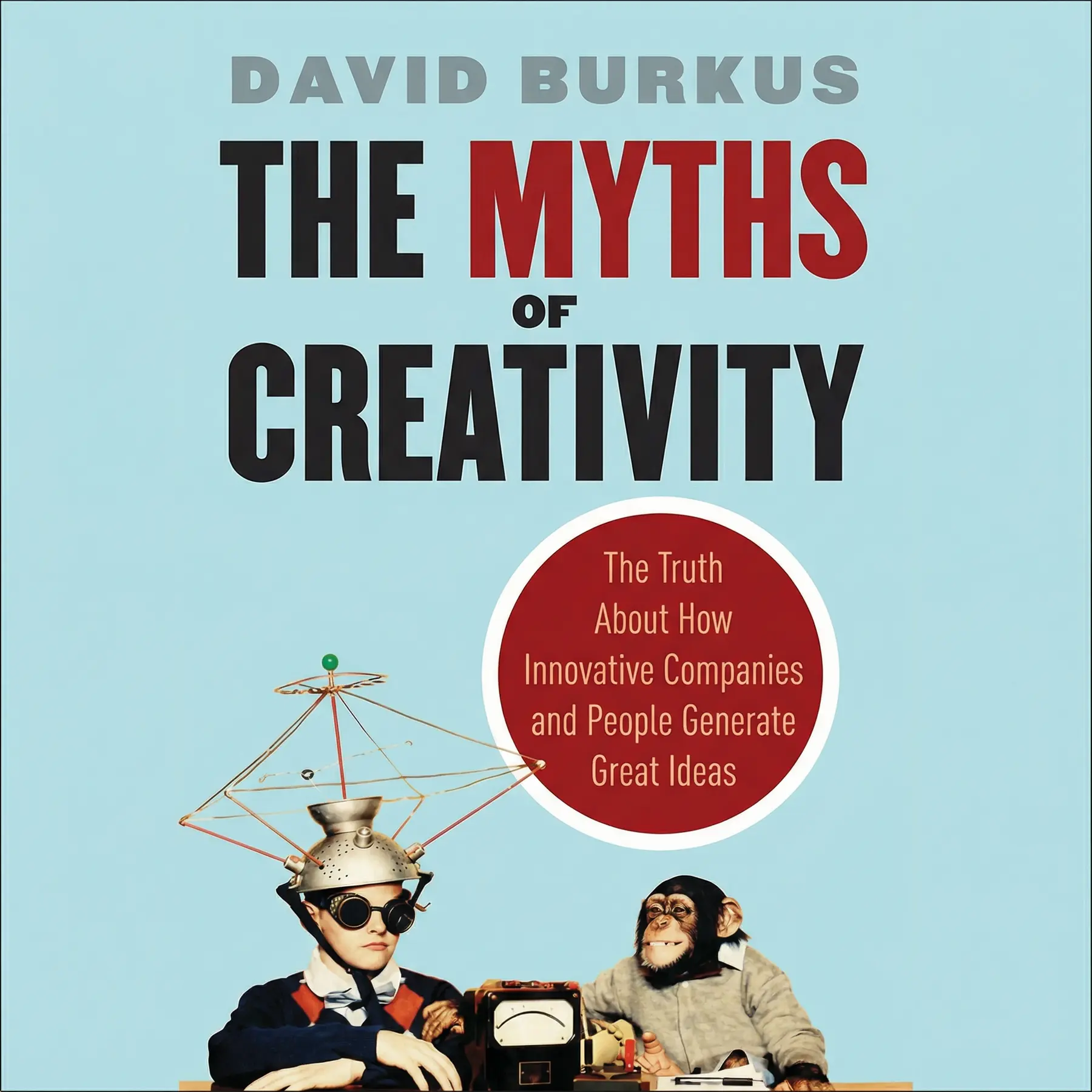
The Myths of Creativity: The Truth About How Innovative Companies and People Generate Great Ideas
By David Burkus
A deep dive into the psychological and organizational barriers to innovation, revealing that creativity is a skill developed through collaboration, persistence, and structure rather than a mysterious, innate gift for a select few.
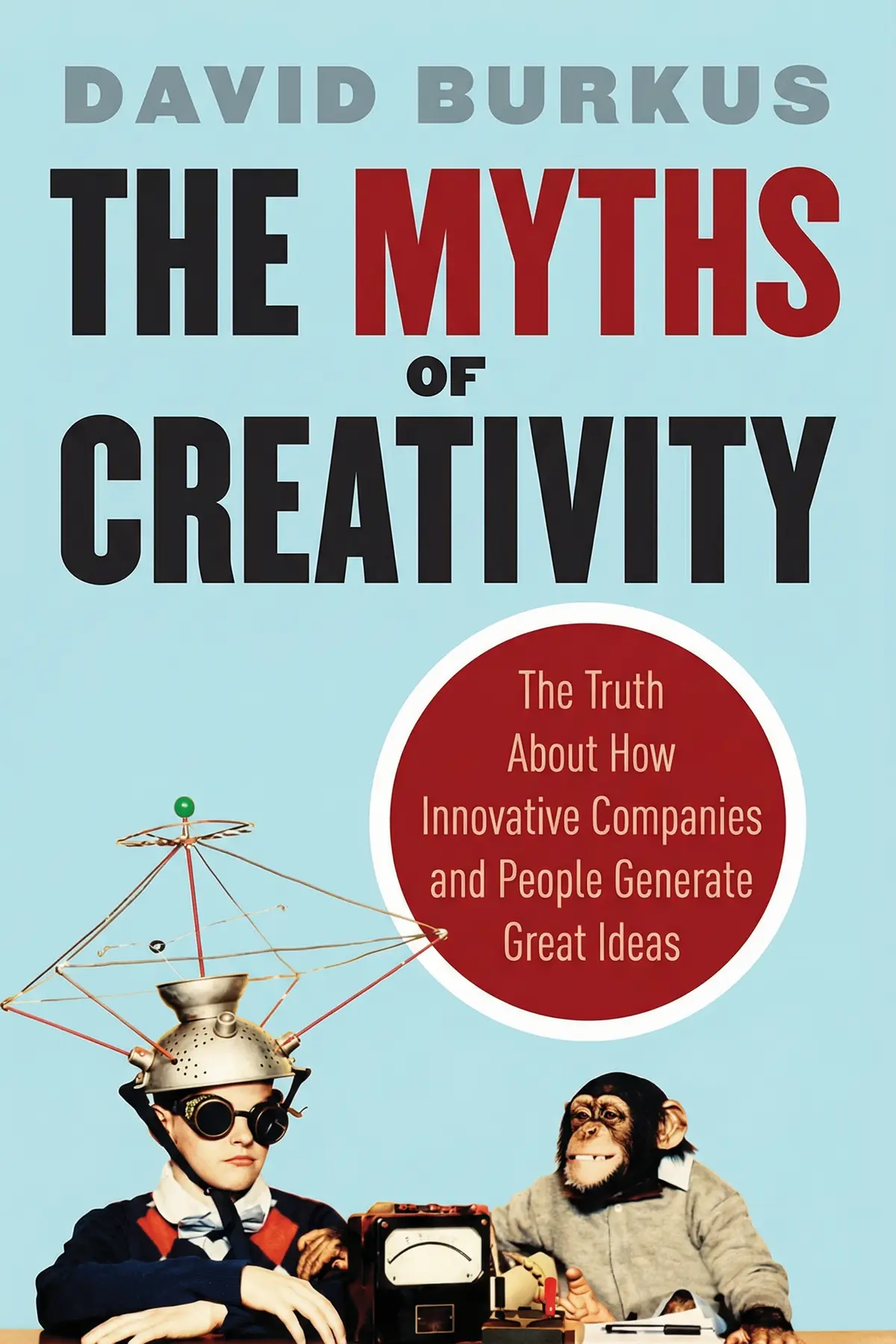
Table of Content
1. Introduction
1 min 36 sec
Have you ever looked at a groundbreaking invention or a stunning piece of art and thought to yourself, ‘I could never do that; I’m just not the creative type’? If so, you are certainly not alone, but you are also falling victim to one of the most pervasive misunderstandings of the modern era. We tend to view creativity as a mystical spark—a rare gift bestowed upon a lucky few while the rest of us are left to handle the ‘practical’ side of life. This divide between the so-called ‘creatives’ and the ‘suits’ is a barrier that keeps thousands of great ideas from ever seeing the light of day.
In the following journey, we are going to tear down those walls. We will explore why our standard definitions of innovation are often rooted more in fiction than in fact. We’ll look at why the legendary stories of sudden inspiration—like an apple falling on a scientist’s head—are usually oversimplified myths that ignore the years of hard work behind them.
Throughline: The true path to innovation isn’t found in waiting for a lightning bolt of genius; it is built through a deliberate process of preparation, collaboration, and the courage to challenge established boundaries. By the end of this summary, you’ll see that creativity isn’t a genetic trait or a divine favor. It’s a muscle that anyone can strengthen, and a process that any organization can master. Whether you are leading a team at a global corporation or just looking to solve a nagging problem in your personal life, understanding the truth about how ideas are actually born will change the way you approach every challenge you face. Let’s begin by re-examining the very moment an idea is born.
2. The Fallacy of Sudden Epiphany
2 min 06 sec
We often imagine geniuses like Newton receiving sudden flashes of insight from the heavens. Discover why these legendary ‘eureka’ moments are largely fictional and why the real creative process takes much more patience.
3. The Biological Reality of Creativity
2 min 01 sec
Is creativity written in our DNA? Scientific studies on twins and brain structures suggest that the ‘creative type’ is a choice and a habit, not a genetic destiny.
4. Democratizing the Innovation Process
1 min 42 sec
Traditional corporate hierarchies often stifle the very creativity they claim to want. Learn how a flatter, more inclusive structure can turn every employee into a source of breakthrough ideas.
5. Strategic Distraction and the Power of Procrastination
1 min 55 sec
Could doing something unrelated to your work actually be the best way to finish it? Explore how ‘mind-wandering’ acts as a catalyst for creative breakthroughs.
6. The Myth of the Lone Genius
1 min 54 sec
From Thomas Edison to Steve Jobs, the world’s most famous inventors didn’t work alone. See how collaboration and social networks are the true engines of progress.
7. Why Boundaries Foster Brilliance
1 min 54 sec
Contrary to the idea that creativity requires total freedom, ‘The Myth of Unlimited Resources’ shows that constraints are often what drive us to our most imaginative solutions.
8. Conclusion
1 min 38 sec
As we wrap up our exploration of the landscape of innovation, the most important takeaway is this: creativity is not a mystery to be solved; it is a discipline to be practiced. We have seen that the stories of sudden ‘eureka’ moments are largely myths and that real breakthroughs come from the slow, steady process of preparation and incubation. We’ve learned that there is no ‘creative elite’—that biology and genetics don’t bar anyone from being an innovator. Instead, it is our environment, our social networks, and our willingness to embrace constraints that truly determine our creative output.
If you want to bring more innovation into your life, start by breaking down the imaginary walls between ‘creatives’ and ‘non-creatives.’ Recognize that every person in your circle is a potential collaborator who can offer a fresh perspective. Don’t be afraid of distractions; use them strategically to give your subconscious mind the time it needs to work. And perhaps most importantly, stop waiting for the ‘perfect’ conditions to start. The constraints you face today are not obstacles—they are the catalysts that will drive you to think more deeply and more effectively than you ever have before.
The throughline of our journey has been that creativity is accessible, democratic, and fundamentally human. By discarding the myths that have held you back, you are now free to approach every challenge with the mindset of a true innovator. You don’t need a lightning bolt of inspiration. You already have all the tools you need to start building your next great idea right now.
About this book
What is this book about?
The Myths of Creativity challenges the widely held belief that innovation is the result of sudden, magical epiphanies or genetic luck. David Burkus argues that our romanticized view of the 'lone genius' and the 'aha' moment actually hinders our ability to generate new ideas. By examining scientific research and historical examples, the book systematically dismantles ten common misconceptions that prevent individuals and companies from reaching their full potential. Readers will discover that creativity is a democratic resource available to everyone, provided they understand the real processes behind it. The book explores how social networks, environmental constraints, and even strategic procrastination can be harnessed to fuel innovation. Ultimately, the promise of this work is to move the reader away from waiting for inspiration and toward a practical, sustainable method for creative thinking and problem-solving in any professional field.
Book Information
About the Author
David Burkus
David Burkus is an associate professor of management at the College of Business at Oral Roberts University in Tulsa, Oklahoma. He is a recognized expert in the fields of innovation, creativity, entrepreneurship, and organizational behavior. His insights have been featured in major publications such as Fast Company and Bloomberg Businessweek. Additionally, he has shared his expertise through keynote presentations for world-leading organizations, including Microsoft and Stryker.
Ratings & Reviews
Ratings at a glance
What people think
Listeners find the book accessible and skillfully authored, offering insightful material that balances intellectual depth with practical wisdom. They also value its clear presentation; specifically, one listener remarked on how effectively it reinforces theories through excellent examples. Furthermore, the work is praised for being highly credible, as one listener pointed out its exceptional performance in detailing ten myths, while another noted how it integrates storytelling to demonstrate various concepts.
Top reviews
Varinee
The chapter on the 'Eureka' myth changed my whole perspective on how I approach my daily work routine. Burkus explains the incubation phase in a way that makes so much sense—sometimes the best thing you can do for a project is to actually stop thinking about it for a while. For years, I felt guilty taking breaks, but this research proves that our brains need that downtime to make connections. The book is remarkably well-written, weaving complex psychological theories into stories that stick with you. I found the Expert Myth particularly eye-opening; it’s a vital reminder that being too entrenched in a field can actually blind you to radical new ideas. Truth is, this is one of those rare books that is both intellectually stimulating and genuinely fun to read. It’s not just for 'creatives' in the traditional sense. It’s for anyone who wants to solve problems more effectively.
Show moreTitiluck
As someone who has always felt 'uncreative' because I'm not an artist, this book was a breath of fresh air. Burkus systematically tears down the idea that creativity belongs only to those with 'flowery shirts and neon glasses.' He shows that it’s a process, not a personality trait. I loved the section on the 'Cohesive Myth'—the idea that conflict is actually necessary for innovation was a total lightbulb moment for me. We spend so much time trying to keep the peace in meetings that we end up killing the best ideas. The book is incredibly enlightening and manages to pair hard intellect with simple common sense. It’s an easy read that doesn't talk down to you. I’ve already started applying the incubation techniques at my job, and the results are actually visible. This is definitely a must-read for anyone trapped in a corporate environment that feels stagnant.
Show moreChanikarn
Rarely do you find a business book that balances rigorous research with such readable prose. Burkus has an outstanding way of describing the ten myths, making them feel relevant to both your personal life and your professional career. Personally, I found the chapter on the 'Originality Myth' to be the most profound. Realizing that innovation is often just the evolution of existing ideas takes a lot of the pressure off. You don't have to invent fire; you just have to find a better way to use it. The book is motivating without being cheesy. It’s full of great examples that feel fresh compared to the usual stories you hear in these kinds of books. Every chapter is a self-contained lesson that challenges your assumptions. It’s a brilliant piece of work that I’ll be recommending to my entire team.
Show moreRotjanee
Finally got around to reading Burkus’s take on innovation, and frankly, it’s a relief to see someone dismantle the 'creative genius' trope so effectively. The book is structured around ten specific fallacies, making it incredibly easy to digest during a commute or a quick lunch break. I particularly enjoyed the section on the Brainstorming Myth; we’ve all been in those endless meetings that go nowhere, and Burkus explains exactly why they fail. To be fair, some of the advice feels like common sense if you’ve been in the industry for a while, but having the scientific backing to support those hunches is invaluable. The writing style is approachable without being overly simplistic. It pairs intellectual depth with a very practical, boots-on-the-ground sensibility that most business books lack. While I wish there were more diverse examples beyond the usual tech and arts suspects, the core message remains strong. It’s a solid, enlightening read for any manager.
Show moreTee
Burkus does a fantastic job of blending academic research with engaging anecdotes that keep the pages turning. In my experience, most business books are either too dry or too fluffy, but this one hits the sweet spot. It tackles the Originality Myth with precision, reminding us that every 'new' idea is really just a combination of existing thoughts. This was a huge weight off my shoulders as a designer! The book is organized so neatly that you can jump between chapters based on what you’re struggling with at the moment. However, I did find that a few of the examples felt a bit recycled from other popular psychology books. If you’ve read a lot of Gladwell or Grant, some of this might feel like familiar territory. Even so, the specific focus on creativity makes it a worthwhile addition to your shelf. It’s a credible, well-reasoned defense of the idea that anyone can be creative if they follow the right process.
Show morePaisley
If you’ve ever felt stuck in a boring corporate brainstorming session, you need this book. Burkus explains the science of why traditional brainstorming usually fails and, more importantly, what actually works. The book is credible and builds its case on a mountain of research, yet it never feels like a textbook. It’s quite an interesting read that clears up the fog around one of the biggest buzzwords of our decade. I especially liked the 'Expert Myth'—it’s a cautionary tale for anyone who thinks they’ve mastered their craft. My only real gripe is that the author focuses a bit too much on what not to do rather than providing a step-by-step guide for what to do. Still, the workbook available on his website is a great companion and helps bridge that gap. It’s a motivating read that will definitely change how you view your own potential.
Show moreWatcharaporn
Ever wonder why we idolize the 'lone genius' trope when most great things are built by groups? Burkus dives deep into this in 'The Myths of Creativity,' and the results are fascinating. The book is a fast read, but it’s packed with insights that stick with you long after you close the cover. I found the section on the 'Incentive Myth' particularly relevant—it’s a wake-up call for managers who think throwing money at a problem will lead to better ideas. The truth is, intrinsic motivation and a sense of play are far more powerful. While I agree with other reviewers that some of the arguments feel a bit situational, the overall framework is incredibly useful. It provides a much-needed reality check in an age where 'innovation' is often treated like magic. This is a solid, well-written guide for anyone looking to foster a more creative environment.
Show moreMilk
While I appreciated the overall message, I felt that some of the arguments in the middle chapters were a bit thin on evidence. Specifically, Chapter 7 attempts to debunk the 'Lone Creator' myth by suggesting that creativity is primarily a team sport, but the examples didn't always hold water. The author uses Broadway plays to illustrate team success, which is fine, but it ignores the very real existence of novelists or solo painters who work in isolation. Is a fiction book written by a team? Not usually. Look, the writing is undeniably good and the flow of the book makes it a quick read, but the 'myths' sometimes felt like they were being debunked just for the sake of the 'everything you know is wrong' format. Not gonna lie, I expected a bit more nuance regarding the balance between individual deep work and group collaboration. It’s a decent starting point, but don't take every chapter as gospel truth.
Show moreSomchai
There is a lot of good stuff here, but I felt like some of the chapters dragged toward the end. The premise is solid: we have all these misconceptions about how ideas are born, and Burkus wants to set the record straight. The storytelling is great, and he weaves the different theories together with a lot of skill. But to be fair, a lot of the 'myths' overlap so much that it felt repetitive by the time I hit chapter nine. I appreciated the discussion on the 'Play' aspect of creativity—the idea that work and play should be indistinguishable is beautiful—but I wanted more concrete advice on how to implement that in a high-stress environment. It’s a well-written book that serves as a good reminder of what not to do. I just think it could have been about fifty pages shorter without losing any of the core impact.
Show moreMalee
I found this to be yet another entry in the 'everything you know is wrong' genre that prioritizes style over substance. Don’t get me wrong, the writing is smooth and Burkus is clearly a talented communicator, but the debunking felt very situational. For every example he provides to prove a myth wrong, you could easily find two more that prove the 'myth' is actually a valid way of working. The tone is a bit too 'pop-science' for my taste, often glossing over the complexities of human cognition to reach a snappy conclusion. Frankly, I didn’t walk away with many actionable steps that I haven't already seen in a dozen blog posts. It’s an easy read, sure, but it lacks the grit and deep-dive analysis I was hoping for. If you’re looking for light entertainment that makes you feel smart, this might work for you. If you want a rigorous manual for organizational change, you might want to look elsewhere.
Show moreReaders also enjoyed

AUDIO SUMMARY AVAILABLE
Listen to The Myths of Creativity in 15 minutes
Get the key ideas from The Myths of Creativity by David Burkus, plus 5,000+ more titles in English and Thai.
- 5,000+ titles
- Listen as much as you want
- 7-day free trial
- Cancel anytime







