
16 min 48 sec
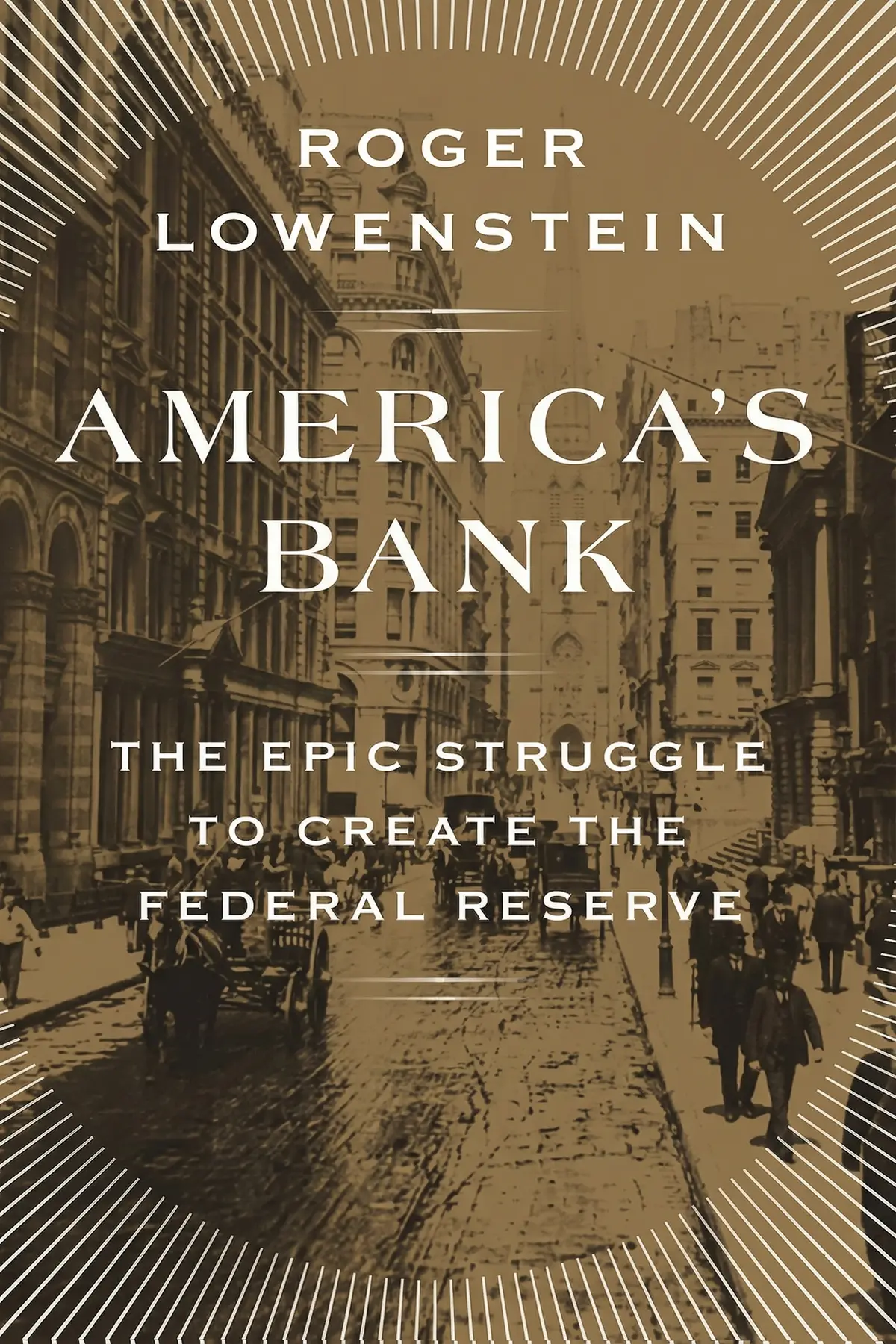
When Genius Failed: The Rise and Fall of Long-Term Capital Management
When Genius Failed documents the spectacular rise and catastrophic collapse of Long-Term Capital Management, a hedge fund that once dominated Wall Street through mathematical precision before nearly toppling the global economy.
Table of Content
1. Introduction
1 min 42 sec
Imagine a group of the smartest people in the world. They aren’t just experts; they are the architects of modern finance, including Nobel laureates and legendary traders. They believed they had found a way to solve the puzzle of the market, turning investing into a precise, predictable science. This is the story of Long-Term Capital Management, often abbreviated as LTCM. In the mid-1990s, this hedge fund was the envy of Wall Street, seemingly possessing a magic formula for generating massive profits with almost no risk. They were the smartest guys in the room, and for a while, the world believed them.
But this isn’t just a story about numbers and spreadsheets. It is a timeless human drama about the dangers of overconfidence. Like the mythological figure who flew too close to the sun on wings of wax, the leaders of LTCM built a financial empire on the belief that their intellectual superiority made them immune to the chaos of the real world. They used mathematical models to navigate the treacherous waters of global finance, assuming that because they could measure risk, they could control it.
What follows is an exploration of how that certainty led to a catastrophic blind spot. We will look at how LTCM rose to a position of staggering influence, how they used borrowed money to amplify their bets, and what happened when the world stopped behaving according to their equations. This summary will take you through the heady days of their success and the frantic, terrifying weeks of their collapse, which nearly took the entire global financial system down with them. It’s a journey that reveals why, in the world of money, pure logic is often no match for human emotion and unpredictable events. Let’s dive into the mechanics of their strategy and the seeds of their eventual undoing.
2. The Arbitrage Foundation of LTCM
1 min 54 sec
Discover how a group of elite traders used mathematical precision to exploit tiny price gaps in the market, building the world’s most formidable hedge fund.
3. The Double-Edged Sword of Leverage
2 min 02 sec
Explore the dangerous math of borrowing, where LTCM turned small price fluctuations into massive profits—and even bigger risks.
4. The Illusion of Certainty Through Academic Prestige
1 min 49 sec
Learn how the involvement of Nobel Prize-winning economists convinced the financial world that risk could be completely calculated and controlled.
5. When Reality Collides with Rational Models
1 min 47 sec
See what happens when a global financial crisis proves that human behavior is far more unpredictable than any computer program.
6. The Impossible Disaster of 1998
2 min 06 sec
Witness the moment a ‘one-in-a-septillion’ event actually happened, bringing the world’s most sophisticated fund to its knees.
7. The Threat of a Systemic Meltdown
1 min 48 sec
Understand why the failure of a single hedge fund was enough to terrify the world’s most powerful central bankers.
8. The Bittersweet Aftermath and Lasting Lessons
1 min 57 sec
Look at the final balance sheet of LTCM and the surprising fate of the men who nearly broke the world economy.
9. Conclusion
1 min 43 sec
As we step back from the wreckage of Long-Term Capital Management, the throughline of this story becomes clear: intelligence is not a substitute for humility. The rise and fall of LTCM wasn’t caused by a lack of brainpower; if anything, it was caused by too much of it, or rather, an over-reliance on it. The firm’s leaders were so brilliant that they convinced themselves—and the rest of the financial world—that they had mastered the art of the ‘sure thing.’ They treated the market like a laboratory experiment, forgetting that real-world laboratories are subject to earthquakes, power outages, and human error.
The legacy of this event continues to shape how we think about risk and regulation today. It exposed the hidden connections in our global economy and showed how a problem in one corner of the world can quickly become a crisis for everyone. It also taught us that ‘liquidity’—the ability to buy and sell easily—is the lifeblood of the markets. When that blood stops flowing, even the most sophisticated strategies crumble.
If there is one actionable takeaway from this narrative, it is to remain skeptical of any investment strategy that claims to have completely solved for risk, especially when that strategy involves high levels of borrowing. The world is inherently unpredictable, and the most successful investors are often those who acknowledge their own limitations. As you navigate your own financial journey, remember the experts at LTCM. They had the best models, the highest credentials, and the most powerful computers, yet they were ultimately undone by the one thing they couldn’t put into an equation: the unpredictable, irrational, and often messy behavior of human beings. True wisdom in the market isn’t about knowing everything; it’s about knowing that you can’t know everything.
About this book
What is this book about?
When Genius Failed provides a detailed examination of one of the most significant financial collapses in modern history. The book tells the story of Long-Term Capital Management (LTCM), a hedge fund founded by legendary bond trader John Meriwether and staffed by Nobel Prize-winning economists. By utilizing complex mathematical models and massive amounts of borrowed money, the fund initially achieved unprecedented returns, leading its leaders to believe they had effectively eliminated risk. However, the narrative shifts as the limits of these models are exposed by real-world volatility. The promise of the book is a cautionary tale about the dangers of intellectual arrogance and the inherent unpredictability of human markets. It explores how the firm’s strategy of arbitrage—profiting from tiny price discrepancies—became a trap when global crises in Asia and Russia triggered a panic that the models could not foresee. The book concludes with the dramatic intervention by the Federal Reserve to prevent a systemic meltdown, offering a sobering look at the fragility of the financial system.
Book Information
About the Author
Roger Lowenstein
Roger Lowenstein is a highly regarded American financial journalist who has spent much of his career contributing to the Wall Street Journal. Beyond his extensive work in articles and book reviews, he has established himself as a prominent author of non-fiction. His bibliography includes five best-selling titles that explore the complexities of finance and the economy, such as The End of Wall Street and While America Aged.
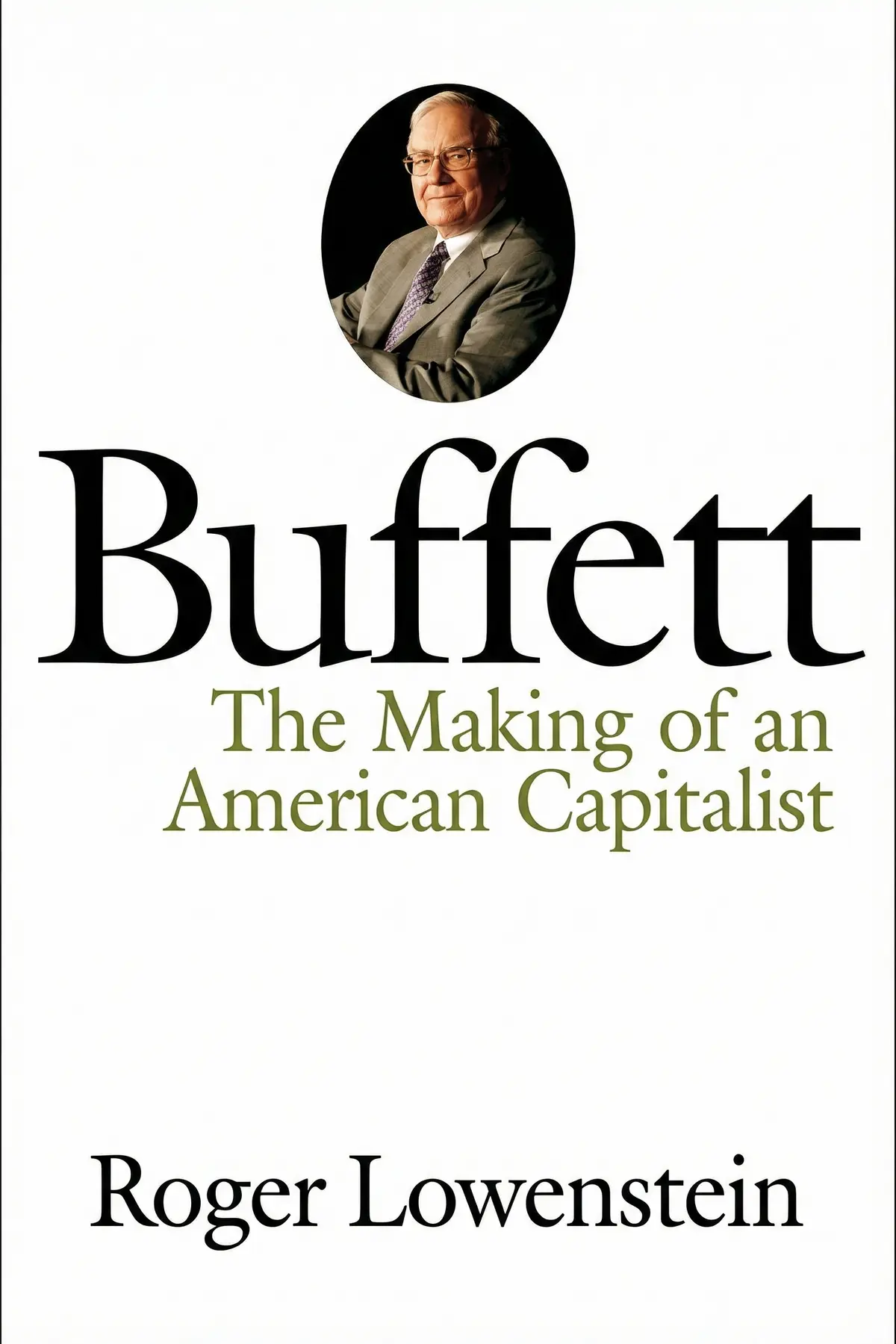
Buffett: The Making of an American Capitalist
Roger Lowenstein
Ratings & Reviews
Ratings at a glance
What people think
Listeners find this work to be gripping and quick-moving, with superb writing that renders intricate technical ideas easy to understand. Furthermore, the extensive level of investigation and lucid breakdowns of financial models turn this into essential material for investors. They also value the narrative style, with one listener noting how it serves as a cautionary tale about hubris, while another highlights how it captures the main theories of modern finance.
Top reviews
Witthaya
Lowenstein has a rare gift for turning dry, mathematical arbitrage into a gripping narrative that reads more like a thriller than a finance textbook. The way he deconstructs the rise of Long-Term Capital Management shows how easily brilliance can morph into pure, unadulterated hubris. I was particularly impressed by how he made the Black-Scholes model and 'fat tail' risks understandable for a layperson. You really feel the tension as the Russian default begins to unravel their perfectly calculated world. It’s a chilling reminder that the market doesn’t care about your PhD or your previous track record. This is essential reading for anyone who thinks they’ve finally 'solved' the market. The research is deep, the prose is elegant, and the lessons remain terrifyingly relevant.
Show moreRung
The sheer audacity of the Nobel laureates involved in LTCM is enough to make your head spin, and Lowenstein captures every bit of it. This isn't just a book about finance; it’s a psychological study of what happens when experts start believing their own press. The pace is surprisingly fast for a book about bond spreads and interest rate swaps, keeping me hooked until the final bailout. I loved the specific details about the culture at Salomon Brothers and how it transitioned into this massive hedge fund experiment. It serves as a perfect cautionary tale about the dangers of over-leverage and the limits of mathematical certainty. Frankly, the level of research involved in reconstructing these private meetings is nothing short of incredible.
Show moreConnor
Finally got around to this classic, and the level of detail Lowenstein unearthed through his reporting is staggering. He manages to weave complex financial theories into a story that feels urgent and deeply human, despite the technical subject matter. The descriptions of John Meriwether’s leadership and the absolute confidence of the quants are particularly well-done. It’s eye-opening to see how their 30:1 leverage turned a manageable dip into a death spiral that required massive intervention. You don't need a finance degree to follow along, though a basic interest in how markets work definitely helps. This book proves that history doesn't repeat itself, but it certainly rhymes with every crisis that has followed since its publication.
Show moreParichat
Wow, what a wild ride through the world of high-stakes bond trading and intellectual arrogance. Lowenstein took a topic that should have been boring and turned it into a page-turner that I finished in two sittings. The research is clearly extensive, yet the prose remains snappy and engaging throughout the entire narrative. It’s genuinely terrifying to realize how close the world came to a total meltdown because of a few guys and their computers. If you want to understand why 'too big to fail' became a part of our daily vocabulary, start right here. It’s easily one of the best business books I have ever picked up, combining historical facts with the pacing of a thriller.
Show moreLena
It’s rare to find a book that explains the efficient market hypothesis and complex derivatives without putting the reader to sleep. Lowenstein manages this feat by focusing on the personalities—the 'geniuses'—whose blind faith in their own models led to a historic catastrophe. The storytelling is top-notch, though the sheer number of names can be overwhelming at times if you aren't paying close attention. I was fascinated by the breakdown of the Russia default and how it acted as a catalyst for the fund’s ruin. The book is a stark reminder that no model can perfectly quantify the future when human irrationality is involved. It’s brilliant, well-researched, and still feels completely relevant to our current economic climate.
Show moreIsabella
Picked this up after reading 'The Big Short' and was stunned by how little Wall Street actually learned from the 1998 meltdown. Lowenstein’s account of LTCM is punchy and well-paced, providing a clear window into the world of elite arbitrage. The truth is, the hubris on display here is almost unbelievable; these guys thought they had outsmarted risk itself. While the book is highly accessible, it doesn't shy away from the technical side of the trades, which I really appreciated. Some might find the focus on bond spreads a bit dry, but the drama of the final weeks makes up for the initial slow burn. It is a definitive account of a crisis that should have been a much louder wake-up call for the entire global banking system.
Show moreYongyut
Ever wonder how the smartest people in the room could almost collapse the global economy by relying on a bell curve? This book provides a masterclass in explaining the 'efficient market hypothesis' and why it fails so spectacularly during real-world crises. Lowenstein’s writing is sharp and remarkably accessible, even when he’s diving into the weeds of equity volatility and derivative contracts. The irony of Nobel Prize winners needing a Fed-brokered bailout because they ignored 'black swan' events is just incredible. My only gripe is that the middle sections get a bit heavy on the technical jargon, which might slow some readers down. Nevertheless, it’s a fascinating look at the intersection of ego and economics that every investor should own.
Show moreSuthee
As someone who lived through the 2008 crash, reading about the LTCM debacle ten years prior felt like watching a slow-motion car wreck you've already seen. Lowenstein wrote this in 2000, yet his warnings about mathematical models providing a false sense of security were incredibly prescient. The book does a fantastic job of illustrating how the partners ignored the 'human factor' in their pursuit of riskless profit. It’s a bit repetitive in the later chapters when the fund is actually collapsing, but the build-up is masterfully handled. I especially appreciated the clear explanation of how their success actually sowed the seeds of their eventual destruction. Truly a must-read for any serious investor who wants to understand the systemic risks inherent in modern finance.
Show moreJames
While the subject matter is undeniably fascinating, I found myself getting lost in the sea of Ivy League names and similar-sounding hedge fund partners. It’s a serviceable account of the 1998 crisis, but I struggled to keep the different 'geniuses' straight after a while. Lowenstein does an excellent job explaining why the models failed, yet the human element felt a bit repetitive in its depiction of arrogance. If you aren't obsessed with bond arbitrage, parts of this might feel like a slog through white-collar egos. Still, the breakdown of how leverage can turn a small mistake into a global catastrophe is vital reading for anyone in finance. It’s a solid three-star book that covers the basics but occasionally gets bogged down in its own details.
Show moreTak
To be fair, the writing is polished and professional, but I felt the author spent far too much time humanizing guys who were essentially gambling with the world's stability. These traders were blinded by their own math, and while the research is impressive, the constant focus on their 'intellectual brilliance' grew tiresome after two hundred pages. It’s frustrating to read about Nobel winners who couldn't account for basic human irrationality or the simple possibility of a Russian default. I appreciate how clearly Lowenstein explains the specific trades, but the lack of a stronger moral critique left me cold. It’s a decent history of a specific failure, just don't expect to actually like any of the players involved in this mess.
Show moreReaders also enjoyed
1929: Inside the Greatest Crash in Wall Street History--and How It
Andrew Ross Sorkin
23 Things They Don’t Tell You About Capitalism
Ha-Joon Chang
A Little History of Economics
Niall Kishtainy
A Splendid Exchange: How Trade Shaped the World
William J. Bernstein

Adults in The Room: My Battle With Europe’s Deep Establishment
Yanis Varoufakis
AUDIO SUMMARY AVAILABLE
Listen to When Genius Failed in 15 minutes
Get the key ideas from When Genius Failed by Roger Lowenstein, plus 5,000+ more titles in English and Thai.
- 5,000+ titles
- Listen as much as you want
- 7-day free trial
- Cancel anytime







