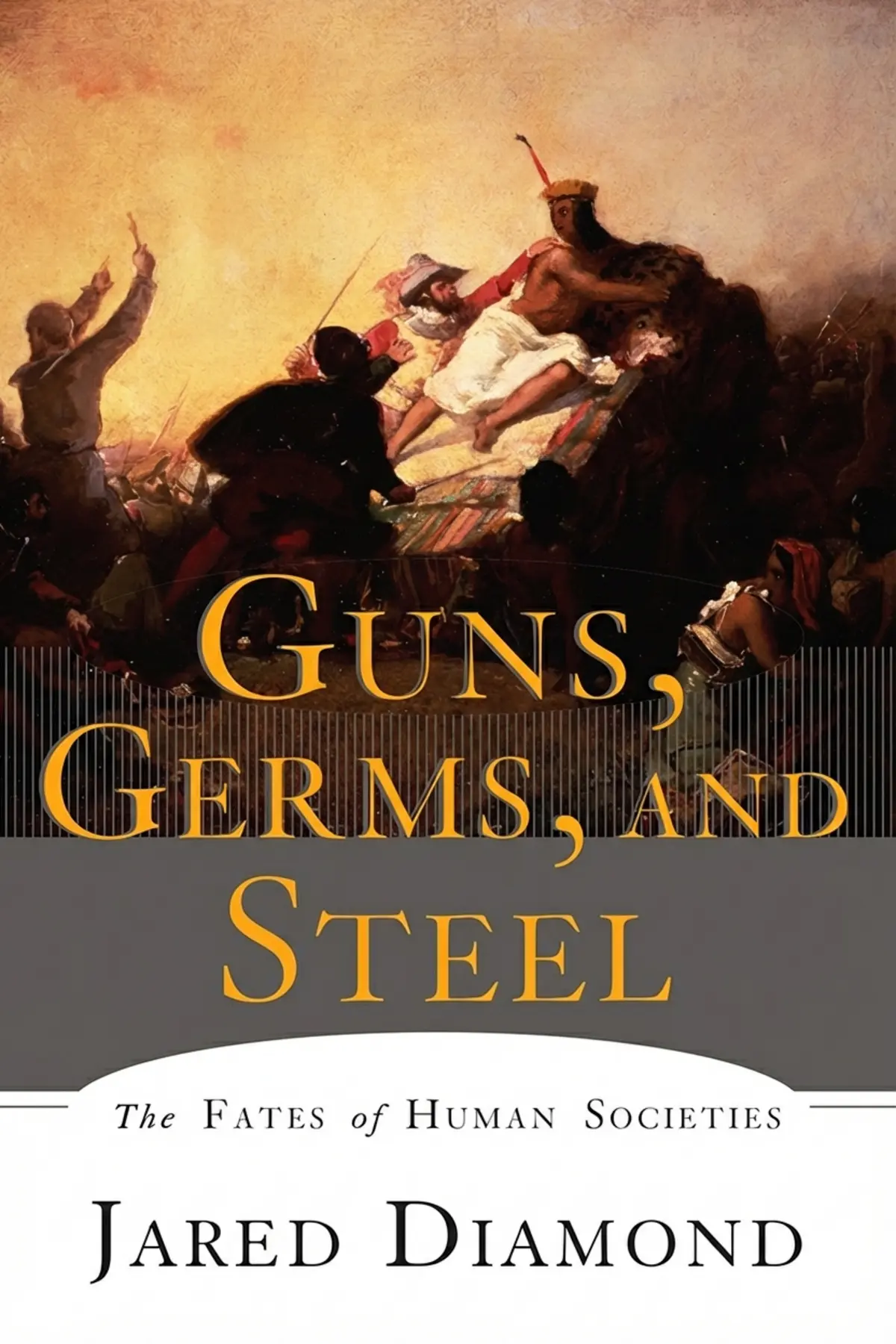
Guns, Germs and Steel: The Fates Of Human Societies
Jared Diamond
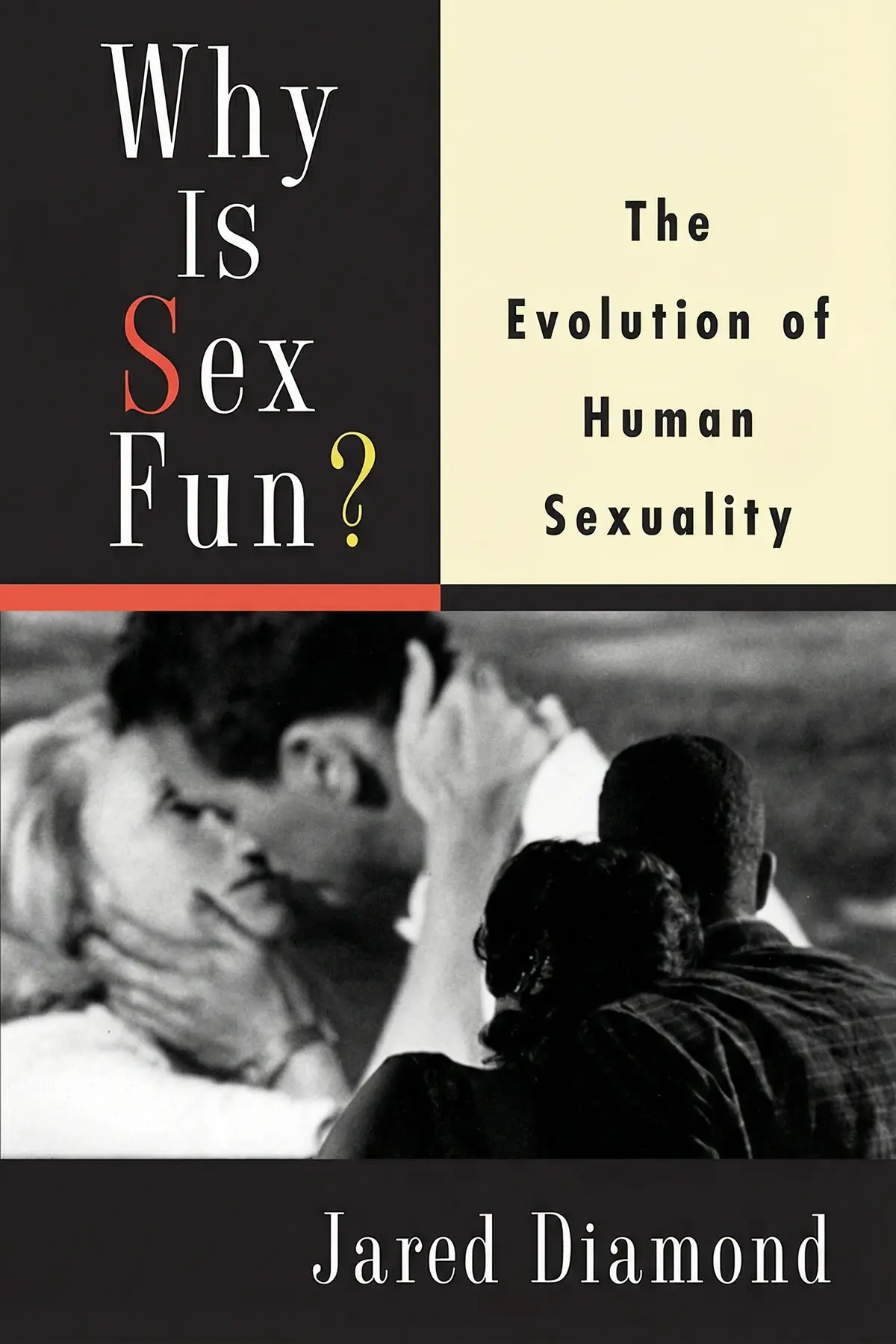
Explore the evolutionary reasons behind human sexuality. This summary explains why our unique habits, like private sex and menopause, are actually strategic adaptations that allowed our species to thrive and survive.
1 min 48 sec
When we think about the natural world, we often imagine a wild, uninhibited landscape where instincts drive every action. But when it comes to the act of sex, humans are the true outliers. We often think of ourselves as the standard for behavior, yet in the eyes of the other thirty million animal species on Earth, we are the ones acting strangely. We choose to hide away in private rooms, we engage in intimacy regardless of whether we can actually conceive, and we form complex social bonds that last decades.
As the famous icon Marilyn Monroe once noted, sex is a fundamental part of nature, and she was happy to go along with it. But even Marilyn might have been surprised to learn just how much nature has sculpted our bedroom habits. Sex isn’t just about physical pleasure or the continuation of the family line; it is a central pillar of our evolutionary history. It is the engine that drove us to become the dominant species we are today.
In this exploration of human sexuality, we are going to look past the cultural taboos and the social norms to find the biological ‘why’ behind our behavior. We will examine how our ancestors’ need to protect their vulnerable offspring led to the rise of monogamy and why the lack of physical signs for ovulation changed the way men and women interact forever. We will even touch on topics that seem like biological dead ends, such as menopause, and discover how they are actually masterstrokes of survival. By the end of this journey, you will see your own biology in a whole new light, understanding that our ‘weird’ habits are actually the very things that make us human. Let’s dive into the fascinating, often counterintuitive world of evolutionary sexuality.
2 min 06 sec
Humans break almost every rule in the animal kingdom’s playbook for reproduction. From our insistence on privacy to our year-round interest in intimacy, we are the weirdest species on the planet.
2 min 29 sec
Human babies are incredibly vulnerable, and their survival depends on a long-term commitment from both parents. Discover why monogamy is a strategic investment rather than just a social preference.
2 min 16 sec
Unlike baboons who advertise their fertility with physical signs, human women have evolved to keep their cycles a secret. This mystery is the foundation of recreational sex and social stability.
2 min 26 sec
Men’s historical role as hunters wasn’t just about putting food on the table. It was also a high-stakes performance designed to attract mates and ensure reproductive success.
2 min 27 sec
Biology shows that men are actually capable of producing milk, yet evolution chose not to go down that path. Discover why this ‘spare’ ability exists and why it was never fully utilized.
2 min 16 sec
From an evolutionary perspective, stopping reproduction early seems like a mistake. Yet, menopause is a unique human trait that helped our ancestors survive and build culture.
2 min 16 sec
Physical traits like muscles, facial beauty, and even the size of certain body parts are more than just aesthetic choices. They are evolutionary signals that broadcast our genetic health.
1 min 33 sec
As we have seen, human sexuality is far more than a simple biological necessity or a source of pleasure. It is a complex tapestry of evolutionary adaptations that allowed us to overcome the challenges of our environment. Our strange insistence on privacy, the mystery of hidden ovulation, and the strategic timing of menopause all serve a greater purpose. They are the mechanisms that enabled us to form stable families, protect our exceptionally vulnerable children, and pass on the collective wisdom of our species.
By detaching sex from a strict reproductive schedule, nature turned a biological act into a social bridge. It encouraged fathers to stay, mothers to lead, and communities to grow. We are ‘weird’ because being weird worked. It gave us the social stability and the longevity needed to move beyond the simple struggle for survival and into the world of culture and technology.
The next time you consider the complexities of human relationships or the quirks of our own bodies, remember that you are looking at millions of years of success. Our sexuality is a testament to our ingenuity as a species. It is a reminder that even our most private and primal behaviors are deeply connected to the grand story of human evolution. We have risen to the top of the food chain not just because of our tools or our language, but because of the unique, fascinating way we connect with one another.
Have you ever stopped to wonder why humans are so different from every other animal when it comes to intimacy? While most creatures follow a strict biological clock, only mating when reproduction is guaranteed, humans have developed a completely different set of rules. This summary dives into the evolutionary mechanics of human sexuality, looking at why we have sex for fun, why we prefer privacy, and how our social structures like monogamy emerged from these biological quirks. From the mysteries of hidden ovulation to the paradoxical nature of menopause, these chapters break down the scientific theories behind our most private behaviors. You will learn how the high demands of raising human children forced a shift toward long-term partnerships and why certain physical traits serve as advertisements for genetic health. Ultimately, the book promises to reveal how our seemingly 'weird' sexual habits are the very things that helped us dominate the planet.
Jared Diamond is a professor of geography at the University of California, Los Angeles. A Pulitzer Prize winner for his bestselling book Guns, Germs, and Steel, Diamond has also been awarded the National Medal of Science and a MacArthur Foundation Fellowship.
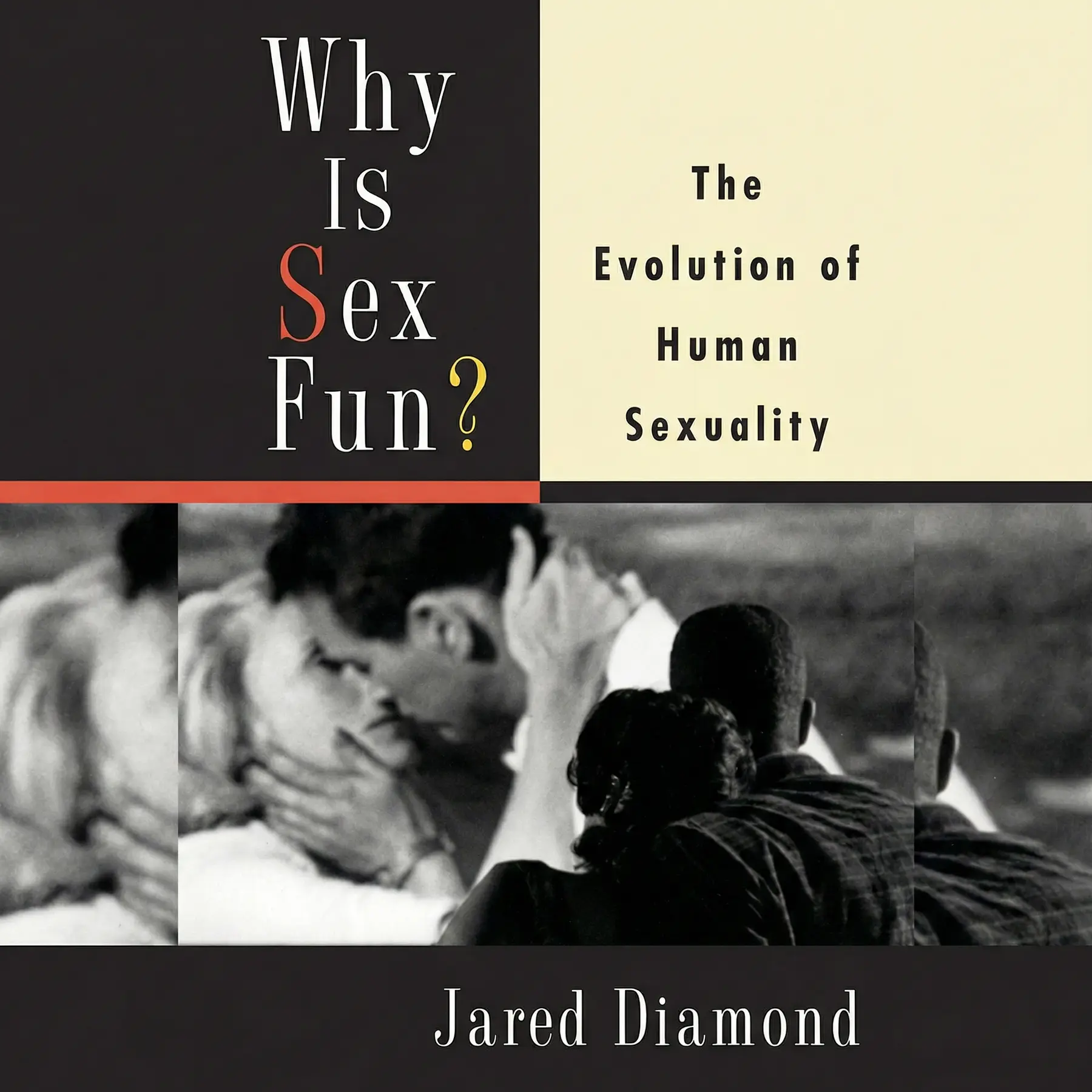
Listeners find the book pleasant and value its lighthearted introduction to evolutionary psychology, with one highlighting how it hooks people using provocative questions. Furthermore, the prose is superb, and listeners feel the scientific material is approachable, with one individual characterizing it as a clear anthropology-based treatment. The work also receives praise for its inventive nature and polished style, though the central concept gets mixed reactions from listeners.
Diamond has a way of making complex anthropology feel like a casual conversation at a dinner party. This is a remarkably fast read that serves as a fantastic insight into the scientific method, specifically regarding how we evolved such unique traits. I loved how he framed the battle of the sexes as a biological struggle rather than just a social one. Some might call it a long essay rather than a full book, but the writing quality is excellent and keeps you engaged. In my experience, most pop science books try too hard to be academic, but this one remains readable without losing its intellectual edge. The questions he asks about why women have large breasts or why men have large penises are genuinely intriguing.
Show moreThe way Diamond explains the scientific method through the lens of human behavior is simply brilliant and highly engaging. I had forgotten just how good this book actually is until I picked it up for a second read recently. Although Guns, Germs, and Steel is usually the favorite, this one holds its own by asking really provocative questions about our nature. It makes me wonder why there are so few really good television documentaries on this subject that reach the heights of the BBC. Not gonna lie, the book is bursting with fascinating questions that will change the way you look at your own body. It is a quick, informative, and creatively written piece of popular science.
Show moreEver wonder why humans are the only ones having sex for pleasure instead of just when it is time to breed? Jared Diamond tackles these provocative questions with a breezy style that makes evolutionary psychology feel incredibly accessible. He spends a significant amount of time comparing our habits to other species, which provides a clear anthropology-based treatment of why we are so weird. While I found the sections on menopause and why men don't breastfeed fascinating, the lack of citations felt a bit lazy for a scientist of his caliber. To be fair, it is a creative approach to a topic that usually feels dry. It functions well as an introduction, though it leaves you wanting a deeper dive into the actual data.
Show moreAs someone who enjoys evolutionary psychology, this was a decent primer, though it certainly shows its age in a few places. I think not including any observations on how LGBTQIA people fit into this evolutionary picture is a major oversight for a modern reader. However, the comparisons drawn between humans and other species are still quite informative for anyone interested in our sexual evolution. The book is bursting with fascinating questions that most people are too embarrassed to ask out loud. Frankly, it is a quick and enjoyable read that provides a solid foundation in human behavioral biology. I particularly liked the discussion on why humans have concealed ovulation compared to other primates.
Show moreThe chapter on male lactation absolutely blew my mind because I had no idea the biological equipment was already there. Diamond asks what men are actually good for and concludes that, evolutionarily speaking, the answer is not a lot. We don't do nearly as much helping out as women do, which is a pretty unattractive reality of our species. The book is a clear anthropology-based treatment that avoids getting bogged down in overly dense jargon. Gotta say, the title is what drew me in, but the actual science is what kept me turning the pages until the end. It is a breezy introduction to why our mating habits are so distinct from the rest of the animal kingdom.
Show morePicked this up on a whim because the title was so catchy and I ended up finishing it in two sittings. It is not as if good pop science books do not come out of the USA, but this one has a specific charm. Diamond presents several alternatives for why we evolved certain traits, which makes for a fantastic insight into the scientific method. Why do we have menopause? Why are men's penises so large compared to other apes? These questions are clearly important, but the answers may not be nearly so easy to come by as one might think. Personally, I found the writing to be excellent and the anthropology-based treatment very refreshing.
Show moreLook, the writing is top-notch, but the lack of formal citations in the text really bothered me during the more controversial parts. To be fair, Diamond is writing for a general audience, so the breezy introduction to evolutionary psychology works for most people. The book covers everything from sexual cannibalism to the intricacies of lactation with a very readable and light tone. It is a short book that manages to answer some very strange questions about why humans act the way we do. While I wish there was more focus on modern human society, the animal comparisons were still quite enlightening. Overall, it is an enjoyable and creative look at a topic everyone thinks they already understand.
Show moreThis felt more like a long essay than a fully fleshed-out book, which made it a very quick read. While the premise is interesting, the execution had a few flaws that kept me from fully loving it. Some of the evolutionary explanations felt a bit like 'just-so' stories without enough rigorous data to back them up. Look, I appreciate the creative approach to the subject matter, but I needed more than just anecdotal evidence and animal comparisons. It’s an enjoyable enough way to spend an afternoon, but don't expect the depth of his more famous historical works. The science content is accessible, but it barely scratches the surface of modern evolutionary theory.
Show moreTruth is, I expected a lot more from Diamond given his reputation with major works like Guns, Germs, and Steel. This book focuses way too much on animal behavior and sexual cannibalism in spiders, leaving the human element feeling like an afterthought. I was left questioning a lot of his research because the lack of footnotes really irked me throughout the entire read. Where are the sources for these claims? I do not have time to go digging through a massive bibliography just to verify a single point about hermaphroditic fashion models. It was a mostly tedious experience, saved only by a few interesting facts about lactation that bumped my rating up.
Show moreNot what I expected at all, and frankly, the whole thing was quite a slog to get through. Who the eff cares about the intricacies of why sex is fun when the book barely answers its own title? I learned a lot about the mating habits of strange animals and very little about actual human sociology. Diamond’s lack of footnotes really irked me and I was left questioning a lot of his research throughout the chapters. I mean sure, learning about various animals boosted my trivia knowledge, but where is the actual source material? Ultimately, it failed to deliver on the promise of its catchy title and left me feeling disappointed.
Show more
J. Craig Venter
bell hooks
Carl Zimmer
Bill Bryson
Jeff Hawkins
Lisa Kaltenegger
AUDIO SUMMARY AVAILABLE
Get the key ideas from Why is Sex Fun? by Jared Diamond, plus 5,000+ more titles in English and Thai.