
9 min 39 sec
Guns, Germs and Steel: The Fates Of Human Societies
Discover why world history unfolded so differently across continents. This summary explores how geography, climate, and local resources—rather than human biology—shaped the unequal distribution of power and wealth in the modern world.
Table of Content
1. Introduction
1 min 27 sec
When we look at the modern world, the gap between the wealthiest nations and the most impoverished ones is staggering. It is easy to assume that these disparities are the result of cultural traits or perhaps even different levels of innate ability. But if we want to understand the true origin of this global imbalance, we have to look much further back than the industrial revolution or the age of discovery. We have to zoom out until the scale of our history encompasses tens of thousands of years.
Historians often focus on the small details—the specific choices of a king or the outcome of a single day of combat. But there is a broader pattern to human existence that transcends individual lives. Around thirteen thousand years ago, the human experience was remarkably uniform across the globe. Whether a person was living in what we now call Europe, Africa, or the Americas, they were likely a member of a small tribe, using stone tools and hunting for their daily meals. There was no writing, no organized government, and no metal weaponry.
So, what happened? Why did the people of the Eurasian landmass eventually develop the ships, the steel, and the infectious diseases that allowed them to conquer almost every other corner of the planet? To find the answer, we must investigate the deep environmental factors that set different groups of people on vastly different paths. This is a story about geography, biology, and the accidental advantages that shaped the fates of human societies.
2. The Agricultural Foundation of Power
1 min 44 sec
Discover why the transition from hunting to farming was the single most important turning point in human history and how it paved the way for modern cities.
3. The Biological Lottery of Plants and Animals
1 min 51 sec
Explore why some regions were naturally blessed with the perfect ingredients for civilization while others faced insurmountable environmental hurdles.
4. How Continental Shape Determined Destiny
1 min 48 sec
Learn how the physical orientation of the continents either helped or hindered the spread of new technologies and food sources across the globe.
5. The Lethal Legacy of Germs
1 min 35 sec
Uncover the dark side of civilization: how living with animals gave certain societies a biological weapon they didn’t even know they had.
6. Conclusion
1 min 14 sec
The history of the world is often told as a series of triumphs of the human spirit or the brilliance of specific cultures. But as we have seen, the true drivers of our shared story are much more grounded in the physical world. The disparities we see today are not the result of innate differences between people, but the result of the environments in which those people found themselves.
Eurasian societies didn’t become powerful because they were smarter or more hardworking. They became powerful because they were lucky enough to live on a continent with a favorable orientation, a wealth of domesticable plants, and a variety of animals that could be harnessed for work. These environmental gifts created the food surpluses that built cities, the technologies that forged steel, and the biological immunity that conquered continents.
Understanding this ‘geographic luck’ changes how we view our past and our present. It reminds us that our successes are often built on foundations we didn’t create ourselves. By recognizing the role of environment in shaping human fate, we can move away from harmful myths of superiority and begin to see the story of humanity for what it really is: a complex, fascinating interaction between our species and the planet we call home.
About this book
What is this book about?
Have you ever wondered why some societies developed advanced technology and massive empires while others remained as hunter-gatherers for thousands of years? This exploration of human history argues that the answer has nothing to do with racial or intellectual superiority and everything to do with environmental luck. By looking back thirteen thousand years, we see a world where every human group lived similarly. The divergence that followed was driven by the plants people could grow, the animals they could tame, and the way their continents were shaped. This narrative traces the path from the first farms in the Fertile Crescent to the global dominance of Eurasian civilizations, offering a compelling look at the accidental roots of modern inequality.
Book Information
About the Author
Jared Diamond
Jared Diamond is a professor of geography at UCLA in California. With a diverse background as a trained biologist, his scholarly work has spanned multiple disciplines, including ornithology, history, and ecology. His landmark book, Guns, Germs and Steel, earned him the Pulitzer Prize and has been recognized as one of the most significant nonfiction works of all time by Time magazine.
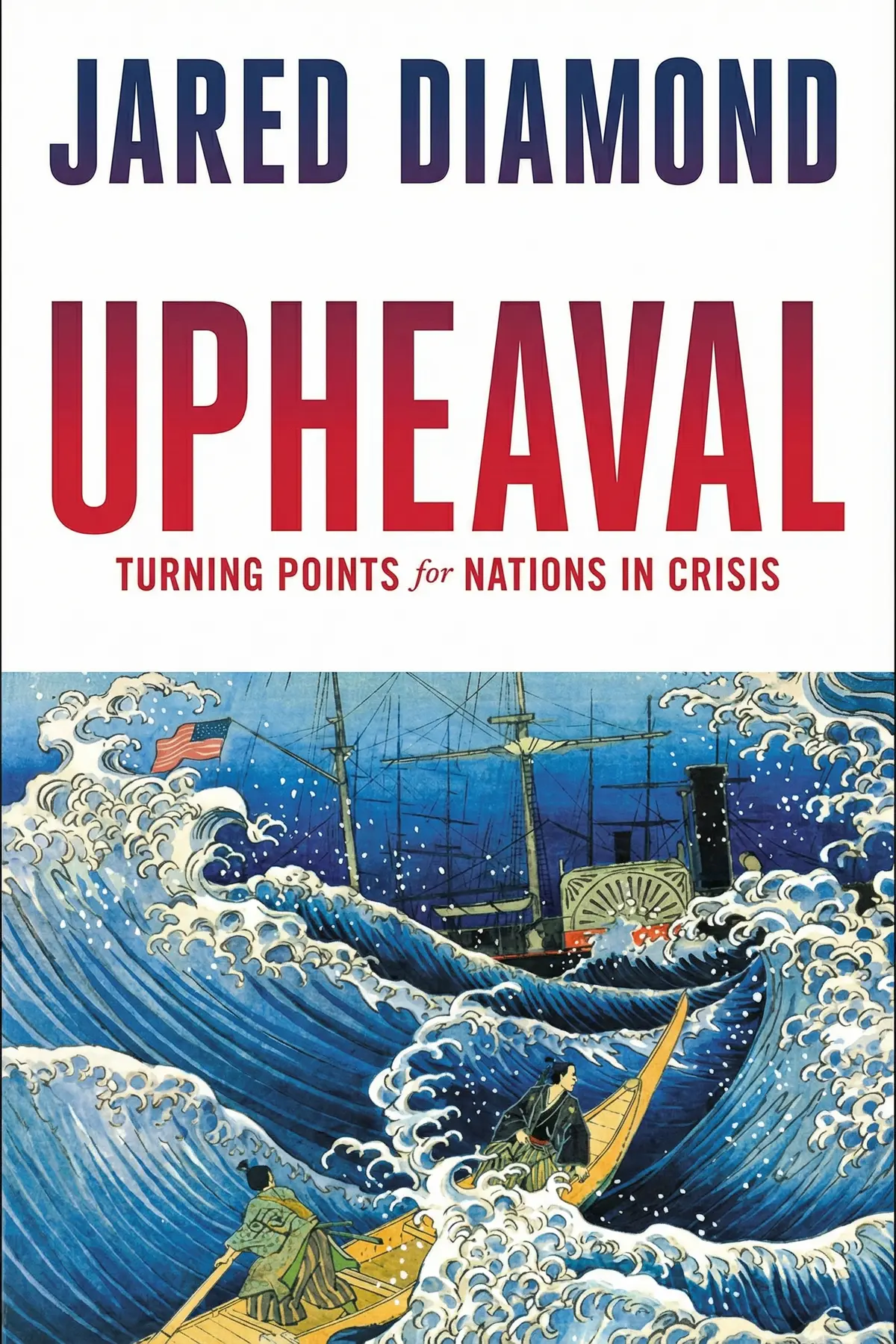
Upheaval: Turning Points for Nations in Crisis
Jared Diamond

Why is Sex Fun?: The Evolution of Human Sexuality
Jared Diamond
Ratings & Reviews
Ratings at a glance
What people think
Listeners consider the work exceptionally engaging and expertly crafted, noting its transparent and approachable prose. They value the exhaustive investigation and detailed presentation, viewing it as essential reading for anyone fascinated by historical and cultural developments. The text provides an alternative viewpoint on global history and delivers a compelling account of how human civilizations have progressed. Listeners characterize the content as stimulating, with one review highlighting its use of multiple academic disciplines to examine the human past.
Top reviews
Patcharaporn
Ever wonder why certain civilizations flourished while others remained isolated for millennia? Jared Diamond tackles this massive question by looking at geography rather than biology. It’s a dense read, yet incredibly rewarding because it dismantles any notion of racial superiority with cold, hard data about crop availability and animal domestication. Truth is, the broad east-west axis of Eurasia allowed for much faster transmission of ideas and technologies compared to the north-south orientations of the Americas or Africa. This isn't just a history book; it's a structural breakdown of human existence. While the 'Steel' section felt a bit rushed, the overall thesis is mind-blowing. I finished this feeling like the entire map of the world finally made sense.
Show moreAkira
Wow. I haven’t looked at a map the same way since I put this book down. Diamond starts with a simple question from a man named Yali in New Guinea and proceeds to build a massive, multidisciplinary framework to answer it. The way he links the availability of wild wheat and barley to the eventual rise of empires is nothing short of brilliant. Look, some people call it deterministic, but the logic regarding how latitude affects the spread of agriculture is hard to argue against. It’s a thick book, but the style is conversational enough that I never felt buried in jargon. This is essential reading for anyone trying to understand the 'why' behind the modern world's power imbalances.
Show moreDiego
The chapter on the 'Spaced-out' effect of continental axes is worth the price of admission alone. Diamond argues that it was much easier for crops and animals to spread across the similar climates of Eurasia than it was to move through the varying latitudes of the Americas. This insight explains so much about why certain civilizations hit technological milestones earlier than others. Not gonna lie, the book requires a lot of focus, but it’s the kind of work that rewards your patience with a total paradigm shift. It is a masterful synthesis of biology, geography, and archaeology that manages to be both academic and accessible. I highly recommend it to anyone who enjoys 'big history' books like Sapiens.
Show moreSangduan
Direct and powerful, this book provides the most logical explanation for global inequality that I’ve ever encountered. Diamond avoids the trap of focusing on politics or religion and instead looks at the literal dirt and animals that humans had to work with. It works. The truth is that some people simply got a better head start because of their local flora and fauna. It’s a massive, sweeping narrative that manages to stay grounded in scientific facts rather than cultural myths. While the text is quite long, the chapters are structured in a way that makes the logic easy to follow. This is a must-read for anyone who wants a deeper understanding of how we all ended up where we are today.
Show moreWanida
After hearing so much hype about this Pulitzer winner, I finally dove into the world of environmental determinism. Diamond is remarkably thorough, perhaps even to a fault, as he spends a massive amount of time on grain types and the domestication of large mammals. Personally, I found the chapter on the evolution of germs and their impact on indigenous populations to be the most gripping part of the entire narrative. The writing is accessible for a layman like me, though the middle sections definitely start to feel repetitive after the third or fourth example of continental orientation. To be fair, he needs that evidence to support such a sweeping claim about why Europe and Asia dominated. It’s a solid, thought-provoking read.
Show moreJom
Picked this up on a recommendation and found myself surprisingly sucked into the history of domesticated pigs and cattle. Diamond does a great job of explaining how food surpluses lead to specialized classes like soldiers and bureaucrats, which eventually allows for conquest. My only real gripe is that he occasionally treats humans like they are just pawns of their environment with no choice in their own destiny. That being said, the research presented is staggering and the prose flows much better than your average academic text. In my experience, most history books focus too much on 'Great Men,' so it was refreshing to see a focus on environmental factors instead. It's a comprehensive and very readable piece of non-fiction.
Show moreHang
Finally got around to reading this classic and I can see why it’s so polarizing. On one hand, the evidence for how geography shaped the early stages of civilization is absolutely compelling and well-researched. On the other hand, Diamond is a bit of a 'Monday morning quarterback' who fits every historical event into his specific theory. I loved the section on why Australia remained hunter-gatherer based on its lack of domesticable species—harnessing a kangaroo is a hilarious image. The book is definitely thought-provoking, even if you don't agree with every single conclusion he draws. It’s a meaty, dense, and ultimately enlightening look at the foundations of our modern society.
Show moreMethinee
Not what I expected given the punchy title. If we are being precise, the book should really be called 'Grains, Germs, and Geographic Luck' because the discussion of weaponry is surprisingly thin. I appreciated the deep dive into why some societies developed immunity to lethal diseases, but the pacing is all over the place. One moment you are learning something fascinating about the QWERTY keyboard, and the next you are trapped in fifty pages of botanical data that feels like a textbook. Gotta say, it's an important work, but it definitely didn't need to be this long to prove its core point. It’s worth a skim if you’re interested in anthropology, but don't expect a fast-paced history of warfare.
Show morePalm
As someone who studied anthropology, I found Diamond’s take on cultural materialism to be a bit reductive. While his focus on geography is a necessary counter to older, racist theories of history, he swings too far in the opposite direction. He treats every cultural development as an inevitable result of the landscape, which ignores the complex social dynamics that actually drive human behavior. The writing is clear and the Pulitzer was likely deserved for the sheer scale of the project, but the repetition makes it a chore to finish. To be fair, his explanation of the 'Spanish Conquest' and the role of germs is quite powerful. Just take his 'predestined' conclusions with a massive grain of salt.
Show moreYulia
This book is essentially what happens when a biologist decides he can explain every single nuance of human history through a single lens. Diamond ignores the agency of individual cultures and boils everything down to where you happen to live on a map. It’s boring. Frankly, it’s a bit of a slog to get through because the prose is incredibly dry and the 'Steel' part of the title is barely addressed. If you enjoy reading 400 pages about why you can't domesticate a zebra or a rhino, then this is for you. Otherwise, it feels like a very long exercise in speculation that ignores actual archaeological proof in favor of a neat, materialistic theory. It's just too simplistic for such a complex subject.
Show moreFeatured in
Readers also enjoyed
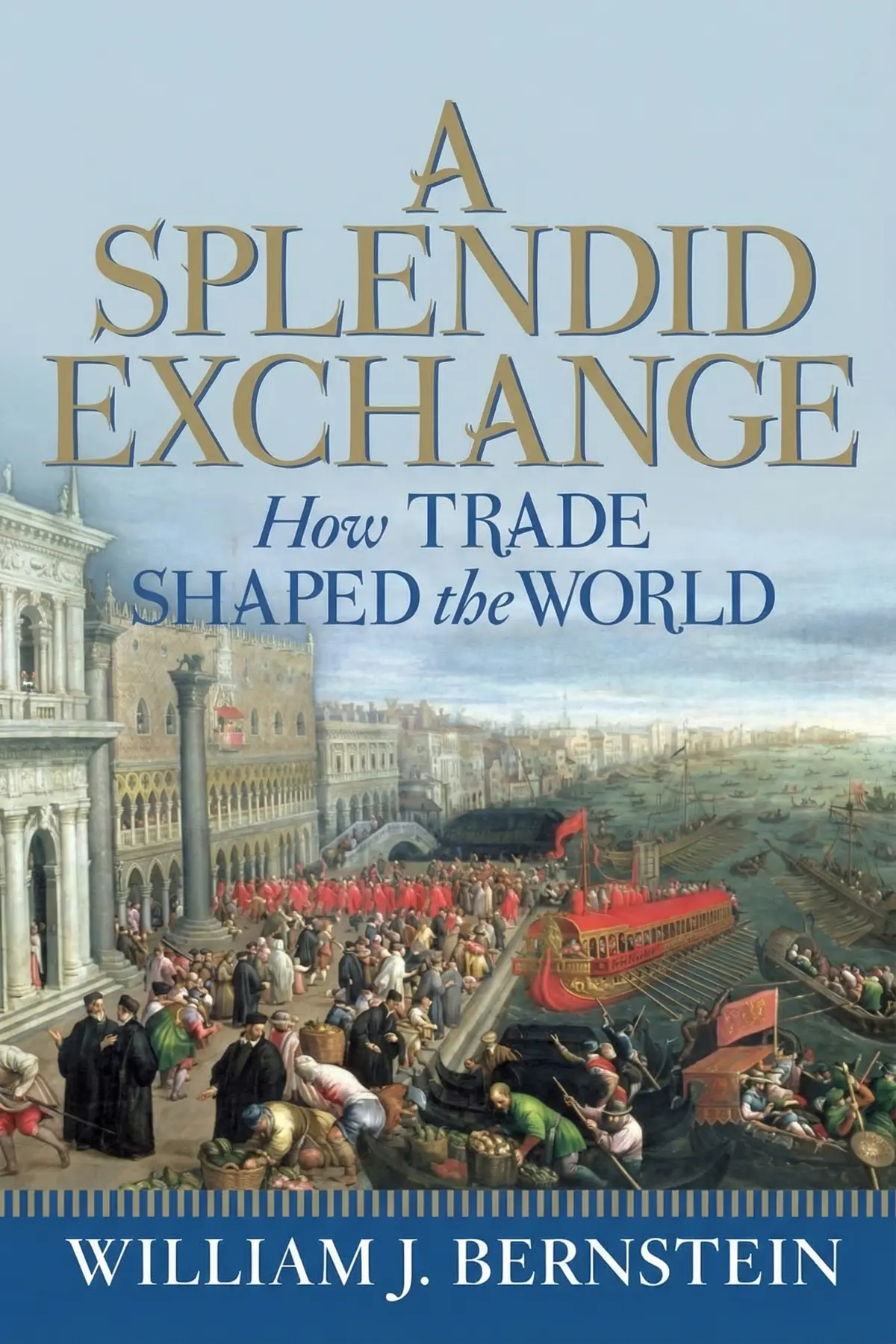
A Splendid Exchange: How Trade Shaped the World
William J. Bernstein

A Spy Among Friends: Philby and the Great Betrayal
Ben Macintyre


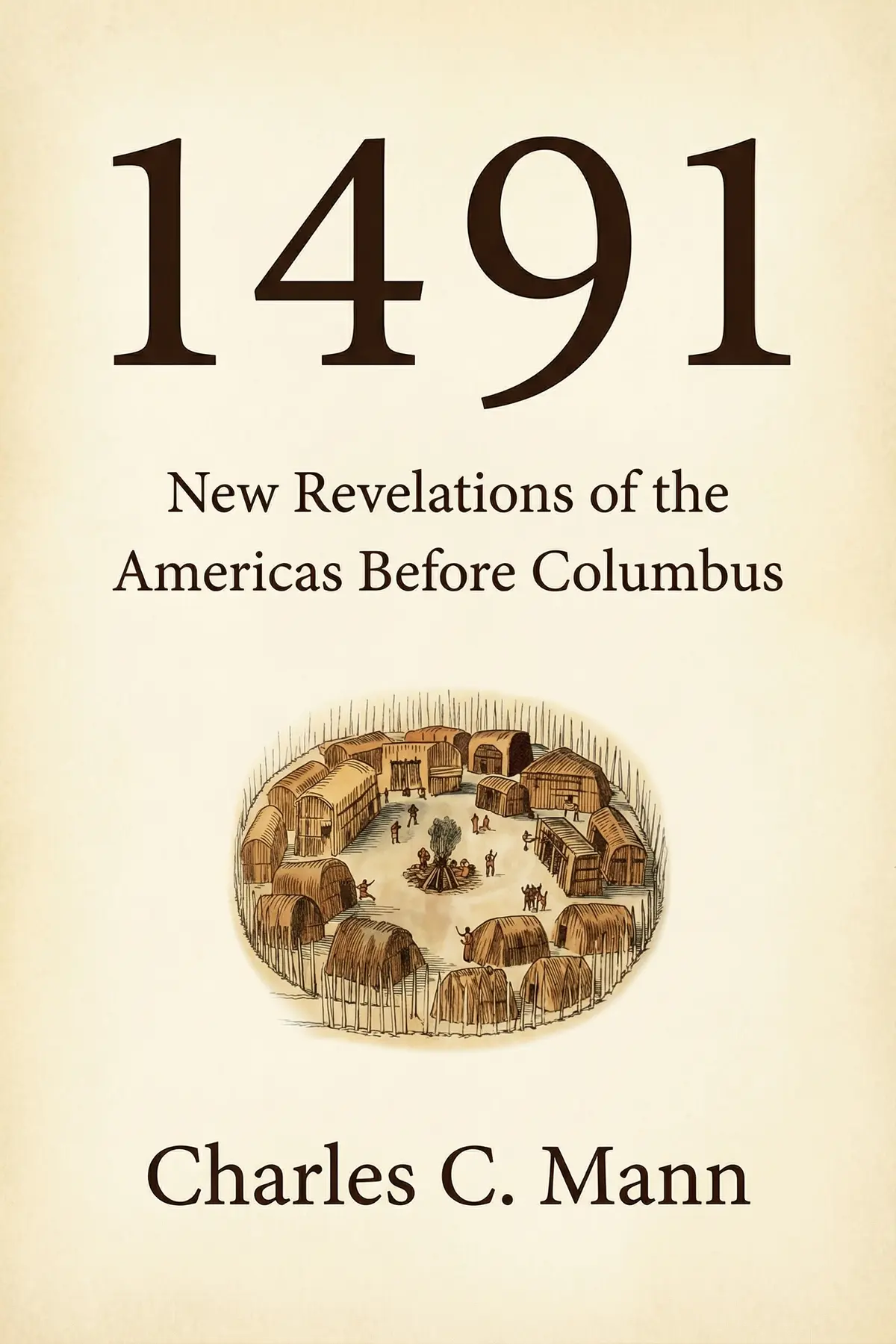
1491: New Revelations of the Americas Before Columbus
Charles C. Mann

A Year in the Life of William Shakespeare: 1599
James Shapiro

1929: Inside the Greatest Crash in Wall Street History--and How It
Andrew Ross Sorkin
AUDIO SUMMARY AVAILABLE
Listen to Guns, Germs and Steel in 15 minutes
Get the key ideas from Guns, Germs and Steel by Jared Diamond, plus 5,000+ more titles in English and Thai.
- 5,000+ titles
- Listen as much as you want
- 7-day free trial
- Cancel anytime







