
Guns, Germs and Steel: The Fates Of Human Societies
Jared Diamond
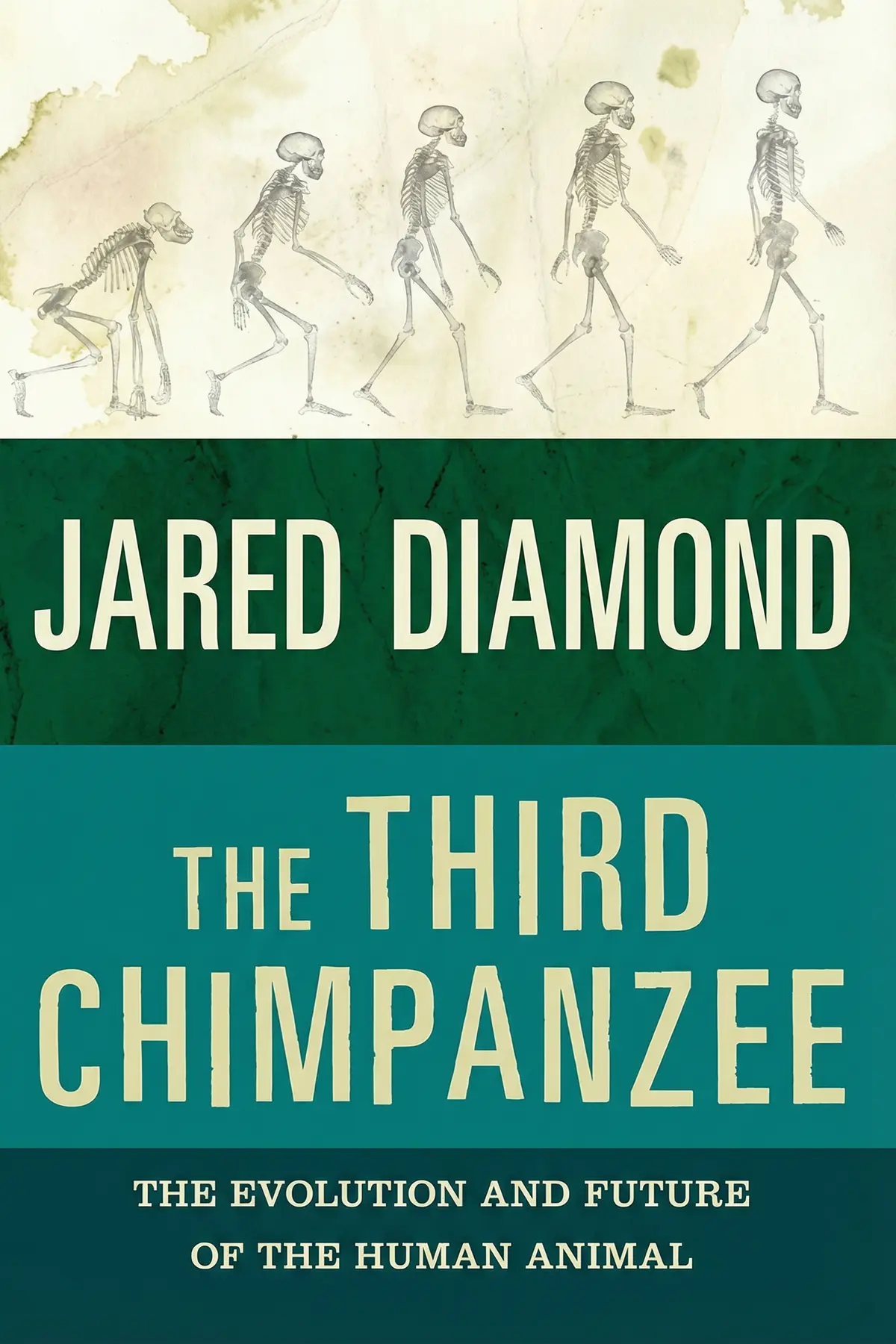
Exploring the biological roots of humanity, this summary reveals how a tiny genetic difference separates us from chimpanzees, influencing everything from our capacity for language to our tendencies toward environmental destruction.
1 min 48 sec
Walking through a zoo, it is easy to feel a sense of detachment from the creatures behind the glass. We look at the primates, with their hairy coats and expressive faces, and we see a curiosity, perhaps even a distant relative. But we rarely see ourselves. We tend to view humanity as something entirely separate—a species defined by art, complex technology, and the power of speech. Yet, when we look closer at the biological blueprints of life, that boundary begins to blur. The reality is that we are far more connected to the wild world than our modern lives suggest.
This exploration begins with a fundamental realization: we are, for all intents and purposes, a third type of chimpanzee. This isn’t just a metaphor for our behavior; it is a literal description of our genetic identity. For a long time, we have focused on the tiny fraction of our makeup that makes us unique, often ignoring the vast majority of our heritage that we share with our closest cousins. But to truly understand where we are going as a species, we must first accept where we came from. We have to look at the beautiful and the brutal aspects of our nature with equal honesty.
Throughout this journey, we will look at how a few small anatomical shifts sparked a massive leap forward in our development. We will explore how our ability to communicate allowed us to build civilizations, and how our choices regarding food and the environment have led to both massive population growth and catastrophic collapses. By examining the history of the human animal, we gain a clearer picture of the traits that might lead to our ultimate success—or our eventual downfall. It is a story of evolution, culture, and the high stakes of being a species that has suddenly found itself in charge of the entire planet.
2 min 27 sec
Discover the shocking truth about how little separates us from the animal world at a molecular level and why our classification as a unique family might be a mistake.
2 min 17 sec
Explore the dramatic shift that occurred forty thousand years ago and the specific anatomical change that unlocked the door to human culture and technology.
2 min 07 sec
How simple animal signals and the birth of new human languages today provide a window into how our ancestors first began to talk.
2 min 20 sec
Why do humans look so different across the globe? Discover the two forces of selection that shaped our physical features and our perceptions of race.
2 min 10 sec
Could the transition from hunting to farming have been a mistake? Re-examine the history of human health and the true cost of ‘progress.’
2 min 12 sec
Your capacity for compassion masks a darker evolutionary inheritance. Discover why genocide isn’t aberration but pattern—and how understanding our tribal psychology is essential to preventing it.
2 min 26 sec
Dismantling the idea that early humans lived in perfect harmony with nature by looking at the ancient extinctions and environmental collapses they left behind.
2 min 04 sec
In the end, we are faced with a paradox. We are a species that shares almost all of its DNA with the chimpanzee, yet we have managed to fundamentally alter the face of the Earth. We have unlocked the secrets of the atom, created masterpieces of art, and built a global network of communication. But we also carry with us the ancient instincts of our primate ancestors—instincts for territoriality, aggression, and the short-sighted exploitation of resources. Our history is a testament to this duality: we are capable of the Great Leap Forward and the great collapse.
The throughline of our story is that our unique human traits are double-edged swords. Language gave us the power to collaborate, but also the power to deceive and dehumanize. Agriculture gave us the ability to support billions of people, but it also tied us to a cycle of constant growth and environmental strain. We are not separate from nature, nor are we inherently wiser than the ancestors who accidentally destroyed their own homes. We are simply the first species in history to possess both the power to destroy the world and the self-awareness to understand that we are doing it.
This realization should not lead to despair, but to a sense of urgent responsibility. By recognizing ourselves as the ‘third chimpanzee,’ we can approach our problems with a dose of biological humility. We must stop assuming that progress is inevitable or that our technology will automatically save us from our own nature. Instead, we must use our unique capacity for foresight to override our more primitive impulses. We have the history of those who came before us as a guide. If we want to avoid the fate of the civilizations that collapsed in the past, we must choose to act with the wisdom that our ancestors lacked. The future of the human animal depends on our ability to finally master the one point four percent of us that makes us truly human.
Have you ever wondered why humans behave the way they do? The Third Chimpanzee dives into the deep history of our species to show that we are not as far removed from the animal kingdom as we like to think. By looking at our genetic makeup, which is over ninety-eight percent identical to that of a chimpanzee, we can begin to see ourselves as a third member of that primate family. This perspective offers a new lens on our greatest achievements and our darkest failures. The summary covers human evolution, the emergence of language, the development of racial traits, and the unintended consequences of agriculture. It promises to dismantle common myths about human progress, showing that our unique traits—like speech and complex culture—are recent developments that come with immense power and immense risk. By understanding how we evolved into the dominant force on the planet, we can better navigate the challenges of our future survival and ensure we do not repeat the mistakes of the past.
Jared Diamond is a multi-disciplinary scholar whose career spans physiology, geography, and evolutionary biology. Currently serving as a professor at the University of California, Los Angeles, he is well-known for bridging the gap between complex science and public understanding. Diamond has written several acclaimed works, including the highly influential best-seller Guns, Germs, and Steel, which cemented his reputation as a leading voice in human history and anthropology.
Jared Diamond
Jared Diamond
Jared Diamond
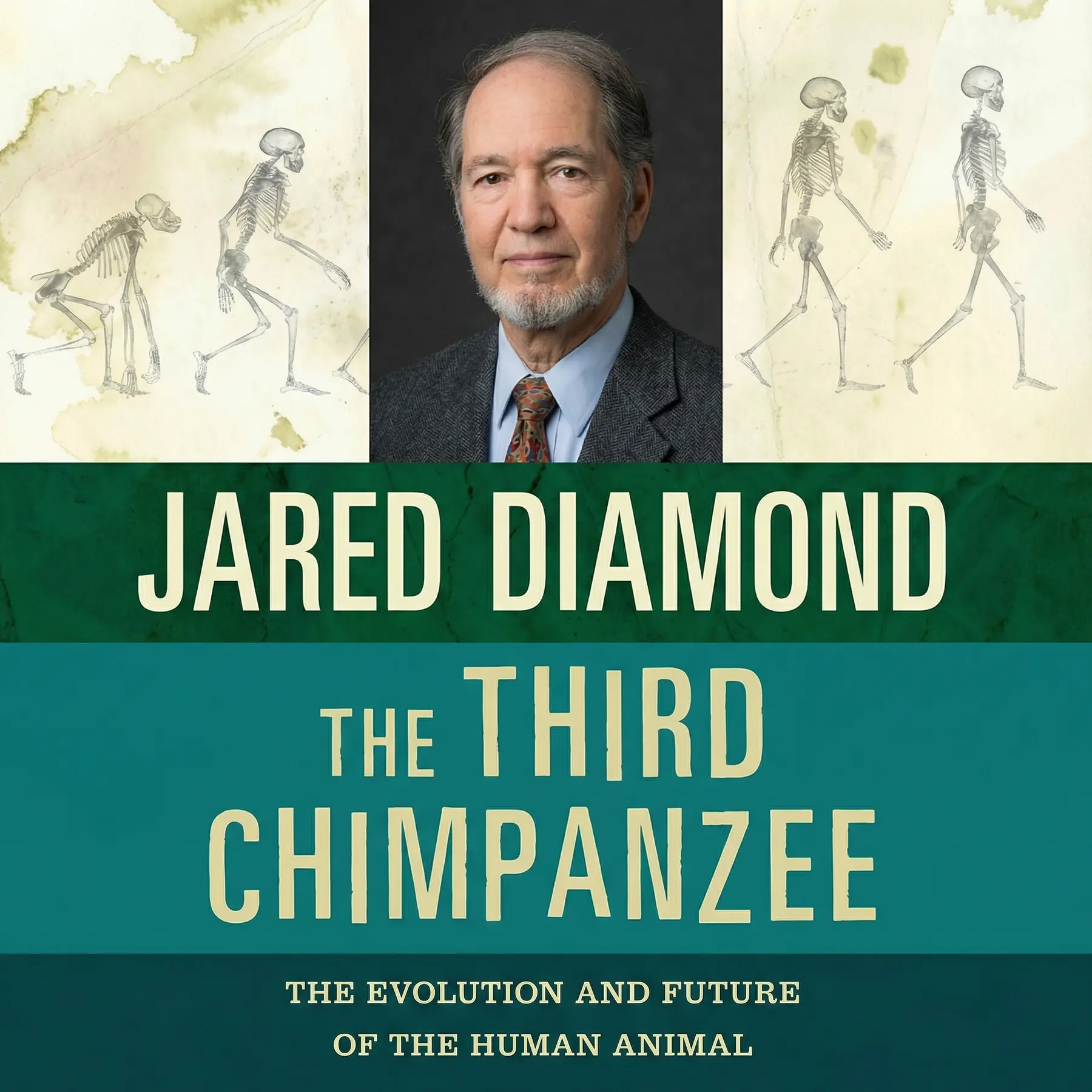
Listeners appreciate the depth of research and clarity in this work, with one listener noting it digs deeply into the science. The writing style is well-regarded, and listeners consider it essential for those interested in evolution. It is also quite thought-provoking; one listener mentions it changes their complete understanding of humanity, and it features a marvelously open sense of humor. However, the pacing gets mixed reviews, as one listener observes that it veers off rapidly into speculation and arm-waving.
Jared Diamond has a remarkable ability to turn complex biological data into a narrative that feels both urgent and personal. This book dives deep into the 1.6% genetic difference that separates us from chimpanzees, exploring how that tiny gap led to the 'Great Leap Forward' 40,000 years ago. I was particularly struck by the sections on human sexuality and concealed ovulation, which Diamond treats with a surprisingly open sense of humor. He argues convincingly that our social behaviors, from art to drug use, have deep evolutionary roots rather than being purely cultural inventions. While some of the archaeology might feel slightly dated, the core message about our species' self-destructive tendencies remains incredibly relevant. It is a thought-provoking journey that forced me to reconsider what it actually means to be 'human' in a world of animals. If you loved Guns, Germs, and Steel, you will find this to be an even more intimate and accessible exploration of our shared history.
Show moreThis is hands-down one of the most eye-opening books I have ever picked up. It completely changed my understanding of humanity by stripping away our ego and looking at us as just another species of big mammal. The way Diamond explains the evolution of language from vervet monkey alarm calls is nothing short of masterful. I also loved the gritty details about how hunter-gatherers were actually healthier and worked fewer hours than early farmers; it really flips the 'progress' narrative on its head. Truth is, we often forget that our 'Great Leap Forward' was fueled by cultural evolution rather than just genetic shifts. The author’s dry wit makes even the darkest topics, like the collapse of the Easter Island civilization, feel engaging rather than just depressing. It is a profound, well-researched, and often funny look at our origins. Every chapter offers a new 'wow' moment that you'll want to share with friends immediately.
Show moreThe way Diamond links our biological heritage to our modern crises is both brilliant and terrifying. I was hooked from the moment he described humans as a 'third' type of chimpanzee, more closely related to chimps than chimps are to gorillas. This book covers everything from the origins of art to the reasons behind menopause, all while maintaining a fast-moving and engaging prose style. His argument that agriculture led to class divisions and shortened birth intervals was a total paradigm shift for me. I also appreciated the deep science behind the 'Great Leap Forward' and how symbolic language changed the game for our ancestors 40,000 years ago. It’s a sobering look at how our traits for territoriality and expansion are now threatening our very survival. Diamond is a master of the 'big picture' history, and this book is the perfect entry point into his philosophy. It is a must-read for any amateur anthropologist or history buff.
Show moreIf you're interested in why we are the way we are, this is the definitive starting point. Diamond explores the 'Great Leap Forward' with such clarity that you can almost see the first cave paintings being created 40,000 years ago. The book is a marvel of interdisciplinary research, pulling from linguistics, genetics, and archaeology to tell a cohesive story. I found the chapters on the collapse of ancient civilizations like the Anasazi to be a haunting precursor to his later book, Collapse. The truth is, Diamond isn't just writing about the past; he’s writing a warning for the future. His sense of humor keeps the more technical chapters on DNA and taxonomy from becoming dry. It is a deeply well-researched piece of work that manages to stay easy to understand for the layperson. This book really changed my complete understanding of humanity. I cannot recommend it highly enough for those who want to look under the hood of our species.
Show moreEver wonder why we are the only species that builds cathedrals but also commits systematic genocide? This book attempts to answer that by looking at us through the lens of an evolutionary biologist. Personally, I found the chapter comparing the human body to a car—where everything is designed to fail at once—to be a brilliant bit of writing. Diamond isn't afraid to tackle the 'why' behind uncomfortable topics like adultery or the rise of agriculture, which he controversially frames as a major mistake for human health. The pacing is generally excellent, though the author does occasionally drift into speculative territory when discussing extraterrestrial life. To be fair, those diversions are still entertaining, even if they lack the rigorous grounding found in the chapters on New Guinea linguistics. It is a must-read for anyone who wants to understand the biological hardware running our modern cultural software. The writing is clear, witty, and deeply researched without feeling like a dry textbook.
Show morePersonally, I found this more accessible than some of Diamond's later, heavier tomes. He has this way of weaving his personal experiences in New Guinea into the broader scientific narrative that makes the information stick. The discussion on how we choose our partners based on subtle traits—even finger length—was fascinating and slightly eerie. Not gonna lie, the chapter on the 'handicap principle' and why we use drugs to show off our biological fitness was a real lightbulb moment for me. The book does show its age in a few places, specifically regarding Neanderthal DNA, but the overarching theories still hold a lot of water. Some readers might find the sections on genocide and environmental destruction a bit bleak, but they are necessary for the full picture. It’s a well-rounded, deep dive into the human animal that doesn't pull any punches. I highly recommend it to anyone interested in the intersection of biology and history.
Show moreFew authors can make the evolution of language and the history of the Indo-European expansion feel like a page-turner, but Diamond manages it. I loved the way he connects the domestication of horses and the invention of the wheel to the linguistic map of the world today. The chapter on human sexuality was also a highlight; it’s rare to find a science book that discusses genitalia size and adultery with such clinical yet humorous detachment. While he does ramble a bit when discussing bowerbirds and the origins of art, the connections he draws are always thought-provoking. Got to say, his perspective on 'the body as a car' is one of the best analogies for aging I’ve ever come across. It’s a well-written, dense, yet readable account of how we became the dominant species on Earth. Despite being written decades ago, the environmental warnings at the end feel more urgent than ever.
Show moreGot around to finishing this today and I’m still processing some of the crazier statistics. Did you know we share 98.4% of our DNA with chimps? It makes our self-importance feel a bit ridiculous. Diamond’s writing style is punchy and direct, which helps when you're dealing with complex topics like glottochronology or sexual dimorphism. I found the section on the Clovis people and the extinction of megafauna in the Americas particularly compelling and well-argued. To be fair, some of the middle chapters on social behavior feel a little more like 'pop' science than hard research, but they are still highly engaging. The book is essentially an autopsy of human nature, showing us both our incredible potential and our darkest impulses. It is a fantastic bridge between biology and history. If you're looking for a book that will make you rethink your daily habits from an evolutionary perspective, this is it.
Show moreLook, I enjoyed the first half of this book immensely, but the second half felt like it was veering off into wild arm-waving. The early chapters on DNA and our divergence from other primates are stellar and offer a really easy-to-understand breakdown of 98.4% genetic similarity. However, as Diamond moves into art and the 'purpose' of music, the arguments start to feel a bit thin and overly speculative. He tries to link almost every human achievement back to sexual advertisement, which feels reductive after a while. The transition from hard science to social commentary is a bit bumpy, and some of the pacing suffers in the final third. That said, his insights into how the East-West axis of Eurasia aided development are still fascinating and lay the groundwork for his later, more famous books. It’s a decent read for the curious, but I’d suggest taking some of his grander conclusions with a grain of salt.
Show moreNot exactly what I was hoping for. While the first few chapters on genetics were informative, the author eventually falls into a trap of making sweeping generalizations that aren't backed by much evidence. Frankly, the section where he dismisses the possibility of intelligent life elsewhere in the universe felt totally out of place and weirdly arrogant. He also spends a lot of time talking about 'primitive' cultures in a way that feels a bit condescending and dated by today's standards. The pacing slows to a crawl during the long-winded sections on linguistics, and I found myself skimming just to get to the end. I expected a rigorous scientific text, but what I got was a lot of personal anecdotes and speculation. There are some interesting facts scattered throughout, like the bit about chimps practicing genocide, but they aren't enough to save the book for me. It feels like a rough draft for his better works.
Show more
Lisa Kaltenegger
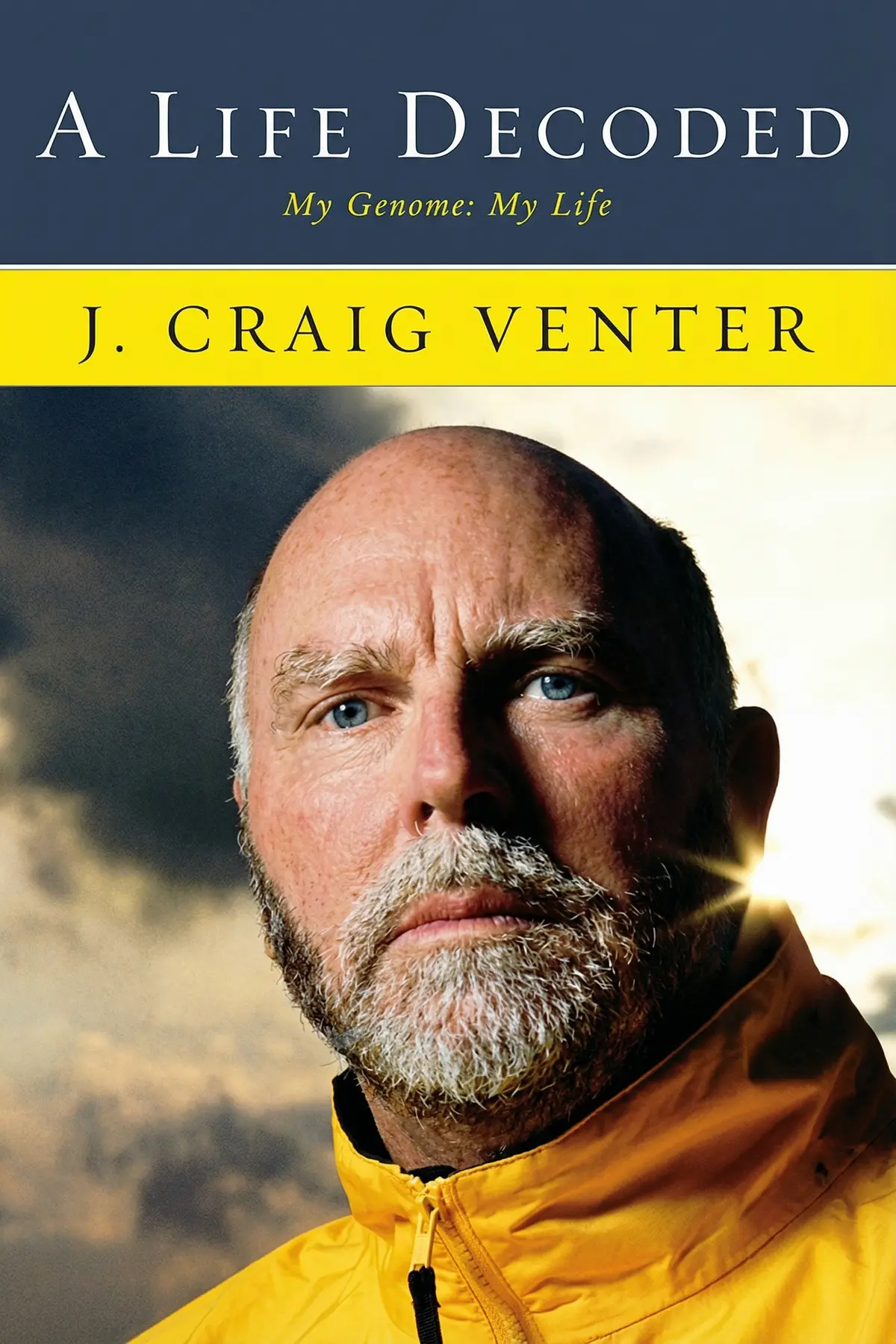
J. Craig Venter
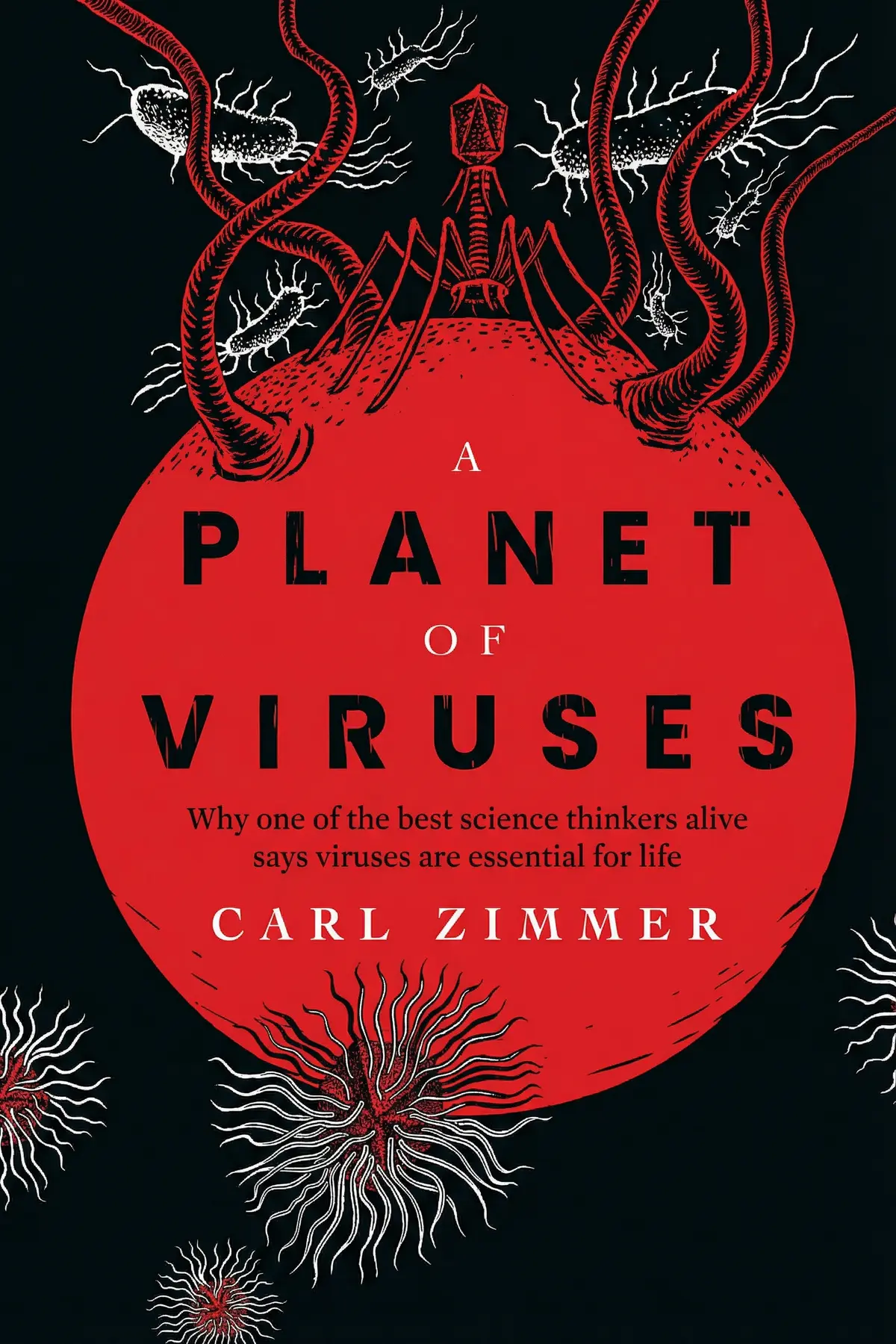
Carl Zimmer
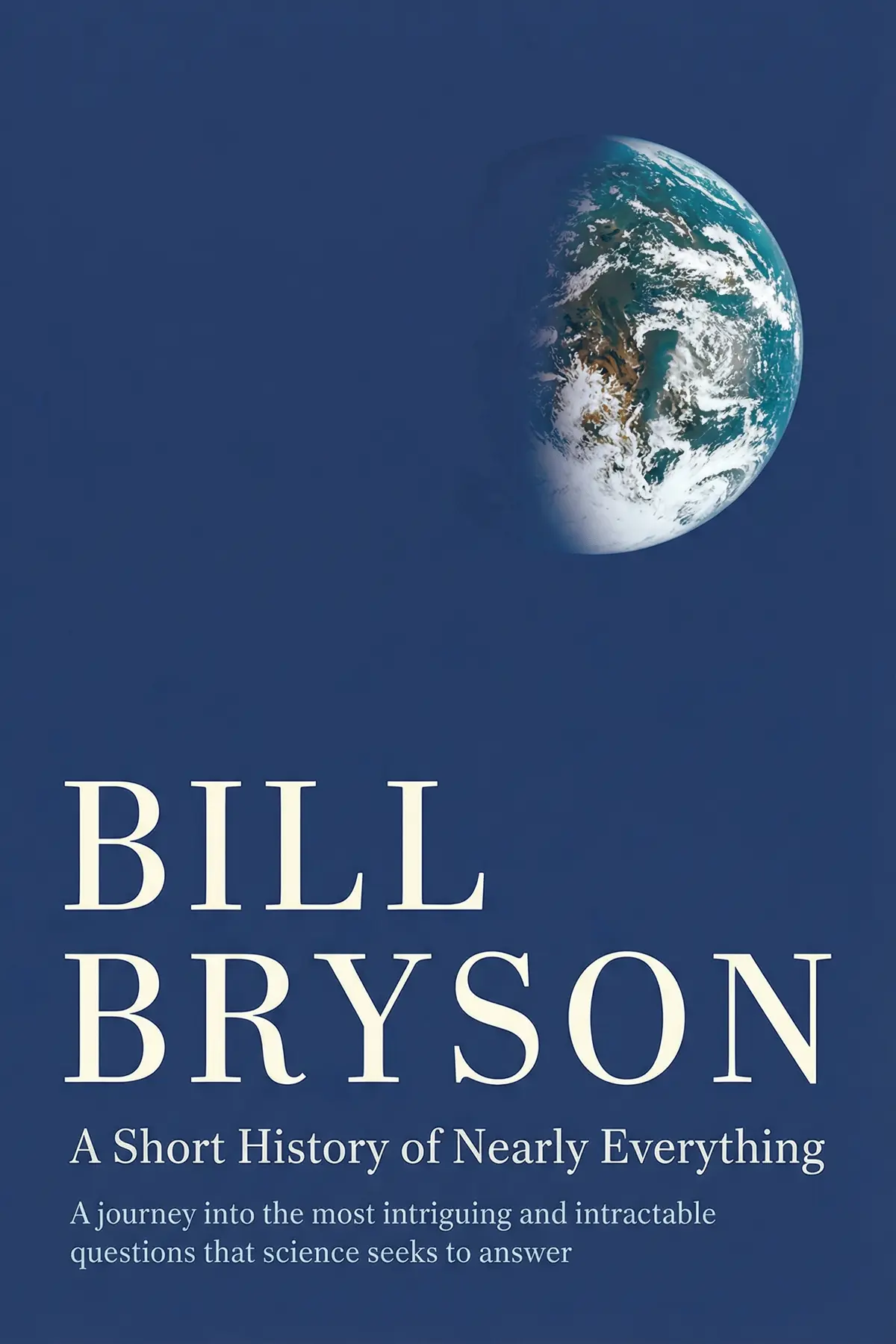
Bill Bryson
AUDIO SUMMARY AVAILABLE
Get the key ideas from The Third Chimpanzee by Jared Diamond, plus 5,000+ more titles in English and Thai.







