
18 min 09 sec
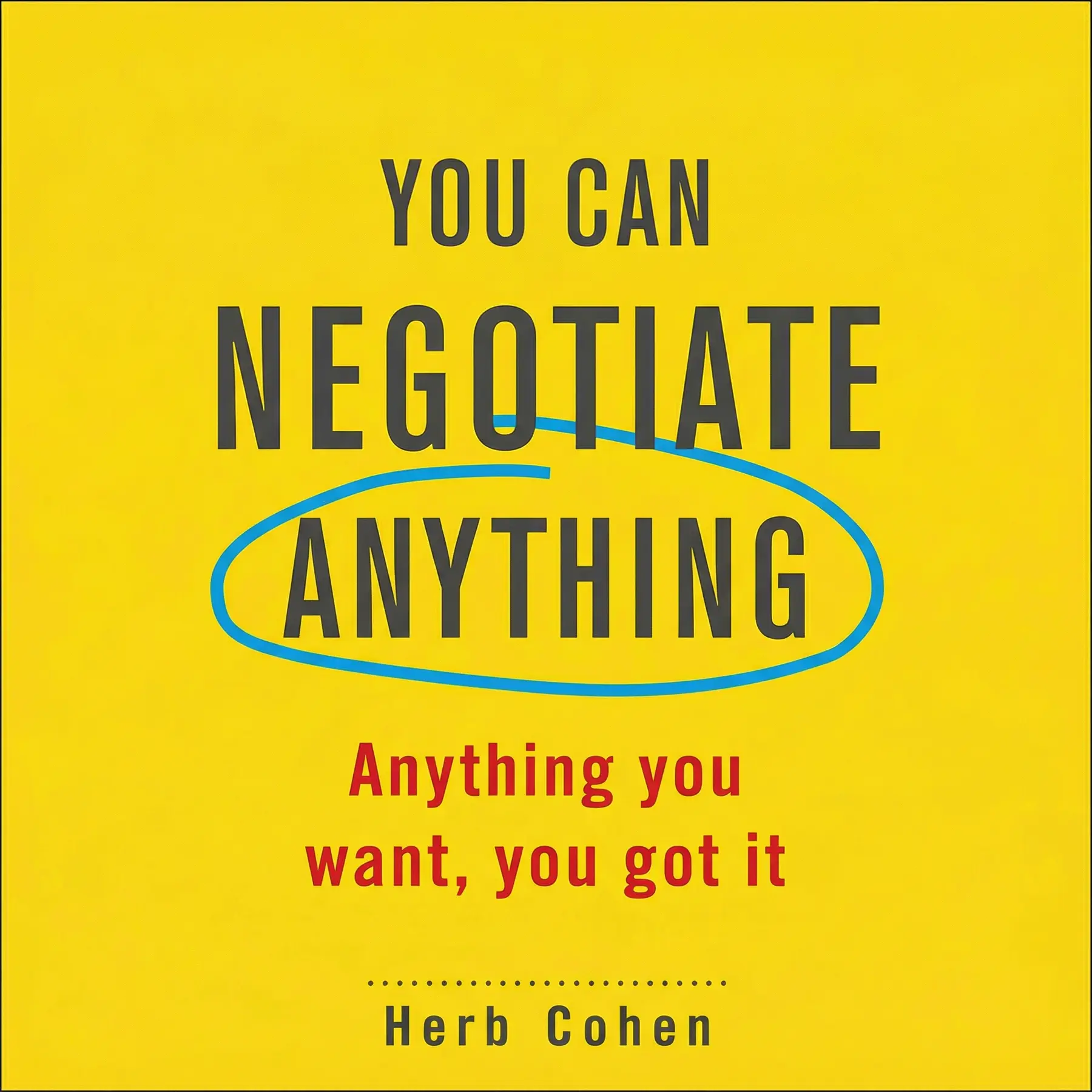
You Can Negotiate Anything: Anything you want, you got it
By Herb Cohen
Learn the art of getting what you want through effective communication. This guide reveals how power, time, and information shape every interaction, from buying a fridge to high-stakes international deals.
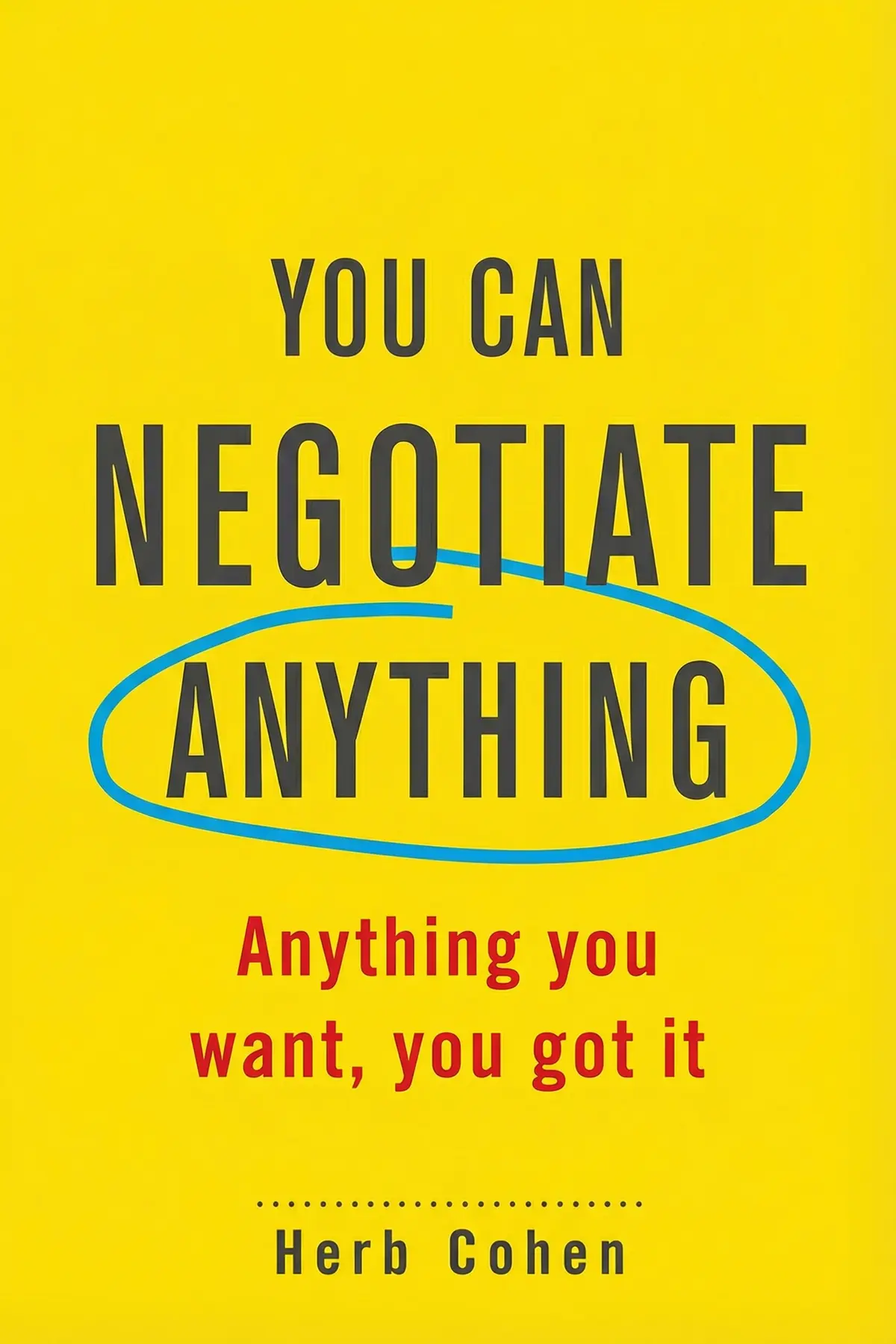
Table of Content
1. Introduction
1 min 41 sec
Imagine for a moment that the world around you is not a fixed landscape of rigid rules and set prices, but rather a fluid environment where almost everything is up for discussion. Most of us go through life accepting the ‘No’ we receive at face value. We see a price tag and assume it’s the final word. We hear a corporate policy and assume it’s an unbreakable law. But what if those barriers were actually just starting points?
In this exploration of Herb Cohen’s insights, we are going to look at the reality that life is essentially one long, continuous negotiation. Whether you are trying to convince your child to finish their dinner, asking your manager for a well-deserved salary increase, or navigating the complexities of a real estate deal, you are negotiating. You are attempting to influence someone else’s behavior to reach a desired outcome.
The core throughline we will follow is that successful negotiation is built upon three primary pillars: power, information, and time. By understanding how these three forces interact, you can transform your interactions from stressful confrontations into productive dialogues. We’ll move beyond the idea that someone has to lose for you to win. Instead, we’ll see how a collaborative mindset can expand the possibilities for everyone. We will also learn how to protect ourselves from those who view every interaction as a battlefield.
By the end of this journey, you’ll understand that your ability to get what you want is rarely about luck. It’s about your willingness to engage, your preparation, and your ability to see the human being on the other side of the table. Let’s dive into the mechanics of influence and discover how to navigate the bargaining table of life.
2. The Universality of Negotiation
2 min 05 sec
Discover why the world is more flexible than it appears and how the simple act of asking the right person can unlock doors you thought were bolted shut.
3. Identifying and Managing Competitive Tactics
2 min 20 sec
Some people view every deal as a war. Learn to spot ‘Soviet-style’ tactics and how to protect your interests when the other side refuses to play fair.
4. The Power of Collaborative Win-Win Outcomes
2 min 08 sec
Moving past compromise can lead to better results for everyone. Learn how to transform conflicting demands into shared solutions by uncovering hidden needs.
5. Leveraging the Three Pillars: Power
2 min 07 sec
Power in negotiation isn’t about being the boss; it’s about perception. Explore the diverse sources of leverage you already possess, from expertise to the power of the printed word.
6. Leveraging the Three Pillars: Information
2 min 10 sec
Knowledge is the currency of the bargaining table. Learn how to gather vital intel long before the meeting starts and why ‘playing dumb’ can be your best strategy.
7. Leveraging the Three Pillars: Time
2 min 01 sec
Time can be your greatest ally or your worst enemy. Discover the 80/20 rule of deadlines and how to keep your cool when the clock is ticking.
8. The Essential Role of the Human Connection
2 min 06 sec
Negotiation isn’t just about logic and numbers; it’s about people. Learn why being likable is a strategic move and how to avoid making ‘visceral enemies.’
9. Conclusion
1 min 31 sec
As we wrap up our look at the art of negotiation, the most important takeaway is that you already have the tools you need to be more effective in your daily life. Negotiation isn’t a dark art reserved for the elite; it’s a skill that can be developed through awareness and practice.
Remember the three pillars: Power, Information, and Time. Always be looking for the hidden sources of leverage you possess, from your expertise to the simple power of having other options. Never underestimate the value of information; do your research early and ask more questions than you answer. And finally, don’t let the clock bully you. Most deadlines are softer than they appear, and patience is often the key to the best concessions.
Beyond the mechanics, never forget the human element. The goal should rarely be to ‘beat’ the other side. Instead, strive for collaborative outcomes where everyone’s underlying needs are met. This not only leads to better deals but also preserves the relationships that make future negotiations possible. Avoid the trap of the win-lose battlefield, and instead, look for ways to harmonize conflicting desires.
From now on, when you see a ‘fixed’ price or hear a firm ‘no,’ don’t see it as a wall. See it as an invitation to begin a conversation. Be prepared, be patient, and most importantly, be willing to ask. You might be surprised at just how much of the world is waiting to be negotiated.
About this book
What is this book about?
Negotiation isn't just for lawyers and diplomats; it is a fundamental part of daily life. This summary explores how nearly everything in our world is up for discussion, provided you understand the mechanics of human interaction. It breaks down the three essential pillars of any deal: the power you project, the information you gather, and the pressure of time. By moving away from a competitive win-lose mindset and toward a collaborative approach, you can find solutions that satisfy everyone involved. You will discover how to identify aggressive tactics used by others, how to leverage your own hidden strengths, and why building a personal connection is often more effective than any logical argument. The promise is a more successful life achieved through the mastery of the bargaining table, whether that table is in a corporate office or your own kitchen.
Book Information
About the Author
Herb Cohen
Herb Cohen has spent more than forty years as a professional negotiator, navigating everything from massive corporate mergers to delicate international disarmament contracts and high-stakes hostage situations. His expertise is sought after by the highest levels of government and law enforcement, having taught his specialized skills to the FBI, the CIA, and at Harvard University. His unique insights and strategies have been profiled in major global publications including The New Yorker, TIME, Rolling Stone, and The Economist.
Ratings & Reviews
Ratings at a glance
What people think
Listeners find the guide offers dependable negotiation tactics and is simple to grasp. They enjoy the entertainment value, with one listener mentioning the author’s humorous way of presenting facts. The pacing is well-received, and one listener notes the helpful focus on making negotiations more personal. Though it is rich with anecdotes, some listeners feel there are too many examples included. Ultimately, listeners consider the purchase to be a good value.
Top reviews
Noppadol
Finally got around to reading this classic, and it is surprisingly relevant even decades later. Cohen breaks down the entire process into three core elements: Information, Time, and Power. This framework shifted how I view every interaction, from buying a car to discussing deadlines at work. I especially appreciated the section on the 'Power of Legitimacy.' It is eye-opening to realize that most rules are just the result of a previous negotiation. The writing style is punchy and accessible, making it an easy weekend read. Gotta say, the humor is a bit dry, but it keeps the technical advice from feeling like a textbook. While some of the retail examples feel like they belong in 1980, the psychological principles are timeless. You start to see the 'web of tension' everywhere you look. It is a solid investment for anyone who feels like they are always the one giving in during a conflict.
Show moreChatchai
Herb Cohen manages to turn a dry business subject into a genuinely fun read through sheer personality and wit. He views the world as a game of illusion, which takes a lot of the stress out of asking for what you want. I loved the idea that everything produced by a negotiation is itself subject to further negotiation. Why should a printed sign in a store have the final word? This mindset shift alone is worth the price of the book. The pacing is excellent, and the author’s humorous delivery keeps you engaged even when the facts get a bit dense. It is refreshing to read someone who doesn't take themselves too seriously while teaching serious skills. This book teaches you to care, but not too much, which is the ultimate secret to maintaining your leverage. If you want to stop being a victim of 'the system,' you need to read this.
Show moreYuwadee
Wow, the idea that every rule is just a previous negotiation's result totally changed my perspective on authority. I used to see 'policy' as an immovable wall, but Cohen teaches you to see it as a starting point. This book is about much more than just money; it is about how to navigate life with a sense of agency. The writing is incredibly engaging and the lessons on 'Information, Time, and Power' are easy to memorize. I specifically enjoyed the part about the 'Power of Morality' and how staying on the high ground can actually be a leverage point. Even if you never plan to haggle over a refrigerator, the communication skills here are top-tier. It is one of those rare business books that actually feels like it was written by a human being with a sense of humor. I will be recommending this to my entire team at work.
Show moreSumalee
Ever wonder why you feel like the underdog in every high-stakes conversation? Herb Cohen argues that we have more power at our fingertips than we realize, provided we know how to use it. The book focuses heavily on personalizing negotiations, which was a major takeaway for me. If you can get the other side to identify with you as a human rather than a statistic, you have already won half the battle. Personally, I found the advice on silence and patience to be the most practical. People are often so uncomfortable with tension that they will concede just to end the silence. To be fair, the book is quite old, and some of the gendered language is noticeably dated. However, if you can look past the 1980s veneer, the core strategies are incredibly effective. It is a quick read that packs a lot of psychological wisdom into a small package.
Show moreRay
The chapter on telephone tactics alone makes this worth the price of admission for anyone in sales. Cohen explains why it is almost always better to be the caller rather than the callee to maintain control of the pace. I had never considered how much easier it is for people to say 'no' when they cannot see your face. This realization has already changed how I schedule my most important meetings. The book is full of these tiny, actionable tidbits that you can apply the very next day. My only gripe is that some of the 'power' sources, like the power of persistence, seem a bit repetitive after a while. Still, the emphasis on gathering information before the 'web of tension' begins is a vital lesson. It is an easy-to-understand guide that demystifies the aura of authority that institutions often project. Definitely a classic for a reason, even if it shows its age in the examples.
Show moreAroon
Picked this up on a whim and realized I have been giving away my power for years by being too impatient. Cohen explains that most concessions happen right at the deadline, so the person who can sustain the tension longest wins. This was a hard pill to swallow for someone like me who hates conflict, but it is undeniably true. The book provides a solid foundation for understanding the 'needs' of the other side, which are rarely what they state openly. By identifying those hidden needs, you can find creative solutions that make everyone happy. My only complaint is that the author glamorizes his success stories a bit too much, making it seem like you'll never lose. Real life is usually messier than his anecdotes suggest. Nevertheless, the tactical advice regarding increments of concession and avoiding 'visceral opponents' is gold. It is a great starting point for anyone looking to improve their persuasive capacity.
Show moreSirichai
As someone who prefers concise frameworks, I found the endless stream of stories a bit exhausting. The book contains plenty of anecdotes, and while some are entertaining, many feel repetitive or overly specific to the author's unique luck. Frankly, the core message could have been delivered in about fifty pages without losing much substance. That said, the breakdown of 'Win-Win' versus adversarial styles was helpful for my current role in project management. Cohen emphasizes that meeting both parties' needs does not have to be mutually exclusive. This is a nice sentiment, but it occasionally contradicts his more manipulative suggestions found earlier in the text. I am giving it three stars because the 'Power of Investment' concept—spending time to make the other side more likely to agree—is brilliant. It is a decent book, but you will have to dig through a lot of fluff to find the real needles.
Show moreErn
Truth is, I struggled with the inconsistency between the 'Win-Win' mantra and the more cutthroat, 'dirty' suggestions. One moment the author is talking about building trust and empathy, and the next he is describing how to waste a salesman's time to get a tiny discount. It feels like the book is trying to be two different things at once: an ethical guide and a manual for sharks. In my experience, using some of these 'adversarial' tricks would ruin a long-term professional relationship in a heartbeat. However, the section on deadlines was genuinely insightful. Understanding that the other side has just as much pressure as you do helps level the playing field. The book is a mixed bag of brilliant psychological insights and questionable moral shortcuts. Read it with a critical eye and take what works for your personal ethics. It is not the magical solution the title implies, but it is certainly better than most modern self-help.
Show moreKru
In my experience, few self-help books from the 80s hold up as well as this one, though it is starting to fray at the edges. The world has changed significantly since Cohen wrote this, yet the basic psychology of human tension remains the same. I appreciated the focus on 'The Power of Expertise' and how establishing your credentials early can prevent challenges later. That said, some of the stories are just too long and feel like the author is just bragging about his past wins. It makes the pacing feel a bit uneven at times. I also found some of the advice regarding 'legitimacy' to be a bit repetitive across different chapters. There is definitely some 'garbage advice' mixed in with the gems, particularly the stuff that borders on being a nuisance to retail workers. It is a 3-star read for me because I had to filter through a lot of dated filler to get the value.
Show moreDek
Not what I expected from a supposed 'business bible' in the modern era. While the three pillars of power, time, and information are conceptually sound, the specific tactics Cohen suggests are frequently appalling. I was genuinely shocked to see a bestseller encourage people to pretend to be mentally handicapped or deliberately damage store merchandise to secure a discount. Look, the author claims these are just examples of what others might do, but the line between identifying and teaching these 'tricks' is incredibly thin. The book is undeniably a product of its time, filled with outdated language and a cutthroat mentality that feels more like manipulation than professional negotiation. If you can look past the ethical sludge, there is a core lesson about not taking 'no' for an answer. However, for the average person trying to live with integrity, much of this advice is simply unusable. I cannot recommend this to anyone who values their character over a few saved dollars.
Show moreReaders also enjoyed


AUDIO SUMMARY AVAILABLE
Listen to You Can Negotiate Anything in 15 minutes
Get the key ideas from You Can Negotiate Anything by Herb Cohen, plus 5,000+ more titles in English and Thai.
- 5,000+ titles
- Listen as much as you want
- 7-day free trial
- Cancel anytime







