A Force for Good: The Dalai Lama's Vision for Our World
Daniel Goleman
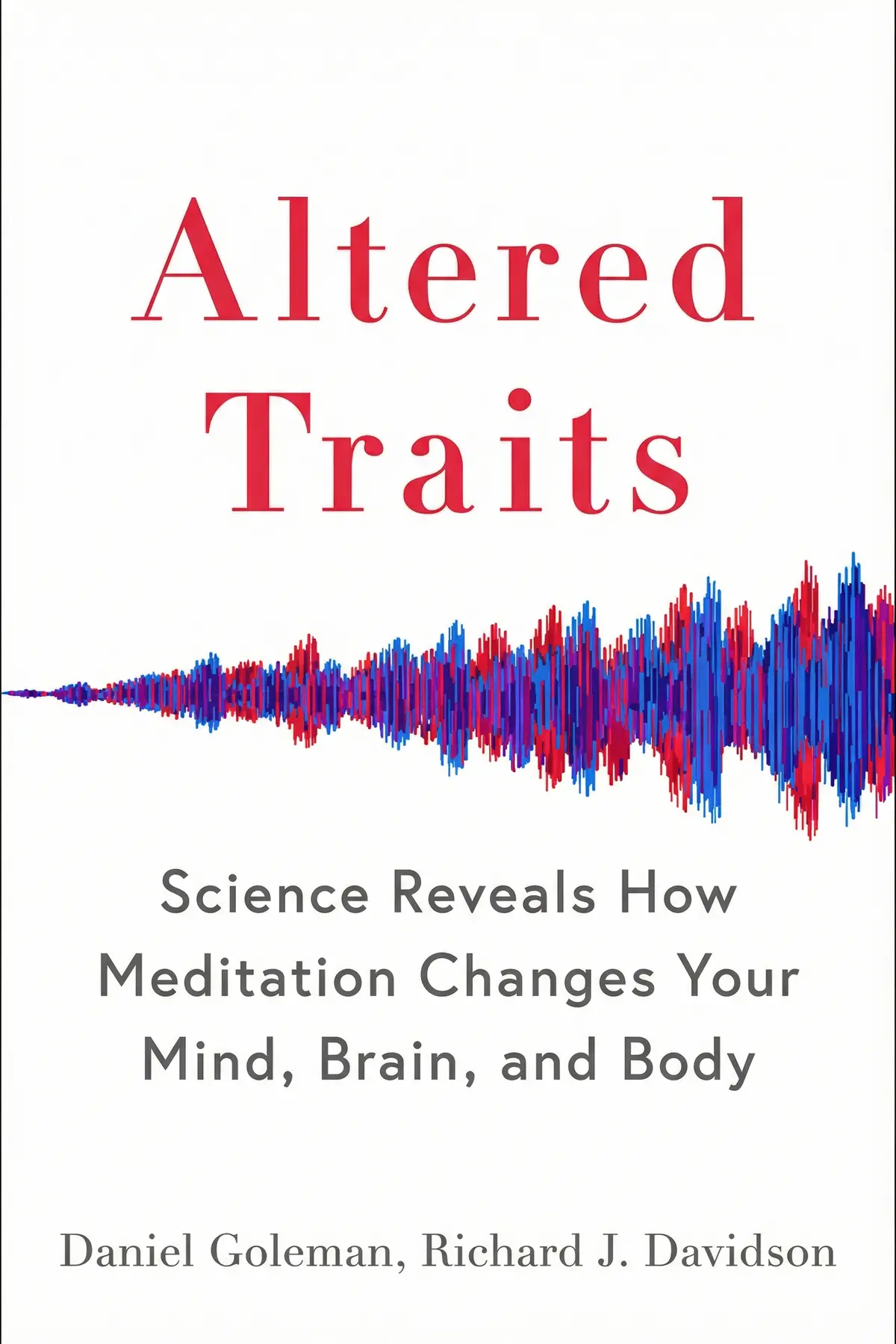
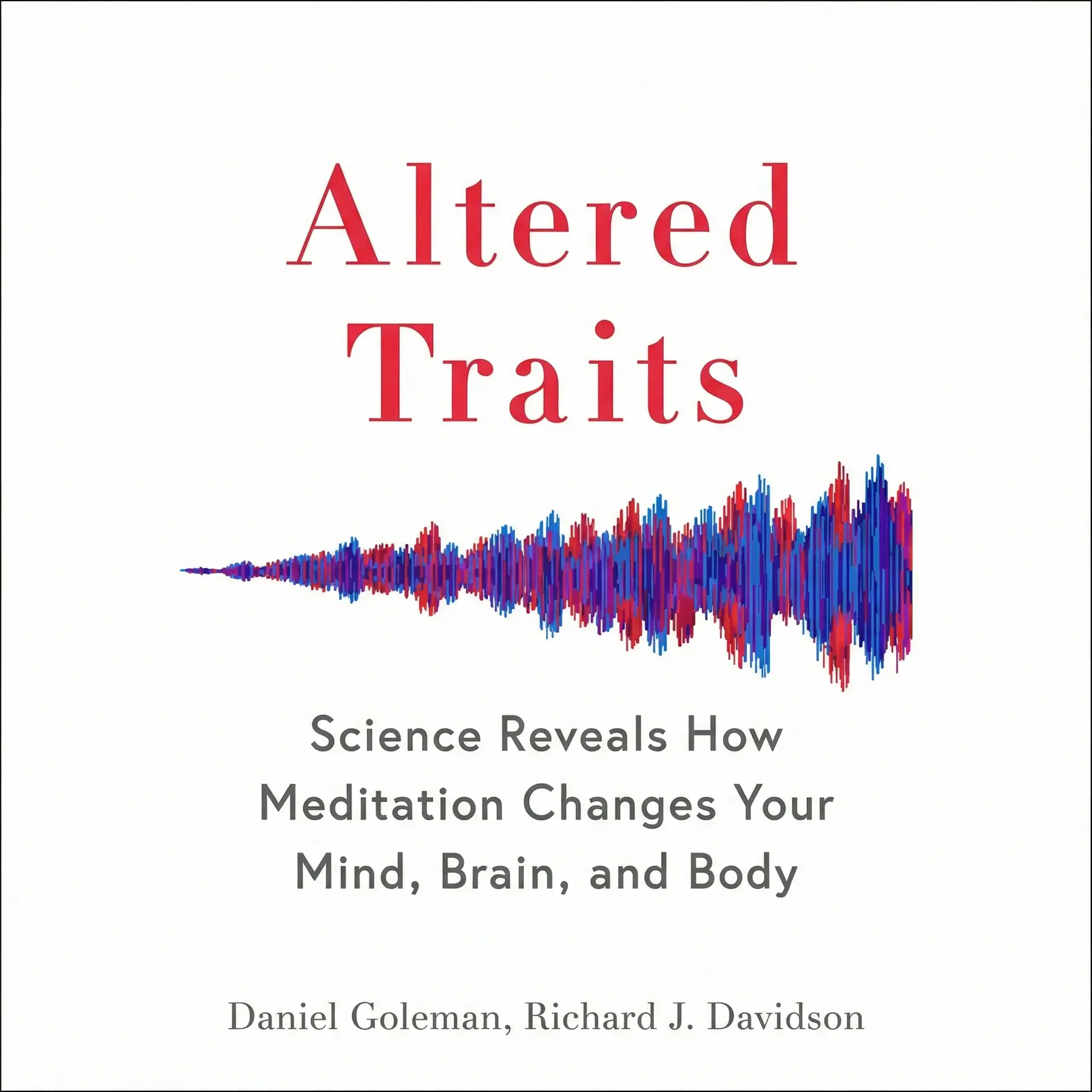
Altered Traits explores the scientific evidence behind meditation, revealing how consistent practice moves beyond temporary relaxation to create permanent, positive changes in brain structure, emotional resilience, and overall well-being.
1 min 44 sec
For a long time, the idea of meditation sat on the fringes of Western society, often dismissed as a mystic’s pastime or a fleeting trend without much clinical weight. We might imagine someone sitting in silence, perhaps feeling a bit more relaxed afterward, but we rarely stopped to ask what was actually happening under the hood. However, as our tools for measuring the human brain have evolved, so has our understanding of this ancient practice. We are now in an era where we can move past the anecdotes and look at the hard data. This is where the journey of discovery begins in the work of Daniel Goleman and Richard J. Davidson.
At the heart of this exploration is a fundamental question: does meditation actually change who we are, or does it just make us feel better for a few minutes? The answer lies in the distinction between what the authors call ‘states’ and ‘traits.’ A state is a temporary feeling, like the calm you might feel while listening to soft music. A trait, however, is a permanent feature of your personality—a new way of being that stays with you even when you aren’t actively practicing. This summary will guide you through the groundbreaking evidence showing that meditation, when practiced with intention and consistency, can actually rewire our neural circuitry.
We will look at how the brain handles the relentless stress of modern life, why our minds seem so prone to wandering, and how we can effectively train our attention like a muscle. Along the way, we will encounter extraordinary individuals whose brains defy standard medical expectations and learn how meditation can serve as a powerful tool in the fight against clinical issues like depression. By the end of this narrative, the goal is to provide a clear, science-backed picture of how mental training can lead to a more resilient, focused, and compassionate version of yourself.
2 min 23 sec
Meditation isn’t just one single activity; it’s a diverse set of mental tools. Discover how focusing on your breath differs from observing your thoughts without judgment.
2 min 19 sec
Stress often feels like an unavoidable part of life, but meditation may change how our bodies react to it. Explore how practice speeds up recovery from life’s pressure.
2 min 00 sec
Multitasking is often praised as a skill, but science suggests it’s actually a drain on our resources. Learn how meditation acts as an antidote to a scattered mind.
2 min 08 sec
What is your brain doing when you aren’t doing anything? It’s likely stuck in the ‘default mode.’ Discover how meditation helps silence the internal chatter.
1 min 50 sec
Can mental exercises actually change the physical structure of the brain? Research suggests meditation may slow the aging process of our neural pathways.
2 min 04 sec
Meditation is increasingly used in clinical settings to treat psychiatric disorders. Learn how mindfulness can be as effective as medication for some individuals.
2 min 00 sec
What happens to the brain after tens of thousands of hours of practice? Witness the super-normal neural activity of a master meditator.
2 min 04 sec
You don’t need to be a monk to see results, but the real benefits come with persistence. Discover the ‘dosage’ required to turn temporary states into lasting traits.
1 min 46 sec
As we close this exploration of the science behind meditation, the throughline is clear: our minds are not fixed. The work of Daniel Goleman and Richard J. Davidson effectively bridges the gap between ancient wisdom and modern neuroscience, proving that the qualities we admire most—resilience, focus, and kindness—are actually skills we can develop. We have seen that meditation is more than a way to relax; it is a rigorous form of mental training that physically reshapes the brain, calms the body’s stress response, and provides a powerful alternative to traditional psychiatric treatments.
The most important takeaway is the shift from ‘states’ to ‘traits.’ While it’s wonderful to feel a sense of peace during a ten-minute session, the real goal is to carry that peace into the middle of a traffic jam, a difficult meeting, or a personal crisis. This transformation doesn’t happen overnight, but the data shows it is possible for anyone who is willing to be consistent. Whether you are a beginner looking to improve your concentration or someone interested in the profound empathy of master yogis, the biological potential for change resides within you.
To turn this knowledge into action, the best approach is to start small but remain steady. Many people claim they don’t have time to meditate, yet we often lose hours to mindless scrolling or internal worrying. By reclaiming just a few minutes of your day to focus on your breath or observe your thoughts, you are beginning the process of neural restructuring. Over time, these small sessions accumulate, leading to the lasting ‘altered traits’ that can redefine your experience of life. The science is in: the mind is a landscape we can actively cultivate, and there is no better time to start than now.
For decades, meditation was viewed in the West as a mystical or fringe activity. In Altered Traits, renowned science journalist Daniel Goleman and neuroscientist Richard J. Davidson peel back the curtain of hype to reveal what the hard data actually says. Drawing on their own pioneering research and a vast meta-analysis of global studies, they explain how meditation fundamentally rewires the human brain. The book’s central promise is a shift in perspective: from the temporary 'states' of calm we feel during a session to the lasting 'traits' that define who we are in our daily lives. By exploring how different practices affect everything from the amygdala’s reaction to stress to the default mode network’s tendency toward distraction, the authors provide a roadmap for anyone looking to optimize their mental health, sharpen their focus, and cultivate a deeper sense of compassion based on neurological reality.
Daniel Goleman is a celebrated author and Harvard graduate, best known for his groundbreaking work on Emotional Intelligence. His fascination with the human mind and contemplative practices began during a transformative two-year journey to India while he was still a student. Richard J. Davidson is a distinguished psychologist from Harvard and currently serves as the director of a leading neurological laboratory in Wisconsin. Davidson has dedicated his career to the scientific study of well-being, specifically focusing on how various forms of meditation can influence the brain and behavior over the long term.
Daniel Goleman

Daniel Goleman
Daniel Goleman
Daniel Goleman
Listeners find this work informative and well-composed, emphasizing the incredible ways meditation impacts our brains and the high-quality scientific findings supporting the practice. They value its life-altering substance, as one listener points out its success in linking scientific data with the personal journey of practitioners. Feedback on the scientific depth is split; some admire the detailed analysis while others view the research as spotty. Likewise, the book's narrative quality and entertainment level have met with mixed responses.
As someone who has dabbled in various mindfulness styles for years, I found this deep dive into neurophysiology absolutely fascinating. Goleman and Davidson managed to bridge the gap between ancient Eastern philosophy and modern Western neuroscience in a way that feels both respectful and rigorous. The most inspiring parts of the book involve the "Olympic-level" meditators—the Tibetan monks who have clocked over 30,000 hours of practice. Hearing about their EEG signatures and their ability to sustain gamma waves for minutes at a time is mind-blowing. It really reframes what is possible for the human mind. While some might find the heavy focus on study design tedious, I actually appreciated the honesty about how flawed previous research has been. It makes the actual findings feel much more reliable and earned. This isn't just another self-help book; it’s a foundational text for understanding the future of contemplative science.
Show moreWow, I finally understand the actual mechanism behind how regular practice changes the brain's baseline. Goleman and Davidson have done a massive service to the community by cutting through the nonsense. I was particularly struck by the data on how loving-kindness meditation can actually change the brain's response to the suffering of others in a very short amount of time. The book beautifully illustrates that our brains are not fixed; they are muscles that can be trained for compassion and focus. I appreciated the transparency regarding the authors’ own journeys to India in the 70s, which added a nice personal touch to an otherwise data-heavy text. It’s a rare treat to see such high-level researchers being so honest about the limitations of their own field while still remaining optimistic about the potential for human transformation. This is a must-read for anyone serious about the intersection of mind and matter.
Show moreAfter hearing so many anecdotal success stories, it was refreshing to read a book that treats meditation with the rigor of a clinical trial. The partnership between a science journalist like Goleman and a researcher like Davidson creates a perfect balance of readability and authority. I was especially moved by the section on how compassion training can decrease inflammatory markers in the body. It’s one thing to say "be kind," but it’s another thing entirely to see the biological evidence of why it matters. The book does a great job of explaining complex concepts like the nucleus accumbens and the basal ganglia without making you feel like you need a medical degree to follow along. While it’s definitely not a "how-to" guide, it provided the scientific "why" that I had been missing. It has inspired me to take my practice more seriously and move beyond the beginner level.
Show moreAltered Traits provides a much-needed course correction for anyone lost in the hazy world of new-age meditation claims. Goleman and Davidson bring a heavy dose of scientific rigor, effectively separating legitimate neuroplasticity from the marketing hype that often surrounds mindfulness today. I appreciated how they leaned into the data from Davidson’s Wisconsin lab, highlighting that while some benefits appear early, the most profound changes—what they call "altered traits"—require thousands of hours of dedication. Truth be told, the writing can feel a bit dense when they dive deep into research methodology and control groups, which might lose some readers looking for a casual weekend read. However, for those who want to understand the actual biological mechanisms behind the practice, this is indispensable. It’s not just about feeling better for twenty minutes; it’s about how consistent practice can physically restructure the brain’s response to stress and pain. A solid, science-backed exploration.
Show moreThe discussion regarding the amygdala and prefrontal cortex connections is where this book truly shines for me. It explains why some long-term practitioners seem so unflappable in the face of stress—it's not just a "feeling," it’s a physical rewiring. I found the distinction between temporary mental states and enduring traits to be a vital concept that most other books in this genre completely ignore. To be fair, the authors do get a bit repetitive when discussing the lack of double-blind studies in the field, which slowed down the middle of the book significantly. However, the profiles of practitioners like Matthieu Ricard and Mingyur Rinpoche kept me engaged throughout. It’s a sobering reminder that while ten minutes of an app might help your day, true transformation takes a lot more sweat equity. If you want the hard truth about meditation without the fluff, this is your book.
Show moreGotta say, the authors do a fantastic job of weeding out the junk science that currently clutters the mindfulness industry. It’s easy to get swept up in the "meditation cures everything" narrative, so having two heavyweights like Goleman and Davidson provide a reality check is refreshing. They make a compelling case for why long-term practice is necessary to achieve "altered traits" rather than just "altered states." My only real gripe is that the book can feel a bit elitist at times, focusing so heavily on the "Olympic" meditators that the benefits for us "mortals" feel a bit diminished in comparison. Still, the chapters on how mindfulness impacts the default mode network and our sense of self are brilliant. It gave me a lot to think about regarding my own habits and how I process daily stressors. It's a dense read, but one that is ultimately worth the effort.
Show moreFinally got around to reading this, and it really shifted how I view my daily ten-minute session. The authors break down the expertise levels into beginners, long-term, and world-class, which helped me realize exactly where I stand on the journey. It was a bit humbling to see how much practice is actually required to see the structural brain changes they describe. I particularly liked the "In a Nutshell" summaries; they served as a great anchor when the scientific jargon got a bit too intense. Not gonna lie, some of the chapters felt like they were repeating the same point about the importance of control groups, but I suppose that’s the price you pay for scientific accuracy. Overall, it’s a high-quality review of the current state of contemplative science. It might not be the most "entertaining" book on my shelf, but it’s definitely one of the most informative ones.
Show moreEver wonder why some people experience profound shifts while others feel nothing after months of practice? This book attempts to answer that by looking at the "dose-response" curve of meditation, but it often gets bogged down in the technical weeds. While the credentials of the authors are undeniable, I found the narrative structure a bit disjointed. They jump from one academic study to the next without providing a cohesive bridge for the layperson. Personally, I was hoping for more actionable insights or a clearer guide on which styles of meditation produce which specific results. Instead, we get a lot of talk about the "Gold Standard" of research and the flaws in existing studies. It’s an informative read if you are a researcher or a hardcore skeptic, but if you’re looking for a "how-to" manual, you will likely walk away disappointed. It’s a bit dry for my taste, though the section on Tibetan yogis was genuinely impressive.
Show morePicked this up after hearing Goleman speak on a podcast, but the book itself was a bit of a mixed bag. On one hand, the science is clearly top-notch and the authors are experts in their field. On the other hand, the prose is quite academic and lacks the narrative drive that makes science writing really pop. I struggled with how they categorized various meditation styles without really explaining how to do them. It felt a bit like being invited to a gourmet dinner only to be shown the chemical breakdown of the ingredients instead of getting to eat. Look, the info on telomerase and aging is cool, and the "In a Nutshell" summaries at the end of chapters were very helpful. But overall, it felt like it was written more for other scientists than for people who actually meditate. It’s informative but definitely not an easy or particularly fun read.
Show moreNot what I expected given the pedigree of the authors. I came in expecting something as engaging as Emotional Intelligence, but the writing here is remarkably bland and repetitive. So much of the page count is dedicated to critiquing the methodology of other scientists that the actual "traits" promised in the title get buried. Frankly, it was a struggle to stay focused because the "filler" content outweighed the interesting bits about brain changes. There are almost no practical takeaways for an average reader who just wants to improve their focus or reduce stress. It felt like I was reading a peer-reviewed journal article that had been stretched out into a full-length book. If you aren't already deeply invested in the academic politics of neuroscience research, you might find this to be a very dry and unrewarding experience. I'm disappointed that such a fascinating topic was made so clinical.
Show more
J. Craig Venter
Eckhart Tolle
Carl Zimmer

Bill Bryson
Pico Iyer

Jeff Hawkins

AUDIO SUMMARY AVAILABLE
Get the key ideas from Altered Traits by Daniel Goleman, plus 5,000+ more titles in English and Thai.