A Force for Good: The Dalai Lama's Vision for Our World
Daniel Goleman
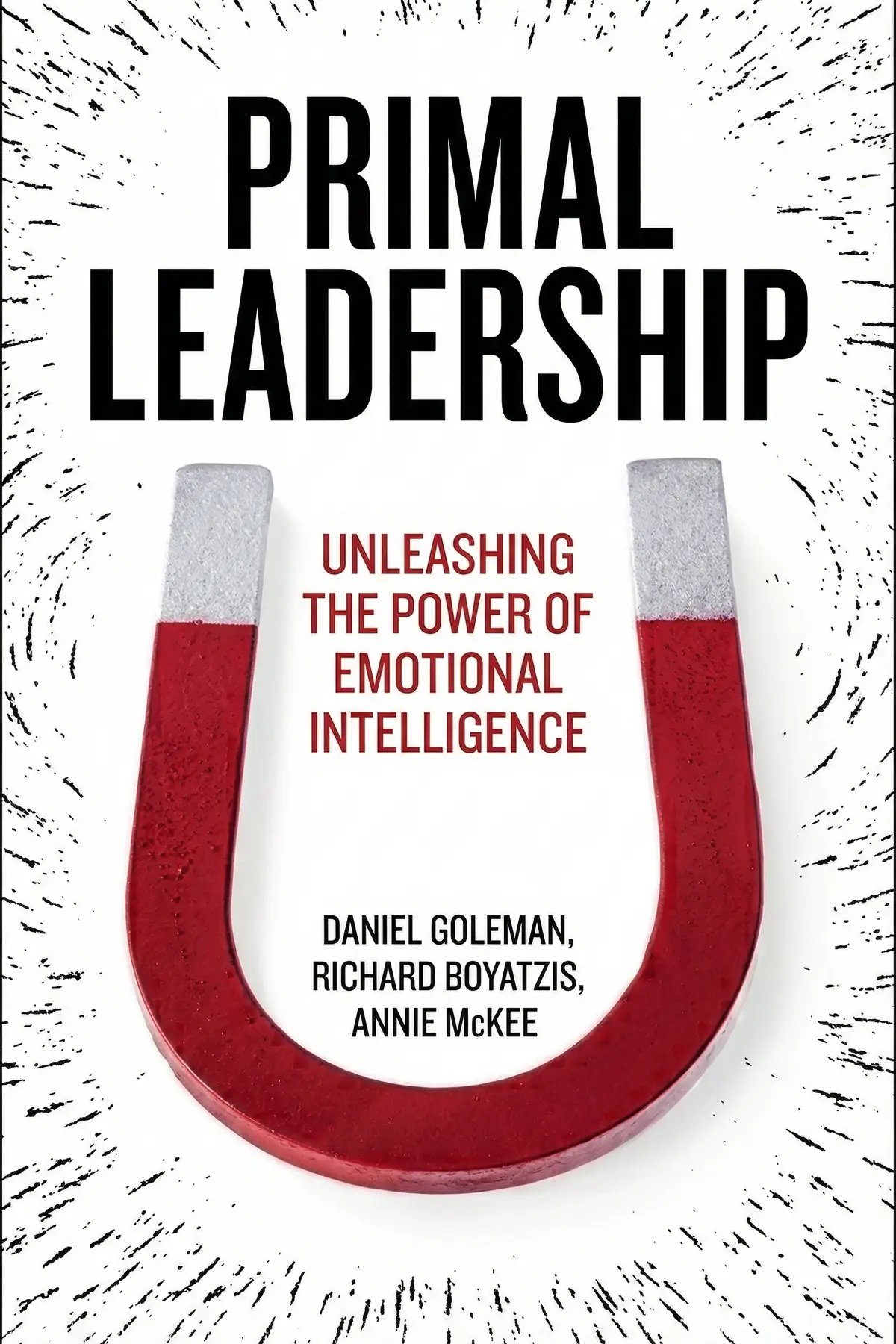
Explore how emotional intelligence serves as the foundation of effective management. This summary explains the biological impact of a leader’s mood and the four essential domains for building resonant, high-performing teams.
57 sec
We often think of leadership as a series of cold, calculated decisions. We picture a person at the front of a room with a brilliant strategy, a perfect five-year plan, and an unmatched intellect. But while those things are certainly valuable, they aren’t what actually moves a team to action. If you look closely at the most effective leaders in history, you’ll find that their true power doesn’t come from their spreadsheets, but from their ability to connect with the people around them.
This is the core idea of Primal Leadership. It suggests that the most fundamental task of any leader is an emotional one. Before a leader can drive results, they must drive emotions in the right direction. When a leader fails to manage the emotional climate of their team, nothing else—no matter how clever the strategy—will work quite right. Over the next few minutes, we are going to explore why our brains are so sensitive to the moods of our bosses, and how you can master the four domains of emotional intelligence to become a leader who inspires rather than drains.
1 min 59 sec
Discover how the human brain is hardwired to mirror the emotions of those in charge through an open-loop system that affects our physical well-veing.
2 min 10 sec
Learn the essential pillars of resonance that transform a manager from a source of stress into a source of inspiration and collaboration.
1 min 00 sec
The traditional view of leadership often ignores the very thing that makes us human: our emotions. But as we’ve seen, the biological reality of our open-loop limbic system means that a leader’s emotional state is perhaps their most influential trait. By recognizing that you are the emotional thermostat for your team, you can take responsibility for the energy you bring into every meeting and every interaction.
To become a truly resonant leader, remember the four-step path: start by knowing yourself, learn to manage your own internal world, practice deep empathy for those around you, and finally, use those connections to manage your relationships with care. These aren’t just soft skills; they are the hard science of high performance. As you move forward, try to pay closer attention to the emotional wake you leave behind. With patience and consistent practice, you can move beyond mere management and unlock the primal power of resonant leadership, creating a workplace where both people and profits can thrive together.
What separates an average manager from a truly great leader? The answer isn’t just found in strategy or intellect—it resides in emotional intelligence. This exploration into the heart of leadership reveals that our brains are biologically wired to respond to the emotions of those in charge. By understanding the open-loop nature of the human limbic system, leaders can learn to broadcast positive energy that improves team performance and physiological well-being. The book provides a roadmap for developing this primal skill set through four key domains: self-awareness, self-management, social awareness, and relationship management. It promises to move leaders away from dissonance—leadership that creates unnecessary stress and discord—and toward resonance, where a leader’s emotional state aligns with and inspires their team. By mastering these competencies, anyone can cultivate a work environment that isn't just more pleasant, but significantly more efficient and sustainable.
Daniel Goleman is an author and former science reporter for the New York Times, known for international bestsellers like Emotional Intelligence and Social Intelligence. Richard E. Boyatzis is an author and a distinguished professor at Case Western Reserve University. Annie McKee is an author, cofounder of the Teleos Leadership Institute, and a teacher at the University of Pennsylvania.
Daniel Goleman
Daniel Goleman
Daniel Goleman
Daniel Goleman
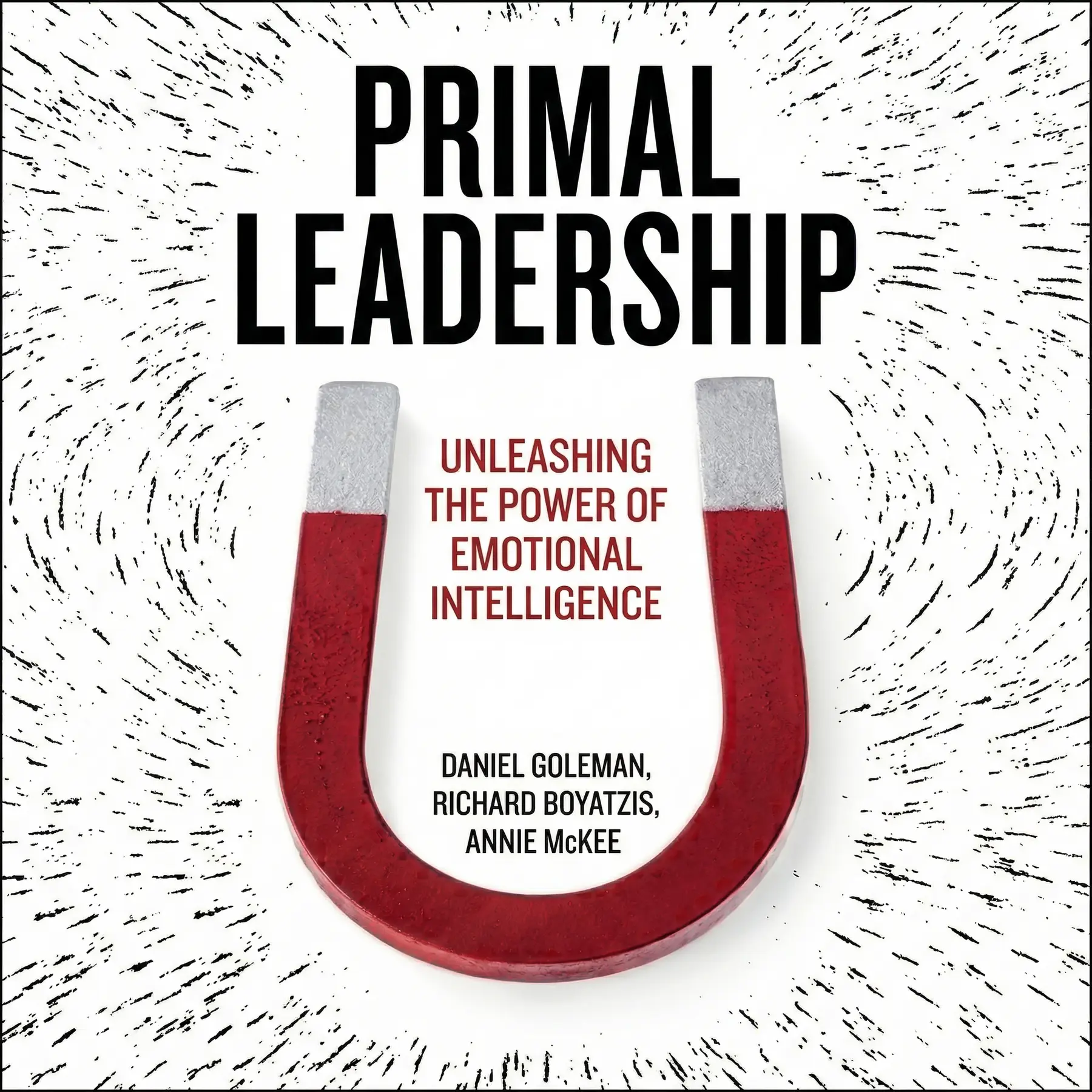
Listeners find this text to be a compelling and essential guide for corporate experts, delivering excellent guidance for cultivating leadership and blending emotional intelligence with self-awareness. The material provides in-depth explorations of management theories and remains accessible, with one listener pointing out how it harmonizes academic models with professional practices. Listeners believe it is well worth the cost.
Finally got around to reading this staple of management literature, and it is undoubtedly an essential foundation for any professional aiming to scale the corporate ladder. The authors do a phenomenal job of moving beyond the abstract concept of 'soft skills' to provide granular breakdowns of how emotional intelligence actually dictates the success of a team. I particularly appreciated the distinction between resonant and dissonant leaders; it explains so much about the toxic dynamics I've seen in past roles. While some sections regarding the neurological aspects of the brain are a bit dense, the way it balances scientific theory with actionable business principles justifies the cover price. It’s a must-read if you want to understand why some managers inspire fierce loyalty while others just breed resentment. To be fair, you have to be ready for some introspective work, but the payoff for your career trajectory is immense.
Show moreWow, I didn't expect a business text to make me re-evaluate my entire personality, but here we are. Unlike some reviewers who found the 'ideal self' exercises demeaning, I found the process of identifying my emotional gaps to be incredibly empowering and humanizing. The authors argue that great leaders aren't just born; they are made through a conscious effort to improve their social circuitry. That message of mind plasticity is so vital in today’s rigid corporate world. I loved the deep dive into how emotions are contagious. It changed the way I walk into meetings every morning. The book is well-referenced and provides a perfect roadmap for anyone serious about fostering a resonant culture. If you are a manager who actually cares about the people you lead, this is a top-tier resource.
Show moreAfter hearing about this in a leadership seminar, I was skeptical about how EI applies to my work in the public sector, but I was pleasantly surprised. The authors articulate a vision of leadership that is rooted in service and authenticity rather than just manipulation or hitting quarterly targets. It’s a refreshing change from the 'command and control' style that is still so prevalent. The way they describe 'collective mindfulness' helped me understand why my team has been struggling with certain ingrained habits. By surfacing the emotional reality of our organization, we’ve actually started to see real change. This book is a must-read for anyone who wants to lead with heart without losing sight of excellence. It’s detailed, easy to follow, and provides a language for leadership that feels both modern and deeply human. High marks from me.
Show moreAs someone who has navigated a few different corporate cultures, the core concept of 'limbic leadership' really hit home for me. By examining the way our limbic systems interact, the authors illustrate how a leader’s mood isn't just a personal matter but a broadcast signal that can either harmonize a team or completely shatter its productivity. It’s fascinating stuff. I found the six leadership styles—especially the contrast between the Pacesetting and Coaching models—to be incredibly practical for daily application. My only gripe is that the writing can feel a bit like a technical report in the middle chapters, making it a slower read than your average business bestseller. Still, the detailed explanations provided here offer a roadmap for building leaders who are actually self-aware. If you can push through the occasional dry stretch, the insights on relationship management are pure gold.
Show moreThe chapter on 'CEO disease' alone makes this a worthwhile purchase for anyone sitting in an executive chair or aspiring to one. It’s a stinging reminder of how easily leaders can become isolated in a bubble of their own making. This book offers more than just theory; it provides a comprehensive guide on how to stay attuned to the emotional reality of your organization. I’ve read plenty of management books, but few balance the psychological side of leadership with practical business outcomes as effectively as this one. Some of the real-life examples felt a bit truncated, leaving me wanting more depth on the specific turnarounds mentioned, but the overarching message is powerful. You’ll walk away with a much better understanding of how your own self-management—or lack thereof—is the primary driver of your team’s climate. Definitely worth the time for the self-reflection it triggers.
Show morePrimal Leadership serves as a fantastic primer for anyone who wants to operationalize their soft skills instead of just talking about them. Personally, I found the sections on 'relationship management' to be the most insightful part of the entire volume. It’s one thing to know you should be empathetic; it’s another to see the data on how empathy drives the bottom line. The book does a great job of showing how leaders can act as 'limbic attractors' to keep their teams focused and positive. While I agree that some chapters feel a bit like they were cut and pasted from different reports, the overall message remains cohesive. It’s an informative read that challenges you to look in the mirror before you try to change anyone else. A solid addition to any management library.
Show moreThis book feels like three different manuscripts stapled together, and frankly, the stitching shows quite clearly. While the opening chapters on the power of resonance are exciting and offer a fresh perspective on what makes a leader 'primal,' the later sections devolve into a mountain of study summaries that feel repetitive. It’s ironic that a book about emotional intelligence can occasionally feel as dry as a grocery list or a recycled PowerPoint presentation. I struggled to stay engaged during the deep dives into organizational theory, even though I recognize the value of the information. That said, the checklist of leadership competencies at the end is a fantastic tool for self-assessment. It’s a bit of a mixed bag: the ideas are groundbreaking, but the execution is often uninspired and takes a lot of discipline to finish.
Show moreEver wonder why a highly intelligent boss can still be a total disaster when it comes to office morale? This book answers that question by prioritizing empathy and social awareness over raw IQ, which is a perspective I think more companies need to adopt. However, the experience of reading it was a bit of a slog for me. The authors seem quite full of themselves at times, constantly name-dropping the multinational CEOs they’ve coached. It creates a bit of a barrier for those of us working in smaller firms or non-profits. The theory of self-directed learning is useful, but it’s buried under so much academic padding that I found myself skimming frequently. It’s a good book with great ideas, but it desperately needed a more ruthless editor to keep the energy high throughout.
Show moreTruth is, I opted for the audiobook version, which might have been a mistake because the narrator was exceptionally dry. The content itself is quite valuable, specifically the breakdown of the four domains of emotional intelligence, but the delivery made it hard to stay focused. It’s a relatively short book that should have taken two days, but it felt much longer. I did appreciate the practical advice on how to build a learning agenda that focuses on strengths rather than just fixing weaknesses. It’s a decent primer for someone who has never heard of EI, though seasoned managers might find some of the advice a bit elementary. It provides okay information for building leaders, but don't expect to be entertained. It’s strictly educational and a bit clinical.
Show moreNot what I expected from Goleman, as the writing here is incredibly uninspired and buried under piles of redundant study summaries. I was excited to learn more about emotional intelligence in leadership, but the result was a book that felt like a chore to finish. The real-life stories were far too brief to have any emotional impact, and the authors kept repeating the same few points about resonance until they lost all meaning. Look, the core idea is solid, but you could probably get everything you need from a twenty-minute summary online. It took me months to get through this because it was so dull and frustrating. For a book that preaches the importance of engagement and connection, it failed to connect with me as a reader. Disappointing.
Show more
Hamilton Helmer

Margaret Heffernan
Joseph A. Maciariello

AUDIO SUMMARY AVAILABLE
Get the key ideas from Primal Leadership by Daniel Goleman, plus 5,000+ more titles in English and Thai.