A Force for Good: The Dalai Lama's Vision for Our World
Daniel Goleman
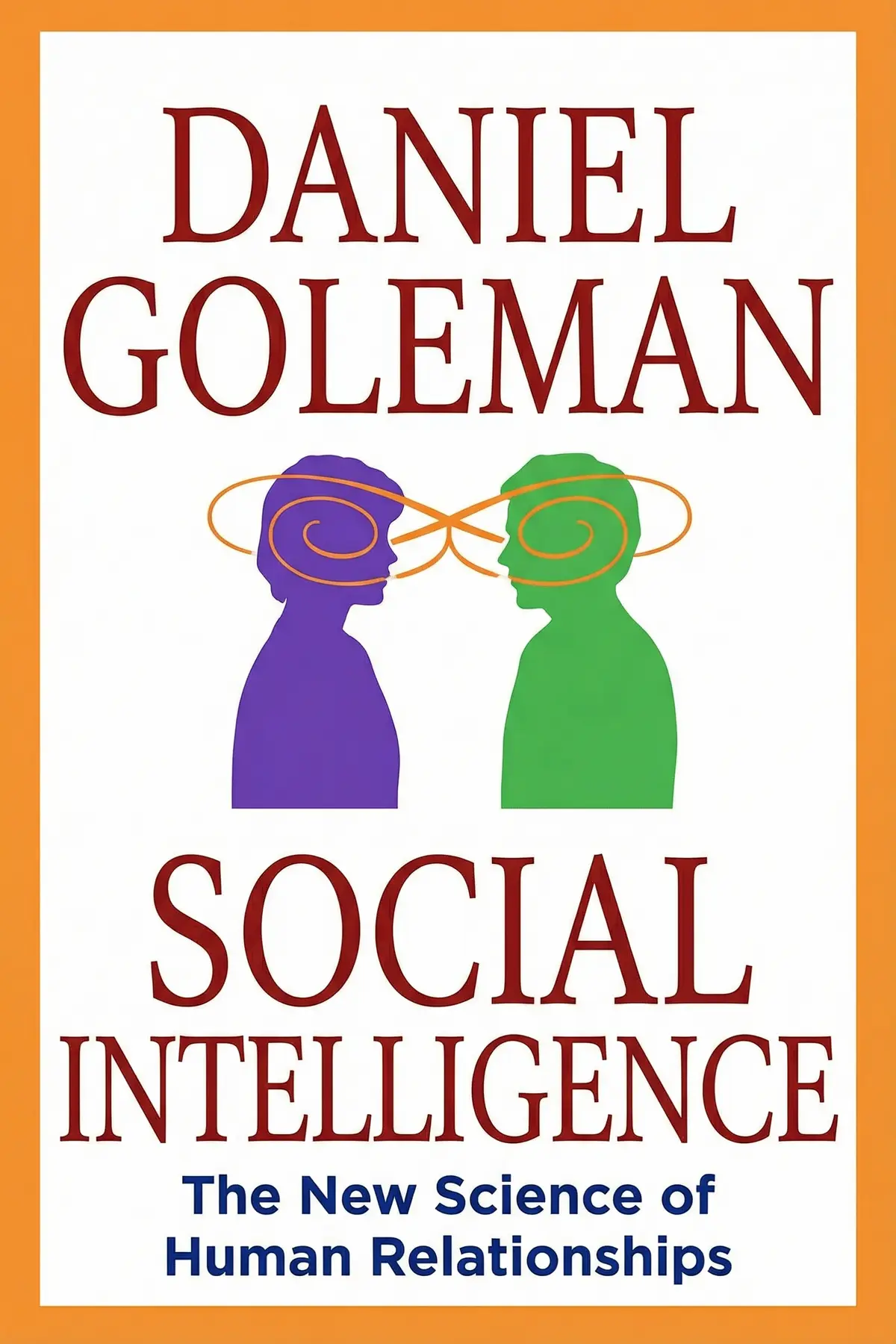
Social Intelligence explores the biology of human connection. Daniel Goleman reveals how our brains are wired for interaction, impacting our health, relationships, and success, while offering insights into developing deeper interpersonal awareness.
1 min 55 sec
Have you ever wondered why some of the most brilliant people you know—individuals who can solve complex equations or master intricate technical skills—seem to completely fall apart the moment they have to strike up a conversation at a wedding? Or why a person with an average IQ might be the most successful leader in their field simply because they know how to work a room? This discrepancy highlights a fundamental truth: there is a specific kind of intelligence that exists entirely outside of logic puzzles and academic testing. It is what Daniel Goleman calls Social Intelligence.
For a long time, we viewed intelligence as a static, internal trait—something you either have or you don’t, usually measured by how well you process information. But as neuroscience and psychology have evolved, researchers have discovered that our brains are not isolated processors. Instead, they are designed for connection. We are constantly, often invisibly, influencing the biology of the people around us, and they are doing the same to us. This throughline of interconnectedness is the heart of Goleman’s exploration.
In this summary, we are going to dive deep into the mechanics of human relationships. We’ll look at why the ability to “read” someone’s mind is more than just a metaphor and how our cultural backgrounds dictate the way we pay attention to each other. We will also explore the surprising biological roots of shyness, the hidden health benefits of a strong social circle, and why some people are naturally more prone to narcissism or aggression than others.
By the end of this journey, you will see that social intelligence is not just a soft skill. It is a vital, biological necessity that shapes our health, our resilience, and our capacity for joy. Let’s begin by looking at the fundamental building block of social interaction: our ability to accurately perceive what others are feeling.
2 min 19 sec
Discover why the ability to read hidden signals is a survival skill that can prevent conflict and deepen the most important bonds in your life.
2 min 09 sec
Explore how the simple act of listening varies across cultures and why genuine attention is the ultimate test for any healthy relationship.
2 min 18 sec
Uncover the secret link between brain wiring and shyness, and learn how our environment can rewrite our social destiny.
2 min 06 sec
Can watching a scary movie actually make you more adventurous? Learn the surprising role of fear in healthy development.
2 min 08 sec
Examine the chilling connection between lack of empathy and narcissism, and how biology influences our darkest social impulses.
1 min 59 sec
Discover why compassion can be exhausting and how your community acts as a secondary immune system for your body.
2 min 04 sec
Could your friendships be as important as your medicine? Learn the medical case for staying social when you’re sick.
2 min 14 sec
Find out why a teacher’s emotional bond with a student is often more important than the curriculum for academic success.
1 min 58 sec
As we have seen, social intelligence is far more than just the ability to be charming at a dinner party. It is a complex, biologically-driven capacity that influences every facet of our existence. From the way our amygdala reacts to a stranger’s face to the way our immune system responds to the stress of caregiving, our social lives and our physical health are inextricably linked. We are not solitary islands of intelligence; we are part of a vast, interconnected web of human circuitry.
The throughline of Daniel Goleman’s work is clear: we have the power to influence the well-being of everyone we interact with. By developing our empathic accuracy, we can bridge the gap between ourselves and others. By paying genuine attention, we can foster rapport and cultural understanding. And by recognizing the biological roots of our behavior, we can learn to manage our impulses and build more resilient, compassionate communities.
The most important takeaway is that social intelligence is a skill that can be nurtured. Whether you are a parent helping a shy child find their courage, a teacher looking past a student’s behavior to their needs, or a friend showing up for someone in a hospital room, you are putting this science into practice.
As an actionable closing thought, remember that the smallest social gestures often carry the most weight. When you make a mistake, don’t just brush it off. Science shows that people who openly admit their errors and show genuine remorse are treated with far more leniency and respect than those who try to ignore their blunders. This simple act of social honesty builds trust and strengthens bonds. In a world that often prizes individual achievement above all else, never forget that our greatest strength lies in our ability to connect, to understand, and to care for one another. That is the true power of social intelligence.
Social Intelligence delves into the fascinating world of neuroscience to explain why humans are fundamentally social creatures. Daniel Goleman takes us on a journey through the "new science" of relationships, showing that our interactions with others have a profound physical impact on our bodies and minds. The book moves beyond traditional measures of IQ to explore how empathic accuracy, social awareness, and emotional rapport dictate the quality of our lives. The promise of this work is a better understanding of the invisible threads that connect us. Goleman explains how we can mirror the emotions of those around us, why some people are naturally better at reading a room, and how our early childhood experiences shape our social predispositions. From the classroom to the hospital wing, the book demonstrates that social intelligence isn't just a personality trait—it's a vital survival skill that can be nurtured to improve our well-being and strengthen our communities.
Daniel Goleman is a distinguished author who has written extensively on psychology, the social sciences, and the practice of meditation. He spent many years as a contributor to the New York Times, where he covered brain and behavioral sciences. Goleman is perhaps best known globally for his 1995 bestseller Emotional Intelligence, a book that redefined how the world views the relationship between cognitive ability and personal success.
Daniel Goleman
Daniel Goleman
Daniel Goleman
Daniel Goleman
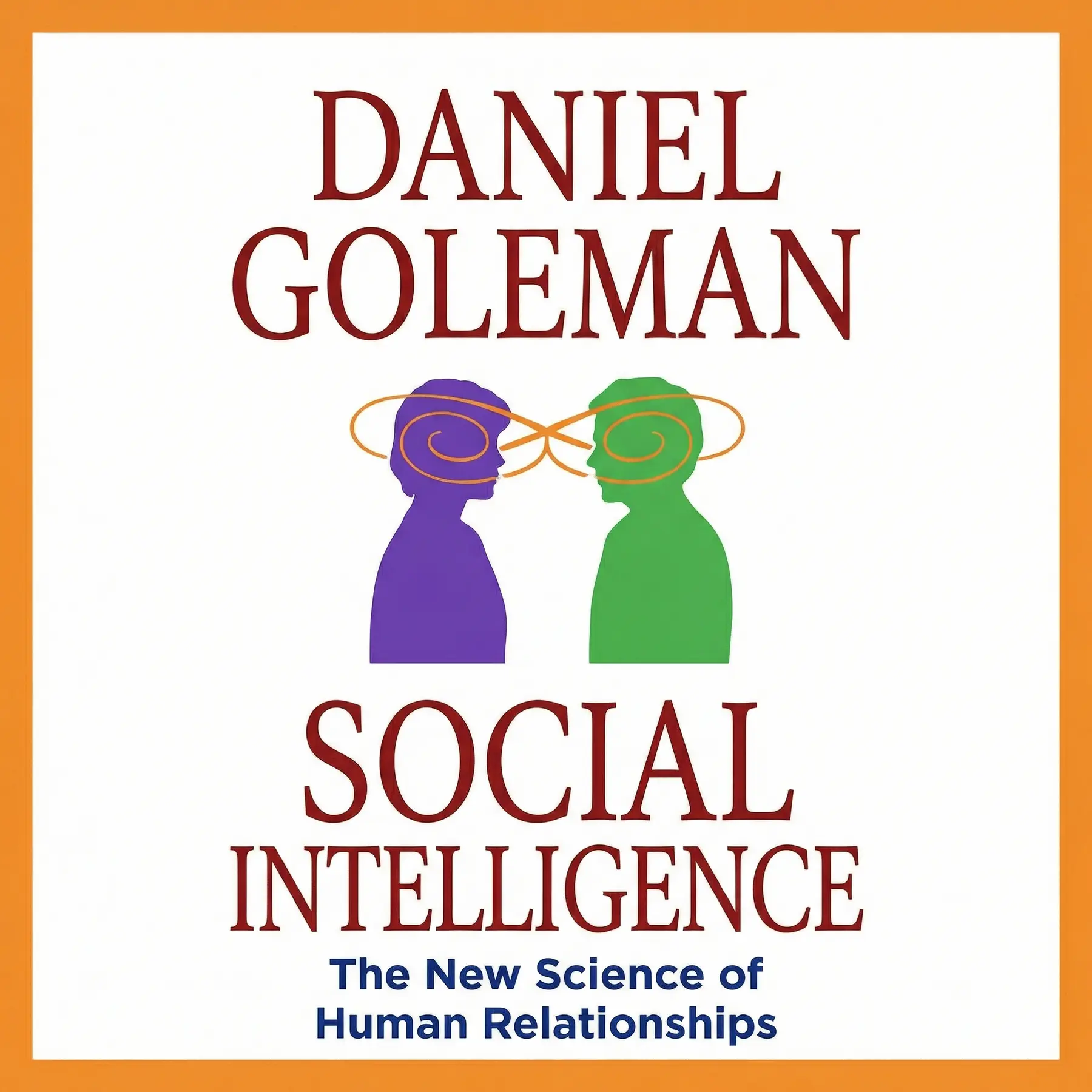
Listeners find the book enlightening, pointing to the numerous studies mentioned and commending its clear, high-quality prose. The details are shared effectively, with one listener highlighting that the content is anchored in evidence-based research, and they prize the focus on human connections and emotional intelligence. However, opinions are split on the speed of the narrative, with several listeners noting that the material feels quite repetitive.
Wow, this really changed how I view my daily interactions with colleagues and family. The concept of 'emotional contagion' resonated deeply, explaining how one person’s toxic mood can spread like a virus through an entire room. Goleman argues that we are biologically wired for connection, and he backs this up with fascinating studies on everything from marriage to the immune system. Not gonna lie, I was surprised to learn that social isolation can be as damaging to your health as a vitamin C deficiency. The writing is clear and authoritative, making high-level psychology accessible to those of us without a PhD. It’s a profound reminder that our relationships are the primary architects of our well-being.
Show moreFinally got around to reading this, and I'm honestly struck by how much of our mental life is just a series of chemical reactions. Objectifying my anger as a neurological response, rather than a personal failing, has already helped me stay calmer during arguments. The book is packed with insights about how we 'catch' emotions from others, making it a must-read for anyone in a caregiving or teaching profession. In my experience, the chapters on exposure therapy and overcoming fear through social support were the most practical parts of the text. While it's long and occasionally repetitive, the core message about the power of human connection is incredibly life-affirming. It’s a brilliant, science-backed look at the ties that bind us.
Show moreThe chapter on empathic accuracy alone makes this book worth the price of admission. It’s not just about knowing what someone is feeling; it’s about understanding the 'why' behind their emotions to build deeper bonds. Goleman’s writing is authoritative yet accessible, even when he’s explaining the intricacies of the amygdala and its role in first impressions. I’ve been thinking a lot about the 'socially intelligent' way to handle conflict ever since I finished it. In my view, seeing our relationships as a biological necessity rather than just a social preference changes everything about how you treat people. This is a masterful follow-up to his work on emotional intelligence and provides a much-needed map of the human heart’s social landscape.
Show moreDaniel Goleman has a knack for making complex neuroscience feel applicable to everyday life. I was particularly fascinated by the distinction between the 'high road' and the 'low road' of social interaction. The idea that our brains are constantly scanning others for emotional cues, often without our conscious awareness, is both empowering and a bit scary. While the book is dense with research and case studies, it provides a solid foundation for understanding why we react the way we do in crowds. To be fair, some sections felt a bit like a textbook, especially when diving deep into brain anatomy. However, the insights into how our social connections directly impact our physical health made the denser parts worth the effort.
Show moreAfter hearing so much praise for Goleman, I finally dove into this exploration of how our brains are 'wired to connect.' The chapters on how parents influence a child's social development through mirror neurons were eye-opening for me. It’s comforting to know that our genes aren't our destiny and that we can actually reshape our neural pathways through conscious effort. Personally, I think the book shines when it discusses the 'low road'—that split-second emotional intuition handled by the amygdala. The only downside is that the author tends to bury his best advice under layers of anatomical descriptions. It requires a bit of patience, but the perspective shift on human empathy is absolutely worth the slog.
Show moreAs someone who works in a high-stress management role, I found the section on socially intelligent leadership to be incredibly relevant. Goleman illustrates how a leader’s mood can either foster a creative, bonded group or stifle productivity through fear. The research on how eye contact and physical rhythm create 'attunement' between people provides a scientific basis for what we usually call 'chemistry.' While the book is heavily grounded in evidence-based research, it occasionally feels like it’s trying to cover too much ground at once. I would have preferred more 'how-to' guidance rather than just the 'why' behind our behaviors. Still, it’s a high-quality read that offers a lot of food for thought regarding workplace dynamics.
Show moreDirectly addressing the way we interact with others, Goleman proves that social intelligence is just as vital as IQ. I loved the anecdote about Indian hospitals and how the presence of family actually speeds up the healing process. It’s a powerful testament to the idea that humans are built for cooperation, not just competition. Got to say, the technical bits about the brain's left side doing the heavy emotional lifting were a bit over my head at times. However, the overarching theme that we can literally change our brain's wiring by changing our behavior is very inspiring. It’s a dense read, but if you enjoy evidence-based psychology, you won’t find a better resource on the subject.
Show moreEver wonder why some people just 'get' social cues while others seem completely oblivious? Goleman explores this through a mountain of evidence-based research, focusing on the neurological basis of human connection. Truth is, the book follows a very rigid formula that becomes quite repetitive by the halfway mark. You get a case study, a technical term, a brain location, and then an interpretation over and over again. It’s definitely more of an academic literature review than a quick self-help guide for the average reader. I did appreciate the sections on 'empathic accuracy' and how mirror neurons allow us to feel what others feel. If you can push through the dry pacing, there are some real gems hidden in the data.
Show moreThis book is definitely an interesting deep dive into the 'anatomy' of our social lives, though it lacks the focus of Goleman's previous hits. It feels like a collection of fascinating essays that never quite coalesce into a single, unified argument. One moment we are talking about the biology of a cold, and the next we are analyzing the gaze of an attractive stranger. I did learn that the 'high road' of social interaction is much slower and more conscious than the 'low road,' which explains a lot about my own social anxiety. To be fair, Goleman is an expert in his field, but the length of the book deludes some of the most valuable information. It’s a bit of a marathon to finish.
Show morePicked this up expecting a practical toolkit for improving my social skills, but I found myself drowning in a sea of technical jargon instead. The author spends way too much time on the 'sociopath next door' and deviant behaviors rather than focusing on everyday relationships. Look, the science is clearly there, but the delivery is painfully slow and often feels like it's going in circles without a clear destination. It lacks the incisiveness of his earlier work on emotional intelligence and feels bloated with unnecessary case studies. Frankly, I struggled to stay engaged past the first hundred pages because the tone is just too academic for a general audience. This might be great for psychology students, but it wasn't my cup of tea.
Show more
Steven C. Hayes
Deborah Gruenfeld
Anthony Pratkanis
AUDIO SUMMARY AVAILABLE
Get the key ideas from Social Intelligence by Daniel Goleman, plus 5,000+ more titles in English and Thai.