

A Force for Good: The Dalai Lama's Vision for Our World
Daniel Goleman
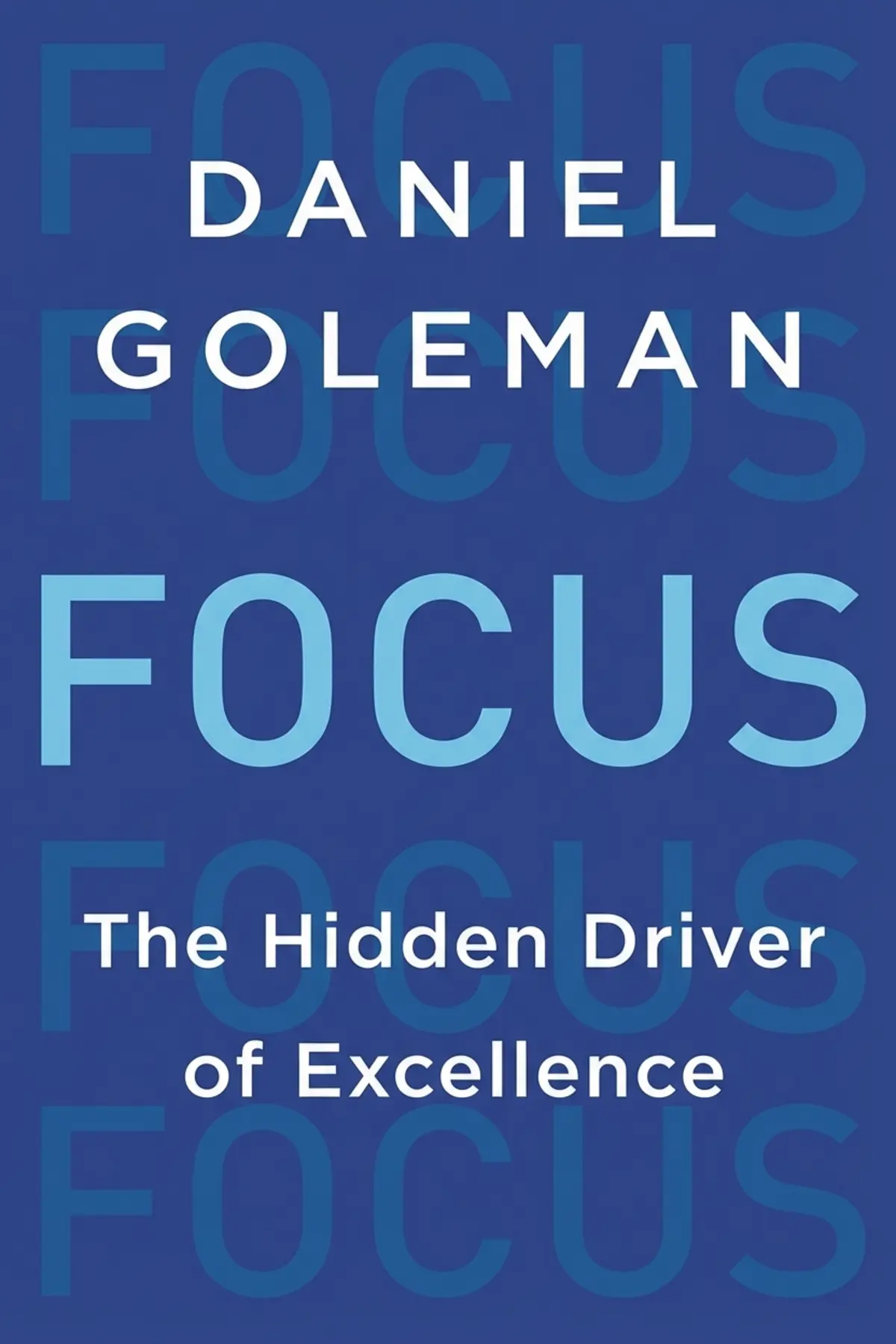
In an era of relentless distraction, Daniel Goleman reveals that focus is a subtle yet powerful mental muscle. Mastering attention through inner, other, and outer awareness is the key to personal and professional excellence.
1 min 52 sec
In our modern era, we are constantly bombarded by an endless stream of notifications, emails, and the persistent pull of social media. It often feels as though our attention is no longer our own, scattered across a dozen different screens and tasks at any given moment. We find ourselves in a state of constant mental fragmentation, struggling to stay present with our work, our families, and even our own thoughts. This sense of being perpetually distracted isn’t just a minor annoyance; it is a fundamental barrier to achieving our full potential. But what if the solution wasn’t just about trying harder to concentrate? What if excellence actually depends on a much more sophisticated understanding of how our minds work?
Daniel Goleman invites us to look at attention through a new lens. He suggests that focus is a vital tool for high performance that operates behind the scenes of every success. It is the ‘hidden driver’ that allows us to navigate a complex world with clarity and purpose. By expanding our definition of focus beyond simple concentration, Goleman introduces a triad of awareness: focus on ourselves, focus on others, and focus on the wider world. This multi-dimensional approach to attention is what separates the merely competent from the truly exceptional.
Throughout this journey, we will explore the different ways our brains process information, from the fast, emotional responses of our subconscious to the slow, deliberate efforts of our conscious mind. We will see how selective attention can be trained like a muscle, and why even mind-wandering has a crucial role to play in our creative breakthroughs. From the boardrooms of global corporations to the quiet practice of mindfulness, we will discover how to harness the power of attention to lead more fulfilling, productive, and empathetic lives. By the end, you will have a roadmap for reclaiming your mental space and directing your energy toward what truly matters.
2 min 25 sec
Our brains operate using two distinct systems that handle everything from routine habits to complex planning. Understanding how these systems interact is the first step toward regaining control over your daily focus.
2 min 31 sec
In a world screaming for your attention, the ability to choose what to ignore is as important as the ability to focus. Strong selective attention is a hallmark of high performance.
2 min 26 sec
Not all focus needs to be narrow and goal-oriented. Sometimes, letting your mind wander is the most productive thing you can do for your creativity and self-reflection.
2 min 21 sec
Success is often determined by the ability to manage frustration and persist toward long-term goals. Willpower is the internal engine that keeps your focus aligned with your values.
2 min 42 sec
True focus isn’t just about what’s in your head; it’s about how you perceive the people around you. Empathy is a form of attention that bridges the gap between individuals.
2 min 24 sec
Excellent leaders and thinkers look beyond their immediate environment to understand the larger systems at play. This ‘outer focus’ is crucial for long-term survival and success.
2 min 21 sec
A leader’s primary job is to direct the attention of their team. Success hinges on a leader’s self-awareness and their ability to communicate a clear, compelling vision.
2 min 20 sec
Remaining too focused on past successes can lead to future failure. Successful leaders must constantly explore new horizons and adapt to changing market landscapes.
2 min 14 sec
Leaders who lack empathy often fail to see the consequences of their actions. True success comes from empowering others and understanding your effect on the community.
2 min 11 sec
Focus is not an innate gift; it is a skill that can be strengthened through practice. Meditation is one of the most effective ways to build ‘meta-awareness.’
2 min 18 sec
A positive outlook isn’t just about being happy; it’s a biological driver for motivation. Focusing on strengths and possibilities helps sustain the energy needed for long-term goals.
1 min 56 sec
In the end, the message of Daniel Goleman is clear: attention is the most valuable resource we have. In a world that is designed to fragment our focus, the ability to concentrate is a superpower. But true excellence is not just about being able to sit in a room and work for hours. It is about a balanced ‘triple focus.’ We must look inward to understand our own emotions and values; we must look outward to connect with the people around us through empathy; and we must look even further to understand the complex systems that shape our future.
One of the most practical pieces of advice Goleman offers is the importance of rest. Just like a physical muscle, your focus can become fatigued. If you find yourself staring at a page without absorbing the words, or if your mind is constantly slipping away from your task, don’t try to force it. That is a signal that your ‘top-down’ focus needs a break. The best way to restore your attention is to switch to ‘bottom-up’ mode. Let your mind wander, go for a walk, or simply watch the clouds. By giving your concentration a rest, you allow it to recharge, so that when you return to your work, you do so with a clear head and renewed energy.
Finally, we must find ways to make the distant threats of the future feel more concrete. Because we are biologically wired to care about the ‘here and now,’ we often ignore the long-term consequences of our actions. Goleman suggests using our imagination to bring those future scenarios to life. By focusing our full attention on the possible outcomes of our current choices, we can trigger the emotional cues that prompt us to take action today. Whether it is protecting our planet or building a long-term career, the future depends on where we choose to look right now. By mastering the art of attention, we don’t just become more productive; we become more human, more connected, and more capable of leaving a positive mark on the world.
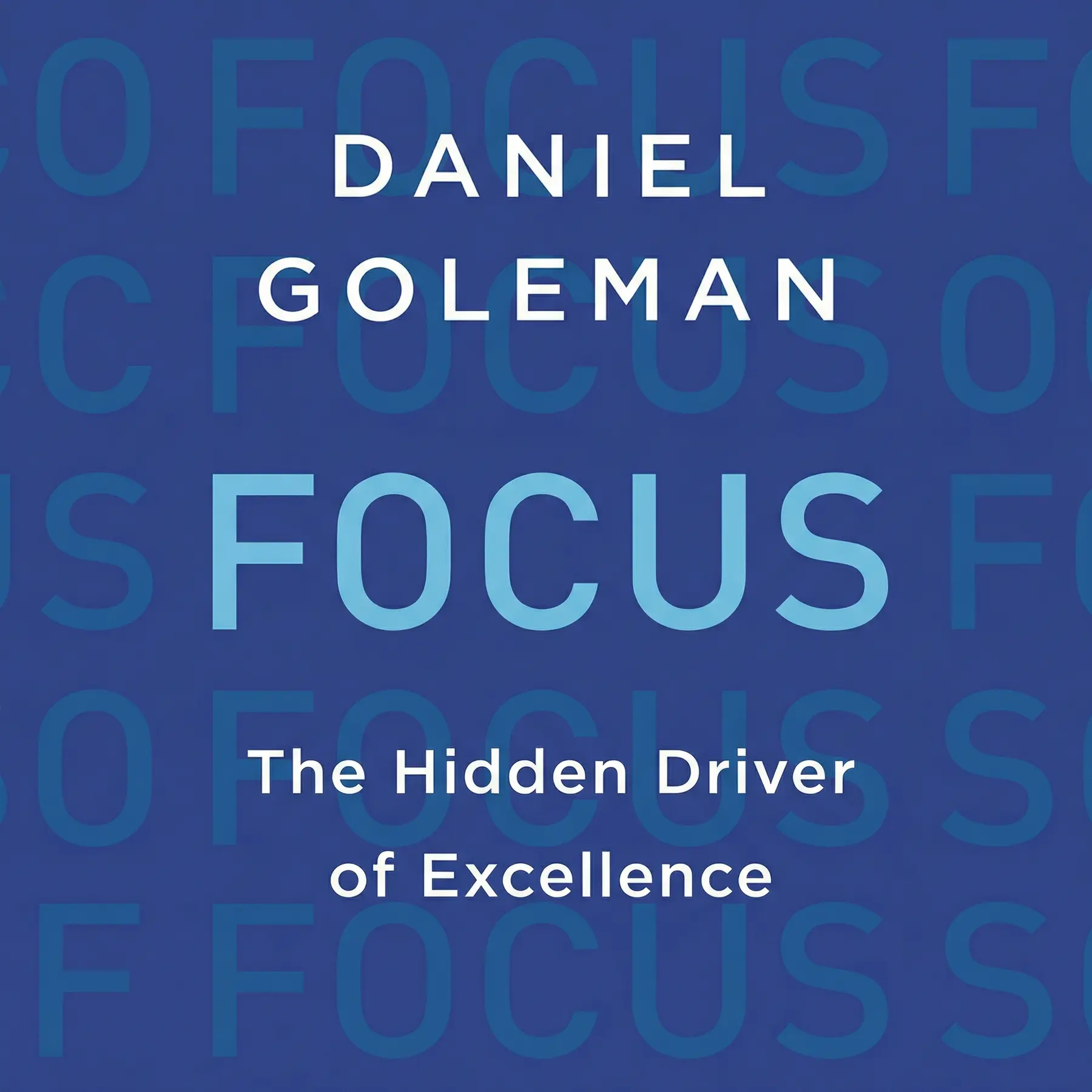
Have you ever wondered why some people seem to excel effortlessly while others struggle to stay on task? The secret isn't just intelligence or hard work; it is the quality of their attention. This exploration of the mind delves into the science of how we concentrate and why our ability to focus is under siege in the modern world. Daniel Goleman breaks down focus into three distinct categories: inner, other, and outer. Inner focus connects us to our intuition and values; focus on others allows us to build empathy and strong relationships; and outer focus helps us navigate the complex systems of the world. By balancing these three dimensions, we can improve our performance, deepen our leadership, and find a more meaningful path through life. This summary provides the tools to strengthen your attention and reclaim your concentration.
Daniel Goleman is a psychologist and a former science journalist for the New York Times and the author of 13 books, including the bestseller Emotional Intelligence. He also lectures frequently for professionals and student groups.
Daniel Goleman
Daniel Goleman

Daniel Goleman
Listeners find this work offers practical insights into neurological functions and is quite easy to digest, suggesting it is essential reading for professionals in any industry. They value its profound exploration of self-awareness along with intriguing concepts and studies, with one listener highlighting how it assists in building individual attention frameworks. The text includes captivating stories, though some feel the writing becomes overly technical on occasion, and while many find it compelling, others view the narrative as lacking focus.
Daniel Goleman has a way of peeling back the layers of our own cognitive habits that feels both scientific and deeply personal. After the massive success of Emotional Intelligence, the bar was high, but I feel he managed to tackle the modern epidemic of distraction with real grace. He dives deep into brain chemistry and the circuitry that dictates how we interact with the world around us. Frankly, some of the sections on "top-down" versus "bottom-up" mental processing were eye-opening for my own self-awareness. It’s not a simple self-help book; it’s more of a deep dive into how we can cultivate a personal framework for attention in a world that wants to steal it. You’ll find yourself reconsidering how you spend your quiet moments.
Show moreThis book is a powerful reminder of what we lose when we surrender our attention to constant digital noise and the myth of multitasking. Goleman returns to the themes of his earlier work but applies them to the specific challenge of staying centered in a high-speed world. I was particularly moved by the description of 'wayfinding' and how we must learn to navigate the sea of distractions by looking for subtle internal signs. It’s an ambitious book that asks us to look inward before we can fix our outward habits. Not every chapter is a hit—I’ll admit I skimmed some of the more political sections—but the core message is vital for anyone feeling overwhelmed by modern life. Truly a must-read for everyone.
Show moreFinally got around to finishing this, and I'm left with a much deeper understanding of how my own brain filters out the world. Goleman successfully builds a framework for understanding how different types of focus—inner, other, and outer—determine our success in life. It’s not just about getting more work done; it’s about empathy and understanding the larger systems we live in. I appreciated the deep dive into self-awareness and how to recognize when our 'bottom-up' impulses are taking over our 'top-down' goals. Some might find the scientific terms like the prefrontal cortex a bit much, but I think it adds necessary weight to his arguments. This is an essential read for anyone serious about personal growth and professional excellence.
Show moreAs an educator, I found the sections on mindfulness in the classroom and developing empathy in young children to be the real highlights here. Goleman argues that we are raising a generation that is technically 'connected' but cognitively scattered, and his data supports that claim well. The application of emotional intelligence to the workplace and the school system is where this book truly shines. It isn't just about personal concentration; it's about how our collective attention shapes our society. While some chapters on business management felt a bit disconnected, the overall message about the importance of 'other-focus' is something every parent and teacher needs to hear. It provides a fascinating deep understanding of self-awareness.
Show moreEver wonder why some businesses thrive while others suffer from a total lack of long-term vision? Goleman’s take on Apple’s business strategy through the lens of concentrated attention was one of the more engaging parts of this volume. He explains how high-level leadership requires a specific type of triple-focus: on ourselves, on others, and on the wider world. Personally, I found the research on how we can improve our own relations by being more present to be incredibly practical. It’s a dense book, and I had to take breaks to digest the heavier sections on brain function, but the insights into pattern recognition were worth the effort. It’s a highly readable resource for anyone in a leadership field.
Show moreLook, if you've already devoured everything by Malcolm Gladwell or Daniel Kahneman, a lot of this material will feel like a retread of familiar ground. Goleman writes well, but he isn't exactly breaking new ground in the world of pop-psychology here. The concepts of 'flow' and 'executive function' are presented as if they are brand new, which might be frustrating for seasoned readers of the genre. To be fair, he does update the science with some newer brain imaging studies, which adds a layer of credibility. It’s a solid 4-star book if you’re new to the topic, but it might feel like a repeat if you’ve been keeping up with behavioral science for a while. Still, it helps develop personal frameworks for attention.
Show moreWhile the neuroscientific explanations of our internal attention systems are technically sound, the prose often gets bogged down in heavy academic posturing. Goleman is clearly an expert, but he sometimes struggles to translate complex brain regions into something the average reader can use on a Tuesday morning. The truth is, I enjoyed the parts about 'system blindness' and how we lose track of the big picture, but those gems are buried under a lot of jargon. It's a bit of a slog at times. If you have the patience to sit through some very dry chapters on brain circuitry, you’ll find some great insights into how we relate to others. Just don't expect a fast-paced or particularly 'focused' read.
Show moreThe irony of a book titled 'Focus' being so incredibly scattered is almost too much to handle. I walked into this expecting a tactical guide to improving my attention span, but instead, I was met with a disjointed collection of essays. One minute he is talking about the amygdala, and the next he is lecturing the reader on global warming or corporate empathy. There is no cohesive thread that binds these topics together. It felt like Goleman just emptied his notebook of 'interesting things' and hoped the title would do the heavy lifting. To be fair, some of the anecdotes are interesting, but they lack the context needed to make this a functional read for someone looking for actual strategies.
Show morePicked this up hoping for a manual on productivity, but instead found a rambling collection of thoughts on everything from corporate strategy to Polynesian wayfinding. Don't get me wrong, the story of Mau and the traditional navigators was fascinating, but what does it really have to do with my daily struggle to stay off my phone? The book lacks the 'focus' it preaches. It feels like a retread of pop-psychology tropes you’ve likely seen in better books. I kept waiting for the 'how-to' part, but it never really arrived in a meaningful way. If you want a scientific survey of what attention is, this might work, but as a guide for self-improvement, it largely falls flat.
Show moreNot what I expected at all. I managed to get through about half before I realized I was just reading a series of loosely connected facts without any real direction. I’ve enjoyed Goleman’s work in the past, but this one felt like it was written in a hurry or edited by someone who forgot the title. It’s dry, overly technical in parts that don’t matter, and surprisingly vague in parts where I actually wanted details. Frankly, it was a struggle to stay engaged, and I ended up putting it down to find something with more actionable advice. If you want to learn about the brain in a cohesive way, there are more accessible and better-organized options out there.
Show more

Laura Vanderkam

Richard Wiseman


AUDIO SUMMARY AVAILABLE
Get the key ideas from Focus by Daniel Goleman, plus 5,000+ more titles in English and Thai.







