
27 min 45 sec
At The Existentialist Café: Freedom, Being and Apricot Cocktails
Explore the vibrant history of existentialism, from its birth in a Parisian café to its global influence, following the lives and ideas of Jean-Paul Sartre, Simone de Beauvoir, and their contemporaries.
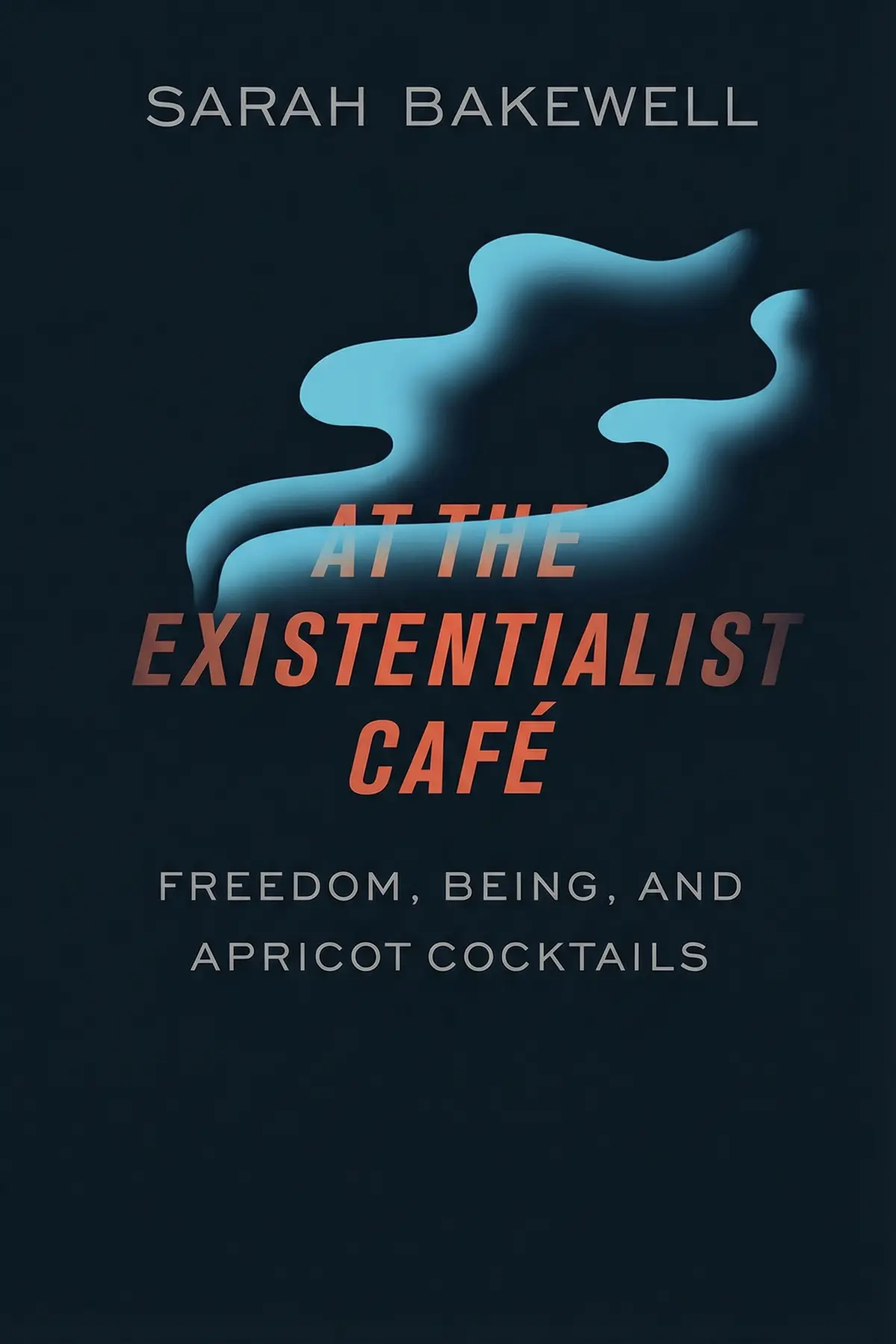
Table of Content
1. Introduction
2 min 08 sec
Imagine yourself sitting in a smoky Parisian bar in the early 1930s. The air is thick with conversation and the clink of glasses. At a small table, three young intellectuals are discussing their frustration with the world. They feel trapped by an academic philosophy that cares more about abstract logic than the actual experience of sitting in that chair, breathing that air, or feeling the weight of a decision. This moment, sparked by a simple apricot cocktail, served as the catalyst for one of the most influential movements of the twentieth century: existentialism.
In our journey today, we are going to trace the throughline of this movement. We aren’t just looking at dusty books; we are looking at the lives of people who tried to live their thoughts out loud. This is the story of Jean-Paul Sartre, Simone de Beauvoir, Albert Camus, and several others who believed that philosophy should be something you can feel, something that guides you through a world war, and something that helps you understand the very nature of your own freedom.
The central theme we will explore is the shift from ‘what’ things are to ‘how’ we experience them. We will see how these thinkers moved away from the cold, detached observations of the past and toward a messy, passionate engagement with reality. From the quiet forests of Germany to the jazz clubs of post-war France, we will uncover why these ideas remain so vital today. They teach us that we are not defined by our past, our biology, or our social status, but by the actions we take in the present moment.
As we delve into this narrative, keep in mind that existentialism was born out of a hunger for authenticity. It’s a philosophy for those who find the standard answers unsatisfying. We will explore how a group of friends revolutionized the way we think about responsibility, gender, and the meaning of life itself. By the end, you’ll see that existentialism isn’t a gloomy meditation on the pointlessness of existence; rather, it’s a vibrant, sometimes difficult, but ultimately empowering way of embracing the total freedom of being human.
2. A Revolutionary Spark in a Parisian Bar
2 min 12 sec
Discover how a single conversation and a fruit-flavored drink set Jean-Paul Sartre on a path to redefine human existence through a new lens of reality.
3. The Foundation of Pure Description
2 min 25 sec
Learn about the German birthplace of phenomenology and the rigorous method used to peel back assumptions and see the world as it truly is.
4. The Enigma of Being and the Shadow of History
2 min 40 sec
Examine Martin Heidegger’s groundbreaking ideas on what it means to exist and the dark personal choices that complicated his legacy.
5. The Weight of Radical Freedom
2 min 49 sec
Unpack Jean-Paul Sartre’s most famous claim—that existence precedes essence—and what it means for our personal responsibility.
6. Living the Philosophy in Public and Private
2 min 35 sec
Explore the unconventional life of Sartre and de Beauvoir, whose partnership and political activism were an extension of their existentialist beliefs.
7. Existence Under the Shadow of War
2 min 40 sec
See how the existentialists found meaning and focus during the German occupation of France, transforming hardship into intellectual breakthroughs.
8. The Absurd Hero and the Smiling Sisyphus
2 min 35 sec
Explore Albert Camus’ unique take on the meaninglessness of life and why he eventually parted ways with his fellow existentialists.
9. The Gaze and the Creation of Woman
2 min 44 sec
Delve into Simone de Beauvoir’s groundbreaking analysis of how society shapes the female experience and the fight to reclaim agency.
10. A Cultural Explosion in the Streets of Paris
2 min 37 sec
Witness the moment existentialism became a global phenomenon, influencing music, fashion, and the very air of post-war France.
11. Conclusion
2 min 20 sec
As we look back on the journey of the existentialists, we see a movement that succeeded in doing something few philosophies ever manage: it stepped out of the shadows of the academy and into the sunlight of daily life. From that first apricot cocktail to the massive political rallies of the 1960s, these thinkers proved that ideas have the power to shape not just our thoughts, but our very existence. They taught us that while the world may often feel chaotic, absurd, or even oppressive, we always retain a core of radical freedom.
The throughline of our exploration has been the transition from being an observer of life to being a participant in it. We’ve seen through the eyes of Husserl how to strip away assumptions, through Heidegger how to recognize our ‘being-there,’ and through Sartre and de Beauvoir how to take responsibility for our choices. We’ve learned that ‘bad faith’ is a constant temptation, but that authenticity is a goal worth striving for every single day. The legacy of these thinkers is a reminder that we are not fixed objects; we are ongoing projects, constantly reinventing ourselves with every action we take.
To bring this home, consider the actionable advice at the heart of this entire movement: Take nothing for granted. In your own life, you are frequently presented with paths that feel pre-determined—by your career, your family, or social expectations. Existentialism asks you to pause and recognize that these paths are choices, not destinies. When you face a crossroads, don’t ask what is expected of you. Instead, ask yourself: ‘Which of these choices helps me become the person I truly want to be?’
Embrace the ‘vertigo’ of your own freedom. It may be frightening to realize that you alone are responsible for the meaning of your life, but it is also the ultimate liberation. Like Sisyphus with his rock, or de Beauvoir at her café table, you have the power to define your own struggle and your own joy. The story of the existentialist café is ultimately a story about the courage to exist authentically in a world that often wants us to be something else. Carry that courage with you, and remember that your life is a masterpiece you are painting in real-time, one choice at a time.
About this book
What is this book about?
This narrative summary takes you to the heart of twentieth-century philosophy, tracing the evolution of existentialism through the lives of its most famous proponents. It begins with a legendary conversation over apricot cocktails in 1932 Paris and follows a group of rebellious thinkers as they attempt to make philosophy relevant to the messy reality of human life. You will witness how these figures navigated the dark years of the Second World War, personal scandals, and political upheavals, all while trying to define what it means to be truly free. The promise of this exploration is a deeper understanding of how abstract ideas can be lived. By looking at the works of Sartre, de Beauvoir, Heidegger, and Camus, you will discover why the burden of choice is both terrifying and liberating. The journey reveals how existentialism isn't just a gloomy academic subject, but a practical call to action that encourages us to stop hiding behind social roles and start creating ourselves through our choices and commitments.
Book Information
About the Author
Sarah Bakewell
Sarah Bakewell is a British author who grew up in Bournemouth and spent several years of her childhood in Australia. She pursued her interest in philosophy at the University of Essex and later worked as a curator of early printed books at the Wellcome Library for the History of Medicine in London. Bakewell is recognized for her ability to weave biography and philosophy together, having written four acclaimed books, including works on Montaigne and the story of the English Dane.
Ratings & Reviews
Ratings at a glance
What people think
Listeners find this work remarkably effective at illustrating intricate philosophical concepts while establishing a strong sense of historical background. Furthermore, the prose is lucid and captivating, and listeners value the way it illuminates the circumstances surrounding the work of intellectual icons. The book also provides accessible interpretations of dense philosophies, leading listeners to characterize it as an exhilarating exploration of the lives of these thinkers.
Top reviews
Ahmed
This book is a breath of fresh air for anyone who has ever felt intimidated by the heavy hitters of 20th-century thought. Sarah Bakewell manages to turn what could have been a dry academic history into a vibrant, pulsing narrative that feels as much like a biography of a friendship as it does a study of philosophy. I loved the way she balanced the 'big' ideas—like Husserl’s phenomenology—with the gritty, human details of the thinkers' lives. Seeing Sartre’s frantic writing pace, fueled by medication and a refusal to edit his own output, made his massive bibliography finally make sense. It’s rare to find an author who can explain the complex 'epoche' with such clarity while also capturing the smoky, caffeinated atmosphere of a Parisian café. Personally, I found her treatment of the Heidegger controversy particularly nuanced; she doesn't shy away from his Nazism but still acknowledges his intellectual allure. It’s a joyful, illuminating read.
Show moreBank
Picked this up after loving Bakewell's work on Montaigne, and she did not disappoint. She has this incredible way of making you feel the 'sunny joy' of rediscovering a subject that clearly shaped her own youth. The heart of the book is definitely the relationship between Sartre and Beauvoir—those 'interlinked cogs' that kept the existentialist machine running for decades. I was fascinated by the contrast between their public personas and their private struggles, especially Beauvoir's internal conflict about playing second fiddle to Sartre despite her own heavyweight intellect. The book manages to be both an intellectual history and a gripping social drama. One minute you’re learning about the divergence of Czech dissidents, and the next you’re reading about manuscripts being smuggled in diplomatic bags. It’s an exhilarating dive into a world where ideas actually mattered, where people got into fistfights over the meaning of freedom. Easily one of the best non-fiction books I’ve read in years.
Show moreSuthinee
Wow, I didn't think a book about phenomenology could actually be a page-turner. I went into this with almost no background in 20th-century philosophy, yet I never felt lost or bored. Sarah Bakewell serves up these 'poptastic' descriptions of incredibly dense topics without losing the underlying complexity. I particularly enjoyed how she contextualized the thinkers within the horrors of the 1930s and 40s. Seeing how Heidegger’s Nazism or Sartre’s later Communism influenced their work added a layer of reality that you just don't get from reading their primary texts alone. The book is vibrant, funny, and deeply moving at times—especially when discussing the fallout of long-term friendships. It’s the kind of reading experience that makes you want to go out and buy a black turtleneck and spend the rest of your life in a library. This book isn't just an education; it's an absolute pleasure.
Show moreKasemsan
After hearing so much about the rivalry between Camus and Sartre, it was fascinating to see the breakdown of their friendship described so vividly. Bakewell paints a picture of a Paris that was starving for both food and meaning, and she shows how existentialism provided a framework for a new kind of life. The way she handles the political shifts—the move from the Resistance to the Cold War—is incredibly helpful for understanding why these philosophers were so obsessed with 'engagement.' I also loved the smaller details, like the description of the minuscule shorthand Husserl used for his thousands of pages of notes. It makes these towering figures feel like real, flawed humans who were just trying to figure things out. This book is a massive achievement, managing to be both a scholarly resource and a wildly entertaining narrative. If you have even a passing interest in how we got to our modern understanding of freedom and identity, you have to read this.
Show moreOmar
Not what I expected from a philosophy book, but in the best way possible. I always thought existentialism was just for moody teenagers, but Bakewell shows it’s actually a philosophy of action and terrifying responsibility. The anecdotes are pure gold. The story about Sartre writing an 8-hour Freud script for John Huston and then making it even longer when asked to cut it had me laughing out loud. It’s that blend of humor and high-stakes thinking that makes this work. Bakewell’s writing is so clear and engaging that you don't even realize you’re learning about Dasein until you’re already halfway through a chapter. This isn't a dusty tome; it’s an invitation to a conversation. By the time I finished, I felt like I’d been sitting at that café myself, nursing a drink and arguing about the nature of being. Five stars, no question.
Show moreLook
Ever wonder why existentialists are always pictured in smoky cafes wearing black turtlenecks? Bakewell takes that stereotype and breathes incredible life into it, showing that these ideas weren't born in a vacuum but in a world on fire. The way she traces the shift from Husserl’s quiet descriptions to the radical freedom demanded by Sartre during the Resistance is masterful. I especially appreciated her critique of Simone de Beauvoir’s The Second Sex and the way she highlights how much was lost in the early English translations. It’s not just a book about books; it’s a book about how to live authentically in a century defined by crushing ideologies like Nazism and Stalinism. My only gripe is that Heidegger remains such a frustrating, grumpy figure, though Bakewell’s refusal to give him an easy pass for his silence is refreshing. A truly exhilarating dive into the minds that shaped our modern sense of self.
Show moreTod
Bakewell has a remarkable talent for humanizing people who are usually just names on a dusty syllabus. In her hands, Sartre is not just a statue of an intellectual; he is a man obsessed with his work, popping pills, and dragging his friends into endless, caffeine-fueled debates. The book serves as a perfect biography of a movement, tracing how ideas flowed from the rigorous German phenomenologists into the politically charged atmosphere of post-war Paris. I was particularly struck by the sections on Karl Jaspers and Hannah Arendt, who often get overshadowed by the Sartre/Beauvoir power couple. While the philosophy can still get a bit dense when she dives into Heidegger’s more obscure terminology, Bakewell usually throws you a lifeline just before you drown. My only real complaint is that I wish there was even more on Simone Weil, who remains one of the most enigmatic figures in the periphery. Overall, it’s a beautifully written, deeply researched look at the 20th century’s most influential thinkers.
Show moreMethinee
The chapter detailing how Husserl’s manuscripts were smuggled out of Nazi Germany felt like a high-stakes thriller, which is not something I ever expected to say about a philosophy text. Bakewell’s ability to weave together the political urgency of the 1930s with the abstract concerns of phenomenology is her greatest strength. She takes these 'jawbreaker' concepts and breaks them down into digestible, even delightful, insights. For instance, explaining 'intentionality' through the lens of a simple cup of coffee or a glance across a room makes the theory stick in a way a textbook never could. Look, it’s a long book, and the sheer number of minor philosophers can get a bit overwhelming toward the end. But the central narrative of Sartre and Beauvoir keeps the momentum going. It's a brilliant piece of intellectual biography that provides a measure of context that is often missing from more formal studies.
Show moreSudarat
To be fair, I enjoyed the historical sweep of this book, but it felt a bit uneven in its pacing. Some chapters, like the ones on the early days of phenomenology in Germany, were absolutely riveting and offered a contextual understanding I never got in college. But then the middle section seemed to drag as we looped back through Sartre and Beauvoir’s relationship for the third or fourth time. I appreciate how Bakewell simplifies complex theories without being condescending, yet I occasionally felt like the 'character' of the book overshadowed the actual 'ideas.' The story about the shorthand manuscripts being smuggled to Belgium was a highlight, though. It’s a solid introduction for a casual reader, but I found myself wanting more of Camus and less of the endless Sartrean drama. It's a good piece of writing, just a bit too focused on the gossip for my tastes.
Show moreSiraporn
Frankly, I found the focus on the thinkers' personal scandals a bit distracting from the actual philosophical meat I was craving. While Bakewell’s prose is undeniably lively and she has a great eye for a witty anecdote, I felt the book veered too often into 'intellectual gossip' territory. I wanted a deeper dive into the mechanics of Being and Nothingness, but instead, I got stories about Sartre’s failed movie scripts and Beauvoir’s romantic triangles. To be fair, her explanation of the 'thing-in-itself' was decent, but it felt a bit like 'Philosophy Lite' for the beach-read crowd. If you want a rigorous academic breakdown of phenomenology, look elsewhere. However, if you want to know who was sleeping with whom while they discussed the nature of freedom, you’ll probably love it. It just wasn't exactly what I was looking for in a history of existentialism.
Show moreFeatured in
Readers also enjoyed
A Guide to the Good Life: The Ancient Art of Stoic Joy
William B. Irvine
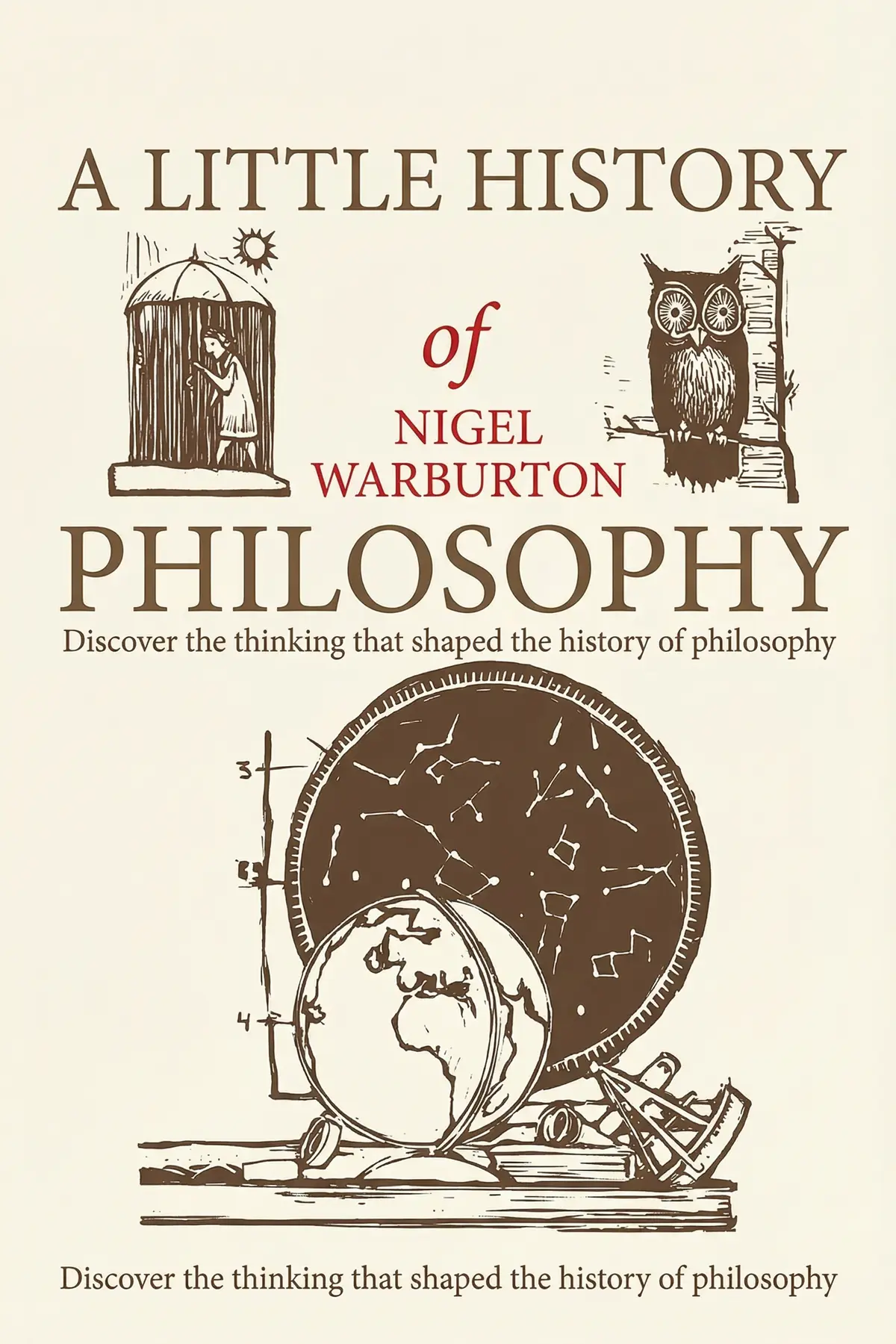
A Little History of Philosophy
Nigel Warburton
A Theory of Justice
John Rawls
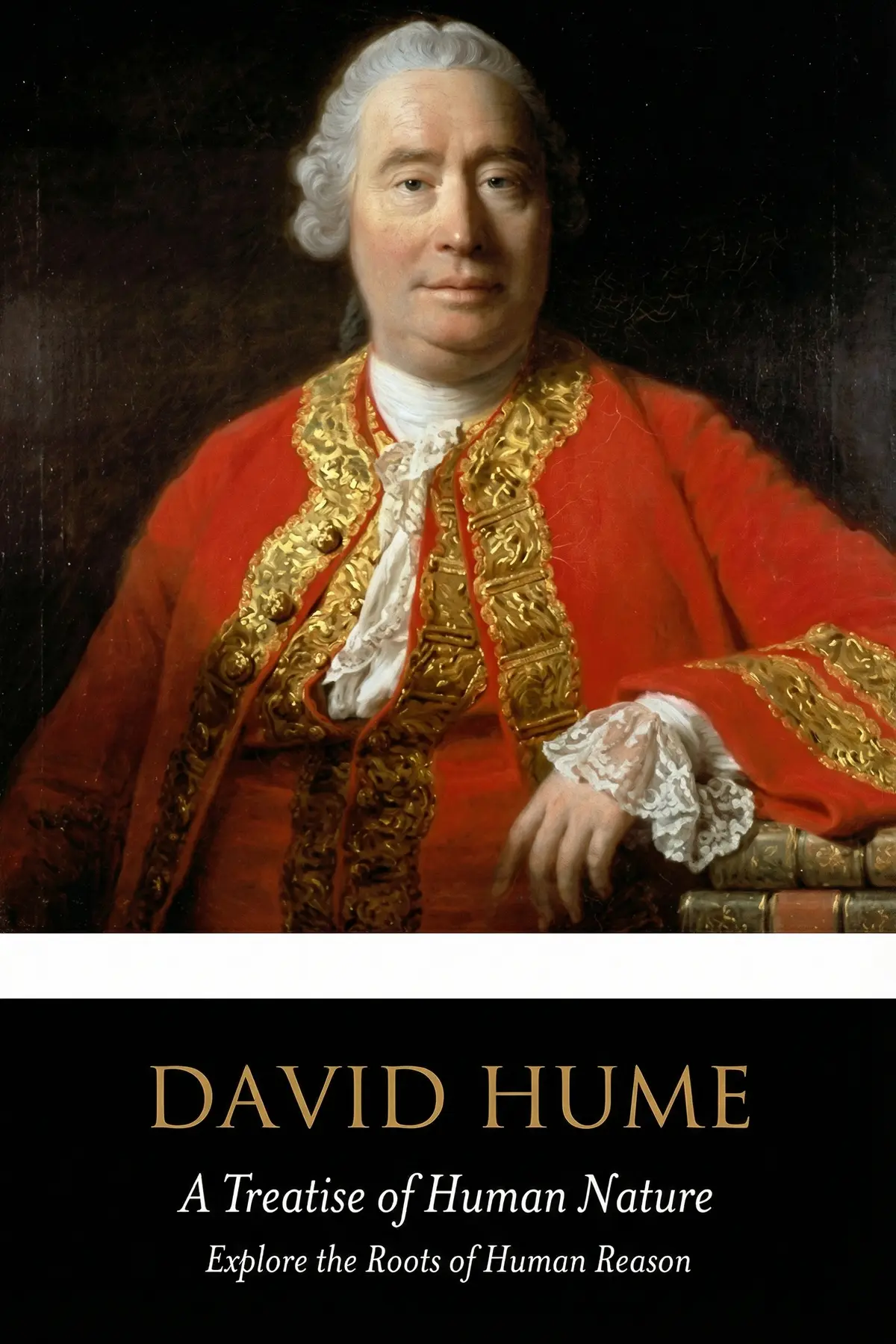
Anarchy, State, and Utopia
Robert Nozick
Antifragile: Things That Gain from Disorder
Nassim Nicholas Taleb
Areopagitica: Philosophy)
John Milton
AUDIO SUMMARY AVAILABLE
Listen to At The Existentialist Café in 15 minutes
Get the key ideas from At The Existentialist Café by Sarah Bakewell, plus 5,000+ more titles in English and Thai.
- 5,000+ titles
- Listen as much as you want
- 7-day free trial
- Cancel anytime







