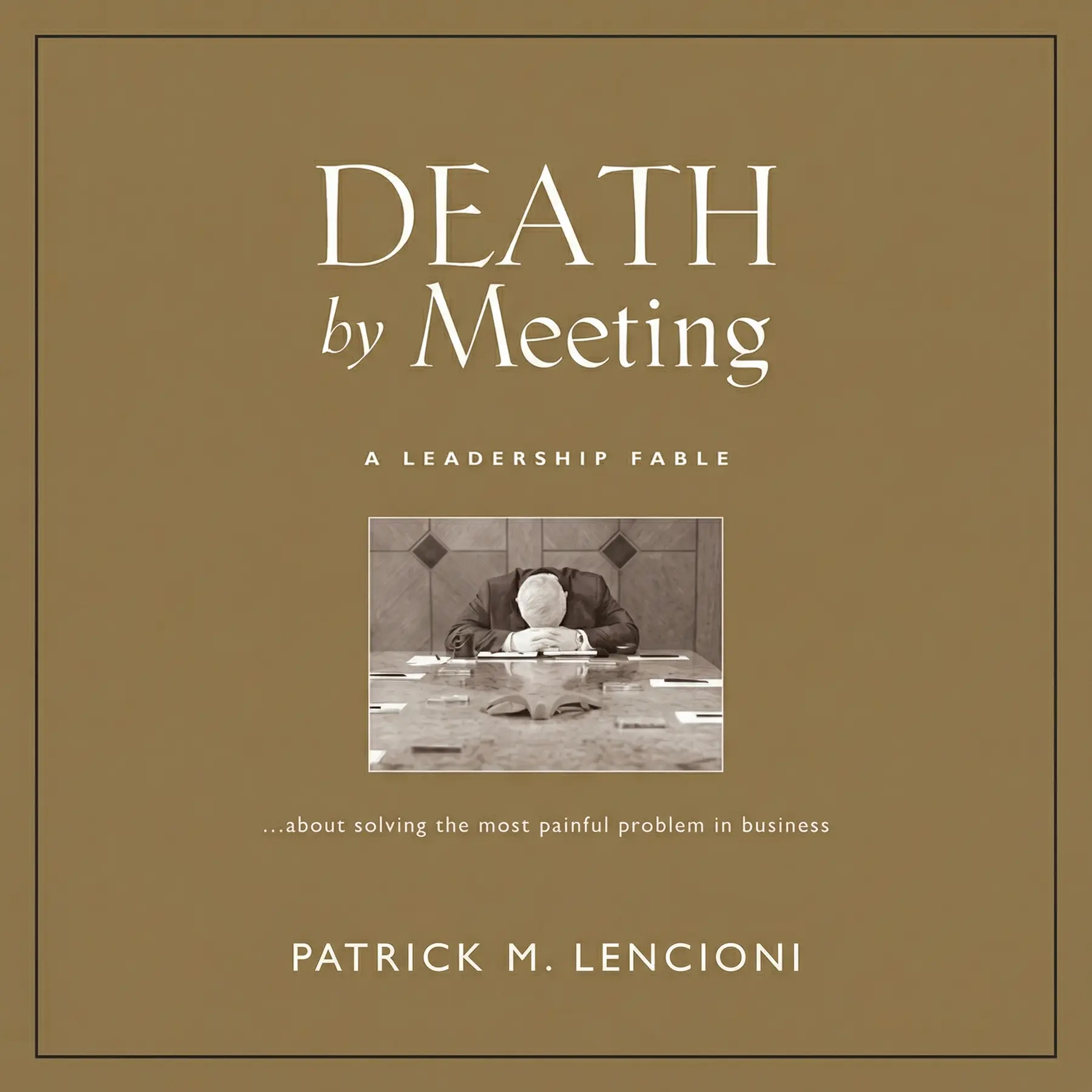
Getting Naked: A Business Fable About Shedding The Three Fears That Sabotage
Patrick M. Lencioni
Transform your organization’s most tedious task into its most competitive advantage. This summary explores Patrick Lencioni’s fable-based approach to making meetings engaging, productive, and essential for any successful leadership team.
1 min 22 sec
If you were to ask a room full of professionals to list their least favorite part of the workday, the answer would almost certainly be ‘meetings.’ We’ve all been there: staring at the clock, watching the minutes tick by as a conversation circles around a topic that doesn’t seem to matter, or listening to a presentation that could have been a three-sentence email. It’s a tragedy of modern business that the very place where collaboration is supposed to happen has become a source of profound boredom and resentment.
But here is the twist: meetings are not the problem. Bad meetings are the problem. In fact, if an organization is struggling, the quality of its meetings is often the first place you should look for the cause. When done right, these gatherings are the primary engine of a company’s success. They are the venue where the most important decisions are hammered out, where culture is built, and where teams align on a shared vision.
In this summary of Patrick Lencioni’s insights, we are going to explore a radical new way of looking at these corporate rituals. We’ll follow the story of a struggling CEO who discovered that the secret to saving his company was hidden in the way his team talked to one another. You will learn why a lack of conflict is actually a bad sign, how to stop mixing different types of problems into one ‘stew,’ and the specific framework of four meeting types that can transform your office culture from lethargic to electric. Let’s look at how to stop the ‘death by meeting’ and start using them as your greatest competitive advantage.
1 min 53 sec
Meet Casey McDaniel, a passionate entrepreneur whose dream company is slipping away because of one invisible flaw in his leadership style.
1 min 52 sec
Discover how a young assistant found the secret to better business communication in an unlikely place: the world of screenwriting.
1 min 46 sec
Learn why the most dangerous thing for a team is a lack of disagreement, and how to mine for the tension that drives results.
1 min 33 sec
Are your meetings a confusing mix of minor tasks and major goals? Find out why ‘context’ is the key to clarity.
1 min 45 sec
Streamline your day-to-day operations with two high-frequency, high-impact meeting formats designed for speed and focus.
1 min 37 sec
Dedicate the right time to the big picture by creating space for deep dives and long-term visioning.
1 min 44 sec
See how changing the way you meet can fundamentally alter the health and success of your entire organization.
1 min 19 sec
We’ve covered a lot of ground, but the core message is simple: meetings don’t have to be the part of the day everyone hates. They are actually the most important tool a leader has for driving results and building a strong team. The secret lies in two fundamental shifts: introducing healthy, dramatic conflict and creating a clear contextual structure.
Remember, a meeting without conflict is just a boring presentation. If you want your team to be engaged, you have to give them something to care about. You have to be willing to bring the tough issues to the table and let the team debate them. And to make those debates productive, you must stop the ‘meeting stew.’ Separate your daily updates from your weekly hurdles, and your weekly hurdles from your monthly strategies. Give every conversation the time and the context it needs.
As you head back to your own organization, take a hard look at your calendar. Are your meetings predictable and polite, or are they challenging and productive? Start small. Try implementing a ten-minute standing check-in tomorrow morning. Then, at your next weekly meeting, try mining for just one piece of conflict—one area where you know people disagree but are staying silent. When you start to see the energy in the room shift, you’ll know you’re on the right track. Meetings aren’t a distraction from the work; they are the work. Make them count.
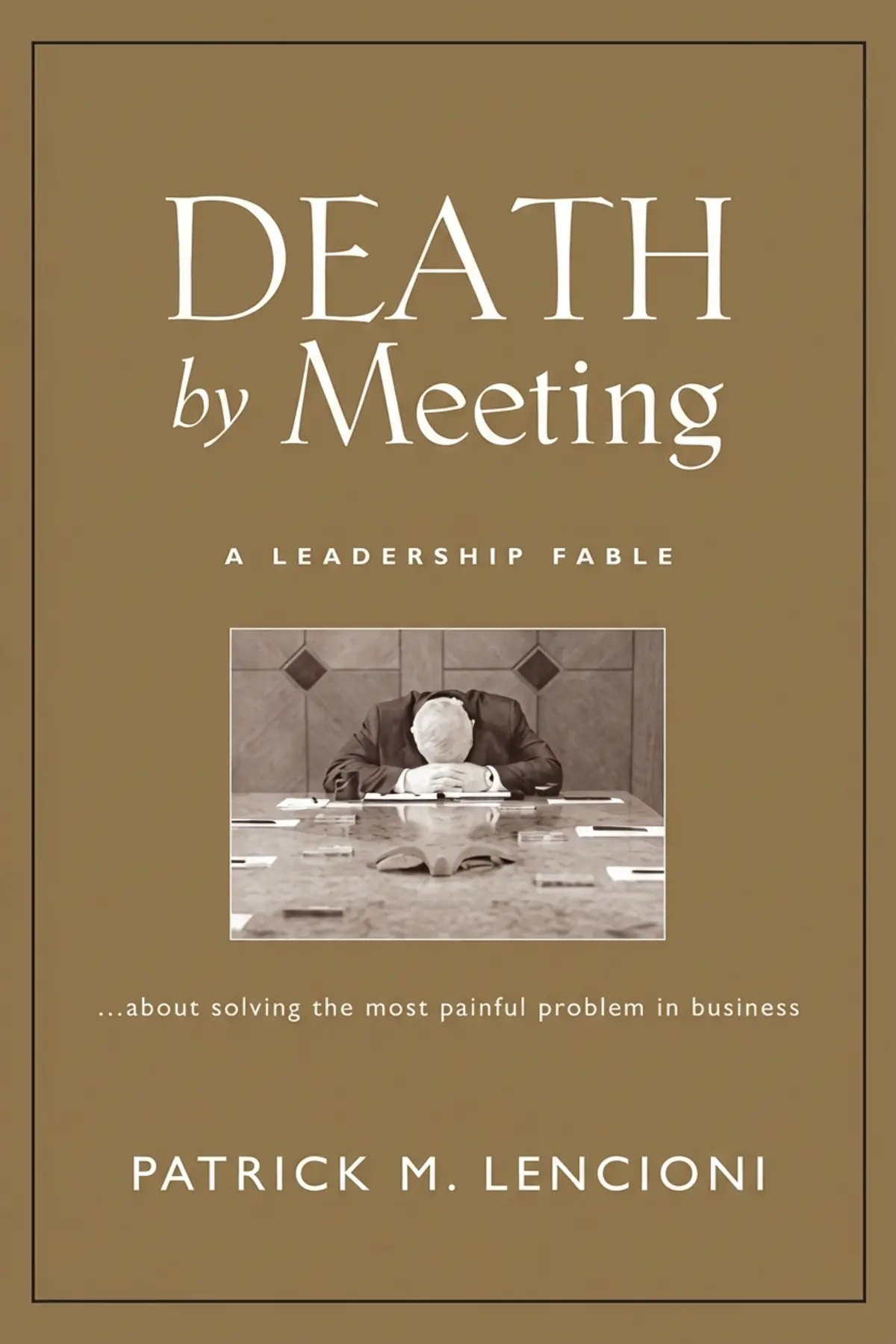
Death by Meeting addresses the universal frustration of corporate life: the dull, unproductive meeting. Through a compelling leadership fable, Patrick Lencioni identifies the two primary causes of meeting failure: a lack of drama and a lack of contextual structure. Most companies suffer from 'meeting stew,' where every type of issue—from administrative tasks to high-level strategy—is thrown into a single, confusing session. The book provides a framework for categorizing conversations into four distinct formats: Daily Check-ins, Weekly Tacticals, Monthly Strategics, and Quarterly Off-sites. By separating these contexts and actively encouraging healthy, constructive conflict, leaders can turn meetings from time-wasters into catalysts for alignment and decision-making. The promise is simple: better meetings lead to a more energized workforce and a healthier organization.
Patrick M. Lencioni is a celebrated author, speaker, and management consultant known for his deep insights into organizational health and team dynamics. In 1997, he established The Table Group, a firm dedicated to enhancing employee engagement and teamwork. Lencioni is the author of thirteen books, including the New York Times bestseller The Five Dysfunctions of a Team.
Patrick M. Lencioni

Patrick M. Lencioni
Patrick M. Lencioni
Listeners find this book to be an accessible read and essential material for business students, offering practical resources for improving meeting efficiency. The text explores the necessity of productive gatherings and delivers vital takeaways, with one listener highlighting the way it differentiates between various meeting categories. They value the narrative approach and find the content stimulating, noting that the material is clearly organized with recap sections at the conclusion. Listeners feel it is a valuable investment.
Ever wonder why you leave every office gathering feeling like your soul has been drained of all energy? Lencioni argues that the problem isn't the meetings themselves, but rather our pathological fear of conflict and drama. This book completely flipped my perspective by comparing a good meeting to a compelling movie where the stakes are actually high. I've started 'mining for conflict' in our weekly tacticals, and the results have been immediate and incredibly transformative for my staff. We used to sit in silence, but now we’re actually debating the strategic issues that affect our bottom line. I love that he provides a clear summary at the end for those who want to skip the fluff. It’s rare to find a business book that is this practical while also being entertaining enough to read in a single weekend. Essential reading for anyone in a leadership position.
Show moreThe concept of 'meeting stew' changed my entire perspective on how our executive team operates on a day-to-day basis. We were constantly trying to solve long-term strategic problems during our short tactical updates, and it was causing massive friction. Lencioni’s solution of separating these into different forums—the daily huddle, the weekly tactical, and the monthly strategic—is brilliant. Not gonna lie, I actually enjoyed the fable because it made the concepts feel less like a lecture and more like a real-world application. The way the characters learn to 'mine for conflict' and grant 'real-time permission' for debate is a game-changer for passive-aggressive cultures. My team is now more productive and efficient because we actually know what each meeting is supposed to achieve. This is a must-buy for any manager who feels like their schedule is out of control.
Show moreWow, I never thought I would say that a book about meetings was actually engaging and even a bit fun to read. Lencioni understands that the biggest problem in corporate America isn't the number of meetings, but the lack of intensity. He teaches you how to keep people engaged by focusing on the stakes, just like a screenwriter would do in a movie. The lightning round and progress review sections have already saved us hours of wasted time every single week. I love how he breaks down the four distinct types of meetings so you don't end up with a confusing mess. It’s thought-provoking, well-presented, and offers a specific plan that any team can implement immediately. This is worth every penny for the time you'll save in the long run.
Show moreNot what I expected from a business book, but the emphasis on mining for conflict is a total game-changer for our leadership. Most of us are trained to avoid tension at all costs, but Lencioni proves that tension is exactly what makes a meeting productive. The story format helps illustrate how these principles work in a high-pressure environment, which is much more effective than just reading a list of bullet points. I particularly liked the section on quarterly off-sites; we used to treat them as boondoggles, but now they are focused strategy sessions. By separating tactical issues from strategic debates, we’ve regained hours of our week. The writing style is short and uncluttered, making it very easy to digest during a flight or a commute. This is a classic for a reason, and it belongs on every manager's bookshelf.
Show moreFinally got around to reading Lencioni's take on corporate culture, and I'm genuinely impressed by the 'fable' approach. While some find the story of Will and his struggle to save a fictional company a bit cheesy, it actually helped me visualize the implementation of his strategies. The distinction between a daily huddle and a monthly strategic session is something my team desperately needed to understand. We were suffering from what the author calls 'meeting stew,' where every topic gets thrown into one pot and nothing actually tastes good. To be fair, the book feels a little long for the amount of actual advice given, but the narrative makes the lessons stick. If you can look past some of the slightly dated tropes in the story, the structural advice is top-tier for any manager. It’s a quick read that offers a blueprint for turning boring sessions into productive debates.
Show moreLook, the advice inside is gold, even if the delivery feels a bit like a forced corporate training video from the early 2000s. I particularly appreciated the section on the 'Weekly Tactical' and how to set a real-time agenda based on the lightning round. Most managers spend hours prepping agendas that no one cares about, so this shift towards immediate priorities was a revelation for me. The book identifies exactly why we're bored: we avoid the very tension that makes business interesting. While the story elements involving golf and traditional office hierarchies are a bit eye-rolling, the underlying methodology for conducting meetings is solid. I’ve already recommended it to my department head because we spend way too much time on 'informational sermons' that could be emails. It’s a solid four-star resource that actually provides tools you can use on Monday morning.
Show moreAs someone who manages a remote team, the daily check-in and weekly tactical advice provided an immediate boost to our team cohesion. We were struggling with communication gaps, and these short, focused interactions have helped us stay aligned without the dreaded 'email chains from hell.' The author does a respectable job of identifying why meetings are usually ineffective, pointing toward the lack of drama and structure. I do agree with other reviewers that the fable feels a little dated, particularly the way it handles some of the side characters. However, the tactical advice on setting a real-time agenda is something I haven't seen in other business books. It’s an easy, quick read that delivers practical solutions for a problem every professional faces. Definitely worth picking up if you're tired of wasting your life in a conference room.
Show moreThis book is definitely a staple for business majors, yet the narrative format won't appeal to everyone who prefers direct facts. Personally, I found the story of the protagonist's career arc to be a distraction from the otherwise brilliant four-meeting model. The daily check-in and quarterly off-sites are concepts I can get behind, but I didn't need 200 pages of fiction to get there. It feels like the ideas could have been conveyed in a long-form article or a very concise PDF. Frankly, some of the subtext in the fable felt a bit 'old school' in a way that didn't age particularly well for a modern workforce. However, the core message about eliminating 'meeting stew' is undeniably valuable and has helped me organize my own calendar better. It’s a mixed bag of great advice wrapped in a mediocre YA-style novel.
Show moreTo be fair, Lencioni could have condensed this into a twenty-page whitepaper without losing any of the core message or impact. The story is a bit of a boondoggle, taking far too long to get to the point about contextual structure and drama. I understand that narrative helps some people retain information, but for me, it just felt like unnecessary filler to justify a book price. That being said, the ideas about the 'Daily Check-In' and the importance of 'The Hook' in a meeting are genuinely helpful. We’ve started keeping our tactical meetings to 90 minutes max, and the clarity has improved significantly. It’s a decent resource if you have the patience to dig through the fiction to find the nuggets of wisdom. Just don't expect a masterpiece of literature; it's a business tool first and foremost.
Show moreAfter hearing so much hype about Lencioni, I found the story of Will and his struggling company to be a major slog. The 'fable' is filled with problematic subtexts—like the weird focus on golf and the somewhat dismissive attitude toward certain employees—that made me uncomfortable. It felt like being trapped in a bad meeting about meetings, which is ironic considering the title. Why do business authors feel the need to sugarcoat their insights with these awkward, fictionalized scenarios instead of just giving us the data? The actual framework for the four types of meetings is only a few pages long and could have been a blog post. I’d rather have the cold, hard facts than a 200-page story that feels painfully outdated in today's diverse workplace. Two stars because the meeting structure itself isn't terrible, but the delivery is just not for me.
Show more
Hamilton Helmer
Margaret Heffernan
Joseph A. Maciariello
AUDIO SUMMARY AVAILABLE
Get the key ideas from Death by Meeting by Patrick M. Lencioni, plus 5,000+ more titles in English and Thai.