
25 min 37 sec
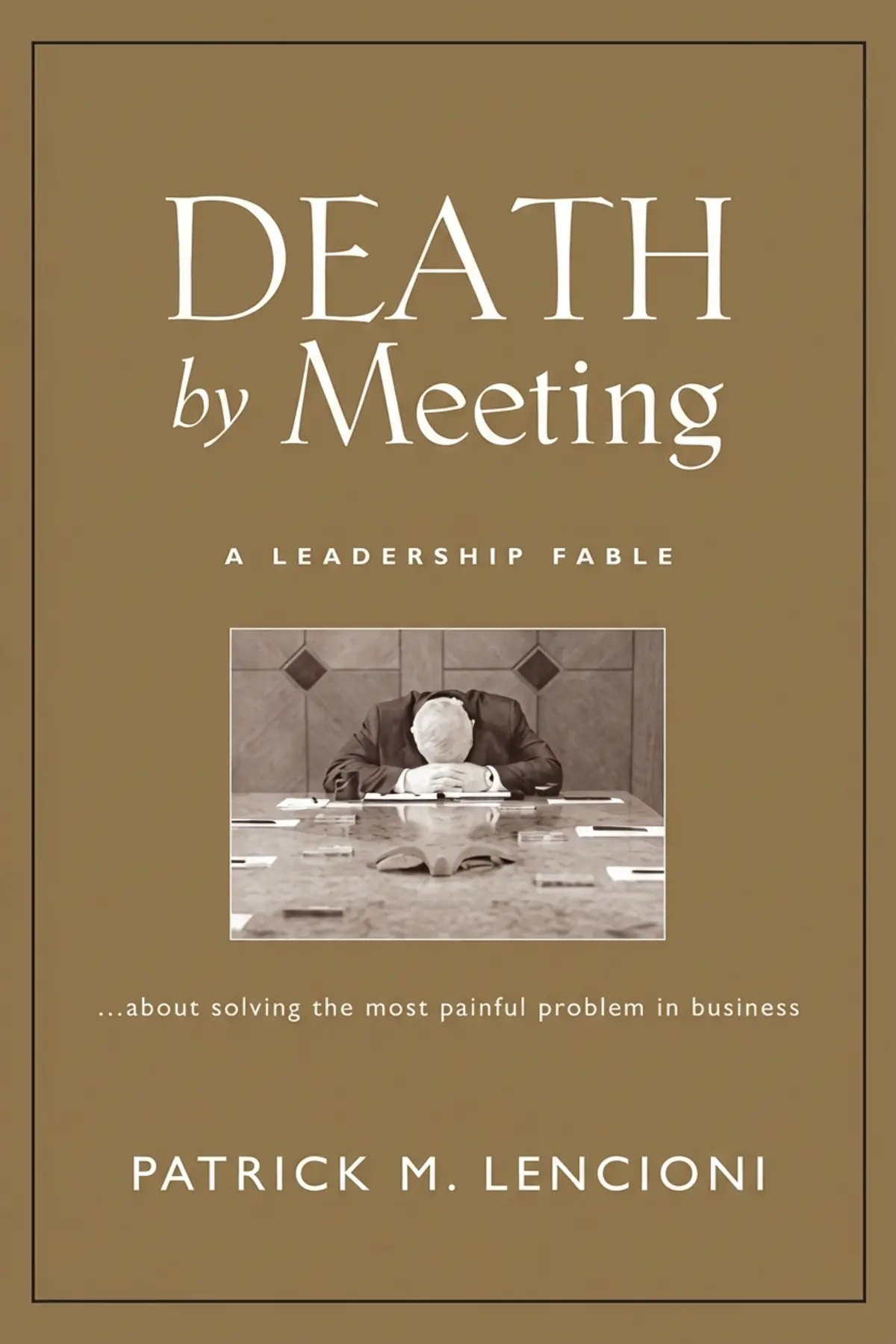
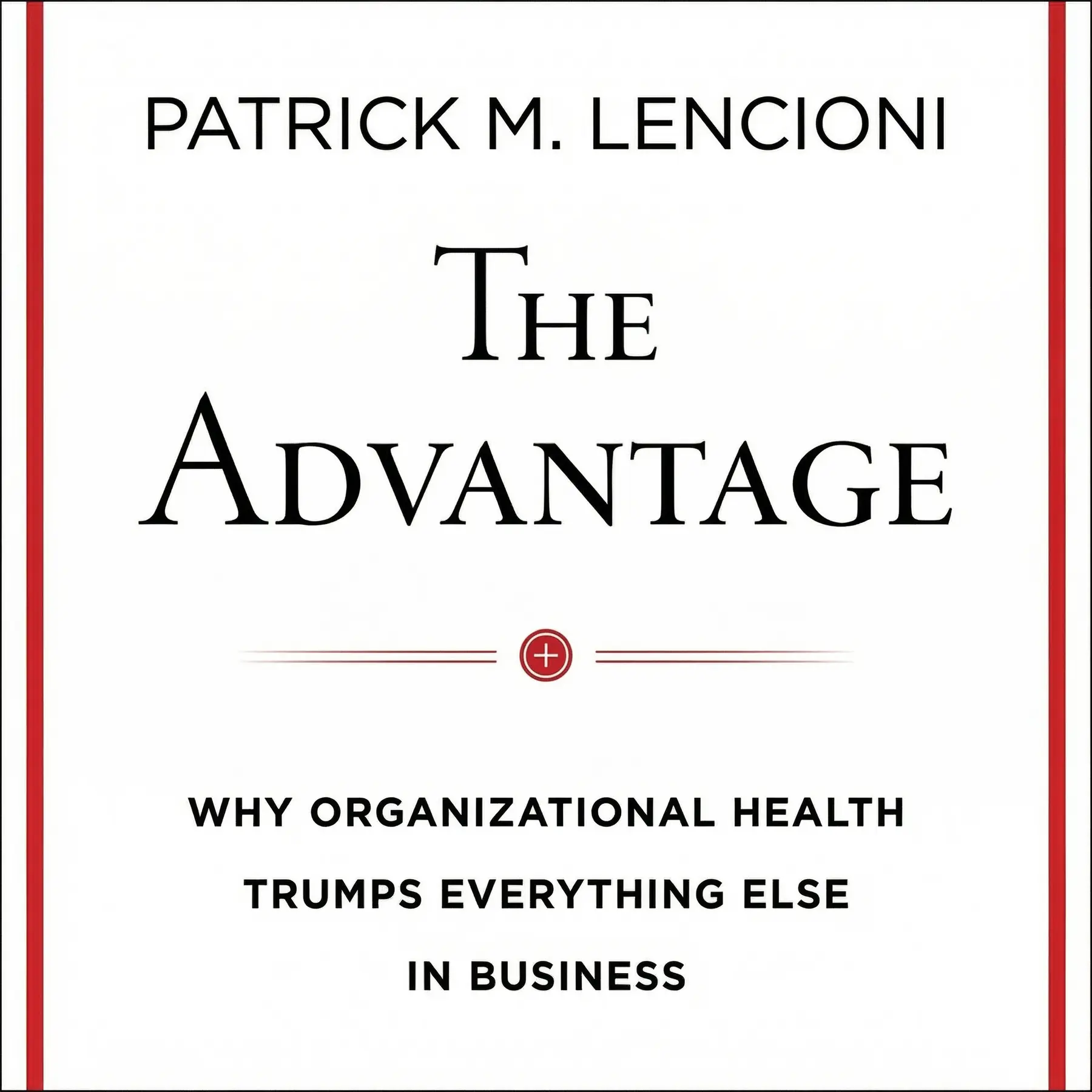
The Advantage: Why Organizational Health Trumps Everything Else in Business
Patrick M. Lencioni argues that the true path to success isn't just about business strategy or intelligence. It's about organizational health—minimizing politics and confusion while maximizing morale, clarity, and team cohesion.
Table of Content
1. Introduction
1 min 45 sec
In the modern business landscape, we are often obsessed with intelligence. We look for the smartest MBAs, the most cutting-edge marketing algorithms, and the most sophisticated financial models. We assume that if a company is ‘smart’ enough, it will naturally win. But we’ve all seen companies that have every technical advantage yet still crumble under the weight of internal politics, high employee turnover, and rampant confusion. We recognize these dysfunctional environments in the satirical world of Dilbert comics, but in real life, the consequences are anything but funny.
When an organization is unhealthy, it doesn’t just lose its best people; it loses its ability to think. This is the central premise of Patrick Lencioni’s work. He argues that while being ‘smart’ is essentially a commodity today—everyone has access to the same technology and data—being ‘healthy’ is the true differentiator. A healthy organization is one that functions with high morale, clear communication, and a total absence of politics. It is a place where people are rowing in the same direction and where energy is spent on winning in the market rather than winning internal arguments.
Over the course of this summary, we are going to explore a comprehensive roadmap for transforming any business into a healthy powerhouse. We will look at why leaders often ignore the human side of business in favor of things they can measure on a spreadsheet. We’ll examine the necessity of building a leadership team that can actually work together, and we’ll dive into the specific behaviors that make that possible. We will also discover how to create a foundation of clarity that eliminates second-guessing across the entire workforce. By the end, you’ll understand that the greatest opportunity for success isn’t found in a new product or a complex strategy, but in the way your people interact and align with one another every single day.
2. The Duality of Success: Smart vs. Healthy
2 min 25 sec
Discover why being the smartest person in the room isn’t enough to save a company that is suffering from internal dysfunction and confusion.
3. Why Leaders Overlook Cultural Health
2 min 28 sec
Uncover the three specific biases that prevent even the best executives from focusing on the most important part of their business.
4. The Foundation of a Cohesive Executive Team
2 min 03 sec
Learn why the strength of your organization starts with a small group of leaders who are willing to put the company first.
5. Vulnerability-Based Trust and Productive Conflict
2 min 08 sec
Explore why the best teams are those where members can openly admit their failures and engage in passionate debate.
6. Achieving Commitment and Peer-to-Peer Accountability
2 min 06 sec
Understand how to get everyone on board with a decision, even if they originally disagreed with it.
7. The Power of Clarity: Asking Why We Exist
2 min 08 sec
Learn how the most successful organizations align their people by answering simple yet profound questions about their core purpose.
8. Identifying Priorities and Defining Roles
2 min 15 sec
Avoid the trap of having too many goals by identifying the one ‘thematic goal’ that matters most right now.
9. The Art of Overcommunication
2 min 17 sec
Discover why the best leaders act as ‘Chief Reminding Officers’ to ensure their message is heard and understood.
10. Designing Human Systems Around Core Values
2 min 09 sec
Learn how to embed your company’s culture into every stage of the employee lifecycle, from hiring to firing.
11. The Strategic Architecture of Effective Meetings
2 min 15 sec
Transform your meetings from a waste of time into the most important engine of organizational health.
12. Conclusion
1 min 38 sec
Building a healthy organization is not a one-time project; it is a continuous, disciplined way of leading. It requires a leader who is willing to stay engaged and who understands that their most important job isn’t being the smartest person in the room, but being the person who ensures the room is healthy. This work is never truly ‘done.’ Much like a healthy marriage or a fitness routine, it requires daily attention and a commitment to doing the hard things—like having uncomfortable conversations, admitting weaknesses, and repeating the same message for the thousandth time.
However, the rewards for this effort are extraordinary. A healthy organization is more than just a pleasant place to work. It is a company that can out-execute and out-innovate its competitors because it isn’t being weighed down by the invisible ‘tax’ of politics and confusion. When people know why they are there, how they are supposed to act, and what is most important, they are freed to do their best work. They become more productive, more loyal, and more successful.
As you move forward, remember that you don’t need a more sophisticated strategy or a more complex financial model to win. You need to start by building a cohesive team that trusts one another. You need to create total clarity and then overcommunicate it until it’s part of the company’s DNA. Start today by looking at your next meeting not as a chore, but as an opportunity to build health. Don’t fear the conflict that arises from honest debate; embrace it as the path to the best possible decisions. If you can master the discipline of organizational health, you will find that it is indeed the ultimate advantage—the one that makes everything else in your business work better.
About this book
What is this book about?
Many businesses spend all their energy focusing on the technical side of the house: strategy, marketing, and finance. While these are necessary, they are only half the equation. In this summary, we explore why organizational health is the ultimate competitive advantage and the most overlooked opportunity in the modern business world. Building a healthy organization requires a disciplined approach to leadership. It begins with creating a cohesive executive team that trusts one another and isn't afraid of productive conflict. From there, leaders must establish total clarity by answering six fundamental questions about why the company exists and what it intends to achieve. Finally, that clarity must be overcommunicated and embedded into every human process in the company. This isn't just about making employees feel good; it’s about creating an environment where smart people can actually make smart decisions without being held back by politics or misalignment.
Book Information
About the Author
Patrick M. Lencioni
Patrick Lencioni is the founder and president of The Table Group, a management consultancy specializing in organizational health and the development of executive teams. He has authored ten business books that together have sold over three million copies globally. His best-selling book is The Five Dysfunctions of a Team, the key ideas of which are also available in blinks.
Getting Naked: A Business Fable About Shedding The Three Fears That Sabotage
Patrick M. Lencioni

The Five Dysfunctions of a Team: A Leadership Fable
Patrick M. Lencioni
Ratings & Reviews
Ratings at a glance
What people think
Listeners find this business title to be an essential read that offers actionable advice and assists companies in progressing in a wholesome, efficient manner. The work is direct and uncomplicated, guiding listeners through its material systematically, and they value its concentration on outcomes and high-level performance. They appreciate the instruction on forming unified leadership groups and company health, with one listener mentioning how it describes the four disciplines with thorough detail.
Top reviews
Pridi
Finally got around to Lencioni’s most comprehensive work, and it’s essentially a field manual for anyone running a business. While most gurus focus on strategy or market intelligence, this emphasizes that a healthy culture is the ultimate competitive edge. The four disciplines laid out are straightforward, but the real value is in the detailed checklist for building a leadership team that actually trusts each other. It’s a refreshing break from the usual abstract fluff found in the management section. I especially appreciated the focus on over-communicating the vision until it sticks. If your organization feels like it's spinning its wheels, the clarity provided by the six critical questions will get things moving forward again. It’s practical, actionable, and arguably the most important business book I've encountered this year.
Show moreCholada
Ever wonder why smart companies still fail? Lencioni suggests it's because they're 'unhealthy,' and honestly, he makes a compelling case. This book distills his entire career into four disciplines that are easy to understand but incredibly difficult to master. I loved the section on the six critical questions because it forces you to define exactly what your company does and why it exists. It’s not just about 'feel-good' culture; it’s about aligning everyone toward a unified goal to maximize productivity. Some might find the tone a bit repetitive, but that’s actually the point—consistency is key. Creating an environment where people can be vulnerable and take risks is what separates the winners from the mediocre. I’m already planning on buying copies for my entire management team to read before our next offsite.
Show moreBunyarit
This book is essentially a masterclass in execution. Many leaders think they have a strategy problem when they actually have a health problem, and Lencioni identifies that gap perfectly. I’ve read a lot of business books, but few provide such a straightforward path to moving an organization forward in a productive way. The emphasis on 'over-communicating' really resonated with me because it’s usually the first thing that falls by the wayside when things get busy. By answering the six critical questions, you eliminate the politics and confusion that slow most companies down. It’s about being authentic and disciplined, even when it’s uncomfortable. This isn't just theory; it’s a practical toolkit for anyone who is serious about top performance. I’d recommend it to any senior leader looking to build a legacy of health.
Show moreCharles
The Advantage feels like the definitive collection of Lencioni’s philosophy. I’ve been a fan of his work for years, and having all his concepts—from team dysfunctions to clarity—in one volume is incredibly convenient. He makes a bold claim that organizational health is the single greatest advantage in business, and by the end of the book, you’ll likely agree. The step-by-step approach to creating a cohesive leadership team is invaluable for anyone stepping into a new management role. It’s not a 'fable' like many of his others, but the directness is refreshing for a change. My only criticism is that it feels very top-down; it’s definitely written for the C-suite rather than the average employee. However, if the leaders follow this guide, the entire company will undoubtedly feel the positive impact.
Show moreYulia
The chapter on building a cohesive team was a massive wake-up call for my executive group. Frankly, we spend so much time on numbers that we forgot how to actually talk to one another about the hard stuff. Lencioni argues that organizational health is more important than being 'smart,' and he backs it up with a clear step-by-step framework. I found the advice on healthy conflict particularly useful because it challenges the fake harmony that ruins most offices. However, I’ll admit the writing style is a bit dry compared to his earlier fables. It reads more like a textbook or a consultant’s manual than a narrative. Despite that, the results we're seeing from implementing the six questions are undeniable. It's a must-read for leaders who want to move past office politics and focus on actual performance.
Show morePawinee
Lencioni moves away from his usual storytelling style here to deliver a direct, no-nonsense guide to organizational health. While I personally missed the 'fable' format of his other books, this one packs a much heavier punch in terms of sheer utility. It feels like a comprehensive summary of his best ideas, all organized into a single, cohesive system. The focus on reinforcing clarity through every process—from hiring to performance management—is where the real magic happens. We often think culture is some mysterious vibe, but this book treats it like a rigorous discipline. Look, it’s not going to win any literary awards for its prose, but that's not why you buy a business book. You buy it for the results, and this provides a very clear roadmap to achieving them.
Show moreSamroeng
After hearing about this through my church leadership circle, I decided to give it a go despite not being in the corporate world. It turns out that 'organizational health' applies just as much to a non-profit or a ministry as it does to a Fortune 500 company. The principles of building trust and creating clarity are universal. Lencioni does a brilliant job of showing why leaders need to 'get naked' first by being vulnerable to set the tone for the rest of the group. It helped me realize that our team was suffering from a lack of clear direction, not a lack of talent. My only minor gripe is that some of the corporate jargon can feel a bit out of place in a volunteer context. Still, the practical information on how to run effective meetings alone makes it worth the price.
Show moreViroj
Establishing clarity isn't just about a mission statement on the wall. It’s about how you behave, what you do, and how you will succeed on a daily basis. Lencioni’s four disciplines provide a framework for reinforcing these messages until they become part of the organization’s DNA. I appreciated how he broke down the importance of the 'first team'—the idea that leaders must prioritize their peers over their own departments. That single concept has shifted the way our leadership group functions. While the book can feel a bit repetitive at times, that’s largely because the author is practicing what he preaches regarding communication. It’s clear, direct, and focused on results. If you want a healthy culture, you have to do the work, and this book shows you exactly what that work looks like.
Show moreRoongsak
To be fair, there is a lot of common sense here that many managers desperately need to hear. The book provides a detailed checklist for things like setting goals and having meetings that don't suck, which is helpful. But I couldn't shake the feeling that Lencioni is a bit too enamored with his own consultant status. The writing feels rushed in the final third, and some of the arguments lack the specificity I was looking for. He talks a lot about 'vulnerability,' but it feels a bit performative when written in this typical business style. It’s like listening to a lecturer who has great points but a slightly irritating delivery. If you need a basic framework for team cohesion, it’s fine. Just don’t expect a groundbreaking masterpiece that will change your entire worldview on leadership.
Show moreTippawan
As someone who appreciates prose and nuanced arguments, I found this to be incredibly frustrating. Lencioni writes with a patronizing tone that feels like he's lecturing a group of toddlers rather than seasoned professionals. The anecdotes provided are all anonymous, which makes them feel like convenient fabrications to support his rather thin arguments. Truth is, most of this is just common sense packaged as 'secret' wisdom for a hefty price tag. He tells us to build trust and communicate well, but he offers very little in terms of actual psychological depth or scientific evidence. If you’ve read Radical Candor, this will feel like a massive step backward in terms of quality and sophistication. It’s a quick read, but I’m left wondering if the author has ever actually worked a day in a real, complex organization.
Show more
Readers also enjoyed
A Year with Peter Drucker: 52 Weeks of Coaching for Leadership Effectiveness
Joseph A. Maciariello
Acting with Power: Why We Are More Powerful Than We Believe
Deborah Gruenfeld
AUDIO SUMMARY AVAILABLE
Listen to The Advantage in 15 minutes
Get the key ideas from The Advantage by Patrick M. Lencioni, plus 5,000+ more titles in English and Thai.
- 5,000+ titles
- Listen as much as you want
- 7-day free trial
- Cancel anytime







