
20 min 35 sec
The Five Dysfunctions of a Team: A Leadership Fable
Explore the structural weaknesses that prevent groups from achieving their full potential. This guide identifies five critical behavioral traps and provides a roadmap for building a cohesive, high-performing executive team.
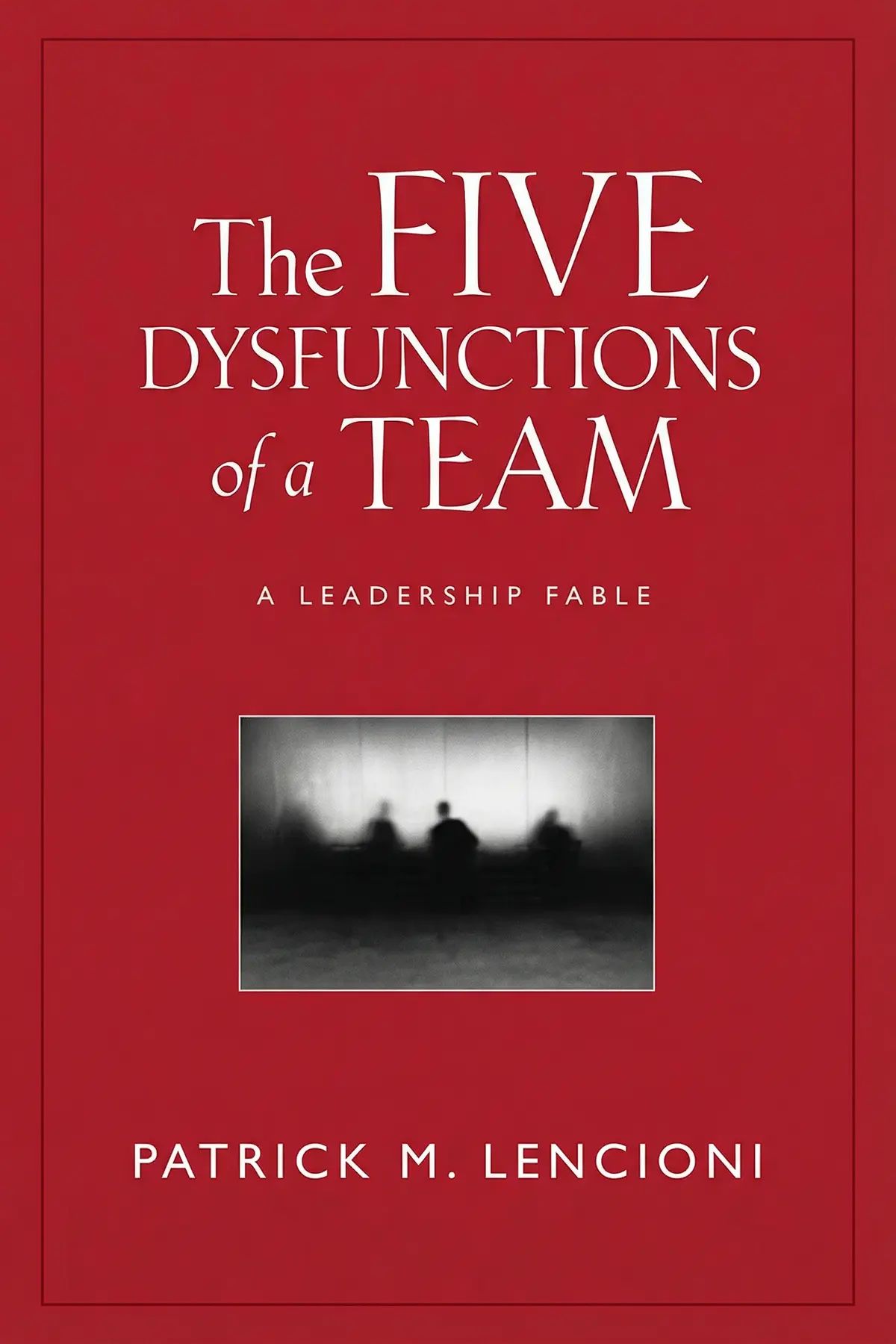
Table of Content
1. Introduction
1 min 42 sec
Every person who has ever participated in a shared project knows that teamwork is the ultimate goal, yet it remains one of the most elusive qualities in professional life. We often talk about it as if it’s a simple ingredient we can just add to a group, but in reality, effective collaboration is incredibly difficult to sustain. This is because teams are not just collections of skills; they are collections of humans. And humans, by our very nature, are imperfect. We carry egos, personal agendas, and a deep-seated desire for self-protection. These natural tendencies are what make most teams inherently dysfunctional.
When these human imperfections are left unaddressed, they manifest as five specific hurdles. It starts with a fundamental lack of trust. Without trust, people are too afraid to challenge one another, leading to a fear of conflict. This hesitation results in a lack of true commitment, as people never felt their voices were heard. From there, we see a breakdown in accountability, where no one wants to call out a peer for poor work. Finally, the team loses its way entirely, suffering from an inattention to results where individual status becomes more important than the group’s success.
But here’s the shift: while these dysfunctions are natural, they are not inevitable. By applying a specific set of principles, any group can transform into a high-functioning unit. This requires a leader who is willing to be a role model, a team that is willing to be vulnerable, and a collective focus on the scoreboard rather than the spotlight. In the following sections, we will explore how to dismantle these five roadblocks and replace them with a foundation of trust and results. We’ll look at why even a team of superstars can fail and how a leader can steer a sinking ship back to success by prioritizing the health of the team over everything else.
2. The Power of Team Synergy
2 min 17 sec
Discover why a group of average players often outperforms a team of superstars and how individual egos can quietly sabotage a company’s future success.
3. Vulnerability-Based Trust
2 min 14 sec
Learn why the most effective teams aren’t just polite to one another, but are willing to expose their greatest weaknesses and mistakes to build a foundation of safety.
4. The Leader’s Role in Modeling Vulnerability
2 min 04 sec
Find out why a team leader must be the first to admit failure, and how this courageous act sets the standard for the entire organization’s culture.
5. Embracing Constructive Conflict
2 min 20 sec
Explore why harmony in the workplace can actually be a sign of a failing team and why passionate debate is the only way to reach the best decisions.
6. Commitment Without Consensus
1 min 57 sec
Understand the ‘consensus trap’ and learn how teams can achieve full buy-in on major decisions even when everyone doesn’t agree with the final choice.
7. The Weight of Peer-to-Peer Accountability
1 min 59 sec
Learn why the most effective form of discipline isn’t top-down management, but the social pressure and mutual respect found among high-performing peers.
8. Focusing on Collective Results
2 min 18 sec
See how individual career ambitions can become the ultimate roadblock to team success and why clear, measurable goals are the only way to keep egos in check.
9. The Strategic Value of Meeting Together
2 min 19 sec
Learn why regular face-to-face meetings are not a waste of time, but a vital tool for building rapport, resolving conflict, and saving hours of redundant work.
10. Conclusion
1 min 25 sec
Building a truly cohesive team is perhaps the most difficult challenge a leader will ever face, but it is also the most rewarding. By understanding the five dysfunctions—absence of trust, fear of conflict, lack of commitment, avoidance of accountability, and inattention to results—we can see the roadmap for success. It all starts with trust. Without the willingness to be vulnerable, a team is just a group of people working in the same building. But when trust is established, everything else becomes possible.
As you move forward, remember that your role as a leader or team member is to model the behavior you want to see. If you want trust, be the first to share a story of failure. If you want accountability, have the courage to tell a peer when they’ve let the team down. If you want results, keep the collective scoreboard in the center of every conversation.
One actionable step you can take today is to sit down with your team and define a single, measurable goal for the next quarter. Make it public, make it clear, and review your progress toward it every single week. This simple act of focusing on a shared outcome will start to pull the team together and expose the areas where trust and commitment might be lacking. Teamwork isn’t a destination you reach and then forget; it’s a constant practice of choosing the group over the self. If you commit to that practice, there is no limit to what your team can achieve.
About this book
What is this book about?
This summary breaks down the hidden dynamics that cause teams to stall, using the framework of five specific dysfunctions: a lack of trust, fear of debate, failure to commit, dodging responsibility, and a disregard for collective goals. Through the story of a struggling Silicon Valley firm and its new leader, the book illustrates how human ego and individual ambition can sabotage even the most talented groups. It promises a clear path forward, showing leaders how to foster vulnerability, encourage healthy friction, and drive focus toward measurable team outcomes.
Book Information
About the Author
Patrick M. Lencioni
Patrick Lencioni is president of The Table Group, a management consultancy. His previous bestselling books include Overcoming the Five Dysfunctions of a Team, Death by Meeting and Silos, Politics and Turf Wars. In 2008, CNN Money listed him as one of ten new gurus you should know.
Getting Naked: A Business Fable About Shedding The Three Fears That Sabotage
Patrick M. Lencioni

The Advantage: Why Organizational Health Trumps Everything Else in Business
Patrick M. Lencioni
Ratings & Reviews
Ratings at a glance
What people think
Listeners view this book as a vital resource for team managers, praising its influential tenets and its clear identification of standard team dynamic problems. Additionally, the storytelling style is absorbing and clear, allowing for seamless integration into real-world circumstances. They also find the functional advice and the depiction of management team best practices highly useful, with one listener highlighting that the material changed their leadership style forever.
Top reviews
Nathan
After hearing so much hype about Lencioni, I finally dove into this business classic to see what the fuss was about. The narrative approach makes the five key pillars feel grounded rather than just another list of dry corporate buzzwords. While the characters in the fable can feel a bit one-dimensional at times, the underlying message regarding trust and conflict resonates deeply. Since finishing it, I’ve already started changing how I facilitate our weekly meetings to encourage more healthy debate. It is a game-changer for anyone who feels stuck in a culture of polite, unproductive silence. If you are leading people, you simply cannot afford to skip these insights into team dynamics.
Show morePetch
Wow, I wish I had encountered this book ten years ago when I first entered the corporate world. For years, I struggled with passive-aggressive colleagues and a total lack of peer-to-peer accountability without knowing how to voice my frustration. Lencioni puts words to those exact feelings while offering a roadmap to actually fix the underlying rot. The section on productive conflict was a revelation for me because I always viewed friction as a failure of leadership. Now I see it as a necessary ingredient for a high-performing group. It’s powerful, practical, and a breath of fresh air in a genre often filled with useless fluff.
Show moreCharles
As someone who has always been wary of management consulting fads, I was completely blown away by how much I identified with this. It is rare to find a business book that captures the emotional weight of a toxic workplace so accurately. The fear of vulnerability is such a massive hurdle in corporate America, and Lencioni addresses it head-on with zero fluff. I felt a bit like Jerry Maguire reading his mission statement because it just felt right. I have already bought copies for my entire executive team because we need this wake-up call. It is a must-read if you actually care about your people and your results.
Show moreAdam
Frankly, this is one of the few leadership books that I will actually return to year after year. Most corporate literature is forgotten within a week, but the Five Dysfunctions framework is so sticky that it becomes part of your mental hardware. I love how it highlights that the CEO’s primary team is the leadership group, not their individual departments. That perspective shift alone is worth the price of admission for any high-level executive. It is short, punchy, and provides a clear mirror to see your own failings as a leader. If you want to stop the drama and start winning, read this immediately.
Show moreCholada
This book provides a surprisingly effective framework for dissecting why groups of talented individuals often fail to produce results. I was initially skeptical of the fable format because corporate storytelling usually feels forced and juvenile. Truth be told, the plot here is a bit thin, but the model Lencioni builds is incredibly sturdy and easy to communicate. The pyramid of dysfunctions offers a clear vocabulary for discussing issues that usually feel too vague to address directly. We used it to identify our own lack of accountability, and the shift in our office atmosphere was almost immediate. It is definitely not a magic wand, but it serves as a damn good compass for the journey.
Show moreFang
Picked this up during a particularly rough patch at the office where it felt like everyone was working in silos. Not gonna lie, the five dysfunctions list sounds a bit banal when you just see it written out on a slide deck. But reading the story gives those points a context that makes them stick in your brain much longer. To be fair, the book oversimplifies how messy human relationships actually are, yet that simplicity is exactly what makes it applicable. It gives a dysfunctional team a shared language to stop blaming individuals and start looking at the system. It’s a solid addition to any manager's bookshelf.
Show moreNatchaya
Finally got around to reading this for a work book club, and I am glad I did. The writing style is punchy and direct, which is perfect for busy professionals who do not have time for an academic tome. I particularly liked the focus on attention to results as the pinnacle of the pyramid because it is easy to get distracted. Despite that, the practical applications are clear and immediate for anyone trying to build a better culture. It is a very informative piece for those new to management and leadership.
Show moreYui
The chapter on lack of commitment really hit home for me and my current project team. Personally, I have always preferred buy-in through consensus, but this book taught me that disagreement is fine as long as there is commitment afterward. The fable is a bit stilted and obviously serves the author's agenda, but the model is too useful to ignore. It is an engaging narrative that does not bog you down with endless graphs or unnecessary case studies. While it might be common sense to some, seeing it structured this way makes it much easier to implement. It serves as a truly great leadership best practice guide.
Show morePornpimon
Ever wonder why business books feel the need to wrap every simple lesson in a fictional story? While I appreciate that this makes for a quick read, the melodrama between Kathryn and the other executives felt a bit like a corporate soap opera. The characters are somewhat cartoonish, making it hard to take the narrative seriously at several points. However, I can't deny that the core principles regarding the lack of trust and the fear of conflict are spot on. It’s a decent enough tool for a weekend read, but do not expect a profound literary experience or a complex psychological study. Use it as a conversation starter for your team and nothing more.
Show moreIsaiah
Not what I expected given all the glowing recommendations I’ve seen on LinkedIn over the years. Look, I understand the value of simplicity, but this feels like a toy compass trying to navigate a complex jungle. The characters are cringeworthy archetypes who do not behave like real people in any office I’ve ever worked in. While the five points are technically correct, the book offers very little in terms of deep psychological insight or nuanced strategy. It’s fine as a ninety-minute distraction, but I found the pretensions to wisdom a bit hard to swallow. If you want something with real meat on its bones, keep looking.
Show more
Readers also enjoyed
All In: How Great Leaders Build Unstoppable Teams
Mike Michalowicz
7 Powers: The Foundations of Business Strategy
Hamilton Helmer

A Bigger Prize: How We Can Do Better Than the Competition
Margaret Heffernan
AUDIO SUMMARY AVAILABLE
Listen to The Five Dysfunctions of a Team in 15 minutes
Get the key ideas from The Five Dysfunctions of a Team by Patrick M. Lencioni, plus 5,000+ more titles in English and Thai.
- 5,000+ titles
- Listen as much as you want
- 7-day free trial
- Cancel anytime







