
Manufacturing Consent: The Political Economy of the Mass Media
Edward S. Herman
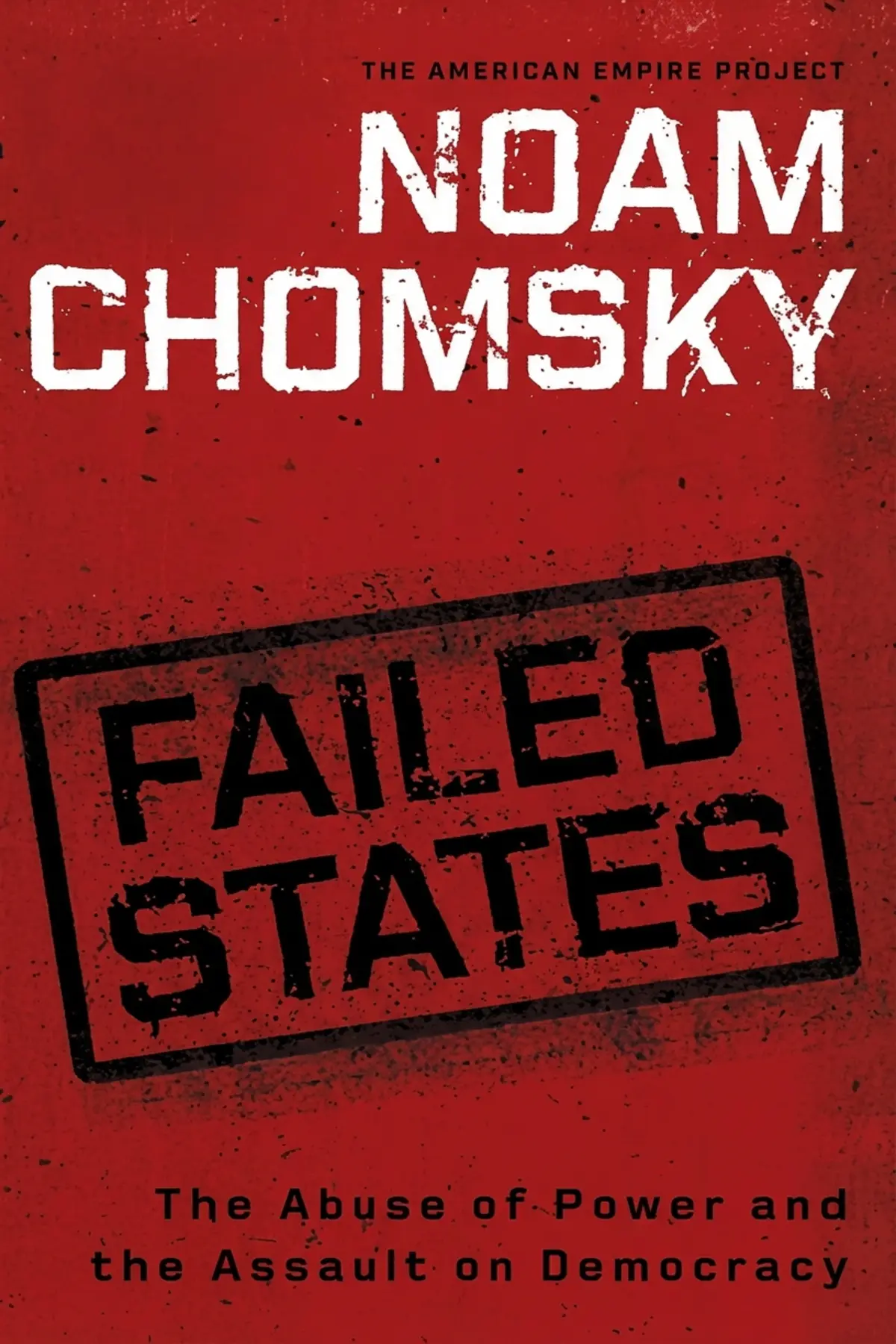
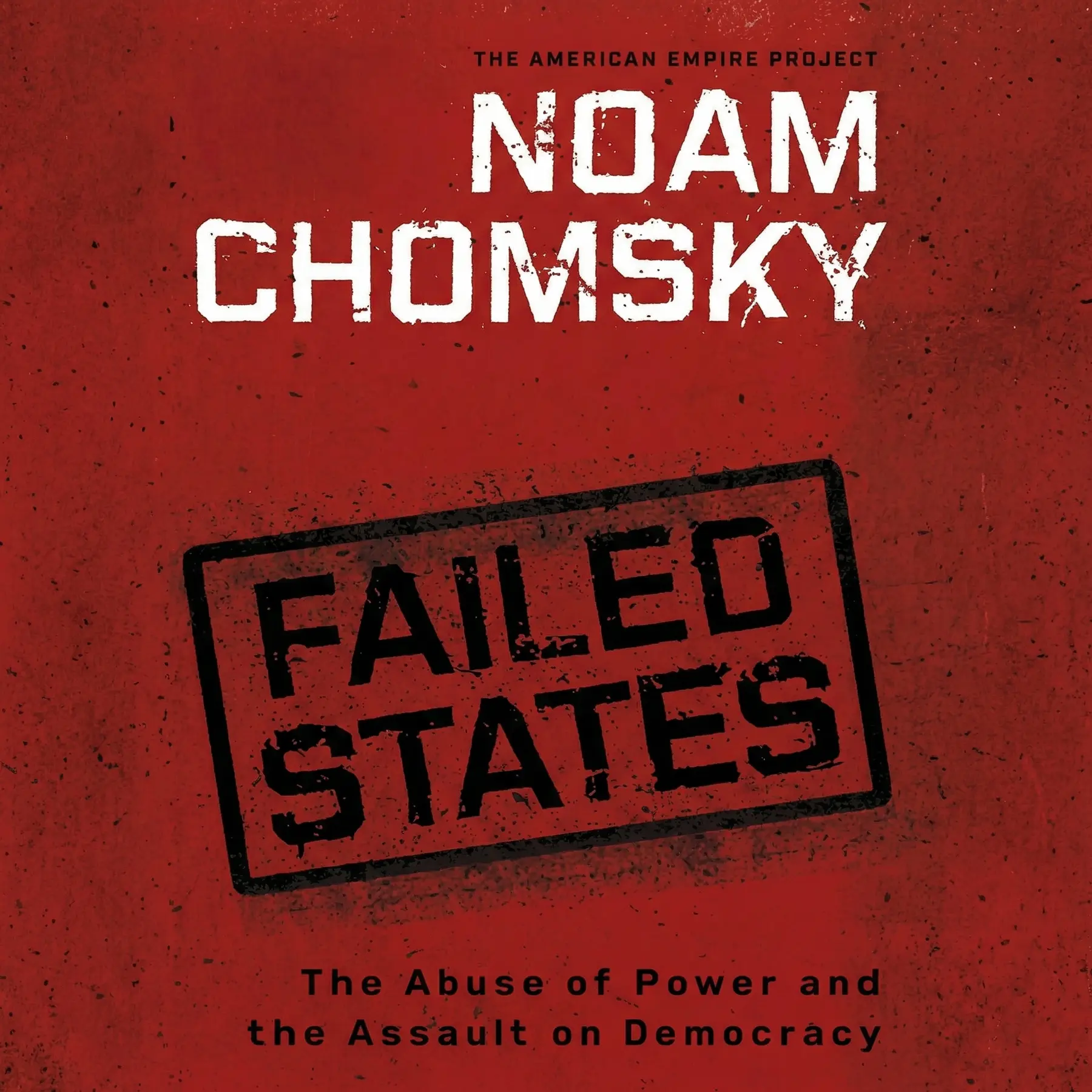
Failed States offers a provocative critique of how the United States, despite its democratic rhetoric, often acts as a destabilizing force globally and fails to meet democratic standards within its own borders.
1 min 53 sec
Listen to the speeches of almost any major political leader in the United States, and you will hear a recurring theme: America is the exceptional guardian of global liberty. The narrative is consistent and powerful. It paints a picture of a nation that acts as a benevolent referee, a global policeman whose primary mission is to safeguard democracy and push back the tides of chaos and tyranny. This throughline suggests that without the steady hand of American intervention, the world would be a far more dangerous and less free place.
But what happens when we look past the soaring rhetoric and examine the actual record of policy and action? As we dive into this exploration, we begin to see a starkly different reality emerge. There is a profound gap between the altruistic ideals projected on the world stage and the pragmatic, often destructive, effects of US foreign policy. Far from being a consistent force for peace, the actions of the superpower frequently exacerbate instability, perpetuate poverty in developing regions, and occasionally operate in direct opposition to international law.
This isn’t just a critique of a single administration or a specific era. It is an analysis of a deep-seated systemic behavior where the pursuit of dominance often overrides the very democratic values the country claims to represent. We are going to look at how this disconnect manifests in international institutions like the United Nations, how it reshapes the definition of war and torture, and how it impacts the very survival of our species through the lenses of nuclear security and environmental policy.
Ultimately, this journey leads us to a startling conclusion: the United States may actually meet the criteria of a ‘failed state’—a term it frequently uses to justify intervention elsewhere. By the end of our discussion, you’ll see why the throughline of this work is not just about criticizing power, but about understanding the urgent need for a democratic renewal that aligns a nation’s actions with its highest stated principles.
2 min 14 sec
Explore the structural imbalances within the United Nations that allow powerful nations to bypass the very laws they expect the rest of the world to follow.
2 min 17 sec
Unpack the legal justifications used to bypass traditional rules of war and the dangerous double standards they create for global security.
2 min 29 sec
Learn why the world’s most powerful nation often hesitates to act on nuclear proliferation and climate change when wealth is on the line.
2 min 16 sec
Examine the long-standing obsession with Cuba to understand why the US often views national independence as a threat to its global influence.
2 min 19 sec
Discover how the rhetoric of spreading freedom is often a convenient cover for securing valuable resources and strategic pipelines.
2 min 19 sec
Analyze why true peace in the Middle East is often hindered by a preference for favorable outcomes over democratic processes.
2 min 25 sec
Revisit the invasion of Iraq to see how the promise of democracy resulted in increased theocracy and documented violations of international law.
2 min 22 sec
Examine the startling conclusion that the United States fits its own criteria for a ‘failed state’ due to the disconnect between its citizens and its policies.
1 min 38 sec
As we wrap up our look at the themes of this work, the central message remains clear: the greatest threat to global stability and democratic values often comes from the very power that claims to be their champion. We have seen a consistent pattern where the United States uses its unique position in international organizations to place itself above the law, redefines military aggression as self-defense, and prioritizes short-term economic gains over the survival of the planet.
This analysis isn’t meant to be a counsel of despair, but a call for clarity. To understand why the Middle East remains in conflict, why the environment continues to degrade, and why international law seems so fragile, we must look at the way power is exercised behind the scenes. The ‘failed state’ is not just a label for others; it is a mirror that asks us to examine the health of our own democratic institutions.
The actionable takeaway here is the need for a re-engagement with true democratic principles. It is a reminder that a state’s legitimacy comes not from its military might or its economic output, but from its willingness to follow the rules it sets for others and its commitment to the well-being of all people, not just a privileged elite. If we want a world that is safer, fairer, and more democratic, the change must start with holding the most powerful actors accountable to the same standards of justice we expect from everyone else. The throughline of this journey is that power without accountability is the ultimate recipe for a failed world, and the path forward requires us to close the gap between the rhetoric of freedom and the reality of our actions.
In this deep dive into modern geopolitics, we examine the provocative thesis that the world’s most powerful nation exhibits the very traits it uses to label others as 'failed states.' The narrative moves beyond headlines to explore the systemic disconnect between the stated goals of American foreign policy—freedom, security, and democracy—and the reality of its actions, which often include undermining international law and ignoring the will of its own citizenry. Through various lenses, including military intervention in the Middle East, economic embargoes in the Caribbean, and domestic policy shifts, the content reveals a pattern of prioritizing elite economic interests and strategic dominance over global stability. The promise of this summary is to challenge your perspective on global leadership and provide a clearer understanding of why contemporary international relations are fraught with tension, ultimately asking what it truly means for a state to fulfill its responsibilities to its people and the world.
Noam Chomsky is a world-renowned American linguist and political thinker who serves as Professor Emeritus at the Massachusetts Institute of Technology. A prominent cultural figure, he has authored over 100 books and was voted the top public intellectual in the world in a 2005 poll.
Edward S. Herman
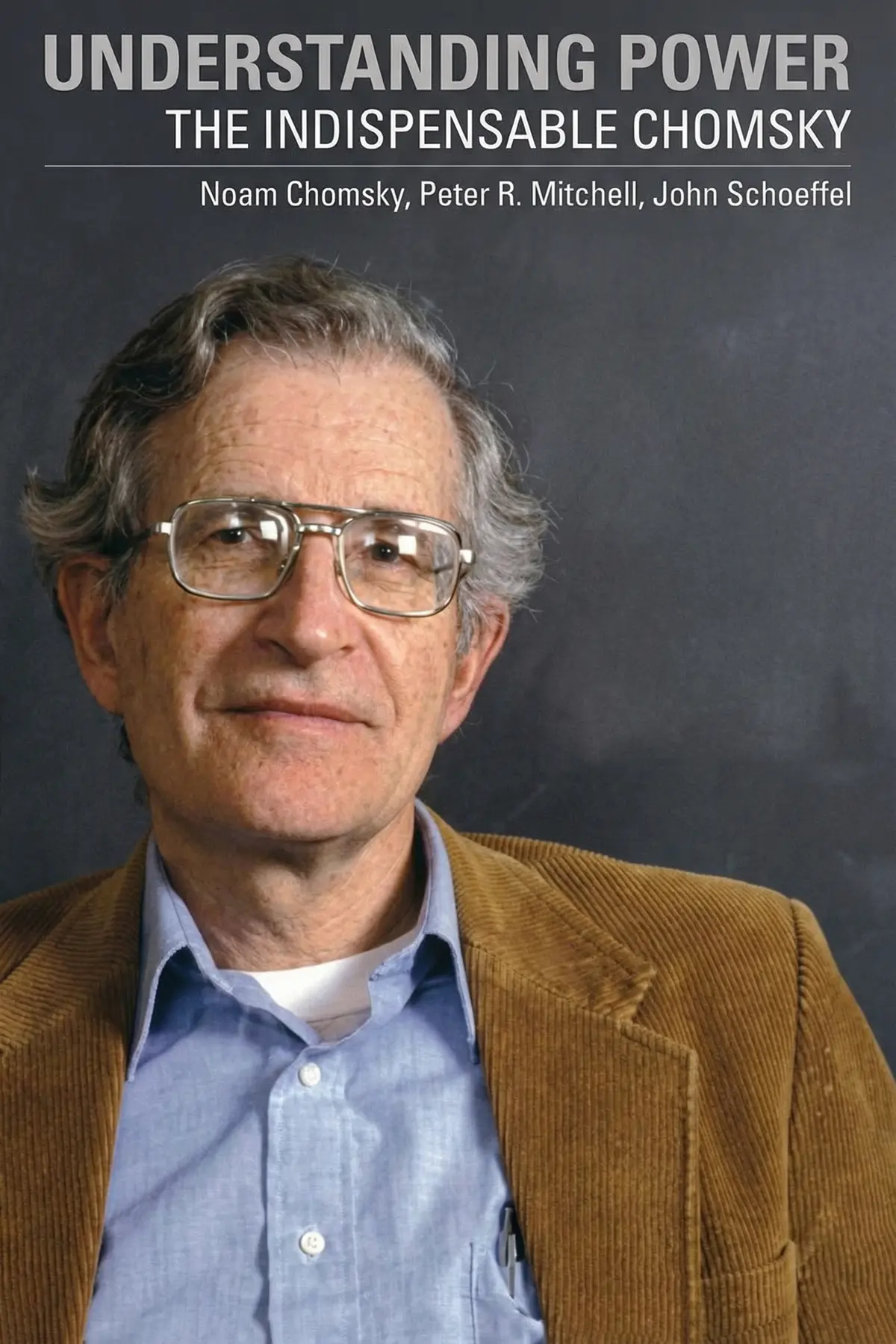
Noam Chomsky
Noam Chomsky
Noam Chomsky
Listeners find the work both educational and revelatory, with one individual pointing out how it meticulously establishes a factual basis. Furthermore, the writing is considered deeply intellectual, prompting listeners to reconsider government policies. On the other hand, the ease of consumption gets varied responses, as some struggle with the content initially. Perspectives on the book's precision and narrative direction are also divided; one listener characterizes it as a devastating polemic against the U.S., while another feels it is lacking focus.
Finally got around to this classic critique, and it remains disturbingly relevant even decades after the Bush era. Chomsky’s central argument is devastatingly simple: the United States routinely flouts the very democratic principles it claims to champion globally. His thesis isn't just a loud polemic; it is methodically constructed with an abundance of evidence that makes you question the 'official' history we are fed daily. The synthesis of global power relations and the unpacking of how aggression is framed as 'freedom' provides a sound foundation for understanding modern imperialism. I found his analysis of the two existential threats—nuclear proliferation and environmental catastrophe—to be particularly chilling. Even if you find his prose a bit dry or forensic, the moral balance sheet he presents is impossible to ignore. This is an essential audit of power that demands a response from any thinking citizen.
Show moreAfter hearing so much about the 'Failed States' thesis, I was surprised by how forensically Chomsky dismantles the narrative surrounding the Iraq War and WMDs. He highlights a glaring contradiction: while the administration claimed there were no weapons, equipment for developing them—provided by the West in the 80s—was being looted and moved across the Jordanian border in truckloads. It’s this kind of detail that makes his work so dangerous to the status quo. He isn't just shouting at the wind; he is citing the IAEA and high-precision equipment logs. The chapter 'Illegal but Legitimate' regarding Kosovo is particularly eye-opening, showing how much of our history is written backwards to justify intervention. This book isn't just about foreign policy; it’s a terrifying look at how sovereignty is used as a shield for the powerful while being denied to the weak.
Show moreThe chapter on the assault on democracy within the United States itself was a total revelation. We often talk about 'bringing democracy' elsewhere, but Chomsky points out the massive disjunct between what the American public wants—like universal health care or reliance on the UN—and what the political elite actually delivers. He argues that corporatism has perverted the democratic process to the point where the electorate’s views are almost entirely ignored by both major parties. This internal decay is what really justifies the 'failed state' label in his eyes. The book is a devastating polemic, but it’s backed by public opinion surveys and legislative records that are hard to refute. It makes you realize that the threat to our way of life isn't just external; it's baked into the way our institutions currently function. It’s gut-wrenching, brilliant, and absolutely necessary for understanding the 21st century.
Show moreTruth is, the sheer volume of obscure journals and technical literature cited here is staggering, even for a Chomsky book. He is relentless in his pursuit of truth, refusing to let the reader look away from the debacles of the Bush II years. This isn't just a book about the past; it’s a warning about the future of a superpower that believes it can write its own rules. The focus on how we have been lied to regarding WMDs and 'altruistic' interventions is handled with a surgical precision that is rare in modern political writing. Personally, I found the analysis of the 'War on Terror' to be the most enlightening section, as it connects U.S. support for global terror to its own stated goals of smashing competition. It is an informative, thought-provoking, and ultimately essential read for anyone trying to make sense of a world that often seems to have lost its way.
Show moreReading Chomsky is a workout for your conscience that often leaves me feeling washed out and despondent. He presents the failures of our system so vividly that it becomes impossible to hide behind the comfortable lies of mainstream news programs. The most frightening aspect of this work is that he doesn't rely on conspiracy theories; he shows how the system is self-correcting and maintains its own trajectory of exploitation. This book feels even more urgent than Naomi Klein’s work because it suggests a level of domestic decay that we are trained to overlook. Truth is, we have become the very Winston Smiths that Orwell warned us about, accepting legal end-runs as standard procedure. My only minor gripe is the readability, as the sheer volume of data can feel overwhelming at first. However, the insight into how public opinion is curtailed is worth the effort.
Show moreAs someone who lives outside the American bubble, Chomsky’s dissection of US foreign policy feels like a necessary antidote to the polished narratives of the state department. He pulls no punches in describing how the U.S. government views international law: as something that is fine, provided it comes out the right way. The book makes a compelling case that the 'War on Terror' has actually increased the risk of global instability. I especially appreciated the sections on how the U.S. rejects the jurisdiction of the International Criminal Court. While I don't always agree with his structural determinism, his ability to track the systemic incentives for power is unparalleled. It’s a dense read and can be quite depressing, but it provides a perspective that is rarely allowed in polite political conversation. Highly recommended for those who want to see under the hood of the empire.
Show moreTo be fair, I don’t always align with Chomsky’s specific brand of political philosophy, but his audit of American hypocrisy in 'Failed States' is airtight. He methodically traces how the U.S. claims the right to attack any country it deems a potential threat while exempting its own nuclear facilities from international inspection. The irony is blinding. He isn't interested in romantic revolution; he’s performing a cool, forensic unpacking of how democracies start to mimic the authoritarian regimes they supposedly oppose. The writing is dry and can be difficult to get through at first, but the rewards are worth the effort. It forces you to confront the enormity of the issues we face, from nuclear proliferation to the erosion of civil liberties at home. Even if you only agree with half of it, the half you agree with will keep you up at night.
Show moreLook, the research here is undeniable, but the prose style is a massive slog for the average reader. Chomsky is a master of the forensic detail, yet he often gets lost in a meandering array of figures that can make the book feel lacking in focus. I appreciate the effort to define the U.S. through the lens of a failed state—specifically its inability to protect citizens and its habit of bypassing international law—but the delivery is often too dry. To be fair, if you aren't paying close attention, you’ll miss the subtle irony he uses to dismantle government propaganda. It’s a thought-provoking read, but it requires a level of patience that many might not have. It’s informative, sure, but I wouldn't call it an easy or particularly engaging experience for someone new to political theory.
Show moreEver wonder if a book can be too right for its own good? Chomsky is clearly brilliant, but his tone can be so dismissive and sarcastically heavy that it risks alienating anyone who isn't already a devotee. He spends a lot of time on rhetorical chicanery, trying to trap the reader in a web of facts that sometimes feel like they are being used to bludgeon the 'imperialists' rather than to invite a genuine dialogue. The premise that America is a failed state is a fascinating intellectual exercise, but in practice, he stretches the definition to its breaking point. Not gonna lie, the middle chapters felt repetitive, essentially echoing his previous work like 'Hegemony or Survival.' It’s an eye-opening book if you can get past the author's apparent lack of intellectual honesty regarding his own biases. Use it as a starting point, but keep your skepticism high.
Show moreThis book fills me with a blank uneasiness that I find hard to shake. Noam Chomsky is clearly a gifted thinker, but his worldview has become so rigidly consistent that it borders on the surreal. At this point in his career, he feels like the Jimmy Buffett of the far left; he keeps packing in the crowds without ever really changing his set list. You get the same numbing array of facts, the same quotes from obscure journals, and the same scathing denunciations of American perfidy. While the research into the Bush years is deep, the central conceit—that the U.S. is the new Somalia—feels like an exercise in rhetorical magic rather than a functioning political analysis. Frankly, his self-serving definition of a 'failed state' ignores the most basic requirement: that a state must actually stop functioning. It’s a dense, predictable slog that will only satisfy those already converted to the cause.
Show more
Yuval Noah Harari
Jacinda Ardern
Pankaj Mishra
James Comey
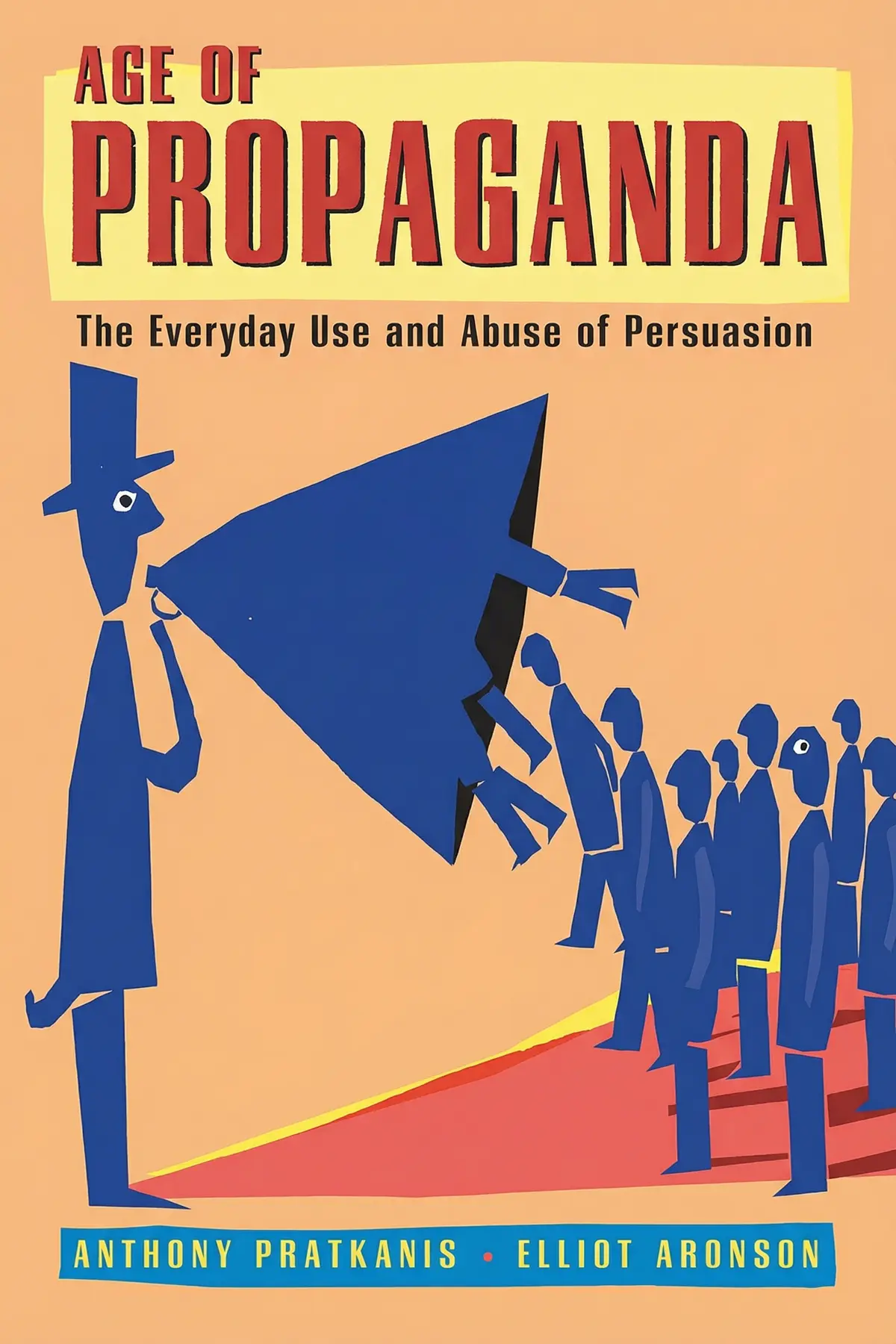
Anthony Pratkanis
Barack Obama
Masaji Ishikawa
AUDIO SUMMARY AVAILABLE
Get the key ideas from Failed States by Noam Chomsky, plus 5,000+ more titles in English and Thai.







