
14 min 42 sec
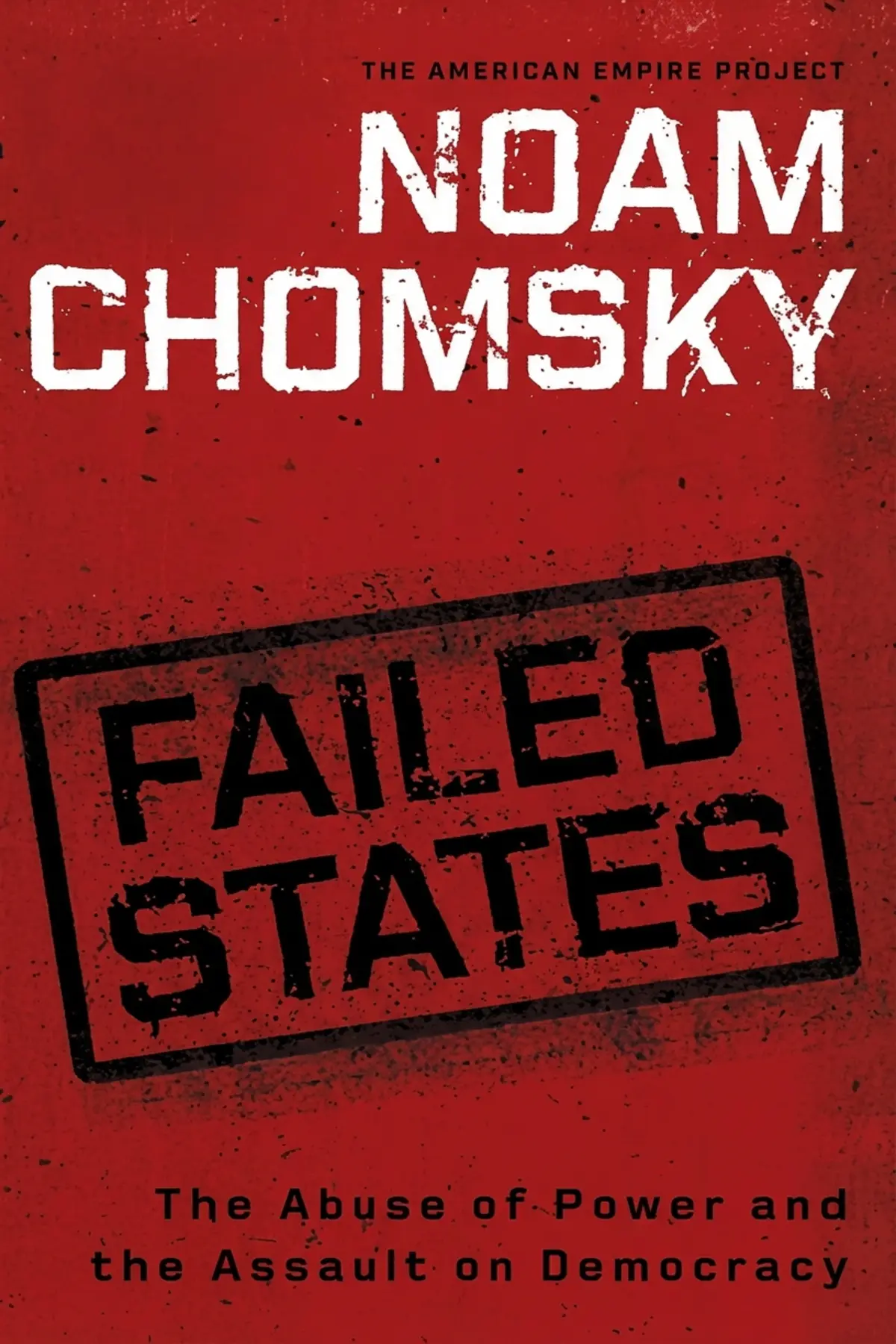
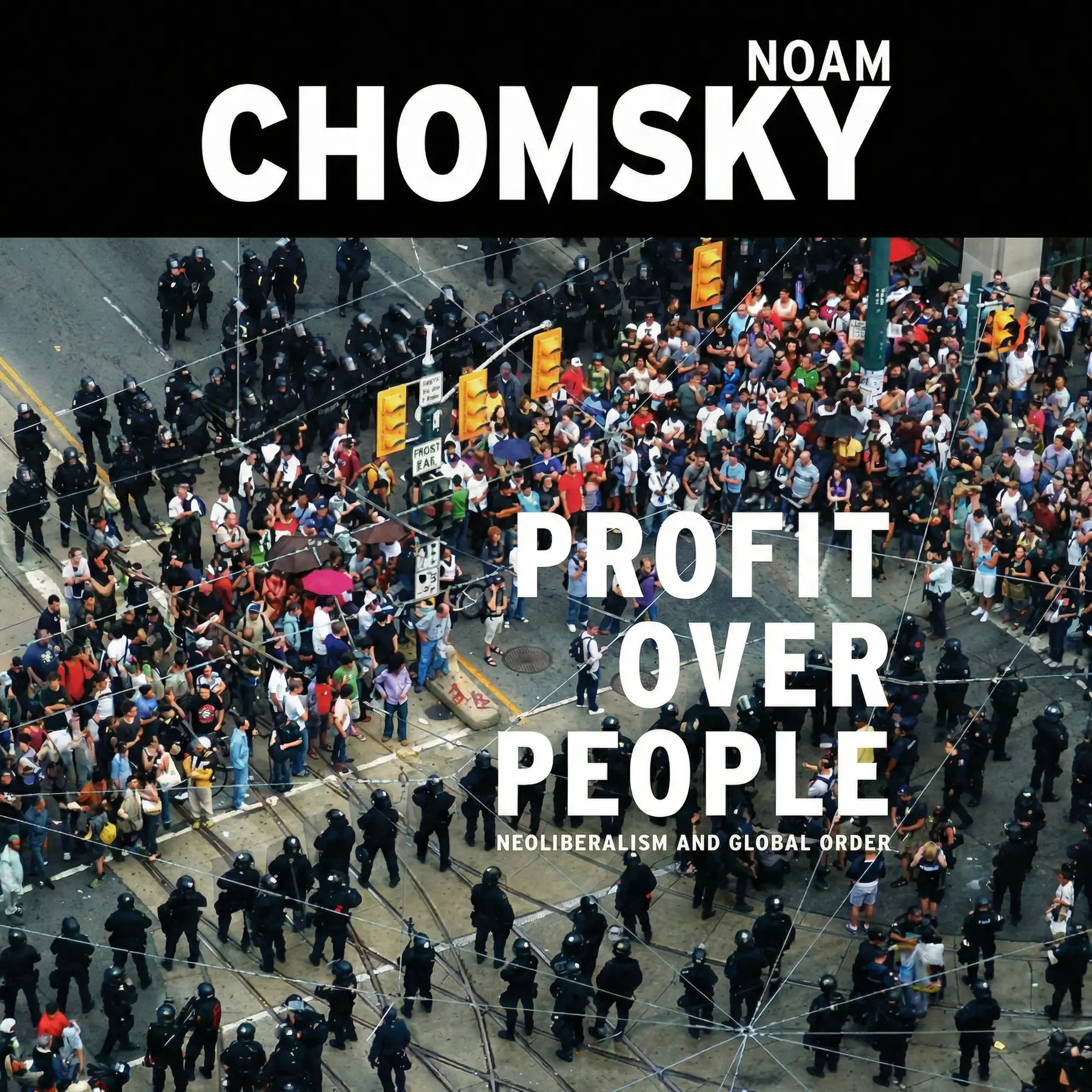
Profit Over People: Neoliberalism and Global Order
By Noam Chomsky
Profit Over People explores how neoliberal economic policies systematically prioritize corporate interests and wealth concentration over democratic governance, public welfare, and the sovereign rights of developing nations across the globe.
Table of Content
1. Introduction
1 min 48 sec
Imagine a world where the rules of the game are written by those who already hold all the chips. We are often told that the global economy is a rising tide meant to lift all boats, yet the reality frequently looks like a stormy sea where only the largest vessels remain afloat. This is the world of neoliberalism, a specific economic worldview that has come to dominate international policy over the last several decades. At its core, this doctrine suggests that the market should be the ultimate arbiter of human affairs, and that governments should step back to allow private enterprise to lead the way. It sounds like a vision of freedom, but when we look closer, we see a different story unfolding.
In this exploration of Profit Over People, we are going to look at the hidden mechanics of our global financial and political systems. We will move past the jargon of trade liberalization and privatization to see what these policies actually do to real communities. We’ll see how the pursuit of profit has often come at the direct expense of democratic choice and human needs. From the halls of power in Washington to the rural fields of Mexico and the industrial history of India, the throughline is clear: when profit is placed above people, the results are rarely accidental.
This journey is not just about identifying problems; it is about understanding the structures that shape our daily lives. By pulling back the curtain on how international institutions and powerful nations operate, we can begin to see the world with greater clarity. We will examine how specific policies have been used to protect the wealthy while dismantling the social safety nets of the vulnerable. As we navigate through these ideas, we’ll see that the current global order is not an inevitable fact of nature, but a series of choices—choices that can be questioned, challenged, and ultimately changed to better serve the common good.
2. The Ideological Framework of Neoliberalism
2 min 11 sec
Explore the foundational beliefs of the neoliberal doctrine and see how the ‘Washington Consensus’ became the invisible hand shaping the global economy.
3. Interventionism in the Name of Private Interest
2 min 11 sec
Discover the historical pattern of how powerful nations have actively suppressed movements that prioritize local social welfare over foreign corporate profits.
4. The Selective Application of Trade Rules
2 min 33 sec
Uncover how dominant powers use free-market rhetoric to open foreign markets while simultaneously protecting their own home-grown industries.
5. The Disregard for International Law
2 min 02 sec
Examine the tension between global rules and national power, focusing on how dominant states choose when to follow international norms and when to ignore them.
6. The Human Cost of Trade Agreements and the Spirit of Resistance
2 min 23 sec
Analyze the real-world impact of deals like NAFTA and see how marginalized communities are fighting back against the erosion of their rights and livelihoods.
7. Conclusion
1 min 34 sec
As we wrap up our look at the ideas presented in Profit Over People, the central theme is impossible to ignore: the current global economic order is far from a neutral or naturally occurring phenomenon. It is a carefully constructed system that frequently prioritizes the concentration of wealth and power over the essential needs of the many. We have seen how the doctrine of neoliberalism—with its emphasis on deregulation and privatization—has often served as a tool for the powerful to reshape the world in their own image. We’ve looked at the selective application of international law and the way trade agreements can hollow out local communities in the name of efficiency.
But the most important takeaway is that understanding this system is the first step toward changing it. By recognizing the mechanics of how profit is placed over people, we can begin to advocate for policies that prioritize human rights, environmental sustainability, and genuine democratic participation. The historical examples of resistance, from India to Mexico, show us that people have always fought back against systems that seek to marginalize them.
What this really means for us today is a call to critical thinking and active citizenship. It means questioning the narratives we are told about free trade and economic growth, and looking instead at the lived realities of people on the ground. The future is not yet written, and by shifting our focus back to the common good, we can work toward a global society that is truly equitable and just. The journey toward a world that values people over profit is long, but it is a journey that starts with the clarity and understanding we’ve explored here today.
About this book
What is this book about?
Have you ever wondered why the global economic landscape seems tilted in favor of a few powerful nations and massive corporations? Profit Over People dives deep into the heart of neoliberalism, the dominant economic doctrine that advocates for unfettered free-market capitalism. It reveals the machinery behind international trade and policy, showing how the promise of universal prosperity often masks a reality of exploitation and control. The book pulls back the curtain on the "Washington Consensus" and the role of institutions like the World Trade Organization. It examines historical case studies—from interventions in Latin America to the deindustrialization of India—to show how economic rules are often applied selectively. By the end, you will understand how the drive for profit can undermine the very foundations of democracy. This summary provides a critical perspective on the global order, offering insights into how economic systems can be reshaped to truly serve the collective interests of humanity rather than the bottom line of the elite.
Book Information
About the Author
Noam Chomsky
Noam Chomsky is a world-renowned figure whose influence spans both linguistics and political science. He is credited with revolutionizing the field of linguistics through his groundbreaking research into syntactic structures. Beyond academia, Chomsky is one of the most prominent critics of US foreign policy. His extensive body of work includes influential titles such as Manufacturing Consent and Hegemony or Survival, which challenge mainstream narratives on power and media.
Manufacturing Consent: The Political Economy of the Mass Media
Edward S. Herman
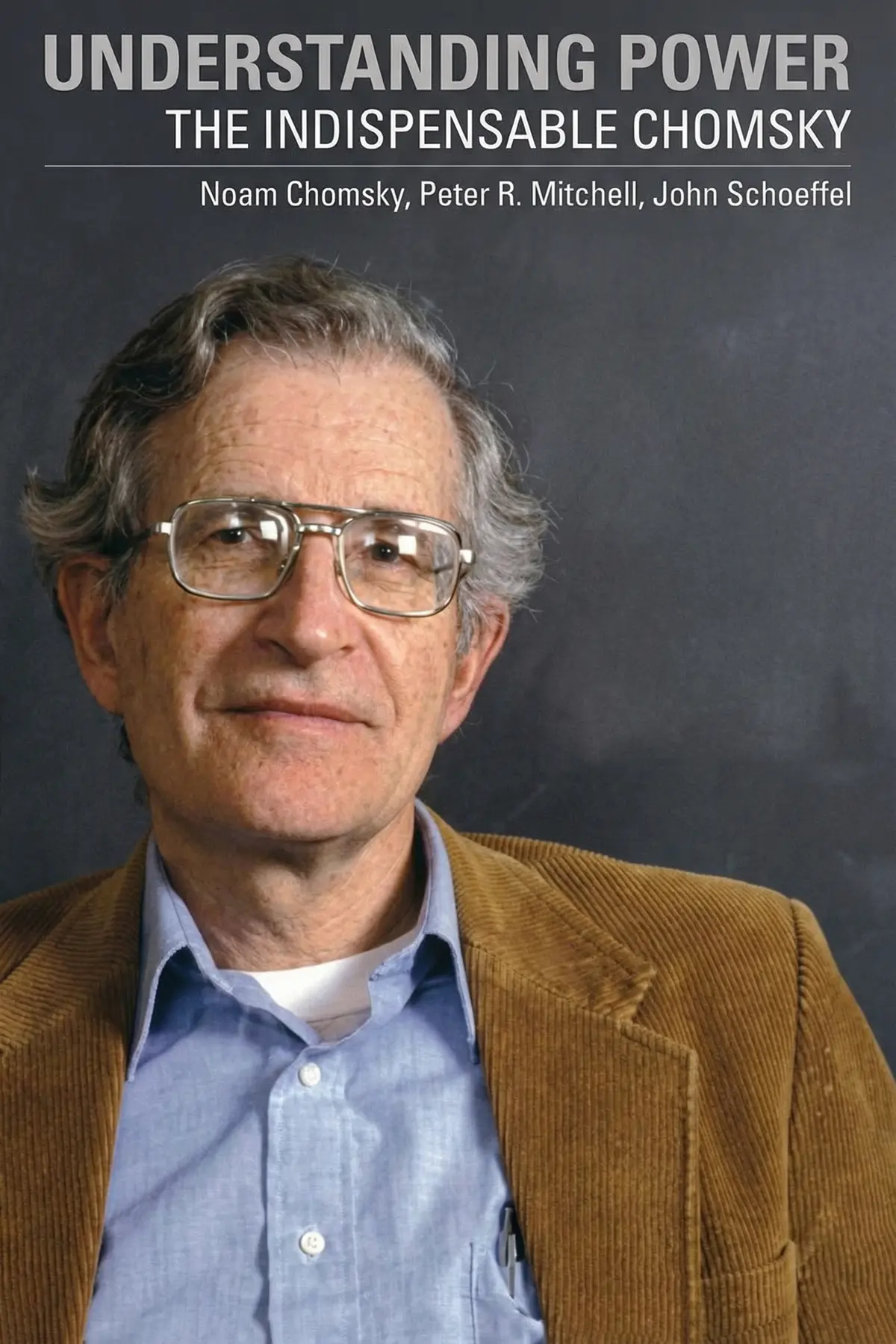
Understanding Power: The Indispensible Chomsky
Noam Chomsky
What Kind of Creatures Are We?
Noam Chomsky
Who Rules the World?
Noam Chomsky
Ratings & Reviews
Ratings at a glance
What people think
Listeners find this volume to be a classic must-read that offers deep insights and sharpens awareness, viewing it as one of Chomsky’s premier works. The writing is skillfully composed, and listeners call it eye-opening, including one who points out how it encourages people to broaden their outlook. However, reactions to the book's simplicity are varied, as some find it accessible while others consider it intricate. Furthermore, several listeners have reported the presence of typographical errors throughout the text.
Top reviews
Maksim
Chomsky’s 'Profit Over People' is an absolute classic that should be mandatory reading for anyone trying to understand the global landscape. It offers a piercing look at how neoliberalism prioritizes corporate gains over human well-being, widening the gap between the elite and everyone else. While some find his style complex, I thought it was incredibly eye-opening and helped me expand my thinking on international trade. The way he discusses the erosion of democracy is frankly terrifying but essential for any informed citizen today. I did notice a few typos in this edition, which is a bit distracting for such a prestigious work, but the content remains top-tier. If you want to understand the modern world, start here.
Show moreTang
Ever wonder why the world feels like it's built for corporations instead of actual human beings? This book provides the answers in a way that is both intellectually stimulating and emotionally resonant. Chomsky is at his best here, dismantling the myth that neoliberalism is about freedom or democracy. It’s actually about control and the transfer of wealth to a tiny elite. The insights provided are a masterclass in political literacy, forcing you to question everything you hear on the nightly news. Personally, I found the section on the WTO and telecommunications to be a real lightbulb moment for understanding globalization. It’s one of those rare books that completely reconfigures your brain and how you process current events.
Show moreArt
Picking this up feels like taking the red pill; it completely changes how you view US involvement in countries like Haiti and Colombia. Chomsky doesn't pull any punches when he describes how 'aid' is often just a tool for expanding corporate reach at the expense of local communities. The way he connects the dots between Reagan-era policies and the trade wars of the late 90s is brilliant. Some might say his analysis of the WTO is dated, but the underlying mechanisms of power he describes haven't changed one bit. It’s an eye-opening experience that makes you realize how much of our history is sanitized for public consumption. This is essential reading for the 21st century.
Show moreOksana
Finally got around to this collection of essays, and it certainly lived up to its reputation of being an eye-opening deep dive. Chomsky manages to pull back the curtain on the 'free market' rhetoric used by the US to justify some pretty questionable interventions. I was particularly struck by the analysis of how these policies impact developing nations, specifically the examples regarding Haiti. The writing is sharp, though it occasionally feels like a series of disjointed articles rather than a fluid narrative. My only real gripe is that some of the references to 90s-era trade deals feel a little bit dated in the current geopolitical climate. Still, the core principles of his critique are as relevant today as they were twenty years ago.
Show moreTuck
As someone who is relatively new to political theory, I found Chomsky’s breakdown of how neoliberalism functions surprisingly accessible. Many people warned me that his writing was dense, but I actually found it to be quite straightforward and punchy. He has a knack for taking complex economic jargon and translating what these policymakers are REALLY saying behind closed doors. The focus on the 'democratic deficit' is especially poignant given the state of politics today. I did notice several typos throughout the text which was a bit annoying for a professional publication. Regardless, the knowledge gained far outweighs the minor editing flaws found in this specific printing. It’s a great starting point for anyone wanting to see past the media spin.
Show moreKai
Not what I expected given the heavy title, but the writing style is actually quite straightforward and persuasive. I’ve always been skeptical of the 'invisible hand' of the market, and Chomsky provides the data to show why that skepticism is justified. He distinguishes between the rhetoric of capitalism and the reality of state-sponsored corporate welfare. It’s a bit of a grim read at times, especially when he discusses the exploitation of third-world resources. However, the ending offers a bit of hope by showing how grassroots movements successfully fought back against the MAI. It reminds us that people still have power if they choose to use it. Definitely a solid addition to any political library.
Show moreSupatra
This book is a masterclass in exposing the contradictions between the rhetoric of 'free markets' and the reality of state-protected corporations. Chomsky is incredibly effective at showing how the rules are rigged to ensure that profits always come before people. While I found the introduction by McChesney to be a bit dry, the rest of the book is high-energy and deeply informative. It’s a classic work that helps people expand their thinking beyond the narrow corridors of mainstream political thought. Some of the formatting in this edition is a little wonky, and the index is basically useless, but the core message is too important to ignore. It’s a must-read for anyone who suspects the system isn't working for them.
Show moreJackson
The chapter on the Multilateral Agreement on Investment (MAI) was definitely the standout for me, but the rest felt a bit recycled. I’ve read a lot of Chomsky, and if you’ve seen his lectures, you’ll recognize most of these arguments immediately. It’s essentially a compilation of pieces, which makes it feel a bit repetitive at times. To be fair, he makes excellent points about the hypocrisy of 'liberalization' when it only benefits the powerful. However, I was hoping for a more comprehensive critique of economic theory itself rather than just a laundry list of the effects. It’s a good introduction for a beginner, but seasoned readers might find it lacking in fresh insights.
Show moreDimitri
In my experience, Chomsky is usually a bit more rigorous, but this volume feels like a bit of a 'greatest hits' collection. Don't get me wrong, the insight into business-government collusion is still better than 90% of what's on the shelf. But I found myself wanting more contemporary examples and a bit less jumping around between unrelated historical anecdotes. The analysis of globalization is starting to show its age, particularly the predictions about telecommunications markets that didn't quite pan out as expected. It’s still a decent read for the historical context, but it shouldn't be the only book you read on the subject. It’s simple enough for a casual reader but might frustrate those looking for a deep academic dive.
Show moreSureerat
Look, I appreciate the message, but this book is essentially just a compilation of older articles rather than a cohesive new work. I feel like I paid for a brand name rather than new research, which is a bit disappointing. The introduction by McChesney also feels strangely disconnected from the rest of Chomsky’s prose, almost like they were written for different audiences. While the critique of corporate domination is valid, the book spends way too much time on James Madison and historical quotes that don't always feel applicable to modern tech monopolies. Truth is, there are better books out there, like Korten’s work, that cover these topics with much more depth and structure. It's not awful, but it's certainly not his best.
Show moreReaders also enjoyed
Abortion: Our Bodies, Their Lies, and the Truths We Use to
Jessica Valenti
21 Lessons for the 21st Century
Yuval Noah Harari
Age of Anger: A History of the Present
Pankaj Mishra

A Different Kind of Power: A Memoir
Jacinda Ardern
Age of Propaganda: The Everyday Use and Abuse of Persuasion
Anthony Pratkanis
A Higher Loyalty: Truth, Lies and Leadership
James Comey
1929: Inside the Greatest Crash in Wall Street History--and How It
Andrew Ross Sorkin
AUDIO SUMMARY AVAILABLE
Listen to Profit Over People in 15 minutes
Get the key ideas from Profit Over People by Noam Chomsky, plus 5,000+ more titles in English and Thai.
- 5,000+ titles
- Listen as much as you want
- 7-day free trial
- Cancel anytime







