
17 min 02 sec
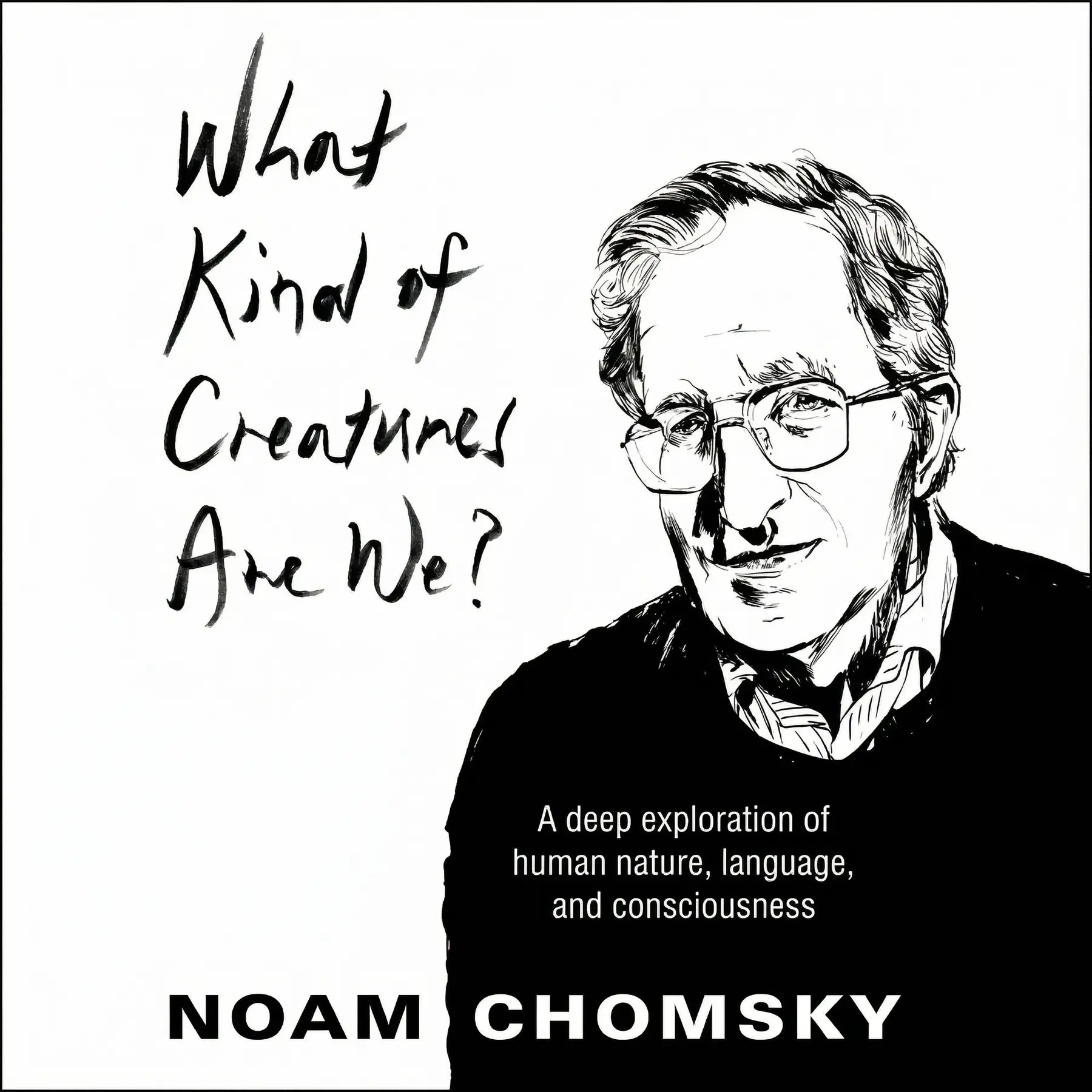
What Kind of Creatures Are We?
By Noam Chomsky
A deep dive into the biological roots of language, the boundaries of human knowledge, and the social structures that either foster or inhibit our innate creative and intellectual potential.
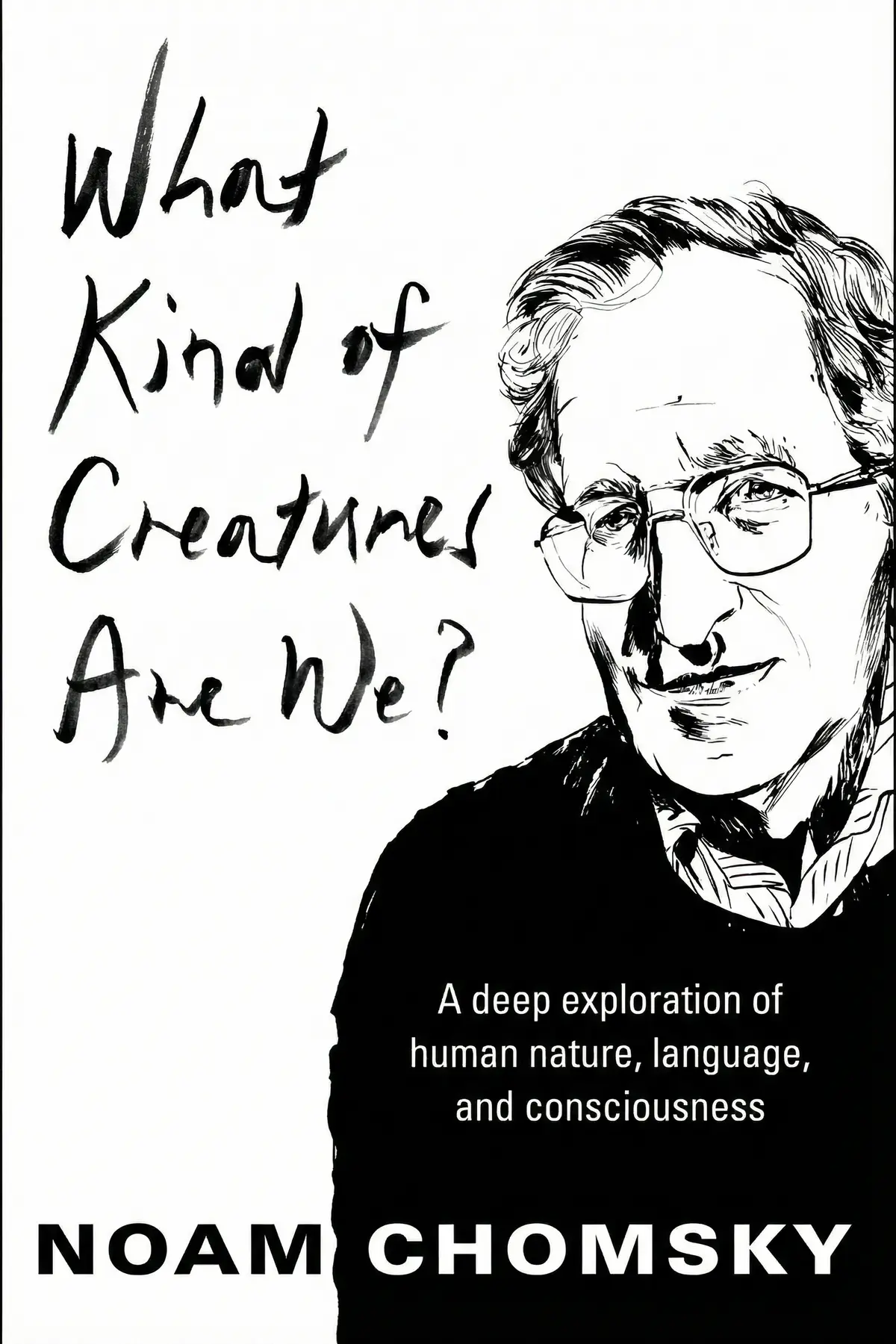
Table of Content
1. Introduction
1 min 34 sec
Every single day, you perform a miracle without even thinking about it. In a fraction of a second, your brain assembles a series of sounds or symbols into a coherent thought that has potentially never been uttered in the history of the universe. This capacity is so fundamental to our lives that we rarely stop to ask: what does this ability say about the kind of creatures we actually are? We often think of ourselves as creatures of habit, or perhaps creatures of culture, but at our core, we are biological entities with a very specific, very strange set of internal tools.
In this exploration of Noam Chomsky’s deep philosophical and scientific inquiry, we are going to look under the hood of the human mind. We will move past the superficial ideas of language as just a way to chat or trade information. Instead, we’ll see it as the very architecture of our consciousness. We’ll also confront a humbling reality: just as our biology gives us incredible powers of reasoning, it also sets hard boundaries on what we can ever truly know.
Through the lens of this work, we’ll connect the dots between the way a toddler learns to speak and the way a society should be organized to respect human freedom. The throughline here is simple yet profound: by understanding the biological limits and capabilities of the human mind, we gain a clearer picture of our moral and social responsibilities. We aren’t just blank slates; we are creatures with a specific nature, and recognizing that nature is the first step toward true self-understanding. Let’s begin by looking at the computational engine that defines our species.
2. The Internal Engine of Language
2 min 57 sec
Discover why language is actually an internal tool for thinking rather than just a way to talk, and how a simple mental operation creates infinite possibilities.
3. The Power of Intellectual Constraints
2 min 42 sec
Learn why the very limits of our brain are what make our intelligence possible, and how distinguishing between problems and mysteries changes our view of science.
4. How Words Map to the World
2 min 46 sec
Explore the strange relationship between the symbols in our heads and the objects in the world, and why a ‘book’ isn’t just a physical object.
5. The Architecture of a Free Society
2 min 42 sec
Connect the science of the mind to the structure of society, and see why true democracy requires a environment that respects our creative nature.
6. The Mystery of the Physical
2 min 38 sec
Revisit the history of science to see how ‘absurd’ ideas like gravity changed our definition of reality, and what that means for the future of the mind.
7. Conclusion
1 min 43 sec
In our journey through the landscape of the human mind, we’ve covered a vast territory—from the microscopic operations of the ‘Merge’ function to the grand structures of social organization. We’ve seen that we are defined by a unique biological engine that generates infinite thought, and that this engine is both our greatest strength and the source of our inevitable limits.
We’ve learned that language is not just a way to exchange information, but the very scaffolding of our internal reality. It allows us to build complex mental models that go far beyond the physical objects around us. We’ve also seen that our biological nature demands a specific kind of environment to flourish—one that values freedom, creativity, and self-direction over rigid control and mindless repetition.
Finally, we’ve looked at the history of science to find a reason for both humility and hope. We may never solve the ‘mysteries’ of consciousness, but by recognizing the boundaries of our own cognitive reach, we can be more effective in solving the ‘problems’ that are within our grasp.
The actionable takeaway from this exploration is to look at your own intellectual and social life with a new set of eyes. Recognize the ‘creative impulse’ in yourself and others as a biological fact, not just a nice idea. Challenge the structures in your life that treat you as a passive recipient of information or a cog in a machine. By honoring the specific kind of creature you are—an infinite thinker in a finite body—you can better contribute to a world that respects the profound potential of the human mind. Thank you for listening to this exploration of our shared nature.
About this book
What is this book about?
What Kind of Creatures Are We? offers a profound investigation into the unique attributes that define the human species. Drawing from decades of groundbreaking research in linguistics and philosophy, this exploration challenges the common assumption that language is primarily a tool for communication. Instead, it posits that language is an internal computational system—a biological 'engine'—that allows for infinite thought. Beyond linguistics, the work examines the inherent limits of the human mind, distinguishing between problems we can eventually solve and mysteries that may forever lie beyond our cognitive reach. It concludes by bridging these scientific insights with social philosophy, arguing that our understanding of human nature must inform how we build societies. The promise of this summary is to reshape your understanding of your own mind, revealing the extraordinary biological machinery that allows you to think, speak, and envision a better world.
Book Information
About the Author
Noam Chomsky
Noam Chomsky is Institute Professor Emeritus at MIT and Laureate Professor at the University of Arizona. He is widely recognized as one of the most influential linguists and public intellectuals of the 20th century. His groundbreaking work Syntactic Structures revolutionized the field of linguistics in the 1950s, while books like Manufacturing Consent established him as a leading critic of U.S. foreign policy and media. Beyond his academic work, Chomsky has authored over 150 books and continues to be a prominent voice on issues of politics, language, and cognitive science.
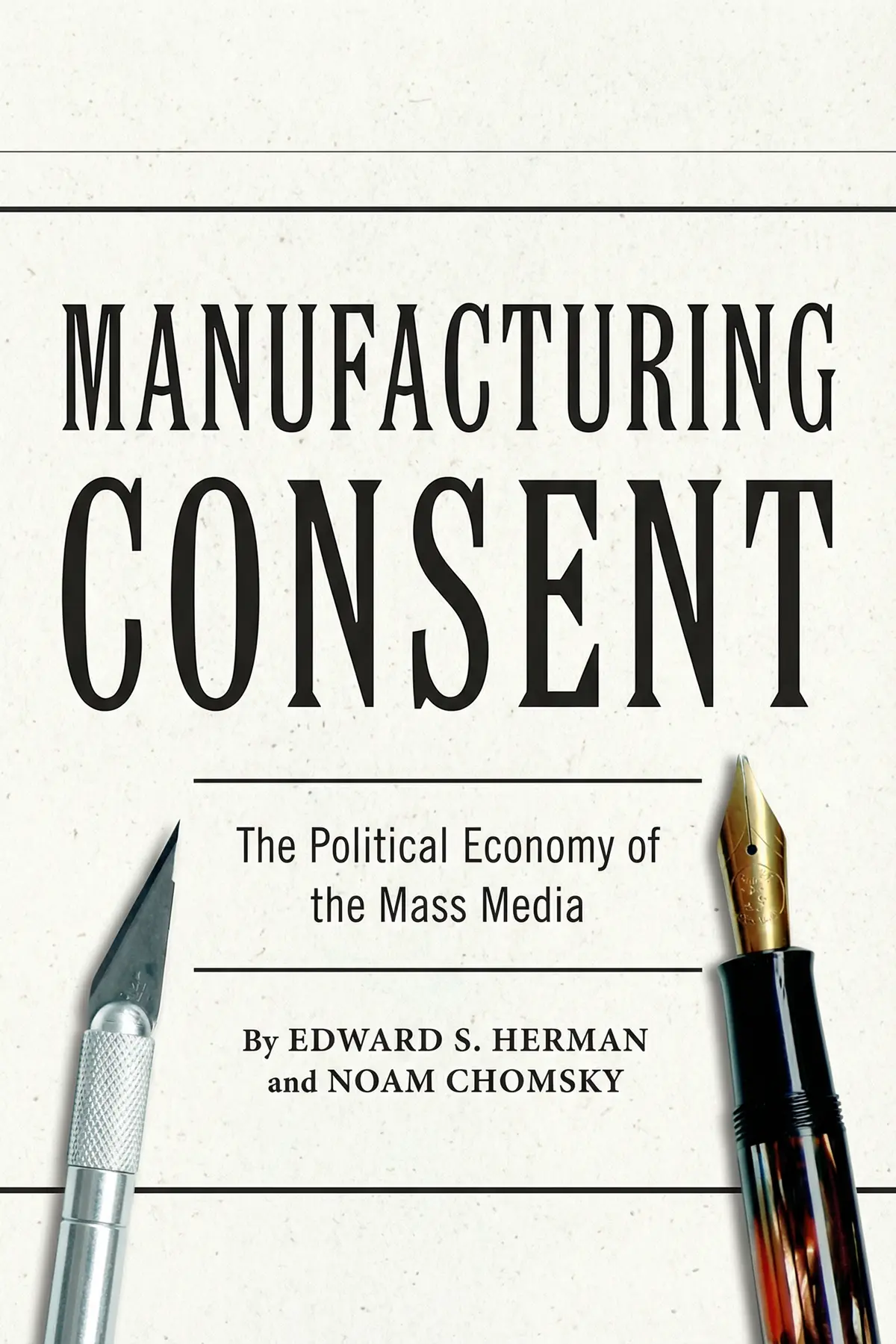
Manufacturing Consent: The Political Economy of the Mass Media
Edward S. Herman
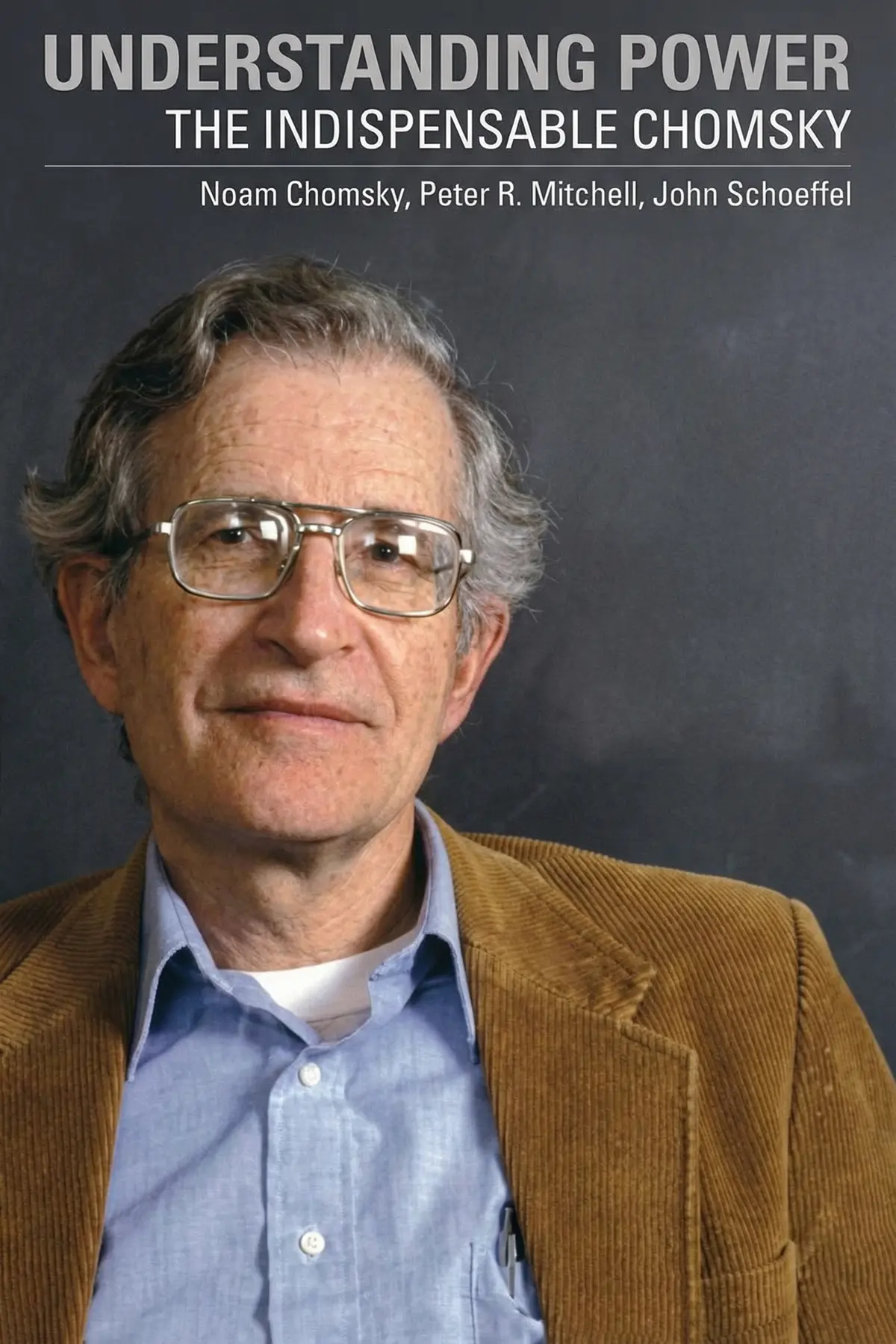
Understanding Power: The Indispensible Chomsky
Noam Chomsky
Who Rules the World?
Noam Chomsky
Ratings & Reviews
Ratings at a glance
What people think
Listeners find the writing accessible and intellectually stimulating, with one listener observing that it offers a viable theory of reality. Furthermore, the analysis of language earns praise, with one review pointing out the way linguistics and philosophy converge throughout the text. Additionally, listeners value the material, with one listener describing it as a thorough review into the foundations of the subject matter.
Top reviews
Watcharaporn
Finally got around to reading this, and it’s a brilliant synthesis of a lifetime of work in linguistics and philosophy. Chomsky moves beyond simple communication and argues that language is actually a biological tool for thought itself. I was particularly fascinated by his discussion of 'mysterianism' and the limits of human cognition. He uses Newton’s discovery of gravity to show that we can model reality mathematically without ever truly grasping its underlying nature. It’s a humbling perspective that challenges the modern arrogance of thinking we can solve every mystery in the universe. The way he bridges the gap between the internal mechanics of the mind and the external struggle for the common good is masterful. This isn't just a science book; it's a deep meditation on what it actually means to be a human being in a complex, often unintelligible world.
Show moreMaja
The chapter on the mysteries of nature is probably the most profound thing I've read all year. Truth is, we often confuse scientific representation with actual understanding, and Chomsky peels back that layer of delusion with surgical precision. He looks back at thinkers like Locke and Priestley to show how we've moved away from a mechanical view of the world toward something much more abstract. It’s fascinating to see how linguistics and philosophy converge throughout the text, suggesting that our cognitive limits are hard-wired into our biology. I loved the discussion on how the path from finite elements to infinite structure cannot be mapped in a way we can fully comprehend. It’s a dense read, no doubt, but it provides a framework for reality that feels both scientifically grounded and deeply philosophical. This is Chomsky at his most contemplative.
Show moreKenji
Wow, this small volume packs a serious punch if you're willing to do the mental heavy lifting required. It’s an efficient overview of Chomsky’s entire corpus, touching on everything from generative grammar to the depravity of modern global politics. I was particularly struck by his defense of 'abduction' as a way of understanding the world and his rejection of methodological dualism. He argues convincingly that the mind should be studied with the same scientific rigor as any other physical phenomenon, even if we can't fully explain it yet. The writing is academic, yes, but there's a certain elegance to his logic that is undeniably impressive. It left me with so many questions about the internal versus external aspects of our existence. If you want a book that taxes the mind and rewards your focus, this is definitely it.
Show moreConnor
Picked this up on a whim and was immediately sucked into the discussion about how our genetic endowment dictates the structure of our thoughts. Chomsky has this incredible ability to connect the dots between 17th-century physics and 21st-century linguistics in a way that feels totally natural. The book isn't just about language; it's about the very limits of what we can understand as biological organisms. I found his take on Adam Smith to be eye-opening, especially the parts about how the division of labor can destroy our humanity. It’s a short work, but it covers an immense amount of ground, from the nature of the common good to the 'hidden' mysteries of the universe. It’s the kind of book that you finish and then immediately want to start over again just to catch everything you missed the first time.
Show moreKob
As someone who has followed Chomsky's political activism for years, I found his exploration of anarchy and the 'common good' here to be surprisingly refreshing. He manages to reclaim the term from its usual association with chaos, linking it instead to a deep-seated human desire for creative freedom. The sections on the division of labor and how it potentially stifles our humanity were particularly poignant. However, I have to admit the linguistic portions were quite dry and required a lot of re-reading to fully grasp. He treats 'Universal Grammar' as an absolute truth, which might frustrate those looking for a more balanced debate on the subject. To be fair, the book succeeds as a high-level overview of his core principles, even if it feels a bit repetitive in the final chapters. It's a demanding read that forces you to question the very foundations of your own consciousness.
Show moreClara
This book was a total trip into the mind-body problem, and I gotta say, it changed how I look at my own brain. The writing style is undeniably academic, filled with 'yawning sentences' that seem designed to challenge the reader's focus at every turn. I picked this up hoping for a clear explanation of human nature, and for the most part, I got a viable theory of reality. Chomsky seems less interested in the utility of words and more in the internal structure of thought itself. Even though the political sections felt a bit recycled from his earlier works, they still provide a necessary context for his scientific views. If you enjoy being pushed to the edge of your intellectual comfort zone by someone who refuses to simplify complex ideas, then this is for you. It's a confusing, brilliant mess that actually attempts to answer the heavy question in its title.
Show moreVimolwan
After hearing so much about the 'Chomskyan Revolution,' I thought this would be a great entry point into his scientific theories. What I found was a compelling argument that language isn't just a human invention like the wheel, but a sudden biological leap in our evolution. He makes a strong case for language being an internal system of thought rather than just a way to talk to each other. The idea that a finite set of rules can create an infinite number of expressions is still mind-boggling when you really sit with it. My only real complaint is that the book feels a bit 'atomized' at times, jumping between cognitive science and social critique without a strong bridge. Still, the way he uses the history of science—specifically the post-Newtonian shift—to frame our current understanding of the mind is worth the effort.
Show moreChloe
Frankly, I'm stuck somewhere in the middle with this one because it's both impressive and frustratingly opaque. On one hand, the book offers a thorough review into the foundations of cognitive science and why behaviorism failed as an explanation for human behavior. On the other hand, the structure is so loose and meandering that I often forgot what point he was even trying to make. One page is about the 'properties of attraction' and the next is a critique of the plutocracy. It feels like a collection of 'incomplete thoughts' that were tied together with very thin string at the last minute. While I enjoyed the intellectual challenge, the frequent acronyms and specialized terms made it a very demanding read for a casual fan. It's definitely not a 'self-contained' book—you really need to do some outside reading to understand half of the references he makes.
Show moreWipawan
Does anyone else feel like this was just a bunch of random essays or incomplete thoughts slopped together under a catchy title? Personally, I struggled to find the thread connecting his theories on Universal Grammar with his critiques of American foreign policy. Chomsky is obviously a genius, but the name-dropping in this volume is almost aggressive, making it feel more like a study guide for a philosophy final than a standalone work. One moment he’s talking about the 'poverty of the stimulus' and the next he’s rambling about the failures of capitalism. I appreciated the insight into how our genetic endowment shapes our capacity for language, but the transition to political theory felt jarring and unconvincing. It’s definitely thought-provoking if you have the patience to dig through the academic density, but it lacks the narrative flow I was hoping for.
Show moreSayan
Look, I usually enjoy a good intellectual challenge, but this felt like it was written exclusively for PhD linguists who live in Ivory Towers. The sentences are absolutely massive and full of what some might call 'nerd impedimenta' that makes my head spin after just a few pages. Chomsky keeps name-dropping philosophers like Hume and Kant without actually explaining why their specific theories matter to his current argument in a way a layperson can follow. I found myself frequently lost in the dense, meandering prose, wondering if I just wasn't smart enough or if the book was just poorly edited. It feels less like a cohesive book and more like a collection of disjointed lectures that were never meant for the general public. While the sections on politics were slightly more accessible, they still felt like an afterthought compared to the heavy linguistic theory. If you aren't already well-versed in generative grammar, you should probably skip this one.
Show moreReaders also enjoyed
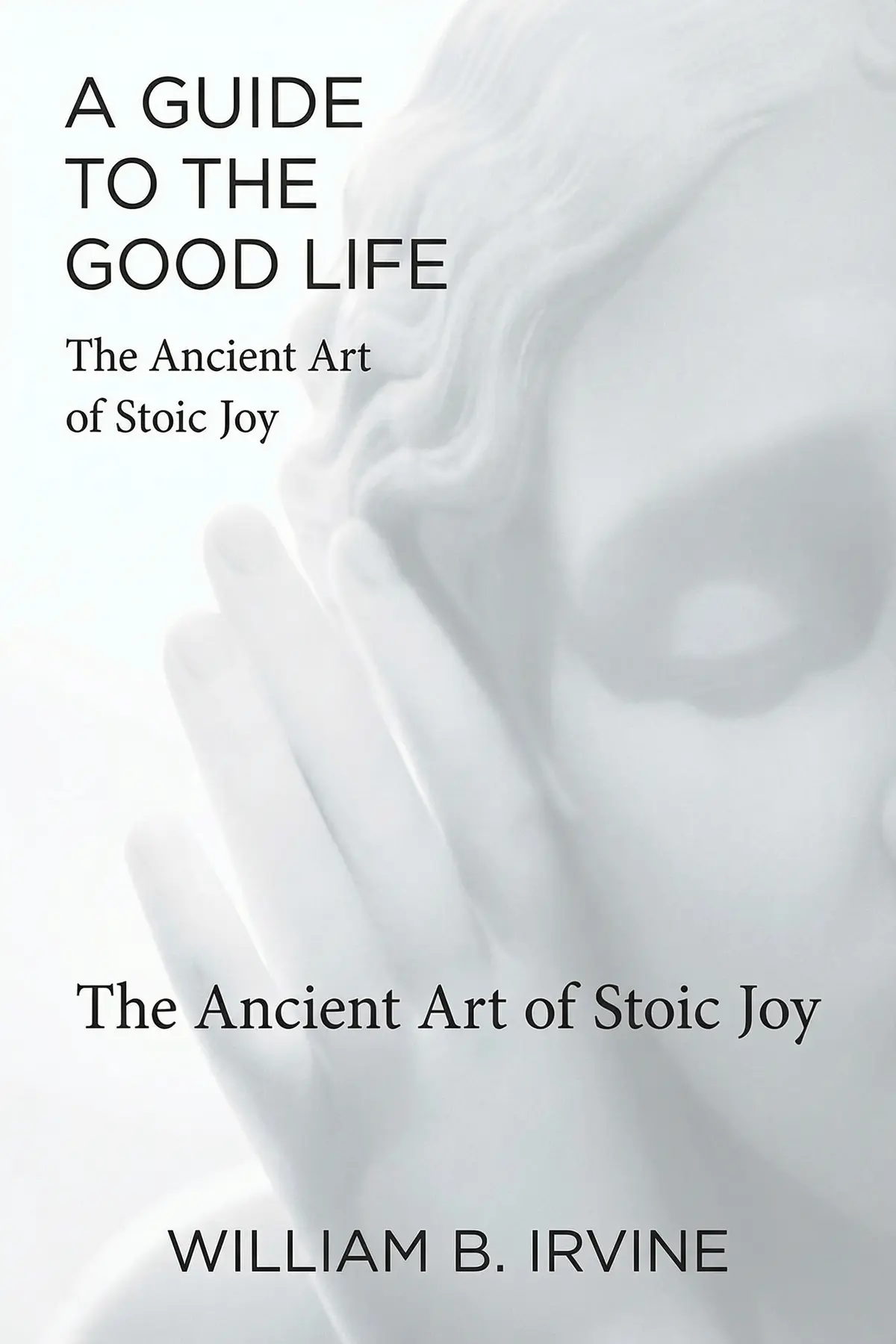
A Guide to the Good Life: The Ancient Art of Stoic Joy
William B. Irvine

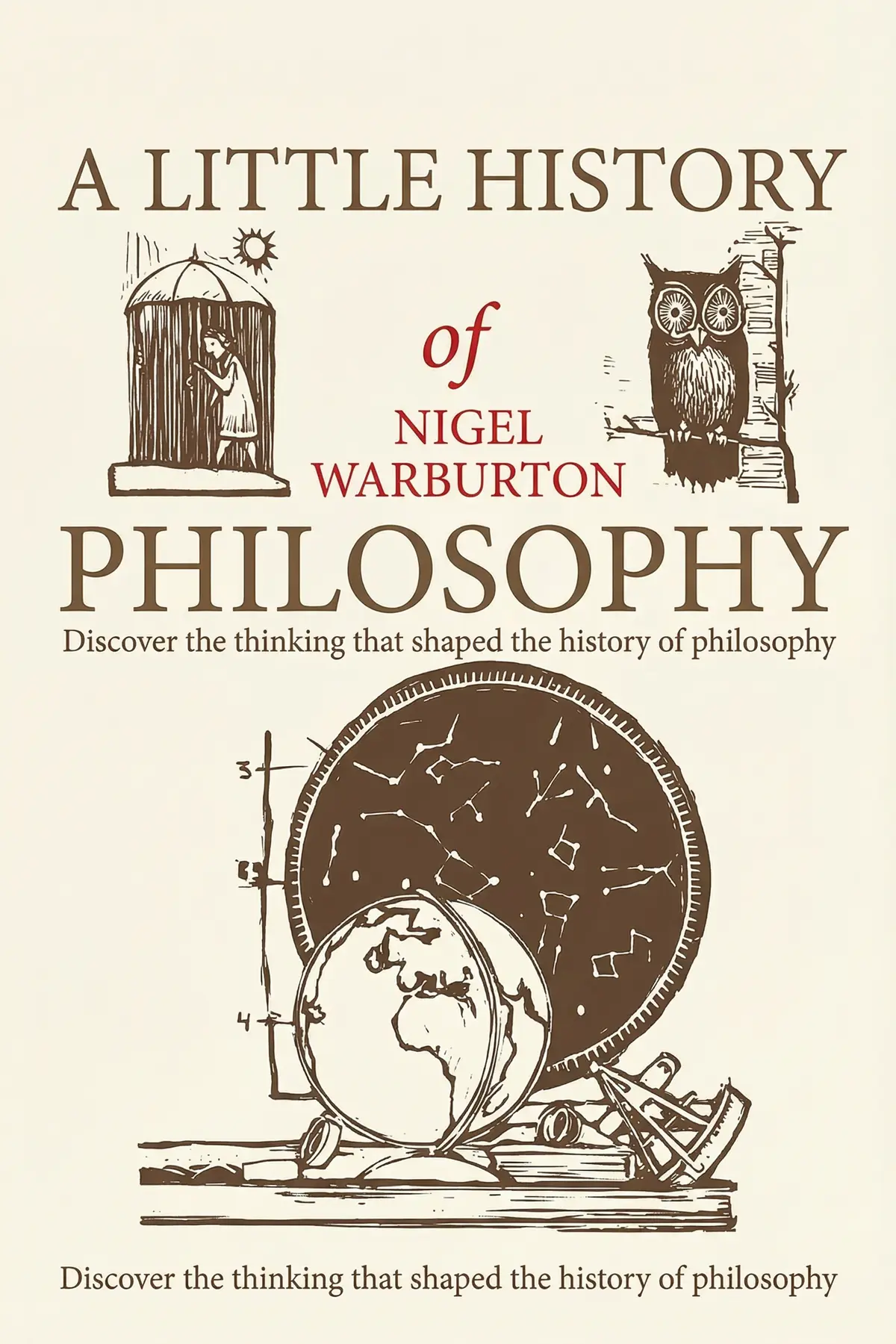
A Little History of Philosophy
Nigel Warburton
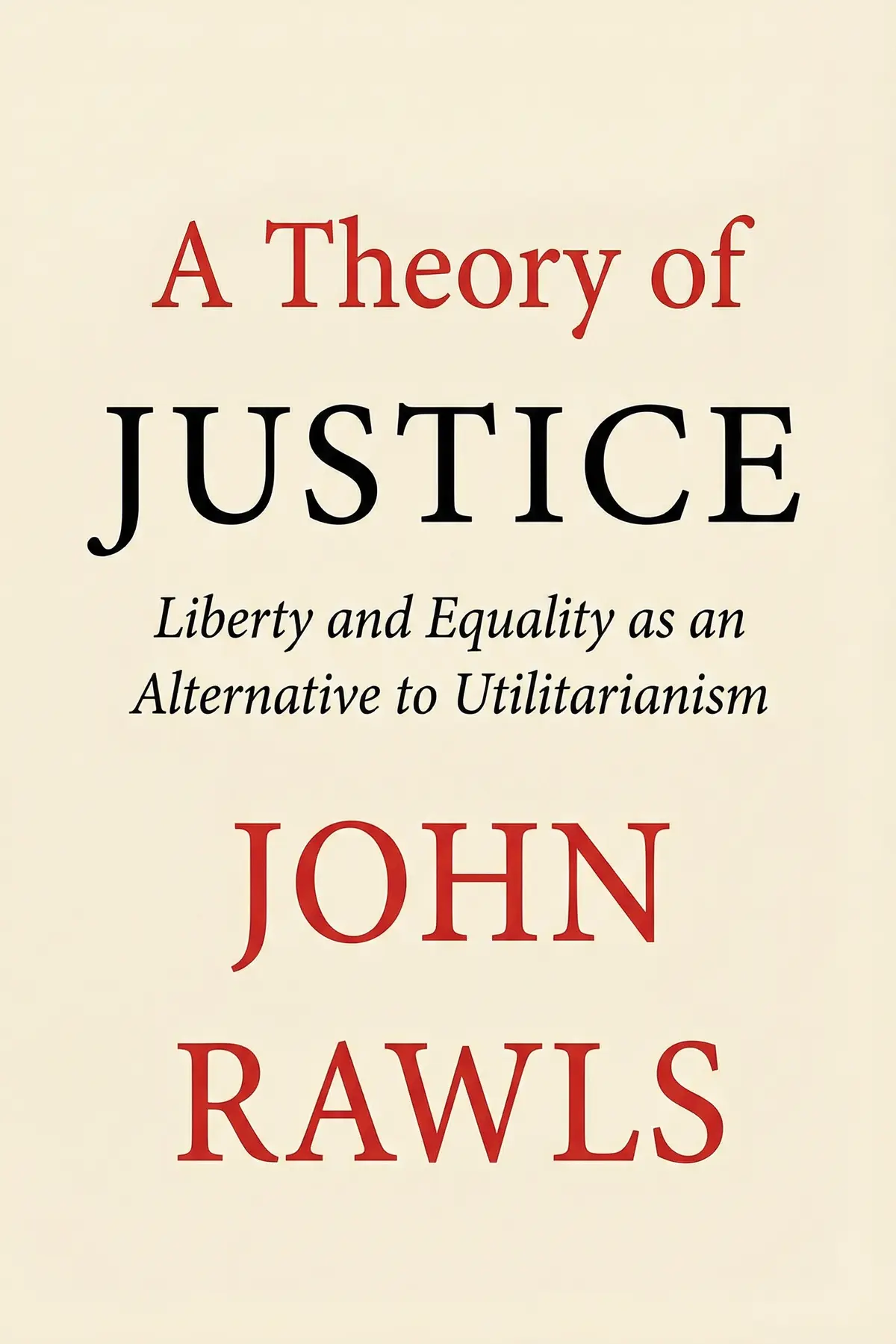
A Theory of Justice
John Rawls
Anarchism: A Very Short Introduction
Colin Ward
Anarchy, State, and Utopia
Robert Nozick
Antifragile: Things That Gain from Disorder
Nassim Nicholas Taleb
AUDIO SUMMARY AVAILABLE
Listen to What Kind of Creatures Are We? in 15 minutes
Get the key ideas from What Kind of Creatures Are We? by Noam Chomsky, plus 5,000+ more titles in English and Thai.
- 5,000+ titles
- Listen as much as you want
- 7-day free trial
- Cancel anytime







