
19 min 57 sec
Hardwiring Happiness: The New Brain Science of Contentment, Calm, and Confidence
By Rick Hanson
Hardwiring Happiness explores the biological roots of our negativity bias and offers a practical, neuroscience-based method to train the brain to internalize positive experiences, leading to lasting resilience and calm.
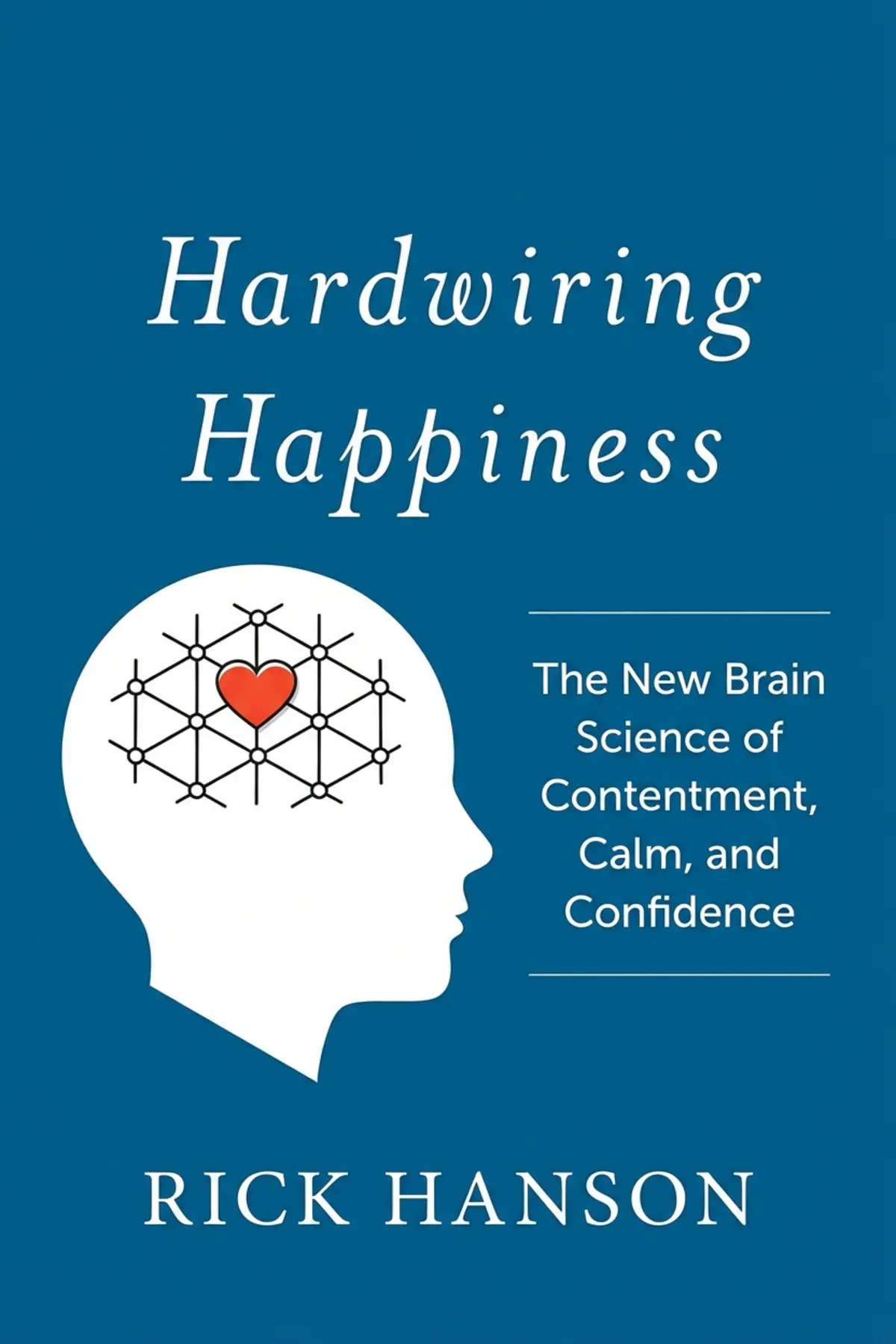
Table of Content
1. Introduction
1 min 52 sec
Imagine you are sitting at your breakfast table, scrolling through the news on your phone. What catches your eye? Is it the story about a community coming together to plant a garden, or is it the headline about a looming economic crisis or a sudden tragedy? For most of us, the dark, stressful news wins every time. We are naturally drawn to the bleak, the scary, and the problematic. You might feel a bit guilty about this, wondering why you aren’t more focused on the beauty of the world. But here is the secret: it isn’t entirely your fault. It is your brain doing exactly what it was designed to do.
In this exploration of Hardwiring Happiness, we are going to dive deep into the biological machinery that runs your life. We will look at why we seem to be hardwired for worry and how that ancient programming, which once saved us from literal predators, is now making us miserable in a world of spreadsheets and traffic jams. But this isn’t just a story about how we are broken. It’s a story about how we can change.
We will uncover the incredible truth that your brain is not a finished product. It is a living, breathing, changing organ that you can actually reshape through your own conscious efforts. By the end of this journey, you will understand the mechanics of your ‘negativity bias’ and, more importantly, you will have a set of practical tools to flip the switch. You’ll learn how to turn fleeting moments of joy into permanent parts of who you are. We are going to look at how the structure of your brain dictates your mood, why your ancestors were more stressed than soldiers in world wars, and how something as simple as lingering on the taste of your morning coffee can actually heal your nervous system. Let’s begin by looking at the physical foundation of our emotions and why the ‘bad’ always seems to loom larger than the ‘good.’
2. The Biological Priority of the Negative
2 min 14 sec
Discover why your brain is naturally tuned to detect threats and why a single negative comment often carries more weight than a mountain of praise.
3. The Brain as a Malleable Muscle
1 min 59 sec
Learn how your brain is constantly changing in response to your experiences and how you can direct this change toward happiness.
4. The Ghost of the Saber-Toothed Tiger
1 min 59 sec
Explore why modern stressors trigger the same life-or-death reactions as ancient predators and how this affects your well-being.
5. The Physical Toll of the Negativity Bias
2 min 01 sec
Understand how the constant state of alarm triggered by negative news and stress affects your body and your mental state.
6. Actively Seeking the Light
2 min 03 sec
Learn simple strategies for training your mind to notice and appreciate the positive moments that occur every day.
7. The Power of Savoring
2 min 07 sec
Understand the difference between a fleeting positive thought and a lasting neural change by learning the art of relishing the good.
8. Healing the Past with the Present
2 min 00 sec
Learn how positive experiences can be used to overwrite old traumas and soothe deep-seated emotional wounds.
9. Creating an Upward Spiral of Joy
2 min 04 sec
Discover how proactive positivity and altruism can expand your capacity for happiness and improve your social connections.
10. Conclusion
1 min 38 sec
As we reach the end of this journey through the mechanics of the mind, it is important to remember that you are not a victim of your biology. While it is true that we inherited a brain designed for survival in a dangerous world—a brain that is naturally anxious, reactive, and prone to dwelling on the negative—we also inherited the most complex and adaptable organ on the planet. You have the power to consciously direct the evolution of your own mind.
The core message here is one of hope and agency. By understanding that your brain is like velcro for the bad and teflon for the good, you can finally stop blaming yourself for your anxieties. But more importantly, you can start the work of changing that. Through the simple, daily practice of noticing the good, savoring it for thirty seconds, and letting it sink in, you are physically reshaping your neural pathways. You are moving from a state of ‘surviving’ to a state of ‘thriving.’
Your homework, if you choose to accept it, is to start small. Don’t wait for a life-changing event. Instead, find one small thing today—a warm breeze, a good cup of tea, a smile from a stranger—and don’t let it just pass you by. Stop, breathe it in, and let it ‘hardwire’ itself into your being for at least twenty seconds. And when you find something that truly makes you happy, share it. Tell a friend, tell a partner, or write it down. By sharing your joy, you revive the experience and help others find their way out of the darkness of the negativity bias as well. You have the tools; now it’s time to start building a brain that is as resilient and joyful as you deserve it to be.
About this book
What is this book about?
Have you ever wondered why a single piece of criticism can ruin an otherwise perfect day, while a dozen compliments seem to vanish the moment they are spoken? This isn't just a personal quirk; it is a fundamental feature of the human brain. Hardwiring Happiness explains that our minds are evolutionarily designed to prioritize threats over rewards, acting like a magnet for bad news while letting the good stuff slide right off. This ancient survival mechanism served our ancestors well in a world of predators, but in the modern age, it often leads to chronic stress, anxiety, and a feeling of perpetual dissatisfaction. This book provides a roadmap for shifting that internal balance. By understanding how neuroplasticity works, you can learn to consciously 'install' positive experiences into your neural architecture. It isn't about ignoring the difficulties of life, but rather about learning how to savor the moments of safety, satisfaction, and connection that we often overlook. The promise of this work is a gradual, permanent transformation of the mind—moving from a default state of reactivity and fear to one of deep-seated contentment and confidence.
Book Information
About the Author
Rick Hanson
Rick Hanson is a renowned psychologist and a leading voice in the field of neuroscience-informed personal growth. He earned his PhD in psychology and has become a bestselling author with influential titles such as Just One Thing, Buddha’s Brain, and Mother Nurture. Known for his direct, personal, and accessible writing style, Dr. Hanson bridges the gap between complex laboratory research and everyday life. Beyond his writing, he is a dedicated speaker and coach, helping people around the world understand how to harness the power of the brain to cultivate happiness and well-being.
Ratings & Reviews
Ratings at a glance
What people think
Listeners find the material thoroughly researched and simple to follow, offering practical, actionable advice that yields real results. They value the optimistic outlook on retraining the brain for joy, and one listener remarks that it provides an excellent overview of the neuroscience field. Listeners describe the work as captivating, with one noting the inclusion of narratives to maintain interest, while another observes that it is written for ordinary individuals facing everyday challenges.
Top reviews
Liam
The 'Velcro and Teflon' analogy really stuck with me. For anyone who feels like they are constantly drowning in negative thoughts, this provides a biological explanation rather than a moral judgment. Rick Hanson explains how our Stone Age brains are naturally wired for survival, which unfortunately means we fixate on the bad. By using the HEAL method, I’ve started actually "absorbing" the small moments of joy instead of letting them slide away. It’s a bit repetitive in the middle chapters, but frankly, that repetition might be necessary to hammer the point home for a skeptical mind.
Show moreRania
Finally, a book that explains the 'why' behind our constant worrying without making it feel like a personal failing or a lack of willpower. Hanson’s writing is compassionate and deeply informed by his background as a neuropsychologist. The distinction between the responsive and reactive modes of the brain was a lightbulb moment for me. I’ve started practicing the ten-second "soaking in" technique during my morning coffee, and it actually makes a difference in my stress levels. It’s a must-read for anyone who feels like their brain is permanently stuck in "fight or flight" mode.
Show moreKomsan
This isn't just another 'think positive' book; it's a manual for retraining your evolutionary response to threats in a modern world. Rick Hanson manages to weave together Buddhist practices and modern brain science in a way that feels both spiritual and logical. I especially appreciated the focus on how to "Let In" positive experiences, an area that many mindfulness practices actually overlook. Even though it can feel a bit repetitive, I think that’s intentional to help the reader actually "hardwire" the lessons. It’s changed how I view my own anxiety and given me a path forward.
Show moreLuckana
As someone who has struggled with a 'grumpy amygdala' for years, I found the HEAL process quite practical and grounded. Unlike many self-help gurus who preach "law of attraction" nonsense, Hanson uses neuroscience to show why we need to consciously tilt toward the positive. I appreciated the specific exercises for letting go of past traumas and building inner strength. My only minor gripe is that the tone can get a bit clinical at times, which made it hard to stay engaged during long reading sessions. Still, the core message about "taking in the good" is incredibly valuable.
Show moreSienna
Picked this up on a whim from the library and was pleasantly surprised by the lack of 'toxic positivity' usually found in this genre. The author doesn't suggest that we ignore the bad things in life; instead, he teaches us how to build up our internal resources so we can handle them better. I particularly liked the section on "Let Be, Let Go, Let In," which bridges the gap between traditional mindfulness and active change strategies like CBT. It’s written for real people with real problems, though the narration in the audiobook version can be a bit dry.
Show moreTak
After hearing so much about neuroplasticity, I was looking for concrete steps rather than just vague theories, and this book delivered exactly that. The HEAL method is a tangible way to transform fleeting positive experiences into lasting neural structures. I found the sections on "growing" inner strengths like compassion and grit to be the most helpful. The author does over-simplify some of the neuroscience to make it accessible, which might bother actual scientists, but for a layperson, it’s perfect. It’s definitely more of a manual for mental health than a casual beach read.
Show moreSven
Is happiness really something you can just 'hardwire' into your brain through sheer repetition? Rick Hanson certainly thinks so, and he provides plenty of data to support his claims. The concept of the "negativity bias" is eye-opening and helps explain why we remember one insult but forget ten compliments. However, the four-step technique he proposes—HEAL—is so simple that it didn’t need several hundred pages of explanation. I found myself skimming through the latter half because the examples started to feel redundant. It’s a good book with a great core idea that just lacks brevity.
Show moreConnor
While I appreciate the solid research backing Hanson's claims, the writing style itself is incredibly dry and repetitive to the point of annoyance. The first fifty pages are brilliant, laying out the evolutionary reasons why our brains are like "Velcro for bad experiences." After that, the book descends into endless lists of adjectives and slightly cheesy scenarios that didn't always resonate with me. To be fair, the practical steps are easy to implement in a busy life. I just wish the editor had cut about sixty pages of fluff to keep the momentum going.
Show moreCaleb
I really wanted to love this after hearing Rick Hanson on a podcast, but it felt like a chore to finish. The science in the first few chapters is genuinely fascinating, especially the parts about neuroplasticity and the evolution of the mind. However, the rest of the book is essentially the same few tips repeated over and over again with different adjectives. It feels like a very solid magazine article that was stretched thin to meet a publisher's word count. If you’re looking for a quick fix, just read the synopsis online and save your time.
Show moreRatthapong
Look, the truth is that this whole book could have been a three-page PDF or a short YouTube video. I appreciated the initial explanation of the "Stone Age Brain," but I found myself zoning out for minutes at a time as the author listed off categories of adjectives. It felt like he was trying to wallpaper over my actual problems with forced optimism. If you are in a genuine crisis, I don’t think following a four-step clinical checklist is going to be the miracle cure this book promises. It’s okay as an introductory text, but it’s far too bloated.
Show more

Readers also enjoyed
Abundance: The Inner Path to Wealth
Deepak Chopra
Alcoholics Anonymous
Alcoholics Anonymous World Services
A Liberated Mind: How to Pivot Toward What Matters
Steven C. Hayes
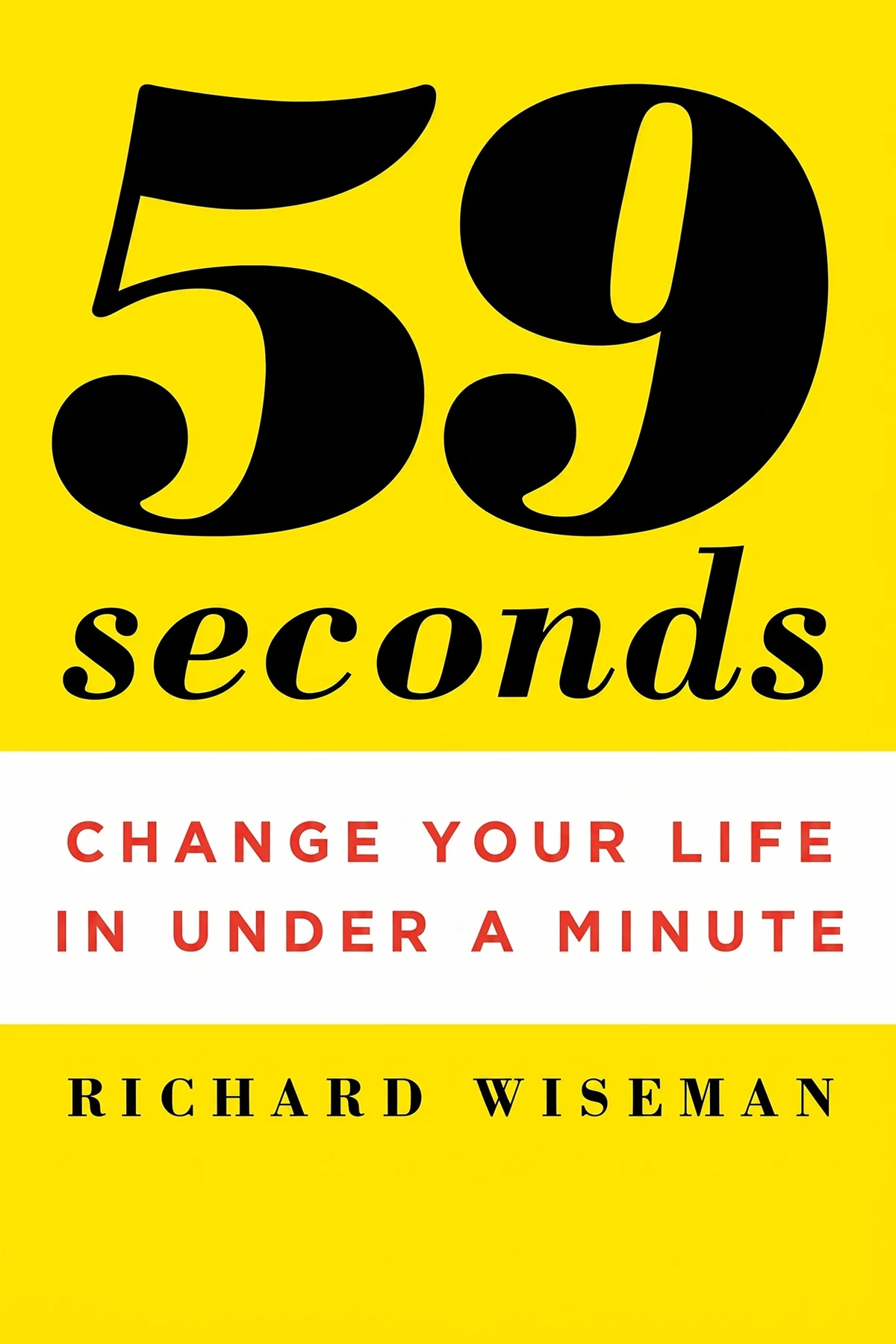
59 Seconds: Change Your Life in Under a Minute
Richard Wiseman
AUDIO SUMMARY AVAILABLE
Listen to Hardwiring Happiness in 15 minutes
Get the key ideas from Hardwiring Happiness by Rick Hanson, plus 5,000+ more titles in English and Thai.
- 5,000+ titles
- Listen as much as you want
- 7-day free trial
- Cancel anytime







