
22 min 15 sec
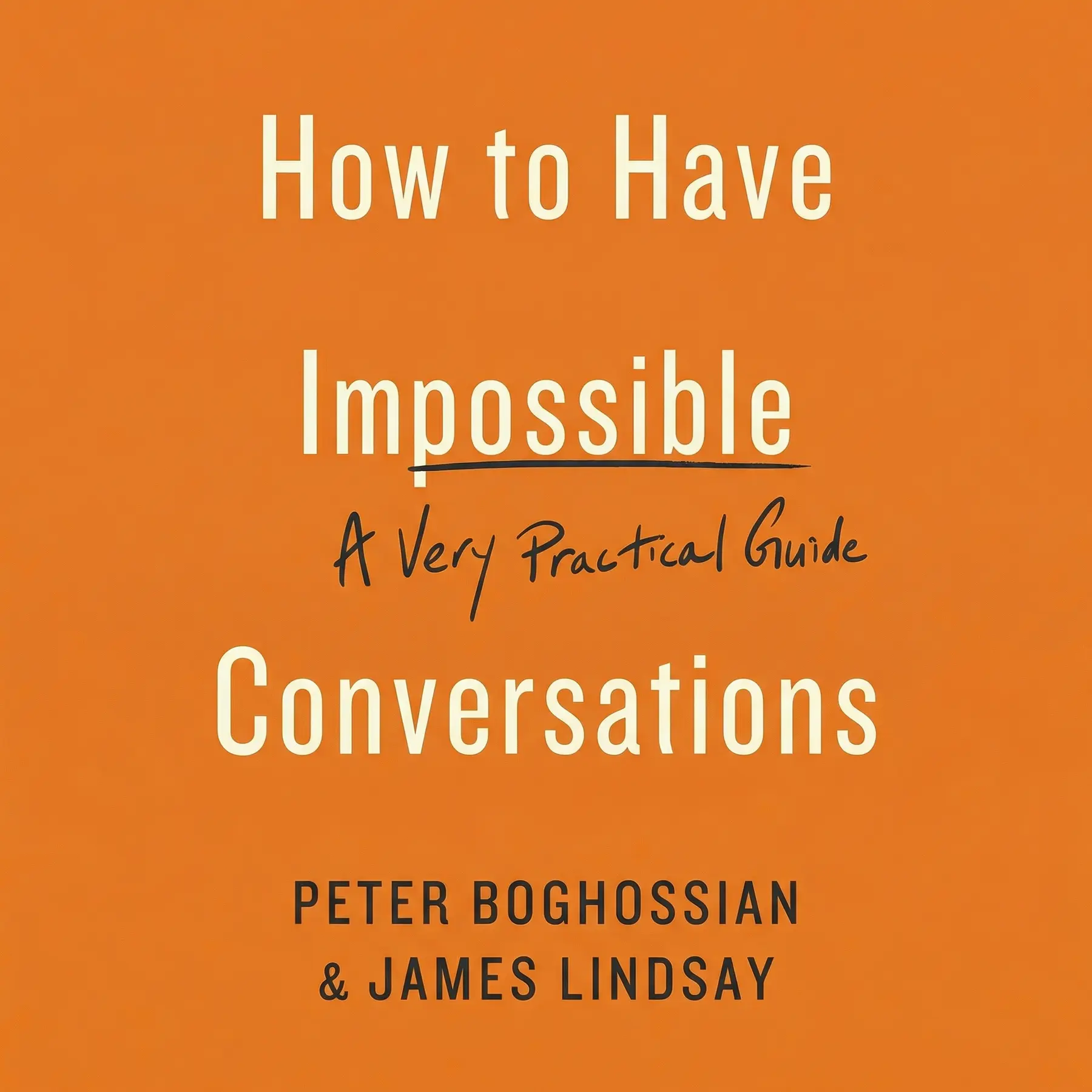
How to Have Impossible Conversations: A Very Practical Guide
Discover a transformative approach to high-stakes dialogue. This guide provides actionable strategies to bridge deep ideological divides, replacing aggressive debate with collaborative questioning to foster mutual understanding and genuine persuasion in polarized times.
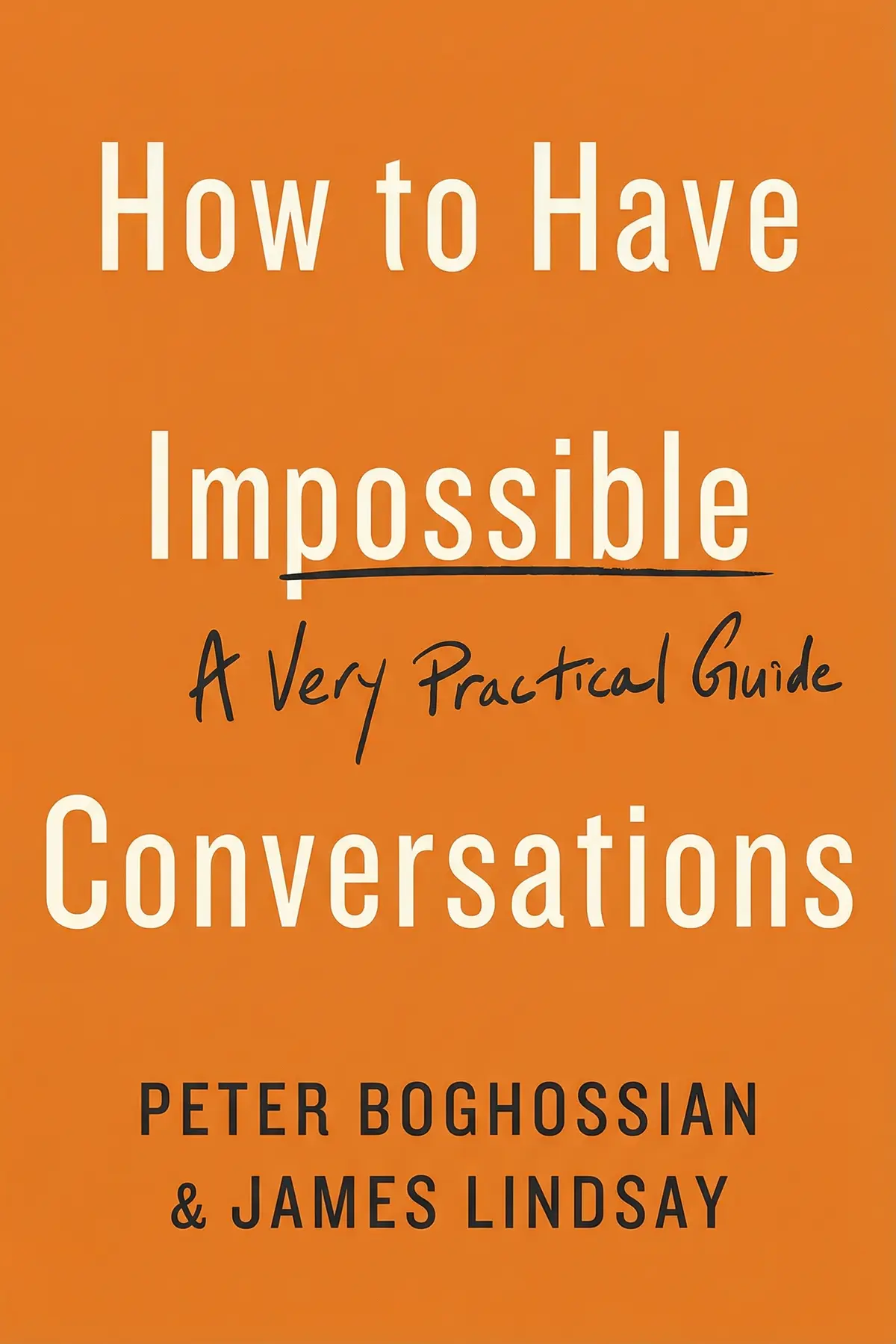
Table of Content
1. Introduction
1 min 51 sec
In our current era, it often feels like we are living in two different worlds. We look at the same news, the same events, and the same data, yet we come to radically different conclusions. These differences aren’t just academic; they define who we are. Our views on faith, morality, and the direction of our country are deeply personal. When someone challenges those views, it doesn’t just feel like a disagreement—it feels like an attack on our identity.
Because the stakes feel so high, many of us have simply stopped talking to those on the ‘other side.’ We avoid the holiday dinner table debates, or we retreat into social media echo chambers where everyone already agrees with us. When we do engage, it often spirals into a shouting match or a cold, resentful silence. We’ve been told that these conversations are ‘impossible,’ that the gap is too wide to ever be closed.
But what if the problem isn’t the topics themselves, but the way we’re approaching them? Authors Peter Boghossian and James Lindsay suggest that we’ve forgotten how to talk to each other. We’ve traded curiosity for combat and listening for lecturing. In this summary, we are going to explore a new way of engaging. We’ll look at why throwing facts at people usually backfires and how we can use specific, practical techniques to lower defenses and open minds.
The goal here isn’t to ‘win’ a debate in the traditional sense. It’s to learn how to have a productive, collaborative exchange that leaves both parties feeling heard and perhaps a little bit more open to the truth. Whether you’re dealing with a radical relative or a coworker with opposing views, the strategies we’re about to discuss will help you turn a potential explosion into a meaningful connection. Throughline: Success in difficult conversations comes from moving away from coercion and toward a collaborative exploration of how we know what we think we know.
2. Shifting from Combat to Collaboration
2 min 25 sec
Traditional arguments often feel like a battlefield where one side must lose. Learn why switching to a collaborative mindset is the only way to truly reach someone.
3. The Failure of the Lecture and the Power of Listening
2 min 19 sec
Lecturing someone often triggers immediate resistance. Explore a famous wartime study that reveals why self-generated ideas are the key to real change.
4. Establishing Rapport and Common Ground
2 min 26 sec
Even the most heated debates can be navigated if there is a foundation of trust. Discover how small connections prevent conversations from turning into conflicts.
5. The Illusion of Explanatory Depth
2 min 15 sec
Many of us think we understand the world far better than we actually do. Learn how ‘modeling ignorance’ can gently reveal the limits of a person’s knowledge.
6. Using Rapoport’s Rules to Voice Disagreement
2 min 14 sec
Criticizing someone’s view can easily lead to defensiveness. Discover a four-step checklist designed to ensure your critiques are received with respect.
7. Recognizing When Evidence Isn’t the Answer
2 min 14 sec
We often think more facts will settle a debate, but for many, beliefs are tied to identity rather than data. Learn how to spot this ‘Ham vs. Nye’ dynamic.
8. Focusing on Internal Logic and Disconfirming Questions
2 min 13 sec
When external facts are ignored, the best way forward is to explore the internal consistency of a person’s logic. Learn how to ask questions that encourage self-reflection.
9. Applying Hostage Negotiation Tactics
2 min 21 sec
High-stakes negotiators have developed proven methods for de-escalating tension. Learn how ‘mirroring’ and ‘golden bridges’ can save a failing conversation.
10. Conclusion
1 min 57 sec
As we wrap up our look at the art of impossible conversations, it’s worth reflecting on the world we’re living in. Polarization isn’t just a political problem; it’s a communication problem. When we lose the ability to talk across differences, we lose the ability to function as a society. But as we’ve seen, the tools for bridging these gaps are within our reach. They don’t require us to give up our values, but they do require us to give up our need to ‘win’ every exchange.
The core of this approach is a return to intellectual humility. It’s about recognizing that we all have our own ‘moral dialects’—ways of speaking about values that make perfect sense to us but might sound like a foreign language to someone else. When we hear someone using words like ‘freedom,’ ‘equity,’ or ‘justice’ in a way that feels wrong to us, we shouldn’t immediately assume they are the enemy. We should ask what those words mean to them. Are we actually disagreeing about the world, or are we just using different dictionaries?
Moving forward, try to identify your own moral dialect. Notice the terms you use that act as shortcuts for your values. Then, the next time you find yourself in a conversation that feels ‘impossible,’ stop and take a breath. Instead of reaching for a killer fact, reach for a curious question. Build a bridge of rapport, model ignorance to test the depths of the topic, and use Rapoport’s Rules to show that you’ve truly heard the other side.
If you can change just one conversation from a battle into a collaboration, you’ve made a difference. You’ve proven that no gap is truly unbridgeable if we have the patience to listen and the courage to be curious. Real persuasion doesn’t happen by shouting; it happens through the quiet, steady work of building understanding, one question at a time. The next time you face a difficult topic, remember: you aren’t trying to change a mind; you are trying to open a door.
About this book
What is this book about?
Have you ever found yourself in an argument where neither side is listening, and the divide feels completely unbridgeable? Whether the topic is politics, religion, or social justice, these 'impossible conversations' often end in frustration or silence. This summary explores a different path, moving away from the goal of winning and toward the goal of understanding. By drawing on philosophy, psychology, and even hostage negotiation, the authors provide a toolkit for navigating modern polarization. You will learn why facts often fail to change minds and how asking the right questions can encourage people to reevaluate their own assumptions. The promise of this book is not just to help you argue better, but to transform how you relate to those who see the world differently, creating space for civil discourse in an increasingly divided world.
Book Information
About the Author
Peter Boghossian
Peter Boghossian is an assistant professor of philosophy at Portland State University, Oregon. He is a speaker at the Center of Inquiry and lectures internationally with the Richard Dawkins Foundation for Reason and Science. He is also the author of A Manual for Creating Atheists. James Lindsay holds degrees in physics and mathematics. He has written five books, including Cynical Theories, and is a regular contributor to Time, Scientific American, and Philosopher’s Magazine.
Ratings & Reviews
Ratings at a glance
What people think
Listeners find this book both pragmatic and beneficial for navigating tough dialogues, with one review highlighting its nine ways to change minds. They value its significance and scientific foundation, as one listener draws attention to its excellent illusion of explanatory depth. The work receives praise for its central message, including one review that mentions the focus on political and moral discussions. Though listeners describe it as unexpectedly straightforward, views regarding its ease of follow are mixed.
Top reviews
Pornpimon
This guide actually delivers on its promise to help bridge the massive ideological gaps we see every day on social media. I found the section on the 'illusion of explanatory depth' particularly eye-opening because it demonstrates how little we truly understand the mechanics of our own political stances. By asking someone to explain the actual 'how' of a policy rather than the 'why,' you can lower the heat of the conversation instantly. To be fair, some of the initial advice about being a good listener feels basic, but the book quickly transitions into more advanced techniques like Rapoport’s Rules. These strategies aren't just about winning an argument; they are about building a genuine partnership with your interlocutor. It’s a pragmatic toolkit that values civil discourse over moral posturing, which is exactly what our polarized culture needs right now.
Show moreEmma
Wow, this book changed how I view every single interaction I have with people on the 'other side' of the political aisle. I used to be the person who would jump into a Facebook thread with a list of facts and links, wondering why everyone was getting so angry. This book explained that I was essentially attacking their identity, which triggered a defensive response that made learning impossible. The 'yes, and' technique and the focus on 'how do you know that' have completely shifted my approach to more curious and less combative. Not gonna lie, it takes a lot of discipline to keep your ego in check and build those golden bridges when you really just want to be right. But the peace of mind and the improved relationships I’ve experienced in just a few weeks are totally worth the effort. This is essential reading for our current times.
Show moreSirichai
Truth is, I was skeptical about whether a book could actually provide techniques for 'impossible' conversations, but the advanced skills section proved me wrong. The breakdown of how to engage with ideologues by identifying the moral foundations of their beliefs was incredibly insightful and deeply practical. It’s not just about what people believe, but the 'why' and 'how' that anchors their identity to those specific ideas. I’ve started applying the synthesis technique, where you actually recruit your partner to help refine your own positions, and it’s been incredibly productive. The book is well-organized and serves as a great reference guide that you can come back to whenever you anticipate a difficult talk. While some critics point to the authors' past controversies, the actual advice here is evidence-based and focuses heavily on civility and respect. This is the manual for anyone who still believes that talking to each other is the only way forward.
Show moreMonthon
Finally got around to finishing this, and I have to say, the emphasis on building rapport before diving into the deep end is a game changer. Most of us approach a disagreement like a war where we need to crush the opponent, but this book reframes the encounter as a collaborative search for truth. I especially liked the concept of 'building golden bridges,' which allows the other person to change their mind without losing face or feeling humiliated. It’s a relief to read something that prioritizes the relationship over the 'mic drop' moment we see so often online. My only real gripe is that the tone can occasionally veer into being a bit clinical or detached. Still, if you want to stop the constant venting and actually have a productive dialogue, this is worth your time.
Show moreWachira
As someone who works in a high-stress environment where disagreements are constant, I found the evidence-based approach in this book surprisingly refreshing. The authors break down complex psychological triggers into simple, actionable steps that anyone can follow regardless of their prior communication skills. I’ve already started using the 'minimal encouragers' and mirroring techniques from the hostage negotiation chapter, and the results have been immediate. It turns out that simply repeating the last few words of what someone said can de-escalate a situation faster than any logical counterpoint. The book does get a little repetitive toward the end, and some of the advanced 'master' levels feel a bit out of reach for casual daily use. However, the foundational advice on avoiding 'you' statements and focusing on shared values makes this a high-quality resource for the modern age.
Show moreOak
The chapter on 'disconfirmation' was worth the price of the book alone because it forces you to confront the limits of your own certainty. By asking 'what would it take for you to stop believing this,' you move the conversation away from entrenched positions and into the realm of actual reason. I appreciated how the authors categorized different levels of skills, from beginner habits like listening more to expert-level moral reframing. It’s a very practical manual that avoids the fluff usually found in self-help books about communication. I did notice the specific ideological examples used, which might alienate some readers before they get to the good stuff. If you can ignore the authors' personal baggage, the actual methodology for de-escalation is top-tier. It definitely helped me understand why my previous attempts at difficult conversations always ended in a shouting match.
Show moreNim
After hearing so much buzz about this title, I was pleased to find a very straightforward guide that doesn't waste time on abstract theory. The authors provide nine clear ways to change minds, though they wisely point out that the goal shouldn't always be a total conversion. Instead, the focus is on instilling a healthy sense of doubt and moving people toward a more nuanced understanding of their own positions. I found the 'scale of 1-10' confidence tool particularly effective for moving past black-and-white thinking in my own household. Personally, I found the book a bit American-centric and it might not translate perfectly to cultures that have different norms for directness and politeness. Despite that, the core principles of active listening and intellectual humility are universal and incredibly valuable. It is a simple but effective toolkit for anyone tired of the constant polarization in their community.
Show moreYanin
Ever wonder why some discussions feel like hitting a brick wall regardless of how many facts you throw at the problem? Boghossian and Lindsay argue that facts aren't actually the point, and instead focus on the epistemology behind why we believe what we do. While the techniques like 'altercasting' and using 'yes, and' are genuinely clever, I struggled with the authors' choice of examples throughout the text. It felt like a significant portion of the book was dedicated to showing the reader how to dismantle religious faith or progressive ideals. If you can look past that specific bias, there are some very helpful hints here for anyone dealing with difficult family members. Frankly, it’s a bit repetitive in the middle sections, but the core message of modeling the behavior you want to see is solid.
Show moreOat
Picked this up hoping for deep insights into human psychology, but I found that many of the 'beginner' tips are just common sense for people with empathy. Don't be an asshole, don't interrupt, and try to see the other person as a human being—is this really news to people? That said, the more advanced sections on Rapoport's Rules and the 'Unread Library Effect' provide a much-needed structure for when emotions start to run high. The writing is accessible and easy to follow, making it a quick read for anyone looking to sharpen their rhetorical teeth. I just wish the authors spent more time on how to handle people who aren't interested in playing by these rules. It feels a bit idealistic at times, assuming that every difficult conversation can be solved with a clever epistemological question. It is a decent starting point, but it won’t solve every social conflict you encounter.
Show moreRatchanee
Not what I expected at all, and to be honest, it felt more like a manual for subtle manipulation than a guide to honest communication. The authors claim to want civility, yet many of their 'interventions' seem designed to sow doubt and 'unmask' beliefs rather than actually understanding where the other person is coming from. I was particularly put off by the way they seem to treat conversation partners as subjects to be analyzed rather than humans with valid experiences. There is a certain smugness to the writing style that makes it difficult to take their calls for humility and charity seriously. While the 'scale of 1 to 10' confidence tactic is a neat trick, it doesn't make up for the underlying feeling that this is just psychological attrition. It is a deeply polarized book that ironically might make you more cynical about the people you disagree with.
Show moreReaders also enjoyed


AUDIO SUMMARY AVAILABLE
Listen to How to Have Impossible Conversations in 15 minutes
Get the key ideas from How to Have Impossible Conversations by Peter Boghossian, plus 5,000+ more titles in English and Thai.
- 5,000+ titles
- Listen as much as you want
- 7-day free trial
- Cancel anytime







