
19 min 29 sec
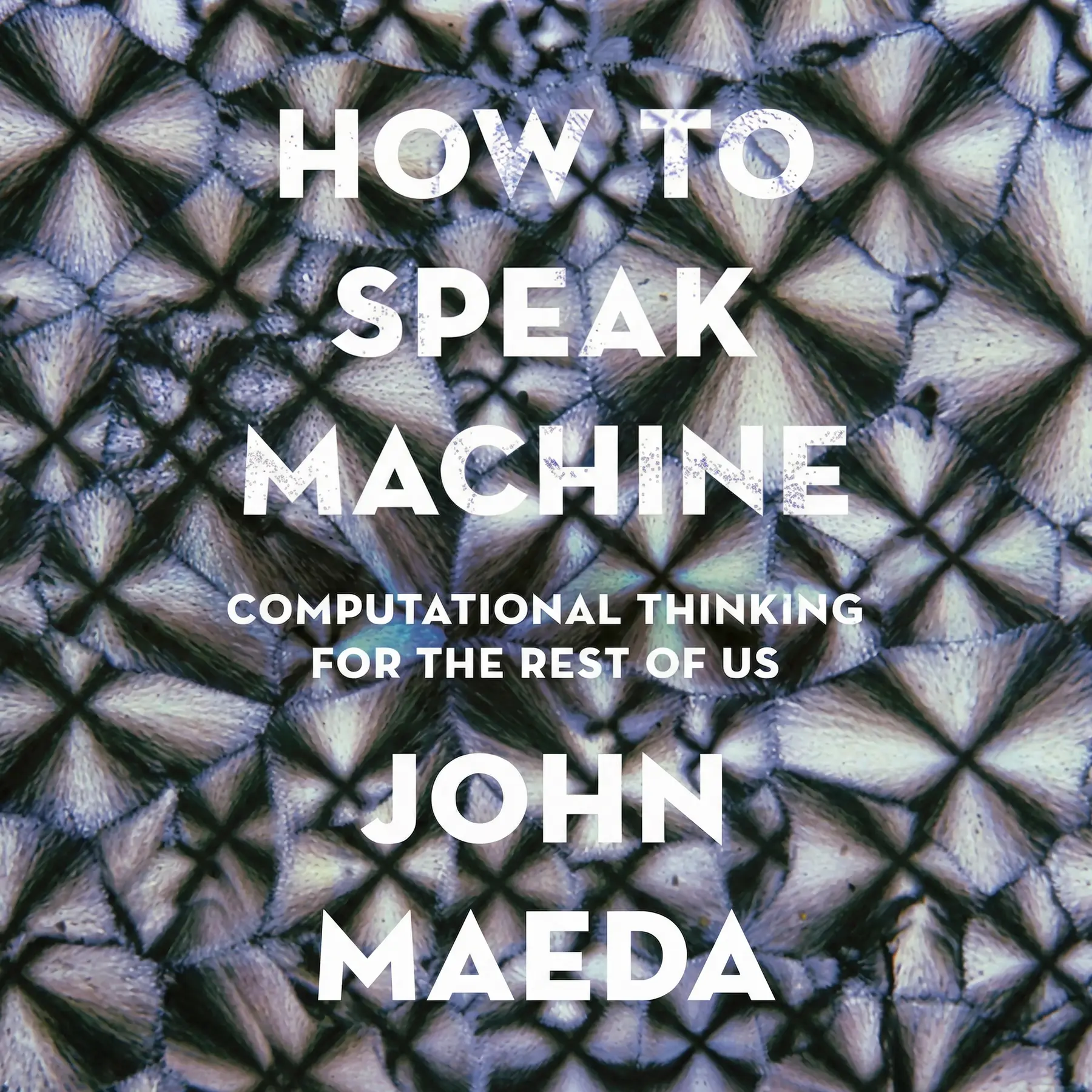
How to Speak Machine: Computational Thinking for the Rest of Us
By John Maeda
Discover how to navigate the digital era by understanding the fundamental logic of computers. This guide explores how computational thinking, artificial intelligence, and data shape our modern business and social landscapes.
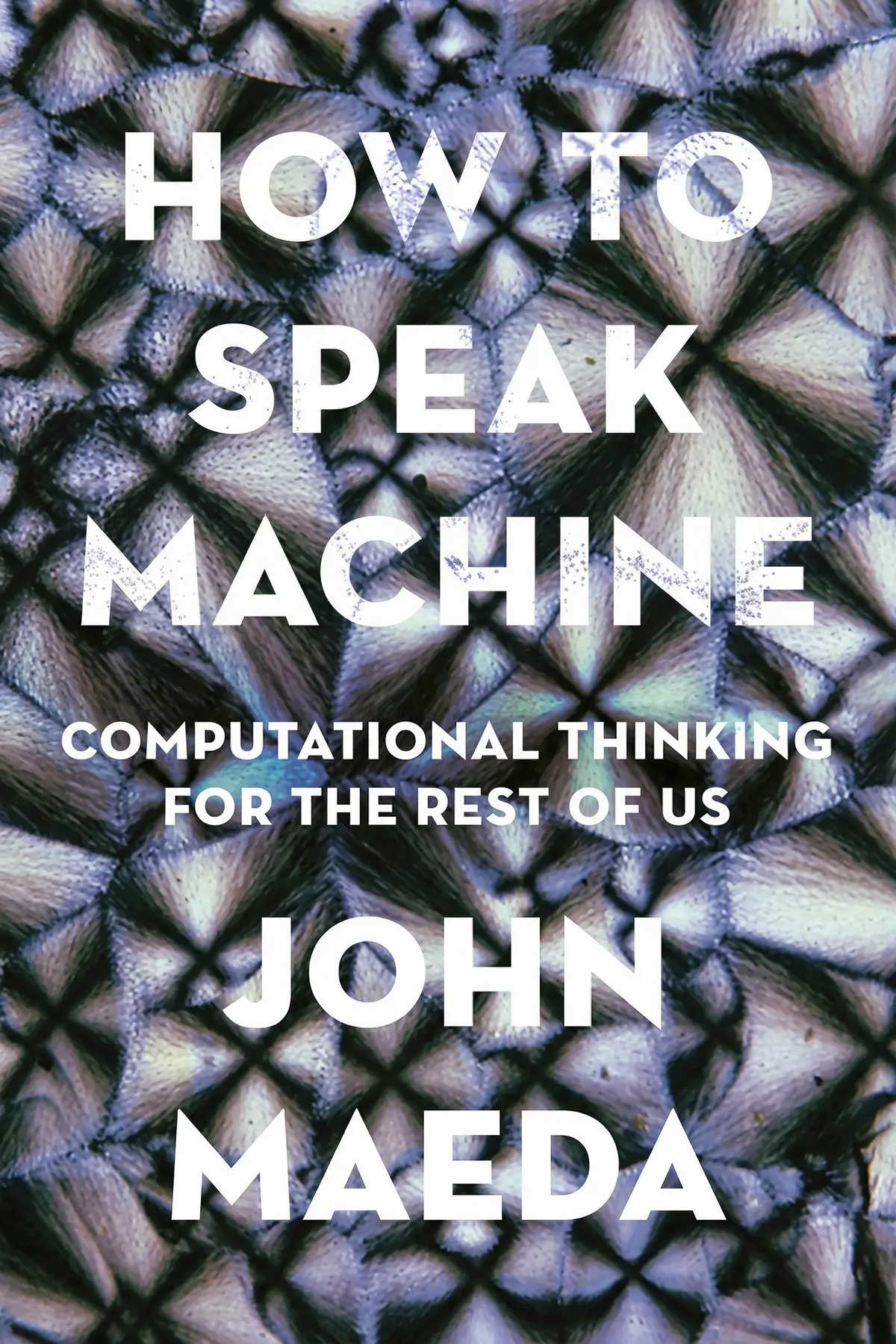
Table of Content
1. Introduction
1 min 50 sec
In our modern world, we are constantly interacting with technology. We tap our screens to unlock our lives, refresh our feeds with a flick of a finger, and rely on invisible algorithms to guide us through our daily schedules. But for most of us, there is a massive gap between using these tools and actually understanding how they function. We are like passengers in a high-speed vehicle, enjoying the ride but having no idea what is happening under the hood. This lack of knowledge might seem harmless now, but as technology continues to accelerate, the divide between the tech-literate and everyone else is growing wider.
John Maeda suggests that we don’t necessarily need to become expert programmers, but we do need to learn how to speak machine. This doesn’t mean memorizing complex syntax; it means understanding the fundamental logic, the ‘computational thinking,’ that governs how digital systems behave. Whether you are a business owner looking to leverage the power of the cloud or a concerned citizen worried about data privacy, understanding the inner workings of machines is the only way to navigate our digital future intelligently.
In this summary, we will explore the core concepts that make computers so powerful and so different from humans. We will look at why machines are the ultimate masters of repetition, how they think in dimensions we struggle to visualize, and how the digital world has completely rewritten the rules of business. We’ll also confront the darker side of technology—the ways in which human biases can be baked into code and how our data is being used in ways we might not even realize. By the end, you’ll have a clearer perspective on the unique partnership between humans and machines, and you’ll be better equipped to participate in the digital age with confidence and clarity.
2. The Infinite Stamina of Logical Loops
2 min 26 sec
Think about the sheer energy it takes for a human to repeat a single physical motion. Now, imagine a worker that never sleeps and never complains. Discover how basic code unlocks this infinite potential.
3. Thinking in Exponential Dimensions
2 min 14 sec
Most of us view the world in simple steps, but computers see the world in layers that grow at a staggering rate. Learn why this exponential perspective changes everything.
4. The Evolution Toward Living Logic
2 min 25 sec
As technology advances, the line between ‘machine’ and ‘living thing’ starts to blur. Explore the journey from simple chat programs to the potential of a technological singularity.
5. A New Blueprint for Business
2 min 09 sec
The digital world has abandoned the slow, perfectionist models of the past. Learn how ‘lean’ and ‘agile’ strategies allow companies to evolve in real-time.
6. The Constant Pulse of Personal Data
1 min 56 sec
Every click, hover, and scroll is a piece of a larger puzzle. Discover how your digital behavior is transformed into a commodity and why privacy is harder to maintain than ever.
7. The Hidden Biases in the Code
2 min 06 sec
Machines are often thought of as neutral, but they reflect the prejudices of their creators. Learn how a lack of diversity in tech leads to ‘racist’ and ‘sexist’ algorithms.
8. The Vital Role of Human Judgment
2 min 29 sec
Computers are masters of numbers, but they struggle with meaning. Discover why qualitative human insight is still the most valuable tool in a data-driven world.
9. Conclusion
1 min 54 sec
As we have seen, ‘speaking machine’ is about much more than just learning to code. It is about understanding the fundamental shifts in how our world now operates. We have moved from a world of physical limits to a digital landscape of infinite loops, exponential growth, and constant evolution. We have seen how the tireless nature of machines can be harnessed to solve massive problems, but also how that same power can be used to exploit our data or reinforce our worst biases.
The most important takeaway is that technology is not a neutral force. It is a reflection of the people who create it. When we understand the logic of the machine—its strengths in quantitative data and its weaknesses in qualitative judgment—we gain the power to question it. We can demand more diversity in the tech industry to ensure that algorithms are fair. We can be more mindful of the data we share and the terms of the digital services we use.
You don’t need to be a computer scientist to have a voice in this conversation. By simply understanding the concepts of loops, nesting, and iteration, you are already better equipped than most. As a practical first step, take a look at your own digital footprint. Most of us blindly accept ‘cookies’ on every website we visit. These are small files that track your behavior and can be sold to third parties. Go into your browser settings and disable third-party cookies. It is a small, simple action, but it is a way of asserting your agency in a world that is constantly trying to turn you into data.
The future will be built by both humans and machines. By learning to speak the language of the digital world, you ensure that you aren’t just a passenger on this journey—you are one of the people helping to steer the ship. The machines are ready to listen; it’s up to us to decide what we want to say to them.
About this book
What is this book about?
How to Speak Machine explores the intersection of design, technology, and business, offering a roadmap for anyone looking to understand the digital world without needing to become a professional coder. John Maeda explains the core principles that drive software and hardware, from the tireless nature of loops and recursion to the exponential power of cloud computing. The book delves into how these mechanical behaviors influence everything from how companies like Apple or Google operate to the ethical challenges posed by biased algorithms and a lack of diversity in the tech industry. By demystifying the 'language' of computers, Maeda promises to transform the reader from a passive consumer of technology into an informed participant. You will learn how the shift from physical to digital manufacturing has revolutionized product development through agile methods and A/B testing. Ultimately, the book highlights the enduring importance of human intuition and qualitative judgment in an era increasingly dominated by quantitative data, ensuring that we can harness the power of machines without losing our humanity.
Book Information
About the Author
John Maeda
John Maeda is a multifaceted expert who blends the worlds of graphic design and computer science. He formerly served as the president of the Rhode Island School of Design. He later held an executive position at Automattic, a major web development firm, where he focused on fostering a more inclusive and diverse environment within the technology industry. He has authored several books exploring the intersection of these fields, including notable works like The Laws of Simplicity and Design by Numbers.
Ratings & Reviews
Ratings at a glance
What people think
Listeners find the material accessible and value its concise nature, while one listener highlights how it reviews basic concepts in computing and design.
Top reviews
Wittaya
After hearing so much about John Maeda’s work at the intersection of art and engineering, I was excited to dive into this. It isn't just a technical manual; it's a thoughtful meditation on how the logic of loops and quantitative data shapes our qualitative world. Maeda’s prose is remarkably accessible, breaking down the complex, invisible machinery that powers our smartphones into something digestible. While some tech experts might find the concepts elementary, the way he bridges the gap between design and raw computation is masterful. I particularly enjoyed the sections on how machines lack human empathy, requiring us to be the 'heroes' of the story. It’s a brief read, but it lingers in your mind long after you close the cover.
Show moreSoontorn
Maeda delivers a calm, humanistic manifesto that suggests we shouldn't leave the future of AI solely to a technical elite. He argues that understanding computation is a new form of literacy that everyone needs to embrace to remain relevant in a digital economy. I loved his take on how design can make these 'alien' computational systems more transparent and intelligible to the average user. It’s an optimistic look at a world where technology serves humanity rather than just optimizing for clicks. The practical advice about disabling third-party cookies was a nice touch in a book that is otherwise quite philosophical. Truly an inspiring read for those entering the field.
Show morePloy
Finally got around to reading this, and the chapter on how computation doesn't obey the laws of physics really changed my perspective. Software is an infinitely flexible medium, and Maeda captures the wonder and the danger of that power perfectly. He writes with the perspective of a 'first-generation techie' who is passing the torch to a new era of digital heroes. It’s a very encouraging book for anyone who feels intimidated by the speed of technological change. The focus on transparency and education as a defense against tech-toxicity is exactly what we need to hear right now. Short, insightful, and highly recommended for students.
Show moreNim
Ever wonder why computers feel so rigid compared to the fluidity of human thought? Maeda explores this beautifully, explaining how machines function in logical loops that repeat until a specific command tells them to stop. It’s a great primer for those of us who are 'non-techies' but want to understand the digital forces governing our lives. The book is short, punchy, and avoids the usual jargon that makes tech writing so exclusionary. However, I did find some of the anecdotes about his time in Silicon Valley a bit repetitive towards the end. It serves as a solid, gentle introduction to Artificial Intelligence without being intimidating.
Show moreKamol
Picked this up because I wanted to understand the invisible infrastructure of our daily lives. Maeda does a fantastic job of explaining how the 'alien universe' of code operates outside the traditional laws of physics. His description of the 'Syntax Error' as a crushing, soul-sucking experience for beginners really resonated with my own brief, frustrated attempts at learning to code. It’s a readable, fast-paced book that manages to make abstract concepts feel tangible. I do wish he had delved deeper into the ethics of algorithmic composition, but as an introductory text for the layperson, it hits the mark perfectly.
Show moreSuphan
As someone who struggles with the 'black box' of modern technology, I found Maeda’s breakdown of computational thinking quite refreshing. He simplifies the way AI processes quantitative data without making the reader feel stupid or overwhelmed. The book is brief, which is a plus for busy professionals, and it reviews the basic concepts of design and computing with remarkable clarity. My only gripe is that it occasionally feels like a series of disjointed essays rather than a cohesive narrative. Still, the perspective on how computation can threaten the sovereignty of nations is a chilling and necessary observation that makes the read worthwhile.
Show moreSook
Personally, I found the memoir aspects much more compelling than the actual technical explanations. Maeda’s journey from traditional design to the heart of computing is fascinating, especially his reflections on how the physical world keeps him grounded. He doesn't shy away from critiquing the toxic, insular culture often found in high-tech environments. To be honest, the actual 'how to speak machine' parts felt a bit light on substance for my taste. It’s a weird hybrid of a career retrospective and a beginner’s guide to coding. While the writing is clear, the target audience feels a bit confused—is it for CEOs or middle school students?
Show moreNatchaya
Look, if you've ever typed a line of code or know what a 'syntax error' feels like, 70% of this will feel like a retread. The book is titled 'How to Speak Machine,' but it's more like 'A Brief History of Why Machines Are Different.' It’s definitely not for software engineers. It is, however, an excellent gift for a designer or a manager who works with developers but doesn't quite 'get' them. Maeda's writing is stylish, though sometimes he gets lost in his own metaphors. It’s a 3-star experience—useful for some, but largely redundant for the technologically literate who already live in this world.
Show morePannipa
This book is basically a collection of surface-level insights that could have been a single blog post or a quick YouTube video. For anyone who has a fundamental understanding of how a computer works, most of the content here will feel like a tedious list of clichés. Frankly, the author spends too much time on his own pedigree and not enough time offering deep analysis or new value. I spent less than an hour skimming through it and still felt like I wasted my time. If you don't know the difference between hardware and software, you might learn something, but for the rest of us, it’s remarkably redundant and a bit patronizing.
Show moreA
Not gonna lie, the author’s tone comes off as incredibly self-important throughout most of these chapters. There’s a fine line between sharing personal experience and being downright obnoxious, and this book crosses it frequently. The 'insights' provided are largely common knowledge presented as if they were revolutionary revelations. 'Computers follow instructions' is not exactly a groundbreaking thesis for a book published in this decade. I found the 15-minute abridged summary floating around online much more useful than the actual text. Save your money and just read a Wikipedia page on basic algorithms instead; you'll get the same value without the ego.
Show moreReaders also enjoyed

AUDIO SUMMARY AVAILABLE
Listen to How to Speak Machine in 15 minutes
Get the key ideas from How to Speak Machine by John Maeda, plus 5,000+ more titles in English and Thai.
- 5,000+ titles
- Listen as much as you want
- 7-day free trial
- Cancel anytime







