
20 min 02 sec
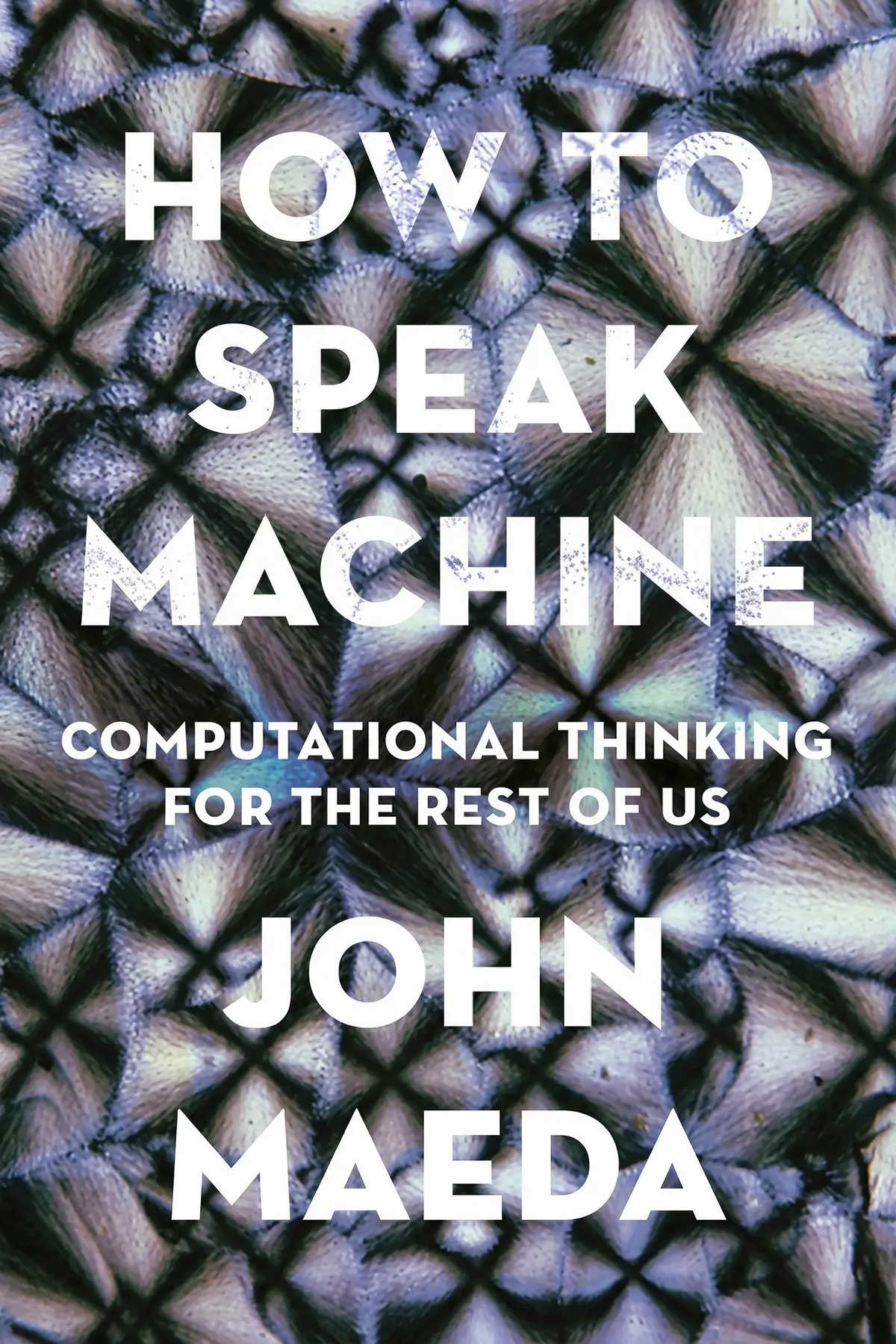
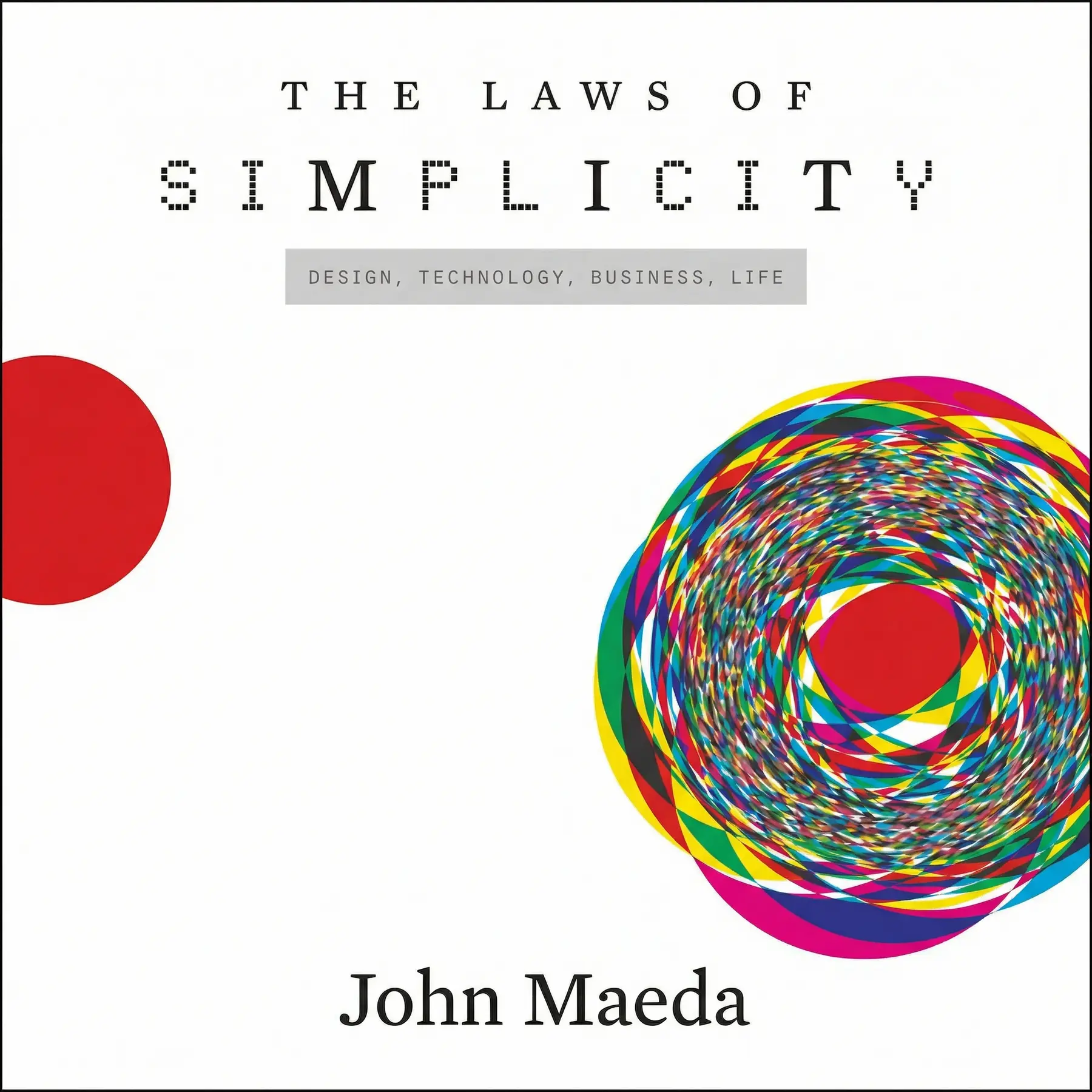
The Laws of Simplicity: Design, Technology, Business, Life
By John Maeda
Explore John Maeda’s definitive guide to streamlining design, business, and daily life. Learn how to subtract the obvious to make room for the meaningful in an increasingly cluttered digital world.
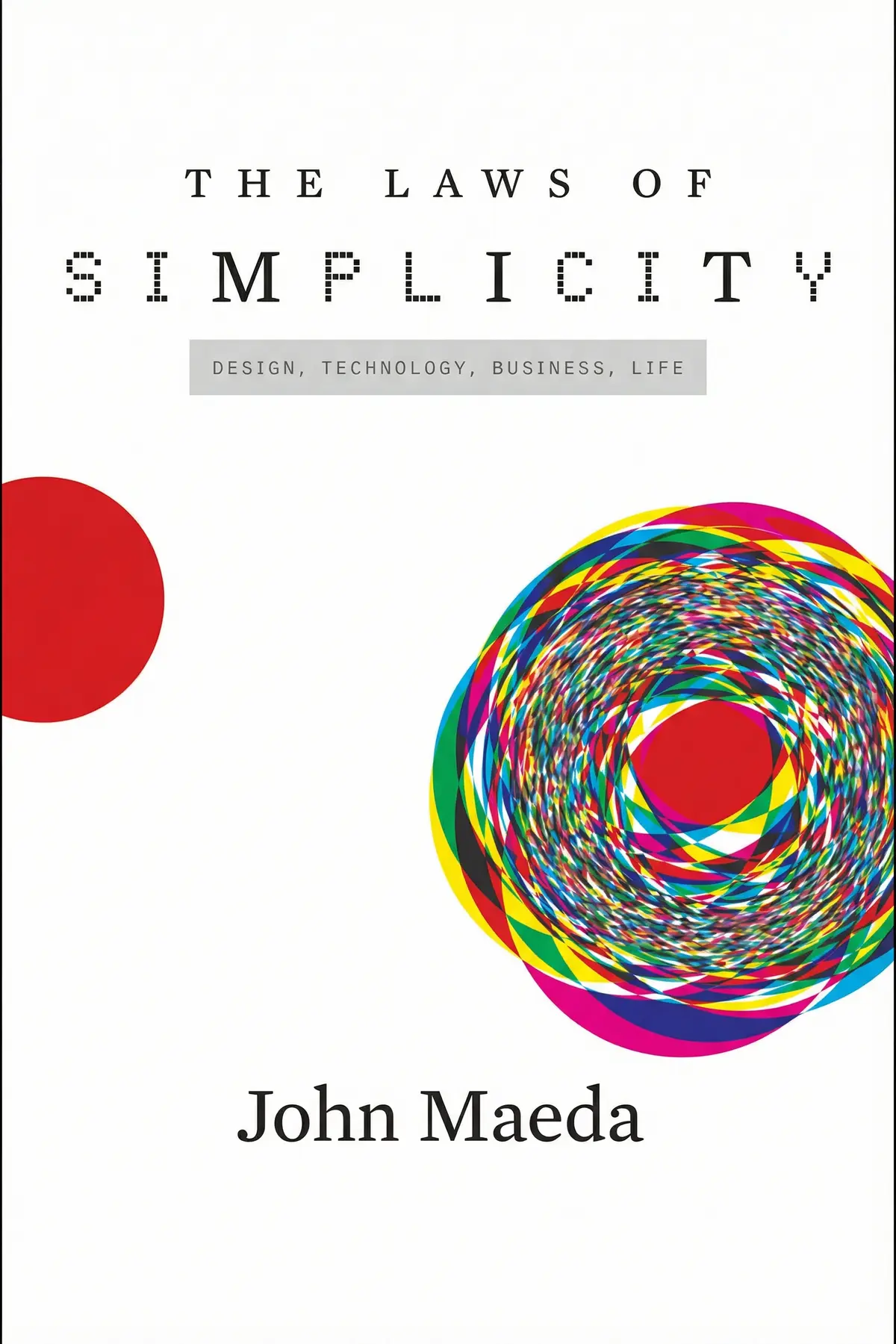
Table of Content
1. Introduction
2 min 10 sec
Think back for a moment to the days before the digital revolution. There was a time when communication was anchored to specific places: a telephone sat on a table in the hallway, and a physical mailbox stood at the edge of the driveway. These were the primary gateways through which the world could reach you. Life, in many ways, felt contained and manageable. Contrast that with the reality of the twenty-first century. Today, the barriers between our personal space and the global network have essentially vanished. You are reachable in the car, at the grocery store, and even in the quiet of your bedroom. Emails, texts, social media notifications, and instant messages create a relentless stream of data that demands your attention.
While we often celebrate technology for making life more convenient, there is an underlying cost that we all feel: the creeping weight of complexity. Every new feature, every software update, and every innovative device adds a new layer of things we have to learn, manage, and troubleshoot. It raises a critical question: Is there a way to reclaim our sanity without abandoning the benefits of the modern age? The answer lies in the pursuit of simplicity. This isn’t just a design aesthetic or a minimalist trend; it is a fundamental strategy for both business success and personal well-being.
Simplicity allows a product to stand out in a crowded market and helps individuals focus on what truly matters. It is the secret ingredient behind some of the most iconic brands in history and the key to a more intentional lifestyle. In the following discussion, we will explore the core principles laid out by John Maeda to understand how we can strip away the noise to find the essence of a task, a product, or a relationship. We will look at why we are drawn to sleek devices, how we can trick our perception of time, and when complexity is actually necessary. By the throughline of subtraction and meaning, we can learn to navigate a complex world with grace and clarity. This is about more than just doing less; it’s about doing what is meaningful.
2. The Strategic Subtraction of the Obvious
2 min 20 sec
Discover why the most successful products often do less rather than more, and how focusing on meaningful features creates a luxury experience in a cluttered market.
3. Shrinking and Hiding Complexity
2 min 22 sec
Explore the psychological tricks designers use to make powerful tools feel simple, including the art of physical miniaturization and the use of hidden functionality.
4. Organization as a Tool for Clarity
2 min 12 sec
Learn how to transform a chaotic list of responsibilities into a structured plan using grouping, labeling, and the power of the 80/20 rule.
5. The Perception and Management of Time
2 min 28 sec
Understand how our experience of time is subjective and discover ways to make the inevitable moments of waiting feel shorter and more tolerable.
6. Teaching and the Power of Knowledge
2 min 09 sec
Learn the secrets of effective instruction and how creating immediate familiarity in your work can lower the barrier for others.
7. The Role of Trust and Relinquishing Control
2 min 16 sec
Find out how trusting experts and technology can streamline your decision-making process, and why the ‘undo’ button is essential for a simple life.
8. The Limits of Simplicity and the Human Element
2 min 16 sec
Understand why total simplicity isn’t always the goal, especially when it comes to human emotions, personal expression, and delicate communication.
9. Conclusion
1 min 49 sec
As we look toward the future, the relationship between technology and simplicity will continue to evolve. One of the most significant shifts is that technology is becoming better at hiding its own complexity. When you use a search engine, you see a clean white page and a single bar. You don’t see the thousands of servers and the millions of lines of code working in the background to bring you information in a fraction of a second. The complexity has moved ‘off-stage,’ leaving the user with a simplified experience. This is the direction of progress: making the most powerful tools in the world as easy to use as a pencil.
We also see simplicity through the power of community. Open-source movements show that when many people work together on a complex problem, it becomes simpler for everyone involved. If you encounter a bug in a community-driven software, you aren’t alone in trying to fix it; you have an entire network of experts who have already paved the way. This collective effort is a form of social simplification.
The throughline of John Maeda’s work is that simplicity is a choice and a discipline. It requires us to constantly ask: What is essential? What can be removed? And where is the meaning? By applying these laws—whether it’s by organizing your tasks to reduce mental clutter, trusting experts to save your decision-making energy, or knowing when to embrace complexity for the sake of emotion—you can create a life and a career that are both efficient and deeply fulfilling. Start today by looking at your most pressing task and asking yourself: What is the obvious part I can subtract, and what is the meaningful part I must keep? The path to clarity starts with that single, simple question.
About this book
What is this book about?
In an era where technology seems to grow more complex by the hour, John Maeda offers a refreshing philosophy centered on the power of less. This summary explores the principles of simplicity, illustrating how reducing functionality, organizing tasks, and understanding the psychology of time can lead to better products and a more fulfilling life. The book provides a roadmap for designers, entrepreneurs, and anyone feeling overwhelmed by modern noise. It balances the drive for efficiency with the essential need for human emotion, proving that simplicity is not just about minimalism, but about finding the right balance between what we need and what we can live without. By the end, you will understand how to apply these laws to your own work and habits to achieve clarity and success.
Book Information
About the Author
John Maeda
John Maeda is a distinguished graphic designer, computer scientist, and visual artist. He was a professor of Media Arts and Sciences at MIT and the visionary founder of the SIMPLICITY Consortium at the MIT Media Lab. Maeda has also written several books, including the critically acclaimed Design by Numbers.
Ratings & Reviews
Ratings at a glance
What people think
Listeners find the book deeply insightful, with one listener highlighting its treatment of intricate subjects, and many regarding it as a fundamental text for designers. Feedback on the layout and ease of reading is varied; some listeners find the design exceptional, while others feel it is not worth their time. The tempo is well-liked, with one listener calling it an essential resource for graphic designers, and listeners value the concise format and strong concepts.
Top reviews
Connor
"Simplicity is about subtracting the obvious, and adding the meaningful." This single mantra alone justifies the price of admission for John Maeda’s work. He manages to distill complex design philosophies into a package that is remarkably spare and beautiful. It is a very quick read, but I find myself returning to specific laws like "Differences" to remind myself that complexity is actually necessary for simplicity to shine. The book itself perfectly embodies the principles it preaches by keeping things brief and punchy. While some might find it a bit abstract, the holistic approach to technology and life is exactly what I needed. I plan on rereading this often to keep the core tenets fresh in my mind. Truly essential for anyone in a creative field who wants to cut through the noise.
Show moreDing
This book is a masterclass in brevity and meaningful design. I’ve been working as a graphic designer for a decade, and I still found several "aha" moments within these hundred pages. The way Maeda balances the need for complexity against the desire for simplicity is brilliant. He understands that a completely empty room isn't simple; it’s just empty. We need those "cracks" in the simplicity to find beauty, much like the Japanese concept of wabi-sabi mentioned later on. It’s a very fast read, which is perfect for busy professionals. Some might complain about the lack of hard data, but the philosophical insights are far more valuable to me. It is a shiny, spiffy little book that belongs on every creator's shelf for constant reference.
Show moreTalia
Picked this up on a whim and I’m so glad I did. It’s rare to find a book about technology that feels so human and emotional. Maeda isn't just talking about how to make a cleaner UI; he’s talking about how simplicity affects our souls. Law 7 (Emotion) is something most tech books ignore, but it’s so vital. We want products that make us feel something, not just tools that function perfectly. The brevity of the book is its greatest strength. It respects your time, which is Law 3 in action! I’ve already started applying the SHE principles to my own workflow. If you want a deep dive into the philosophy of less, look no further. This is a brilliant, quick read.
Show moreRatchada
Ever wonder why some gadgets feel intuitive while others are just frustrating? Maeda breaks this down through the SHE principle: Shrink, Hide, and Embody. This first law of thoughtful reduction is easily the strongest part of the entire text. By hiding features and only showing the essentials, designers can create a sense of awe. However, I have to admit that the book starts to wander a bit after the first few chapters. The laws regarding organization and time felt a little less grounded in data and more like casual observations. Using sticky notes as a primary example for organization felt a bit simplistic, even for a book on simplicity. Still, the core message is incredibly valuable for modern product development and user experience.
Show moreLuckana
After hearing so many designers cite this as a "must-have," I finally got around to reading it. The writing style is definitely unique—it’s very personal and almost meditative in places. I really liked the "Learn" principle, which highlights how knowledge makes everything simpler. If you understand how a tool works, the complexity disappears. One minor gripe is that the book pushes its associated website a bit too frequently. It felt like a distraction from the otherwise clean aesthetic of the pages. Also, the tech examples are getting a bit long in the tooth. That being said, the "Laws" serve as excellent abstract guiding principles for anyone trying to declutter their work or their life. It is worth the hour it takes to finish.
Show morePatchara
Truth is, simplicity is much harder to achieve than complexity, and this book does a great job of explaining why. Maeda’s focus on the "Ten Laws" provides a solid framework for approaching product design. I particularly resonated with the idea that simplicity and complexity need each other to exist. If everything is simple, nothing stands out. While I enjoyed the design-focused chapters, I felt the transition into more emotional territory was a bit jarring. The tone shifted from technical to almost spiritual quite abruptly. Nevertheless, the central thesis about subtracting the obvious and adding the meaningful is a powerful guiding star. It’s a slim volume that packs a punch if you’re willing to look past the occasional fluff and dated tech references.
Show moreSangduan
As someone who appreciates a minimalist aesthetic, I found this to be a very thoughtful exploration of the topic. Maeda bridges the gap between being a technologist and being an artist quite well. The principles he lays out, like "Context" and "Failure," are things I’ll keep in the back of my mind for future projects. I did find the constant use of the "TAB" key as an example of organization to be a little strange and specific. And yes, the acronyms are a bit of a hurdle to clear. But if you take it as a collection of insights rather than a strict manual, it’s very rewarding. It’s a quick, spiffy read that definitely sparks joy for the design-minded professional.
Show moreBook
Frankly, the amount of forced acronyms in this short book started to get under my skin after the first thirty pages. Maeda clearly has a brilliant mind, but some of his principles feel like common sense dressed up in fancy, unnecessary terminology. I struggled with the section on organization because it didn't offer the deep research I was hoping for. Instead, we get anecdotes about mind maps and sticky notes that felt a bit dated in the current tech landscape. To be fair, the author admits this is a personal exploration rather than a definitive textbook. The examples involving the iPod and early Google are interesting, but they show the book's age. It's a decent collection of thoughts, but it didn't quite deliver the profound transformation I expected.
Show moreNarut
The chapter on "Trust" was probably my favorite part of the whole book. In simplicity we trust, and Maeda explains how users need to feel secure when features are hidden. However, I can't help but feel let down by the lack of structure in the middle sections. Some laws are explained beautifully, while others feel like filler to get to the number ten. For example, the "Organization" law felt very surface-level with its focus on basic grouping. Also, the writing style could use a bit of simplification itself; some sentences are unnecessarily wordy for a book on this topic. It’s a pretty book with some "shiny bits" on the cover, but I think I was looking for something more academic and less anecdotal.
Show moreSamuel
Not what I expected at all, and unfortunately, it didn't live up to the hype for me. The book reads too much like a personal account without enough research to back up the bold claims Maeda makes. I found the examples, particularly the ones about the iPod shuffle, to be totally unconvincing. Does removing a screen really "save time," or is it just an annoying limitation? The author loves creating new acronyms on every page, which ironically makes the reading experience more complex rather than simpler. It felt like a collection of blog posts rather than a cohesive book. I appreciate the brevity, but I think the content was far too thin to be practically useful for my daily design work. It’s more of a coffee table book than a guide.
Show moreReaders also enjoyed



AUDIO SUMMARY AVAILABLE
Listen to The Laws of Simplicity in 15 minutes
Get the key ideas from The Laws of Simplicity by John Maeda, plus 5,000+ more titles in English and Thai.
- 5,000+ titles
- Listen as much as you want
- 7-day free trial
- Cancel anytime







