
23 min 45 sec
Lives of the Stoics: The Art of Living from Zeno to Marcus Aurelius
Explore the foundational lives of history’s most resilient thinkers. This summary examines how the ancient Stoics translated abstract philosophy into a practical blueprint for courage, justice, and inner peace during chaotic times.
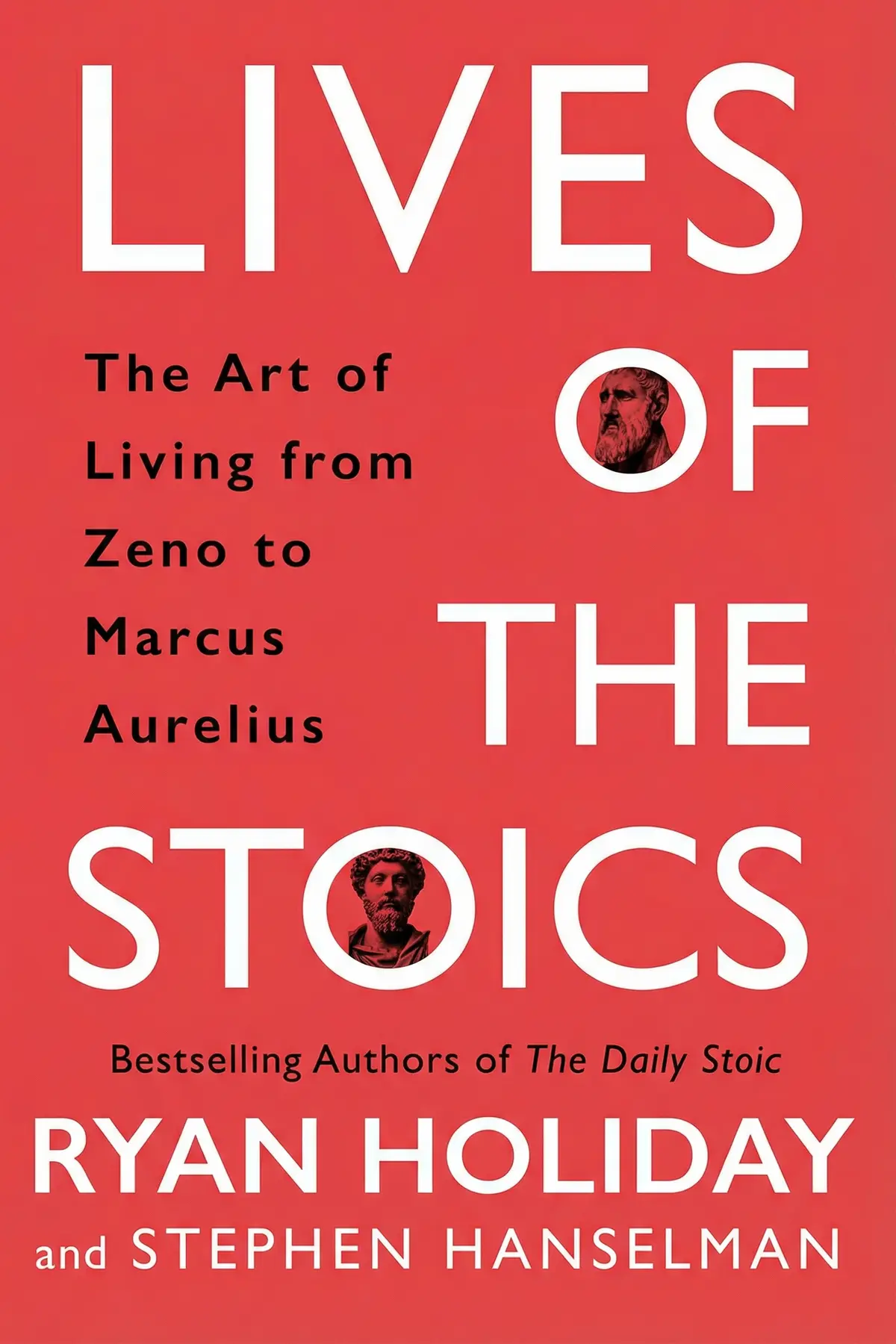
Table of Content
1. Introduction
2 min 18 sec
When we look back at the history of human thought, we often imagine philosophers as distant figures lost in abstract clouds of logic and theory. We picture them in quiet libraries, far removed from the grit and grime of everyday existence. But the school of thought known as Stoicism was born from something far more visceral. It wasn’t forged in a classroom; it was forged in the fire of life’s most intense challenges: shipwreck, exile, plague, and the crushing weight of absolute power.
At the heart of the Stoic tradition lies a single, burning question that remains as relevant today as it was two thousand years ago: How should a person live? This isn’t a request for a set of rules, but a search for a way of being. It’s about how we choose to respond when our world falls apart, or how we treat others when we have nothing left to gain. The Stoics were obsessed with what they called the ‘summum bonum’—the highest good. To them, this good was synonymous with virtue, which they meticulously broke down into four essential pillars: courage, wisdom, moderation, and justice.
In this exploration, we aren’t just going to look at these ideas as definitions in a dictionary. Instead, we are going to look at them through the lens of biography. We’re going to walk through the lives of the people who actually tried to live these virtues. You’ll see that Stoicism is fundamentally a philosophy of ‘deeds, not words.’ It is a practical toolkit designed to help you navigate the storms of life with your character intact.
As we journey from the ports of Ancient Greece to the imperial palaces of Rome, we will meet a diverse cast of characters: merchants, laborers, politicians, and even an emperor. Each of them faced the same human struggles we face today—fear, ambition, grief, and the search for meaning. Their lives serve as a masterclass in resilience, showing us that while we cannot always control what happens to us, we have total authority over how we respond. By the end of this journey, you’ll have a new perspective on what it means to live a life of purpose and how to stand firm when the world around you begins to shake.
2. Zeno and the Gift of Disaster
3 min 11 sec
A devastating shipwreck stripped a wealthy merchant of everything he owned, yet this catastrophe became the catalyst for one of history’s most influential philosophies.
3. Cleanthes and the Sanctity of Effort
2 min 56 sec
A humble water-carrier proved that the most profound wisdom often emerges from the discipline of hard physical labor and a simple life.
4. Cato the Younger and the Price of Integrity
3 min 01 sec
In a world of political compromise and rising tyranny, one man stood as an unmovable pillar of justice, even at the cost of his own life.
5. Porcia Cato and the Strength of Action
2 min 22 sec
The daughter of a Stoic icon demonstrated that true fortitude isn’t a male trait, but a human one, proved through incredible physical and mental endurance.
6. Seneca and the Paradox of Power
2 min 49 sec
A brilliant writer and advisor found himself caught between his Stoic ideals and the service of a murderous tyrant, illustrating the messy reality of practical ethics.
7. Epictetus and the Freedom of the Mind
2 min 43 sec
Born into slavery, this influential teacher discovered that true liberty has nothing to do with physical circumstances and everything to do with our choices.
8. Marcus Aurelius and the Burden of the Crown
2 min 39 sec
The most powerful man in the world used Stoicism not to aggrandize himself, but to remain humble, kind, and focused on the common good.
9. Conclusion
1 min 46 sec
As we close this chapter on the lives of the Stoics, we are left with a powerful realization: these were not perfect people. They were merchants who lost everything, laborers who worked through the night, politicians who struggled with compromise, and emperors who felt the weight of a dying empire. They were human beings who found in Stoicism a way to transcend their circumstances.
The throughline that connects Zeno to Marcus Aurelius is the belief that a good life is not something that happens to you; it is something you create through your choices. It is the understanding that while the world is often chaotic and unfair, your character is your own. The four virtues—courage, wisdom, moderation, and justice—are not abstract concepts to be admired from afar. They are practical tools to be used in the heat of the moment.
If there is one lesson to take away from these biographies, it is that deeds speak louder than words. It’s easy to talk about being brave, but it’s something else entirely to stand firm when the ship is sinking or the tyrant is knocking at the door. Stoicism invites you to look at your own life and ask: Which handle am I grasping? Am I focusing on what I can control, or am I a slave to external things?
By studying these lives, we gain a roadmap for our own. We see that resilience is a muscle that can be built through discipline and that peace of mind is available to us regardless of our tax bracket or our social status. The ancient Stoics left us a legacy of strength and integrity. Now, it’s up to us to take those ideas off the page and put them into practice in our own daily lives. After all, the art of living is not a theory—it’s a performance.
About this book
What is this book about?
What does it actually mean to live well? While many see philosophy as a dry, academic pursuit, the ancient Stoics viewed it as a high-stakes survival guide. This narrative journey moves from the shipwrecks of Greece to the halls of Roman power, detailing the biographies of the men and women who founded and refined this enduring school of thought. By focusing on the lives rather than just the writings of figures like Zeno, Seneca, and Marcus Aurelius, the book provides a vivid portrait of how virtue is tested in the real world. It promises to show you how to maintain your integrity in the face of temptation, how to find stillness in the midst of a crisis, and why the ultimate measure of a person is found in their actions rather than their words.
Book Information
About the Author
Ryan Holiday
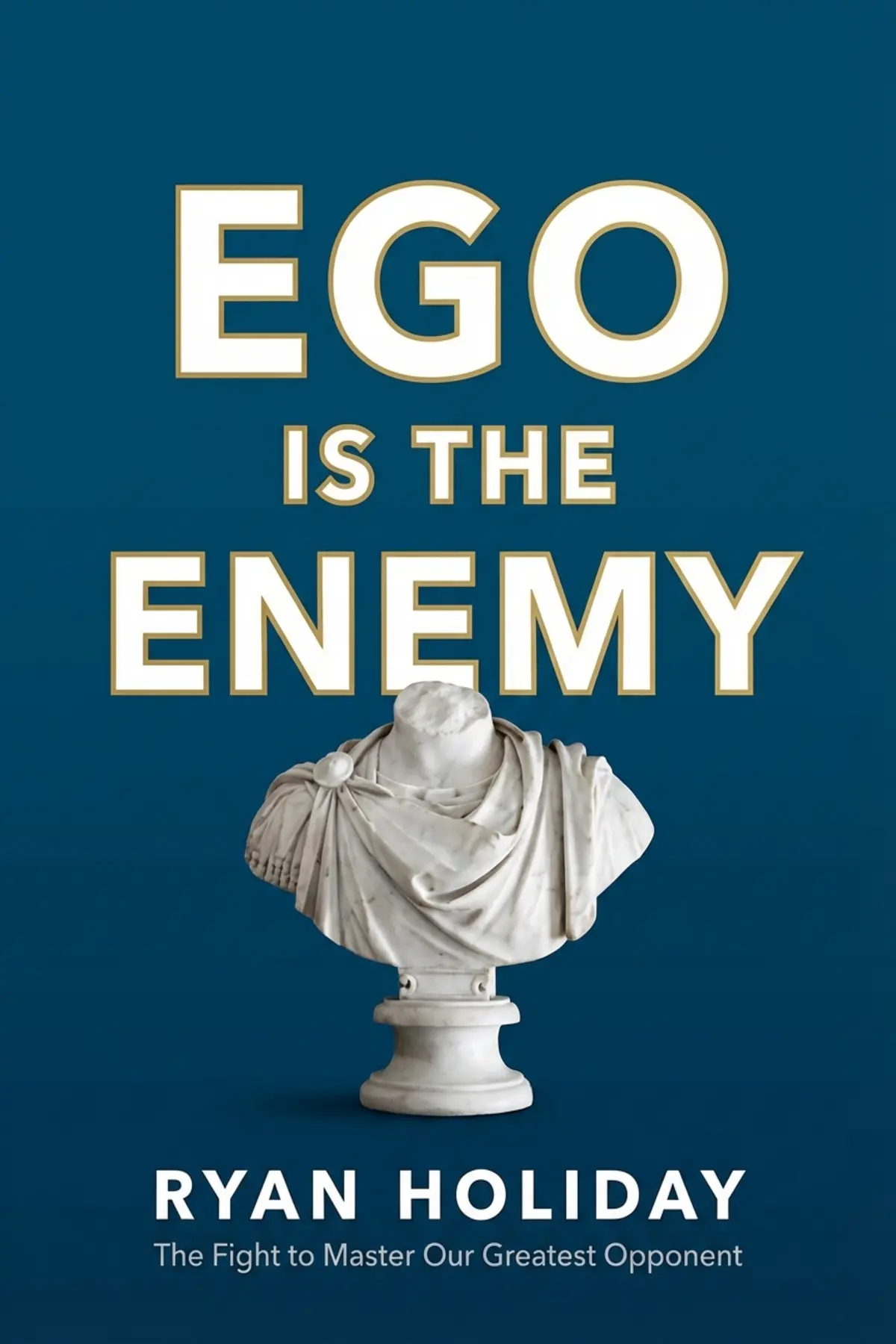
Ryan Holiday is a prominent American author, media strategist, and entrepreneur who owns an independent bookstore. He is widely recognized for his work in popularizing Stoic philosophy and hosts the Daily Stoic podcast. His bibliography includes titles such as Stillness is the Key, Ego is the Enemy, and The Obstacle is the Way. Stephen Hanselman is a seasoned author and publisher with an academic background from Fresno Pacific University and a master’s degree from Harvard Divinity School. He has collaborated with Holiday on The Daily Stoic.
Courage is Calling: Fortune Favors the Brave
Ryan Holiday
Discipline Is Destiny: The Power of Self-Control
Ryan Holiday
Stillness Is the Key
Ryan Holiday
Wisdom Takes Work: Learn. Apply. Repeat.
Ryan Holiday
Ratings & Reviews
Ratings at a glance
What people think
Listeners find this work on Stoic philosophy remarkably accessible and skillfully composed, aiding their understanding of how the ancient school evolved and using thorough research to animate central figures. They value the stimulating insights provided and feel the book is well worth their time and money.
Top reviews
Iff
Ryan Holiday has a knack for making ancient history feel like a conversation with a mentor, and this collaboration with Hanselman is no exception. By focusing on the lives of the Stoics rather than just their abstract theories, the authors successfully bring these dusty figures back to life. It is vibrant. I found the progression of the philosophy fascinating, moving from the early Greeks like Zeno to the Roman heavyweights like Seneca and Marcus Aurelius. The writing style is punchy and accessible. This makes it an easy recommendation for beginners who might find a traditional translation of the Meditations a bit daunting. To be fair, some chapters are definitely stronger than others, and the authors do take creative liberties to fill in the gaps. However, the overarching narrative of people trying to live with virtue in a chaotic world is incredibly inspiring. It’s a well-written guide that reminds us that philosophy was always meant to be a practical tool for survival.
Show moreMoon
This is exactly what the modern philosophy shelf has been missing: a bridge between abstract theory and the gritty reality of life. Holiday and Hanselman have clearly done their homework here, weaving together disparate sources to create a cohesive timeline of the Stoic school. I loved learning about the lesser-known figures like Cleanthes the boxer or the indomitable Porcia Cato. These stories prove that Stoicism isn't just about 'suppressing emotions' but about active service to the common good. The authors write with a sense of urgency that makes you want to get up and actually do something with your life. The research is extensive, yet the prose remains light and highly readable for a layman. It’s a rare book that manages to be both educational and genuinely moving. If you enjoyed 'The Daily Stoic,' this is the perfect companion piece to deepen your understanding of the lineage.
Show moreWorawit
Wow, the chapter on Marcus Aurelius alone makes the entire purchase worth it. I’ve read 'Meditations' dozens of times, but seeing the Emperor’s life placed in the context of his teachers and predecessors gave me a whole new perspective on his writings. The research is deep. You can tell the authors spent years combing through the fragments of lost texts to piece these lives together. It’s incredibly well-written and brings a sense of drama to what could have been a very dry subject. I was particularly moved by the story of Epictetus, the slave who became a world-renowned teacher. His life is the ultimate testament to the Stoic belief that our internal freedom is the only thing that truly matters. This book is a masterpiece of accessible scholarship. It’s thought-provoking, beautifully paced, and serves as a powerful reminder that we are all part of a long chain of people trying to do their best.
Show moreSarocha
Finally got around to reading this, and it’s arguably the most thoroughly researched work Holiday and Hanselman have put out yet. The book does a fantastic job of illustrating the chronological progression of the school, showing how the torch was passed from Zeno all the way to the Emperor's throne. It's rare to find a history book that feels this alive and relevant to modern struggles. They don't just give you the highlights; they dig into the messy politics and the human failings that made these men and women so remarkable. I especially loved the section on Porcia Cato, who proves that Stoic courage wasn't just for the men in the forum. The stories are brief but pack a punch. It’s a thought-provoking read that definitely justifies the price of admission for anyone serious about the 'art of living' in the modern age.
Show moreYulia
Ever wonder what the guys behind the famous quotes actually did for a living? This book provides those answers by offering a series of mini-biographies that humanize the giants of the Stoa. I particularly enjoyed the chapter on Cicero. He wasn't even a full-blown Stoic, but his 'sheisty' political maneuvering and eventual commitment to virtue made for a compelling read. The book does a great job of showing that these weren't perfect saints. They were flawed politicians, teachers, and soldiers who struggled with greed and ambition just like we do. My only gripe is that it can feel a bit repetitive if you read it all in one sitting. It's better to digest one life at a time. Overall, it’s a thought-provoking collection that bridges the gap between ancient history and modern self-help.
Show moreRania
Picked this up because I wanted to see how the school of thought actually evolved over centuries, and it didn't disappoint. The book moves chronologically, which helps you understand how later Stoics like Epictetus were influenced by the writings of those who came long before them. It was eye-opening to see how they handled power and wealth. Seneca, for example, was a billionaire advisor to the deranged Nero, which creates a fascinating tension between his words and his life. The authors don't shy away from these contradictions, which I appreciated. It makes the philosophy feel more attainable because these people were clearly struggling with their own hypocrisies. The short chapter format makes it easy to pick up and put down. While it lacks the dense philosophical analysis of a textbook, it excels at making the Stoics feel like real, breathing human beings.
Show moreWararat
After hearing so much about the 'big three' Stoics, it was fascinating to see how they fit into the larger Roman and Greek landscape. This book introduces you to about two dozen other philosophers who were just as instrumental in shaping the school. I had no idea that the early Stoics were so involved in politics or that the school almost died out several times. The writing is clear and avoids the academic jargon that usually makes philosophy books a chore to get through. Frankly, the authors do a great job of showing that Stoicism was a 'living' philosophy meant to be practiced in the streets, not just studied in a library. I would have liked a bit more detail on the specific differences between the various teachers, as they can start to blend together after a while. Still, it’s a solid 4-star read for anyone looking to expand their knowledge beyond the basics.
Show moreThawee
Truth is, I found this to be a bit of a mixed bag compared to Holiday's previous work. On one hand, it’s a very readable and handy reference for anyone interested in the chronological progression of the school. On the other hand, the historical layer feels very stripped down at times. The authors admit to cutting out the complex 'logic' and 'physics' of the ancients to focus on the 'ethics,' but that leaves the philosophy feeling a bit hollow. It starts to feel like a dry collection of short bios rather than a deep dive into the school's evolution. I also found some of the motivational segments a bit forced, especially when the historical evidence is thin. That said, it’s still worth your time if you want a quick overview of who was who in the ancient world. Just don't expect an academic level of depth.
Show moreBae
While I appreciate the effort to popularize these thinkers, the sheer amount of creative license taken here is jarring. The authors frequently fill in historical gaps with what can only be described as real person fiction, imagining thoughts and motivations that simply aren't in the record. It feels like they are viewing the ancient world through distinctly modern glasses. They project 21st-century values onto people who lived in a vastly different, much more brutal reality. For instance, the way they link figures just because they share a name—like the two Zenos or the Diogenes connection—is intellectually lazy and frankly confusing. I was hoping for a rigorous philosophical exploration. Instead, I got a series of motivational anecdotes that often miss the actual point of the original teachings. If you want to learn about Stoicism, you are much better off reading the primary sources like Seneca or Marcus Aurelius directly.
Show moreTim
Look, I get that Stoicism is trendy right now, but this feels like the authors are just mining the same historical vein until it’s bone dry. This book is a thin collection of mini-biographies that lacks any real depth or new observations. It's clear that Holiday is re-inventing these figures for the masses, cutting out anything complex that might scare off a casual reader. The result is a 'Stoic Fairy Tale' version of history where every flaw is turned into a shallow motivational lesson. The rhetoric would make a Roman cry. It’s frustrating to see modern philosophy dismissed as abstract while these highly edited, imaginative portraits are held up as perfect models. The scholarship levels are laughable at best. Save your money and just buy a good translation of the original texts instead of this RPF-style fluff.
Show moreFeatured in
Readers also enjoyed

A Long Way Gone: Memoirs of a Boy Soldier
Ishmael Beah

All Creatures Great and Small
James Herriot
A Promised Land
Barack Obama

A River in Darkness: One Man’s Escape from North Korea
Masaji Ishikawa
A Spy Among Friends: Philby and the Great Betrayal
Ben Macintyre
A Guide to the Good Life: The Ancient Art of Stoic Joy
William B. Irvine
AUDIO SUMMARY AVAILABLE
Listen to Lives of the Stoics in 15 minutes
Get the key ideas from Lives of the Stoics by Ryan Holiday, plus 5,000+ more titles in English and Thai.
- 5,000+ titles
- Listen as much as you want
- 7-day free trial
- Cancel anytime







