

19 min 17 sec
Not the End of the World: How We Can Be the First Generation to Build a Sustainable Planet
Hannah Ritchie challenges climate doomsday narratives with data, showing how we can be the first generation to achieve true sustainability through energy, food, and industrial innovation.
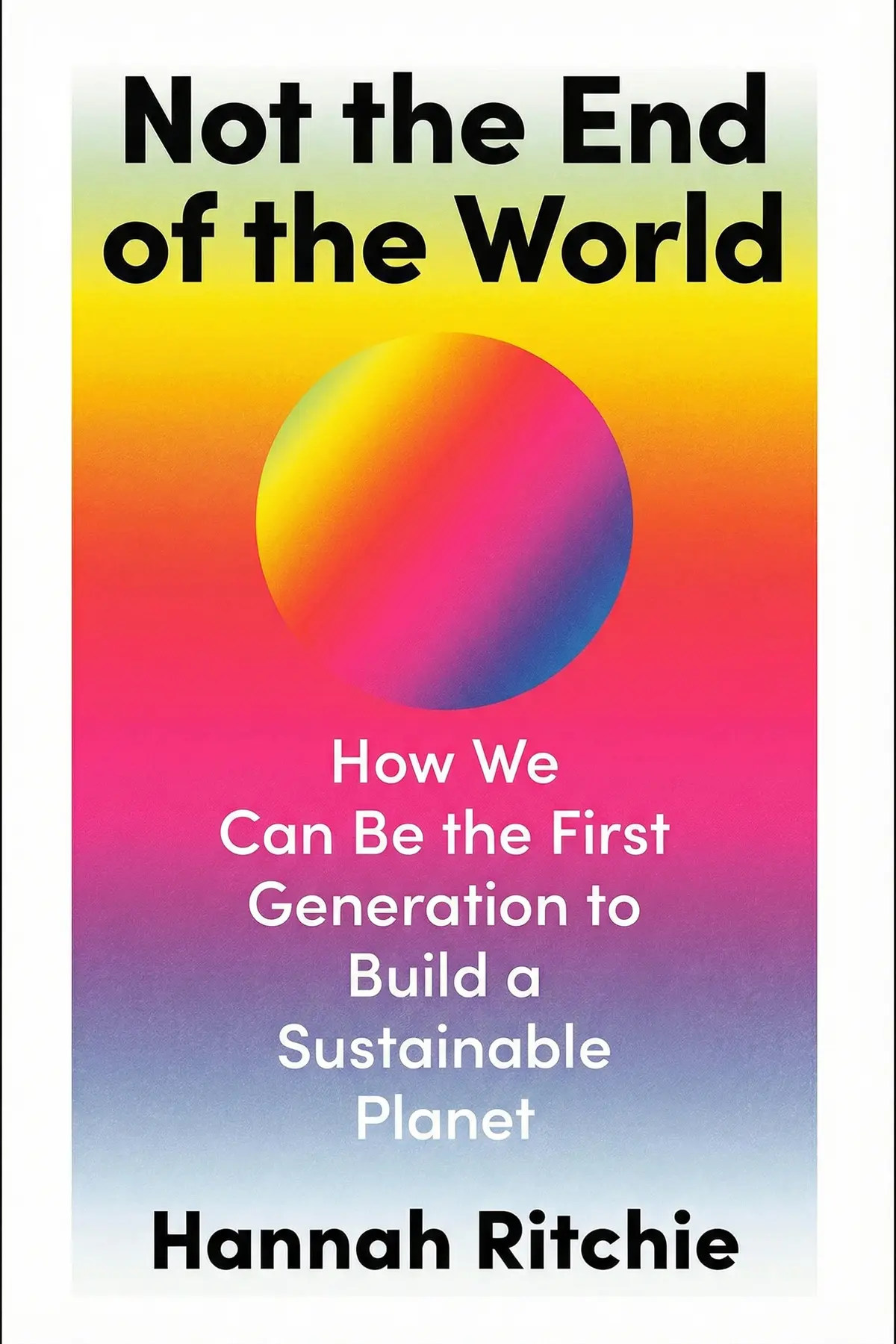
Table of Content
1. Introduction
1 min 47 sec
The modern world is often viewed through a lens of impending catastrophe. If you listen to the prevailing cultural narrative, it seems that humanity has set the planet on an irreversible path toward destruction. This sense of dread is particularly heavy among the younger generations, many of whom report feeling that their future is fundamentally compromised by ecological collapse. But what if this perspective, while born out of genuine concern, is actually standing in the way of the progress we need? What if the most effective way to save the planet isn’t through fear, but through a radical, data-driven shift in how we view our potential?
This is the core proposition we are exploring today. We are moving away from the paralyzing stories of inevitable doom and toward a framework of urgent optimism. This isn’t about ignoring the very real threats of climate change; rather, it’s about recognizing that, for the first time in human history, we possess the tools, the data, and the economic momentum to actually build a truly sustainable world.
By looking at the hard numbers, we can see that we are not merely witnessing the end of an era of environmental destruction—we are uniquely positioned to be the first generation to leave the Earth in a better state than we found it. We will examine how shifting our energy systems, rethinking our transportation, and revolutionizing our food production are not just idealistic dreams, but shifts that are already happening at a staggering pace. Throughout this journey, the throughline is clear: the data suggests that while the situation is serious, it is far from hopeless. In fact, the future of our planet is arguably brighter than it has ever been, provided we have the courage to embrace the solutions already at our fingertips.
2. The Power of Urgent Optimism
2 min 52 sec
Discover why shifting from a mindset of despair to one of data-driven hope is the most effective way to spark real environmental action and global change.
3. The Decarbonization of Energy
2 min 46 sec
Explore the incredible economic shifts and technological breakthroughs that are making the transition from fossil fuels to clean energy faster and cheaper than ever imagined.
4. Revolutionizing How We Move
2 min 37 sec
From the rapid rise of electric vehicles to the unique challenges of long-haul transport, learn how we are cleaning up our mobility systems.
5. The Invisible Impact of Materials
2 min 23 sec
Concrete and steel are the hidden giants of carbon emissions. Learn why decarbonizing heavy industry is a complex but necessary frontier.
6. A Sustainable Food System
2 min 32 sec
Rethinking the way we eat is one of the most powerful tools we have for saving the planet. Discover the impact of meat and the rise of alternatives.
7. Debunking the Myth of the Soil Crisis
2 min 41 sec
Are we really running out of soil? Learn why some of the most alarming headlines about agricultural collapse are based on faulty data.
8. Conclusion
1 min 39 sec
As we have seen, the path toward a sustainable future is not just a theoretical possibility; it is a transition that is already well underway. We are living in a unique moment in human history. For the first time, we have the technological capability and the economic incentive to decouple our progress from the destruction of the planet. From the collapse of renewable energy costs to the rise of cleaner transportation and the rethinking of our food systems, the data provides a clear antidote to the prevailing sense of environmental despair.
The concept of ‘urgent optimism’ is the bridge between acknowledging the scale of our challenges and taking the actions necessary to solve them. It is a call to move past the paralysis of fear and toward the empowerment of evidence-based hope. While the work ahead is significant and will require a sustained effort across every sector of society, we have every reason to believe we can succeed. We have witnessed humanity overcome immense hurdles in health, poverty, and technology in just a few generations. Now, we are applying that same ingenuity to our relationship with the Earth.
Ultimately, the story of the 21st century doesn’t have to be one of decline and collapse. If we continue to lean into the progress we have already made and push for further innovation, we can achieve something truly historic. We can be the generation that stopped the damage and started the healing. We can be the first generation in history to pass on a healthier, more vibrant, and truly sustainable world to those who come after us. The future is not set in stone, and the data suggests that it is ours to build.
About this book
What is this book about?
Not the End of the World re-examines the environmental crisis through the lens of a data scientist. Instead of focusing solely on the looming catastrophe, it highlights the unprecedented progress humanity has made in reducing poverty, improving health, and developing clean technologies. The book argues that while the climate crisis is urgent, the popular narrative of inevitable doom is factually incorrect and paralyzing for those who want to help. The promise of this work is a roadmap for what Ritchie calls urgent optimism. By looking at the dramatic cost reductions in renewable energy, the rise of electric transport, and the potential for a sustainable food system, the book shows that a high standard of living does not have to come at the cost of the planet. It provides a hopeful, evidence-based vision for how we can pass on a better world to the next generation, proving that sustainability is finally within our reach.
Book Information
About the Author
Hannah Ritchie
Hannah Ritchie is a Scottish data scientist and researcher at Oxford University’s Martin School. Ritchie examines issues of sustainability including climate change, energy, and public health. She also serves as Deputy Editor at the online publication Our World in Data.
Ratings & Reviews
Ratings at a glance
What people think
Listeners find the book highly accessible and thoroughly documented, featuring hundreds of intriguing facts. Furthermore, they value its actionable guidance for creating positive change and the way it contextualizes global environmental challenges. This work provides a sense of grounded optimism and delivers a fair-minded perspective on the climate crisis. However, the author’s reasoning has drawn varied reactions, with some perceiving it as flawed, and the tempo is also inconsistent, with one listener observing that it fails to tackle every existential threat.
Top reviews
Paisley
Hannah Ritchie delivers a refreshing jolt of data-driven sanity in an era defined by paralyzing climate anxiety. While most headlines suggest we are standing on the precipice of total collapse, this book utilizes robust statistics to show that we have actually made incredible strides in areas like air pollution and child mortality. I loved the focus on actionable changes, specifically the argument that shifting away from beef and dairy has a far greater impact than obsessing over plastic straws. It is easy to read, remarkably well-researched, and manages to provide realistic hope without veering into blind optimism. Frankly, seeing the world through Ritchie's lens changed how I consume news; I no longer feel like a passive observer of an inevitable catastrophe. This is essential reading for anyone who wants to understand the nuances of sustainability beyond the doomsday narrative.
Show moreWanphen
Finally, a book that doesn't make me want to crawl into a hole and wait for the end of civilization. Ritchie manages to turn terrifying headlines into a series of manageable, data-backed problems that actually have solutions. I was particularly struck by the section on how air pollution deaths have plummeted in many regions despite what we hear on the news. The writing is snappy and avoids the dry, academic tone you usually find in environmental literature. My only minor gripe is that the Kindle version's charts are a bit hard to read, but the information itself is gold. If you're feeling burnt out by the constant stream of environmental negativity, this book will be a much-needed breath of fresh air. It proves that progress is not only possible but is already happening right under our noses.
Show moreKomsan
Picked this up after seeing a recommendation from Bill Gates, and I was pleasantly surprised by how accessible the prose remained throughout. The book is packed with hundreds of interesting facts that challenge the mainstream narrative of constant decline. For example, knowing that we have already passed 'peak' per capita emissions gives me a sense of momentum I didn't have before. Ritchie doesn't say things are perfect—far from it—but she argues that despair is a self-fulfilling prophecy that kills the drive for change. The chapter on food was especially practical, showing exactly which swaps make the biggest difference for the planet. It’s a bold, radically hopeful book that gives us a North Star to aim for. I’ve already bought copies for my most cynical friends because we all need a reminder that the world is worth saving.
Show moreAndrew
What is the role of optimism if not to fuel action? This book argues that we are the first generation capable of achieving true sustainability, and the data mostly backs that up. I loved how Ritchie dismantled the guilt associated with small, ineffective actions—like using paper straws—and refocused the reader on the big levers like energy and diet. It’s a very empowering read because it shifts the focus from 'what we’re losing' to 'what we can build.' The writing style is casual yet authoritative, making complex topics like carbon capture and biodiversity loss easy to digest. Personally, I found the section on the Montreal Protocol and the ozone layer to be a great reminder that international cooperation can actually work. This isn't just a book of charts; it’s a manual for how to stay motivated in the fight for a better future.
Show moreJack
Ritchie manages to bridge the gap between scientific data and everyday life in a way that feels both urgent and hopeful. This book is a masterclass in data-driven journalism, stripping away the sensationalism of the evening news to show the underlying trends of progress. I was amazed to learn how much we’ve actually improved since the mid-20th century in terms of life expectancy and poverty reduction alongside environmental gains. The call to stop eating beef is grounded in such clear land-use data that it’s hard to argue with. It’s a long book, but the pacing is excellent and it never feels like a slog. If you want to understand the modern environmental movement without the crushing weight of hopelessness, start here. It’s a rare book that leaves you feeling both more informed and more energized to make a difference.
Show moreSiriporn
Is it possible to be too optimistic about the apocalypse? Ritchie makes a compelling case for 'the first generation' to achieve true sustainability, and her breakdown of why we shouldn't ban palm oil was eye-opening. She argues that because palm oil is so land-efficient, moving to alternatives would actually accelerate deforestation. It’s that kind of counter-intuitive, data-backed insight that makes the book worth your time. To be fair, her reliance on technological solutions feels a bit like the 'Factfulness' approach by Hans Rosling, which can occasionally gloss over the political roadblocks of the fossil fuel lobby. However, the practical advice on diet and electrification provides a solid roadmap for individual and collective action. It’s a balanced, highly readable perspective that successfully challenges the 'doomer' mindset without ignoring the very real 1.5-degree warming threats we still face.
Show moreCharlotte
As someone who has always leaned toward a 'doomer' mindset, Ritchie’s breakdown of global progress was genuinely eye-opening. She doesn't shy away from the fact that we’re likely to hit 2 degrees of warming, yet she refuses to accept that this means the end of the world. Her logic regarding the 'decoupling' of GDP growth from CO2 emissions is fascinating, even if it feels a bit like a leap of faith at times. I appreciated the nuance she brought to the palm oil debate, as it’s an issue usually presented in black and white. The truth is, the book might be a bit oversimplified for career scientists, but for the average person, it provides a vital sense of perspective. It’s well-paced, mostly convincing, and offers a much-needed antidote to the 'everything is getting worse' fallacy that dominates our social media feeds.
Show moreSau
Ever wonder why we focus so much on plastic straws when industrial fishing nets are the real ocean killers? This book is packed with those kinds of 'wait, really?' moments that make you rethink your entire approach to environmentalism. Hannah Ritchie uses her background as a data scientist to cut through the noise and show that while we are in a tight spot, we aren't doomed yet. The book provides a balanced view of climate change, acknowledging the severity of the crisis while celebrating the massive drop in the cost of solar and wind energy. Gotta say, her take on the 'degrowth' movement was a bit brief and dismissive, which was a letdown. Regardless, the practical advice and the sheer volume of well-researched facts make this a valuable addition to the climate conversation. It’s realistic hope for a generation that desperately needs it.
Show moreAroha
Not what I expected given the hype, mostly because the author seems to gloss over massive issues like freshwater scarcity and the political power of oil companies. While Ritchie is a talented data scientist, her 'apolitical' stance feels like a weakness when discussing climate change, which is an inherently political struggle. The book is certainly easy to read and contains plenty of 'fun facts,' but the logic often relies on the assumption that if a technology becomes cheap enough, it will automatically be adopted. Look at Australia’s repealed carbon tax—politics often trumps economics. To be fair, I did enjoy the sections on overfishing and the benefits of farmed fish, which were quite nuanced. It’s a decent pulse check on where we are, but I’d take her extreme optimism with a healthy grain of salt. It’s a bit too 'business as usual' for my liking.
Show moreNang
Truth be told, this felt more like a neoliberal manifesto than a rigorous scientific analysis of our current ecological predicament. Ritchie's techno-optimism is heavily influenced by the Bill Gates school of thought, which suggests we can innovate our way out of a crisis without addressing the systemic rot of infinite growth on a finite planet. She uses per capita figures to hide the absolute increases in emissions, which feels like a classic accounting trick. I also found the silence on freshwater scarcity and the looming threat of tipping points to be incredibly irresponsible for a book claiming to look at 'the data.' While the chapters on aquaculture and paper straws offer some minor corrections to popular myths, the overall message encourages a dangerous level of complacency. We cannot simply wait for the market to make renewables cheaper while the world burns; we need political rage, not just 'pessimism of the will.'
Show moreReaders also enjoyed

Beyond Words: What Animals Think and Feel
Carl Safina


Cradle to Cradle: Remaking the Way We Make Things
William McDonough
Cod: A Biography of the Fish That Changed the World
Mark Kurlansky
Comfortably Unaware: What We Choose to Eat is Killing Us and Our
Richard A. Oppenlander

Drinking Water: A History
James Salzman
AUDIO SUMMARY AVAILABLE
Listen to Not the End of the World in 15 minutes
Get the key ideas from Not the End of the World by Hannah Ritchie, plus 5,000+ more titles in English and Thai.
- 5,000+ titles
- Listen as much as you want
- 7-day free trial
- Cancel anytime







