
18 min 25 sec
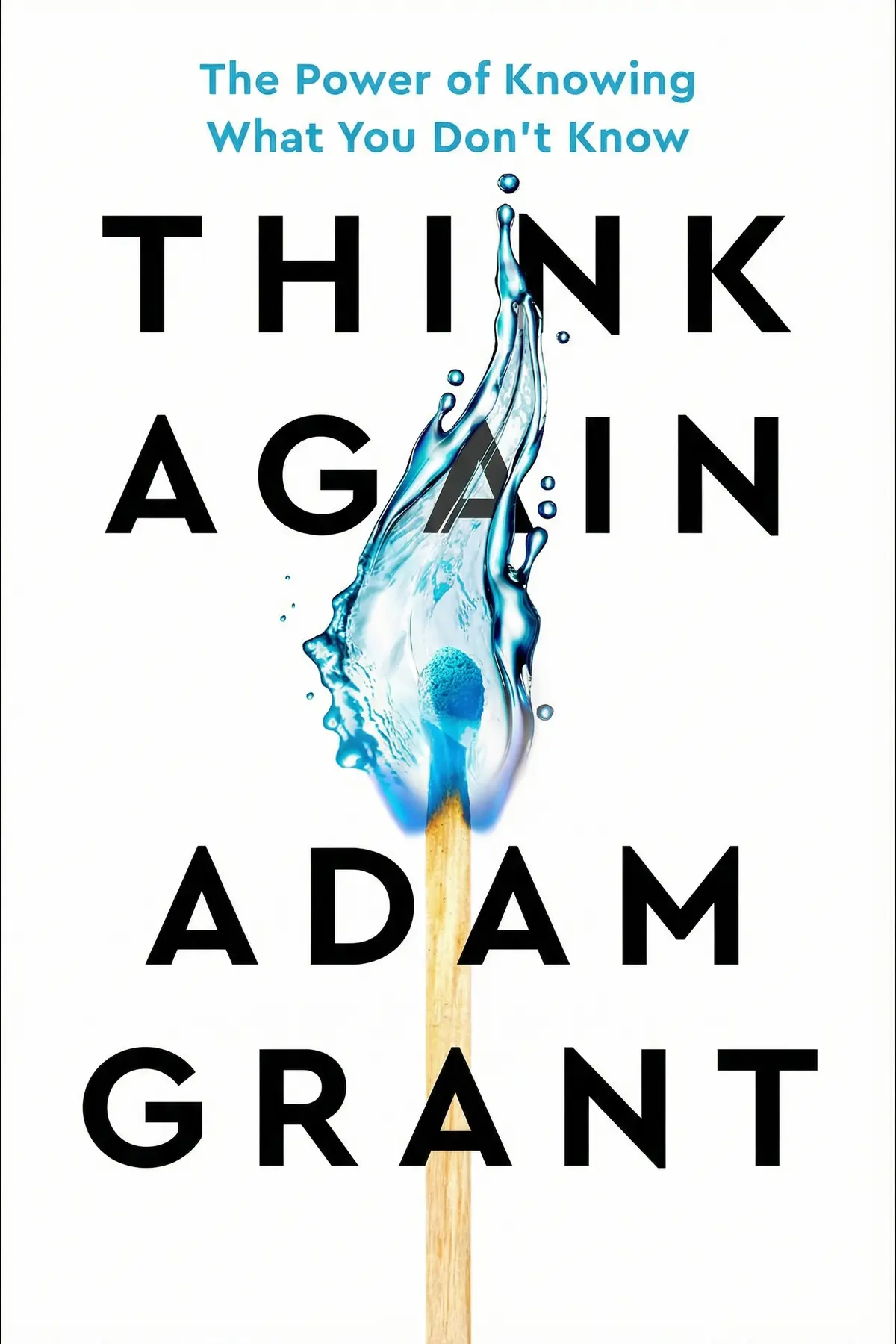
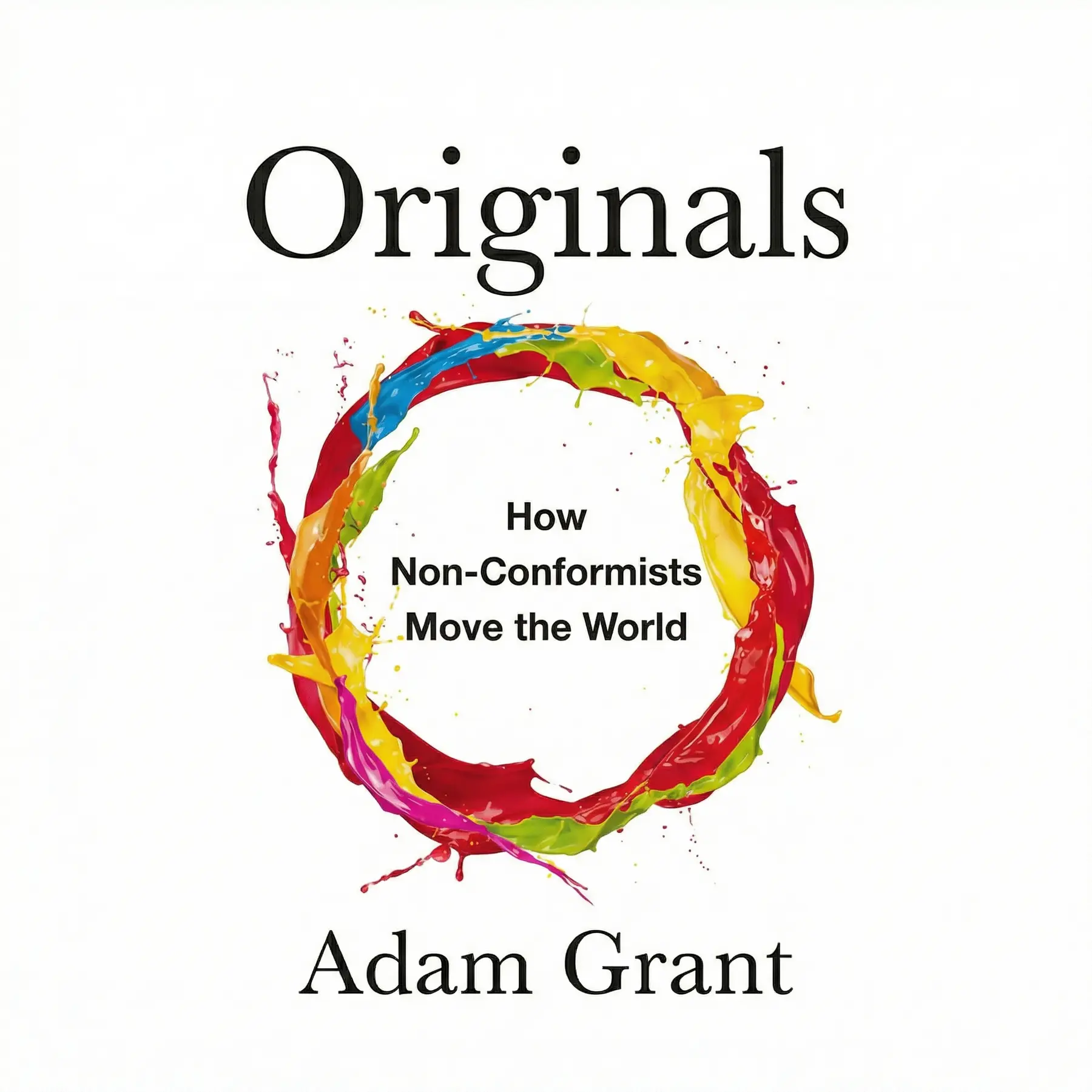
Originals: How Non-Conformists Move the World
By Adam Grant
A guide to breaking the mold and championing new ideas. Adam Grant explores how non-conformists challenge the status quo, manage risk, and use strategic timing to turn original visions into reality.
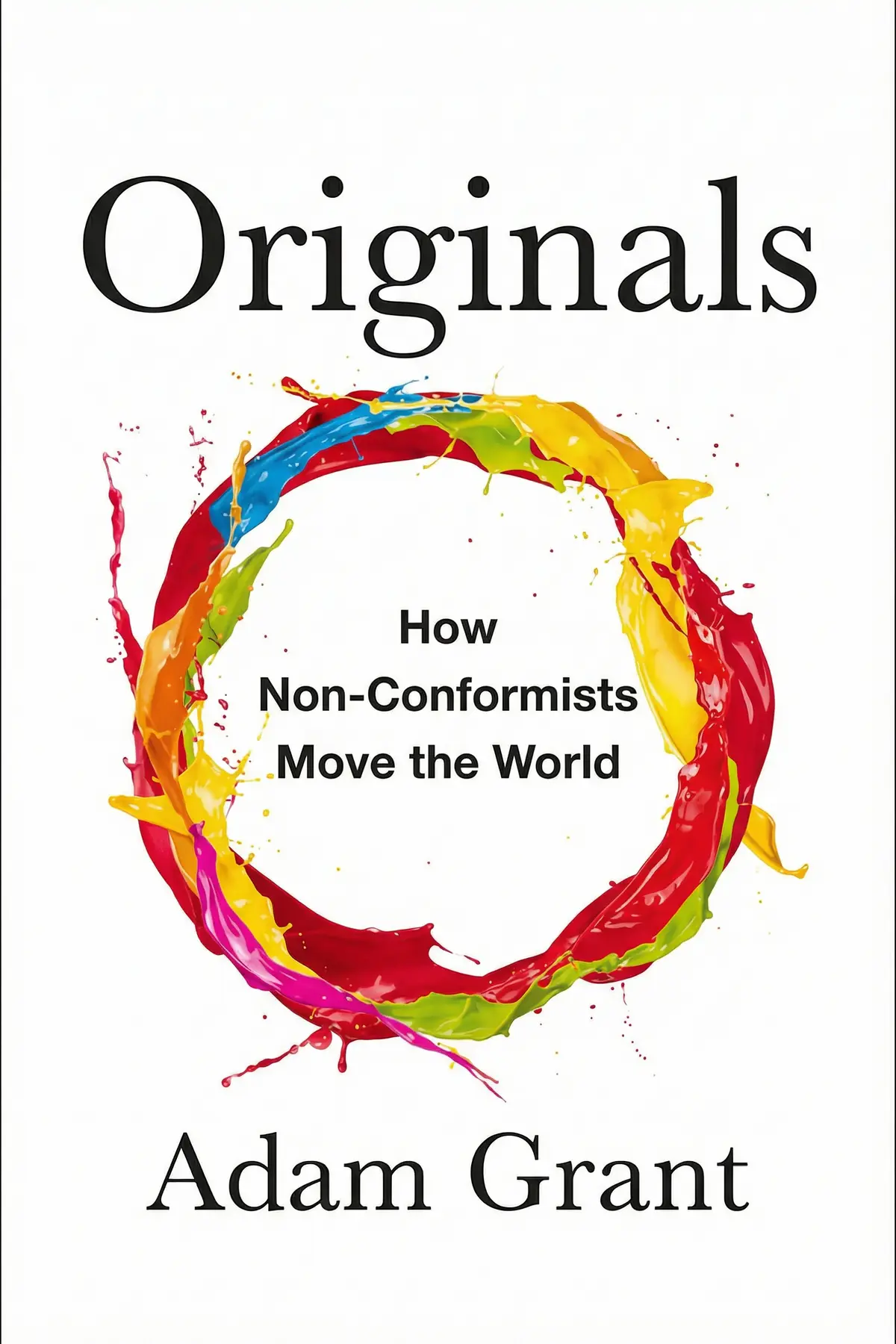
Table of Content
1. Introduction
1 min 38 sec
We often operate under the assumption that the world is divided into two groups: the leaders who create the future and the followers who simply inhabit it. We imagine that the people who change the course of history or disrupt entire industries possess a rare, almost magical quality. We call them ‘originals.’ But what does that really mean? Is originality an innate gift, or is it a set of behaviors that anyone can learn to adopt?
In this exploration of non-conformity, we move past the surface-level idea of eccentricity. True originality isn’t just about having a weird idea; it’s about the initiative to bring that idea into existence. It is about the courage to look at the ‘default’ settings of life—the rules, the traditions, and the standard operating procedures—and ask why they have to stay that way. The throughline here is simple but profound: the most successful innovators aren’t necessarily the ones who jump into the deep end without a life vest. Instead, they are the ones who manage their risks carefully, wait for the right moment, and understand the psychology of the people they are trying to convince.
Over the course of this summary, we are going to deconstruct the myths of the lone genius. We will see how small choices, like which internet browser you use, can be a predictor of your career success. We’ll look at why the most prolific creators are often the ones with the most failures, and why procrastinating might actually be your greatest creative asset. By the end, you’ll see that being an original isn’t about being the loudest person in the room—it’s about being the one who refuses to accept that the way things are is the only way they can ever be. Let’s dive into the habits and strategies that allow non-conformists to move the world.
2. The Power of Rejecting the Default
2 min 20 sec
Could your choice of internet browser predict your professional success? Discover how the simple act of looking for a better option reveals a fundamental trait of the original thinker.
3. Quantity as the Path to Quality
2 min 20 sec
Forget the myth of the one-hit wonder. Learn why the world’s most famous creators were also the most prolific, and why generating ‘trash’ is a necessary part of finding gold.
4. The Strategic Use of Procrastination
2 min 22 sec
Putting things off is usually seen as a failure of will, but for an original, it can be a secret weapon that allows ideas to marinate and evolve.
5. Winning Support by Highlighting Flaws
1 min 58 sec
Counterintuitive as it seems, telling people why they shouldn’t buy your idea can actually be the best way to get them to say ‘yes.’
6. Balancing the Radical with the Familiar
1 min 55 sec
Innovation can be terrifying to the average person. To get your boldest ideas accepted, you have to find a way to make them feel like something they already know.
7. Cultivating Productive Dissent
2 min 08 sec
Harmony is often the enemy of innovation. Discover why the best teams are those that actively invite disagreement and reject the comfort of groupthink.
8. Navigating Internal Politics and Alliances
2 min 00 sec
Why do the people most like us often become our fiercest rivals? Learn how to avoid ‘horizontal hostility’ and build the coalitions necessary for change.
9. Conclusion
1 min 44 sec
As we wrap up our look at the world of the original thinker, the most important takeaway is that originality is not a fixed trait that you are born with. It is a set of choices that you make every day. It’s the choice to question a default setting, the choice to keep producing work even when you feel uninspired, and the choice to speak up even when your voice shakes.
Throughout these ideas, we’ve seen that the road to innovation is often paved with things we usually consider negative. We saw that ‘quantity’ is the secret to ‘quality.’ We learned that procrastination can be a sophisticated strategy for creative incubation. We discovered that leading with your weaknesses can build more trust than pretending to be perfect. And we saw that the friction of dissent is the only thing that can protect us from the blindness of groupthink.
If there is one actionable piece of advice to take away, it is this: start looking for the defaults in your life and your work that you have been taking for granted. Whether it’s a policy at the office, a habit in your personal life, or a standard way of doing business in your industry, ask yourself why it exists. If the answer is simply ‘because that’s how it’s always been done,’ then you have found a prime opportunity for originality.
Remember that the people who move the world aren’t the ones who are fearless; they are the ones who feel the fear and move forward anyway, often with a backup plan and a healthy dose of skepticism. By embracing the habits of the non-conformist, you don’t just improve your own life—you contribute to the progress of the world around you. Originality is a muscle. The more you use it to challenge the status quo, the stronger you become, and the more likely you are to see your own unique vision become a reality.
About this book
What is this book about?
This exploration of creativity and change challenges the common myths surrounding innovation. It argues that true originals are not necessarily the reckless risk-takers we imagine them to be. Instead, they are often individuals who balance their unconventional ideas with a surprising amount of caution. By examining the habits of history’s most influential figures, the book reveals that success comes from generating a high volume of work, knowing when to delay action, and learning how to pitch ideas by emphasizing their flaws. The promise of this work is to provide a practical toolkit for anyone who feels like an outsider with a great idea. It covers how to build a culture of dissent that prevents groupthink, how to make radical concepts feel familiar to skeptical audiences, and how to navigate the internal politics of movements. Whether you are an employee looking to improve your company or an entrepreneur trying to disrupt an industry, these insights offer a roadmap for making a meaningful impact without losing your footing.
Book Information
About the Author
Adam Grant
Adam Grant is an acclaimed consultant and public speaker on the topic of human resources and management. Grant’s clients include Google, Goldman Sachs and Disney Pixar; he is an award-winning professor at the Wharton School of the University of Pennsylvania; and he contributes frequently to The New York Times on the topic of workplace psychology.
Ratings & Reviews
Ratings at a glance
What people think
Listeners find this title to be essential reading that offers superb insights and impressive research, resulting in an engaging social-science narrative. The book also delivers strong leadership concepts and actionable advice, complemented by a wealth of motivational stories. Furthermore, listeners value the emphasis on innovation, with one review highlighting its ability to boost both creativity and decision-making skills.
Top reviews
Pakinee
Ever wonder why some people actually change the world while others just talk about it? Grant breaks down the mechanics of non-conformity in a way that feels both rigorous and accessible. Frankly, the most helpful part for me was the section on 'strategic procrastination'—the idea that letting an idea simmer can actually lead to better results than rushing to be a first mover. I’ve always felt guilty about my own delays, but seeing the data on 'settlers' versus 'pioneers' changed my perspective on leadership. The book is packed with inspiring stories, from the Segway's failure to the surprising success of later-born siblings. It’s a must-read for anyone looking to improve their decision-making. My only minor gripe is that the tone can get a bit 'preachy' towards the end, but the practical suggestions for action more than make up for it.
Show moreTun
Picked this up after seeing Grant’s TED talk and it definitely lived up to the hype. What really struck me was how he reframes the concept of the 'genius.' Instead of the lone wolf, he shows how originality is a team sport and depends heavily on how we select and pitch our ideas. The story of Rufus Griscom and his 'anti-pitch' for Babble was a total eye-opener for me. It’s one of those rare books that improves both your creativity and your ability to spot a bad bet before you sink too much time into it. In my experience, most business books are 200 pages of fluff, but this is packed with practical suggestions. Grant makes a compelling case for why we should all be a little more non-conforming.
Show moreLuke
Adam Grant has written a definitive guide for anyone trying to navigate the messy reality of innovation. From the very first chapter, he challenges the dogma of what it takes to succeed. I especially appreciated the deep dive into the organizational blueprints of companies and how they influence long-term survival. The truth is, most of us are afraid to be original because we fear the risk, but Grant proves that the most successful people are those who manage their risks most carefully. It’s a must-read for any manager. The stories are inspiring and the research feels robust enough to back up the big claims. This is easily one of the best books I've read on creativity and decision-making this year.
Show moreThawee
Finally got around to reading this and it’s a total game-changer for my creative process. The way Grant explains how to overcome the 'confirmation bias' when evaluating our own work has already changed how I approach my projects. I loved the practical advice on how to build a 'challenge network' of people who will give you honest, critical feedback. Most books just tell you to 'think outside the box,' but this actually gives you the tools to do it. It’s a powerful social-science read that manages to be both academic and incredibly practical. Every chapter left me with a new suggestion for action. If you’re serious about moving the world with your ideas, start here.
Show morePhichai
As someone who usually avoids the self-help shelf, I found Grant's approach to organizational psychology surprisingly grounded. To be fair, it does follow that familiar social-science formula of an anecdote followed by a study, but the insights into risk portfolios were genuinely fresh. I loved the counterintuitive argument that the most original people aren't reckless gamblers; instead, they are often the most risk-averse, balancing a wild idea with a very stable day job. The writing style is punchy and keeps you engaged throughout. I did find the hand-washing study a bit questionable in its methodology, but the overarching message about how to champion new ideas is solid. It's a fantastic research-heavy read that actually provides powerful leadership ideas you can use on Monday morning.
Show moreHazel
Not what I expected, but in a good way. I thought this would be another 'follow your passion' manifesto, but it’s actually much more cynical about the myths of success. Frankly, the debunking of the 'first-mover advantage' was worth the price of the book alone. Grant shows that being a 'settler'—someone who enters a market later and improves on the pioneer’s mistakes—is often a much safer and more profitable path. The research is presented in an infotainment style that makes it easy to digest, though some of the transitions between chapters felt a bit forced. It’s a great social-science read for anyone in a leadership position. You’ll walk away with a lot of 'why didn't I think of that?' moments.
Show moreSuphan
While it leans heavily on the Gladwell-esque storytelling style, the data Grant provides on birth order and risk portfolios is fascinating. I’ve read a lot of these pop-psych books, and this one stands out because it focuses on the selection of ideas rather than just the generation of them. We all have ideas, but knowing which ones to kill is the real skill. Personally, I found the section on how to speak truth to power without getting fired particularly useful. The book is earnest and the author’s zest for the subject is contagious. It’s not perfect—some of the studies feel a bit thin—but it’s an entertaining read that offers some genuinely powerful leadership ideas.
Show moreBig
This book feels a bit like a greatest hits album of other pop-psychology books you’ve probably already read. Not gonna lie, I was expecting something more 'original' given the title. Grant is a talented writer, and he knows how to weave a narrative, but much of this felt like a mash-up of Gladwell and Pink with a few personal anecdotes thrown in. The chapter on the Segway was interesting, though I felt the analysis of why it failed was a bit surface-level. Truth is, it’s a very US-centric look at entrepreneurship that ignores a lot of the global context of innovation. It’s an easy read and entertaining enough for a flight, but if you’re looking for deep, cutting-edge science, you might be disappointed by how formulaic it becomes. Still, there are some useful nuggets about fostering creativity in teams.
Show morePui
Look, the anecdotes are fun, but I struggled with how much of this felt like a collection of blog posts with very little first-hand research. To be fair, Grant is a great storyteller, and I enjoyed the bits about how doctors responded to different signs for hand-washing. However, I often felt like the evidence was being massaged to fit a specific 'pithy moral.' It’s a pleasantly readable book, but it lacks the detailed critical analysis you’d find in something like 'Thinking Fast and Slow.' It’s definitely aimed at a general audience rather than scientists. If you want a light, entertaining read about success, this fits the bill. Just don’t expect it to be as cutting-edge as the marketing suggests.
Show moreMarasri
The chapter on the 'I Have a Dream' speech really soured the experience for me because it felt so intellectually dishonest. Grant tries to paint MLK as a procrastinator who just ad-libbed his way to greatness, but then hedges so much that the point becomes gibberish. Look, I get that he’s trying to be provocative, but cherry-picking anecdotes to fit a 'counterintuitive' narrative is exactly what’s wrong with this genre. The book is strikingly unoriginal for something claiming to be about originality. It feels like a collection of blog posts designed to be bought by MBA types who love words like 'disruption' but don’t want to do the actual hard work of research. It’s more of a sales pitch than an educational text, and I found the lack of critical analysis frustrating.
Show more
Readers also enjoyed
A Liberated Mind: How to Pivot Toward What Matters
Steven C. Hayes

Acting with Power: Why We Are More Powerful Than We Believe
Deborah Gruenfeld
Age of Propaganda: The Everyday Use and Abuse of Persuasion
Anthony Pratkanis
AUDIO SUMMARY AVAILABLE
Listen to Originals in 15 minutes
Get the key ideas from Originals by Adam Grant, plus 5,000+ more titles in English and Thai.
- 5,000+ titles
- Listen as much as you want
- 7-day free trial
- Cancel anytime







