
17 min 30 sec
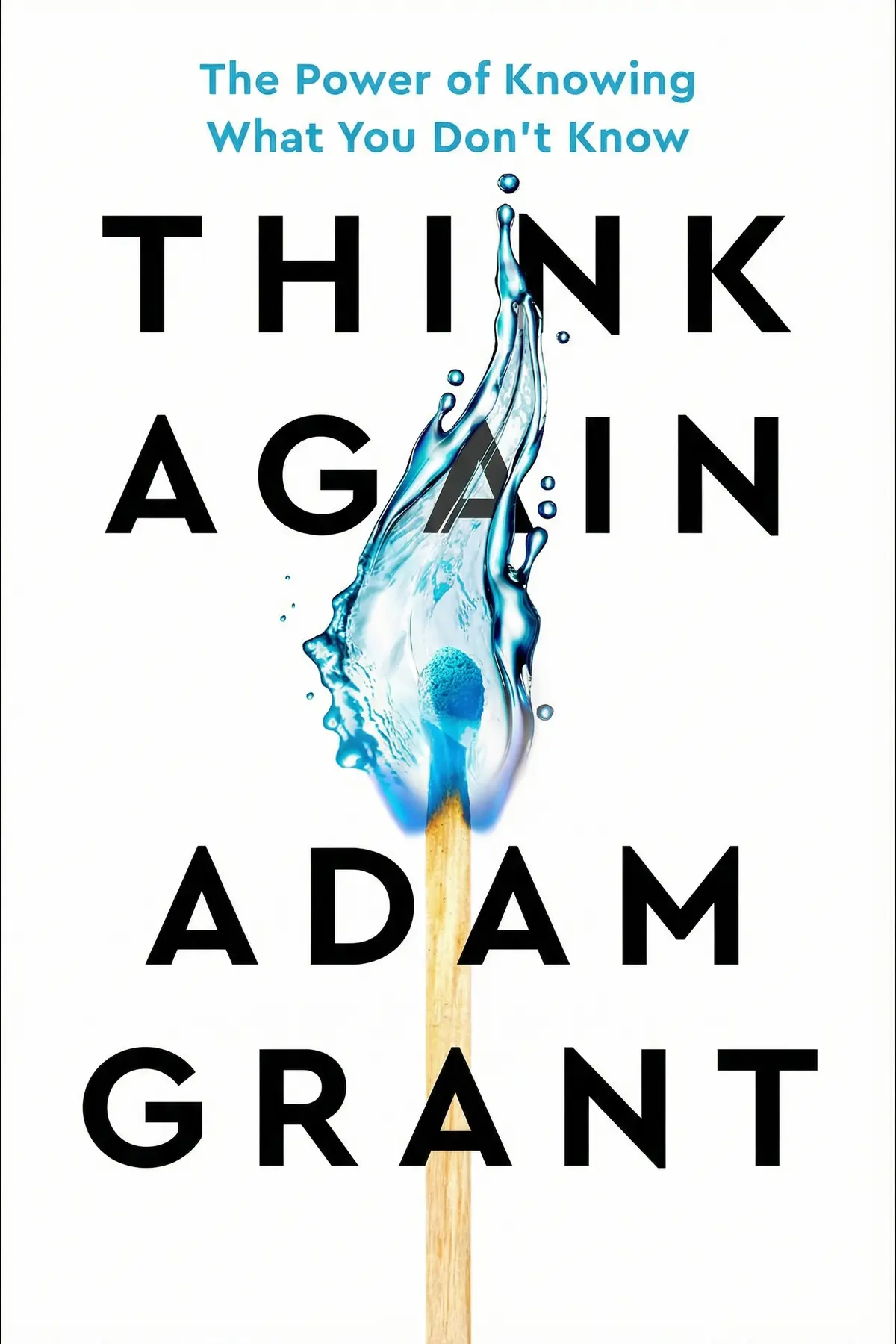
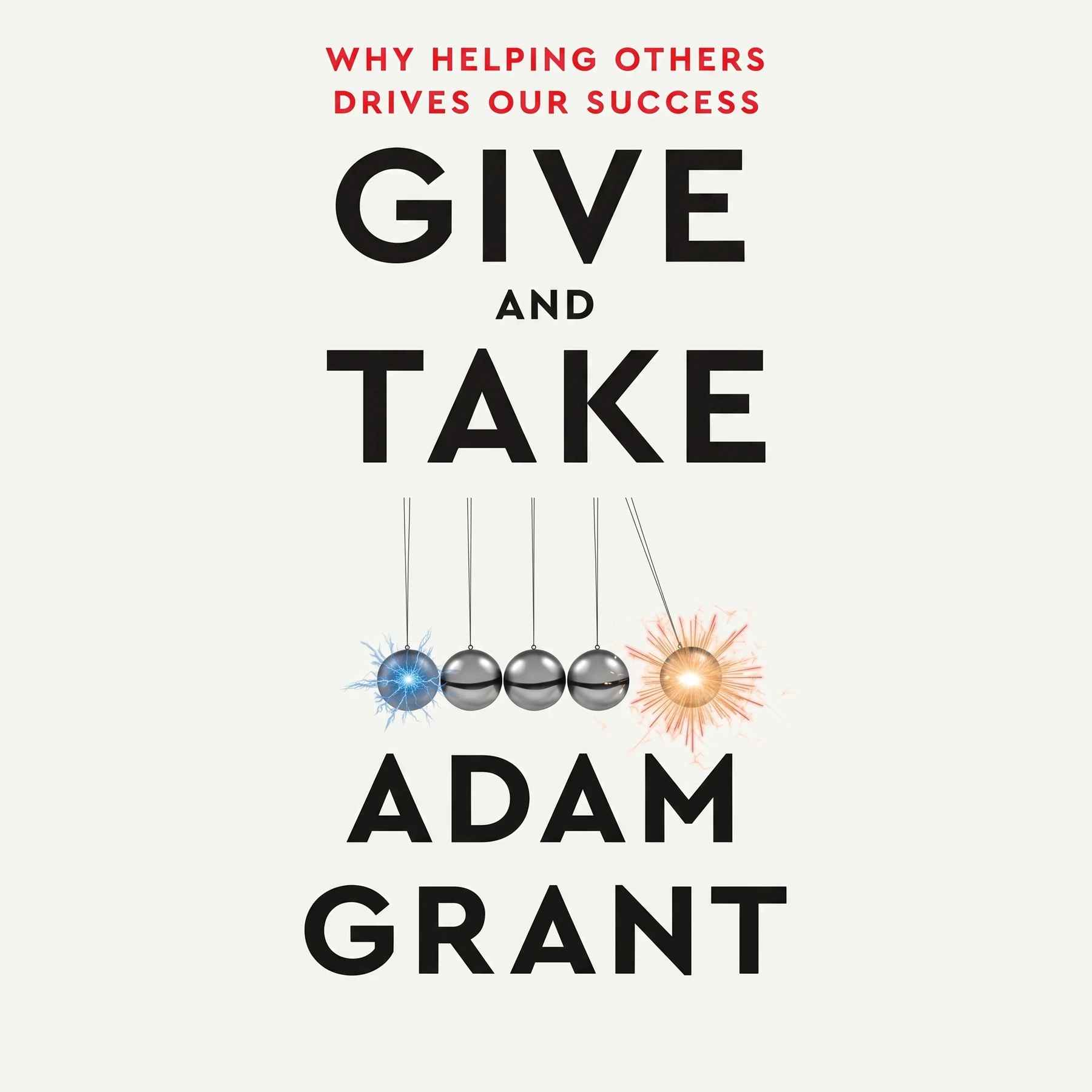
Give and Take: Why Helping Others Drives Our Success
By Adam Grant
Give and Take challenges the traditional view that success requires ruthless competition. Adam Grant reveals how generosity and helping others can actually become the most effective path to reaching the top of your profession.
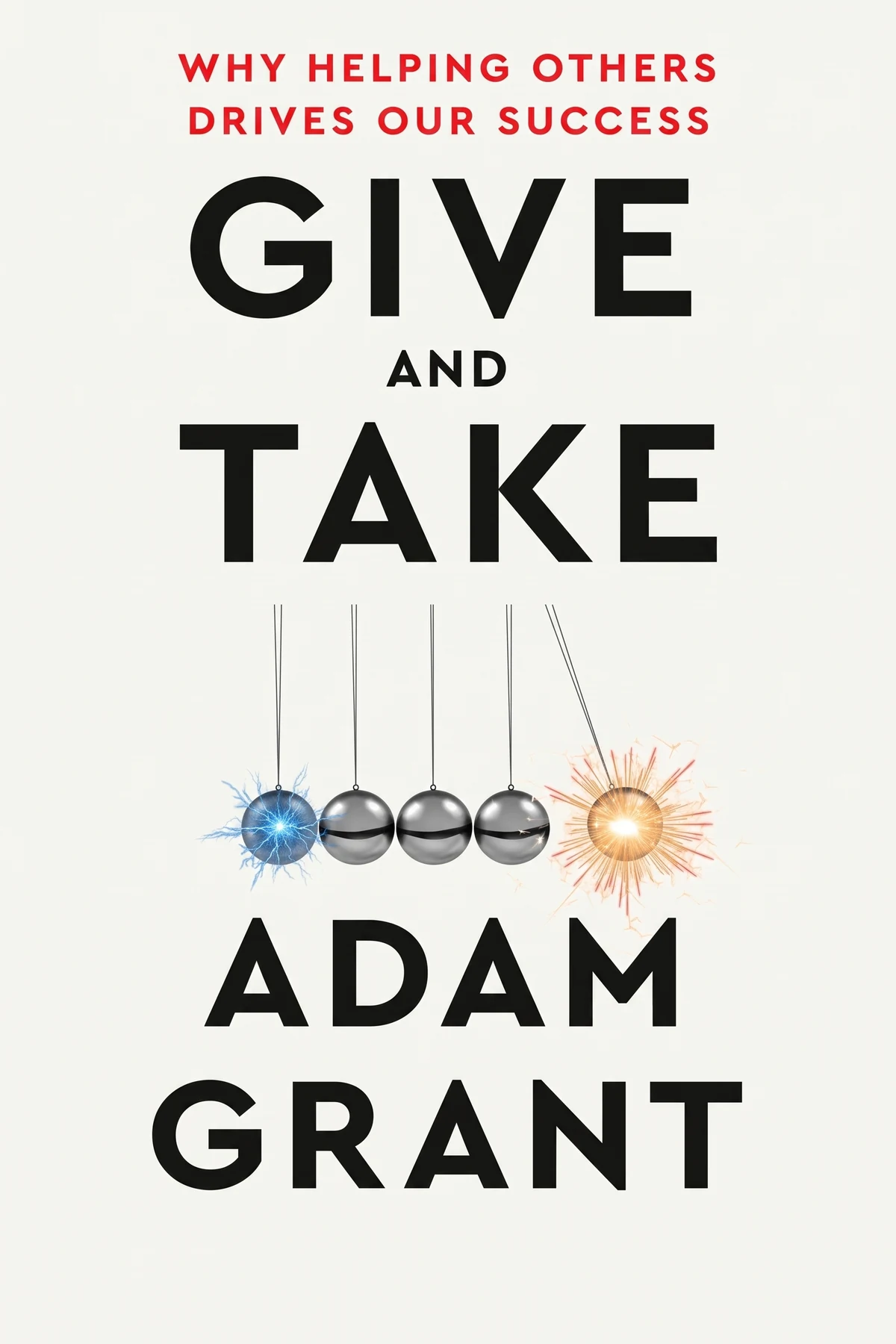
Table of Content
1. Introduction
1 min 33 sec
In our modern, high-pressure world, there is a persistent myth that the only way to get ahead is to look out for number one. We are often told that business is a dog-eat-dog environment where those who take the most end up with the biggest prizes. But what if that conventional wisdom is fundamentally flawed? What if the most effective path to success isn’t about self-promotion, but about something far more counter-intuitive: helping others succeed?
This is the central premise we are exploring today. We are diving into a world where the traditional hierarchy of success is turned on its head. Most people operate on a spectrum of reciprocity—how we handle our interactions with others and how we balance our own interests against the needs of those around us. As we navigate through these ideas, we will see that our personal style of giving or taking doesn’t just reflect our character; it actually predicts our potential for long-term achievement.
We will examine the three main archetypes of human interaction: the takers who see every exchange as a win-lose battle, the matchers who keep a strict ledger of favors, and the givers who contribute without an immediate expectation of return. While it might seem that givers are destined to be exploited, the data suggests a different story. By understanding the mechanics of how givers build networks, communicate, and identify talent, we can see why they often find themselves at both the bottom and the very top of the success ladder. The goal of our journey today is to understand how to move toward that upper echelon of ‘successful giving’—where helping others becomes the engine for our own growth and the growth of our entire community.
2. The Three Lenses of Reciprocity
2 min 10 sec
Discover the fundamental ways people interact with others and how these reciprocity styles—taking, giving, or matching—set the stage for every professional and personal relationship you will ever have.
3. The Hidden Tax on Selfishness
1 min 52 sec
Uncover the long-term consequences of a taker’s mindset and see how the collective ‘taker tax’ eventually dismantles the reputations of those who only look out for themselves.
4. Why the Giver’s Strategy Wins the Long Game
1 min 43 sec
Explore how givers achieve top-tier success by focusing on the greater good, turning their selfless actions into a powerful engine for institutional and personal advancement.
5. The Environmental Influence on Giving
1 min 37 sec
Learn how the people around us and the communities we join can fundamentally shift our natural tendencies toward being more generous or more guarded.
6. The Strength of Dormant Ties
1 min 45 sec
See how givers maintain vibrant, expansive networks by building trust that lasts for years, allowing them to tap into resources that takers simply cannot access.
7. Finding Diamonds in the Rough
1 min 40 sec
Explore how the giver’s tendency to assume potential in everyone allows them to discover and develop talent that others often overlook.
8. The Power of Vulnerable Communication
1 min 43 sec
Learn why ‘powerless communication’—asking questions and seeking advice—is often more persuasive than the assertive, domineering style we usually associate with success.
9. Sustainable Giving and the Impact of Service
1 min 51 sec
Discover how to avoid the ‘doormat’ trap by learning the strategies that keep givers energized, protected, and effective over the long term.
10. Conclusion
1 min 36 sec
As we wrap up our look into the dynamics of reciprocity, the takeaway is clear: the way we treat others is the single most important factor in our long-term success. While the world may often seem to reward the loud, the assertive, and the self-serving, those rewards are frequently temporary and come at a high social cost. The true peaks of achievement are reserved for those who understand that success is a collective endeavor.
We have seen that being a giver isn’t about being a saint or a doormat. It’s about a strategic and sincere commitment to adding value to the people and organizations around us. By building vast networks of trust, seeing potential where others see nothing, and communicating with humility, givers create a unique kind of power. They build a reputation that acts as a safety net when they fail and a catapult when they succeed.
The challenge for all of us is to look at our own lives and ask where we can move from matching or taking toward giving. It might be as simple as a ‘five-minute favor’—an introduction, a piece of advice, or a word of encouragement. It might mean changing how we lead a team or how we mentor a student. The evidence shows that when we shift our focus from ‘What can I get?’ to ‘What can I contribute?’, we don’t just help others. We unlock a more sustainable, more fulfilling, and ultimately more successful version of ourselves. In the end, the pie isn’t limited. By giving more, we help everyone—including ourselves—get a larger slice of a much bigger pie.
About this book
What is this book about?
This exploration of organizational psychology examines how our fundamental styles of social interaction—giving, taking, or matching—dictate our professional trajectories and personal fulfillment. It moves beyond the simplistic 'nice guys finish last' trope to demonstrate that while some givers do struggle, the most successful people in many fields are those who prioritize the needs of others. Through a blend of historical anecdotes and modern research, the book offers a new framework for understanding networking, collaboration, and influence. It provides a blueprint for how individuals can achieve excellence without being selfish, showing that creating value for the collective often results in the highest rewards for the individual.
Book Information
About the Author
Adam Grant
Adam Grant is an award-winning organizational psychologist and a professor at Wharton Business School. He has over 60 journal publications and has presented for many prestigious organizations, such as Google, Facebook and the United Nations.
Ratings & Reviews
Ratings at a glance
What people think
Listeners find this title to be a vital resource for business majors, offering well-supported insights that blend authentic anecdotes and personal history with academic theory. The narrative is engaging, and listeners value the actionable tips for enhancing their quality of life. Furthermore, the work is intellectually stimulating; one listener highlighted how it opened their mind to fresh possibilities, while another listener notes it provided clarity regarding their own generous instincts.
Top reviews
Gung
Finally got around to reading this after seeing Grant's TED talk, and it really shifts your perspective on professional success. Not gonna lie, I used to think that you had to be a bit of a shark to get ahead in a competitive industry. This book proves that 'otherish' givers—those who help others but also look out for their own interests—actually end up at the top of the heap. The stories about Adam Rifkin and the power of dormant ties were particularly eye-opening for me. It’s a rare business book that offers a roadmap for being both successful and a decent human being simultaneously. Highly recommended for anyone who feels like they’re constantly being taken advantage of at work.
Show moreNuk
Wow, it’s rare to find a business book that actually makes you want to be a better person instead of just a richer one. Gotta say, the chapter on 'bloomers' and the self-fulfilling prophecy of teacher expectations was incredibly moving and applicable to leadership. It’s fascinating how givers see potential in everyone and how that investment eventually pays off in ways matchers can't replicate. The writing is engaging and flows much faster than your typical academic text. I’ve recommended this to my entire management team because we need more 'reciprocity rings' and less internal competition. It’s a thought-provoking read that genuinely expanded my mind to new possibilities in networking.
Show morePornpimon
Adam Grant has essentially written the modern-day version of 'How to Win Friends and Influence People,' but with actual data to back it up. In my experience, the most successful people I know are the ones who are constantly connecting others without asking for anything in return. Seeing that behavior validated by research was incredibly satisfying and gave me the confidence to keep being helpful. The examples of Freecycle and the power of community norms were especially inspiring. It’s a book that celebrates the best of human nature while providing a shield against those who might try to exploit it. If everyone read this, our work cultures would be significantly healthier and more productive.
Show moreDome
As someone who has always felt like a bit of a pushover in corporate settings, this was a revelation. Personally, I found the distinction between being a 'selfless' giver and an 'otherish' giver to be the most practical takeaway. Grant explains that you don't have to be a doormat to be a kind person; you just need better boundaries. The concept of the 'giver sandwich'—where givers occupy both the bottom and the top of the success ladder—makes so much sense. I’ve already started implementing the 'five-minute favor' rule in my daily workflow. It’s a solid, well-researched guide that helps you understand your own nature without feeling like you need to change your entire personality.
Show moreJun
Ever wonder why the loudest person in the meeting usually gets their way but rarely stays at the top? Look, this book explains that dynamic perfectly by contrasting 'takers' like Ken Lay with genuine 'givers' like David Hornik. I loved the practical tips on how to spot a faker by looking at their LinkedIn recommendations or their use of 'I' versus 'we' in interviews. It’s a must-read for business majors who want to understand the long-term impact of reputation. My only complaint is that it gets a bit repetitive toward the middle. However, the overall message is powerful enough to overlook the occasional fluff. It’s definitely changed how I approach new professional introductions.
Show morePalm
The advice on avoiding burnout is worth the price of the book alone. No doubt, many givers end up exhausted because they don't know how to say no to takers. Grant’s exploration of the sunk-cost fallacy and ego threat was brilliant, especially regarding how takers often double down on bad decisions to save face. I appreciated the practical strategies for protecting your time while still being a helpful resource for your colleagues. The writing style is entertaining and weaves real-life stories with theory in a way that keeps you turning pages. It’s a great tool for anyone in a high-pressure job that involves a lot of emotional labor and collaboration.
Show moreSomchai
Picked this up on a recommendation from a mentor and found it to be a thought-provoking read that challenged my cynical views. Grant weaves real-life stories with psychological theory in a way that remains entertaining throughout. I’ll admit that I found the distinction between 'selfless' and 'otherish' givers particularly useful for my own career development. It explains why some people get exploited while others thrive. While some parts felt a bit repetitive, the practical advice for building a reciprocity-based network is something I can actually use. This is a solid read for anyone starting out in business who wants to maintain their integrity while climbing the ladder.
Show moreNarumon
While I appreciate the optimistic message Grant promotes, I found the heavy reliance on anecdotes a bit frustrating. The author spends a lot of time painting givers as the ultimate victors, but some of the supporting research feels outdated. I wasn't entirely convinced by using LinkedIn connection counts as a primary measure for genuine human connectivity. Truth is, the book feels like it’s bending over backward to prove a point rather than conducting a rigorous investigation. It's a nice sentiment, but the methodology occasionally left me wanting more. I still think it's worth a read for the core idea, just take the 'science' with a grain of salt.
Show moreMia
This book sits in that weird space between rigorous social science and pop psychology. Frankly, it feels a bit like Grant decided on his conclusion first and then cherry-picked the data to support it. The categorization of humans into three static groups—givers, takers, and matchers—is a bit too simplistic for my taste. People are far more complex and context-dependent than this framework suggests. That said, the ideas about avoiding burnout by 'chunking' your giving were quite helpful. I also enjoyed the section on how seeking advice can be a powerful form of influence. It’s a decent read with some good insights, but don't expect a foolproof scientific formula for life.
Show moreWittaya
The premise that being generous leads to wealth feels incredibly out of touch with the reality of many marginalized groups. Grant writes from a position of massive privilege, and most of his examples involve well-off professionals helping other elite individuals. To be fair, he includes one story about a teacher in Philadelphia, but it feels like a token gesture in a book otherwise designed for the C-suite. He also largely ignores how gender socialization makes the 'giver' role an expectation for women rather than a strategic choice. For those of us in social work or non-profits, this feels like business-bro philosophy wrapped in a thin layer of altruism. It’s a very narrow perspective on kindness.
Show more
Readers also enjoyed
Age of Propaganda: The Everyday Use and Abuse of Persuasion
Anthony Pratkanis
59 Seconds: Change Your Life in Under a Minute
Richard Wiseman
60 Seconds & You’re Hired!
Robin Ryan
AUDIO SUMMARY AVAILABLE
Listen to Give and Take in 15 minutes
Get the key ideas from Give and Take by Adam Grant, plus 5,000+ more titles in English and Thai.
- 5,000+ titles
- Listen as much as you want
- 7-day free trial
- Cancel anytime







