
17 min 24 sec
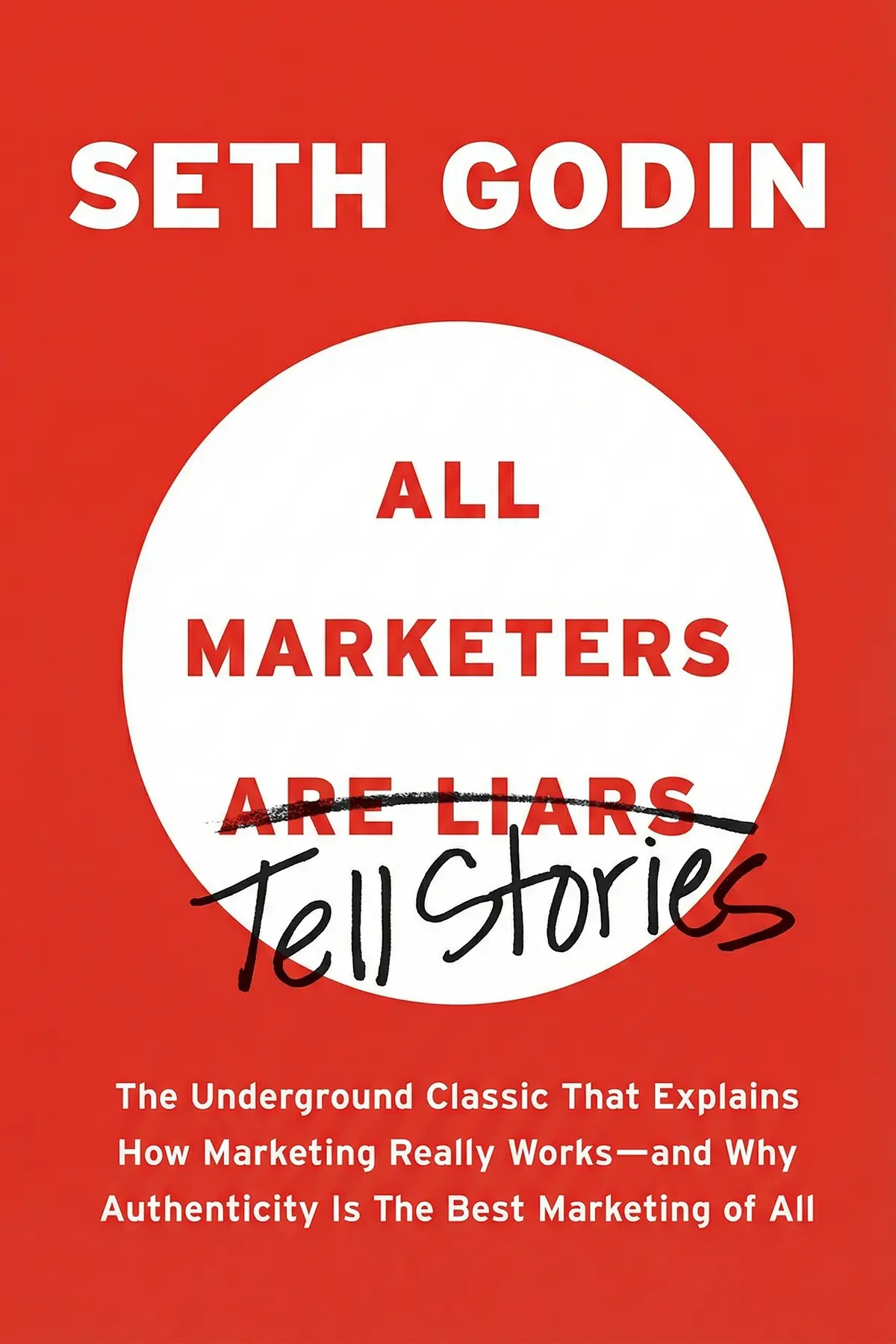
Poke the Box: When Was the Last Time You Did Something for the First Time?
By Seth Godin
Discover how to overcome the fear of failure and embrace the power of initiative. Seth Godin challenges you to stop waiting for permission and start instigating change through curiosity and experimentation.
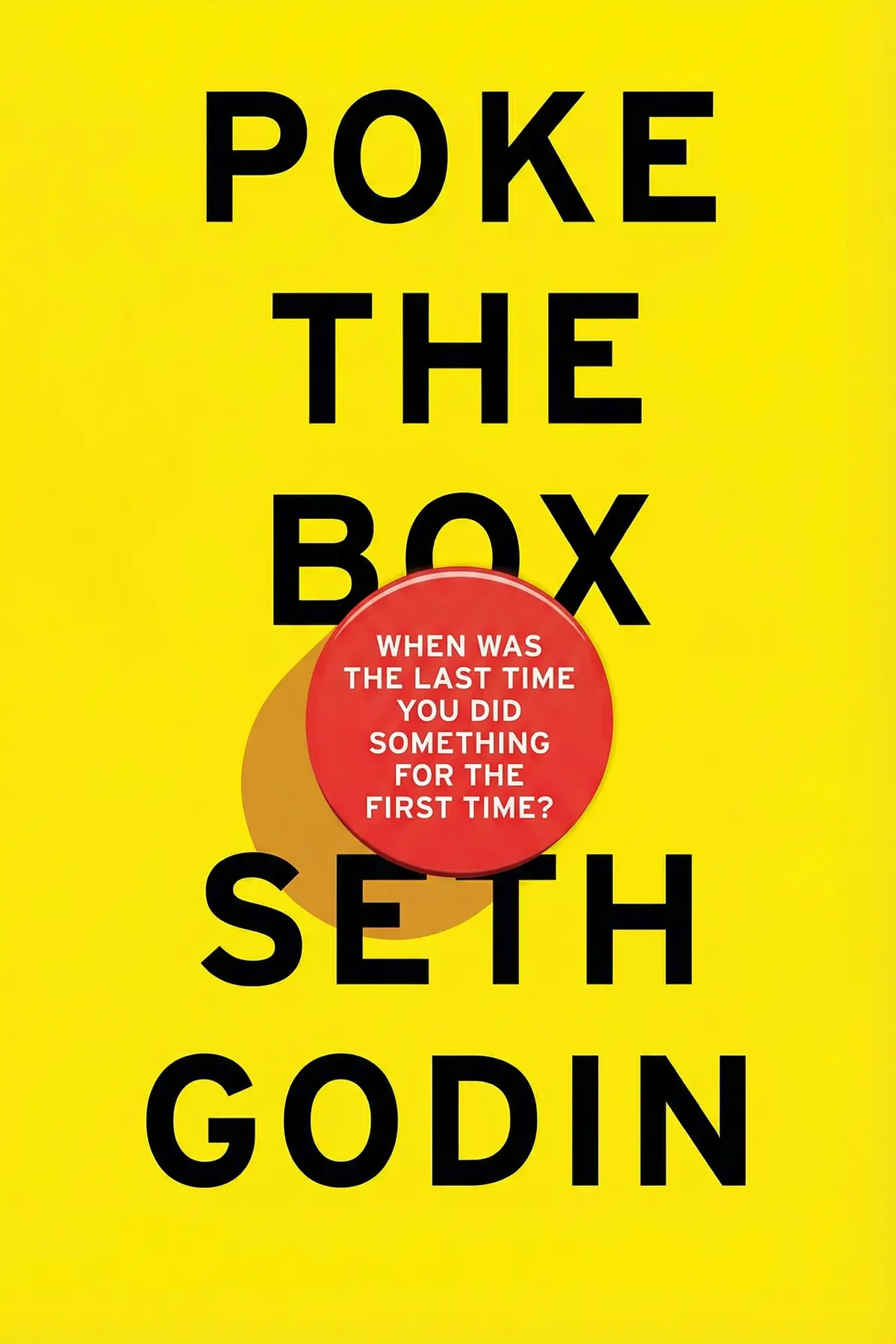
Table of Content
1. Introduction
1 min 41 sec
Imagine you are standing in front of a mysterious black box. There are no instructions, no labels, and no obvious purpose. Most people would walk past it, perhaps casting a curious glance but ultimately deciding it is not their business to interfere. A few might stand and study it from a distance, theorizing about what might happen if they touched a wire or flipped a switch. But there is a rare third group: the people who walk straight up to the box and give it a poke. They want to see what happens. Does it light up? Does it buzz? Does it break? To these individuals, the response from the box—no matter what it is—is far more valuable than the safety of standing still.
In our modern world, we are surrounded by these proverbial boxes. They are new business ventures, creative projects, and internal shifts in how we handle our daily lives. Yet, many of us are paralyzed by the fear that if we poke the box, we might make a mistake. We worry that our ideas are half-baked or that we don’t have enough money or influence to make a real impact. We wait for someone in a position of authority to give us the green light, to tell us that now is the right time to start.
But as Seth Godin explains, the rules of the game have changed. We no longer live in a world where you need a massive factory or a million-dollar loan to make a difference. We live in an era where the most valuable asset you can possess isn’t cash—it’s the willingness to instigate. This is what it means to ‘poke the box.’ It is the act of starting, even when you aren’t sure of the outcome. Over the next few minutes, we’re going to explore how you can cultivate this habit of initiative, why the old barriers to success have crumbled, and how to navigate the inevitable stumbles that come when you decide to become an instigator rather than just a spectator.
2. The Rise of Instigation Capital
2 min 31 sec
Traditional resources like money and status are no longer the primary gates to success. Learn why the drive to start is now the most valuable asset in the modern economy.
3. Poking the Box as a Way of Life
2 min 35 sec
Innovation is not a linear path but a series of experiments. Discover why curiosity and trial-and-error are the only ways to find what works.
4. Making Peace with Failure
2 min 28 sec
The fear of falling often stops us before we even begin. Learn why roadblocks are not signs to stop, but necessary data points on the road to success.
5. The Stamina to Finish
2 min 21 sec
Starting is only half the battle. True innovation requires a culture that supports following through and turning ideas into finished products.
6. Avoiding the Trap of the Overstarter
2 min 34 sec
There is a difference between initiative and impulsivity. Discover how to balance your drive to start with the preparation needed to succeed.
7. The Power of the First Step
2 min 01 sec
The hardest part of any journey is the beginning. Explore why the act of starting is often more important than the quality of the first idea.
8. Conclusion
1 min 13 sec
The core message of this journey is that innovation isn’t a gift reserved for the elite; it’s a habit available to anyone willing to take initiative. In an economy where traditional barriers have fallen, the most valuable currency you have is your ability to start. Poking the box—testing ideas, shipping products, and initiating change—is the only way to navigate a world that is constantly shifting.
We have explored how money and status have been replaced by instigation capital. We’ve seen how failure isn’t the end of the road, but a vital source of information that guides us toward success. We’ve also looked at the critical difference between being a meaningful instigator and a frantic overstarter. The path forward requires a blend of bold curiosity, deep preparation, and the stamina to finish what you began.
So, think about that project you’ve been shelving or that idea you’ve been afraid to mention. Stop waiting for a sign or a permission slip. The box is sitting right in front of you, filled with untapped potential. The lights are ready to flash, and the buzzers are ready to sound, but they won’t do anything until you take action. It’s time to step up, reach out, and give the box a poke. See what happens. The world is waiting for your move.
About this book
What is this book about?
Have you ever wondered why some people seem to launch successful project after successful project while others remain stuck in the planning phase? This summary explores the core philosophy of 'poking the box'—the act of initiating, testing, and shipping ideas in an economy that prizes action over traditional resources. You will learn about the concept of instigation capital and why it has become more valuable than money or status. Through real-world examples ranging from world-champion poker players to indie rock bands, the book demonstrates how failure is an essential part of the discovery process. It provides a roadmap for moving past the internal resistance that keeps ideas dormant and offers a clear-eyed look at the difference between being a creative initiator and a disorganized overstarter.
Book Information
About the Author
Seth Godin
Seth Godin is the former vice president of direct marketing at Yahoo! and the current CEO and founder of Squidoo.com. He is also the author of the world’s most popular marketing blog, as well as over a dozen internationally bestselling books, many of which have shifted the way people think about marketing. These books include Unleashing the Ideavirus, Tribes and Linchpin.

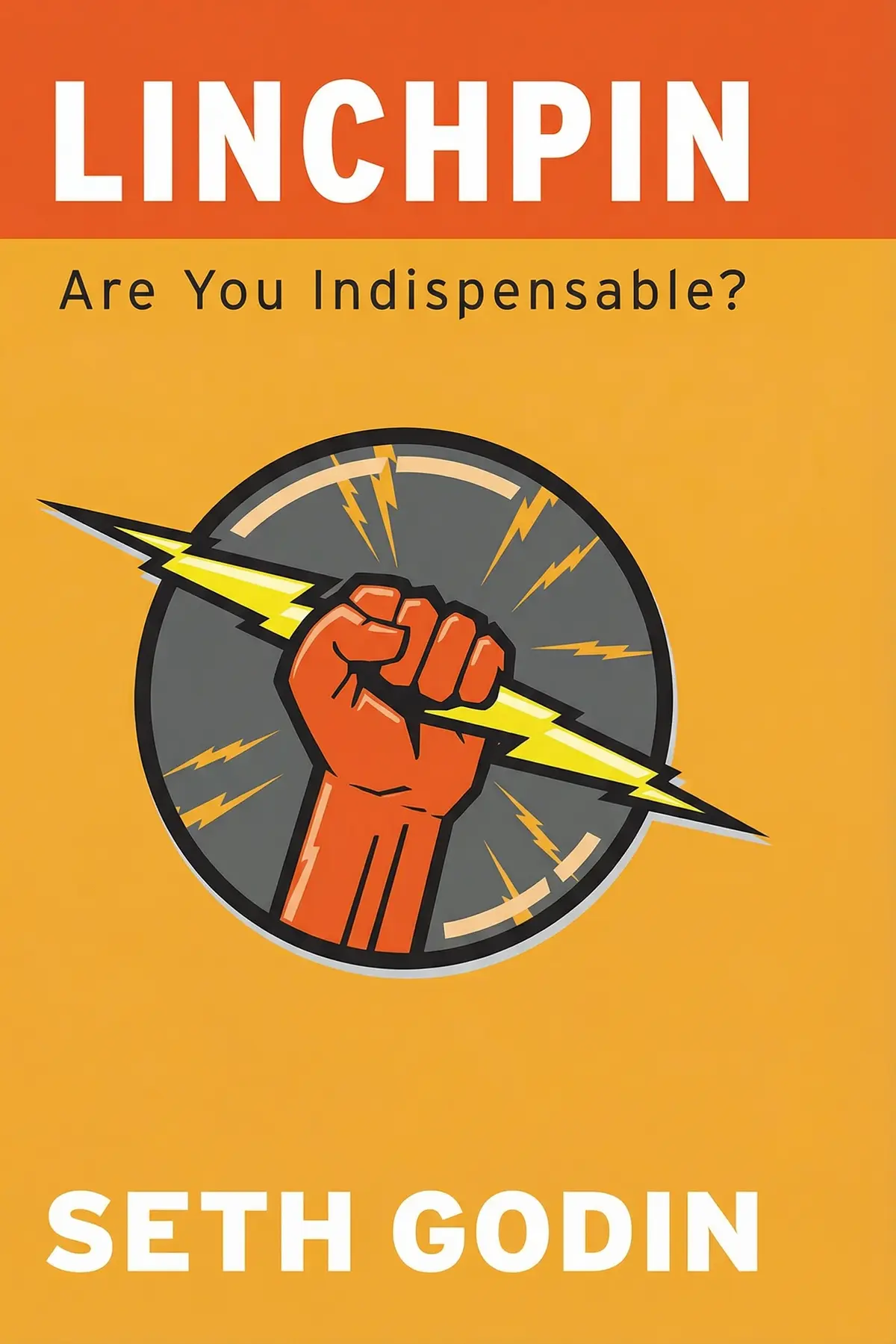
Linchpin: Are You Indispensable?
Seth Godin

The Practice: Shipping Creative Work
Seth Godin

This Is Strategy: Make Better Plans
Seth Godin
Tribes: We Need You to Lead Us
Seth Godin

Ratings & Reviews
Ratings at a glance
What people think
Listeners find this work by Seth Godin to be a swift and captivating listen, packed with significant observations and stimulating concepts that nudge them into taking initiative. This purposefully concise and articulate book translates complex business theories into accessible ideas. The guidance is highly regarded; one listener mentions it's useful on every page, and another finds it particularly helpful for work-related book clubs.
Top reviews
Yam
Picked this up during a lull in my career and it was exactly the spark I needed. The concept of the 'buzzer box' is such a simple, perfect metaphor for how we should approach life and work. We spend so much time fearing the buzzer that we never bother to see what happens when we flip the switch! Seth Godin is a master at making complex business psychology feel like common sense. Not gonna lie, I was the person waiting to be 'picked' for a promotion, but this book convinced me to pick myself instead. It’s short, punchy, and provides meaningful insights on every single page. If you need a kick in the pants to start that project you’ve been shelving, this is the one.
Show moreAnawin
Wow, Seth really knows how to get under your skin and make you feel guilty for playing it safe. This isn't a book you read for pleasure; it’s a book you read to be prodded into action. The central theme is that the world doesn't need more followers; it needs people who are willing to poke the box and see what happens. I loved the emphasis on 'shipping' your work, even when it’s not perfect. In my experience, waiting for perfection is just another word for being scared. This book is a short, sharp shock to the system. It’s the ultimate antidote to the 'let me think about it' mentality that kills so many great ideas.
Show moreAroon
Ever wonder why you’re stuck in the same routine while others seem to thrive? Godin suggests it’s because most of us are waiting for a map that doesn’t exist. This book is a loud, clear call to draw your own map instead of following someone else’s faded lines. The writing is punchy, intentionally short, and designed to make you feel uncomfortable about your own stagnation. While some might find the constant repetition annoying, I think the constant 'poking' is necessary to break through our natural resistance. It’s not just for CEOs; it’s for anyone who has been afraid to hit the 'send' button on a new project. I finished it in one sitting and felt genuinely fired up to initiate something new.
Show moreJack
As an entrepreneur who struggles with 'lizard brain' hesitation, I found this to be a quick, punchy reminder that the cost of not starting is usually higher than the cost of failure. We often treat failure like a fatal event, but Godin rebrands it as a necessary data point in the 'poking' process. The text is broken into these small, digestible bursts that make the complex principles of innovation feel accessible. Our work-related book club had a fantastic discussion about this, particularly the idea that we have a moral obligation to share our ideas with the world rather than 'stealing' them by staying silent. It’s not a deep dive into business mechanics, but it’s a great psychological tool for anyone afraid of making a ruckus.
Show moreFon
After hearing so much hype about the 'Godin method,' I finally dove into this short manifesto. Frankly, I was surprised by how much I enjoyed the minimalist style. It reads like a series of interconnected blog posts, which might bother some, but it works perfectly for a book meant to inspire movement rather than academic study. The advice about ignoring the 'tyranny of being picked' really resonated with me. We are so conditioned to wait for permission that we forget we can just start. It’s an engaging read that manages to distill complex business principles into something a child could understand. Perfect for a quick Sunday afternoon read to get you ready for Monday morning.
Show moreSarocha
Look, this isn't a technical manual for starting a business, and anyone expecting a 10-step plan will be disappointed. Instead, it’s a psychological reset. It focuses heavily on the 'initiator'—the person who starts things—and why they are the most valuable asset in any organization today. I found the section on 'intellectual integrity' to be particularly thought-provoking. It challenges the reader to consider whether they are actually contributing or just occupying space. The book is intentionally short, which I appreciate because it doesn't waste time with fluff, even if the main point is repeated often. It’s a great piece of encouragement for anyone feeling stuck in a 'factory' mindset and needing a push.
Show moreBird
Finally got around to reading this for our office book club and it sparked the most intense conversation we've had all year. We realized how much of our time is spent waiting for instructions instead of just poking the box to see if we can improve our internal processes. It’s rare to find a business book that is this engaging without being bogged down in charts and data. Seth’s writing is evocative and forces you to confront your own deep-seated fears about failure. Whether you’re an artist, a middle manager, or a student, the message is universal: stop waiting for the perfect moment. Start now. This book is essentially a permission slip to go out and make a mess.
Show moreAria
Let's call this what it really is: a blog post that got way too big for its britches. Seth Godin is a brilliant marketer, but here he just takes a single, solitary idea—that you should start things even if you might fail—and hammers it until the reader is dizzy. It’s a manifesto, sure, but the lack of organization makes it feel like a transcript of a frantic late-night rant. I get the 'poking the box' metaphor, truly. However, reading 'go' and 'ship' a hundred times doesn't actually provide a concrete strategy for those of us in the real world. At least it's a very fast read. If you’ve read his blog consistently, you have basically already finished this book without buying it.
Show moreKung
To be fair, Godin has a singular point that is absolutely worth hearing, but he shouts it for 100 pages. The core message—taking initiative is the only way to remain relevant in a changing economy—is powerful. But does it need an entire book? Probably not. It feels like a very long motivational poster with better typography. I appreciated the sections on the 'lizard brain' and how it sabotages our initiative, though much of this was covered better in his previous work. It’s a decent enough read for a flight or a commute, but don't expect deep case studies or a 'how-to' guide. It’s more of a 'why-to' that gets a bit redundant by the final chapter.
Show moreAey
The central metaphor of a 'buzzer box' is charming for the first five minutes, but the novelty wears off fast. Truth is, if you’ve spent more than ten minutes in a corporate environment or ever tried to start a side hustle, you already know that taking initiative is important. Godin doesn't offer much beyond 'just do it' in different fonts and shorter sentences. It felt incredibly repetitive, and the tone bordered on elitist at times, speaking as if everyone has the luxury to fail repeatedly without consequence. While there are a few nice anecdotes about SNL and innovation, they don't justify the price of a full book. You’re better off just reading his daily email for a week.
Show moreReaders also enjoyed


Be Obsessed or Be Average
Grant Cardone

Be Useful: Seven Tools for Life
Arnold Schwarzenegger


Can’t Hurt Me: Master Your Mind and Defy the Odds
David Goggins
Discipline Equals Freedom: Field Manual
Jocko Willink
AUDIO SUMMARY AVAILABLE
Listen to Poke the Box in 15 minutes
Get the key ideas from Poke the Box by Seth Godin, plus 5,000+ more titles in English and Thai.
- 5,000+ titles
- Listen as much as you want
- 7-day free trial
- Cancel anytime







