
21 min 47 sec
The Practice: Shipping Creative Work
By Seth Godin
The Practice challenges the myth of the lone genius, arguing that creativity is a professional skill rooted in consistent process rather than fleeting inspiration or unpredictable bolts of lightning.
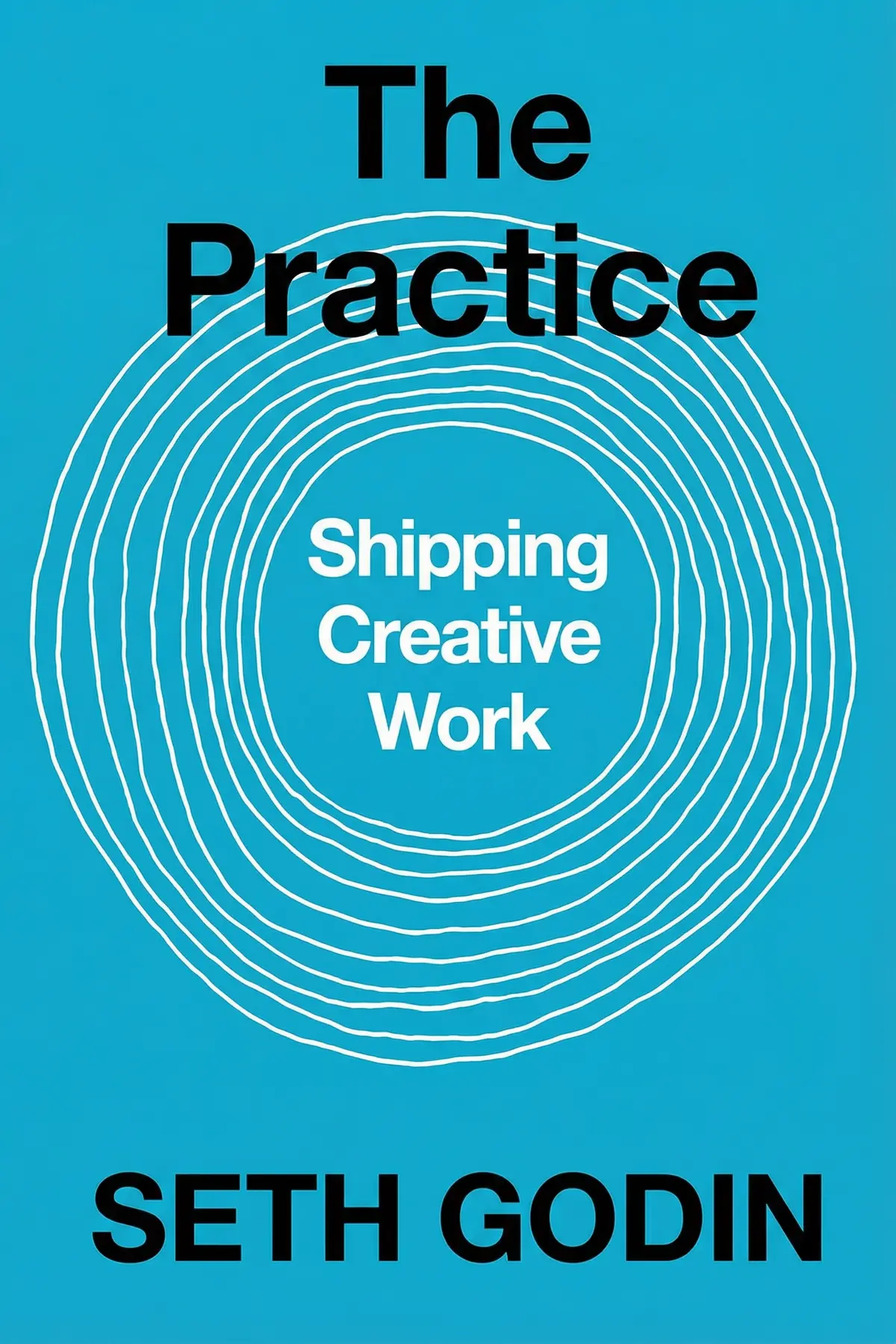
Table of Content
1. Introduction
1 min 59 sec
Have you ever found yourself waiting? Waiting for the perfect idea to strike, waiting for the right moment to start, or waiting until you feel ‘ready’ to call yourself a professional? Most of us grew up believing that creativity is a magical, elusive force. We imagine the great painters or inventors sitting in silence until a bolt of lightning hits them, resulting in a masterpiece. But the reality of creative success is much more grounded, and frankly, much more within your reach than you might think.
In our exploration of Seth Godin’s insights, we are going to dismantle the myth of the ‘natural born’ creative. The truth is that creativity isn’t a gift you are born with; it is a skill you develop through what is known as ‘The Practice.’ This isn’t about luck or waiting for the stars to align. Instead, it’s about establishing a consistent, professional approach to your work that allows you to produce excellence on a regular basis. Whether you are a writer, a designer, a musician, or an entrepreneur, the principles of creative excellence remain the same.
Over the next several minutes, we’re going to look at why the path to success isn’t found in the final product, but in the journey itself. We will explore how to stop being your own worst critic and how to start viewing your work as a generous act of service to others. We’ll talk about why the fear of ‘selling out’ is actually holding you back from making a real difference, and why the most successful people in the world are those who have learned to love their constraints.
This isn’t just about making art; it’s about professionalizing your passion. It’s about learning to ‘ship’ your work—to get it out of your head and into the hands of people who need it. By the end of this summary, you’ll have a new perspective on what it means to be a creator and a set of practical strategies to ensure that your best work doesn’t just stay a dream, but becomes a reality. So, if you’re ready to stop waiting and start doing, let’s dive into the core principles of a professional creative practice.
2. The Power of Process Over Outcome
2 min 11 sec
Success in any creative field begins when you stop obsessing over the finish line and start trusting the steps you take every day.
3. Creativity as an Act of Generosity
2 min 15 sec
Your work only reaches its full potential when it leaves your desk and enters the lives of others, shifting from a private hobby to a public gift.
4. Establishing a Professional Creative Career
2 min 20 sec
Transforming your passion into a profession requires more than talent; it demands an investment in time, value, and high standards.
5. The Necessity of Clear Artistic Intent
2 min 12 sec
Creating with purpose ensures your work resonates deeply, transforming random effort into a targeted force for change.
6. Dismantling Creative Blocks and Perfectionism
2 min 19 sec
The dreaded ‘block’ is often just a mask for the fear of being imperfect; letting go of the need for flaws is the key to unlocking flow.
7. Navigating Criticism and the Act of Shipping
2 min 07 sec
True professionalism is defined by the courage to deliver your work to an audience and the wisdom to distinguish helpful feedback from noise.
8. Strategic Steps Toward Creative Greatness
2 min 19 sec
Reaching the pinnacle of your field isn’t about being a lone genius; it’s about finding your community, honing your unique skill, and staying informed.
9. Embracing Constraints as a Catalyst for Innovation
2 min 09 sec
Limits are not obstacles to creativity; they are the very tools that force us to think more deeply and find more elegant solutions.
10. Conclusion
1 min 56 sec
As we reach the end of our journey through the principles of a professional creative practice, the throughline becomes clear: creativity is not a matter of chance, but a matter of choice. It is a commitment to a process that persists regardless of the outcome. We’ve seen that being a professional isn’t about being perfect; it’s about being present. It’s about showing up day after day, finding your hour, and trusting that the work you do in the quiet moments will eventually speak loudly to the world.
We have explored the importance of shipping—of having the courage to put your work into the hands of others as an act of generosity. We’ve learned that your intent is your guide and that your constraints are your friends. Most importantly, we’ve dismantled the idea that you need to feel ‘inspired’ to create. Inspiration is for amateurs; the rest of us just get to work. When you stop waiting for the perfect idea and start trusting the practice, you unlock a sustainable way to contribute to the world.
So, what is the next step? It’s simple, though not always easy: start. Pick one thing you’ve been holding back on and commit to a small, daily action toward finishing it. Don’t worry about whether it’s good yet; just worry about whether you did it. Remember the lesson of the cartoonist who had a mountain of rejections for every single acceptance. Failure isn’t the opposite of success in creativity; it’s a part of it. The more you ship, the more you learn, and the closer you get to the greatness you envision.
Your work has the power to create change, to offer a new perspective, and to solve problems for the people who need it most. But it can only do those things if you let it out. So, stop waiting for permission, stop fearing the critics, and stop hiding behind perfectionism. Lean into the practice, trust your process, and see where the path takes you. The world is waiting for what you have to offer. It’s time to get to work.
About this book
What is this book about?
Many people view creativity as a mysterious gift that arrives unbidden, but Seth Godin argues that it is actually a disciplined choice. This book provides a roadmap for anyone looking to turn their artistic passion into a professional reality. It moves away from the idea of the 'tortured artist' and toward the 'professional creative'—someone who shows up, does the work, and shares it with the world regardless of how they feel. The core promise of the book is that by focusing on your process rather than your outcomes, you can overcome the resistance that stops most people from ever starting. You will learn how to define your audience, embrace the inevitability of criticism, and find the strength to ship your work even when it feels imperfect. It is a call to action for anyone who has an idea they are too afraid to share, offering the tools to build a sustainable, impactful creative career.
Book Information
About the Author
Seth Godin
Seth Godin is a multifaceted professional who has made his mark as a writer, entrepreneur, teacher, and podcaster. He is recognized globally as a leading authority on the intersection of creativity and entrepreneurship. Godin has authored 19 best-selling books and is the visionary behind the Akimbo workshop platform, designed specifically for creatives and business leaders. He also founded the altMBA, a highly regarded 30-day intensive course that attracts students from around the world.

Linchpin: Are You Indispensable?
Seth Godin


This Is Strategy: Make Better Plans
Seth Godin
Tribes: We Need You to Lead Us
Seth Godin

Ratings & Reviews
Ratings at a glance
What people think
Listeners view this book as both motivational and practical, characterizing it as a life-changing, thought-provoking text that acts as a definitive roadmap for creativity. They find it highly readable and an excellent value, even suggesting it is worth its weight in gold. Listeners value the author's insights, with one listener emphasizing the work's vast breadth and depth, and another explaining how it helps eliminate misconceptions regarding the creative process. While the writing quality and inspiration are widely praised, some listeners mention that the individual sections can feel disconnected.
Top reviews
Wanphen
Finally got around to reading Seth Godin's latest, and it is worth its weight in gold for any aspiring artist. Instead of focusing on the final product, Godin pushes you to fall in love with the daily process. He calls it "shipping," which is basically the act of putting your work out into the world regardless of how you feel about it. It’s incredibly thought-provoking and helps those common misconceptions about "waiting for the muse" dissolve instantly. While the short, snappy paragraphs might feel a bit fast for some, the sheer depth of wisdom found in every page is undeniable. It’s a roadmap to trusting yourself when the outcome is uncertain. I’ve started my own daily streak because of this.
Show moreBee
Wow, this was exactly the kick in the pants I needed to stop overthinking my studio time. Seth Godin has a way of dissolving the mystical aura around creativity and replacing it with something much more practical: a daily streak. He treats art as a generous act, something you do for an audience to help them, not just for your own ego. I found the sections on ignoring outcomes to be life-changing, as I often get paralyzed by how people might react to my work. Not gonna lie, some parts are a bit repetitive, but the repetition serves a purpose here. It’s about hammering home the idea that showing up is 90% of the battle. This is an essential guide.
Show moreAmy
Picked this up during a major creative slump, and it turned out to be the ultimate guide to getting back on track. Godin’s insight into the creative process is unparalleled; he helps you realize that the struggle isn't a sign that you're failing, but a sign that you're doing the work. The concept of "the practice" as an end in itself is a revolutionary way to look at creative output. I love how he demystifies the idea of the "muse" and replaces it with the reliability of a professional habit. It’s worth every penny for the shift in mindset alone. If you’re tired of being stuck, this book will give you the internal tools to move forward.
Show moreMaja
Honestly, I wasn't sure what to expect given the mixed things I’d heard, but this book is a masterpiece of motivation. It’s not just for writers. It is for anyone trying to effect change in their field through the act of 'shipping' creative ideas to the world. Godin’s writing is snappy and substantial. It provides a relentless focus on the process over the results. He reminds us that hoarding our unique voice is actually toxic to ourselves and our community. It’s an infinite game. The goal is simply to keep playing. I found the book to be a high-quality, inspiring guide that helped me view my professional life through a much more generous lens. Truly life-changing stuff.
Show moreMind
As a creative who constantly battles the internal critic, this was a refreshing and much-needed shift in perspective. Godin argues that the "magic" of your art isn't about being a genius; it's about the choice to show up and share what you've made. Truth is, I used to wait for the perfect moment to write, but now I’m learning to embrace the "practice" as the actual goal. Some of the examples, like the one about the DMV versus jazz, felt a little stretched and didn't totally land for me. However, the overall insight into professional vs. amateur habits is brilliant. It’s a book for those who want to stop hiding behind their fears and start making a change.
Show morePrae
Ever wonder why you're stuck in a loop of planning instead of doing? Godin answers that question by exposing our need for reassurance as a form of hiding. The book is a collection of powerful affirmations designed to turn you from a dreamer into a practitioner. It’s not a technical manual, but rather a guide to the psychology of "shipping" work. I particularly liked his take on the "smallest viable audience"—it takes the pressure off trying to please everyone. Personally, I would have liked a bit more implementation advice, but the "what" and "why" are handled with tremendous breadth and depth. It’s a solid read for anyone needing a mindset reset.
Show morePlernpiriya
The chapter on writer’s block alone makes the whole purchase worthwhile for me. Seth Godin challenges the idea that we need to feel "inspired" before we can produce anything meaningful. Instead, he suggests that we write poorly until we write well, emphasizing that the output is simply a byproduct of the habit. Some of the sections felt a little like "toxic positivity" or a bit too much like a "trying-to-be-deep" social media post, which was a turn-off. But if you can look past the fluff, the substance is there. It’s a thought-provoking read that forces you to confront the ways you've been sabotaging your own creativity. It's practical motivation for anyone who feels stuck.
Show moreAnthony
Look, I love Seth’s blog, but this book felt like a massive concatenation of his daily posts rather than a structured narrative. It’s shaped like a book and printed like a book, but the flow is practically non-existent. You could honestly read the chapters in a completely random order and it wouldn't change the impact one bit. There’s a lot of repetition. Trust the process. Ship the work. To be fair, the core message is 10/10, but the delivery is a bit fluffy and motivational-quote-generator-like. If you need a quick jolt of inspiration, it’s great. But don't expect a deep dive into the technicalities of art. It’s more about mindset than a practical how-to guide.
Show moreSukit
To be fair, the core message here is vital, but the delivery is polarizing and often feels a bit like an AI-generated script. I’ve been a fan of Seth for years, but this reads like a hundred blog posts slapped together with some thematic glue. It’s hard to concentrate when the book is laid out in such short, disjointed bursts. Sometimes he says you have to meet genre expectations, but then says don’t surrender to mediocrity, and the bridge between those two points is often missing. Still, the chapter on "No such thing as writer’s block" was quite good. It’s a decent book to keep on your nightstand for a quick morning thought, but it’s not a deep-dive read.
Show moreTaweesak
This feels less like a cohesive book and more like a quote generator designed for social media captions. I found it incredibly fluffy and, frankly, quite frustrating to read in one sitting. One page you’re reading about "the practice," and the next is a random anecdote that feels disconnected from the previous thought. The writing style is so fragmented that it’s hard to build any momentum as a reader. I also struggled with the analogy comparing creating jazz to standing in line at the DMV—it just didn’t make sense and felt like it was trying too hard to be deep. While there are a few decent ideas about writer’s block, it’s mostly just repetitive filler that could have been a single blog post.
Show more
Readers also enjoyed



AUDIO SUMMARY AVAILABLE
Listen to The Practice in 15 minutes
Get the key ideas from The Practice by Seth Godin, plus 5,000+ more titles in English and Thai.
- 5,000+ titles
- Listen as much as you want
- 7-day free trial
- Cancel anytime







