
21 min 01 sec
The Art of Fermentation: With Practical Information on Fermenting Vegetables, Fruits, Grains, Milk, Beans, Meats, and More
The Art of Fermentation is a definitive guide to the ancient and modern world of microbial transformation, exploring how these tiny organisms shape our health, history, and the very air we breathe.
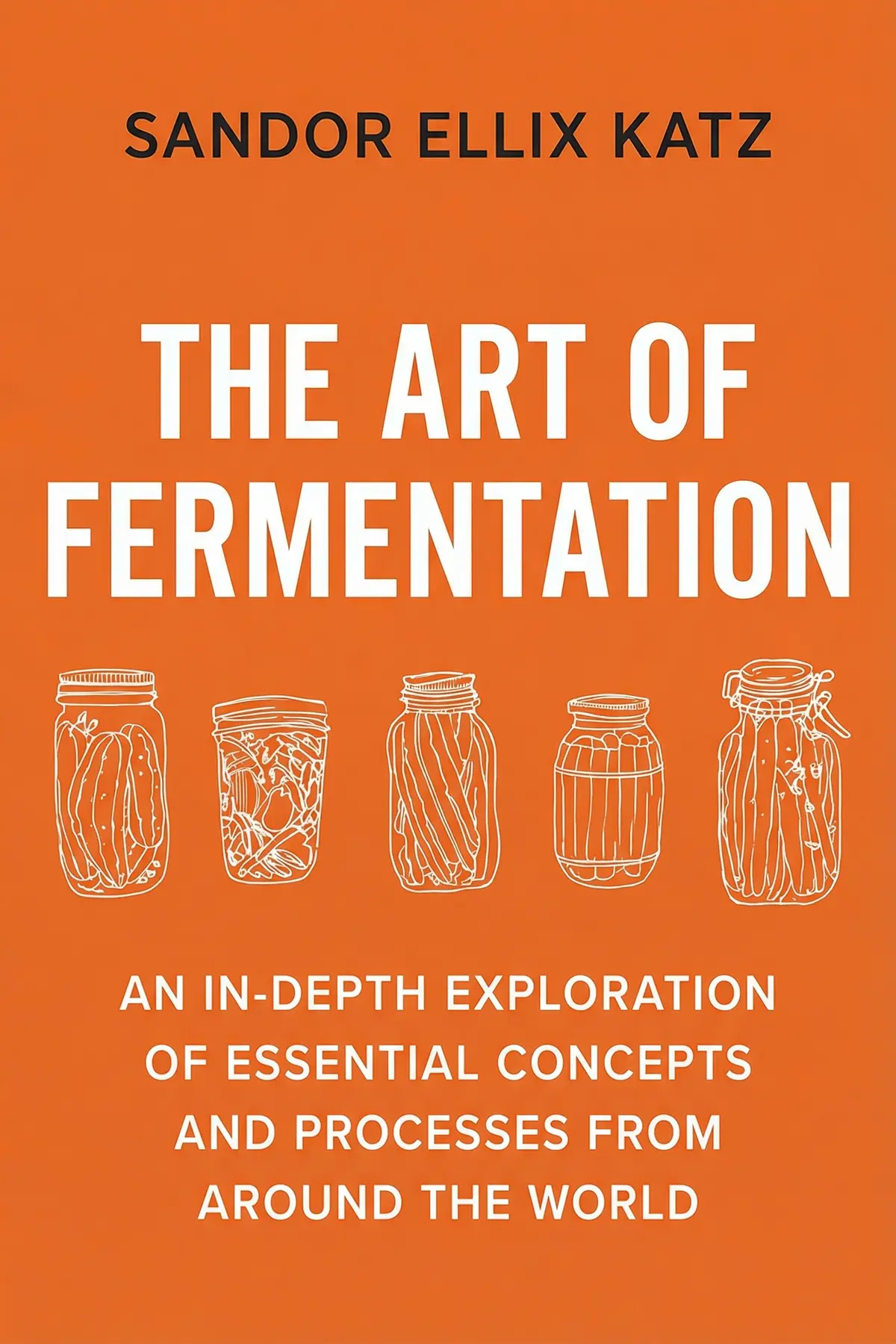
Table of Content
1. Introduction
1 min 51 sec
When we think of fermentation, our minds often jump to the tang of a sourdough starter or the bubbly effervescence of a bottle of kombucha. We might think of it as a culinary trend or a health fad, but as we’ll discover today, fermentation is far more foundational than a mere kitchen hobby. It is, quite literally, the process that made life as we know it possible. It is woven into the fabric of our planet’s history and the very cells that make up our bodies.
In this journey through the world of microbial transformation, we are going to look at fermentation through multiple lenses. We will see it as a primordial energy source that oxygenated our atmosphere. We will view it as a sophisticated human technology that allowed our ancestors to survive harsh winters by preserving the summer’s bounty. And we’ll understand it as a vital biological partnership, where trillions of tiny organisms work inside our guts to unlock nutrients we couldn’t otherwise access.
The central throughline of our discussion is one of coexistence and cooperation. For too long, modern society has viewed the world through a lens of sterilization, treating all bacteria as threats. But by looking at the deep history and practical science of fermentation, we realize that we don’t just live alongside bacteria; we exist because of them. Throughout this summary, we will explore the health-giving properties of traditionally fermented foods, the fascinating biological history of alcohol, and the simple, hands-on techniques you can use to start your own fermentation projects at home. This isn’t just about making pickles; it’s about reclaiming a lost connection to the living world that sustains us. Let’s dive into how these invisible microbes have shaped every facet of life on Earth.
2. The Evolutionary Power of Anaerobic Life
2 min 09 sec
Discover how the very first organisms on Earth used fermentation to survive in an oxygen-free world and how their interactions eventually created the air we breathe.
3. The Body as a Teeming Microbial Landscape
2 min 11 sec
Explore the staggering scale of the human microbiome and learn why we are more accurately described as ecosystems than as single individuals.
4. Biological Defense Systems through Fermentation
2 min 03 sec
Understand how specific bacteria use fermentation to create protective environments that shield us from disease and maintain our reproductive health.
5. Unlocking Nutrients and Detoxifying the Diet
2 min 03 sec
Learn how fermentation acts as a form of ‘pre-digestion,’ making foods safer to eat and significantly more nutritious.
6. Fermentation as a Global Survival Technology
2 min 13 sec
Discover why fermentation is a more sophisticated form of food storage than animal instincts, helping humans thrive in every climate on Earth.
7. The Biological Roots of Our Love for Alcohol
2 min 07 sec
Think alcohol is a human invention? Think again. Explore the ancient relationship between yeast, fruit, and the animal kingdom.
8. The Craft of Cultivating Microbes at Home
2 min 16 sec
Demystify the process of making your own ferments with a simple guide to transforming cabbage into a nutritional powerhouse.
9. Understanding the Surface and Managing Growth
2 min 14 sec
Address the common fears about mold and learn how to manage the living environment of your fermentation jars for the best results.
10. Conclusion
1 min 54 sec
As we wrap up our exploration of the microbial world, it’s clear that fermentation is much more than a way to flavor our food. It is a fundamental bridge between the history of our planet and the daily health of our bodies. We have seen how ancient, oxygen-shunning bacteria paved the way for all complex life, and how our own biology is a teeming ecosystem of trillions of microbial partners. We’ve explored the nutritional magic that happens when we allow these tiny organisms to pre-digest our food, making it safer, more accessible, and packed with life-giving vitamins.
We’ve also seen that fermentation is a universal human heritage. It is a technology of survival that has allowed us to overcome the challenges of our environment, from the heat of the tropics to the cold of the north. And we’ve recognized that our affinity for the products of fermentation—including the ancient tradition of alcohol—is rooted in our very DNA. This isn’t just science; it’s a connection to the natural world that we have, in many ways, forgotten in our modern, sterilized lives.
The most important takeaway is that you don’t need to be a scientist to participate in this ancient tradition. By simply chopping a cabbage and adding a little salt, you can start your own dialogue with the microbes. Remember to trust your senses. If your ferment smells tangy and looks clean, you’ve succeeded in creating a living food that supports your microbiome. Don’t be afraid of the occasional layer of yeast on the surface; just scrape it away and keep going. Fermentation is a process of trial and error, a practice of patience, and a way to reclaim our role as active participants in the web of life. So, go ahead—start a jar, watch it bubble, and enjoy the transformative power of the art of fermentation.
About this book
What is this book about?
This exploration dives deep into the profound relationship between humans and the microscopic world of bacteria and fungi. It traces the origins of fermentation back to the beginning of life on Earth, illustrating how anaerobic organisms eventually paved the way for complex life forms, including ourselves. Beyond history, the text provides a comprehensive look at the human microbiome, explaining why our bodies are more like vast ecological landscapes than solitary units. The promise of this work is a shift in perspective. Instead of viewing bacteria as enemies to be eradicated, it presents them as essential partners in our survival. From the preservation techniques developed by our ancestors to the health benefits of pre-digested nutrients and the cultural significance of alcohol, this summary covers the science and the craft. It also offers a practical starting point for anyone looking to begin their own fermentation journey, debunking common fears about mold and spoilage while celebrating the creative, experimental nature of this essential human technology.
Book Information
About the Author
Sandor Ellix Katz
Sandor Ellix Katz is a self-taught fermentation revivalist whose work is fueled by a lifelong interest in gardening, cooking, and nutritional science. He travels extensively across the United States conducting workshops to teach others the transformative power of microbes. Katz is the author of Wild Fermentation and The Revolution Will Not Be Microwaved. His landmark book, The Art of Fermentation, earned him a prestigious James Beard Foundation Award in 2013, solidifying his role as a leading voice in the modern movement to reclaim traditional food practices.
Ratings & Reviews
Ratings at a glance
What people think
Listeners find the work brimming with insights into fermentation history and methodology, describing it as a fantastic guide and educational asset. The narrative approach is both engaging and supportive for those just starting out, and listeners value how simple it is to follow and comprehend. While some listeners are grateful for the recipes included, others point out that the book is missing them.
Top reviews
Pranee
This tome is much more than a collection of instructions for pickling vegetables; it’s a deep dive into the very fabric of our biological existence. Katz manages to blend dense scientific concepts about anaerobic metabolism with a beautiful, biophilic philosophy that makes you look at a jar of cabbage as a living universe. While the sheer volume of information can be overwhelming for a Saturday afternoon project, its value as a permanent reference is unmatched. Truth be told, I spent more time reading about the history of koji than actually chopping vegetables, but I don’t regret a single minute of it. The writing is entertaining and surprisingly accessible given the complexity of the microbial world he describes.
Show moreHassan
Ever wonder how a tiny bacterium can transform a boring grain into a complex ale or a pungent cheese? Sandor Katz explores these mysteries with a passion that is frankly contagious, turning what could be a dry textbook into a manifesto for microbial liberation. He bridges the gap between ancient indigenous traditions and modern DIY kitchen culture with ease. While he does get a bit wordy in the philosophical sections, the historical context provided for each fermentation style is fascinating. It’s the kind of book that sits on your shelf for years, getting stained with brine and honey as you return to it again and again.
Show moreNuk
After hearing Sandor Katz speak on a podcast, I knew I had to own this massive volume, and it did not disappoint. His perspective as a radical, community-minded creator shines through every page, grounding the science of microbes in a larger social and political context. He isn't just teaching you how to preserve food; he's showing you how to reclaim a lost art that connects us to our ancestors. The chapters on alcoholic beverages and dairy are particularly enlightening, offering a wealth of information that goes far beyond basic household tips. This is a foundational text for anyone who wants to understand the invisible forces that shape our food and health.
Show moreDarius
The chapter on edible molds and koji was a total revelation for me, even though I’ve been fermenting vegetables for years. Katz has a way of making the most intimidating processes feel achievable, even if he doesn't provide a traditional recipe format. Personally, I think he encourages a "mess around and see" approach that might scare some people but truly fosters a deeper intuition for the craft. I’ve started several vinegars and a kvass since I began reading, and the results have been spectacular so far. It’s a hefty investment for a book, but the sheer breadth of global traditions covered makes it worth every penny for any serious student of food.
Show moreCamila
Wow, I never realized how much of our history is tied to the simple act of letting things rot in a controlled environment. This book is a beautiful binding of earth, water, and air, presented through the lens of a writer who truly loves his subject. Reading it feels like a novel at times, as Katz takes you on a journey from Mayan corn techniques to Jewish pickling on the Lower East Side. My Kindle edition is packed with highlights because there are so many gems of wisdom buried in the prose. It has completely changed my relationship with my kitchen and the invisible partners I share it with daily.
Show moreMia
As a seasoned home cook who already owns Nourishing Traditions, I wasn't sure if I needed another book on this topic. However, Katz provides a global perspective that is much wider in scope, exploring everything from sorghum beer to complex Japanese ferments. The writing style is warm and encouraging. It makes you feel like you're part of a global community of "fermentos." While the length of the book is daunting—especially the audiobook version—it serves as a fantastic supplement to any study of world cultures. I snagged my copy at a used bookstore. It has already become one of the most-referenced items in my collection.
Show moreSamroeng
Picked this up after trying and failing to keep a sourdough starter alive, and I quickly realized this isn't your typical recipe book. Instead of a standard "do A then B" structure, Katz offers a panoramic view of fermentation techniques across dozens of cultures and centuries. Some readers might find the lack of concise bullet points frustrating, but in my experience, understanding the "why" is far more important than a rigid list of ingredients. The book functions as an encyclopedia of human-microbe interaction, covering everything from simple sauerkraut to complex mold-based ferments. You won’t find glossy photos on every page, but the depth of knowledge here is staggering.
Show moreWararat
Look, if you want a book that tells you exactly how many grams of salt to use for a quart of pickles, this might frustrate you. This is an encyclopedia of fermentation, designed for those who want to wrap their heads around the entire concept rather than just follow a script. It covers the history, the science, and the cultural significance of these foods with a depth that is honestly breathtaking. I find myself consulting it whenever I see something weird growing on my kraut to see if it’s safe or just part of the process. It’s an essential reference tool for the serious hobbyist who wants to understand the why behind the bubbles.
Show moreOm
To be fair, this book is both too detailed and somehow not detailed enough for a total novice. If you are looking for a quick "how-to" on making your first batch of kimchi, you might be better off starting with Wild Fermentation. Here, the actual steps are often buried under layers of historical anecdotes and broad observations about "experimentalists." I appreciate the encouraging tone, but I occasionally found myself skimming through pages of text just to find a starting ratio for salt. It’s an incredible achievement and a vital resource for the community, but it requires a certain level of patience to digest and execute.
Show moreSienna
Frankly, I found this to be a bit of a slog, bogged down by what feels like pseudoscientific buzzwords and excessive social commentary. While I respect the author's passion, the inclusion of sidebars discussing whether fermented foods can treat serious illnesses like AIDS felt incredibly irresponsible and dated. I came for the techne of food preservation but instead got grainy photos of living rooms and vague appeals to spiritualism. It’s clearly a well-researched work, but the "art" aspect often overshadows the practical utility I was hoping for. If you want a straightforward cookbook, look elsewhere, because this is more of a cultural manifesto than a manual.
Show moreReaders also enjoyed




AUDIO SUMMARY AVAILABLE
Listen to The Art of Fermentation in 15 minutes
Get the key ideas from The Art of Fermentation by Sandor Ellix Katz, plus 5,000+ more titles in English and Thai.
- 5,000+ titles
- Listen as much as you want
- 7-day free trial
- Cancel anytime







