
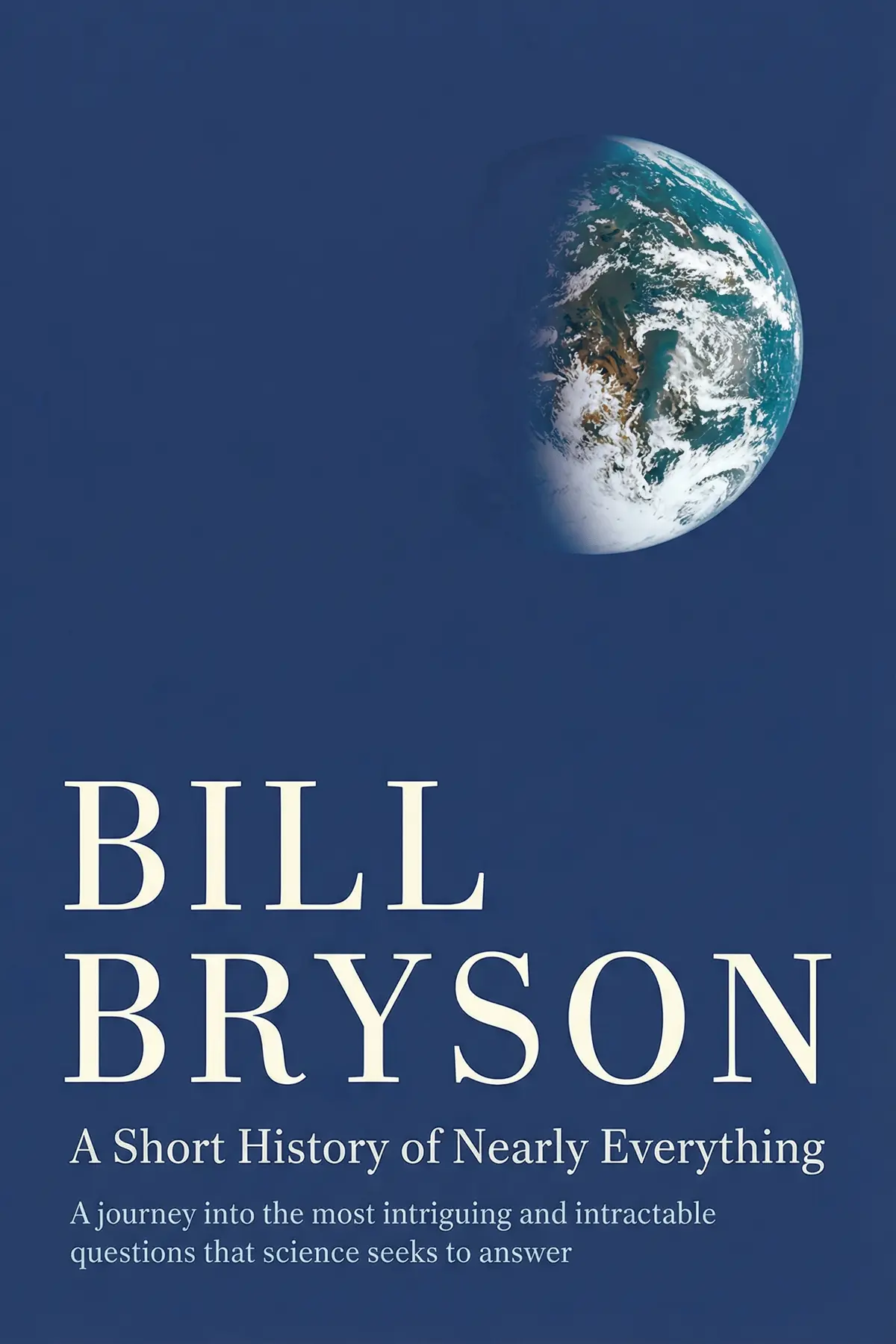
A Short History of Nearly Everything
Bill Bryson
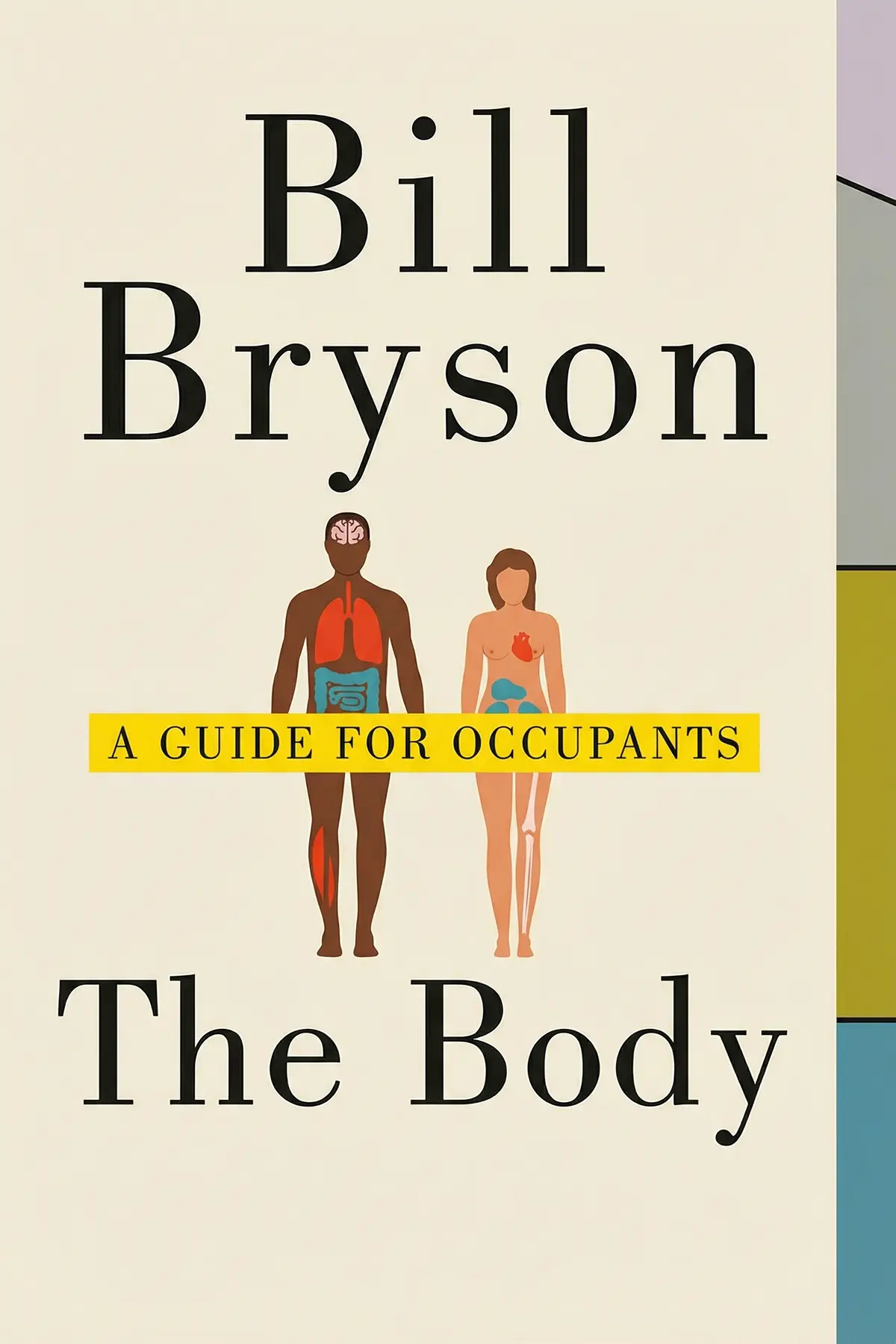
Discover the incredible systems that keep you alive. This guide explores the human body’s intricate biological architecture, from the mysteries of the brain to the trillions of microbes that inhabit us.
2 min 02 sec
When was the last time you truly sat still and thought about the vessel you inhabit? Most of us go through our lives treating our bodies like a piece of equipment that we only notice when it starts to malfunction. We assume we understand how we work, but the reality is that the human body is a spectacular, profound, and often baffling mystery. Even the most elite scientists and medical professionals who spend decades peering into the microscopic world of our cells are frequently left in awe of what they find. The more we learn, the more we realize how much remains hidden in the shadows of our own biology.
In this exploration, we are going to embark on a journey through your own physical existence. We aren’t just looking at bones and blood; we are looking at a masterclass in complexity that operates twenty-four hours a day without you ever having to issue a single conscious command. From the thousands of different species of microbes that call your skin and gut home to the incredible energy efficiency of your brain, your body is a triumph of evolution. It is a collection of systems that work in such perfect harmony that it can sustain itself for decades on nothing more than a bit of food, some water, and a regular period of rest.
As we move forward, we will look at the strange contradictions that define us. We will explore why something as simple as walking on two feet made our survival as a species possible but also made the act of being born more difficult. We will look at how our modern lifestyles are often at odds with the hunter-gatherer bodies we inherited and how we have managed to conquer some of the most terrifying diseases in human history, only to face new challenges born of our own success. This isn’t just a science lesson; it’s an owner’s manual for the most sophisticated machine on the planet. By the time we finish, you’ll see yourself in a completely different light—not just as a person, but as a walking, talking miracle of biological engineering.
2 min 14 sec
What is the true cost and composition of a human being? Learn why having all the right chemical ingredients is still not enough to create the spark of life.
2 min 22 sec
You are never truly alone, as trillions of tiny organisms live on and within you. Discover how these microbes are essential for your very survival.
2 min 22 sec
Despite being mostly water, the brain is the most complex structure in the known universe. Explore its unique sections and incredible energy efficiency.
2 min 13 sec
The heart is more than just a pump; it is a tireless worker. Learn about its true function and the multifaceted nature of the blood it moves.
2 min 02 sec
Hormones are the secret directors of your body’s functions. Discover how these chemical signals regulate everything from growth to affection.
2 min 09 sec
Walking on two feet changed everything for our species. Explore the amazing design of our bones and the trade-offs of our bipedal nature.
2 min 10 sec
You are literally built from the food you eat. Learn how cooking gave us an evolutionary edge and how our modern diet challenges our ancient systems.
2 min 10 sec
We spend a third of our lives asleep, yet the reason why remains one of biology’s greatest questions. Explore the internal clocks that guide our rest.
1 min 52 sec
Medical science has long had a male bias, leaving many aspects of female biology under-researched. Discover the miracles and mysteries of pregnancy.
1 min 58 sec
We have conquered many ancient plagues, only to face new threats from our modern lifestyles. Explore the evolution of illness and the nature of pain.
1 min 58 sec
Medicine has extended our lives, but the process of aging remains inevitable. Reflect on the history of medical success and the reality of our mortality.
1 min 51 sec
As we conclude our journey through the human body, it’s impossible not to feel a profound sense of awe. We have looked at the chemicals that make us, the trillions of microscopic life forms that sustain us, and the incredible evolutionary path that led us to walk on two feet and develop such massive, efficient brains. We have seen how our history is written in our DNA and how our modern world is constantly challenging our ancient physical design.
The throughline of this entire exploration is that your body is a masterpiece of self-regulation. It works tirelessly to keep you alive, often compensating for our poor decisions and the stresses of the environment without us ever noticing. While we have made incredible strides in medicine—conquering plagues and learning to replace or repair parts of ourselves—we are still just beginning to understand the full depth of our own biology. There are mysteries in your hormones, your sleep, and your cells that even the most brilliant minds have yet to solve.
The most important takeaway is a simple one: you are a walking miracle. The sheer number of things that have to go right every second just for you to take a breath is staggering. We often worry about our flaws and our health, but when you consider the complexity of the systems involved, it’s a wonder that we work as well as we do for as long as we do.
So, as you go back into the world, take a moment to appreciate the incredible vessel you inhabit. Treat it with the respect it deserves—not just because it’s the only one you have, but because of the billions of years of effort it took to bring you here. You aren’t just an occupant of your body; you are the expression of its success. Let that realization inspire you to move more, rest well, and never lose your sense of wonder for the spectacular machine that is you.
The Body offers a deep dive into the physical reality of being human. Moving beyond simple anatomy, it explores the staggering complexity of our internal systems, the history of medical breakthroughs, and the lingering mysteries that continue to puzzle modern science. From the way our brains process reality to the evolutionary trade-offs that allowed us to walk upright, this summary covers the vast internal landscape that we often take for granted. You will learn about the essential roles of our microbial residents, the chemical signals that govern our moods and growth, and the precarious balance of our dietary needs. The narrative explores how our bodies have evolved over millions of years, often arriving at solutions through happy accidents of biology. By the end, you will have a renewed sense of wonder for the sheer mechanical and biological effort required to simply exist for a single day.
Bill Bryson is a best-selling American author who lived in the UK for many years. His books include Notes from a Small Island, which in 2003 was voted the book that best represents England, and A Short History of Nearly Everything, which won both the Aventis and Descartes prizes.
Bill Bryson

Bill Bryson
Bill Bryson

Bill Bryson
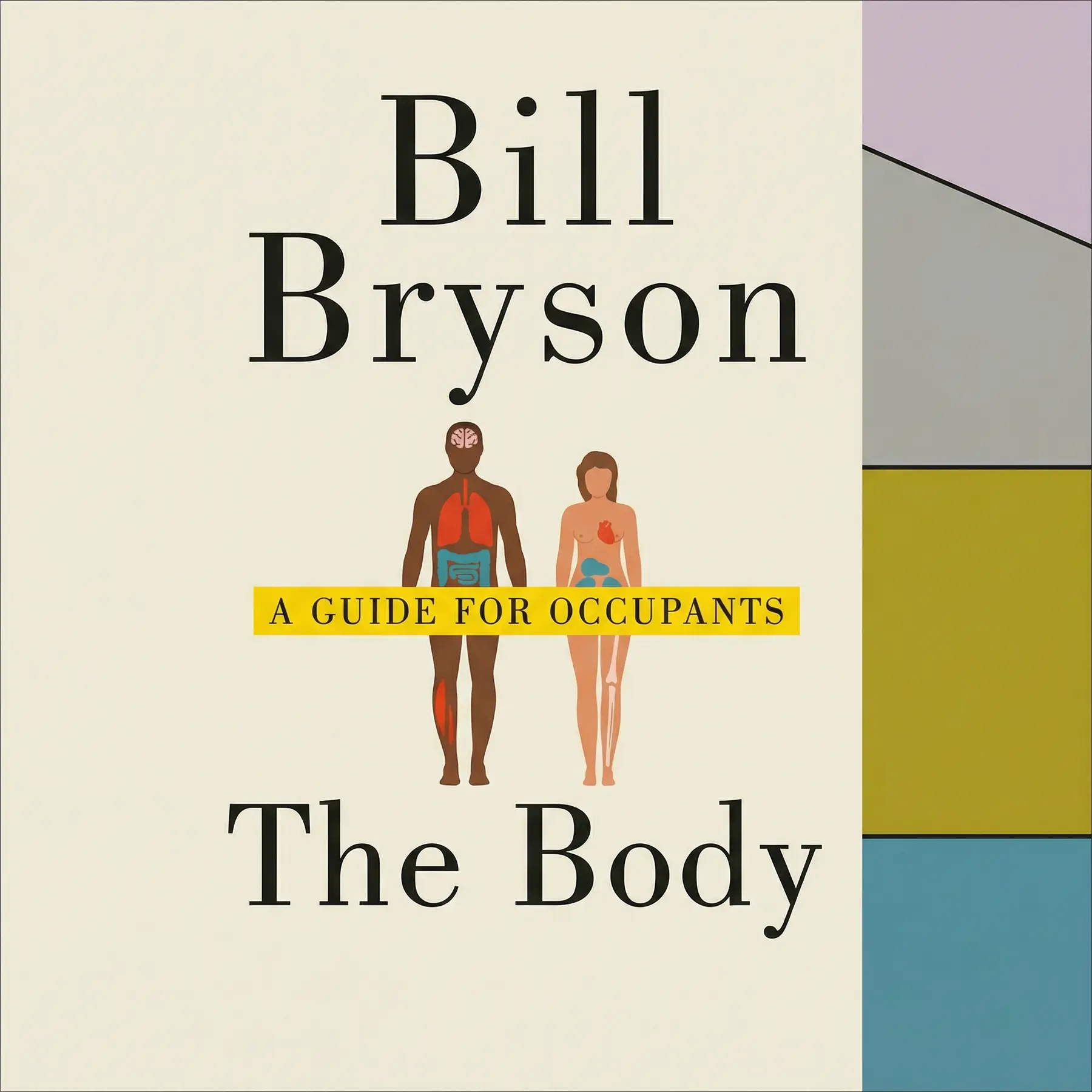
Listeners find this work captivating and simple to follow, highlighting the superb prose that clarifies intricate subjects. The text is packed with intriguing trivia and stories, and listeners value its wit, as one listener points out it provides a "laugh out loud" experience. It is regarded as both amusing and informative, with one listener characterizing the book as a "fascinating dive into the human body."
Ever wonder how much your chemical composition would cost on the open market? According to Bryson, you could put together a Benedict Cumberbatch for about $150,000, though the assembly is definitely the tricky part. This book is a delightful tour of our 'inner space.' It manages to be both educational and hilariously witty. I loved the way he weaves the history of medical discoveries—like the saga of Typhoid Mary or the discovery of insulin—into the physical descriptions of our organs. His writing style is undemanding and charismatic. It's perfect for someone who isn't a scientist but wants to understand the 'plumbing and scaffolding' of their own existence. Personally, I found the trivia about how our brain creates a 3D universe from mere electrical pulses to be absolutely gripping. It’s a thick book, but the short, punchy sections make it incredibly easy to pick up and put down. If you want a fun dive into what makes us human, this is it.
Show moreThe chapter on the brain absolutely blew my mind, no pun intended. Bryson describes it as a dungeoned prisoner living in total darkness, creating a vibrant world out of nothing but Morse code electrical pulses. That image will stick with me forever. It’s fascinating. This book is stuffed with those kinds of 'aha!' moments that make you want to stop and read the passage out loud to whoever is in the room. I’ve always appreciated Bryson’s voice, and here it’s as warm and inquisitive as ever. He doesn't just give you facts; he gives you the wonder of those facts. Some of the history of medicine is truly horrifying, especially the parts about early surgeries and the sheer idiocy of bloodletting. It makes you realize how lucky we are to be alive in the 21st century. Despite the complexity of the subject, the prose remains fluid and engaging throughout the entire journey. It is a masterpiece of accessible science writing.
Show moreFinally got around to this one and it’s a total page-turner for anyone who appreciates the sheer absurdity of being alive. Bryson describes the human body as a collection of plumbing and scaffolding that somehow manages to house a conscious mind. It is remarkable. I loved learning that you could build a human for less than the price of a luxury car, even if the instructions aren't included. The anecdotes about Phineas Gage and the early days of surgery were gruesome but impossible to stop reading. This isn't a textbook, and it doesn't try to be. It’s an anatomical tour led by a guide who is just as amazed as you are. Some of the information was familiar, but Bryson’s delivery makes everything feel fresh and urgent. Frankly, it’s one of those books you end up quoting to everyone you meet for the next month. It’s informative, funny, and deeply human. I couldn't put it down.
Show moreTruth is, I spent half the time laughing at the historical 'bastards' of medicine and the other half checking myself for symptoms. The story of the man who stole credit for Streptomycin was particularly infuriating, yet Bryson tells it with such flair. He has a way of highlighting the tragicomedies that define our medical history. You get the sense that we’ve survived in spite of our doctors, not always because of them. I found the sections on the brain and the immune system to be the most engaging parts of the whole tour. It’s a bit of a 'fun fact' approach, but it works brilliantly for this subject matter. My only complaint is that it can get a little terrifying for hypochondriacs like myself. He describes everything that can go wrong with such vivid detail that you’ll start feeling phantom pains. Still, it’s a masterclass in making science entertaining. You’ll never look at your own skin the same way again.
Show moreThis book left me with a profound sense of how little we actually know about ourselves despite centuries of study. It’s humbling. We spend a third of our lives asleep, yet no one can say exactly why. Bryson takes us on a journey from our brains to our toes, highlighting how every system is a miracle of biological engineering. I especially appreciated his focus on how our modern, sedentary lifestyles are essentially a slow-motion collision with our hunter-gatherer evolution. The book doesn't just focus on the West. It looks at health metrics globally, which puts some sobering perspective on our own expensive healthcare systems. Not gonna lie, some historical surgeries made me cringe. You’ll leave this book feeling grateful for modern medicine. It’s an engaging, informative read that makes the complex machinery of our bodies feel approachable and even a little bit magical. I would highly recommend this to anyone who owns a body.
Show moreBryson has this incredible knack for taking dense, textbook-level information and turning it into a series of digestible anecdotes. He is a master of the aside. From the tiny proteins to the massive complexity of our skeletons, he covers it all without making you feel like you’re sitting in a lecture hall. I particularly enjoyed the way he explains the etymology of medical terms, like why the 'lithotomy' position is called that. It’s gruesome. The book is essentially a travelogue of the human body. He stops at every organ to tell you a story about the person who discovered it or the disease that plagues it. While it’s certainly pop-science, it feels well-researched and accessible for the layman. I did feel like some chapters dragged a bit when he got into the weeds of bacterial names. However, his humor always pulled me back in before I got bored. It’s a solid addition to his bibliography.
Show moreAs someone who usually finds science writing a bit dry, I was pleasantly surprised by how much this read like a collection of strange stories. Bryson explores the naming of the X-chromosome and the petty rivalries behind medical breakthroughs with his signature wit. Did you know the X-chromosome was named after 'Planet X' just because they didn't know what it did? It’s little gems like that that keep you turning the pages. To be fair, he does gloss over some of the heavier science, but for a layman, it’s a perfect balance. He makes the 'Islets of Langerhans' sound like a travel destination rather than just a cluster of cells. The chapters on how we’re essentially a bag of atoms and bacteria were both gross and fascinating. Some might say it’s a bit superficial. For me, it was exactly the kind of accessible pop-science I was looking for. It’s a long book, but the conversational tone makes it fly by.
Show moreTo be fair, you shouldn't treat this as a medical textbook, but rather as a sweeping tour of our inner landscape. Bryson is at his best when he’s discussing how our modern lifestyles clash with our evolutionary history. We are essentially hunter-gatherers living in a world of endless calories and sedentary jobs. The consequences are tragic. He spends a good deal of time on how we are overtreated for many ailments while ignoring the basics of health. I found the sections on the immune system particularly eye-opening, especially given how much we take our daily survival for granted. There are some gross bits—parasites and viruses are never fun to read about—but they are handled with Bryson’s usual 'gosh-wow' enthusiasm. It’s not quite as funny as 'A Walk in the Woods,' but it’s arguably more important. You come away with a profound respect for the trillions of cells working tirelessly to keep you upright. It is a very solid read.
Show moreWhile the prose is as charming as you’d expect from Bryson, there were enough technical slip-ups to make me question the overall accuracy. Frankly, if a writer can't distinguish between a feeding tube and a breathing tube, I start to worry about the bigger picture. I noticed several inconsistencies in the chapters on kidney failure and the history of vaccines that felt like they were pulled from a quick Google search rather than deep research. The book functions well as a collection of fun anecdotes, but it lacks the scientific depth to be a truly reliable guide. It often feels like a massively oversimplified book report where the author has skimmed the surface of 400 different topics. To be fair, the historical bits about the 'bastards' of medicine who stole credit for discoveries were highly entertaining. However, I wouldn’t recommend this to anyone looking for a serious exploration of human physiology. It’s a decent 'lite' read, but proceed with caution.
Show moreLook, I love Bill Bryson’s travel writing, but this attempt at biology felt dangerously oversimplified and occasionally problematic. He treats complex topics like sex chromosomes with a fifth-grade level of nuance that borders on exclusionary. It’s frustrating. I was also deeply uncomfortable with how he glossed over the unethical treatment of Alexis St. Martin, calling him an 'uncooperative' subject rather than a victim of medical torture. It feels like he read a stack of books and summarized them without truly understanding the weight of the material. If you have a degree in biology, you’re going to find yourself hissing at the inaccuracies or the sheer superficiality of the explanations. The narrative voice I usually enjoy is buried under a pile of facts that are better presented in books by authors like Mary Roach. It’s a disappointing slog that lacks the rigor required for such a massive subject. Honestly, it felt more like a book report than a finished work.
Show moreBill Bryson
Jeff Hawkins
Lisa Kaltenegger
AUDIO SUMMARY AVAILABLE
Get the key ideas from The Body by Bill Bryson, plus 5,000+ more titles in English and Thai.







