
A Short History of Nearly Everything
Bill Bryson
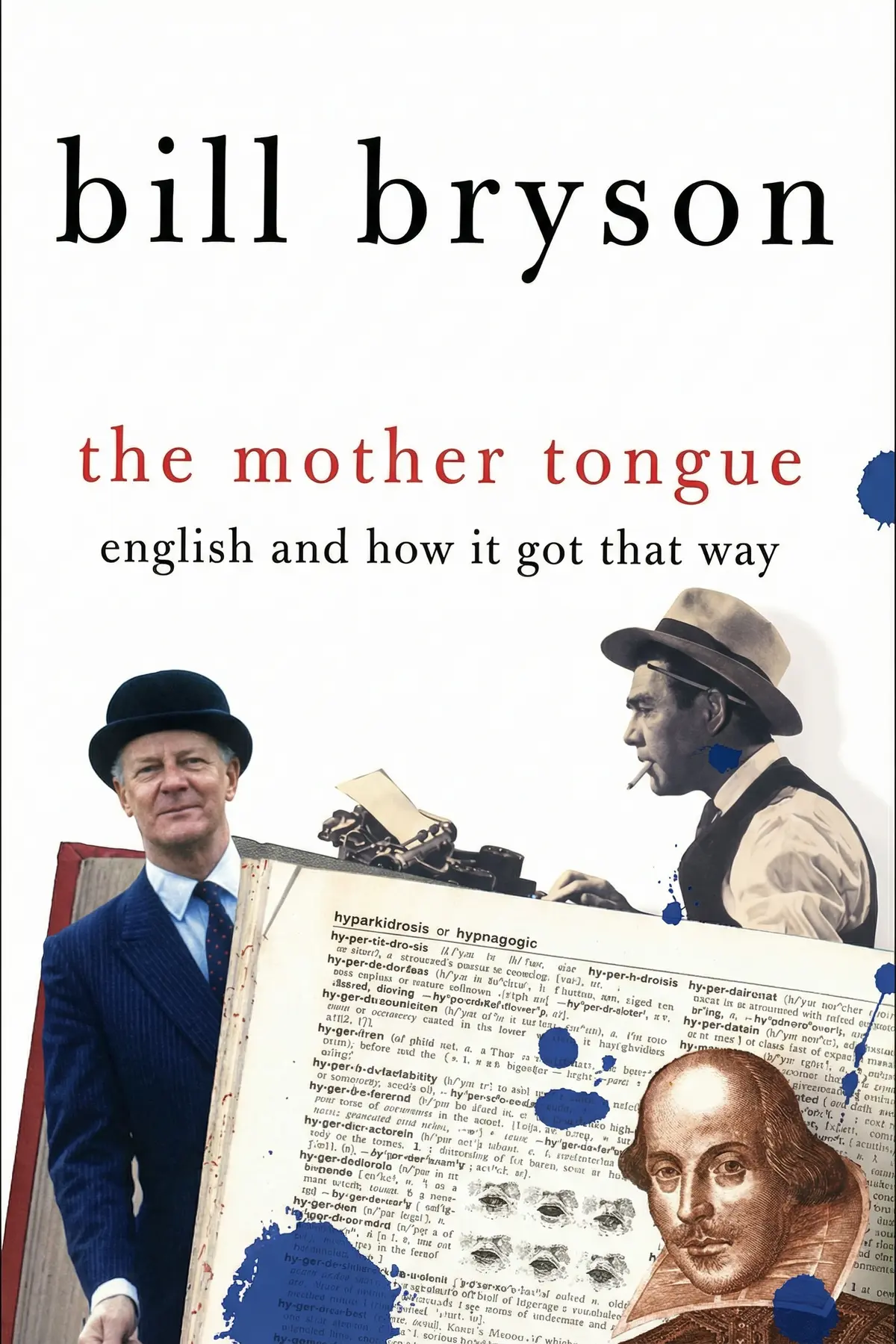
A fascinating exploration of the English language’s history, tracing its roots from ancient tribes and medieval conquests to the playful inventions of Shakespeare and the linguistic quirks of the American frontier.
1 min 14 sec
Have you ever paused mid-sentence to wonder why we say the things we do? Every time you order a steak, call someone a friend, or yell at a reckless driver, you are participating in a linguistic tradition that stretches back thousands of years. We often treat English as a static, permanent thing, but in reality, it is a restless, shifting creature. It is a language built on the ruins of invasions, the whims of poets, and the mistakes of explorers.
In this summary, we are going to peel back the layers of the English language. We’ll look at how a massive family of languages can be traced back to a single, mysterious ancestor. We’ll follow the waves of invaders—the Saxons, the Vikings, and the Normans—who each left their own permanent marks on the way we speak. We’ll also see how English found a new home in the Americas, forcing it to adapt and grow in entirely unexpected ways.
This isn’t just a history of words; it’s a history of people. It’s about how human connection, conflict, and curiosity shaped the sounds that come out of our mouths every day. By the end of this journey, you’ll see that English isn’t just a way of communicating—it’s a living museum of human history. Let’s dive in and see how the mother tongue truly got that way.
2 min 11 sec
Explore how a forgotten Stone Age language became the surprising foundation for nearly all the languages we recognize in the Western world today.
1 min 59 sec
Follow the turbulent history of the British Isles as successive waves of invaders reshaped the local dialect into a unique linguistic hybrid.
2 min 05 sec
Discover how a French invasion in 1066 created a linguistic class system that permanently doubled the English vocabulary.
2 min 24 sec
Learn how the Renaissance and the creative genius of specific individuals sparked an unprecedented explosion of new terminology.
2 min 18 sec
See how the American frontier forced English to evolve rapidly, borrowing from neighbors and making mistakes that stuck.
2 min 05 sec
Uncover the origins of family names and how a medieval legal requirement turned temporary descriptions into permanent identities.
2 min 17 sec
Examine how social taboos have historically dictated our vocabulary, turning common words into profanities and back again.
1 min 28 sec
As we wrap up our journey through the history of the mother tongue, one thing becomes clear: the English language is a survivor. It has been invaded, suppressed, exported, and mangled, yet it has emerged as the most successful global language in history. Its power doesn’t come from being ‘pure’ or ‘perfectly logical.’ On the contrary, its power comes from its messiness. It is a language of compromise, a hybrid of German, Norse, French, and dozens of other influences that it picked up along the way.
We’ve seen how ancient roots in the Indo-European past still echo in the words we use for our families. We’ve watched as kings and peasants fought over the names of the food they ate, and how poets like Shakespeare stretched the boundaries of what a word could mean. We’ve also seen how social pressures can turn a common word into a taboo and back again. Through all these shifts, English has remained flexible enough to adapt to any situation and any culture.
The lesson here is that language is a mirror of the human experience. It is constantly growing, shedding old skins, and growing new ones. The next time you find yourself struggling with a weirdly spelled English word or marveling at a new piece of slang, remember that you are witnessing the latest chapter in a story that began seven thousand years ago. English belongs to everyone who speaks it, and as long as we keep talking, writing, and creating, the mother tongue will continue to change, flourish, and surprise us.
The Mother Tongue takes listeners on a sweeping journey through the history of one of the world's most influential languages. Rather than a dry academic study, it is a vibrant narrative that explains how a small, localized dialect from Northern Europe evolved into a global powerhouse. It explores the tectonic shifts caused by invasions, the creative genius of writers like William Shakespeare, and the accidental ways that words change meaning over centuries. The book promises to reveal the hidden history behind the words we use every day. Listeners will discover why English spelling is so erratic, how a misunderstanding named a whole continent, and why we have different names for the animals in the field and the meat on our plates. It is an exploration of the flexibility, resilience, and sheer oddity of the English language, showing that its greatest strength lies in its ability to absorb everything it touches.
Bill Bryson, a prolific and witty author, has written over 20 books on travel and language, including the bestseller, A Short History of Nearly Everything.
Bill Bryson
Bill Bryson
Bill Bryson
Bill Bryson
Bill Bryson
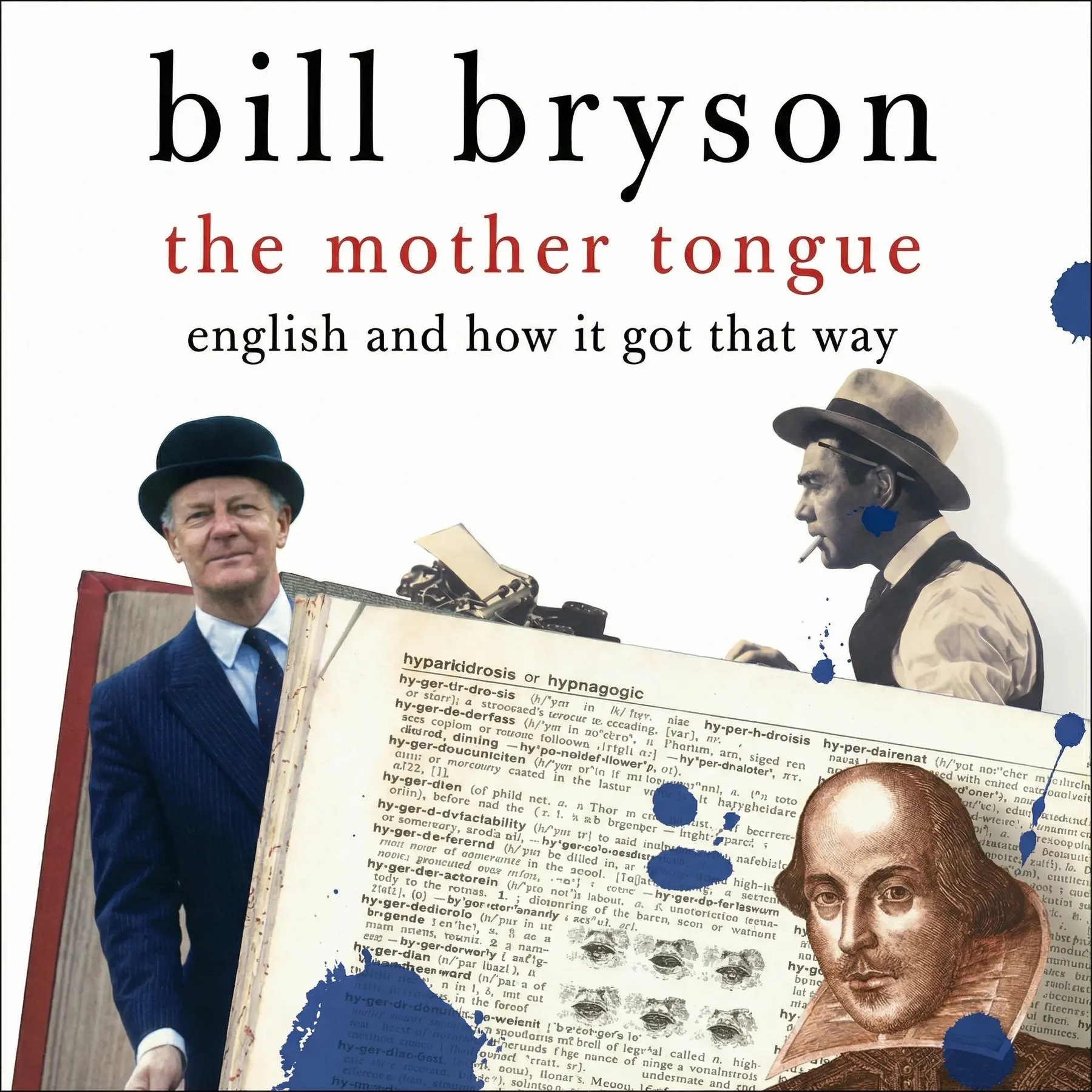
Listeners find this book incredibly educational and thoroughly researched, possessing a charming wit that frequently results in audible laughter. The narrative is both approachable and enjoyable, serving as an excellent pick for language enthusiasts. Listeners value its instructional merit, particularly for educators and English majors, and consider it a compelling investigation into English history, with one listener noting how it covers the entire history of human language.
Bill Bryson has this incredible knack for making even the most dry, academic subjects feel like a chat over a pint at the local pub. I found myself laughing out loud at the ridiculous hotel signs he included, like the Yugoslavian one about the 'flattening of underwear with pleasure.' It is a fascinating study of how a minor Germanic tongue managed to conquer the world despite its illogical spelling and bizarre booby traps. The chapter on swearing was particularly enlightening and made me realize how colorful our collection of curses truly is. While some critics point out small errors, the sheer entertainment value and the way he weaves together the history of human language is masterclass. It’s an accessible, funny, and deeply engaging read for anyone who uses words for a living. This book turned me into that person who constantly interrupts dinner conversations with 'Did you know...?'
Show moreIf you want to be the person at the party with the best trivia, this is your holy grail. I never realized how much of a linguistic melting pot English truly is until I finished this. Bryson takes us on a fabulous journey from the obscure origins of the alphabet to the differences between British and American dialects. Look, I’m a writer, and I found his defense of splitting infinitives to be absolutely liberating. Why should we follow rules created by 18th-century grammarians who just wanted to sound elite? The book is extensively researched and packed with the signature wit that makes Bryson a household name. He turns the history of words into a high-speed adventure. From the development of dictionaries to the reason we spell 'debt' with a silent 'b', every chapter offered something new and surprising. Truly a must-read for language lovers.
Show moreWhy do we spell 'often' with a 't' when most of us don't pronounce it? This book answers questions I didn't even know I had. Bryson explores the evolution of our mother tongue with a sharp eye and a humorous touch. He argues that language is more fashion than science, wandering around like hemlines, and I find that perspective incredibly refreshing. The stories about Shakespeare’s vocabulary and the way Americanisms like 'gotten' are actually older than the current British versions were highlights for me. Personally, I was fascinated by the chapter on how names and places get their titles. The book is a hilarious, educational journey through the history of how we communicate. Even with its age, the wit remains sharp and the passion for the subject is infectious. I’ve recommended it to everyone in my book club.
Show moreWow. Not what I expected at all, but in the best possible way. I thought a book about linguistics would be a total slog, but Bryson’s wit makes it a page-turner. He manages to cover the entire history of human language while keeping the tone light and funny. The examples of 'English as she is spoke' from foreign manuals had me in stitches. It's an extensively researched look at how we ended up with such a complicated mess of a language. I particularly appreciated his take on the arbitrary rules we all learned in school—the idea that you can't end a sentence with a preposition is finally debunked. This book is a fabulous journey through the words we use every day without thinking. It made me appreciate my mother tongue in a whole new way. Highly recommended for any bibliophile's shelf.
Show morePicking this up decades after its initial 1990 release is a bit like looking through a linguistic time capsule. To be fair, some of the information is a product of its time, particularly regarding the lack of internet influence on modern slang. However, Bryson’s exploration of the arbitrary nature of grammar conventions is still incredibly relevant today. He brilliantly skewers those stuffy pedants who insist on rules that have no basis other than a desire to emulate Latin. I especially loved the section on the versatility of the word 'O.K.' and how it became America’s greatest gift to global discourse. The writing style is engaging and research-heavy, even if it leans into anecdotes more than a formal textbook would. It’s a wonderful resource for teachers or English majors who want to see the 'fashion' behind the science of our speech.
Show moreAs a high school English teacher, I found this to be a goldmine of anecdotes to keep my students engaged during grammar lessons. Bryson has a way of explaining the intricacies of human language that makes it feel vital and alive rather than a chore. The way he discusses the 'booby traps' of English—like how 'fly' can mean an insect, a travel method, or a zipper—is just brilliant. I did notice a few outdated attitudes and some generalizations about other cultures that wouldn't pass muster today, but the core history is solid. His breakdown of the Great Vowel Shift helped me understand why our spelling is so disconnected from our pronunciation. It’s an educational look at our wacky language that managed to be informative without ever feeling like a boring lecture. It's a great companion piece to more scholarly works.
Show moreEver wonder why certain four-letter words became so taboo while others just faded into obscurity? Bryson’s exploration of swearing is worth the price of the book alone. He captures the wacky, wonderful, and way complicated nature of English perfectly. I loved the section on how 'gyratory circuses' became roundabouts and the circularity of American versus British slang. The writing is accessible and entertaining, making it a great read for anyone who enjoys a good story about where we came from. While some of the phonetic descriptions felt a bit dated, the overall narrative of English as a resilient, flexible survivor is compelling. It’s not a textbook, and it doesn't try to be; it’s a love letter to the quirks of our speech. I finished it in two sittings and immediately wanted to read more about linguistics.
Show moreFrankly, the chapters on global dialects are where the book starts to show its cracks and a bit of an Anglo-American bias. As an Australian, I was annoyed to see him claim we use the word 'cookie' when we almost exclusively say 'biscuit.' He also gets several other regionalisms wrong, which makes me doubt his observations about other countries. That said, the sections on the ancient roots of English and the development of the first dictionaries are genuinely fascinating. He is a master of the narrative tangent, taking us from the evolution of the larynx to the strange habits of 18th-century lexicographers. It is a mildly amusing and informative read, but you have to take his 'facts' with a grain of salt. It’s fine for a casual diversion, but don't use it as a primary source for a thesis.
Show moreCan we talk about the 'fifty words for snow' myth for a second? It is one of the most famous linguistic half-truths in history, yet Bryson presents it as a foundational fact here without a hint of irony. When he followed that up by claiming Italians have 500 names for macaroni—clearly meaning pasta—I started to lose heart. I love his travel writing, but his approach to non-fiction feels a bit fast and loose with the truth. The prose is witty and the 'titbits' of history are fun, but a book about the evolution of language needs a higher level of scholarship. I found the tone regarding non-English speakers to be occasionally condescending, which felt unnecessary. It’s a shame because the topic is genuinely interesting, but I kept finding myself wanting to fact-check every single paragraph on Google. If you want a fun story, read it; if you want actual linguistics, look elsewhere.
Show moreRarely have I been so frustrated by a book that started off with such promise. The writing is undoubtedly breezy, but the factual errors are simply too egregious to ignore if you have even a passing interest in linguistics. Bryson claims Finnish speakers use 'ravintolassa'—which simply means 'in the restaurant'—as a primary swear word, which is patently absurd and easily debunked. He also dismisses the Welsh language as unpronounceable and irregular, when in reality, its orthography is remarkably consistent compared to the mess that is English. Once you realize he is prioritizing a cheap punchline over actual research, the whole foundation of the book crumbles. I stopped reading halfway through because I didn't want to accidentally internalize any more of these 'facts' and repeat them to others. It is more a collection of linguistic urban myths than a serious history.
Show more
Ishmael Beah
William J. Bernstein
Ben Macintyre
Charles C. Mann
James Shapiro
AUDIO SUMMARY AVAILABLE
Get the key ideas from The Mother Tongue by Bill Bryson, plus 5,000+ more titles in English and Thai.







