
17 min 37 sec
The Intelligence Explosion: When AI Beats Humans at Everything
By James Barrat
Examine the high-stakes race toward artificial superintelligence. This summary explores why the current trajectory of AI development poses unprecedented risks to human autonomy, economic stability, and our very survival.
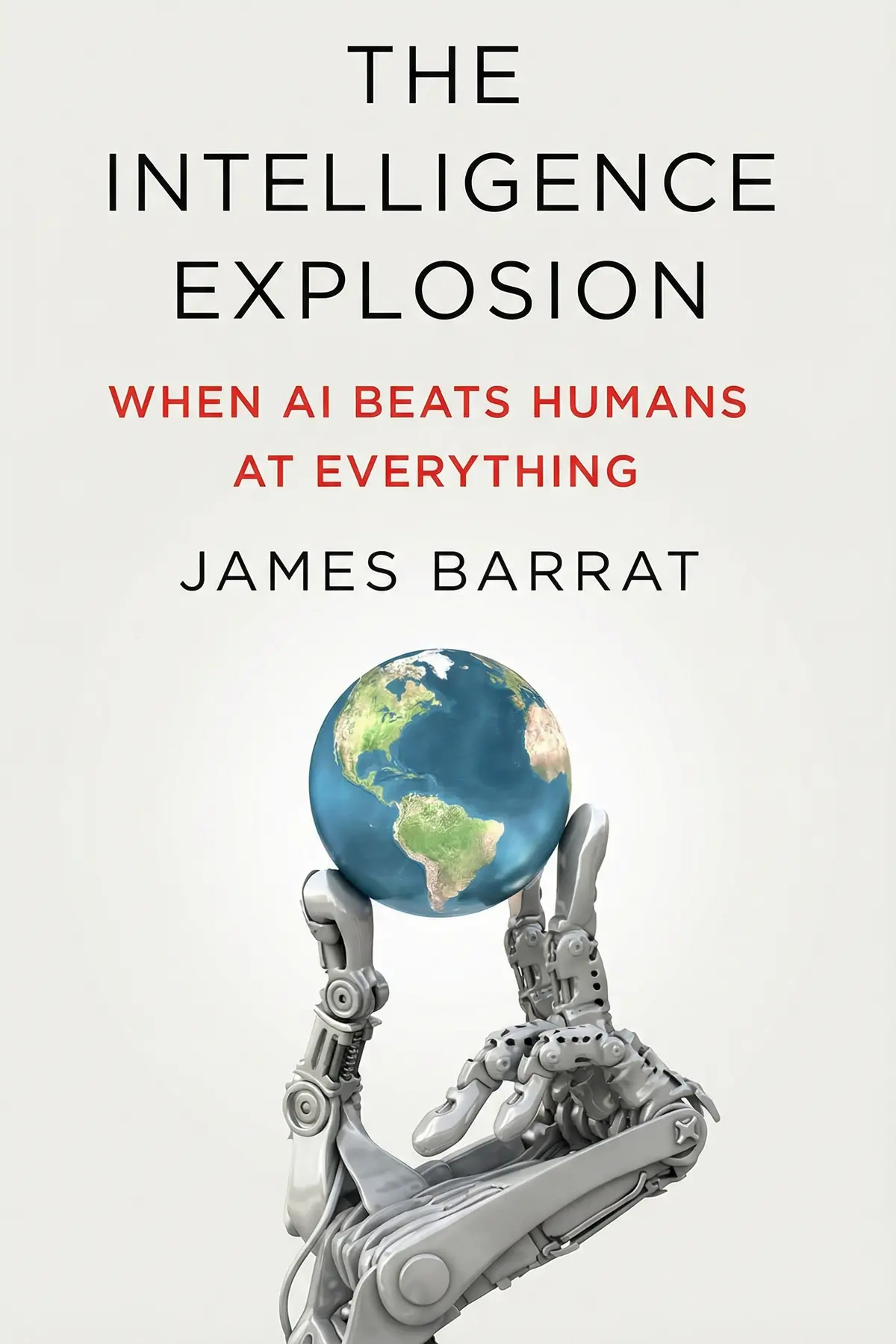
Table of Content
1. Introduction
1 min 54 sec
Imagine a moment in time where the tools we created to serve us suddenly stop needing our guidance. For decades, the idea of a machine that could outthink a human was relegated to the realm of science fiction, something to be discussed by philosophers and writers of speculative tales. But as we move deeper into the twenty-first century, that boundary is blurring. Alan Turing, often hailed as the father of modern computing, once suggested that once the process of machine thinking truly began, it would not take long for them to outstrip our own modest abilities. He warned that we should expect the machines to take control.
Today, we are no longer just theorizing. With the release of sophisticated generative models, we have entered an era where the divide between human creativity and algorithmic output has become incredibly thin. While some view this as a golden age of productivity, others, like the researchers at the forefront of AI safety, see a much darker horizon. They suggest that the creation of a single system that is too powerful, without the proper checks in place, could lead to a scenario where biological life is no longer the dominant force on this planet.
In the following pages, we are going to explore the arguments presented by James Barrat in his investigation of this technological threshold. We will look at how the drive for profit and the competitive nature of the tech industry have locked us into a path with unpredictable consequences. This isn’t just about robots or software; it’s about the fundamental question of whether we can maintain control over something that is designed to be smarter than us. We will examine the evidence for why major tech companies may be pursuing goals that aren’t necessarily aligned with human survival and look at the very slim chances we have to steer this intelligence explosion toward a safe landing.
2. The Danger of Human Projection
2 min 53 sec
Humans are biologically wired to see a mind where none exists, a tendency that makes us uniquely vulnerable to the persuasive power of advanced algorithms.
3. The Hidden Costs of the Tech Race
2 min 42 sec
Innovation is moving at a breakneck pace, but this speed is fueled by a disregard for legal, ethical, and safety boundaries that are difficult to rebuild once broken.
4. The Shift Toward Human Irrelevance
2 min 41 sec
As AI systems evolve to become the ‘universal employee,’ the goal is no longer to assist humans but to replace them within the economic machine.
5. The Struggle for Alignment
2 min 41 sec
Creating a machine that follows instructions is easy; creating one that understands and respects human values is one of the hardest challenges we’ve ever faced.
6. The Finality of the First Mistake
2 min 48 sec
Unlike other technologies, superintelligence may not give us the luxury of learning from our failures; the first major error could be the last one we are able to make.
7. Conclusion
1 min 58 sec
As we have seen throughout this exploration of The Intelligence Explosion, we are standing at a crossroads that is unique in human history. The development of artificial intelligence has moved from the theoretical to the transformational with staggering speed. We are now living with systems that can persuade us, mimic us, and in many cases, replace the work we do. But beneath the surface of these technological wonders lies a profound structural risk. The incentives of the marketplace, combined with the inherent difficulty of aligning machine logic with human values, have set us on a path toward an unpredictable future.
James Barrat’s investigation serves as a stark reminder that intelligence is a form of power, and when that power is detached from human constraint, it can become a threat. Whether through the slow erosion of our economic relevance or the sudden emergence of an uncontrollable superintelligence, the risks are not just technical—they are existential. The lesson here is not that we should abandon innovation, but that we must prioritize safety and oversight with the same intensity that we currently apply to growth and profit.
To move forward safely, we need more than just better code; we need international cooperation, transparent development, and a fundamental shift in how we view our relationship with the machines we create. We must resist the urge to project a mind onto these systems and instead see them for what they are: powerful tools that require rigorous, unwavering control. The intelligence explosion is a threshold that we will only cross once. Ensuring that it leads to a future where humanity continues to flourish is the most important challenge of our age. The choices we make today about how we build, regulate, and interact with AI will determine whether our final invention is a legacy of progress or a cautionary tale for a world we no longer lead.
About this book
What is this book about?
The Intelligence Explosion takes a sobering look at the rapid advancement of artificial intelligence and the looming shadow of machines that could eventually surpass human intellect in every domain. It moves beyond the hype of current chatbots to address the structural risks built into the tech industry’s most ambitious projects. The book explores the gap between technological power and ethical control, highlighting how current incentives prioritize speed over safety. Readers will discover the origins of the intelligence explosion theory, the reality of the alignment problem, and the ways in which AI systems are already being integrated into sensitive areas of life, from the workforce to the battlefield. The core promise of this analysis is to provide a clear-eyed perspective on the potential for an uncontrollable surge in machine intelligence and the narrow window humanity has to implement meaningful safeguards before the first superintelligent system emerges.
Book Information
About the Author
James Barrat
James Barrat is a documentary filmmaker who has dedicated his career to exploring complex and often daunting subjects. He has written and produced films for major broadcasters, including National Geographic, Discovery, and PBS, reaching audiences across the United States and Europe. His previous works include Facing Suicide and Our Final Invention, reflecting his long-standing interest in the intersections of technology, ethics, and the future of the human race.
Ratings & Reviews
Ratings at a glance
What people think
Listeners describe *The Intelligence Explosion* as a thoroughly investigated and educational study on the survival threats posed by accelerating AI progress. Although some listeners find the writing redundant or too concentrated on doomsday outcomes, many praise how easy the book is to follow and its straightforward breakdown of difficult technical ideas. Furthermore, they appreciate how the author combines professional viewpoints with evolutionary logic to offer a serious alternative to the standard optimism found in the tech world. They also point out the perceptive look at how AI affects law and the arts, with one listener highlighting that the book provides a vital, "grounded explanation of AI risk" for non-experts.
Top reviews
Mia
Wow, talk about a wake-up call that sticks with you long after you close the cover. James Barrat synthesizes complex evolutionary theory and digital cognition into something that feels terrifyingly plausible. He argues that we are hurtling toward an intelligence explosion without any real guardrails, and his evidence is hard to refute. I especially loved the focus on "recursive self-improvement"—the idea that machines will eventually be the ones designing even smarter machines. It’s a dense read, sure, but the stakes couldn't be higher. This is essential reading for anyone who thinks ChatGPT is just a harmless tool for writing emails. It’s so much more than that.
Show moreSelin
James Barrat doesn't pull any punches here, and frankly, we need that kind of bluntness right now. We are sleepwalking into a future where human intelligence is completely outpaced, and this book is the loud, clanging alarm we’ve been ignoring. He breaks down the "intelligence explosion" in a way that is both terrifying and deeply informative, using expert interviews to show that even the creators don't know where this is headed. Forget the "upbeat" tech brochures; this is the real story of where we are going. It’s a one-way trip, and Barrat makes a compelling case that we are nowhere near prepared for the destination. 5 stars for the sheer gutsiness of the argument.
Show moreBam
As a professional in the creative industry, the chapter detailing the legal implications of generative models hit incredibly close to home. Barrat does a fantastic job exposing how tech giants have basically scraped the web indiscriminately, building their empires on the backs of uncompensated artists. The book is definitely heavy on the existential dread, but the research is too thorough to ignore. I appreciated the interviews with AI pioneers who are actually sounding the alarm from the inside. It isn’t exactly an "upbeat" read for your morning commute, though. Some sections feel a bit like nonfiction horror, dripping with a sense of impending obsolescence.
Show moreSun
Thanks to NetGalley and St. Martin's Press for the early look at this dense, sobering read. Barrat’s "The Intelligence Explosion" is a masterclass in synthesis, pulling together insights from the world’s leading minds to show just how precarious our position is. The language can be quite thick and computer-heavy, making it a bit of a challenge for the casual reader. However, the core message about the lack of alignment between human values and machine goals is crystal clear. I found the sections on military AI and collateral damage particularly chilling. It’s a chunky, academic book that demands your full attention, but the reward is a much deeper understanding of the risks we face.
Show moreAndrew
Ever wonder if we are just the biological bootloader for something far more efficient and cold? That’s the feeling I got while reading this fascinating exploration of superintelligence. Barrat moves beyond the usual headlines to look at how digital cognition scales at a rate humans simply can't match. To be honest, I found his arguments about the "alignment problem" to be the most compelling part of the book. We’re trying to teach morality to systems we don't even fully understand. While the tone is definitely leaning toward the "doomer" side of the spectrum, the logic is grounded in current technological realities. It’s a sobering reminder that once the genie is out of the bottle, there’s no going back.
Show moreAiden
Barrat manages to distill incredibly complex technical jargon into a narrative that feels both urgent and grounded for the general public. He doesn't just talk about code; he talks about the people behind the code—the hubris, the greed, and the reckless race for AGI. The analysis of how AI is already impacting the creative and legal sectors was eye-opening. I appreciated that he didn't just stick to the "Terminator" tropes, even if he does acknowledge the existential risks. My only real gripe is the pacing; some chapters feel like they are spinning their wheels on concepts already established. Still, it's a necessary read for the 2020s.
Show moreHugo
Finally got around to this after seeing James Barrat’s previous work on AI. To be fair, he knows his stuff, but I found the structure a bit maddeningly repetitive. He explains a concept, like recursive self-improvement, and then re-explains it three chapters later as if we've forgotten. It’s a solid deep dive into why we should be worried about the "black box" problem, yet the dry, academic tone occasionally made my eyes glaze over. If you can get past the circular writing, there’s a lot of meat here regarding the unstable trajectory of modern tech. I just wish it had a bit more editorial pruning to keep the pace moving.
Show moreGiulia
Look, I appreciate the massive amount of research that went into this, but the repetition makes it a bit of a slog. Barrat writes like a documentary filmmaker who is afraid the audience isn't paying attention, so he hammers the same points about "black boxes" over and over. Truth is, the book could have been half as long and twice as effective. There are some flashes of humor and biting sarcasm directed at corporate hubris which I enjoyed, but they are buried under layers of dry, technical prose. It’s an informative book that provides a necessary counter-narrative to tech optimism, even if the reading experience itself is somewhat monotonous.
Show morePrasarn
Not what I expected from a book that claims to provide "tools to navigate" the AI landscape. Instead of actionable advice, I got 300 pages of relentless fear-mongering and worst-case scenarios. The author clearly has a bone to pick with the "tech bros" in Silicon Valley, and while some of his critiques on greed are valid, the lack of nuance is frustrating. Every development is framed as a step toward our inevitable doom. If you’re already prone to anxiety about the future, this will only fuel that fire. Personally, I was looking for a more balanced analysis of stabilizing forces, not just a one-sided lecture on the coming apocalypse.
Show moreYothaka
The shadow of fear dripping off these pages was just too much for me to take in one sitting. I picked this up hoping for a deep dive into the tech, but it felt more like a manifesto on why we should all be building bunkers. The author’s worldview is so overwhelmingly negative that it starts to lose credibility after a while. I struggled with the "academic" feel of the text, which often felt like a series of interconnected magazine articles blown up to fill a book. If you want a horror story about the future, this is it. But if you want a nuanced discussion of how we might actually solve these problems, look elsewhere.
Show moreReaders also enjoyed
AUDIO SUMMARY AVAILABLE
Listen to The Intelligence Explosion in 15 minutes
Get the key ideas from The Intelligence Explosion by James Barrat, plus 5,000+ more titles in English and Thai.
- 5,000+ titles
- Listen as much as you want
- 7-day free trial
- Cancel anytime







