
26 min 50 sec
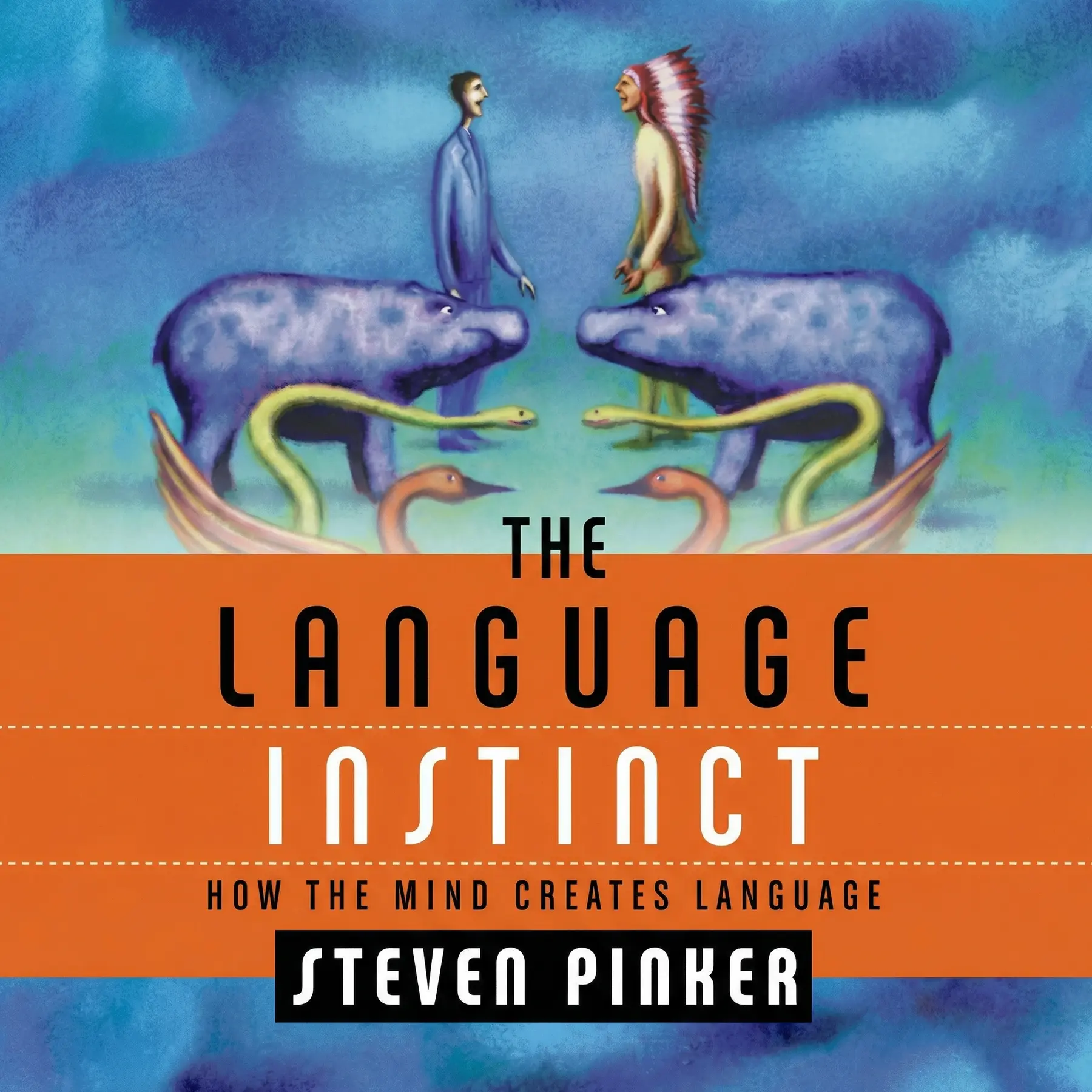
The Language Instinct: How the Mind Creates Language
Explore the biological roots of human communication. This summary reveals how language is a natural instinct hardwired into our brains through evolution, shaping how we learn, speak, and understand the world around us.
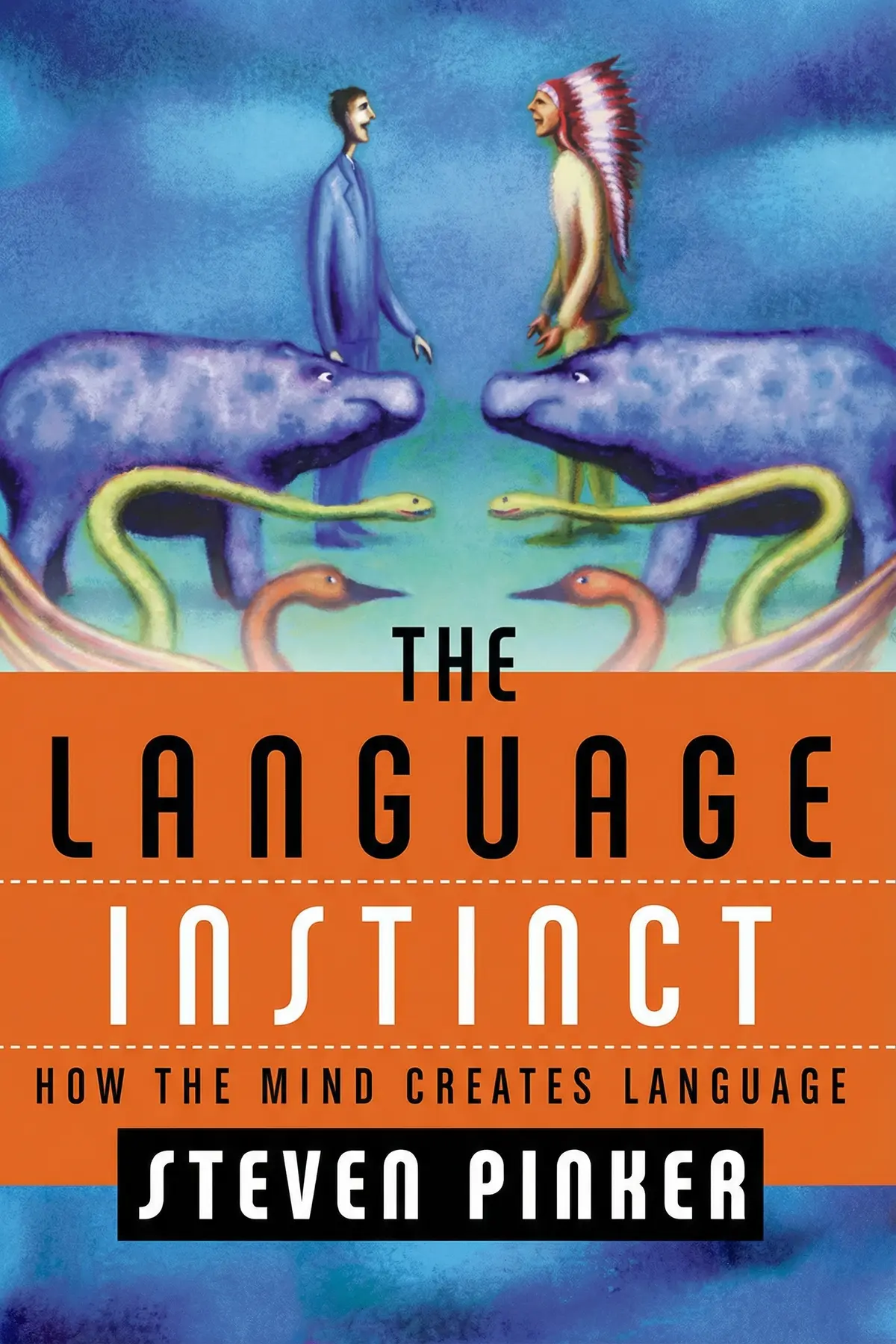
Table of Content
1. Introduction
1 min 55 sec
Have you ever paused to consider the sheer miracle of a simple conversation? Think about the effortlessness with which you turn a fleeting, abstract thought into a structured sequence of sounds, and how someone else—using only their ears and their brain—can reconstruct that exact thought in their own mind. We often take this for granted, viewing language as just another skill we picked up in school, like long division or the names of world capitals. But when you look closer, the mystery deepens. Why is it that a three-year-old child, who cannot yet tie their own shoes or perform basic addition, can master the staggering complexities of grammar and syntax? Why is it that we can learn our first language without ever opening a textbook, yet struggle for years to master a second one as adults?
In this exploration of Steven Pinker’s seminal work, we are going to challenge the common assumption that language is merely a cultural artifact. Instead, we’ll see it for what it truly is: a biological instinct. Much like a spider knows how to weave a web or a beaver knows how to build a dam, human beings are born with a specialized mental faculty designed for communication. This isn’t just a poetic metaphor; it is a scientific reality hardwired into the very fabric of our brains through millions of years of evolution.
As we move through these ideas, we will uncover the deep architecture of human speech. We’ll see how grammar operates as a set of unconscious rules, how we decode the messy stream of sounds that hit our ears, and why the way we speak doesn’t actually limit the way we think. We’ll also look at the evolutionary history that gave us this unique gift and the neurological structures that make it possible. By the end, you’ll have a new perspective on every sentence you speak and hear. You’ll understand that language isn’t just something we do—it’s part of who we are as a species. So, let’s begin this journey into the mind and discover the hidden machinery of the language instinct.
2. The Biological Blueprint of Universal Grammar
2 min 23 sec
Have you ever wondered how a toddler masters complex grammar without a single lesson? This exploration reveals the hidden biological blueprint that makes such an incredible feat of learning possible for every human.
3. Debunking the Myth of Linguistic Relativity
2 min 30 sec
Is it true that the language you speak dictates how you see the world? We examine the famous Whorfian hypothesis to uncover why our thoughts are far more independent of our vocabulary than many believe.
4. The Dual Pillars of Communication
2 min 28 sec
How do we turn a small set of sounds into an infinite number of unique thoughts? Discover the two fundamental principles that allow human language to be both arbitrary and endlessly creative.
5. The Internal Logic of Word Building
2 min 15 sec
Why can a preschooler correctly pluralize a word they have never heard before? Learn about the mental machinery of morphemes and the internal rules our brains use to build and modify words.
6. Decoding the Continuous Stream of Speech
2 min 10 sec
If you look at a digital recording of speech, there are no gaps between words. Explore why our brains can decode this continuous stream of sound while even the most advanced computers often struggle.
7. How the Mind Parses Meaning
2 min 10 sec
Why do certain sentences lead our brains down a dead end, forcing us to restart our internal processing? Discover how the mind acts as a parser, breaking down complex information in real-time.
8. The Critical Window for Language Acquisition
2 min 12 sec
Why is it that a child can absorb a new language like a sponge while adults often struggle for years? We look at the critical biological window that defines our linguistic development.
9. Language as an Evolutionary Masterpiece
2 min 15 sec
If language is a biological trait, how did it first emerge in our ancestors? Delve into the evolutionary journey of speech and see how natural selection carved out our unique capacity for communication.
10. The Conflict Between Manners and Mechanics
2 min 24 sec
Are the rules of “proper” grammar truly the foundation of speech, or just social etiquette? Understand the difference between the innate laws of the mind and the arbitrary rules of the classroom.
11. The Architecture of the Linguistic Mind
2 min 10 sec
Where exactly does language live in the brain? We look at the physical structures that support our speech and explore whether other human behaviors are governed by similar innate instincts.
12. Conclusion
1 min 58 sec
As we wrap up our journey through the landscape of the language instinct, let’s reflect on the profound shift in perspective we’ve encountered. We began by viewing language as a cultural skill, something we learn much like we learn to drive a car or bake a cake. But as we have seen, language is something far more fundamental. It is a biological imperative, a complex and specialized system that is as much a part of our anatomy as our heartbeat or our vision.
We have seen that grammar is not a set of dry, academic rules, but a vibrant, internal logic that allows us to weave an infinite variety of thoughts from a finite set of sounds. We’ve learned that the way we speak doesn’t trap our thinking, but rather gives us a way to share the universal experience of being human. We’ve explored the critical window of childhood, the evolutionary history of our species, and the physical regions of the brain where language lives. All of these threads lead to one inescapable conclusion: we are born to talk. Communication is the very essence of our biological identity.
The next time you find yourself lost in a book, caught in a deep conversation with a friend, or even just listening to the babble of a toddler, take a moment to appreciate the incredible machinery at work. Every sentence you hear is a testament to millions of years of natural selection and the miraculous complexity of the human brain. You aren’t just hearing words; you are witnessing an instinct that defines our species.
So, as you go back to your day, pay attention to the flow of language around you. Don’t worry about the “proper” rules or the supposed limitations of your vocabulary. Instead, celebrate the fact that you possess one of the most complex and beautiful systems in the known universe. Use your language instinct to connect, to create, and to share. After all, it is the gift that makes us truly human.
About this book
What is this book about?
What makes human beings unique in the animal kingdom? While many believe we learn to speak simply by imitating our parents, the reality is far more profound. This summary of Steven Pinker’s work argues that language is not a cultural invention like agriculture or clock-making, but rather a biological instinct—a complex specialized skill that develops in the child spontaneously. We dive deep into the mechanics of the mind, exploring how children master intricate grammatical rules without formal instruction and why all human languages share a deep, underlying structure. You will discover why the popular idea that language limits our thoughts is a myth, and how our brains are specifically organized to process the rapid-fire stream of sounds we call speech. From the evolutionary origins of our vocal abilities to the specific regions of the brain that act as a language organ, this exploration provides a comprehensive look at how the mind creates language. It promises to change the way you think about every word you speak, revealing the hidden biological machinery that makes human connection possible.
Book Information
About the Author
Steven Pinker
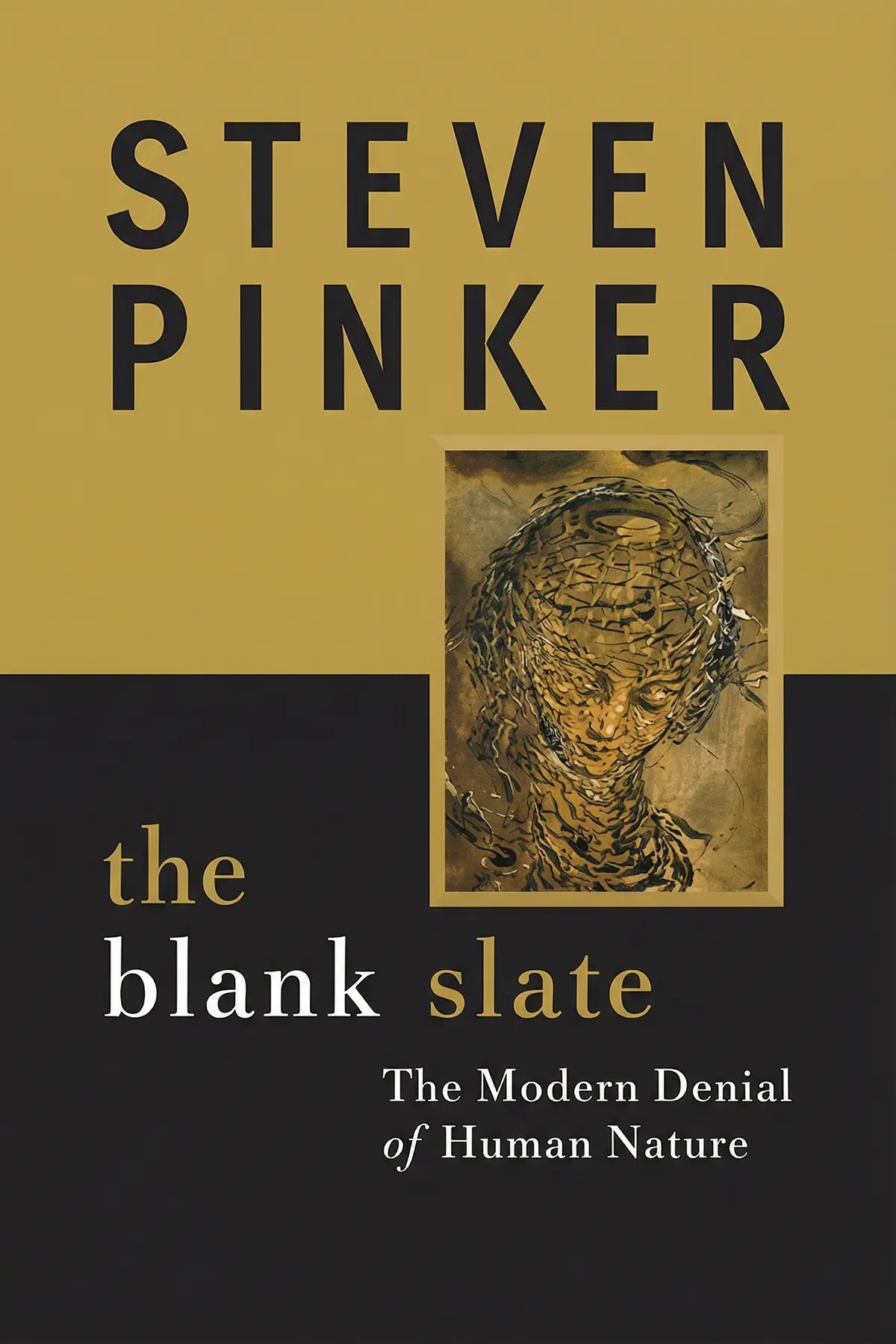
Steven Pinker serves as a professor of psychology at Harvard University and is a renowned experimental psycholinguist. Throughout his distinguished career, he has authored many influential books. Notably, two of his acclaimed works, titled The Blank Slate and How the Mind Works, achieved the prestigious status of being finalists for the Pulitzer Prize.
Ratings & Reviews
Ratings at a glance
What people think
Listeners find the book offers a superb explanation of linguistics and explores the underlying logic of language systems, making it a helpful tool for comprehending how language develops. The prose is captivating, with one listener remarking that it reads like a novel, and listeners value the extensively researched material and its capacity to stimulate thought. Listeners call the experience entertaining and fascinating, with one review noting its detailed investigation into brain structures.
Top reviews
Lillian
Picked this up because I wanted to understand the 'logic' behind our speech, and I was completely blown away. The way Pinker utilizes the mouse-to-elephant evolution example—borrowed from Dawkins—to explain selection pressures in language is a masterclass in scientific communication. It makes the abstract concept of 'Universal Grammar' feel concrete and inevitable. I particularly enjoyed the deep dive into the Great Vowel Shift; it turned what I thought was a dry historical fact into a vibrant story of linguistic survival. This isn't just a textbook; it’s an entertaining journey through our own minds. Every chapter uncovers a new layer of how our brain structures are hard-wired for syntax. Truth is, I used to think language was just a cultural artifact, but Pinker has thoroughly convinced me of its status as a true human instinct. It is well-researched, witty, and profoundly illuminating for the casual reader and the academic alike.
Show moreEleni
Wow, what an absolute whirlwind of information that completely changed how I look at my own thoughts. Pinker manages to make the study of morphemes and syntax feel like a high-stakes detective story. The way he explains how children create complex creole languages from simple pidgins in just one generation is nothing short of miraculous. It provides such a powerful argument for the existence of an innate linguistic blueprint. I also appreciated his takedown of the idea that language determines thought—his critique of neo-Whorfism is sharp and necessary. The book is well-researched but never feels like a dry academic paper; it’s engaging, funny, and deeply respectful of the complexity of the human mind. After reading this, you’ll never take a simple 'hello' for granted again. It’s a valuable resource for anyone who wants to understand the biological roots of our most essential tool. Truly a classic of modern science writing.
Show moreCarter
After hearing so much about the Great Vowel Shift in my English Lit classes, it was amazing to see it explained through the lens of evolutionary biology. Pinker makes the 'logic of language' feel like a puzzle that we are all born knowing how to solve. He treats the reader with intelligence, presenting complex data about brain lesions and child development without ever 'dumbing it down.' I loved the anecdotes about Boston taxi drivers and the various linguist jokes sprinkled throughout; they kept the mood light despite the heavy subject matter. The book reads like a novel, yet it's packed with well-researched content that challenges your assumptions about how we learn. It’s an entertaining and extremely interesting deep look at what’s happening under the hood when we speak. This is one of those rare books that makes you feel smarter for having read it. Simply brilliant.
Show moreGiulia
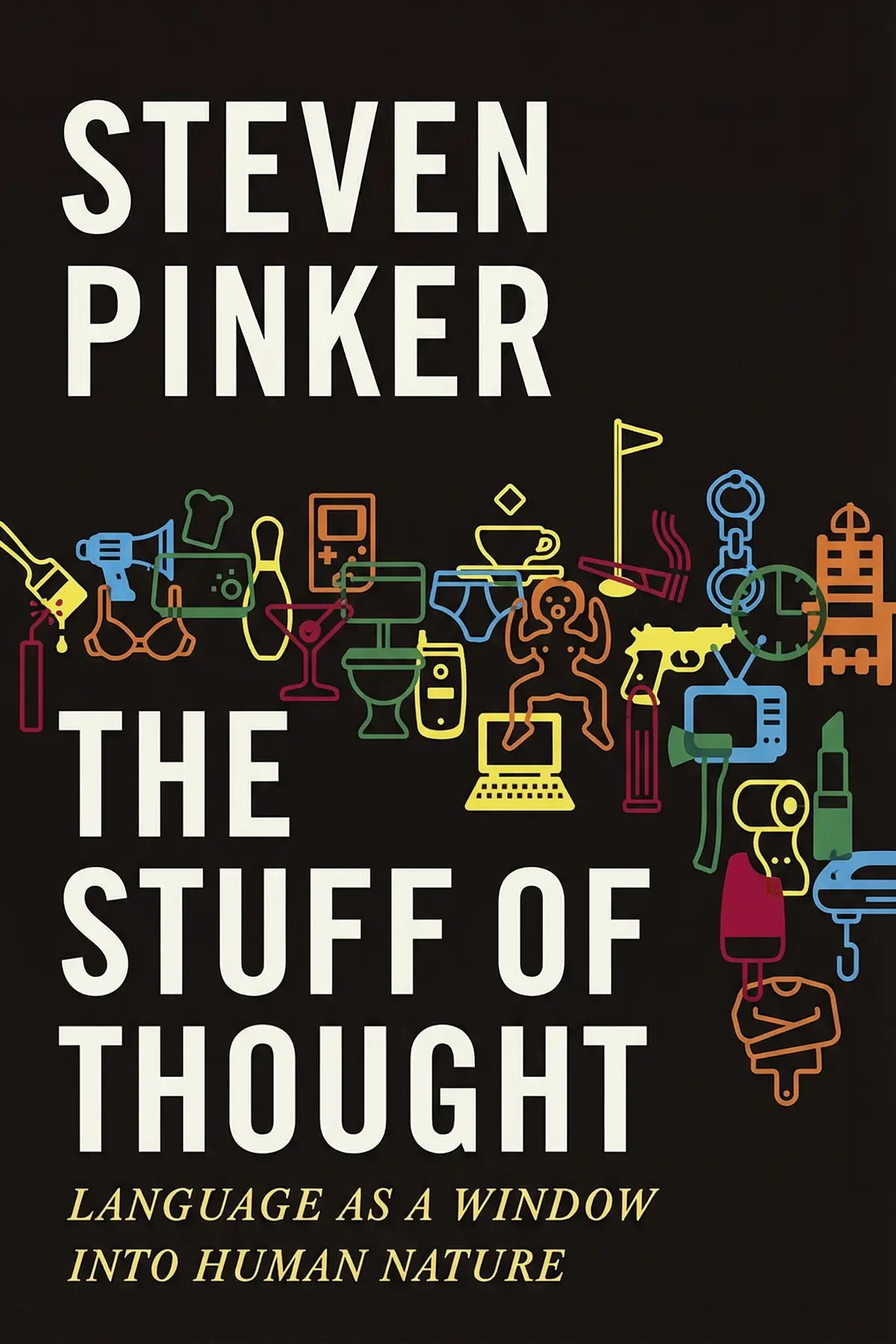
Finally got around to reading this foundational text and it definitely lives up to the hype. Pinker’s ability to link the structure of creole languages to the very wiring of the human brain is just masterly. Compared to his later work like 'The Stuff of Thought,' this feels even more focused and revolutionary. He builds a convincing case that we are 'hard-wired' for communication, making the case for a universal grammar that transcends individual cultures. The book is an absolute whirlwind of information, covering everything from the history of Old English to the latest findings in neurobiology. Not gonna lie, some of the technical sections on syntax trees required a second pass, but the overall message is clear and compelling. It’s a fascinating investigation into the essence of human nature. If you’ve ever wondered why we can say things we’ve never heard before, this book has the answers. Essential reading for any curious mind.
Show moreKet
Ever wonder why human beings are the only ones chatting away while other species remain silent? This book provides a brilliant, almost novel-like exploration into the biological machinery that makes speech possible. Pinker argues convincingly that language isn't just something we learn like knitting; it’s a deep-seated biological impulse, as natural to us as spinning webs is to a spider. I loved the way he broke down complex neurobiology into accessible metaphors. The sections on child development are particularly eye-opening, illustrating how toddlers are essentially 'baby geniuses' when it comes to sussing out the rules of their native tongue. My only gripe is that he occasionally gets distracted by academic feuds that feel a bit dated now. Regardless, the way he connects evolution to our everyday chatter is thought-provoking and stays with you long after you close the cover. It’s a mandatory read for anyone curious about the intersection of the brain and the words we use.
Show moreMontri
As someone who struggled with linguistics in college, I found Pinker’s writing style to be a breath of fresh air. He has a knack for taking intimidating concepts like the 'pluperfect subjunctive' and turning them into the punchline of a genuinely funny joke. The book moves at a brisk pace, building a logical case for language as a specialized module in the brain. I was particularly fascinated by the evidence from sign language and how it follows the same structural rules as spoken tongues. It really reinforces the idea that our drive to communicate is an irrepressible biological force. I did find the middle chapters on sentence structure a bit repetitive, and he can be quite dismissive of the role of social learning. However, the sheer breadth of research on display is impressive. It’s an extremely interesting look at what makes us uniquely human, even if you don't agree with every single one of his reductionist theories.
Show moreGin
The chapter on the 'Grammar Mavens' is worth the price of admission alone, as Pinker deconstructs the arbitrary rules we were all taught in school. He shows that many so-called 'errors' are actually just natural variations in a living, breathing system. Personally, I found his defense of non-traditional dialects quite moving and scientifically sound. The book provides a great explanation of how our brain structures have evolved to handle the 'diabolically tricky' nuances of speech. While I think he oversimplifies the influence of culture on how we perceive the world, his core thesis about the language instinct is very hard to argue with. The text is dense, and you’ll need to pay close attention to the diagrams, but the payoff is a much deeper appreciation for the 'mental legos' we use to build sentences. It’s a thought-provoking read that bridges the gap between biology and the humanities quite effectively.
Show moreSuphan
Pinker’s attempt to synthesize high-level linguistic theory into a pop-science package is mostly successful, but it leaves some bitter aftertastes. While his famous disheveled hair suggests a mad-scientist persona, the writing is actually quite disciplined, though at times it feels like he’s just repackaging Chomsky for the masses. I found his dismissal of the Sapir-Whorf hypothesis a bit too aggressive; he treats cultural influence on thought as if it were a flat-earth theory. To be fair, his explanation of how children impose structure on pidgin languages to create creoles is absolutely mesmerizing. It’s a dense read that occasionally bogs down in tree diagrams that will make your head spin. Still, the logic holds up if you can get past his somewhat condescending tone toward 'Grammar Mavens' and anyone who disagrees with his strict evolutionary perspective. It is a solid introduction, but I’d recommend reading it with a skeptical eye toward his more dogmatic conclusions.
Show moreNiramai
Frankly, this was a bit of a slog, and I’m surprised it’s considered such a masterpiece in the field. Pinker comes across as incredibly arrogant, often attacking 'straw man' versions of opposing arguments rather than engaging with them honestly. He spends so much time trying to prove that he’s smarter than the 'Grammar Mavens' that the actual science of linguistics gets buried under his ego. Some of the logic feels circular—asserting that language is innate because it has structure, and that structure exists because it’s innate. While the digressions into how aphasics process words were mildly interesting, the overall signal-to-noise ratio is frustratingly low. He’s a psychologist trying to play at being a 'real' hard scientist, and it shows in his shoddy reasoning regarding selection pressures. If you want a clear understanding of these ideas, you are better off going straight to the source and reading Chomsky instead of this mess.
Show moreWit
Look, I know this is considered a classic, but I found it to be a miserable pile of unsupported conclusions and knee-jerk contrarianism. Pinker tries to synthesize the ideas of people much smarter than he is, like Chomsky, but he ends up muddling the arguments until they are barely recognizable. His attempt to use evolutionary arithmetic to prove his points is fractally incoherent and shows a deep misunderstanding of how selection pressures actually work. He spends half the book insulting anyone who thinks culture or society might play a role in language development, calling them 'moronic' without providing actual evidence to the contrary. It's essentially a 500-page exercise in arrogance disguised as science. The signal-to-noise ratio is pathetically low, and the constant jokes are just a distraction from the shoddy reasoning. Don't waste your time with this; read a real linguist instead of a psychologist with a loud personality.
Show moreReaders also enjoyed


A Life Decoded: My Genome: My Life
J. Craig Venter

59 Seconds: Change Your Life in Under a Minute
Richard Wiseman

A Planet of Viruses
Carl Zimmer
A Short History of Nearly Everything
Bill Bryson
AUDIO SUMMARY AVAILABLE
Listen to The Language Instinct in 15 minutes
Get the key ideas from The Language Instinct by Steven Pinker, plus 5,000+ more titles in English and Thai.
- 5,000+ titles
- Listen as much as you want
- 7-day free trial
- Cancel anytime







