
23 min
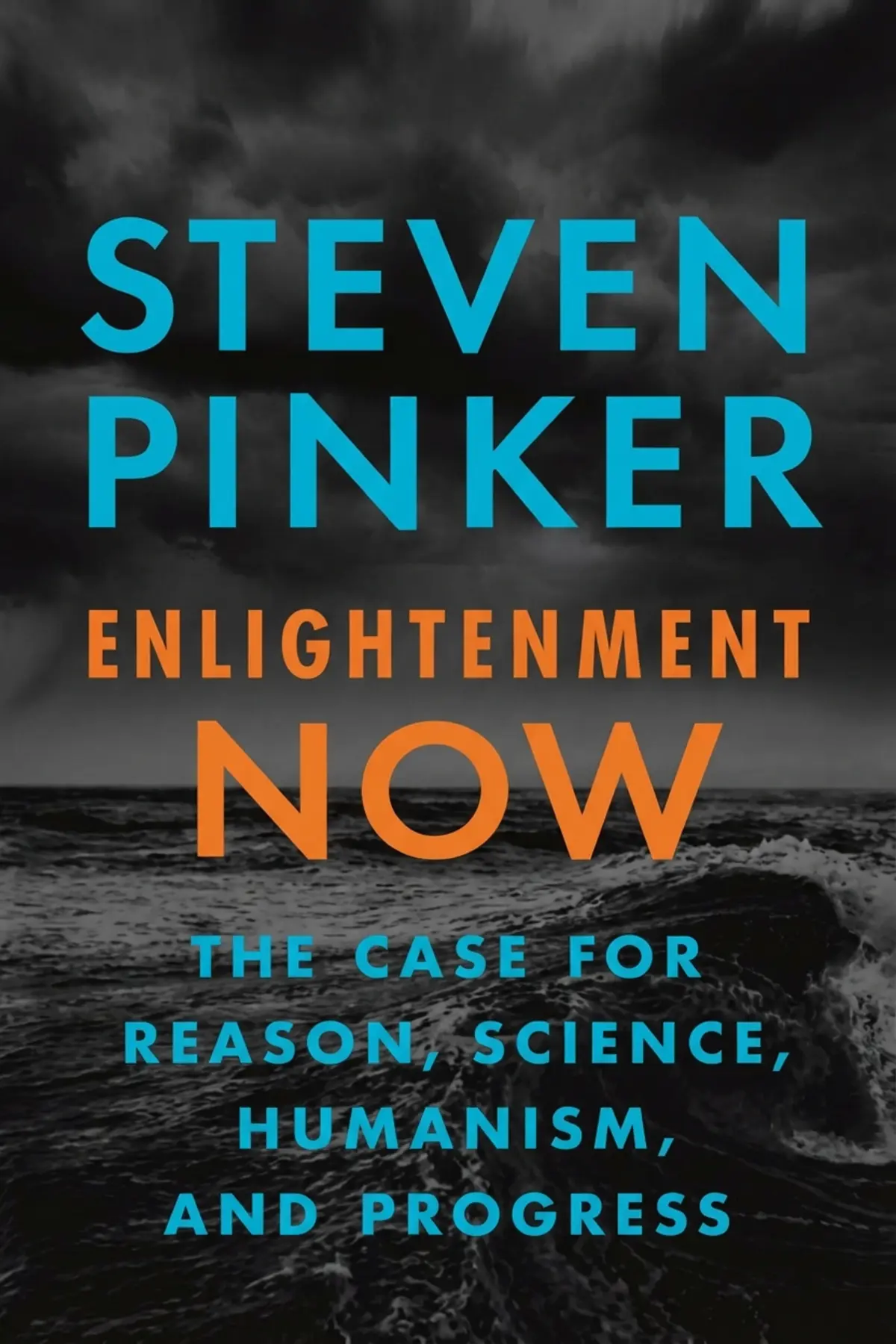
The Sense of Style: The Thinking Person’s Guide to Writing in the 21st Century
A modern, science-based guide to effective writing that prioritizes clarity over rigid rules. Steven Pinker explains how to overcome the curse of knowledge to craft prose that resonates with 21st-century readers.
Table of Content
1. Introduction
1 min 42 sec
Think about the last time you read something that truly moved you. Perhaps it was a long-form essay that changed your perspective, a novel that painted a world more vivid than your own, or even a particularly sharp editorial. What was it that grabbed you? Most of us would point to the author’s voice or their way with words. In short, we would point to their style. But style is often viewed as a mysterious, innate gift—something you either have or you don’t. Steven Pinker, a renowned cognitive scientist and linguist, disagrees. In The Sense of Style, he argues that writing is a craft that can be understood, deconstructed, and mastered through the lens of science and reason.
This isn’t your grandfather’s style guide. We aren’t here to memorize obscure Latinate rules or to learn how to sound like a 19th-century academic. Instead, this summary explores a 21st-century approach to communication. We will look at how the human mind processes information and how you can use that knowledge to make your writing more transparent and more powerful. We’ll examine why experts often struggle to explain simple concepts—a phenomenon known as the curse of knowledge—and how you can break free from it.
Throughout this journey, we’ll move from the smallest units of language, like commas and word choices, to the architecture of an entire argument. The throughline here is simple: good writing is an act of hospitality. It is about guiding a reader through a landscape of ideas with clarity and grace. Whether you are drafting a professional report, a creative piece, or a simple email, the principles we discuss today will help you ensure that your message isn’t just received, but truly understood. Let’s dive into the mechanics of great prose.
2. Learning Style Through Immersion
2 min 27 sec
Mastering the art of writing begins not with a rulebook, but with an appreciation for the great works of others. Discover why reading like a writer is the first step toward excellence.
3. The Power of the Classic Style
2 min 22 sec
Explore a writing philosophy that treats the reader as an equal and the act of writing as a visual tour of the world, leading to unparalleled clarity.
4. Overcoming the Curse of Knowledge
2 min 20 sec
The biggest obstacle to clear writing isn’t a lack of vocabulary, but the inability to remember what it’s like not to know what you know.
5. The Logic of Sentence Architecture
2 min 21 sec
Language is a code, and syntax is the key to unlocking it. Learn why the arrangement of words is just as important as the words themselves.
6. Using the Passive Voice Strategically
2 min 27 sec
Contrary to popular belief, the passive voice isn’t always the enemy. Discover when to swap ‘the dog bit Jack’ for ‘Jack was bitten’ to improve your narrative flow.
7. Creating Coherence and Narrative Flow
2 min 20 sec
A collection of great sentences does not a great book make. Learn how to bridge your ideas and build a structural arc that keeps readers engaged.
8. Usage Over Rigid Purism
2 min 42 sec
Is it ‘less’ or ‘fewer’? Steven Pinker explains why many of the rules grammar purists obsess over are actually based on myths and dead languages.
9. Precision and Avoiding Word Pitfalls
2 min 39 sec
Learn to distinguish between ‘who’ and ‘whom’ and avoid the ‘malaprops’ that can undermine your credibility as a writer.
10. Conclusion
1 min 40 sec
As we reach the end of our exploration into Steven Pinker’s approach to writing, the central theme remains clear: writing is an act of empathy. It is the process of translating the complex, messy thoughts in your head into a form that someone else can easily digest. This requires more than just a mastery of grammar; it requires a deep understanding of the human mind and a commitment to clarity over ego.
We’ve learned that style isn’t about following a dusty set of prohibitions, but about making strategic choices that serve the reader. Whether you are choosing the ‘classic style’ to explain a difficult concept, strategically using the passive voice to maintain focus, or breaking a ‘false rule’ to improve the rhythm of a sentence, your goal should always be the same: to be a hospitable guide. By recognizing and defeating the ‘curse of knowledge,’ you can bridge the gap between your expertise and your reader’s understanding.
One of the most practical steps you can take to improve your work immediately is to read your drafts aloud. This simple act reveals the hidden rhythm—or lack thereof—in your prose. If you find yourself tripping over a sentence or running out of breath, it’s a sign that your syntax needs work. Clear writing should have a musicality to it; it should feel like a natural conversation between equals.
Ultimately, mastering style is a lifelong journey. It involves continuous reading, careful observation, and a willingness to revise. But by focusing on the principles of logic, clarity, and reader-centricity, you can ensure that your writing is not just a collection of words on a page, but a vivid and meaningful experience for anyone who reads it. Take these tools, apply them with care, and give your ideas the style they truly deserve.
About this book
What is this book about?
The Sense of Style offers a refreshing take on the craft of writing by blending traditional style guidance with modern linguistics and cognitive science. Rather than simply listing do’s and don’ts, Steven Pinker explores the psychological reasons behind why some writing succeeds and why much of it fails. He identifies the 'curse of knowledge' as a primary barrier to clear communication and advocates for a 'classic style' that treats the reader as an equal. Through an analysis of both masterful prose and common linguistic pitfalls, the book provides a roadmap for anyone looking to improve their communication. It covers everything from sentence structure and the strategic use of the passive voice to the evolution of grammar rules. The promise of the book is that by understanding the mental mechanics of language, writers can produce work that is not only clear and concise but also engaging and elegant.
Book Information
About the Author
Steven Pinker
Steven Pinker, who serves as Chair of the Usage Panel of the American Heritage Dictionary, is an award-winning linguist and cognitive scientist. A professor at Harvard University’s Department of Psychology, he is the author of numerous best-selling books, including Words and Rules and The Language Instinct.
The Blank Slate: The Modern Denial of Human Nature
Steven Pinker
The Language Instinct: How the Mind Creates Language
Steven Pinker
Ratings & Reviews
Ratings at a glance
What people think
Listeners find this book a total joy to consume, authored by a renowned linguist who offers engaging examples and useful guidance based on scientific research. It merges profound academic expertise with rules of syntax and grammar, and listeners value its intellectually stimulating nature, specifically the observations on cognitive psychology and language shibboleths. Although listeners consider it a valuable resource for reference, some remark that parts of it can be a slog to read.
Top reviews
Pongpan
Steven Pinker has managed to do the impossible by making a grammar guide actually enjoyable to read. Instead of just barking orders about what not to do, he uses his background in cognitive science to explain why our brains struggle with certain types of sentences. Frankly, the concept of the 'Curse of Knowledge' was a total revelation for me. It explains exactly why smart people often write such impenetrable, soggy prose—they simply cannot imagine what it is like not to know what they know! Pinker’s wit is sharp throughout, and his defense of the 'classic style' makes so much sense in a world filled with corporate doublespeak. While the tree diagrams in the middle were a bit technical, the overall logic is undeniable. This isn't just a book about where to put a comma; it is a masterclass in how to respect your reader’s intelligence. If you want to move beyond the rigid superstitions of your high school English teacher, start here.
Show moreSupachai
The chapter on tree diagrams might look scary at first, but the logic behind it is pure gold once you wrap your head around it. Pinker argues that grammar should be about clarity, not blind obedience to arbitrary rules. I love how he tackles the 'Curse of Knowledge' because I see it every single day in technical manuals. He encourages writers to be visual and conversational. This book is a delight because it treats the English language with the respect it deserves while stripping away the snobbery. His stance on the Oxford comma alone makes him a hero in my book! Each page is packed with examples that show you exactly how to transform soggy, abstract prose into something sharp and engaging. It’s rare to find a book that is this intellectually stimulating while also being deeply practical. If you care about the craft of writing, this belongs on your shelf right next to the dictionary.
Show moreTee
Wow, a style guide that actually treats the reader like an equal instead of a student in detention. Pinker’s approach is so refreshing because it's rooted in how we actually think and speak. He replaces the 'thou shalt nots' of traditional grammar with a philosophy of 'classic style' that emphasizes vision and conversation. I found his analysis of 'zombie nouns'—those clunky abstractions that suck the life out of prose—to be particularly helpful. The book is filled with wit and authority, as you’d expect from a member of the American Heritage Dictionary's Usage Panel. It’s more than just a list of tips; it’s a defense of clear thinking. While some sections are definitely more technical than others, the overall impact on my writing was immediate. I’ve started cutting out the 'hedging' and 'signposting' that used to clutter my work. This is the new standard for anyone who wants to write with impact.
Show moreAmelia
After hearing so many people rave about this, I can confirm the praise is well-deserved. Pinker uses his massive brain to help us understand why we write such confusing stuff. The highlights for me were the sections on how to maintain coherence across a long piece of text. It's one thing to write a good sentence; it's another to build a logical argument. He shows you how to do both with style. I also appreciated his take on 'monologophobia'—the irrational fear of repeating a word. Sometimes, using the same word is actually the clearest way to go! The book is a fascinating blend of cognitive psychology and practical writing advice. It’s not a light read, but it’s an incredibly rewarding one. He makes you realize that good writing isn't a gift; it's a skill that involves constant revision and a deep empathy for your reader. Simply an absolute delight for any language nerd out there.
Show morePhu
Picked this up after struggling with my own professional reports, and it offered a much-needed fresh perspective. Pinker treats language as a living thing rather than a set of museum relics. The truth is, most of us write poorly because we are trying to sound 'professional' by using zombie nouns and endless passives. Pinker’s advice on how to guide the reader’s gaze toward concrete imagery is incredibly practical. I found the side-by-side comparisons of bad versus improved sentences to be the most helpful part of the book. You can see the clarity emerge right before your eyes. My only gripe is that it can feel a bit pedantic when he starts critiquing other style guides. Still, his authority as the chair of the Usage Panel shines through. It is a thought-provoking read that will definitely make you second-guess your next draft. Highly recommended for anyone who wants to communicate with more grace and less gobbledygook.
Show moreNang
Finally got around to reading this, and I have to say, the psychological angle on writing is what sets this apart. Pinker isn't just repeating rules from the 1920s; he's showing us how the mind processes syntax. Look, writing is hard work, and this book doesn't sugarcoat that. It demands your full attention. I particularly enjoyed the sections on coherence and how to lead a reader logically from one idea to the next. The way he explains the 'topic, then comment' structure changed how I organize my paragraphs. However, it’s not a quick read. Some of the linguistic jargon is a bit heavy-handed for a general audience. You might find yourself re-reading sentences just to keep up with his explanations of how sentences work. Despite the occasional dry patch, the insights into language shibboleths are worth the price of admission alone. It’s a solid 4-star resource for any serious wordsmith.
Show moreHemp
Gotta say, I never thought I’d care so much about the difference between a preposition and a superstition. Pinker does a fantastic job of debunking the 'rules' that were just made up by grumpy grammarians centuries ago. He focuses on what actually makes writing work: clarity, coherence, and a touch of style. The way he explains how to weave sentences together so they flow naturally is worth the read alone. In my experience, most people write like they're trying to hide their meaning, and Pinker gives you the tools to stop doing that. My only complaint is that the book is a bit bulky. It’s not something you can just toss in your bag and flip through for a quick tip. It requires a quiet room and a focused mind. If you're willing to put in the effort, you'll come away with a much deeper understanding of how to communicate effectively. A very smart, very necessary book for the modern age.
Show morePrapaiwan
Ever wonder why style manuals feel like they are written for robots? Pinker tries to avoid that trap, but he doesn't always succeed. The first hundred pages are absolutely brilliant, especially his breakdown of how 'classic style' creates a conversation between writer and reader. However, the book becomes a real slog once he dives into the linguistic tree diagrams. I understand he’s an eminent linguist, but those sections felt more like a dense textbook than a guide for the casual writer. To be fair, his alphabetical list of usage errors at the end is quite handy for reference. He debunks a lot of old-fashioned myths, like the silly ban on splitting infinitives, which I appreciated. But man, those middle chapters were a grind to get through. It is a strange hybrid of a pop-science book and a technical manual. Useful? Yes. A page-turner? Not exactly.
Show moreJong
As someone who writes for a living, I found the first half of this book revolutionary, but then it hit a wall. Pinker’s critique of 'highfalutin gobbledygook' is spot on. He has a great sense of humor and isn't afraid to call out academic pretension. But then come the diagrams. I personally found the focus on the internal structure of sentences a bit overkill for a style guide. Not gonna lie, I skimmed the last third of the book. It felt like he was trying to settle scores with other linguists rather than helping me write a better blog post. It's definitely better than Strunk & White in terms of logic, but it lacks the brevity that makes a guide 'handy.' Use it as a reference, but don't feel guilty if you can't read it cover-to-cover. It’s a bit of a mixed bag: half genius, half tedious linguistic theory.
Show moreHassan
Not what I expected given the hype surrounding Pinker's other works. I found this incredibly dense and, frankly, quite boring. I was looking for a modern style guide, but what I got was a deep dive into linguistics that felt more like a lecture than a helpful tool. The sentence diagrams are a nightmare. Who actually diagrams sentences in their spare time? The author is clearly brilliant, but he seems to have fallen into his own 'Curse of Knowledge' trap here. He assumes the average reader wants to know the neurological reasons why a prepositional phrase works a certain way. I just wanted to know how to write better emails and reports. It’s too academic for the casual writer and too long-winded for a quick reference. There are much better, more concise books out there if you just want to improve your prose without getting a PhD in linguistics first.
Show moreReaders also enjoyed
AUDIO SUMMARY AVAILABLE
Listen to The Sense of Style in 15 minutes
Get the key ideas from The Sense of Style by Steven Pinker, plus 5,000+ more titles in English and Thai.
- 5,000+ titles
- Listen as much as you want
- 7-day free trial
- Cancel anytime







