
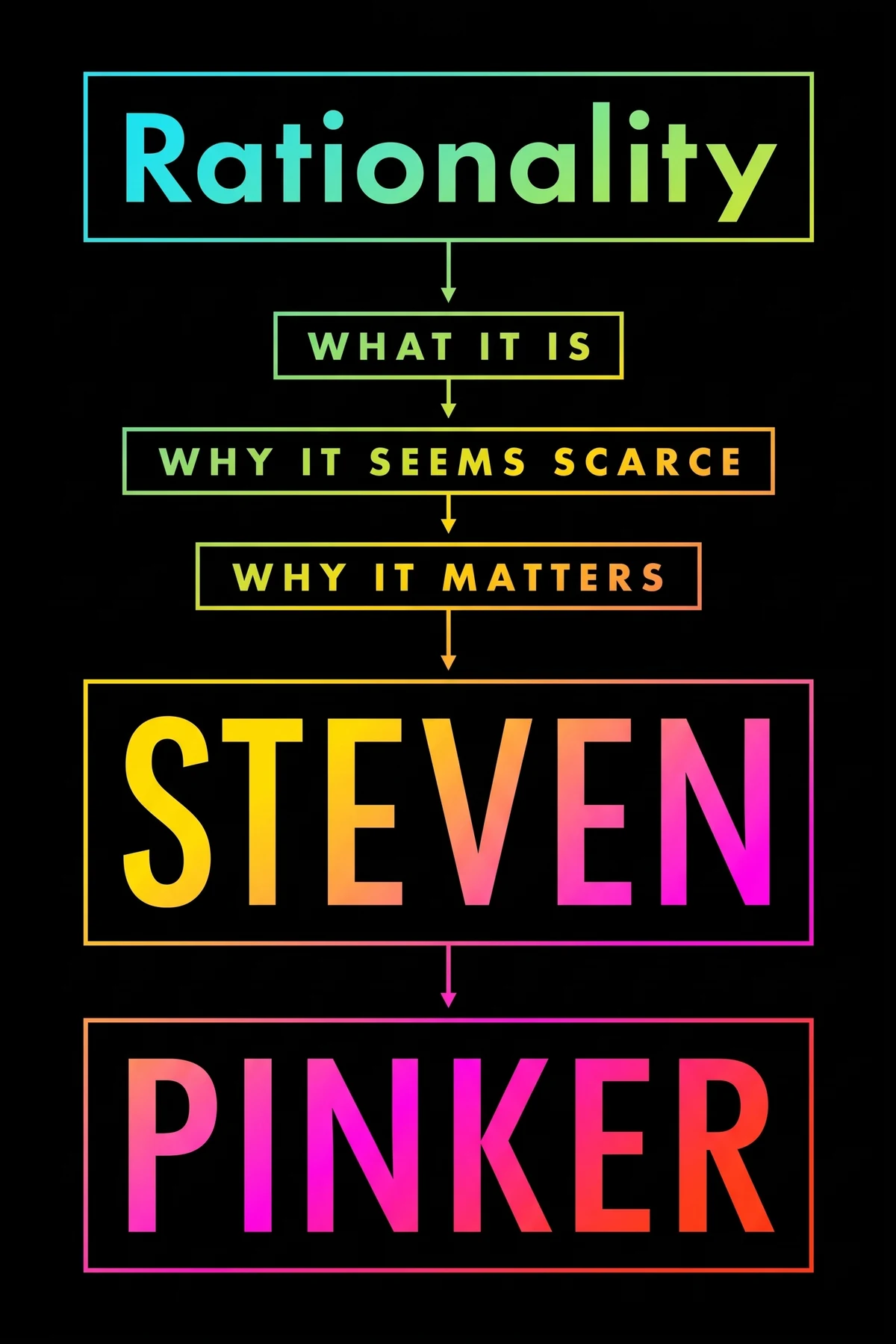
27 min 54 sec
Enlightenment Now: The Case For Reason, Science, Humanism, and Progress
Enlightenment Now challenges modern pessimism by using data to prove that reason, science, and humanism have led to unprecedented global progress in health, wealth, safety, and overall human flourishing.
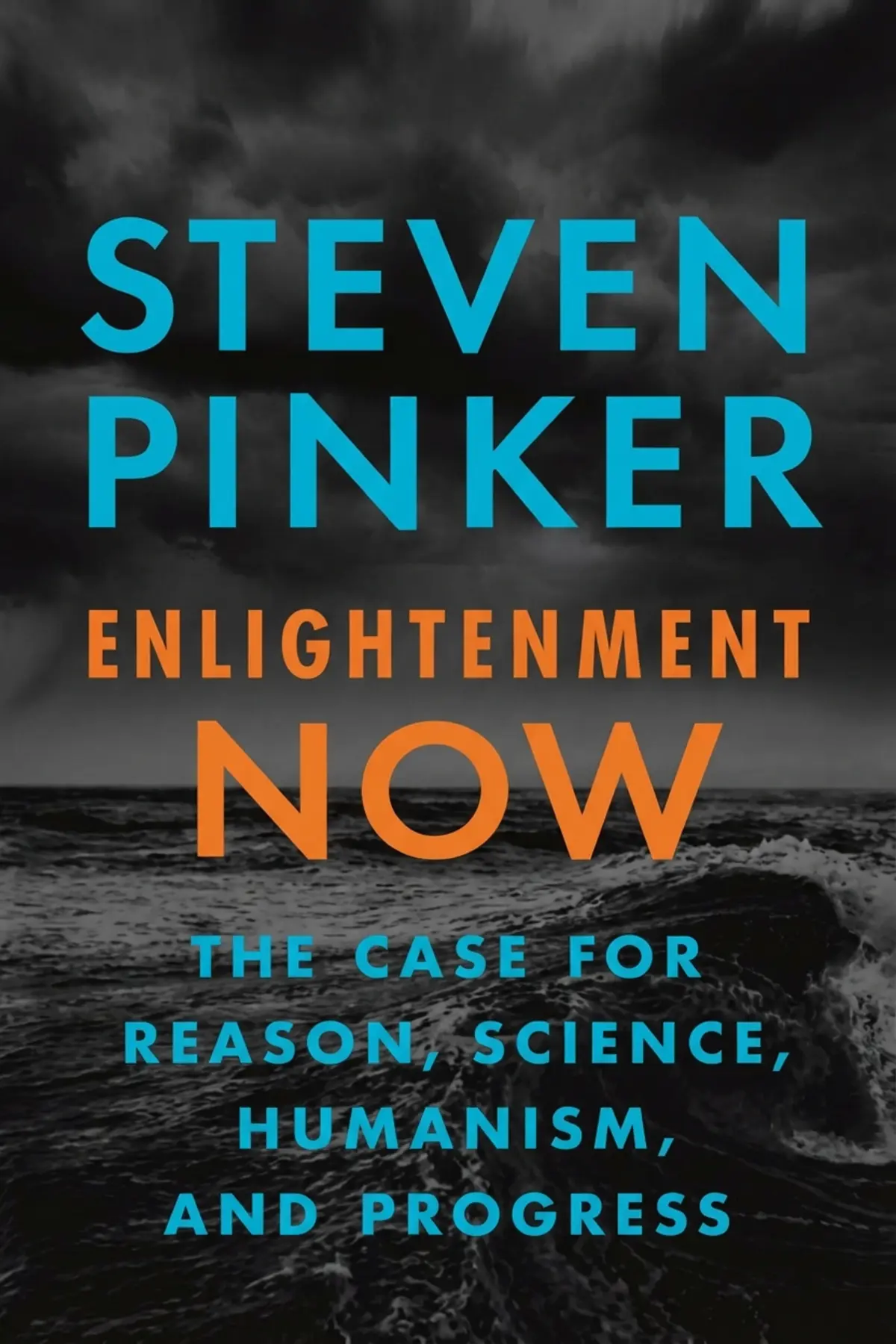
Table of Content
1. Introduction
2 min 01 sec
When you wake up and check your phone or turn on the television, the world often looks like a series of unfolding disasters. We see footage of natural catastrophes, political upheaval, and economic instability. It is easy to fall into the trap of believing that humanity is on a downward spiral, losing its grip on the stability our ancestors fought so hard to build. This sense of impending doom is not just a personal feeling; it is a cultural mood that defines much of modern life. We are told that our environment is dying, our societies are more divided than ever, and that the promise of the future has been replaced by a dark, uncertain reality.
But what if this narrative is fundamentally wrong? What if the very tools we use to perceive the world—like the 24-hour news cycle—are designed to highlight the exceptions rather than the rules of human existence? This summary invites you to step back from the frantic noise of the present and look at the big picture. Through the lens of data and history, we can see that we are actually living through an era of unparalleled success. Life is longer, healthier, safer, and wealthier than at any point in the history of our species. This is not a matter of opinion or wishful thinking; it is a measurable reality backed by centuries of hard evidence.
The secret to this success lies in a specific set of values that took root several centuries ago during a period we now call the Enlightenment. By prioritizing reason over superstition, science over dogma, and humanism over tribalism, we have built a world that provides more flourishing for more people than ever before. This journey will take us through the statistics of human progress, explaining why we often miss the good news and how we can double down on the principles that made this progress possible. It is a call to reclaim our confidence in the power of the human mind and to recognize that, while we still face significant challenges, we have never been better equipped to solve them.
2. The Pillars of the Enlightenment
2 min 36 sec
Discover how a shift in European thought replaced ancient superstitions with a framework of reason and science, forever changing the course of history.
3. The Constant Battle Against Entropy
2 min 18 sec
Learn why the universe is naturally inclined toward chaos and how human knowledge acts as the ultimate shield against decline.
4. The Remarkable Rise in Global Health
2 min 33 sec
Explore the staggering data behind our increased life expectancy and the near-total defeat of history’s most feared diseases.
5. Escaping the Trap of Extreme Poverty
2 min 29 sec
Uncover how international trade and social safety nets have transformed a world of bone-grinders into a global middle class.
6. Living in the Most Peaceful Era
2 min 27 sec
Challenge the headlines by looking at the long-term data on war, murder, and global conflict in the twenty-first century.
7. The Global Expansion of Human Rights
2 min 21 sec
Trace the decline of tyranny and the rise of democratic values that protect individuals from oppression and prejudice.
8. Overcoming the Culture of Fear
2 min 25 sec
Examine why our brains are wired to overestimate risks like terrorism and AI, and how to reclaim a rational perspective on safety.
9. The Vital Defense of Science
2 min 17 sec
Learn why science is often unfairly blamed for history’s atrocities and why it remains our best tool for solving future crises.
10. The Resilience of the Modern World
2 min 21 sec
Discover why recent surges in populism and nationalism are likely a temporary backlash rather than the end of global progress.
11. A Rational Case for Optimism
2 min 05 sec
Summarize the evidence for human flourishing and learn why staying committed to Enlightenment values is the key to our future.
12. Conclusion
2 min 01 sec
In the end, the message of Enlightenment Now is one of profound and grounded hope. We have seen that the history of the last few centuries is not a tale of inevitable decay, but a record of magnificent human achievement. By choosing to prioritize reason, science, and humanism, we have built a world that is objectively better in almost every way. We live longer, we suffer less from disease and hunger, and we have created societies that are more just and less violent than ever before. This is the great throughline of our modern era: the slow, steady triumph of the human mind over the chaos of the natural world.
However, this progress is not a perpetual motion machine. It requires our active participation and our intellectual defense. We must be willing to look past the sensationalism of the daily news and the pessimistic rhetoric of cultural critics to see the underlying reality of our success. The challenges we face today are real, but they are not unique. Every generation has faced its own ‘existential’ crises, and every generation that has stayed committed to the values of the Enlightenment has found a way through. The path forward is not to return to a mythical past of tribalism or superstition, but to double down on the rational tools that have served us so well.
As you move forward, carry this perspective with you. When you encounter a new problem, don’t ask if the world is ending; ask what knowledge we need to solve it. When you hear a claim of impending doom, look for the data. By cultivating a mindset of rational optimism, you become part of the ongoing project of progress. We are the beneficiaries of an intellectual revolution that changed everything, and it is now our responsibility to keep that flame burning for the generations to come. The world is getting better, and with our continued commitment to reason and humanism, it will continue to do so.
About this book
What is this book about?
If you follow the headlines, it feels like the world is teetering on the edge of a total collapse. We are bombarded with stories of war, rising inequality, and impending environmental doom. But what if the news is giving us a distorted view of reality? Enlightenment Now makes the compelling case that we are actually living in the most prosperous and peaceful era in human history. By looking at long-term data rather than daily anecdotes, we see a story of dramatic improvement across every measurable metric of well-being. The book promises to shift your perspective from one of despair to one of grounded optimism. It traces our current success back to the values of the Enlightenment—specifically reason, science, and humanism. These are the tools that allowed us to conquer diseases, reduce extreme poverty, and expand human rights. By understanding how these principles have worked in the past, we can find a clear path forward to solve the remaining challenges of the twenty-first century. This is a roadmap for anyone who wants to understand the true state of the world and the intellectual framework required to keep the momentum of progress going.
Book Information
About the Author
Steven Pinker
Steven Pinker is a highly respected professor of cognitive science and linguistics at Harvard University. Known for his ability to translate complex scientific concepts for a general audience, he is a frequent contributor to major publications such as the New York Times and the Atlantic. His expertise is further recognized through his role on the usage panel for The American Heritage Dictionary. Pinker has authored several influential books on popular science and psychology that have become cultural touchstones, including The Language Instinct and How the Mind Works.

The Blank Slate: The Modern Denial of Human Nature
Steven Pinker
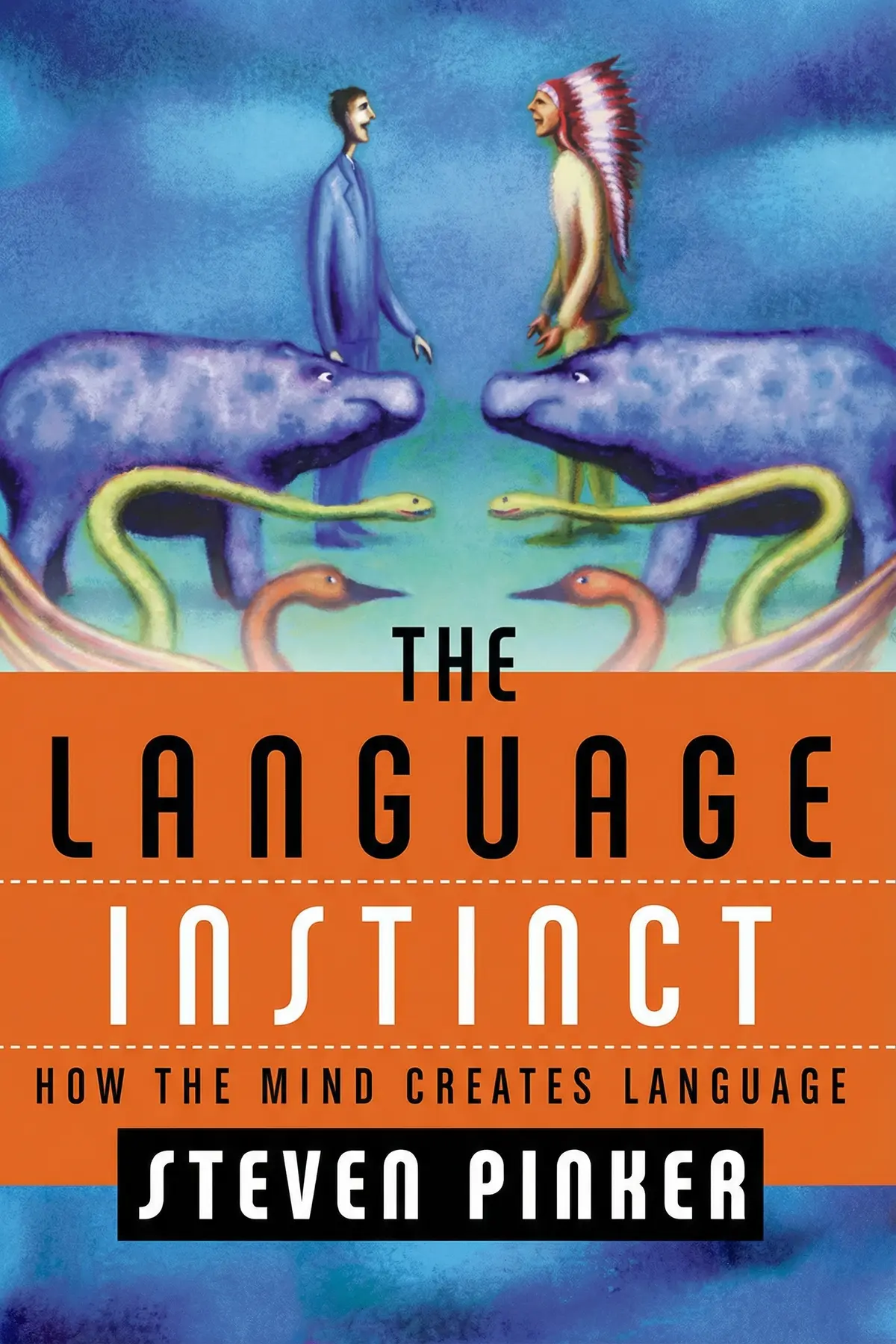
The Language Instinct: How the Mind Creates Language
Steven Pinker
Ratings & Reviews
Ratings at a glance
What people think
Listeners consider this work essential reading because of its thorough research and extensive data, with one review highlighting the way the author bases his analyses on evidence. Listeners view it as a persuasive philosophical argument for positivity that leaves them feeling hopeful, while one person emphasizes the expert treatment of significant concepts. The quality of the writing earns high marks, as one listener points out that the prose is full of precise meaning. Although many find the content engaging, some listeners feel the material becomes tedious after a while.
Top reviews
Kob
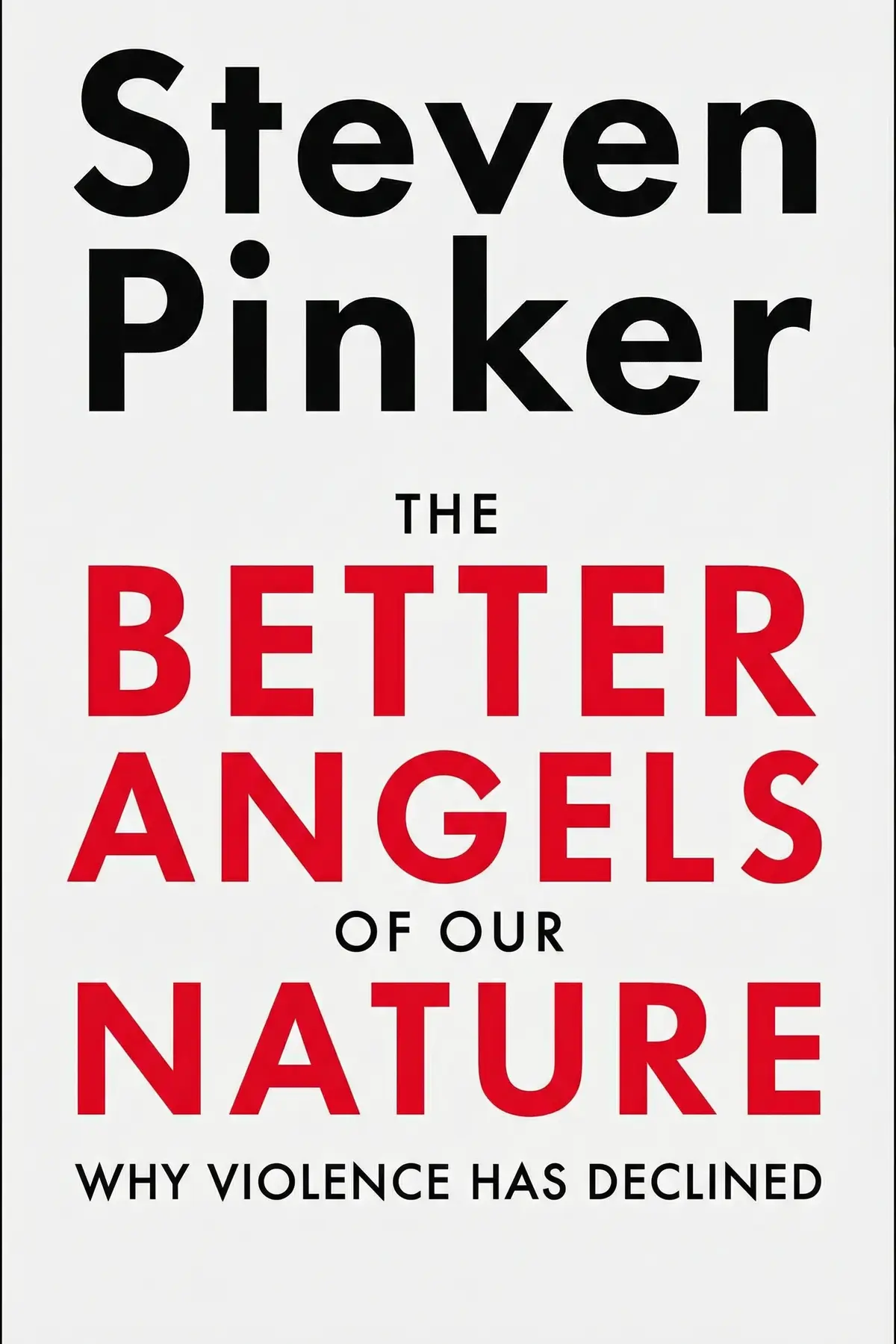
After hearing about The Better Angels of Our Nature for years, I finally committed to Pinker’s newest deep dive into human progress. It’s an absolute masterclass in data-driven optimism that makes a compelling case for the values of reason and science. While the charts are dense, they paint a picture of a world that is getting demonstrably better in almost every category, ranging from global literacy and longevity to the decline of extreme poverty and violence. I found the section on 'human flourishing' particularly moving because it moves beyond mere survival to what actually makes life worth living. It’s a dense read, but one that leaves you feeling significantly more hopeful than when you started.
Show moreAna
This book is a masterful defense of humanism that manages to be both intellectually rigorous and deeply inspiring. Pinker’s writing style is incredibly precise, packing every sentence with meaning without making the text feel inaccessible to a casual reader. I was especially struck by the analysis of how much time we’ve reclaimed from household drudgery thanks to technological innovation. It’s easy to take things like washing machines for granted, but he shows how these small betterments aggregate into massive leaps in human freedom. If you need a solid reason to believe in the future again, this is the book you should pick up immediately.
Show moreSaowalak
The chapter on global health and the eradication of diseases like smallpox serves as a powerful reminder of what humanity can achieve when we prioritize science. Pinker doesn't just offer positive vibes; he builds a massive, undeniable wall of facts to prove that we are winning the war against entropy. His prose is remarkably elegant and precise for such a data-heavy book. I loved how he compared modern quality of life to that of the ultra-wealthy in past centuries to show our progress. This book has fundamentally changed the way I perceive the daily news cycle and fills me with genuine hope for the next generation.
Show morePawinee
Look, it’s rare to find a book that is both a heavy-duty academic work and a genuine page-turner, but Pinker somehow pulls it off with his signature clarity. He builds on the themes from his previous work but expands the scope to cover fifteen different measures of human progress. The result is a holistic picture of our species' development that feels fresh and vital in our current political climate. I particularly appreciated his take on the 'Flynn Effect' and how our collective IQ is rising as our environments become more cognitively demanding. This isn't just a book of statistics; it's a manifesto for a better way of thinking about our world.
Show moreTuck
Wow, what a refreshing change of pace from the doom-scrolling that defines most of our modern political discourse! Steven Pinker has delivered a tour de force that reminds us that progress is not an accident but a result of specific values. By focusing on humanism and reason, he shows how we’ve managed to slash child mortality and extreme poverty across the globe in ways that feel almost miraculous. The book is packed with precise meaning and avoids the fluff you often find in common non-fiction. Reading this book requires a significant time commitment, but the payoff is a much clearer understanding of our world.
Show moreSun
Ever wonder why the evening news is so relentlessly negative when we’re living in the most prosperous era of history? Pinker answers this by dissecting our psychological biases toward pessimism. Truth is, some of the middle chapters on energy and the environment got a bit repetitive and dry for my taste. However, the overall argument for Enlightenment ideals as the engine of our success is hard to ignore. It’s a well-researched, must-read volume for anyone who wants to understand actual historical trends rather than just the scary headlines. The prose is packed with precise meaning and really fills you with a sense of perspective.
Show moreAurora
Picked this up because I was feeling pretty cynical about the world's current trajectory and needed a reality check. Pinker provides that much-needed clarity in spades throughout every chapter. He uses data to show that poverty, war, and even domestic violence are on a long-term downward trend. My only real gripe is that the author’s tone can occasionally feel a bit condescending toward anyone who doesn't share his unwavering techno-optimism. Despite that, the weight of the evidence makes it a compelling philosophical case for why we shouldn't give up. It’s a thick book, but the thematic structure makes it relatively easy to digest.
Show moreSukit
As someone who appreciates data over rhetoric, I found the seventy-plus charts in Enlightenment Now incredibly illuminating and worth the price of admission alone. Pinker does a great job explaining why our brains are wired to fixate on the negative, which helps explain the gap between reality and perception. Not gonna lie, the book is quite long and I definitely hit a wall during the more philosophical segments toward the end. However, the core sections on wealth and safety are filled with 'aha!' moments that I’ve been sharing with everyone I know. It's an essential read for anyone who wants to base their worldview on facts.
Show moreCholada
Not what I expected, though I can't deny the sheer volume of meticulous research Pinker poured into these five hundred pages. While I agree that science and reason are vital, I found his dismissal of certain criticisms regarding inequality and environmental limits to be a bit too flippant. The book is definitely packed with fascinating facts, like the decline in lightning-strike deaths, but it can get quite boring during the long statistical stretches. To be fair, it’s a great reference work, but it feels more like a long editorial than a balanced exploration. It’s worth a look for the data, but keep a critical eye on his interpretations.
Show moreWyatt
Frankly, this feels like a 500-page exercise in cherry-picking data to support a very specific, overly comfortable Western worldview. While it’s nice to hear that things are 'getting better,' Pinker’s breezy dismissal of the existential risks of AI and the widening gap of inequality felt intellectually dishonest. The prose is certainly high-quality, but the tone is so relentlessly smug that it becomes difficult to engage with the actual arguments. He treats every problem as something that will inevitably be solved by more science, ignoring the messy political and social realities that often get in the way. It was an interesting read, but I found it more frustrating than helpful.
Show moreFeatured in
Readers also enjoyed
21 Lessons for the 21st Century
Yuval Noah Harari

A Different Kind of Power: A Memoir
Jacinda Ardern

Age of Anger: A History of the Present
Pankaj Mishra
A Higher Loyalty: Truth, Lies and Leadership
James Comey
Age of Propaganda: The Everyday Use and Abuse of Persuasion
Anthony Pratkanis

A Promised Land
Barack Obama

A River in Darkness: One Man’s Escape from North Korea
Masaji Ishikawa
AUDIO SUMMARY AVAILABLE
Listen to Enlightenment Now in 15 minutes
Get the key ideas from Enlightenment Now by Steven Pinker, plus 5,000+ more titles in English and Thai.
- 5,000+ titles
- Listen as much as you want
- 7-day free trial
- Cancel anytime







