
22 min 56 sec
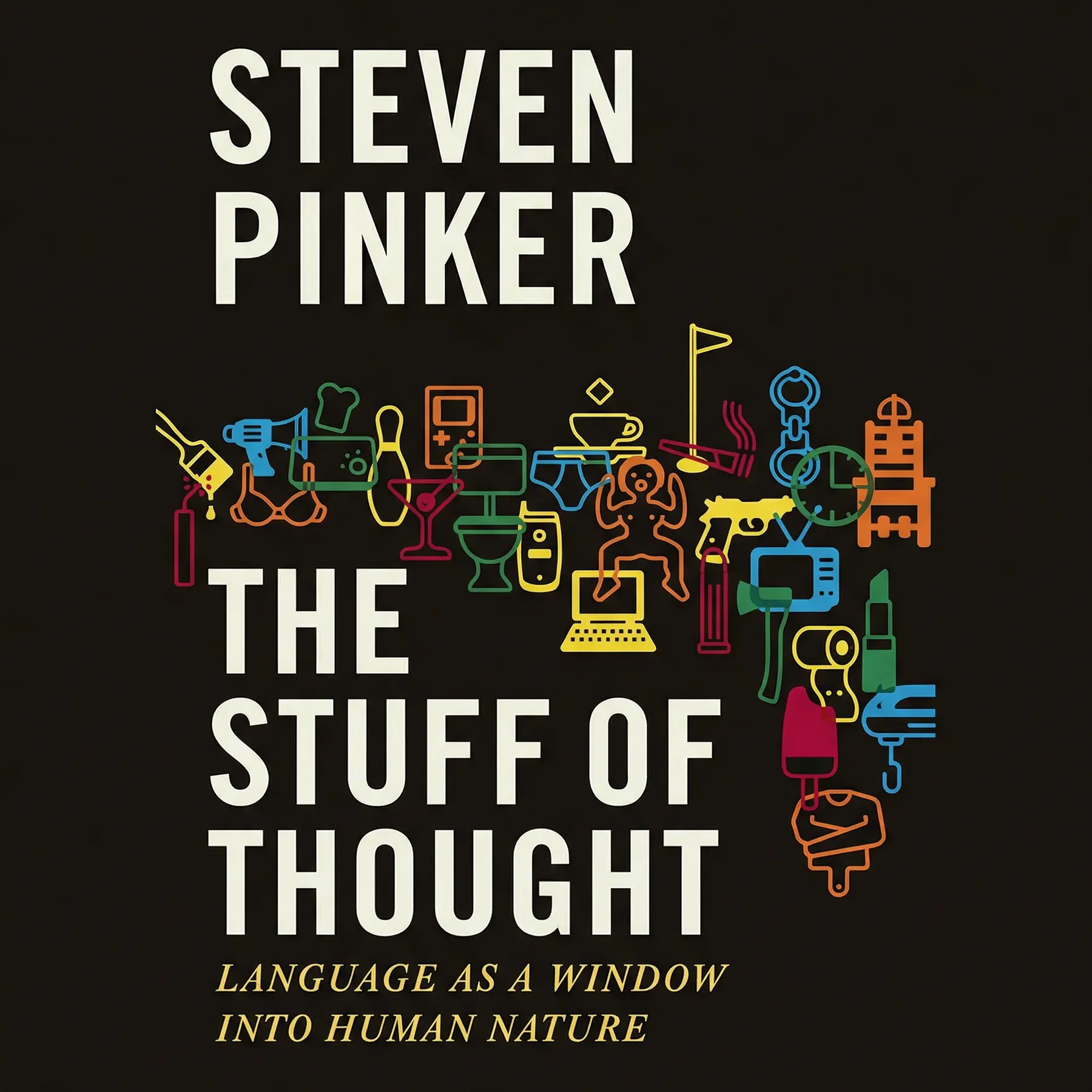
The Stuff of Thought: Language as a Window into Human Nature
A deep dive into how our everyday language reveals the hidden architecture of the human mind, exploring the connection between the words we choose and our fundamental concepts of reality.
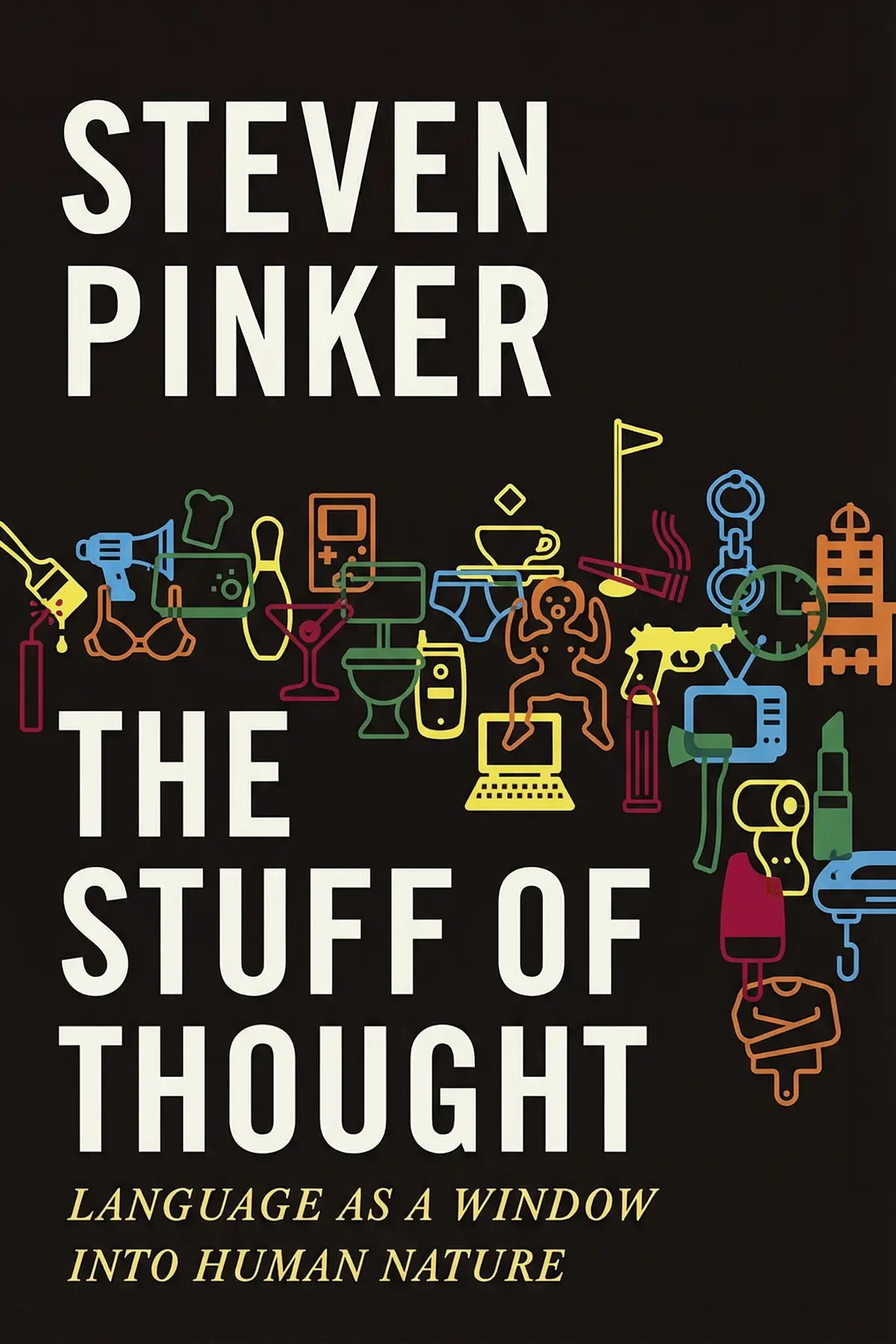
Table of Content
1. Introduction
1 min 37 sec
When we speak, we often feel like we are simply choosing tools to get a point across. We reach for a word, slot it into a sentence, and send it off into the world. But what if the very structure of those sentences was actually a blueprint of the human soul? In this exploration of the mind, we are looking at language not as a mere utility, but as a profound window into how we are wired to think, feel, and interact.
Every time you describe an event, every time you use a metaphor, and even every time you choose to be polite instead of blunt, you are revealing the underlying software of the human brain. This is the central throughline of our journey today: that by looking closely at the ‘stuff’ of our thoughts—the nouns, verbs, and social nuances we use every day—we can uncover the fundamental categories of human existence. We aren’t just talking about grammar; we are talking about the innate concepts of space, time, causality, and social dynamics that define the human experience.
Over the course of this summary, we will see how our linguistic choices reflect a hidden world of ‘Mentalese,’ or a language of thought that exists prior to any spoken word. We will look at how our brains categorize physical matter, how we navigate the invisible rules of social hierarchies through indirect speech, and why certain words have the power to shock us. This isn’t just a study of linguistics; it’s a map of the human mind, hidden in plain sight within the words we use every single day. Let’s begin by looking at the very building blocks of our sentences and seeing what they tell us about how we perceive reality.
2. Verbs as the Framework of Action
2 min 44 sec
Discover how the way we structure our sentences reveals our subconscious understanding of cause, effect, and the physical world.
3. The Dimensions of Thought
2 min 54 sec
Explore the innate concepts of space, time, and causality that act as the fundamental pillars of human cognition and communication.
4. The Language of Thought
2 min 41 sec
Uncover the secret ‘Mentalese’ that exists within us, proving that our thoughts are much deeper than the words we use to speak them.
5. The Power of the Metaphorical Mind
2 min 49 sec
Learn why metaphors are not just poetic flourishes, but the essential tools our brains use to grasp complex and abstract ideas.
6. The Social Game of Indirect Speech
2 min 52 sec
Delve into the hidden logic of politeness, bribery, and threats to understand why we rarely say exactly what we mean.
7. The Biology of Taboo Language
2 min 40 sec
Discover why swear words have such a unique power over our emotions and why they seem to reside in a different part of the brain.
8. Names and the Identity of Things
2 min 57 sec
Uncover the psychological importance of naming and how the labels we give to people and objects shape our social reality.
9. Conclusion
1 min 42 sec
As we have seen, language is far more than a simple delivery system for facts. It is a complex, multi-layered reflection of the human mind’s internal architecture. From the way our verbs frame our physical reality to the metaphors that allow us to grasp the abstract, our speech is a living map of our cognitive hardware. We have explored the secret language of thought—Mentalese—and how it exists independently of the words we speak. We’ve seen how the dimensions of space, time, and causality are the pillars of our everyday conversations, and how we use indirect speech to navigate the delicate dance of social relationships.
We also took a look at the more raw, emotional side of language through the lens of swearing, and how our names for things help define our identity and our place in the social world. All of these elements come together to show that the ‘stuff’ of thought is made of very specific, innate concepts that we all share as human beings.
The throughline of this journey is that by paying attention to our words, we can gain a deeper understanding of ourselves. The next time you find yourself reaching for a metaphor, or choosing to be polite rather than direct, or even accidentally letting a swear word slip, take a moment to notice what is happening. You aren’t just communicating; you are revealing the deep-seated logic of your own mind. Language is our greatest invention, but it is also our most revealing one. It shows us that while our cultures and languages may differ, the underlying way we perceive the world and each other is remarkably, and beautifully, consistent. Use your words with this new awareness, and you’ll find that the world—and the people in it—become much more legible.
About this book
What is this book about?
The Stuff of Thought takes listeners on a journey through the linguistic structures that shape our world. By examining the way we use verbs, the metaphors we rely on, and even the way we swear or use indirect speech, this summary unveils the complex mental machinery operating beneath the surface of our conversations. It promises to change how you hear every sentence, showing that language is not just a way to communicate, but a window into our evolutionary past and our innate understanding of space, time, and social relationships. You will discover how the human mind categorizes the world and how our verbal interactions are governed by deep-seated psychological logic.
Book Information
About the Author
Steven Pinker
Steven Pinker is a linguist, psychologist and professor at Harvard University. He’s also the author of a number of popular books, including How The Mind Works, and The Better Angels Of Our Nature.
The Blank Slate: The Modern Denial of Human Nature
Steven Pinker
The Language Instinct: How the Mind Creates Language
Steven Pinker
Ratings & Reviews
Ratings at a glance
What people think
Listeners find this work enlightening and thought-provoking, with engaging prose that successfully holds their attention. The linguistic analysis earns high marks, with one listener calling it an entertaining overview of the English language. Furthermore, listeners value the focus on social aspects, as one review specifically mentions its exploration of social dimensions. However, the level of technicality results in varied opinions, as some listeners consider the details too technical.
Top reviews
Jan
Ever wonder why we say 'I nailed it' or why certain verbs feel aggressive while others are polite? Pinker dives deep into the semantics of everyday speech to show how our social relationships are baked into our grammar. It’s absolutely stimulating to see how transitive verbs can change the entire 'vibe' of a sentence. Sometimes the technical detail gets a bit thick, especially when he starts listing dozens of ways to describe pouring water, but the payoff is a much deeper understanding of the human mind. Truth is, I’ll never look at a simple sentence the same way again. It really is an incredible window into our social dimension.
Show moreKwame
The chapter on profanity alone makes this worth the price of admission. It’s not just a list of bad words; it’s a brilliant analysis of why we find certain concepts taboo and how that maps onto our brain chemistry. Pinker moves from 'dung speech' to the philosophy of names with a wit that keeps you engaged throughout. I loved the connection he makes between the way we label reality and the way we interact socially. It’s an entertaining overview of the English language that doesn't shy away from being a bit 'saucy' when the subject requires it. Not gonna lie, I laughed out loud at the Sesame Street 'Count' analogy for his verb lists.
Show moreOmar
Wow, Pinker really delivers on the promise of showing how our words mirror our innermost thoughts and social anxieties. The second-to-last chapter on indirect speech acts is perhaps the best thing I’ve read all year. Why do we hint instead of asking? Why is a bribe always couched in 'maybe you could help me out?' It’s a brilliant look at how we navigate the thin ice of social relationships using the subtle tools of grammar. The writing is witty and the examples are perfectly chosen. Even the technical bits about verbs felt necessary once I saw how they built into the larger picture of our cognitive evolution.
Show moreThida
Steven Pinker has this incredible knack for making the most mundane grammatical rules feel like a detective story. He starts with a 'rabbit hole' of verbs that seems tedious at first but eventually reveals how we perceive space, time, and causality. To be fair, you have to be in the right headspace for this; it’s not exactly a light beach read. The sections on how we use indirect language to bribe or threaten without being 'direct' were particularly insightful. Look, if you want to know why we say 'if you could just...' instead of a direct command, this is your book. It’s dense, yes, but incredibly rewarding for those who stick with it.
Show moreSook
As someone who's always been fascinated by how we conceptualize the world, Pinker’s exploration of metaphors was a revelation. He builds on Kantian ideas of a priori categories, showing that we are born with mental structures that allow us to frame the world through language. It’s a very stimulating argument against the idea that we are just 'blank slates' waiting for culture to write on us. However, his tendency to argue with every other linguist in the field can feel a bit exhausting. I didn't need twenty pages on why Lakoff might be slightly wrong about a specific metaphor. Still, the insight into how we 'model' reality is worth the effort.
Show moreNina
After hearing so much about Pinker's evolutionary psychology, I was surprised by how much this book focuses on the specific mechanics of English. It’s a very thorough language study that manages to stay engaging despite the depth. I particularly enjoyed the sections on how we name things and the 'logic' of names. He has this way of taking a complex idea from Chomsky and making it accessible to a layperson, even if he does get a little 'verbingly' excited at times. My only gripe is that it feels a bit repetitive in the middle chapters. It’s a solid 4 stars for being a thought-provoking, if somewhat dense, poundcake of a book.
Show moreSomsri
This book is a dense, intellectual feast that requires you to slow down and chew every sentence. Pinker argues that language isn't just a window into the mind, but a 'fistula' that exposes our internal logic to the world. It’s a visceral image, and it fits the tone of the book perfectly. He balances deep philosophical questions about Kant and the nature of existence with funny anecdotes about sexual euphemisms and dirty words. While the technical detail can be overwhelming for some, I found it helpful to see the specific evidence for his claims. It’s a masterful exploration of how we use symbols to anchor ourselves to a world that isn't made of words.
Show moreBun
Picked this up expecting a breezy popular science read, but it's more like a linguistics textbook in disguise. Pinker is obviously a genius, yet I found myself bogged down in the minutiae of 'content-locatives' for way too long. I’m a top-down learner, and this book is definitely for the bottom-up crowd who loves building a theory from a thousand tiny examples. There are moments of brilliance, like the discussion on how the Morning Star and Evening Star are the same thing, but they are buried under layers of academic jargon. Personally, I think it could have been 100 pages shorter without losing much of the core message about human nature.
Show morePloy
Frankly, the middle section where he argues with every other linguist in the field felt a bit like being trapped at a faculty party. He’s very firm in his opinions, which can be refreshing, but it also makes him come across as a bit of a world-class smartass at times. The 'reality' vs. 'words' debate he brings up is fascinating—that little AI arrow pointing to the word 'Reality'—but he gets so bogged down in semantics that it’s hard to stay focused. There’s a lot of 'hence' and 'obviously' used to bridge gaps in theories that aren't actually that obvious. It’s okay, just a bit of a slog.
Show moreBenjamin
Not what I expected, to be perfectly honest. I was hoping for a broad look at human nature through the lens of language, but instead, I got a 500-page dissertation on verbs. After the first 140 pages of 'on a palm' vs 'in a palm,' I was ready to throw the book across the room. Pinker’s writing style is undeniably lucid, but he gets so caught up in the technicalities that he forgets the average reader might not care about transitive properties. It felt like he was sharing a private joke with the English language that I wasn't invited to. It's just too technical for a general audience.
Show moreReaders also enjoyed
A Liberated Mind: How to Pivot Toward What Matters
Steven C. Hayes
Acting with Power: Why We Are More Powerful Than We Believe
Deborah Gruenfeld
Age of Propaganda: The Everyday Use and Abuse of Persuasion
Anthony Pratkanis
AUDIO SUMMARY AVAILABLE
Listen to The Stuff of Thought in 15 minutes
Get the key ideas from The Stuff of Thought by Steven Pinker, plus 5,000+ more titles in English and Thai.
- 5,000+ titles
- Listen as much as you want
- 7-day free trial
- Cancel anytime







