
33 min 16 sec
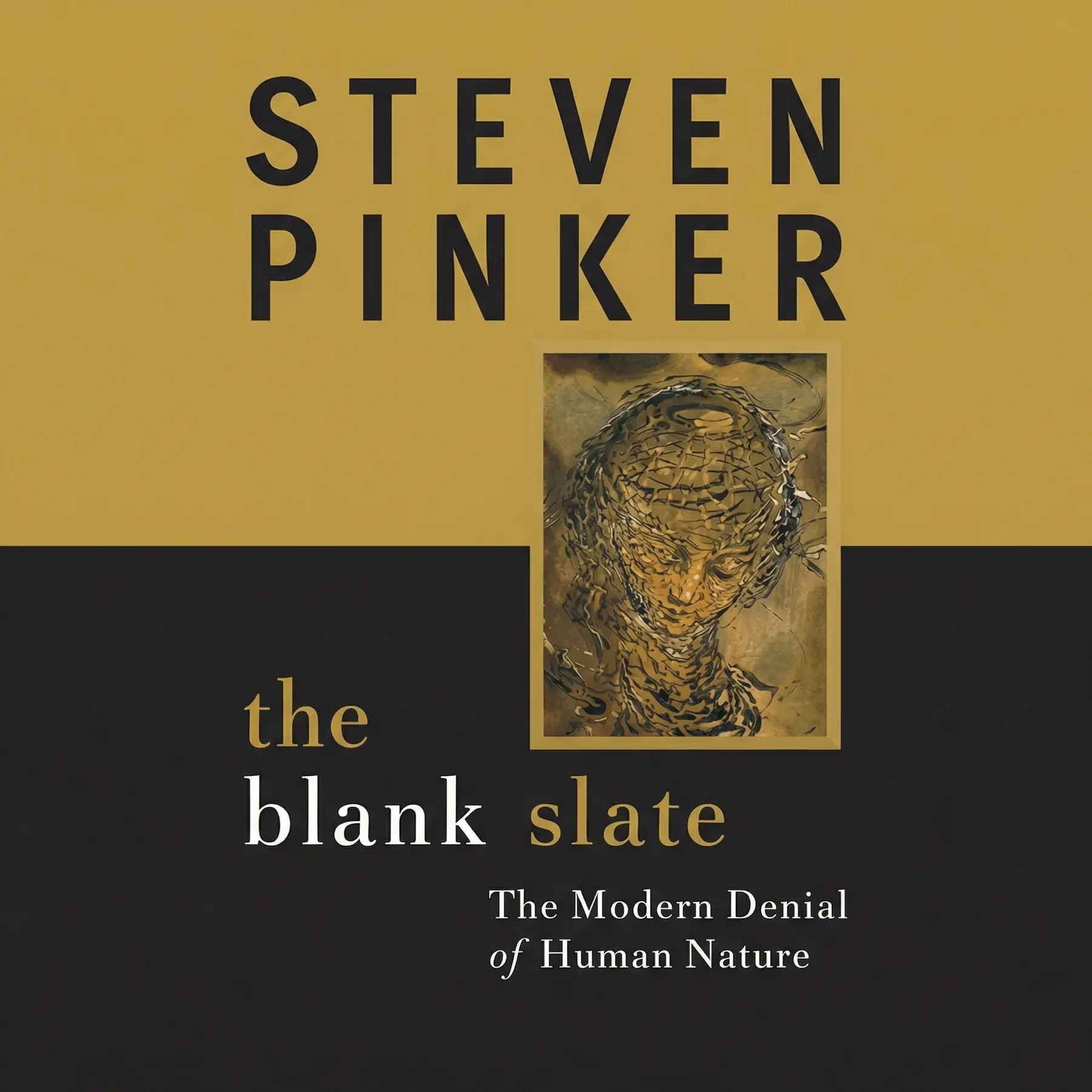
The Blank Slate: The Modern Denial of Human Nature
Steven Pinker challenges the long-held belief that the human mind is a blank slate, arguing instead that biology and genetics significantly shape our behavior, morality, and social structures.
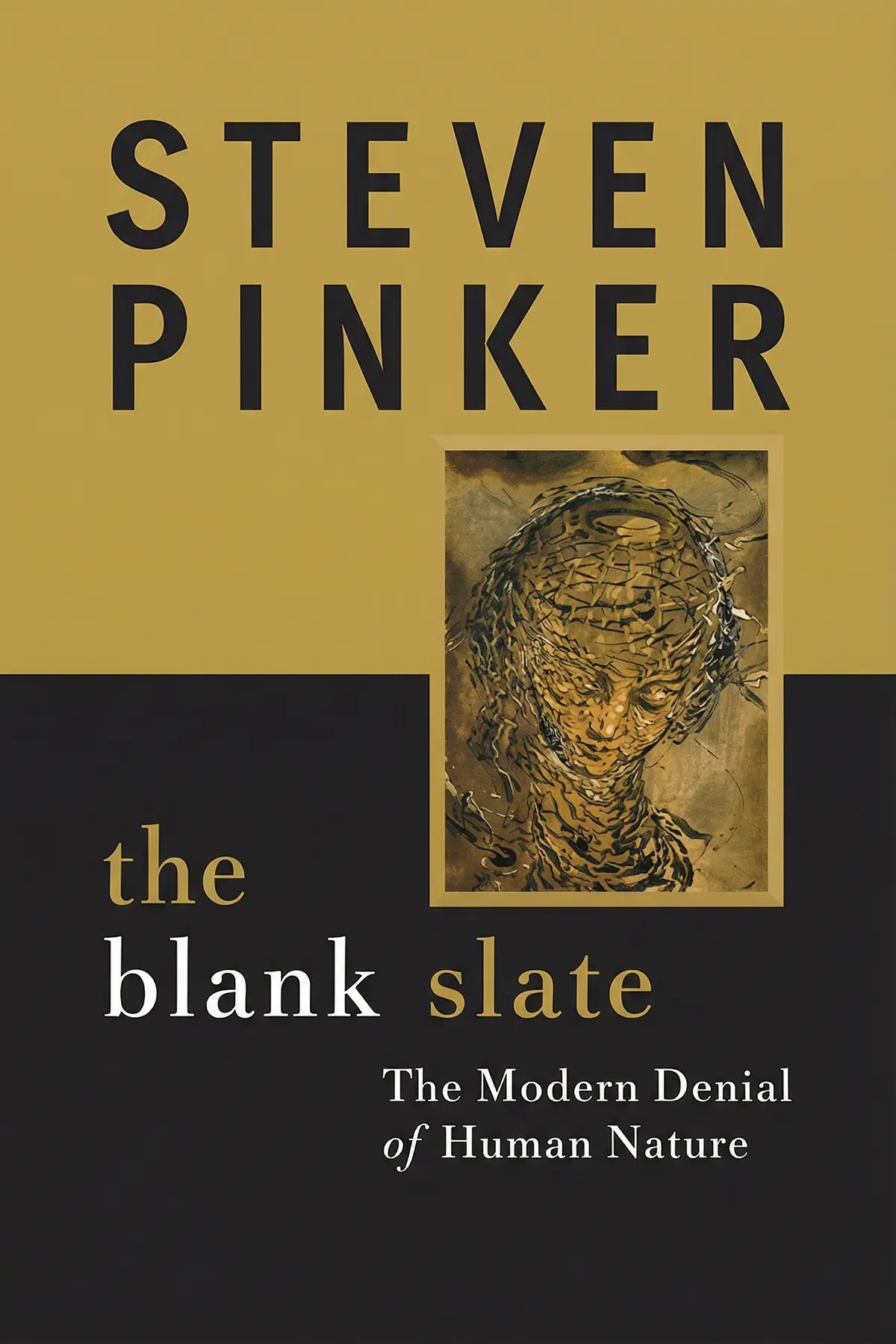
Table of Content
1. Introduction
2 min 21 sec
Who are we, really, at the moment of our birth? For centuries, we have comforted ourselves with the idea that we arrive in this world as a clean sheet of paper, ready for the world to write its story upon us. This concept, the Blank Slate, suggests that our personalities, our flaws, and our virtues are entirely the products of our upbringing, our education, and the culture that surrounds us. It is a beautiful, democratic vision—the idea that any child, given the right environment, could become anything. But what if this vision, as well-intentioned as it is, is fundamentally wrong?
In this exploration of Steven Pinker’s landmark work, we are going to dive into the heart of the nature-versus-nurture debate. We are going to look at why the idea of a blank slate has been so tenaciously guarded by intellectuals, politicians, and even religious leaders, and why modern science is increasingly making that position untenable. Pinker’s central argument is that human nature is not a social construct but a biological reality. He suggests that our minds are equipped with innate circuits and predispositions that have been honed over millions of years of evolution.
This isn’t just an academic exercise. Understanding whether our traits are inherited or learned changes how we think about everything from parenting and education to politics and criminal justice. It forces us to confront uncomfortable questions: If our genes influence our behavior, does that mean we aren’t truly free? If some people are naturally more aggressive or less intelligent, does that justify inequality?
Through this summary, we will unpack three specific myths that have dominated our understanding of the mind for the last century. We will see how bridges are being built between the hard sciences and the humanities, and we will examine the evidence from twin studies and genomic research that points toward a complex, genetically influenced human nature. We will also address the deep-seated fears—of racism, of sexism, of nihilism—that often prevent us from having an honest conversation about biology. By the end, we will see that acknowledging our biological limits doesn’t diminish our humanity; rather, it provides the only solid foundation upon which we can build a more realistic and compassionate society. Let’s begin this journey into the architecture of the human soul.
2. The Three Pillars of Modern Denial
2 min 46 sec
Explore the three influential philosophical theories—the Blank Slate, the Noble Savage, and the Ghost in the Machine—that have shaped our modern but flawed understanding of the human mind.
3. The Biological Blueprint of Language and Culture
2 min 51 sec
How the simple act of a child learning to speak reveals that the mind must be pre-wired with complex systems, proving it could never be a blank slate.
4. Closing the Gap Between Matter and Mind
2 min 49 sec
Discover how the fields of cognitive science and behavioral genetics are dismantling the ‘Ghost in the Machine’ by showing how physical matter creates mental experiences.
5. The Complexity of the Human Genome
2 min 47 sec
The discovery that humans have fewer genes than expected was once used to defend the Blank Slate, but the truth lies in the staggering complexity of gene interactions.
6. The Political and Emotional Stakes of Human Nature
3 min 09 sec
Why the debate over genetics is often fueled by political fears of inequality, and why acknowledging our differences doesn’t have to lead to discrimination.
7. Agency, Responsibility, and the Fear of Determinism
2 min 45 sec
If our behavior is influenced by our genes, are we still responsible for our actions? Unpack the existential dilemma of free will in a biological world.
8. The Brain’s Categorical Instinct and the Roots of Prejudice
2 min 47 sec
Examine how our brain’s natural drive to categorize information, while essential for survival, can lead to the formation of stereotypes and racism.
9. Morality and the Evolved Social Sense
2 min 45 sec
Is morality a set of rules handed down by society, or is it an ancient biological instinct? Discover how our sense of right and wrong is rooted in our survival.
10. The Ineradicable Reality of Individual and Gender Differences
3 min 04 sec
Pinker tackles the sensitive topic of gender, arguing that while men and women are equal in rights, their brains are not identical—and that’s okay.
11. The Three Laws of Behavioral Genetics and the Essence of Art
2 min 57 sec
How genes, family, and unique environments split the pie of personality, and why our love for art is actually written into our DNA.
12. Conclusion
2 min 15 sec
As we conclude our look at Steven Pinker’s *The Blank Slate*, it’s worth reflecting on the ‘throughline’ that connects all these ideas. The central message is that we have nothing to fear from the truth about our own nature. For too long, we have relied on myths—the Blank Slate, the Noble Savage, and the Ghost in the Machine—to protect our values of equality and dignity. But these myths are fragile. If we base our morality on a scientific falsehood, then our morality is at risk every time a new discovery is made in a genetics lab.
Pinker has shown us that the mind is a beautifully complex, pre-wired organ. We are born with the capacity for language, a sense of justice, a drive for social connection, and an innate aesthetic sense. We are also born with less savory traits: a capacity for violence, a tendency toward tribalism, and a brain that loves to use biased shortcuts. Admitting this doesn’t make us ‘evil’ or ‘determined.’ Instead, it gives us the tools to be better.
By understanding the biological roots of our behavior, we can design better schools that work with the grain of the human mind rather than against it. We can build political systems that account for human self-interest and tribalism, creating checks and balances that steer us toward cooperation. We can approach parenting with more humility, recognizing that our children are individuals with their own genetic destinies, not lumps of clay for us to mold into our own image.
The ‘promise’ of this book is a more honest and effective way of living. It moves us past the ‘nature versus nurture’ debate into a more sophisticated understanding of how nature *and* nurture interact. We don’t have to choose between biology and culture; we have to see how our biology makes culture possible. The most ‘actionable’ takeaway is this: stop fearing the science of the mind. Embrace the fact that you are a biological being. When you understand the ‘machine’ of your brain, you don’t lose your ‘soul’—you gain the knowledge you need to truly be the master of your own life. Human nature is not a prison; it is the very thing that makes us human.
About this book
What is this book about?
For decades, the prevailing intellectual view has been that humans are born with no innate traits, shaped entirely by their environment and culture. In this deep dive, Steven Pinker dismantles this 'Blank Slate' doctrine alongside the myths of the 'Noble Savage' and the 'Ghost in the Machine.' Drawing on cognitive science, evolutionary psychology, and behavioral genetics, Pinker explores how our genes influence everything from our political leanings and artistic tastes to our capacity for violence and language. The book promises a journey through the heated intersection of science, politics, and morality. Pinker addresses the fears that acknowledging a fixed human nature will lead to inequality or social Darwinism, arguing instead that a realistic understanding of our biological makeup is essential for creating a truly just society. It is an invitation to look honestly at who we are as a species, moving past ideological dogmas to embrace a scientifically grounded view of the human condition.
Book Information
About the Author
Steven Pinker
Steven Pinker is a cognitive psychologist and one of the world’s most renowned writers on language, the human mind and nature. Pinker has won numerous awards from organizations such as the American Humanist Association and has been included in Time magazine’s “The 100 Most Influential People in the World.” Pinker is a professor of psychology at Harvard University, and his influential books include The Language Instinct, How the Mind Works and The Better Angels of Our Nature.
Ratings & Reviews
Ratings at a glance
What people think
Listeners find this book remarkably profound and thoroughly investigated, considering each section to be of high value. The prose is captivating, and one listener points out the clarity with which Pinker clarifies intricate ideas. Listeners characterize the work as exceptionally impressive, fascinating, and thought-provoking, offering persuasive points backed by data from diverse academic disciplines. They value the scholarly substance, as one review emphasizes how it addresses the persistent conflict between nature and nurture, while another mentions the way it is punctuated with literary references and humor.
Top reviews
Sienna
Steven Pinker takes the sledgehammer of evolutionary psychology to the delicate porcelain of the 'blank slate' theory with remarkable precision. It’s a dense read, yet he punctuates the deep dives into neurobiology with literary references and dry humor that kept me turning pages late into the night. He challenges the dogma that we are purely products of our environment, arguing instead that our genetic scaffolding plays a dominant role in who we become. I especially appreciated the way he navigates the ethical implications of these findings, showing that admitting we have an innate nature doesn't excuse social inequality or violence. While he can occasionally come across as a bit arrogant in his dismissals of 'standard social science,' the sheer volume of research cited makes his core thesis hard to ignore. It is a stimulating, masterfully written piece of non-fiction that feels more relevant every year.
Show moreAir
Ever wonder why certain human behaviors seem to pop up in every single culture, no matter how isolated? Pinker explores this through the lens of evolutionary psychology, systematically dismantling the myth that we are purely 'nurtured' into our identities. The writing style is engaging and accessible, managing to bridge the gap between heavy academic research and popular science. Frankly, his argument regarding the biological basis of sex differences was the most compelling part of the book for me. He uses data from botched medical cases to show how deeply ingrained our gender identity really is. It’s a thick volume, and some of the chapters on political theory drag slightly, but the intellectual payoff is massive. If you want to understand the modern consensus on human nature, this is the definitive starting point.
Show moreNaomi
Wow. This book was basically a religious experience for me as an atheist searching for a deeper understanding of the human condition. Pinker provides a framework for understanding our drives, our flaws, and our beauty without needing to invoke the supernatural. I found his discussion of the 'Noble Savage' myth particularly enlightening, especially regarding the history of violence in indigenous cultures. He backs up every claim with a mountain of evidence, yet the prose remains surprisingly fluid and easy to digest. Not gonna lie, some of the sections on genetics are a bit dense, but they provide the necessary foundation for his larger philosophical points. It’s a rare book that makes you feel both smaller and more connected to the rest of humanity at the same time. Truly a masterpiece of intellectual non-fiction.
Show moreManop
Truth is, we’ve spent decades pretending that biology stops at the neck, and Pinker finally provides a rigorous, scientific defense of an innate human nature. He tackles the big questions—violence, gender, parenting, and even art—with a level of detail that is honestly breathtaking. I was particularly moved by the stories of children who were raised as the opposite gender due to medical accidents; it’s a tragic but powerful proof of his thesis. He manages to be both a hard-headed scientist and a compassionate humanist throughout the text. While some of the technical bits about linguistics took a second reading, the overall narrative is incredibly cohesive and compelling. It’s one of those rare books that actually provides a new lens through which to view every interaction you have. Highly recommended for any curious mind.
Show moreTantipat
Picked this up after a friend mentioned it and was immediately struck by the breadth of fields Pinker draws from to build his case. He weaves together linguistics, genetics, and history to show that the mind has a complex, innate structure. The chapters are each like little gems, particularly the one on the 'Ghost in the Machine' which tackles our desire for a soul independent of the brain. I did find some of his rhetoric a bit polarizing, especially when he attacks long-dead academics to make his points. To be fair, he’s right that many of these old theories are flawed, but he beats the dead horses for quite a long time. Regardless of whether you agree with his politics, the scientific synthesis is undeniably impressive and well-organized. It’s an essential read for anyone interested in why we act the way we do.
Show moreEvelyn
The chapter on parenting was a total revelation, even if it was a bit hard to swallow at first. Pinker presents evidence that a child’s personality is shaped far more by genes and peer groups than by the specific parenting styles we obsess over. It’s a bold claim that likely makes many readers uncomfortable, but that’s exactly why this book is so valuable. He doesn't shy away from controversy; instead, he dives headfirst into the most contentious topics of our time. I appreciated the way he uses humor to lighten the mood when the biological determinism gets a bit heavy. My only real gripe is that he occasionally oversimplifies the 'nurture' side of the equation to make his 'nature' arguments look stronger. Still, the book is incredibly stimulating and will definitely change the way you look at human society.
Show moreLaor
As someone who usually prefers fiction, I was surprised by how much I enjoyed Pinker's literary flair and frequent references to classic authors. He makes a very convincing case that the 'Blank Slate,' 'Noble Savage,' and 'Ghost in the Machine' are three myths that have hindered our understanding of ourselves. The way he explains complex neurological concepts using everyday analogies is just brilliant. Look, he definitely has a specific agenda, and he isn't shy about mocking the 'politically correct' academics who disagree with him. That tone can be a bit off-putting if you're looking for a neutral textbook, but it certainly makes for an entertaining read. I especially liked the section on why we find certain things aesthetically pleasing based on our evolutionary history. It’s a long book, but it’s worth every minute for the insights it provides.
Show moreSirirat
After hearing so much about the 'science wars' of the 90s, I finally decided to read the book that supposedly ended the debate for many people. Pinker is an exceptionally gifted writer, making even the most complex genetic theories feel like a casual conversation. I enjoyed how he used humor to navigate the 'dangerous' ideas he presents, showing that understanding our nature isn't the same as justifying our worst impulses. To be fair, I think he’s a bit too quick to dismiss the impact of cultural systems, and his 'Pinker 2' persona can be a bit too polemical at times. However, the sheer volume of information from different fields—neuroscience, psychology, and history—is incredibly impressive. It’s a challenging but deeply rewarding read that forces you to re-examine your most basic assumptions about behavior.
Show moreBoy
I’m a bit conflicted because Pinker is clearly a brilliant communicator, but this book feels like a battle between two different authors. On one hand, you get 'Pinker 1,' the insightful linguist who explains cognitive architecture with clarity and wit. On the other hand, you have 'Pinker 2,' who seems more interested in scoring points against ideological opponents like 'gender feminists' and postmodernists. Look, the core idea that we aren't born as empty vessels is basically common sense at this point. However, he often relies on what feel like straw man characterizations of those who emphasize environmental factors. I found the section on the twin studies fascinating, but his dismissal of modern art as essentially 'crap' felt totally out of place and poorly supported. It's a well-researched book that is unfortunately bogged down by the author's own political biases and a somewhat patronizing tone.
Show moreSaengdao
While I agree with the basic premise that the 'blank slate' is an outdated concept, the way Pinker constructs cartoonish straw man arguments is just exhausting. He spends hundreds of pages railing against feminists and social scientists as if they all believe in some radical, 100% environmental determinism that nobody actually holds. It’s one thing to say biology matters, but it’s quite another to dismiss the entire field of sociology with such a condescending wave of the hand. Personally, I found his reliance on the Bouchard twin studies to be problematic given the criticisms those studies have faced over the years. He writes with an air of unassailable authority on topics, like modern art, where he clearly has no expertise. It felt less like a scientific inquiry and more like a lengthy political manifesto disguised as pop-science.
Show moreReaders also enjoyed

59 Seconds: Change Your Life in Under a Minute
Richard Wiseman

A Liberated Mind: How to Pivot Toward What Matters
Steven C. Hayes
Acting with Power: Why We Are More Powerful Than We Believe
Deborah Gruenfeld
Age of Propaganda: The Everyday Use and Abuse of Persuasion
Anthony Pratkanis
AUDIO SUMMARY AVAILABLE
Listen to The Blank Slate in 15 minutes
Get the key ideas from The Blank Slate by Steven Pinker, plus 5,000+ more titles in English and Thai.
- 5,000+ titles
- Listen as much as you want
- 7-day free trial
- Cancel anytime







