
31 min 31 sec
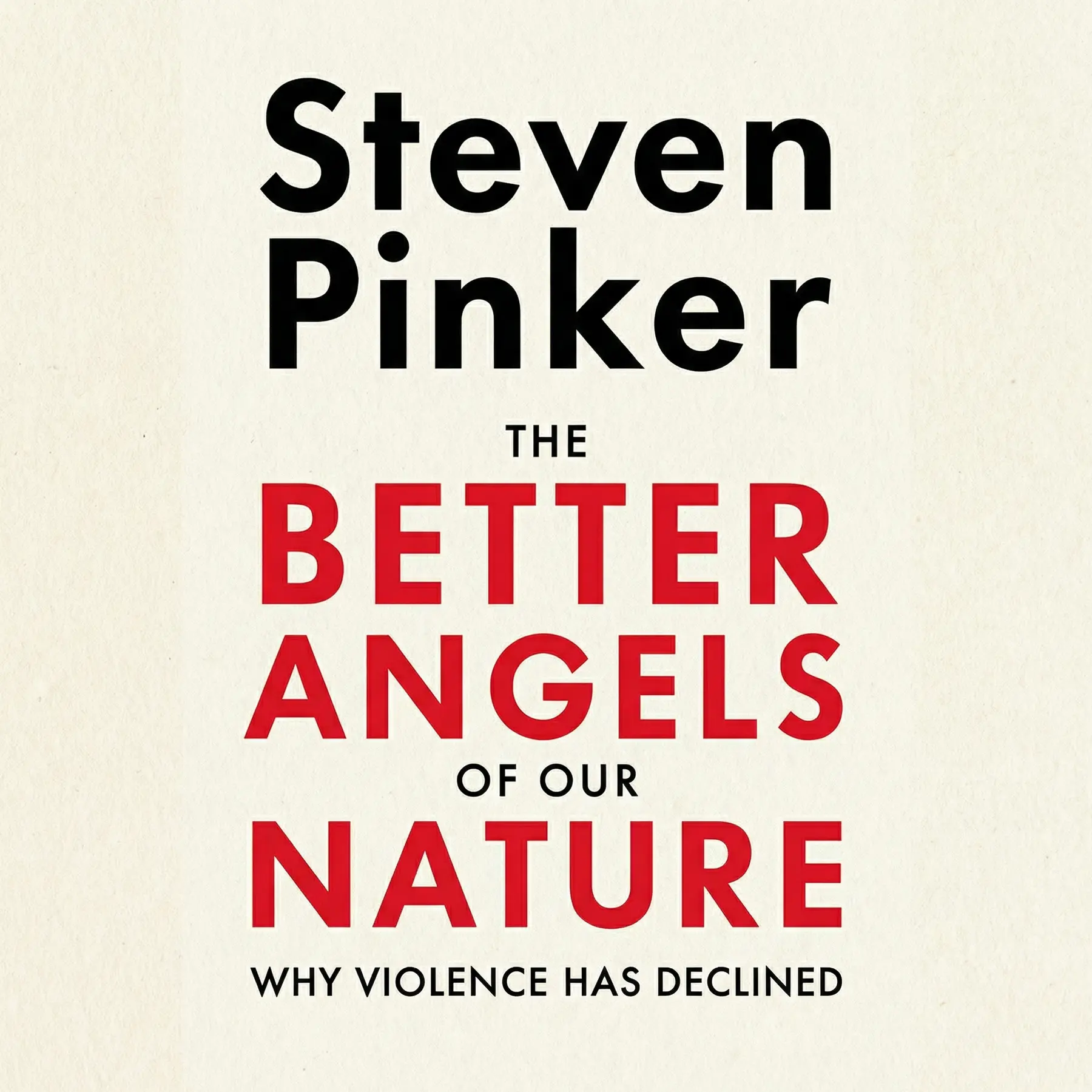
The Better Angels of Our Nature: Why Violence Has Declined
A comprehensive look at the surprising historical decline of human violence, exploring the psychological drivers and social shifts that have transformed our world into its most peaceful era yet.
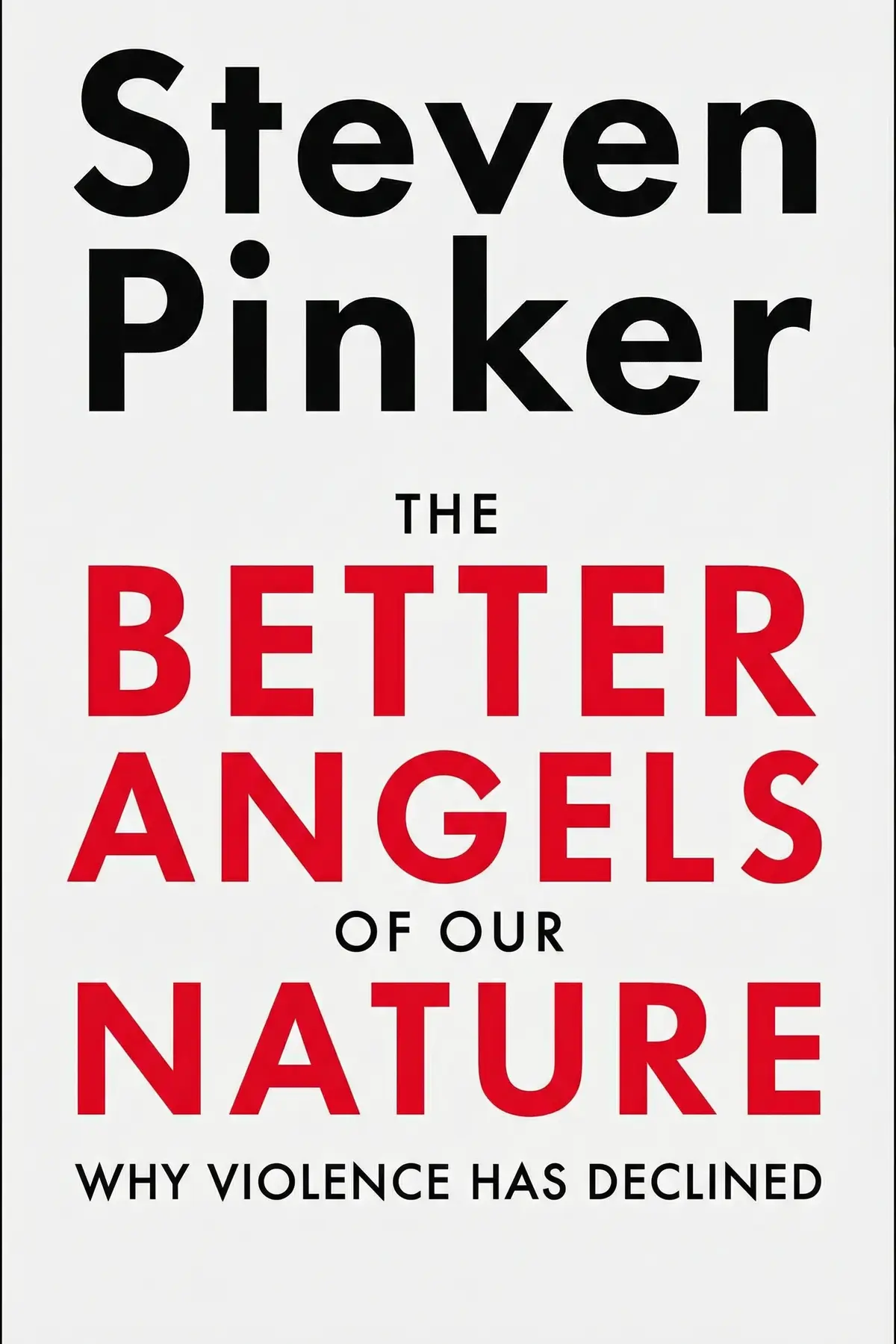
Table of Content
1. Introduction
1 min 38 sec
Turn on the news today, and you might conclude that the world is more dangerous than ever. We are bombarded with images of conflict, reports of crime, and stories of social unrest. It feels as though humanity is teetering on the edge of chaos. But what if that feeling is a psychological illusion? What if, despite the headlines, we are actually living in the most tranquil period our species has ever known?
This exploration delves into a profound and often overlooked truth: the history of human violence is a story of decline. To understand this, we have to look at the tug-of-war happening inside every human brain. On one side, we have our ‘inner demons’—primal urges for predation, dominance, and revenge that were once necessary for survival. On the other side, we have our ‘better angels’—faculties like empathy, reason, and self-control that allow us to live together in peace.
Over the course of this summary, we will trace the path of our species from the brutal reality of our hunter-gatherer ancestors to the structured, rights-respecting societies of today. We will examine the six major historical shifts that fundamentally changed how we interact with one another, from the invention of the printing press to the rise of international trade. By the end, you will see why a modern teenager is statistically safer and even ‘smarter’ in a cognitive sense than any of their ancestors. This is not a message of blind optimism, but a call to understand the mechanisms that lead to peace so we can continue to nurture them. We are on a long journey away from our violent past, and understanding the ‘better angels’ of our nature is the key to seeing just how far we have come.
2. The Impulse of Predation
2 min 06 sec
Violence isn’t always about hatred; often, it is simply the most direct, albeit dangerous, tool for getting what we want in a world of limited resources.
3. The Quest for Social Dominance
1 min 40 sec
Status is more than just ego; in the animal kingdom and human history, it is a gateway to survival and reproductive success.
4. The Dark Logic of Revenge
1 min 57 sec
Revenge feels like a moral necessity and even a physical pleasure, but its evolutionary purpose is actually to serve as a high-stakes deterrent.
5. The Perplexing Nature of Sadism
1 min 38 sec
While truly horrific, pure sadism is rarer than we think, often requiring a specific environment to take root and flourish.
6. The Danger of Violent Ideologies
1 min 55 sec
The most catastrophic violence in history hasn’t come from personal hatred, but from high-minded beliefs about creating a perfect world.
7. The Expanding Circle of Empathy
1 min 50 sec
Empathy is the heart’s primary peacemaker, evolving from simple parental care into a global force that bridges the gap between ‘us’ and ‘them.’
8. Self-Control and the Brain’s Internal Conflict
2 min 03 sec
Our ability to resist violent impulses is like a muscle that can be strengthened, governed by the tension between the brain’s ancient and modern parts.
9. The Four Spheres of Morality
2 min 05 sec
Our sense of right and wrong is a double-edged sword that can either fuel bloody crusades or build a peaceful, cooperative society.
10. Reason as the Escalator of Peace
1 min 59 sec
As our collective intelligence and capacity for abstract thought rise, we are becoming naturally less inclined to solve problems with physical force.
11. The First Historical Shift: Pacification
1 min 53 sec
The transition from wandering tribes to settled states marked the end of an era where violence was a daily necessity for survival.
12. The Second Shift: The Civilizing Process
1 min 46 sec
In the centuries leading up to the modern era, a combination of stronger governments and expanding trade turned refinement and peace into profitable virtues.
13. The Third Shift: The Humanitarian Revolution
1 min 49 sec
The Enlightenment ushered in a radical new philosophy that human life and happiness were the ultimate measures of a society’s success.
14. The Fourth Shift: The Long Peace
1 min 54 sec
Since the end of the Second World War, the world’s major powers have achieved an unprecedented period of direct peace, defying centuries of tradition.
15. The Fifth Shift: The New Peace
1 min 36 sec
With the end of the Cold War, many of the world’s secondary conflicts and mass atrocities have begun to recede as democracy and international cooperation spread.
16. The Sixth Shift: The Rights Revolutions
1 min 53 sec
The last sixty years have seen a massive push to eliminate violence against the vulnerable, from children and minorities to animals.
17. Conclusion
1 min 49 sec
The overarching lesson of this journey through history and psychology is that peace is not an accident. It is the result of a long, arduous struggle between our primitive impulses and our advanced cognitive faculties. We have seen how the ‘inner demons’ of predation, dominance, revenge, sadism, and ideology once dominated the human experience, making life ‘nasty, brutish, and short.’ Yet, we have also seen how the ‘better angels’—empathy, self-control, morality, and reason—have slowly gained the upper hand.
The six historical shifts we’ve explored—the rise of the state, the civilizing process, the Humanitarian Revolution, the Long Peace, the New Peace, and the Rights Revolutions—each provided a new structure that allowed our better nature to thrive. This isn’t just about a change in our hearts; it’s about a change in our systems. When we build societies that reward trade over theft, reason over superstition, and individual rights over tribal loyalty, we create an environment where peace becomes the natural state.
But this progress is not guaranteed. Violence still exists, and the demons remain part of our biological hardware. The work of the ‘better angels’ is never finished. To continue this decline, we must remain vigilant. We can practice this in our daily lives by choosing reason over reaction. When you feel a surge of anger or a sense of unfairness, take a moment to look at the situation impersonally. Try to see it through the eyes of the other person. By expanding your own circle of empathy and strengthening your self-control, you are participating in the very process that has made our modern world possible. We are not yet living in a perfect world, but the data is clear: we are living in a better one. Our task is to keep moving toward the light.
About this book
What is this book about?
The Better Angels of Our Nature challenges the common perception that we live in a uniquely violent age. Through a vast historical and psychological analysis, the work demonstrates that violence in almost all forms—from tribal warfare and murder to slavery and animal cruelty—has actually plummeted over the centuries. The book promises to explain this phenomenon by looking inside the human mind. It identifies five 'inner demons' that push us toward aggression and four 'better angels' that steer us toward peace. By understanding how historical shifts like the rise of the state, the expansion of trade, and the Humanitarian Revolution have empowered our better nature, listeners gain a new perspective on our species' progress and the mechanisms required to maintain a less violent future.
Book Information
About the Author
Steven Pinker
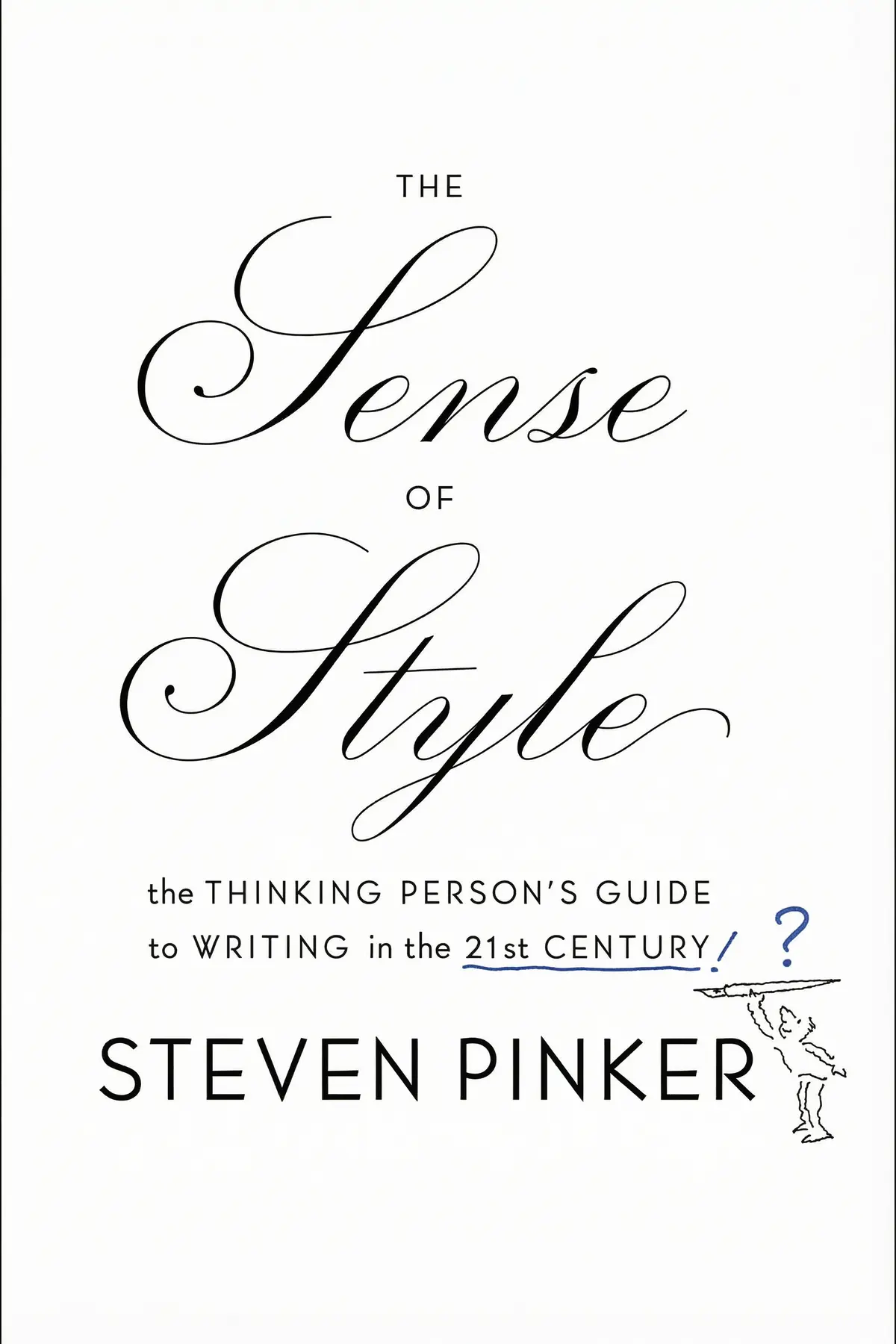
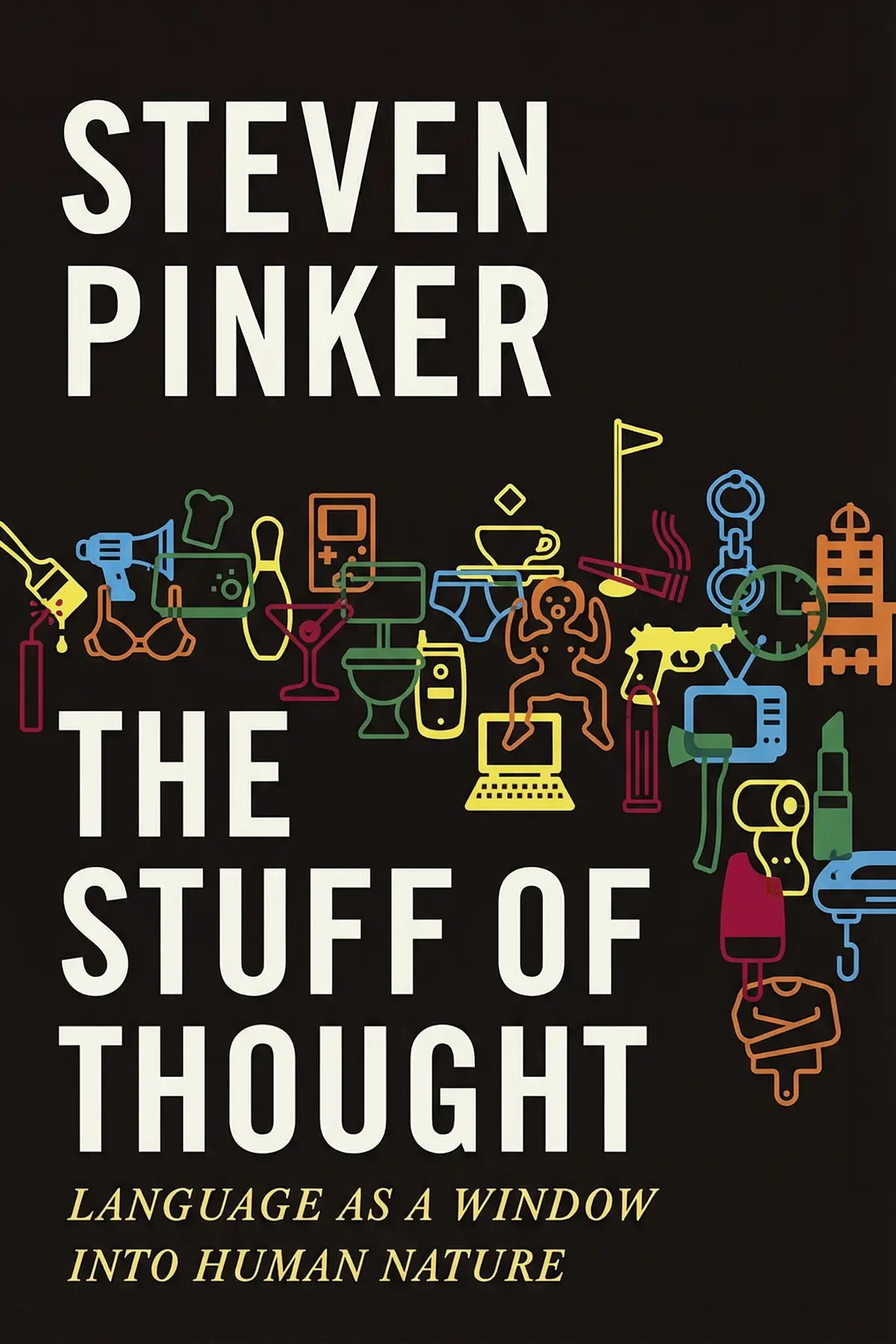
Steven Pinker is a prominent cognitive scientist, linguist, and experimental psychologist. He serves as a professor at Harvard University. Pinker is also the author of several other widely acclaimed books, including How the Mind Works and The Stuff of Thought.
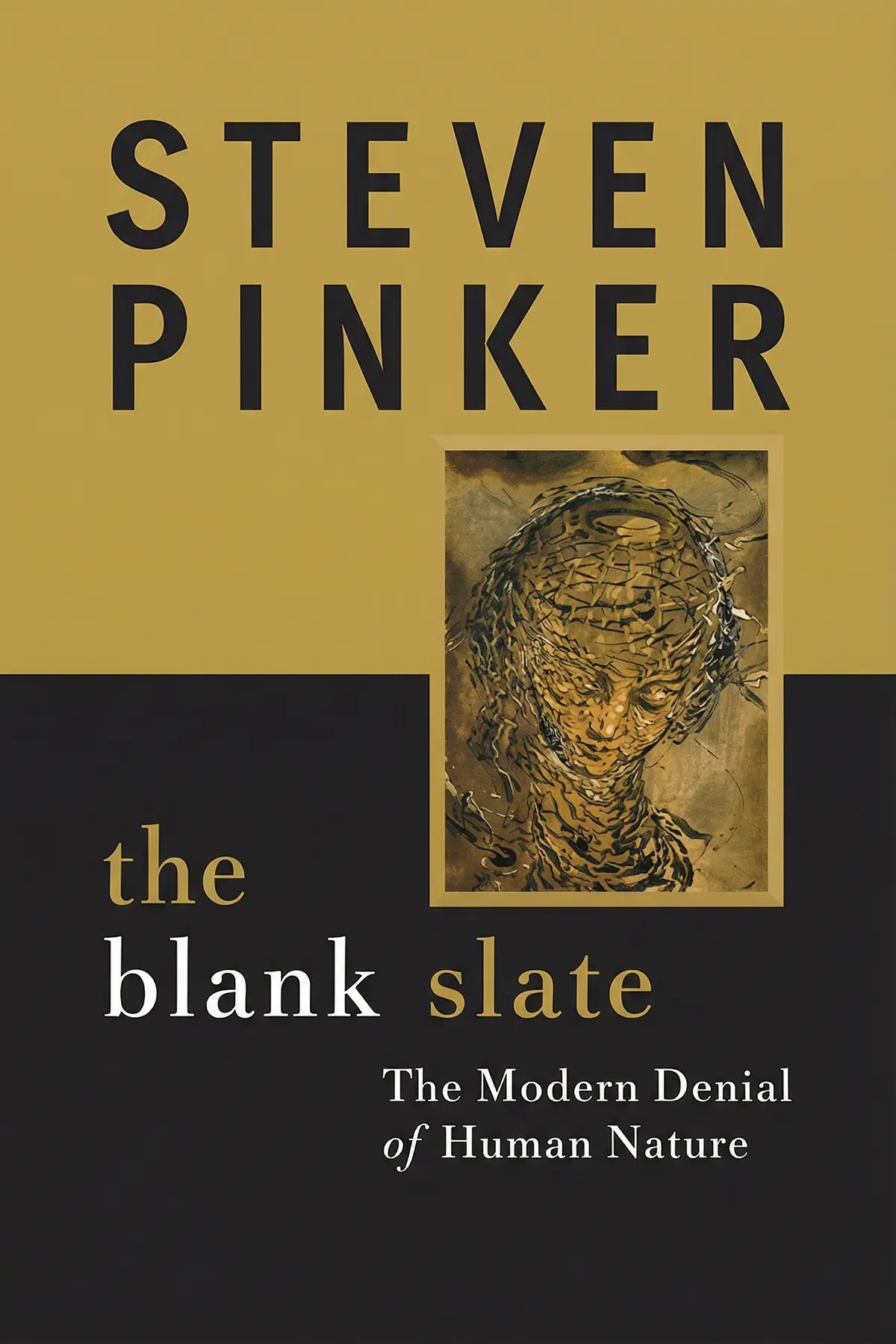
The Blank Slate: The Modern Denial of Human Nature
Steven Pinker
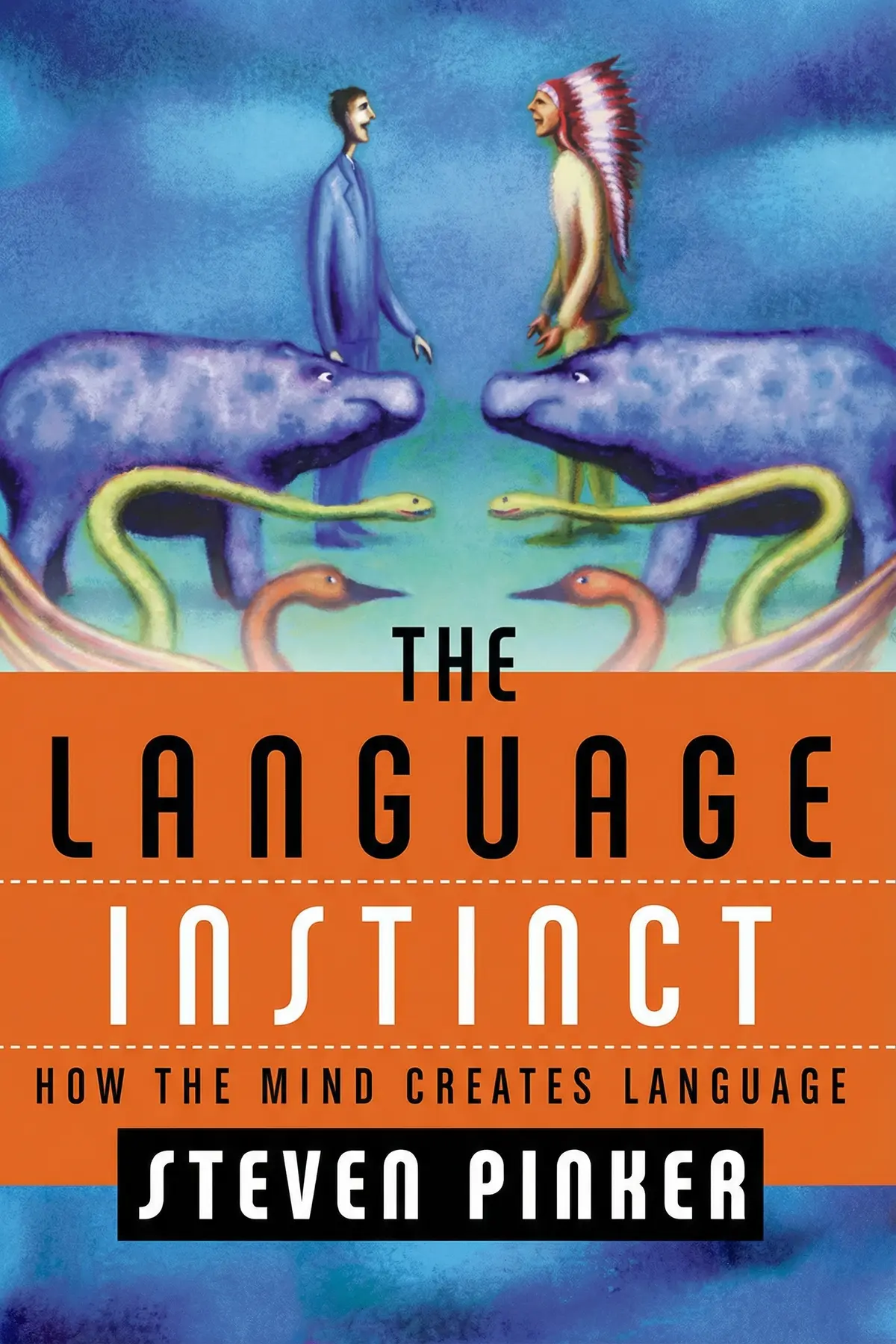
The Language Instinct: How the Mind Creates Language
Steven Pinker
Ratings & Reviews
Ratings at a glance
What people think
Listeners consider the book absorbing and thoroughly investigated, with one listener mentioning it is supported by vast amounts of data and research. They value the discussion on the decline of violence, which identifies the present as the most peaceful period in history, and find the contributions from prominent psychologists intellectually stimulating. Because the writing is clear and accessible, listeners feel more optimistic about humanity, with one listener calling it an encouraging take on the progress of mankind. While its substantial size is viewed positively by many, some listeners think the writing is a bit wordy.
Top reviews
Tak
This book is an absolute monolith of hope. Steven Pinker manages to dismantle the constant doom-and-gloom cycle of the news by providing page after page of hard evidence. To be fair, some readers might find the sheer volume of graphs and statistical charts a bit overwhelming at times. However, seeing the vertiginous descent of murder rates and the decline of corporal punishment provides a necessary reality check for our modern cynicism. It’s uplifting to realize that we are actually living in the most peaceful era of human history. Pinker’s writing style makes complex sociological data surprisingly easy to digest. Even when he’s discussing grim subjects like state-based armed conflicts, his tone remains analytical and steady. It’s a thought-provoking journey that fundamentally changed how I view the progression of mankind.
Show morePacharapol
As someone who usually avoids heavy non-fiction, I found this surprisingly accessible and deeply compelling. Pinker argues that things like "Feminization" and "Gentle Commerce" have done more to civilize us than almost any other social changes. The way he uses neurobiological experiments to explain the "inner demons" of our nature is fascinating. Look, you have to be prepared for his repetitive habit of asking you to "recall" every previous chapter. It can get a bit irritating when you’re deep into the second half of this massive tome. Still, the core message that our better angels are winning is a perspective we desperately need. It gave me a profound sense of hope for our species’ future development.
Show moreCha
Picked this up after hearing Pinker on a podcast and it lived up to the hype. The book provides a breathtakingly detailed look at how we’ve moved away from the "primitive" violence of our ancestors. I was particularly struck by the discussion on "Gentle Commerce" and how economic interdependence discourages war. It's refreshing to read something backed by extensive research rather than just vague philosophical musings. Some might call him a blowhard, but I think his confidence comes from the sheer weight of the data he presents. Not gonna lie, the physical size of the book is intimidating, but the prose flows nicely. It’s an uplifting perspective that reminds us that progress is real, even if it’s slow and messy.
Show morePensri
This is the most important book I’ve read in years. We are constantly bombarded with news of terror and war, making it easy to forget how far we've actually come. Pinker uses over a hundred graphs to prove that we are living in a remarkably peaceful era compared to the Middle Ages. The section on how the "State" took over the monopoly on violence was eye-opening. Personally, I don't mind the length because every page feels like it’s building toward a more complete understanding of our nature. It’s meticulously researched and provides a much-needed antidote to modern pessimism. If you want to feel better about the direction of humanity, this is the book for you. It’s a masterpiece of modern scholarship.
Show moreClaire
Ever wonder why the world feels like it's falling apart when the data says otherwise? Pinker tackles this head-on with a meticulously researched defense of human progress. He breaks down violence reduction into five historical forces, including the "Leviathan" and the "Expanding Circle" of empathy. While the book is undeniably long-winded, the depth of the research makes the length feel justified. Truth is, I had to take breaks because 800 pages of dense cognitive science and history is a lot to swallow. I particularly enjoyed the section on the "Escalation of Reason" and how our collective IQ, or the Flynn Effect, influences our moral choices. It’s not a breezy read, but it is an essential one for anyone who wants to understand the psychological roots of peace.
Show moreSumalee
The chapter on the Flynn Effect was easily the highlight for me. Pinker explains how our rising abstract reasoning skills have directly led to a more sophisticated moral landscape. It's a thought-provoking argument that suggests we are becoming kinder simply because we are becoming smarter. However, I did find his dismissal of certain political ideologies, specifically the left, to be a bit simplistic and one-sided. In my experience, a book of this magnitude should probably acknowledge the nuance of class struggle more than he does. He leans heavily into the idea of the "Leviathan" state being the ultimate peacemaker. Despite those biases, the book is an incredible synthesis of history and psychology. It’s a long journey, but the final 100 pages tie everything together beautifully.
Show moreRohan
After hearing so much about this "uplifting" book, I finally sat down to tackle it. It's rare to find a work that combines history, anthropology, and cognitive science so seamlessly. Pinker’s exploration of the "Expanding Circle" really resonated with me as a way to explain our growing empathy for those outside our immediate tribes. To be fair, he does lean on a lot of statistical jargon like Gini coefficients and Poisson processes. This might alienate some readers who just want the big-picture narrative without the math. But for those who appreciate a data-driven approach, this is gold. It’s an important reminder that the "good old days" were actually quite horrific. We should be grateful to live in such a "feminized" and reasoned society.
Show moreGiulia
I’ve been working my way through this for months and it’s finally finished! The "Escalation of Reason" is a fascinating concept that makes a lot of sense when you look at the decline of public executions and dueling. Steven Pinker is a brilliant writer who knows how to make heavy academic topics feel relevant to the average person. My only real gripe is that he can be quite repetitive with his points. He seems terrified that the reader will forget a concept from three hundred pages ago. While the "Better Angels" are certainly inspiring, the book does feel a little self-indulgent in its 800-page glory. Still, it’s a compelling look at violence reduction that every history buff should own.
Show morePiyanart
Wow, this was a marathon of a book that didn't always stick the landing for me. Pinker is clearly brilliant, but his tone can occasionally come across as a bit arrogant or dismissive of alternative viewpoints. He seems to brush off any criticisms of capitalism or classical liberalism as mere ideological noise while celebrating them as the primary drivers of peace. Frankly, the middle section felt like a dog’s breakfast of loosely connected statistics that could have used a much tighter edit. I found myself rolling my eyes at his frequent use of "recall" as a transition. While the core data on the decline of violence is hard to argue with, the delivery is often self-indulgent and bloated. It’s worth reading for the charts alone, but be prepared to skim the fluff.
Show moreRung
Frankly, I have mixed feelings about how Pinker handles the historical context of the 20th century. He tends to blame Marxism for almost every modern atrocity while painting his own classical liberal ideology as a neutral, "common sense" byproduct of reason. It’s a bit frustrating to see such a leading psychologist ignore the complexities of fascism’s rise in favor of a simpler narrative. The book is undeniably meticulously researched, yet it feels like he cherry-picked data to fit his "better angels" thesis. I also found the George Carlin quote he included to be a bit of an odd, almost cynical touch. While the overall trend of declining violence is compelling, the political flavoring was a bit much for me. It’s a heavy, long-winded read.
Show moreReaders also enjoyed


1491: New Revelations of the Americas Before Columbus
Charles C. Mann

A Year in the Life of William Shakespeare: 1599
James Shapiro

59 Seconds: Change Your Life in Under a Minute
Richard Wiseman
1929: Inside the Greatest Crash in Wall Street History--and How It
Andrew Ross Sorkin
Age of Anger: A History of the Present
Pankaj Mishra

A Biography of Loneliness: The History of an Emotion
Fay Bound Alberti
AUDIO SUMMARY AVAILABLE
Listen to The Better Angels of Our Nature in 15 minutes
Get the key ideas from The Better Angels of Our Nature by Steven Pinker, plus 5,000+ more titles in English and Thai.
- 5,000+ titles
- Listen as much as you want
- 7-day free trial
- Cancel anytime







