

15 min 16 sec
The Opposite of Spoiled: Raising Kids Who Are Grounded, Generous, and Smart About Money
By Ron Lieber
Learn how to transform potentially awkward money conversations into essential life lessons that help children develop financial wisdom, profound gratitude, and a generous spirit in an age of constant material temptation.
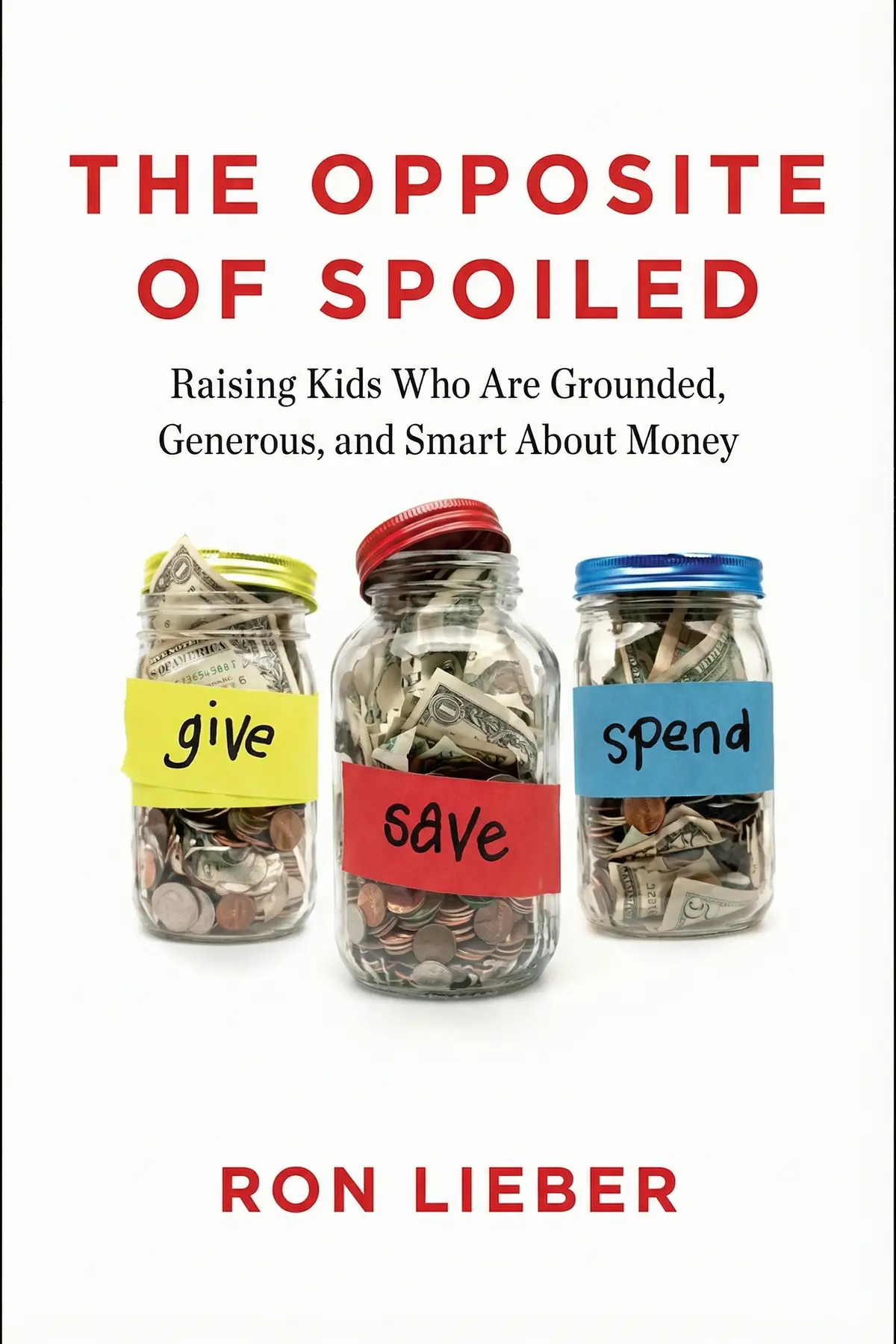
Table of Content
1. Introduction
1 min 41 sec
Have you ever looked at the sheer volume of gadgets and branded clothes that seem to follow modern children everywhere and felt a twinge of worry? It is a common anxiety for today’s parents. We see smartphones in the hands of elementary schoolers and designer gear in middle school hallways, and it’s easy to conclude that the next generation is becoming hopelessly materialistic. We worry that our kids are becoming ‘spoiled,’ a word that carries a heavy weight of judgment and fear. But if we want to understand where this trend comes from, we have to look past the objects themselves and look at the conversations—or the lack of them—happening at home.
Interestingly, the rise of materialism in children often doesn’t stem from parents who obsess over money. Instead, it frequently arises when parents treat money as a taboo subject. When we avoid explaining the mechanics of how we earn, save, and spend, we leave children in a vacuum. In that silence, they don’t learn the value of a dollar or the effort required to obtain the things they desire. They simply see things appear as if by magic.
This summary explores how to break that silence. We are going to look at how money can actually be the most effective tool in your parenting kit for building character. Rather than being a source of corruption, financial education is the path toward raising young people who are patient, curious, and profoundly generous. We will move through practical strategies for everything from the very first allowance to the importance of early work experiences. By the end, you’ll see how being ‘smart about money’ is really about being smart about life and values. Let’s explore how to raise a child who is the exact opposite of spoiled.
2. Redefining the Roots of Entitlement
2 min 03 sec
What truly makes a child spoiled? Discover why the label has less to do with the size of a bank account and more to do with the absence of daily responsibilities.
3. The Power of Financial Transparency
2 min 02 sec
When kids ask about your salary or the family’s wealth, the answer matters less than the reason for the question. Learn how to turn awkward inquiries into teaching moments.
4. Allowance as an Independent Learning Tool
2 min 00 sec
Should you pay for chores? Explore the argument for an allowance that functions as a training ground for decision-making rather than a salary for housework.
5. Combatting the Push for Constant Consumption
1 min 57 sec
In a world of ‘full provisioning,’ learn how to use the ’30th Percentile Rule’ to teach your children the essential art of waiting.
6. The Character-Building Power of Work
2 min 00 sec
Modern childhood often skips the ‘job’ phase, but early employment offers benefits that go far beyond a paycheck.
7. Fostering Generosity and Social Perspective
2 min 01 sec
Giving back shouldn’t just be an abstract concept. Learn how to involve children in active generosity to broaden their understanding of the world.
8. Conclusion
1 min 32 sec
As we wrap up our journey through the landscape of raising grounded children, the central theme remains clear: money is not the enemy of character; silence is. When we are open and honest with our children about how the financial world works, we provide them with a map to navigate their lives with wisdom and integrity. We have seen that being spoiled isn’t a result of having money, but a result of lacking the responsibilities and perspectives that give life meaning.
By implementing tools like a chore-independent allowance, the Dewey Rule for managing material desires, and the habit of active, family-based generosity, you are doing more than just teaching math. You are shaping the way your child views themselves and their neighbors. You are moving them away from a life of passive consumption and toward a life of active, meaningful participation.
If you’re looking for one immediate step to take today, consider the role of media in your home. One of the primary ways children learn to desire unnecessary ‘stuff’ is through the constant stream of advertising on television and digital platforms. By simply being more intentional about their media consumption and limiting their exposure to advertisements, you can significantly reduce the ‘I want’ noise in their heads. This creates the space necessary for the deeper values of gratitude and thrift to take root. Raising a child who is smart, generous, and grounded is a long-term investment, and it starts with a single, honest conversation.
About this book
What is this book about?
Modern parents often feel caught between wanting to provide for their children and fearing they are raising someone entitled or materialistic. This guide argues that the solution isn't to hide the reality of finances, but to embrace it as a primary teaching tool for character development. By breaking the silence surrounding income, spending, and saving, parents can use money as a medium to instill values like patience, thrift, and empathy. The book provides a practical roadmap for various stages of childhood, covering everything from the first allowance and the philosophy of chores to the complexities of part-time work and charitable giving. It shifts the focus from simple math to the deeper emotional and social implications of wealth. Readers will discover how to handle difficult questions about family status, why the way we gift items matters more than the items themselves, and how to foster a sense of perspective in a world that often lacks it. Ultimately, it promises to help parents raise grounded, capable adults who understand the true value of a dollar and the importance of helping others.
Book Information
About the Author
Ron Lieber
Ron Lieber is a prominent financial journalist who currently writes the Your Money column for the New York Times. His expertise in personal finance and parenting has made him a leading voice on family economics. Beyond his column, he is the author of three bestselling books, including the well-regarded title Taking Time Off.
Ratings & Reviews
Ratings at a glance
What people think
Listeners find the book highly accessible and value its concrete strategies and illustrations for educating children about financial topics. Additionally, the work is thoroughly researched and offers superior guidance for families, with one listener mentioning its particular utility for parents from all socio-economic backgrounds. Listeners also prize the author's methodology for handling finances, as one review specifically points out the focus on the non-cash elements of money management.
Top reviews
Sin
Ever wonder how to explain your salary to a curious seven-year-old without making things awkward? This book offers a fantastic roadmap for navigating those high-stakes conversations about money that every parent eventually faces. Lieber advocates for total transparency, suggesting we show kids the actual bills to demystify where the cash goes. I specifically loved the 'save, spend, and give' jar system because it makes the abstract concept of budgeting tangible for little hands. While some examples feel a bit out of reach for the average family, the core strategies are solid. It’s less about the math and more about instilling character through financial literacy. We’ve already seen a shift in how our kids view their weekly allowance since implementing these tips. Definitely a must-read for anyone looking to raise grounded children in a consumer-driven world.
Show moreNang
Finally got around to reading this, and the timing couldn't have been better as my daughter just started asking about our 'net worth.' The advice to respond to a child's question with 'why do you ask?' is a game-changer because it helps you understand their underlying anxiety. Lieber covers everything from the tooth fairy to the cost of college, making the case that money is a tool for teaching patience. The book is well-researched and includes a great bibliography for those of us who want to dig into the actual studies. It’s rare to find a parenting book that is both practical and philosophically challenging. I feel much more equipped to raise a child who understands the value of a dollar without being obsessed with it. This is practical parenting at its finest.
Show morePop
Few things feel as daunting as trying to raise a kind, hardworking kid in a world of instant gratification and social media. This book provided a much-needed framework for our family, especially the sections on instilling gratitude through daily rituals. We’ve started having our kids research charities they want to support using their 'give' jars, and it’s been incredibly rewarding to see their empathy grow. Lieber writes with a lot of heart and a clear desire to help parents navigate the tricky intersection of money and values. Even the stories that felt a bit 'upper class' gave us something to discuss and adapt to our own situation. This is easily one of the most useful parenting books on my shelf. I highly recommend it to any parent feeling lost on this topic.
Show moreThanakorn
To be fair, I wasn't sure if a book about money would hold my interest, but I was pleasantly surprised by how engaging this was. The research into delayed gratification and the 'marshmallow test' connections were fascinating and well-integrated into the advice. It isn't just a 'how-to' manual; it's a look at how our culture's silence around money actually hurts our children’s development. One of the strongest points is how the strategies can be adapted by parents of all socio-economic backgrounds, focusing on character rather than just net worth. I appreciated the specific scripts provided for answering tough questions, like what to do if a child asks if you are rich. It’s a comprehensive look at the subject that treats parents like intelligent adults. A truly excellent resource for families.
Show moreThida
Lieber takes a Malcolm Gladwell-style approach here, weaving together various stories to illustrate his points on raising grounded children. The writing is incredibly conversational and easy to digest, which is perfect for busy parents who only have ten minutes to read before bed. I appreciated the emphasis on 'grit' and the suggestion that teenagers should get jobs where their boss isn't their mom. It’s a well-researched piece, though some might find the heavy reliance on anecdotes a bit distracting from the actual data. The section on muting commercials to teach kids about marketing manipulation was a total lightbulb moment for our household. It’s a practical guide that focuses on values rather than just bank balances. While a few stories felt like 'padding' for a long magazine article, the actionable strategies are worth the time.
Show moreAnchalee
Picked this up to help my kids develop a better sense of gratitude, and I found several of the non-cash strategies quite enlightening. The author argues that being 'spoiled' is less about what you have and more about how you handle it, which is an important distinction. I liked the focus on 'grit' and the idea of giving kids fiscal responsibility early so they can make low-stakes mistakes now. It’s a well-written piece of journalism that manages to make a dry subject like personal finance feel deeply personal. However, I did find myself rolling my eyes at a few of the more extreme examples of wealthy philanthropy. Despite that, the actionable tips on allowance and charitable giving are excellent. It makes you think differently about your family's financial legacy.
Show moreZoe
After hearing Ron Lieber on a podcast, I expected a more rigorous, data-driven deep dive into developmental psychology and finance. Instead, the book is a collection of personal stories that vary wildly in terms of how applicable they are to the middle class. While the 'why do you ask?' strategy for answering kid's money questions is pure gold, other chapters feel like unnecessary filler. I struggled with the disconnect between the author’s definition of middle class and the actual statistics of the US economy. It’s a decent read for general ideas, but you’ll have to do some work to filter out the fluff. If you want a quick summary of modern parenting trends regarding money, this is it. Just don't expect a scientific revolution on every page.
Show moreSebastian
The truth is that this could have been a very effective long-form essay rather than a full-length book. There are several 'nuggets of practicality' sprinkled throughout, like the fun-per-dollar ratio, but the narrative often wanders into repetitive territory. I found the writing style a bit too simple, almost like a series of blog posts stitched together without a strong overarching thesis. While I agree that talking about money shouldn't be taboo, the book doesn't offer much for families struggling with actual scarcity. It targets a very specific demographic that has enough discretionary income to worry about 'spoiling' their children. It's an okay read, but I wouldn't call it essential. If you've read Lieber's columns, you might not find anything new here.
Show morePakpoom
Wow, I really wanted to like this, but the blatant privilege throughout the narrative was impossible to ignore. Lieber tells a story about a family selling a two-million-dollar home to 'downsize' to a one-million-dollar home as if that’s a relatable lesson in sacrifice. It felt tone-deaf to the reality of most Americans living paycheck to paycheck who can't just 'choose' to give away a windfall from a house sale. The advice on decoupling chores from allowance is interesting, but it gets buried under layers of anecdotes about elite families. For a book that claims to be for everyone, it spends an awful lot of time in a very specific, wealthy bubble. Frankly, it felt more like a guide to 'Rich People Problems' than a universal parenting book. The writing is simple enough, but the message is distorted by the author's lens.
Show moreAey
Look, I occasionally enjoy Lieber’s NYT column, but this book felt like he was way out of his element when discussing social issues. He recounts a story about a wealthy family bringing blueberries to a soccer game with poor families as if it’s a profound bridge-building moment. It’s patronizing and reveals a significant blind spot regarding the actual dynamics of poverty and privilege in this country. The advice assumes a level of financial security that many readers simply don't possess, making the 'practical' tips feel like a luxury. While the intent to raise generous children is noble, the execution is hampered by a distorted lens. It’s hard to take the financial advice seriously when the social context feels so superficial and disconnected. It was a major disappointment for me.
Show moreReaders also enjoyed






AUDIO SUMMARY AVAILABLE
Listen to The Opposite of Spoiled in 15 minutes
Get the key ideas from The Opposite of Spoiled by Ron Lieber, plus 5,000+ more titles in English and Thai.
- 5,000+ titles
- Listen as much as you want
- 7-day free trial
- Cancel anytime







