
28 min 54 sec
Available in:English
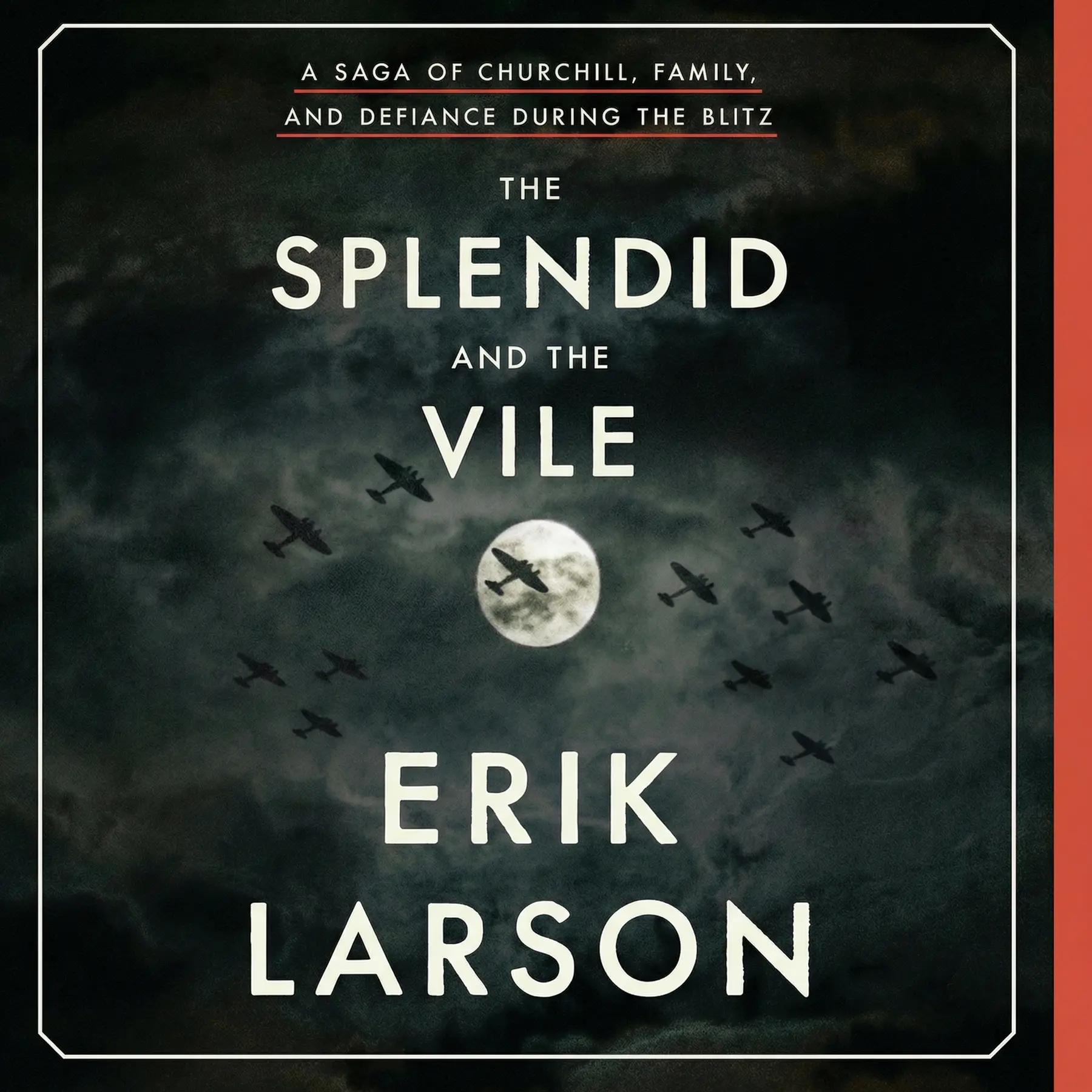
The Splendid and the Vile: A Saga of Churchill, Family, and Defiance During the Blitz
By Erik Larson
Explore the gripping story of Winston Churchill’s first year as Prime Minister, navigating the horrors of the Blitz while fostering the personal and political alliances that would eventually change the course of history.
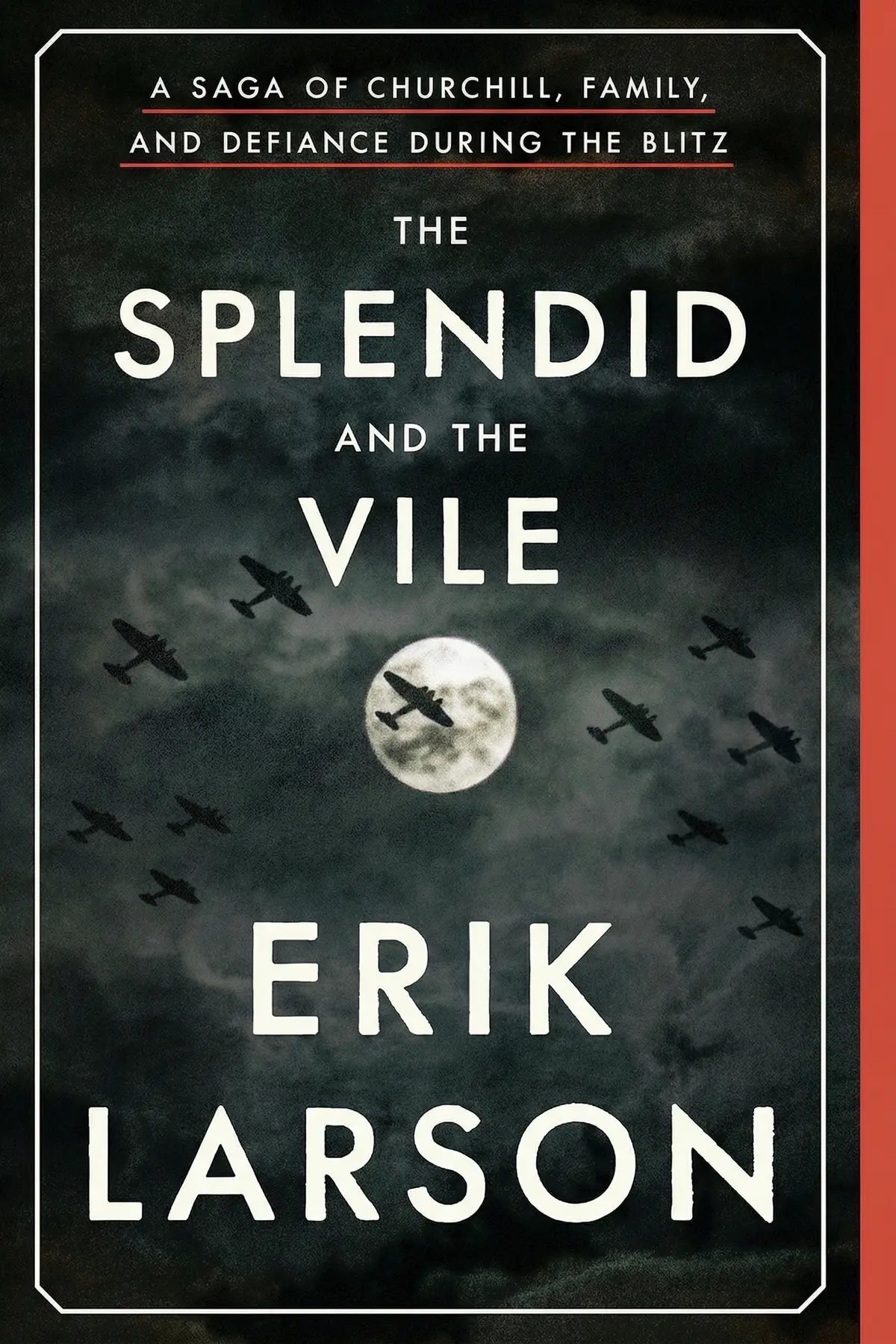
Table of Content
1. Introduction
1 min 53 sec
In the spring of 1940, the world watched in horror as the shadow of Nazi Germany stretched across the European continent. One by one, nations fell—Poland, Norway, the Netherlands, and Belgium. The German war machine seemed unstoppable, driven by an aggressive expansionist ideology and a terrifying new form of aerial warfare. For the people of Great Britain, there was a lingering, perhaps naive, sense of security provided by the English Channel. They believed that as long as France stood with its formidable military and the supposedly impenetrable Maginot Line, the island was safe. But that security was an illusion.
When Winston Churchill was called to lead as Prime Minister, he inherited a situation that many viewed as hopeless. Within days of his appointment, the unthinkable happened: France collapsed, and the British army was forced into a desperate retreat. The story of Churchill’s first year in office is not just a chronicle of military maneuvers; it is a saga of personal defiance and domestic endurance. It is about how a man known for his eccentricities—his flowered dressing gowns, his mid-bath meetings, and his unyielding love for a good cigar—managed to convince a terrified population that they could not only survive but prevail.
This summary will take you through the pivotal twelve months that redefined the twentieth century. We will explore the strategic brilliance and the personal vulnerabilities of the Churchill family, the technological race for air superiority, and the high-stakes diplomatic dance with President Franklin Roosevelt. It’s a journey through the ruins of London and the quiet corridors of power, revealing how the ‘splendid’ spirit of a people met the ‘vile’ reality of war. Through this throughline of defiance, we see how Churchill’s unwavering focus on securing American aid and his ability to articulate the British soul became the bridge to an eventual victory.
2. A New Vision of Defiance
2 min 33 sec
Discover how an unconventional leader replaced a policy of appeasement with a philosophy of absolute confidence, even when the odds were stacked against his nation.
3. The Miracle of Dunkirk
2 min 30 sec
Experience the desperate days on the French coast where a military disaster was transformed into a powerful symbol of national unity and resilience.
4. The War for the Clouds
2 min 45 sec
Go behind the scenes of the high-stakes technological race and the harrowing aerial dogfights that decided the fate of the British Isles.
5. Courting a Reluctant Giant
2 min 34 sec
Explore Churchill’s masterclass in diplomacy as he worked to draw the United States into the conflict through a mix of desperation and charm.
6. The Accidental Spark of the Blitz
2 min 28 sec
Discover how a single navigational error changed the course of the war and brought the full fury of the German air force down on London.
7. Life in the Shadow of Falling Bombs
2 min 41 sec
An intimate look at how ordinary citizens and the Royal Family adapted to the ‘new normal’ of constant danger and sleepless nights.
8. The Financial and Emotional Brink
2 min 36 sec
Witness the deepening crisis as Britain faced the possibility of bankruptcy while the Luftwaffe turned its fury on industrial centers like Coventry.
9. The Emissary of Hope
2 min 17 sec
Learn about the unlikely and deeply personal bond formed between Churchill and Harry Hopkins, the man who became the bridge between two great leaders.
10. The Bizarre Mission of Rudolf Hess
2 min 18 sec
Uncover the strange story of a high-ranking Nazi official’s solo flight to Scotland and the confusion it sparked across the globe.
11. A World Transformed
2 min 24 sec
Trace the final shift from a solitary struggle to a global alliance as Hitler turns toward Russia and the Pacific ignites.
12. Conclusion
1 min 55 sec
As we look back on that extraordinary year, the contrast between the ‘splendid’ and the ‘vile’ remains as sharp as ever. The ‘vile’ was the calculated cruelty of the Luftwaffe, the devastation of the East End, and the existential threat to democracy. The ‘splendid’ was the indomitable spirit of the British people, the courage of the ‘few’ who flew the Spitfires, and the leadership of a man who refused to accept the word ‘impossible.’ Winston Churchill didn’t just manage a crisis; he orchestrated a national awakening. He understood that leadership in a time of war requires more than just logistical skill; it requires an almost poetic ability to give voice to a people’s highest aspirations.
The throughline of this period is the power of defiance. Churchill’s unwavering focus on the United States as the ultimate savior was not a sign of weakness, but of profound strategic foresight. By refusing to compromise with Hitler during the darkest days of 1940, he bought the time necessary for the rest of the world to wake up to the threat. He proved that even when a nation is physically battered, its moral steel can remain unbroken. The lesson for us today is clear: in the face of overwhelming adversity, the most powerful weapon in any arsenal is the human spirit, guided by a leadership that is honest about the struggle but absolute in its conviction.
Ultimately, Churchill’s first year was a journey from isolation to alliance. He took a country on the brink of collapse and turned it into the central pillar of a global coalition. This was his greatest achievement—not just surviving the Blitz, but ensuring that the light of freedom would not be extinguished from the world. As you move forward, carry with you the image of those Londoners who, after a night of fire and noise, walked out into the morning light to find their neighbors and their city still standing. That is the enduring legacy of defiance.
About this book
What is this book about?
This narrative dives into the most harrowing and defining period of Winston Churchill’s career: his first year in power. It captures the atmosphere of a Britain under siege, where the threat of a Nazi invasion loomed over every sunrise. Rather than focusing solely on battlefield strategy, the account examines the intimate details of Churchill’s life, his family, and his inner circle, providing a human lens through which to view monumental historical events. The promise of this story is a deeper understanding of how defiance is built from the ground up. It illustrates the calculated charm Churchill used to court American support and the raw resilience shown by ordinary Londoners during the relentless aerial bombardments of the Blitz. It is a study in leadership under pressure, showing how a single leader’s unwavering confidence could mirror and magnify the spirit of an entire nation.
Book Information
About the Author
Erik Larson
Erik Larson is a distinguished American journalist and a prolific author of five bestsellers that have reached a combined global audience of over nine million readers. He is widely recognized for his ability to transform meticulous historical research into propulsive narratives, with other acclaimed works including Devil In The White City and Thunderstruck.
Ratings & Reviews
Ratings at a glance
What people think
Listeners find this book an enjoyable experience that flows like a novel, featuring meticulously researched information and a compelling, fast-paced narrative. The author’s prose is celebrated for its precise detail, and listeners value the way the work explores crucial turning points in recent history. Listeners describe the account as captivating, with one review highlighting how it successfully recreates history, and they prize the intimate glimpses provided into Churchill's private life.
Top reviews
Rodrigo
Larson has this uncanny ability to turn dry archival documents into a propulsive narrative that rivals any thriller on the shelf today. The way he captures the tension of the Blitz through the eyes of the Churchill family makes the history feel incredibly immediate and personal. You aren’t just reading about dates and casualties; you are there in the underground bunkers smelling the stale cigar smoke. I especially loved the focus on Mary Churchill’s coming-of-age amidst the chaos, which provided a much-needed contrast to the heavy political maneuvering. My only minor gripe is that the sheer volume of secondary characters can get a bit dizzying if you aren't paying close attention. Still, the prose is elegant and the pacing is relentless. It’s a masterful distillation of a year that changed the world forever.
Show moreJom
Wow, the level of intimacy here is staggering. Larson manages to make you feel like a fly on the wall at Chequers or 10 Downing Street during the most terrifying year of the war. Most history books focus on the 'what,' but Larson is obsessed with the 'how'—how did these people eat, sleep, and love while their city was being leveled? The inclusion of John Colville’s diaries was a stroke of genius, offering a grounded perspective from a young man dealing with unrequited love in the shadow of total annihilation. If you want a dry textbook, look elsewhere. This is a cinematic experience that happens to be entirely true. I couldn’t put it down even though I already knew the ending of the war!
Show moreSangduan
Ever wonder how a single man's sheer force of will could hold an entire nation together while bombs rained down nightly? This book provides a vivid, day-by-day answer. Larson’s depiction of Churchill isn't just about his famous oratory; it’s about his vulnerability and his strange, eccentric habits. I was mesmerized by the descriptions of the Blitz, where Londoners would throw parties and pursue romance with a desperate intensity because they didn't know if they'd survive the night. It captures that strange mix of 'splendor and vileness' perfectly. The research is deep, yet the writing never feels academic or boring. It reads like a high-stakes novel with the highest possible stakes. A must-read for any history buff.
Show moreLeila
Picked this up on a whim and ended up staying awake until 2 AM finishing the section on the Coventry bombing. It is rare to find a non-fiction book that creates such a visceral sense of dread and hope simultaneously. Larson’s focus on the year 1940-1941 was a smart choice, allowing for a deep dive into the specific period when England stood alone against the Nazi machine. The way he juxtaposes the horror of the falling bombs with the mundane details of Mary Churchill’s social life is haunting. It reminds us that life doesn't stop during a war; it just becomes more concentrated. This is easily one of the best books I’ve read this year. It’s historical storytelling at its absolute peak.
Show moreDen
The way Larson humanizes these historical giants is nothing short of masterful. We see a Winston Churchill who is at once a brilliant strategist and a weeping, emotional man who dances in his onesie to boost his own morale. The book beautifully illustrates how his rhetoric wasn't just empty words; it was the fuel that kept the British people going when they had nothing else left. I was also struck by the portrayal of the German leaders, which added a chilling layer to the narrative. The prose is sharp, the chapters are bite-sized, and the research is clearly exhaustive. It’s a remarkable achievement that manages to shed new light on a very well-documented period of history. I highly recommend the audiobook version too!
Show moreFang
As someone who usually finds military history a bit of a slog, I was surprised by how much I enjoyed the domestic vignettes. Larson focuses on the intimate details—Churchill’s obsession with hot baths and his habit of walking around naked—that make the man feel like a human rather than a statue. The dynamic between Winston and Clementine was particularly moving, showing a partnership built on mutual respect and strategic advice. While the book is quite long and sometimes bogs down in the minutiae of aircraft production, the emotional core remains strong. You really get a sense of the 'keep buggering on' spirit that defined London during those fifty-seven nights of consecutive bombing. It’s a fascinating look at leadership under extreme duress.
Show morePick
After hearing so much buzz, I finally dove into this saga of Churchill's first year as Prime Minister. The atmosphere Larson creates is thick with the scent of cordite and the sound of gramophones playing military marches late into the night. It’s an exhausting read in the best way possible, conveying the relentless pressure of the Battle of Britain. I was fascinated by Lord Beaverbrook’s constant threats to resign and the 'Prof' Frederick Lindemann’s scientific influence. However, some of the sections regarding the German perspective felt slightly less engaging than the London-based chapters. Despite that, the book is a triumph of narrative non-fiction. It makes the transition from May 1940 to May 1941 feel like a lifetime of struggle and triumph.
Show moreKob
To be fair, I think you need to have a pre-existing interest in the Blitz to fully appreciate the granular detail Larson provides. If you're looking for a broad overview of WWII, this isn't it. This is a microscopic look at one year and one family, but that focus is exactly what makes it so powerful. You get to know the 'Prof' and John Colville as if they were your own colleagues. The ending epilogue was a nice touch, wrapping up the fates of everyone we spent 500 pages getting to know. My only real complaint is that the sheer amount of detail about random cabinet meetings can be a bit much. Overall, it’s a compelling portrait of defiance that feels strangely relevant in today’s world.
Show moreNew
Truth is, while the writing is undeniably beautiful, the pacing felt a bit uneven in the middle sections. I loved the parts about Churchill’s inner circle and his interactions with Roosevelt, but the book occasionally wanders into excessive detail that stalls the momentum. I found myself skimming through some of the more technical aspects of aircraft production to get back to the family drama. To be fair, Larson’s ability to humanize figures like Randolph and Pamela Churchill is impressive, making them feel like characters in a Victorian soap opera. It’s a solid three-star read for me—informative and well-written, but just a tad too long-winded for my personal taste. If you love granular history, you’ll probably adore this more than I did.
Show moreKwame
Not what I expected after the brilliance of 'The Devil in the White City' or 'Dead Wake.' While Larson is a gifted researcher, this particular volume felt like a collection of leftover notes from 'In the Garden of Beasts' stitched together without a clear through-line. There were far too many storylines involving peripheral figures who simply didn't hold my interest for more than a few pages at a time. Do we really need to know the specific color of the pills Rudolf Hess packed for his flight to Scotland? Sometimes less is more, and this book desperately needed a more aggressive editor to trim the fat. It’s not a bad book, but it lacks the narrative tension that usually defines Larson's work. It felt like a chore to finish.
Show moreReaders also enjoyed
A Splendid Exchange: How Trade Shaped the World
William J. Bernstein
A Spy Among Friends: Philby and the Great Betrayal
Ben Macintyre
1491: New Revelations of the Americas Before Columbus
Charles C. Mann
A Year in the Life of William Shakespeare: 1599
James Shapiro
1929: Inside the Greatest Crash in Wall Street History--and How It
Andrew Ross Sorkin
Age of Anger: A History of the Present
Pankaj Mishra

A Biography of Loneliness: The History of an Emotion
Fay Bound Alberti
AUDIO SUMMARY AVAILABLE
Listen to The Splendid and the Vile in 15 minutes
Get the key ideas from The Splendid and the Vile by Erik Larson, plus 5,000+ more titles in English and Thai.
- 5,000+ titles
- Listen as much as you want
- 7-day free trial
- Cancel anytime







