
25 min 19 sec
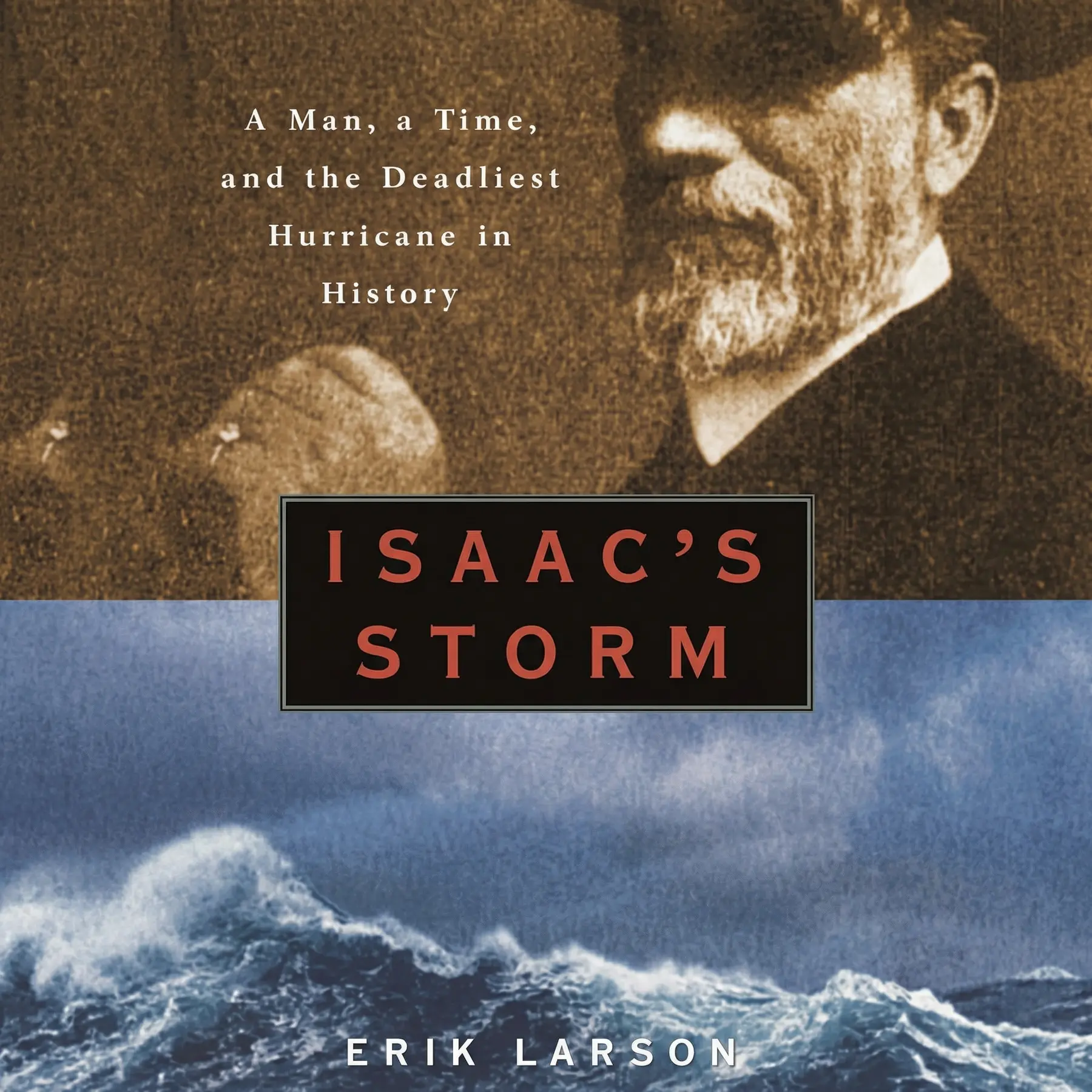
Isaac’s Storm: A Man, a Time, and the Deadliest Hurricane in History
By Erik Larson
Isaac's Storm explores the catastrophic 1900 Galveston hurricane, detailing how scientific overconfidence and bureaucratic failures led to America’s deadliest natural disaster, centered on the life of meteorologist Isaac Cline.
Table of Content
1. Introduction
1 min 29 sec
Imagine a city on the verge of becoming the most important metropolis in the South. In the final months of the nineteenth century, Galveston, Texas, was exactly that. It was a place of immense wealth, cultural diversity, and architectural beauty, often called the ‘New York of the Gulf.’ But on a Saturday in September 1900, that trajectory was violently severed by the most lethal natural disaster in the history of the United States.
At the center of this tragedy was a man named Isaac Cline. As a lead meteorologist for the United States Weather Bureau, he was a man of his era—an era defined by the belief that human intellect and scientific progress could eventually tame or at least perfectly predict the natural world. This summary explores the story of how that confidence turned into a fatal blind spot.
As we walk through these events, we will see how the political machinations of a government agency combined with a lack of humility to create a perfect storm of failure. We’ll follow the timeline of a hurricane that defied the rules experts thought they understood, and we will witness the heartbreaking decisions made by families who realized too late that their sturdy homes were no match for the sea. This is more than just a historical account of wind and water; it is a meditation on human limitation and the enduring mystery of the weather. By the end, you’ll understand how a single weekend transformed a thriving hub of commerce into a site of unimaginable sorrow and why the echoes of that day still resonate in the world of modern meteorology.
2. The Rise of Isaac Cline and the Weather Bureau
2 min 25 sec
Before the storm, the Weather Bureau was an agency plagued by scandal, searching for a man of integrity to lead it into a new century.
3. The Dangerous Myth of Galveston's Immunity
2 min 19 sec
Scientific consensus in the late 1800s suggested that a major hurricane could never actually strike the coast of Galveston.
4. Bureaucratic Rivalry and the Silencing of Cuba
2 min 24 sec
A power struggle within the Weather Bureau led to a blackout of information from the experts who knew hurricanes best.
5. A Deceptive Morning and the First Signs of Trouble
2 min 13 sec
The day of the disaster began with an eerie beauty, leaving many residents unaware of the invisible danger moving toward them.
6. The Struggle for Safety and the Weight of Expertise
2 min 16 sec
As the flooding began, families looked to the city’s leading scientist for guidance, unaware that his confidence was failing.
7. The Physics of the Surge and the Breaking Point
2 min 19 sec
A sudden shift in the wind transformed the flood into a catastrophic surge that no structure could withstand.
8. A Night of Survival and Unspeakable Loss
2 min 04 sec
In the darkness of the storm, the survivors faced a harrowing journey across a landscape that had been turned into a graveyard.
9. The Arduous Cleanup and the End of Hope
2 min 16 sec
The morning after brought a grim reality that overwhelmed the survivors, as they faced the impossible task of dealing with thousands of victims.
10. The Mystery of Explosive Deepening
1 min 58 sec
Modern science has finally provided an explanation for how the 1900 storm became a monster that defied the experts of the time.
11. A City Transformed and a Legacy of Resilience
2 min 08 sec
The hurricane didn’t just destroy buildings; it permanently shifted the economic and cultural map of the American South.
12. Conclusion
1 min 28 sec
The 1900 Galveston hurricane stands as a stark boundary between two eras. It marked the end of an age of unbridled optimism and the beginning of a more humble, data-driven approach to the natural world. Through the story of Isaac Cline, we see the danger of letting our confidence outpace our understanding. Isaac was a brilliant man, but he was blinded by the very institution he helped build—an agency that valued its own reputation over the raw, messy reality of the weather.
This tragedy teaches us that the cost of hubris is often paid by those who have no part in the decision-making. The thousands who died in Galveston were victims of a storm, yes, but they were also victims of a system that silenced warnings and ignored history. The lesson of Isaac’s Storm is as relevant today as it was over a century ago: we must always leave room for the unexpected. Whether in science, leadership, or our daily lives, acknowledging our limitations is the first step toward true preparedness.
Galveston’s story is one of survival and rebuilding, but it is also a story of what might have been. As you think about the events of that weekend, consider where in your own life you might be relying too heavily on ‘scientific consensus’ or personal confidence while ignoring the subtle shifts in the wind. Nature doesn’t care about our theories; it only responds to the physical laws of the universe. Our greatest defense is not just concrete walls or telegraph codes, but the humility to listen when the world tells us that trouble is on the way.
About this book
What is this book about?
Isaac's Storm is a deep dive into one of the most tragic moments in American history: the total devastation of Galveston, Texas, by a massive hurricane in 1900. At the heart of the story is Isaac Cline, a man who represented the pinnacle of nineteenth-century scientific confidence. As the head of the local Weather Bureau, Cline believed that modern science had finally mastered the elements, leading him to publicly declare that Galveston was essentially immune to such a disaster. This book explores the convergence of human hubris, political infighting within the government's weather service, and the sheer, unpredictable power of nature. Through a meticulously researched narrative, the account follows the timeline of the storm from its mysterious beginnings in the Caribbean to its final, violent landfall. It highlights the missed warnings, the silencing of experienced Cuban forecasters, and the personal struggles of families caught in the rising tide. The promise of the book is to reveal how a flourishing city was brought to its knees not just by a storm, but by the failure of experts to respect the limits of their own knowledge, forever altering the course of American urban development.
Book Information
About the Author
Erik Larson
Erik Larson is an award-winning author and journalist whose work has been featured in prestigious publications like the New Yorker, the Atlantic, the Wall Street Journal, and Time magazine. He is renowned for his popular nonfiction titles, including In the Garden of Beasts and Thunderstruck. His book The Devil in the White City earned him numerous accolades, including the Edgar Award for best true crime writing, establishing him as a master of narrative history.
Ratings & Reviews
Ratings at a glance
What people think
Listeners find this book captivating and immersive from start to finish, praising the superb prose and meticulous research. They appreciate the historical narrative, especially the intriguing chronicle of Galveston, and value the meteorology details, including the evolution of forecasting. The pacing gets varying feedback, with several listeners noting that it begins slowly.
Top reviews
Moo
Erik Larson has this incredible knack for taking a historical footnote and turning it into a pulse-pounding thriller. I was fascinated by the early days of the U.S. Weather Bureau and how their arrogance led to such a catastrophe. The way he describes the 'explosive deepening' of the hurricane makes you feel like the pressure is dropping in your own living room. While some might find the biographical bits about Isaac Cline a little dense, they are essential for understanding the sheer hubris of the era. This wasn't just a natural disaster; it was a failure of imagination and scientific ego. By the time the sea starts reclaiming Galveston, you’re already holding your breath for the inevitable. It’s a chilling, masterfully researched account that stays with you long after the final page.
Show moreCholada
How can a city just vanish into the sea in a single night? This book explores that terrifying question with such precision and atmosphere that I felt like I was standing on the beach in 1900. Larson masterfully builds the tension by jumping between the oblivious residents of Galveston and the monster churning in the Gulf. The theme of human hubris is woven into every chapter, showing how our misplaced faith in technology can lead to total ruin. I was particularly struck by the accounts of the survivors, especially the heartbreaking story of the nuns and the orphans. It’s a brutal reminder that nature doesn't care about our scientific models or our civic pride. If you enjoy history that reads like a disaster movie, this is the gold standard.
Show moreAom
I'm still thinking about that image of the children tied together at the orphanage to keep from being swept away. This book is absolutely haunting in its depiction of the 1900 hurricane and the sheer scale of the loss in Texas. Larson doesn't just give you the statistics; he gives you the human faces behind the 6,000 deaths. The contrast between the sun-drenched, optimistic city of the Gilded Age and the post-apocalyptic ruins of the next morning is staggering. I loved the scientific explanations of how hurricanes form and the terrifying reality of a storm surge. It’s rare to find a book that is both intellectually stimulating and emotionally devastating at the same time. This is easily one of the best pieces of non-fiction I have ever picked up.
Show moreGai
This book serves as a grim reminder of what happens when we think we’ve conquered the natural world. Larson paints a vivid picture of Galveston as a thriving metropolis on the verge of greatness, only to show how quickly it could be dismantled. The biography of Isaac Cline is fascinating, portraying him not as a villain, but as a man trapped by the limitations of his era’s knowledge. I was particularly impressed by the way the author handled the aftermath, describing the grim task of dealing with the thousands of bodies left in the wake. The prose is elegant and descriptive without being overly flowery, which suits the subject matter perfectly. It’s a powerful exploration of tragedy, science, and the enduring resilience of the human spirit in the face of total disaster.
Show moreSaengdao
Finally got around to this classic, and while it didn't quite hit the heights of his later work for me, it's still top-tier narrative nonfiction. The first half is admittedly a bit of a slow burn as it sets up the various bureaucratic squabbles between the Americans and the Cuban meteorologists. Truth is, you have to be interested in the history of weather science to really enjoy the buildup. However, once the storm actually makes landfall in Galveston, the pacing shifts into high gear and becomes genuinely terrifying. The descriptions of the 'cock's tails' clouds and the rising water are visceral and haunting. Larson’s research is clearly exhaustive, but he never lets the facts get in the way of a compelling story. It’s a solid four-star read for anyone who likes their history with a side of impending doom.
Show moreErn
The politics of weather sounds like a dry topic, doesn't it? Surprisingly, Larson manages to make the internal power struggles of the fledgling Weather Bureau feel like a high-stakes political thriller. I had no idea that xenophobia and petty jealousy played such a large role in why Galveston was so tragically unprepared. The way the U.S. officials ignored the more experienced Cuban forecasters was infuriating to read about, especially knowing the death toll that followed. The writing is crisp and journalistic, though it occasionally gets bogged down in minutiae that might not interest a casual reader. Still, the level of detail regarding the storm's physics and the city's destruction is truly impressive. It makes you realize how much we take for granted with our modern satellite tracking and 24-hour news cycles.
Show moreCarter
As someone who grew up on the Gulf Coast, this was a terrifying look back at a time before we had any real warning systems. The hubris displayed by the meteorologists of the time is just mind-blowing when you consider how vulnerable Galveston was to the sea. Larson does a great job of explaining the 'Age of Certainty' and why people were so convinced they had conquered nature. My only minor complaint is that the character development for some of the secondary figures felt a little thin. You see a lot of names flash by, and it's hard to keep track of everyone before they are inevitably swept away. Regardless, the book is a fast-paced and informative read that provides a fascinating glimpse into a forgotten chapter of American history.
Show moreSirinat
Not what I expected after loving Devil in the White City, as this one felt significantly more disjointed and academic. Larson clearly knows his stuff, but there were stretches where I found myself skimming the technical details of 19th-century barometers. I wanted more about the actual disaster and perhaps a bit less about the interpersonal drama at the Weather Bureau. Isaac Cline is an interesting figure, yet he remains somewhat distant and hard to sympathize with despite the personal tragedies he endured. The book only really comes alive in the final third when the hurricane hits, and those chapters are undeniably gripping. To be fair, the research is impeccable, but the middle sections felt like they were treading water. It’s worth a read for the history, but be prepared for some dry spells along the way.
Show moreSoontorn
Look, I appreciate the research that went into this, but the narrative felt a bit padded at times. There is a lot of speculation about what Isaac Cline was thinking or feeling, which is understandable given the lack of records, but it sometimes pulled me out of the story. The first hundred pages move at a glacial pace, focusing heavily on the history of meteorology rather than the people of Galveston. I found the sections on the storm itself to be the only truly engaging parts of the book. While the ending is poignant and effectively highlights the tragedy, getting there felt like a bit of a chore. It’s a decent historical account, but it doesn't quite have the narrative flow I’ve come to expect from Larson’s newer books.
Show moreViroj
Maybe I just wasn't in the right mood for 19th-century atmospheric science when I started this one. The truth is that the "Storm" part of Isaac's Storm takes a long time to arrive, and the buildup is very heavy on data. I found the descriptions of the Weather Bureau's internal scandals to be a bit repetitive after a while. Larson is a gifted writer, but the pacing here feels uneven compared to his other works like Dead Wake. I did enjoy the final chapters and the look at how Galveston changed afterward, but it was a bit of a slog to get through the middle. If you're a die-die-hard history buff or a weather nerd, you'll love it, but casual readers might find it a bit too technical.
Show moreReaders also enjoyed
Alexander the Great
Philip Freeman

A History of Iran: Empire of the Mind
Michael Axworthy
A History of the World in 6 Glasses
Tom Standage

A Long Way Gone: Memoirs of a Boy Soldier
Ishmael Beah

A Splendid Exchange: How Trade Shaped the World
William J. Bernstein
AUDIO SUMMARY AVAILABLE
Listen to Isaac’s Storm in 15 minutes
Get the key ideas from Isaac’s Storm by Erik Larson, plus 5,000+ more titles in English and Thai.
- 5,000+ titles
- Listen as much as you want
- 7-day free trial
- Cancel anytime







