
15 min 44 sec
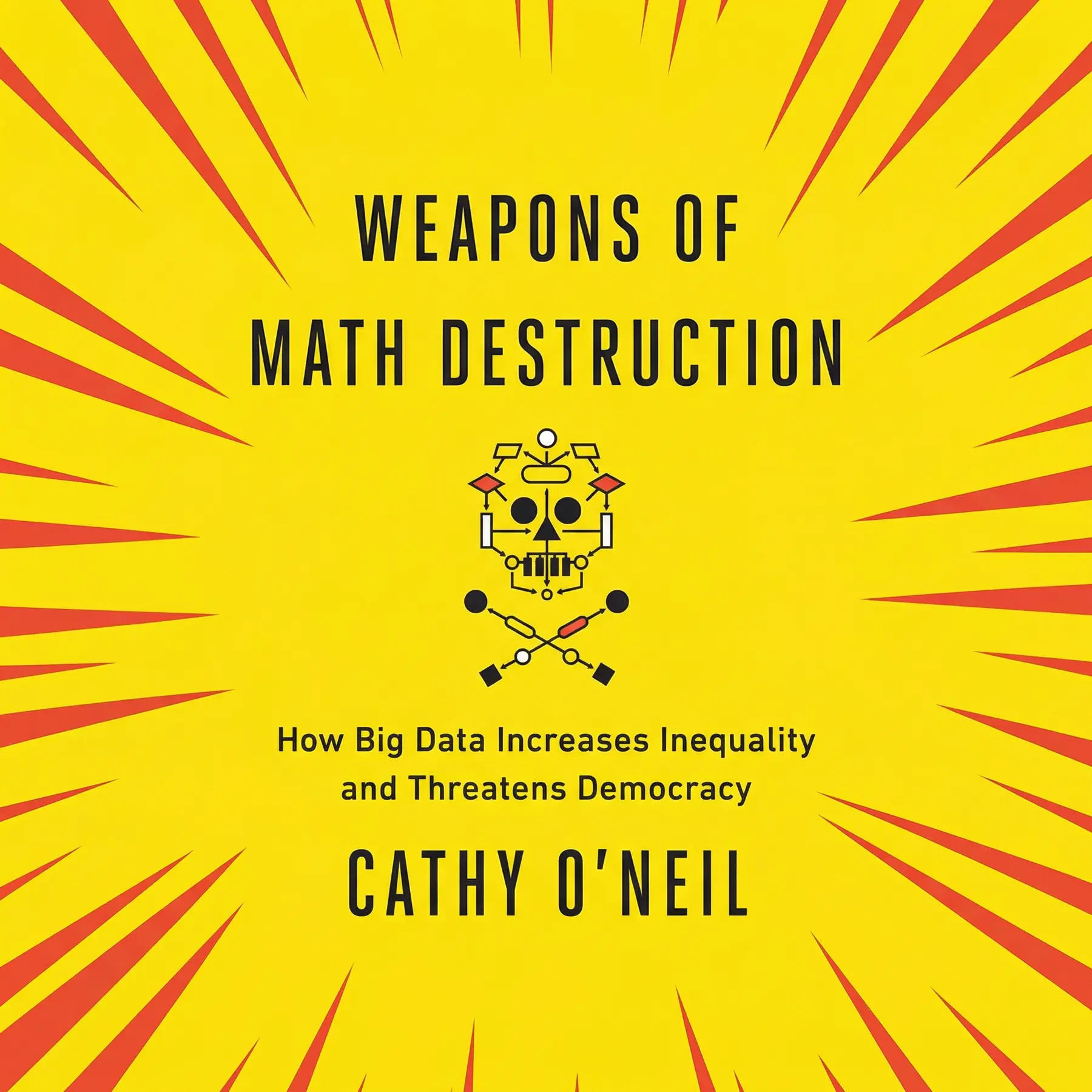
Weapons of Math Destruction: How Big Data Increases Inequality and Threatens Democracy
By Cathy O’Neil
Weapons of Math Destruction explores how unregulated, biased algorithms reinforce social inequality. This summary reveals the hidden mathematical models that influence everything from our voting choices to our insurance premiums and job prospects.
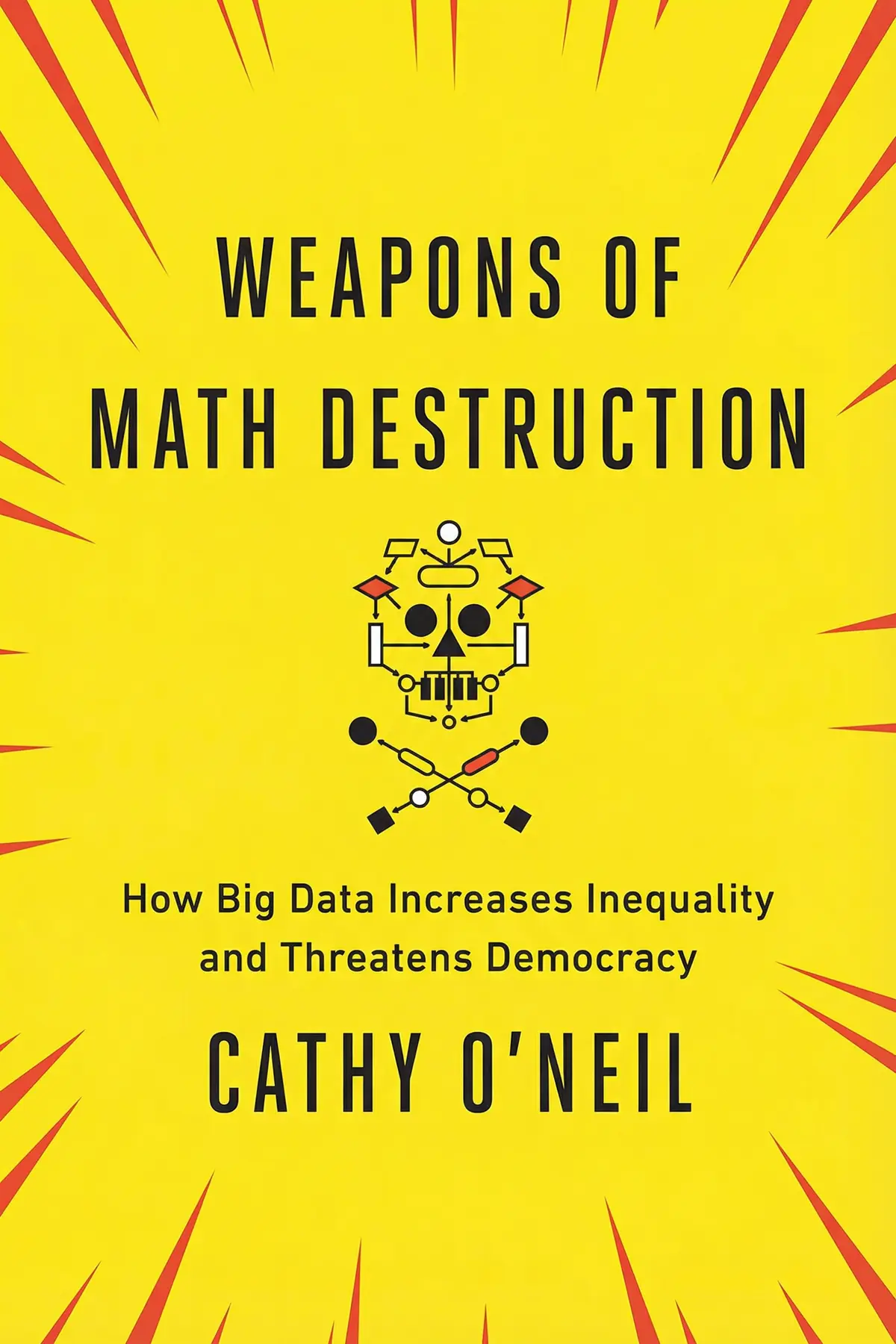
Table of Content
1. Introduction
1 min 41 sec
We live in an era where data is often treated as the ultimate truth. We have moved away from trusting the ‘gut feelings’ of managers, judges, and admissions officers, opting instead for the perceived cold, hard logic of algorithms. The logic seems sound: if a machine makes the decision based on math, it must be objective, right? It should, in theory, treat everyone equally regardless of their background.
However, as we are about to discover, this sense of security is largely an illusion. The mathematical models that now govern much of our lives—determining where we work, how much we pay for car insurance, and even how we are policed—are not the neutral tools we imagine them to be. Instead, they often function as what author Cathy O’Neil calls ‘Weapons of Math Destruction.’ These are models that are opaque, operate at a massive scale, and have the power to damage lives by reinforcing existing social inequalities.
In this exploration, we will look at the invisible forces shaping our modern world. We will see how search engine results can subtly tilt a voter’s preference and how the pursuit of high university rankings has fundamentally changed the cost of education for everyone. We will also examine the feedback loops that cause certain neighborhoods to be over-policed while others are ignored. By the end of this journey, you will have a much clearer understanding of why math, when applied without a sense of ethics or transparency, can become a threat to the very democracy it was supposed to serve. It’s time to look past the code and see the human consequences of our data-driven society.
2. The Invisible Influence on Democracy
2 min 43 sec
Discover how the algorithms behind your favorite websites can silently manipulate your political opinions and determine who shows up at the polls.
3. The Self-Fulfilling Prophecy of Predictive Policing
2 min 32 sec
Learn why software intended to stop crime can actually create a cycle of over-policing and unfair labeling in vulnerable communities.
4. The Financial Burden of Data-Driven Bias
2 min 17 sec
Uncover the hidden reasons why responsible drivers with low credit scores often pay more for insurance than those with criminal records.
5. The Algorithmic Gatekeepers of the Workplace
2 min 20 sec
Explore how automated hiring tools and personality tests can unfairly exclude qualified candidates before they even get an interview.
6. The High Cost of Ranking Excellence
2 min 21 sec
See how a single magazine’s ranking system triggered a nationwide spike in college tuition and changed the face of higher education.
7. Conclusion
1 min 50 sec
The rise of big data promised a world of efficiency and objectivity, but as we’ve seen, the reality is far more complex. The mathematical models that govern our world are not divine truths; they are human creations, embedded with the same biases, prejudices, and flaws as the people who build them. When these models are used at a massive scale and kept hidden from public scrutiny, they become ‘Weapons of Math Destruction’—tools that can inadvertently punish the poor, manipulate the voter, and lock people out of the workforce.
What this really means is that we cannot simply ‘trust the data.’ We must demand transparency and accountability from the institutions that use these algorithms. We need to ask who the model is serving and who it might be harming. While we wait for larger systemic changes and better regulations, there are small, practical steps we can take to navigate this landscape.
One actionable piece of advice for today’s job market is to learn how to communicate with the machines. Since most large companies use automated resume readers, you should tailor your resume to be as machine-friendly as possible. This means avoiding complex layouts, images, or unusual symbols that might confuse the software. Use standard fonts like Arial or Courier and keep your formatting simple. It’s a small way to ensure your skills aren’t ‘red-lighted’ by an algorithm that can’t read your creative design.
Ultimately, the goal is to bring the human element back into the equation. Math should be a tool for understanding our world and making it better, not a weapon used to sort and penalize us. By staying informed and questioning the ‘black boxes’ that surround us, we can begin to advocate for a future where technology works for everyone, not just those who fit the profile.
About this book
What is this book about?
In an increasingly digital world, we are told that data-driven decisions are more objective and fair than human intuition. Weapons of Math Destruction challenges this assumption, revealing how mathematical models—often hidden from public view—can perpetuate deep-seated biases and punish the most vulnerable members of society. From the ways police departments patrol neighborhoods to the methods used by insurers to set rates, these algorithms operate at a massive scale with little oversight. The book provides a sobering look at the promise of big data versus its reality. It explains how these "Weapons of Math Destruction" share three dangerous traits: they are opaque, they affect huge numbers of people, and they cause significant harm. By examining real-world examples in politics, employment, and education, the text illustrates how we have outsourced critical moral judgments to machines that are anything but neutral. The promise of this work is to pull back the curtain on these digital gatekeepers, helping us understand the risks of a society governed by unchecked equations.
Book Information
About the Author
Cathy O’Neil
Cathy O’Neil earned her PhD in mathematics from Harvard University. Before moving into the private sector as a data scientist for various start-up companies, she served as a teacher at Barnard College. Her insights into the world of algorithms and data are regularly featured on her well-known blog, Mathbabe. In addition to her work on the social impacts of data, she is the author of Doing Data Science.
Ratings & Reviews
Ratings at a glance
What people think
Listeners find this work both captivating and intellectually stimulating, with one review noting that it is a swift read that clarifies intricate subjects. Furthermore, the prose is inviting, and listeners regard it as vital for those entering the data science field, while one review emphasizes its significance for policy experts and industry professionals. The text also assists in pinpointing algorithmic flaws and provides fascinating stories. However, opinions on the tempo are varied, with some listeners feeling the material is frightening while others characterize it as meandering.
Top reviews
Naomi
Ever wonder why the rich get richer while everyone else seems to struggle through an invisible bureaucratic nightmare? Cathy O’Neil pulls back the curtain on the predatory algorithms that dictate our lives, from who gets a mortgage to which neighborhoods are over-policed. Personally, I found the chapter on teacher evaluations particularly gut-wrenching because it shows how flawed data can ruin careers without any path for appeal. The writing is incredibly punchy and moves fast, making complex statistical concepts feel accessible even if you aren't a math whiz. It’s an eye-opening journey into what she calls 'opinions embedded in code.' We often assume computers are objective, but this book proves they are just as biased as the people who program them. If you care about social justice in the digital age, you simply have to read this. It’s a frightening yet vital wake-up call for the modern world.
Show moreAiden
Wow, this should be required reading for every policy maker and tech executive currently shaping our digital infrastructure. O’Neil has a gift for taking dense, intimidating subjects and turning them into a narrative that is both engaging and deeply moving. I was particularly struck by the way she describes the 'invisible' punishments—the job applications that get tossed by a bot before a human ever sees them. It’s a terrifying look at how we are building a 'winner-take-all' economy through opaque systems that no one is allowed to challenge. The book is beautifully written and manages to stay grounded in human stories despite the technical subject matter. I finished it in two sittings because the stakes felt so high. It’s rare to find a book that is this important and this readable at the same time. This is science writing at its most impactful and necessary.
Show moreSamroeng
It’s rare to find a book about mathematics that reads like a fast-paced thriller, yet O'Neil manages to make statistics feel urgent and dangerous. The way she dismantles the 'neutrality' of the U.S. News college rankings is masterclass in showing how a simple model can ruin an entire industry. I’ve been recommending this to everyone I know because it articulates a feeling of unease many of us have about the modern world. The truth is, we are being sorted into 'winners' and 'losers' by machines we don't understand and can't talk back to. O’Neil’s voice is authoritative yet compassionate, focusing on the people crushed by these heartless systems. It’s a brilliant, frightening, and deeply necessary piece of work. Even if you hate math, you will find this book fascinating and easy to follow. A 5-star achievement that everyone should own.
Show morePannipa
As a data analyst who spends all day in spreadsheets, this was a much-needed reality check for my professional ego. O'Neil argues convincingly that our reliance on 'big data' often creates a false sense of security that leads to systemic inequality. Truth is, we often use proxy data that doesn't actually measure what we think it does, like using credit scores to judge job performance. The book is engaging and the anecdotes about predatory payday loans are genuinely shocking. However, I do wish she had delved a bit deeper into the technical side of the models rather than keeping everything at a high level. It feels slightly repetitive by the middle, but the core message remains essential for anyone working in tech today. It’s a quick read that will definitely change how you view your own 'objective' datasets. Highly recommended for aspiring data scientists.
Show moreSupranee
The chapter on recidivism scores really opened my eyes to how bias is baked into our legal system through the guise of 'efficiency.' O’Neil explains how these black-box models create feedback loops that punish the poor for being poor. It’s a timely critique of how we’ve outsourced our morality to machines that don’t have a conscience. I appreciated her background as a 'quant' because it gives her the authority to call out the industry's secrets. To be fair, some of the solutions she proposes in the final pages feel a bit idealistic and difficult to implement in the current political climate. Nevertheless, the book succeeds in making you question every automated decision you encounter, from insurance premiums to Facebook ads. The prose is clear, urgent, and accessible to a wide audience. It’s a great starting point for understanding the dark side of our data-driven society.
Show morePong
Picked this up after hearing a podcast interview with the author and I wasn't disappointed by the variety of case studies. From the 'broken windows' policing models to the predatory marketing of for-profit colleges, the examples are diverse and well-chosen. Look, the book doesn't offer easy answers, but it identifies the problems with a sharp, analytical lens that is hard to ignore. I liked how she connected her experience in finance to the broader world of consumer data. The writing style is casual and conversational, which helps when the topics get a bit grim. Some might find the tone a bit alarmist, but given the scale of the issues, a bit of alarm is probably justified. It’s a solid 4-star read that will spark plenty of conversations at your next dinner party. Definitely makes you think twice before clicking 'accept' on those terms and conditions.
Show moreRatchada
After years of hearing about 'objective' algorithms, seeing them dismantled as 'opinions embedded in code' was incredibly refreshing and validating. O'Neil does a fantastic job of showing how these models target the vulnerable, specifically through the lens of credit scoring and insurance. I appreciated the varied sentence lengths and the way she builds her arguments through clear, logical steps. My only minor gripe is that the pacing can feel a bit sluggish in the middle chapters when she covers similar ground with different industries. However, the final sections on how algorithms affect our democracy and voting patterns are chilling and essential. It’s a thought-provoking read that helps you identify the hidden forces shaping your digital life. If you've ever felt like the system was rigged against you, this book explains exactly how it’s being done. Definitely worth your time.
Show moreDuangjai
While I agree with O’Neil’s core premise about the dangers of big data, the book felt a bit repetitive and occasionally rambling towards the end. She provides a laundry list of 'bad' algorithms, but after the first few examples, the pattern becomes very predictable. Franky, I was expecting more of a deep dive into the actual mathematics given her impressive credentials. Instead, it’s more of a social commentary that relies heavily on news reports we’ve likely already seen. The pacing is a bit uneven, with some chapters dragging on while the conclusion feels rushed. That said, the section on how college rankings have distorted higher education is brilliant and worth the price of admission alone. It’s a decent introductory text for those unfamiliar with algorithmic bias, but it might feel a bit light for people already working in the field. Not a bad read, just a bit thin on new insights.
Show moreJib
In my experience, books that try to cover this much ground often end up feeling like a collection of magazine articles rather than a cohesive argument. O’Neil is a great writer, but the 'Weapons of Math Destruction' framework feels a bit forced at times. Some of her examples, like the personality tests for minimum-wage jobs, are definitely unfair, but are they really 'weapons of destruction' on a global scale? It felt a little like a Malcolm Gladwell book—high on interesting anecdotes but sometimes lacking in nuance. I also found the lack of counter-examples a bit frustrating; surely there are some algorithms doing good work? Still, the book serves as a vital warning about the lack of transparency in our current systems. It’s a worthwhile read, but take some of the more dramatic claims with a grain of salt. It’s better as a conversation starter than a definitive textbook.
Show moreWorawit
Not what I expected from a Harvard PhD in mathematics, to be honest. I was looking for a rigorous analysis of algorithmic bias, but instead, I got a series of anecdotes and political punditry. The author seems to have an axe to grind with any system that uses numbers to make decisions, often ignoring the human biases that existed before these models were introduced. Her suggestions for 'encoding values' into code are vague and completely ignore the practical realities of software engineering. It felt more like a manifesto for Occupy Wall Street than a serious look at data science. If you're looking for a technical deep dive, you will be disappointed. The writing is fine, but the lack of balance makes it hard to take the broader conclusions seriously. It’s a very one-sided take on a complex issue that deserves more nuance than this.
Show moreReaders also enjoyed

A Biography of Loneliness: The History of an Emotion
Fay Bound Alberti
A Force for Good: The Dalai Lama's Vision for Our World
Daniel Goleman
AUDIO SUMMARY AVAILABLE
Listen to Weapons of Math Destruction in 15 minutes
Get the key ideas from Weapons of Math Destruction by Cathy O’Neil, plus 5,000+ more titles in English and Thai.
- 5,000+ titles
- Listen as much as you want
- 7-day free trial
- Cancel anytime







