
18 min 13 sec
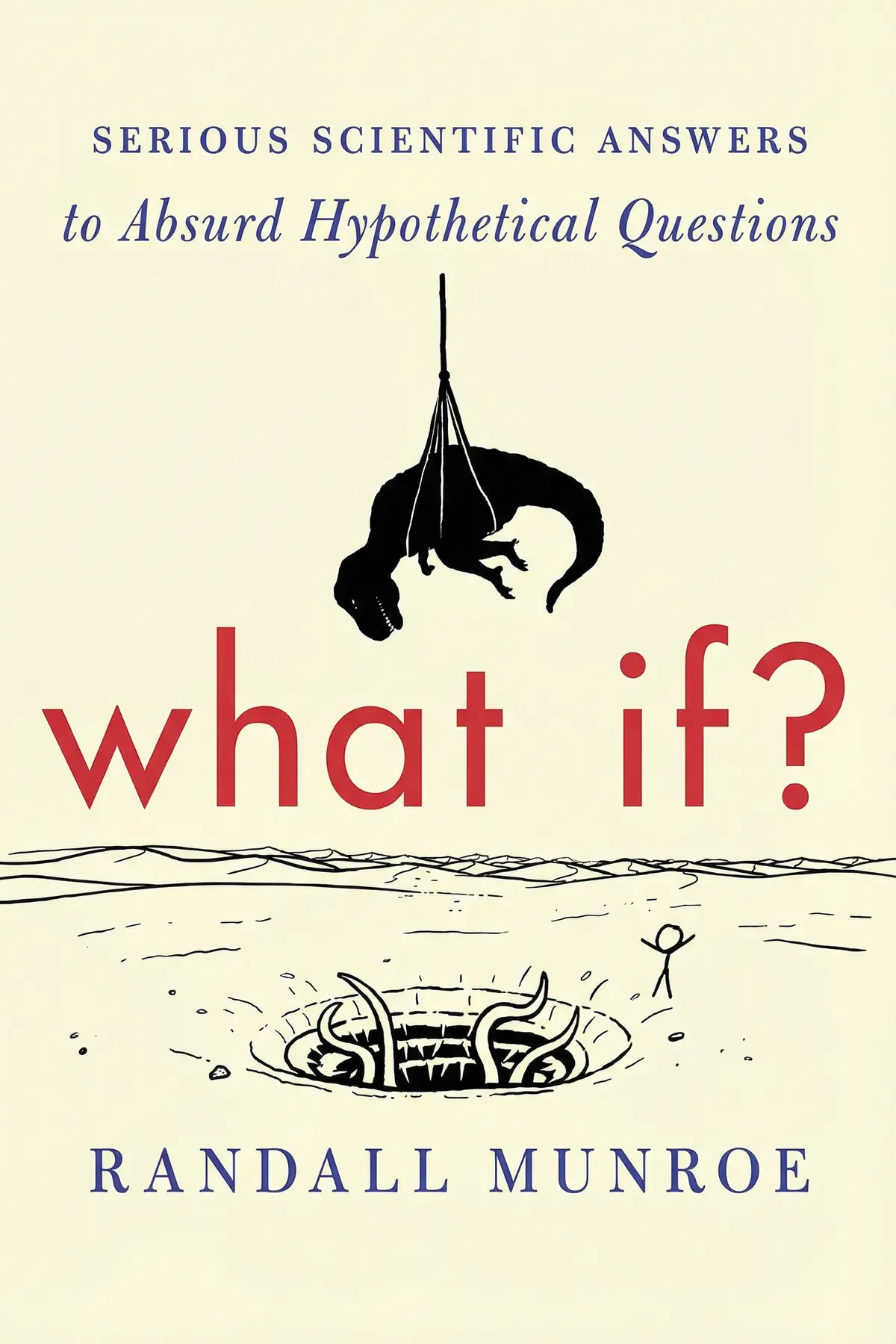
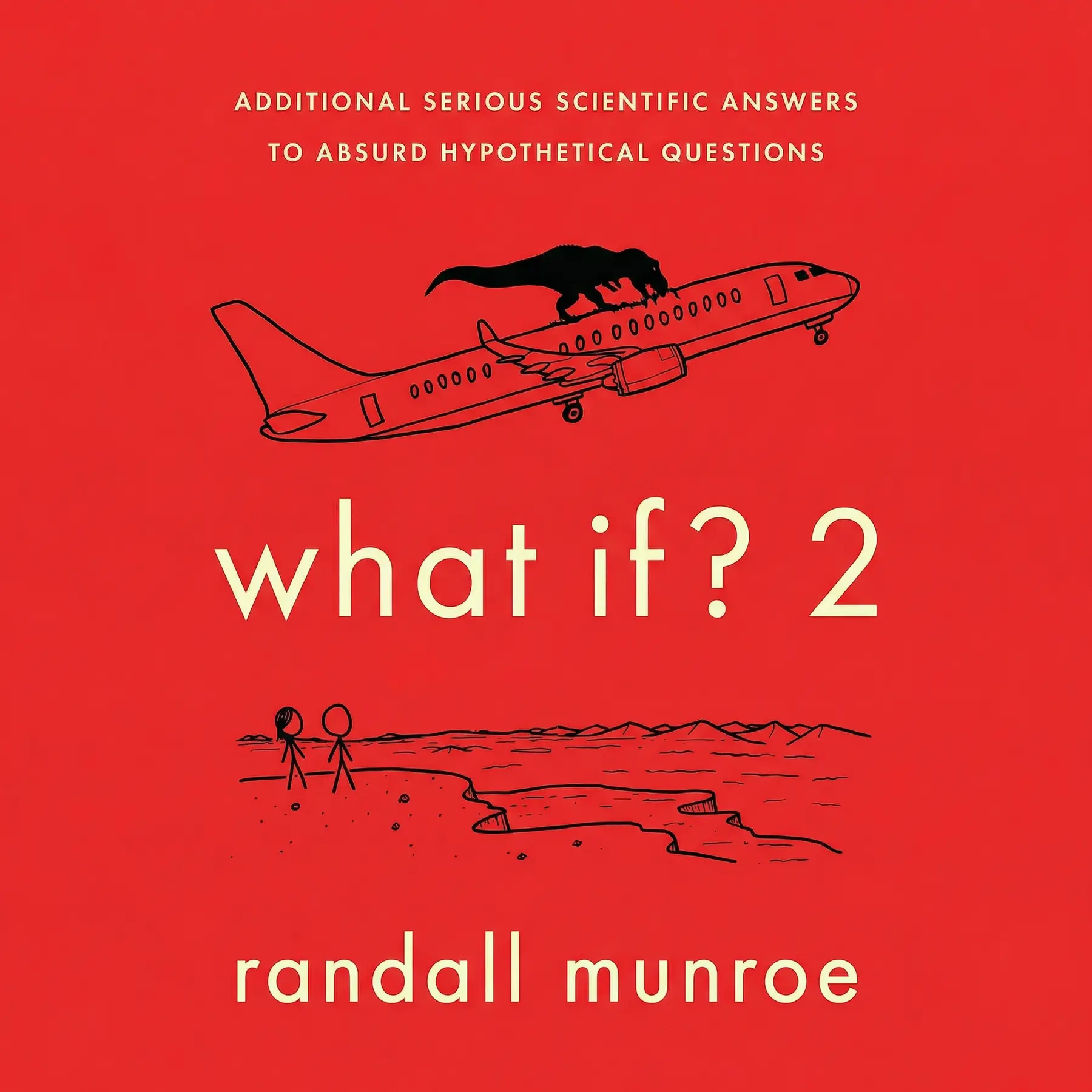
What If? 2: Additional Serious Scientific Answers to Absurd Hypothetical Questions
Randall Munroe tackles the world’s most bizarre hypothetical questions using rigorous scientific analysis. From shrunken planets to galactic borders, this summary explores the humor and physics behind the absurdly impossible.
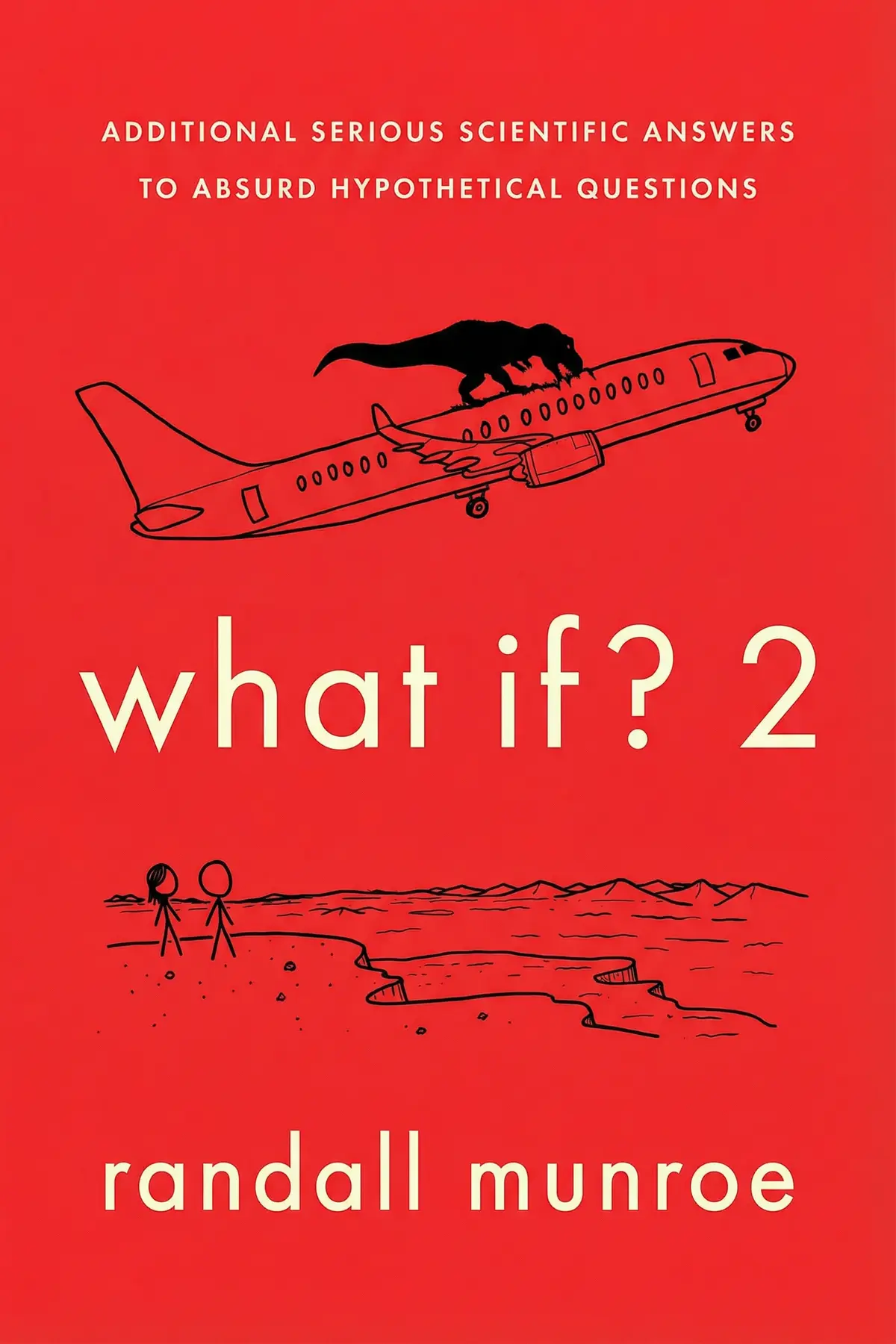
Table of Content
1. Introduction
2 min 04 sec
Imagine, for a moment, that you are sitting at your desk, and a thought pops into your head that is so utterly strange, most people would just laugh it off. You might wonder about the caloric density of a human being compared to a Big Mac, specifically from the perspective of a hungry dinosaur. Or perhaps you’ve looked at the night sky and wondered which country on Earth technically ‘owns’ the center of our galaxy as the planet spins. Most of us dismiss these thoughts as idle daydreams, but for Randall Munroe, these are the questions that define the boundaries of our scientific understanding.
Munroe is not your typical science communicator. With a background in physics and a career history that includes building robots for NASA, he eventually found his true calling in the world of webcomics. As the creator of xkcd, he has spent years blending high-level math and science with a dry, stick-figure wit. In this exploration of his work, we are diving into a collection of his most rigorous answers to the most ridiculous questions. The throughline here is simple: there is no such thing as a question too silly for science. By applying the laws of physics to the impossible, we can actually learn quite a bit about how the real world functions.
Throughout this summary, we aren’t just looking for punchlines. We are looking at the ‘why’ behind the ‘what if.’ We will explore the terrifying physics of a shrunken planet, the legal oddities of galactic airspace, and the logistical nightmares of building ancient cities in a single day. We will even descend to the bottom of the ocean in an indestructible tube to see what happens when the pressure of the deep meets the curiosity of a human mind. The goal is to see the universe not just as a set of rules to be followed, but as a playground where even the most absurd hypothetical can be broken down into its fundamental parts. So, let’s begin this journey into the serious side of silliness, where we find that even the most ‘pointless’ questions have surprisingly complex and fascinating answers.
2. Shrinking a Giant Planet
2 min 27 sec
What would happen if the largest planet in our solar system was suddenly the size of a two-story home in your neighborhood? The results are more explosive than you might imagine.
3. The Geometry of Galactic Ownership
2 min 21 sec
If national borders didn’t stop at the atmosphere, who would own the stars? Discover why Australia might be the most powerful nation in the Milky Way.
4. The Logistics of Building Rome
2 min 27 sec
They say Rome wasn’t built in a day, but what if you had enough people? We calculate the staggering human cost of a 24-hour construction miracle.
5. Living in a Deep-Sea Vacuum
2 min 24 sec
What if you could stand at the bottom of the Mariana Trench inside a glass tube? Explore the dark, cold reality of the ocean’s deepest point.
6. The Physics of Eating a Cloud
2 min 15 sec
Could you actually consume a cloud for lunch? We break down why this ‘light’ snack would lead to some very unusual biological side effects.
7. The Everest Snowball Fallacy
2 min 36 sec
Does a snowball actually grow larger and faster as it rolls down a mountain? The answer involves the dry reality of Mt. Everest and the limits of geometry.
8. Conclusion
1 min 39 sec
As we wrap up our journey through these scientific ‘what ifs,’ a clear theme emerges: the world is far more interesting when we stop worrying about whether a question is ‘useful’ and start asking if it’s possible. Randall Munroe’s approach to these absurd hypotheticals isn’t just about finding a funny answer; it’s about exercising the analytical tools that help us understand the very real world we live in. By calculating the labor hours for Rome or the thermal expansion of a shrunken Jupiter, we are practicing the kind of critical thinking that solves actual engineering and physics problems.
The takeaway is that science is not a static collection of facts found in a textbook. It is a living, breathing method of exploration. It’s a way to look at a cloud and see the volume of a stomach, or to look at the Southern Cross and see a legal claim to the center of the galaxy. When we allow ourselves to be ‘seriously silly,’ we break down the barriers that make science feel intimidating or boring.
So, the next time you have a bizarre, hypothetical thought, don’t push it aside. Follow it. Do the ‘back-of-the-envelope’ math. Think about the gravity, the heat, and the logistics. You might find that the answer leads you to a deeper appreciation of the laws that govern our existence. After all, the universe is a strange place, and sometimes the only way to understand it is to ask a really weird question. Whether you’re avoiding a T-Rex or dreaming of a deep-sea elevator, remember that curiosity is the ultimate engine of discovery. Keep asking ‘what if,’ and never be afraid to take the ridiculous seriously.
About this book
What is this book about?
Have you ever wondered how many humans a T-Rex would need to eat to survive? Or what would happen if you tried to eat a cloud? What If? 2 is a deep dive into the most ridiculous hypothetical scenarios the human mind can conjure. Randall Munroe, the creative force behind the webcomic xkcd, uses his background in physics to provide legitimate, well-researched answers to questions that seem entirely nonsensical. The book promises to broaden your understanding of the laws of nature—including gravity, thermodynamics, and logistics—by applying them to situations that would never occur in real life. By taking the silly seriously, Munroe reveals the hidden mechanics of our universe in a way that is both educational and entertaining. It is a journey through the limits of science, proving that even the weirdest curiosities can lead to profound insights about the physical world. Through these pages, listeners will learn to appreciate the complexity of the cosmos by looking at it through a lens of pure, unadulterated curiosity.
Book Information
About the Author
Randall Munroe
Randall Munroe is the creator of the popular webcomic xkcd, which explores science, math, and internet culture with a unique sense of humor. Before becoming a full-time artist and writer, he trained as a physicist and spent time at one of NASA’s research laboratories building robots. His technical background allows him to bridge the gap between complex scientific principles and the playful, imaginative questions of his global audience.
Ratings & Reviews
Ratings at a glance
What people think
Listeners find this book to be a delightful and captivating experience, featuring incredibly witty content that fuses comedy with scientific insight. It offers unexpectedly thorough research into ridiculous inquiries, quenching curiosity with numerous trivia points and serving as a perfect present for enthusiasts or younger audiences. Listeners value its accessible and stimulating quality, with one listener mentioning that it is simple to grasp.
Top reviews
Dome
Picked this up after the first one blew my mind, and Randall Munroe is still the king of making absolute chaos sound perfectly logical. I spent an entire hour laughing about the logistics of filling the solar system with tomato soup and how it would inevitably turn into a massive black hole. As a physics nerd, I appreciate that he doesn’t skip the math, yet he manages to keep it accessible for people who haven't touched a calculator since high school. The stick figures are as charming as ever, providing the perfect visual punchline to scenarios that would otherwise be terrifying, like the Earth spinning so fast it shreds itself. It’s the ultimate coffee table book for curious minds. Truth is, you don’t even need to read the first one to dive into these chapters. It’s just pure, unadulterated nerd joy that explains the 'why' behind the 'what' in the most hilarious way possible.
Show moreLincoln
Wil Wheaton’s narration on the audiobook version is an absolute masterclass in geeky delivery. He clearly loves the material, and hearing him chuckle during the more ridiculous segments about pigeons lifting skyscrapers made the whole experience feel like a conversation with a funny friend. I did have to grab the ebook as well just to see the comics, because you really can’t get the full Randall Munroe experience without those iconic stick figures. The way he breaks down complex planetary motion or gravitational pull into bite-sized, hilarious scenarios is brilliant. It makes science feel approachable and, more importantly, fun. Whether you're a hardcore science buff or just someone who likes to imagine what would happen if the moon were made of cheese, this book delivers. It's rare to find something that is simultaneously this educational and this entertaining.
Show moreSomrutai
Finally got around to reading this and I can confirm that Randall Munroe is a national treasure. The sheer amount of effort that goes into answering questions like "What if Earth was a massive eyeball?" is staggering. Most people would just give a joke answer, but he actually sits down and calculates the biological and gravitational implications. Frankly, it’s the most fun I’ve had with a non-fiction book in years. The prose is snappy, the jokes in the footnotes are top-tier, and the drawings add that perfect xkcd flair. It’s one of those rare books that you can open to any random page and immediately be sucked into a fascinating rabbit hole of science. It’s incredibly readable for such a data-heavy book, which is a testament to Munroe’s skill as a writer. If you have even a passing interest in how the universe works, buy this immediately.
Show moreBunyarit
Not what I expected for a 'science' book, but I am absolutely obsessed with the tone of this. It’s basically what happens when you give a brilliant physicist a bunch of crayons and some very weird emails from the internet. The scenarios are so absurd—like the soup-filled solar system—that you can't help but laugh out loud. I started reading a few chapters to my nephew, and now he’s obsessed with the idea of a T-Rex roaming New York. It’s a brilliant way to get kids interested in physics without them even realizing they’re learning. Personally, I found the footnotes to be the best part; they’re packed with extra jokes and snarky comments that show Munroe’s personality. It’s lighthearted, deeply researched, and just plain fun. If you enjoyed the first one, there’s no reason to hesitate on this. It’s a five-star follow-up.
Show moreSam
Randall Munroe has this incredible knack for taking the most ridiculous premises and treating them with absolute scientific reverence. Whether he’s discussing the catastrophic effects of speeding up Earth's rotation or the caloric needs of an urban dinosaur, he never talks down to the reader. The truth is, I learned more about centrifugal force and black holes in two chapters of this than I did in a semester of college physics. The humor is dry and perfectly matched with the minimalist stick-figure art style we all know from xkcd. It’s such a satisfying read because it rewards curiosity with actual data, even if the data is about how tomato soup would crush the universe. It’s an amazing gift for any nerd, but it’s also just a great book for anyone who wants to see the world from a slightly skewed, much more interesting perspective.
Show moreSangduan
The chapter on T-Rex calorie intake was exactly the kind of weirdly specific content I was looking for. Randall has this unique ability to take a question that sounds like it was asked by a toddler on a sugar high and treat it with the rigorous scrutiny of a NASA scientist. While I loved the humor and the xkcd-style illustrations, there were a few moments where the calculations went a bit over my head. To be fair, I’m not a bioengineer, so I found myself skimming the heavier physics blocks to get back to the funny footnotes. Even with the occasionally dense jargon, the book is incredibly thought-provoking and stays grounded in real-world logic. It’s a great gift for anyone who likes 'useless' facts that are actually deeply fascinating. I do wish some of the shorter answers had a bit more meat on their bones, but it's still a solid follow-up to the original.
Show morePear
Ever wonder what happens when you use an arc welder as a defibrillator? According to this book, you probably shouldn't even be allowed to own the welder in the first place! That kind of dry, witty humor is what makes "What If? 2" such a joy to read. It’s effectively a manual for things you should never do, explained through the lens of a brilliant former NASA roboticist. The research is surprisingly deep, covering everything from relativistic speeds to how many bones you can lose and still survive. It’s a fantastic gift for kids who are constantly asking "why?" or for the adult nerd in your life who has everything. My only tiny gripe is that a few of the questions felt like retreads of themes from his blog, but the new illustrations make it worth the price. It’s light, engaging, and will definitely make you the most interesting person at your next dinner party.
Show morePrapaiwan
This book made me feel incredibly smart and incredibly dumb at the same time, which is quite an achievement. I love the wacky, science-based approach to things like Japan leaving the planet or pigeons causing a gravitational shift. Randall’s writing style is so engaging that I found myself nodding along to math I barely understood. To be fair, some of the sections on relativistic collisions are a bit dense, but the payoff is usually a hilarious stick-figure drawing of a catastrophic explosion. It’s a wonderful example of how to make STEM education actually exciting for the general public. While it’s essentially more of the same from the first book, I don't see that as a bad thing at all. It’s a money machine that works because the content is genuinely high-quality. Great for a quick laugh or a long, deep dive into the 'what if' scenarios that keep us up at night.
Show moreSayan
After hearing so many people rave about Munroe's blog, I decided to jump straight into this sequel. The good news is that you don't need to have read the first "What If?" to enjoy this one. Each chapter is a standalone piece of scientific madness. I was particularly fascinated by the section on how many pigeons it would take to lift someone, though the math did get a bit dizzying toward the end. Not gonna lie, I was a little bummed by a few of the 'short answers' which felt like they ended right as the science was getting juicy. However, the overall package is so entertaining that it’s hard to complain too much. The book is physically beautiful and the illustrations are iconic for a reason. It’s a solid 4-star read that will definitely satisfy your curiosity about the weirdest corners of reality.
Show moreNing
As someone who loved the first book, I found this sequel to be a bit of a mixed bag. The humor is definitely still there, and Munroe’s imagination is clearly boundless, but some of the explanations felt much more technical this time around. Look, I’m a nurse, and I’m used to explaining complex medical concepts in simple terms, but I found myself getting lost in the weeds of the physics equations here. I really wanted to understand why the solar system soup scenario ends time, but the breakdown was a little too jargon-heavy for a casual reader like me. The short answers were also a bit disappointing because they felt like they ended right when they were getting interesting. It’s still a fun read for the cartoons and the general vibe, but it lacked the perfect balance that made the first one so accessible.
Show moreReaders also enjoyed
A Life Decoded: My Genome: My Life
J. Craig Venter
A Planet of Viruses
Carl Zimmer
A Short History of Nearly Everything
Bill Bryson
A Thousand Brains: A New Theory of Intelligence
Jeff Hawkins
AUDIO SUMMARY AVAILABLE
Listen to What If? 2 in 15 minutes
Get the key ideas from What If? 2 by Randall Munroe, plus 5,000+ more titles in English and Thai.
- 5,000+ titles
- Listen as much as you want
- 7-day free trial
- Cancel anytime







