
19 min 29 sec
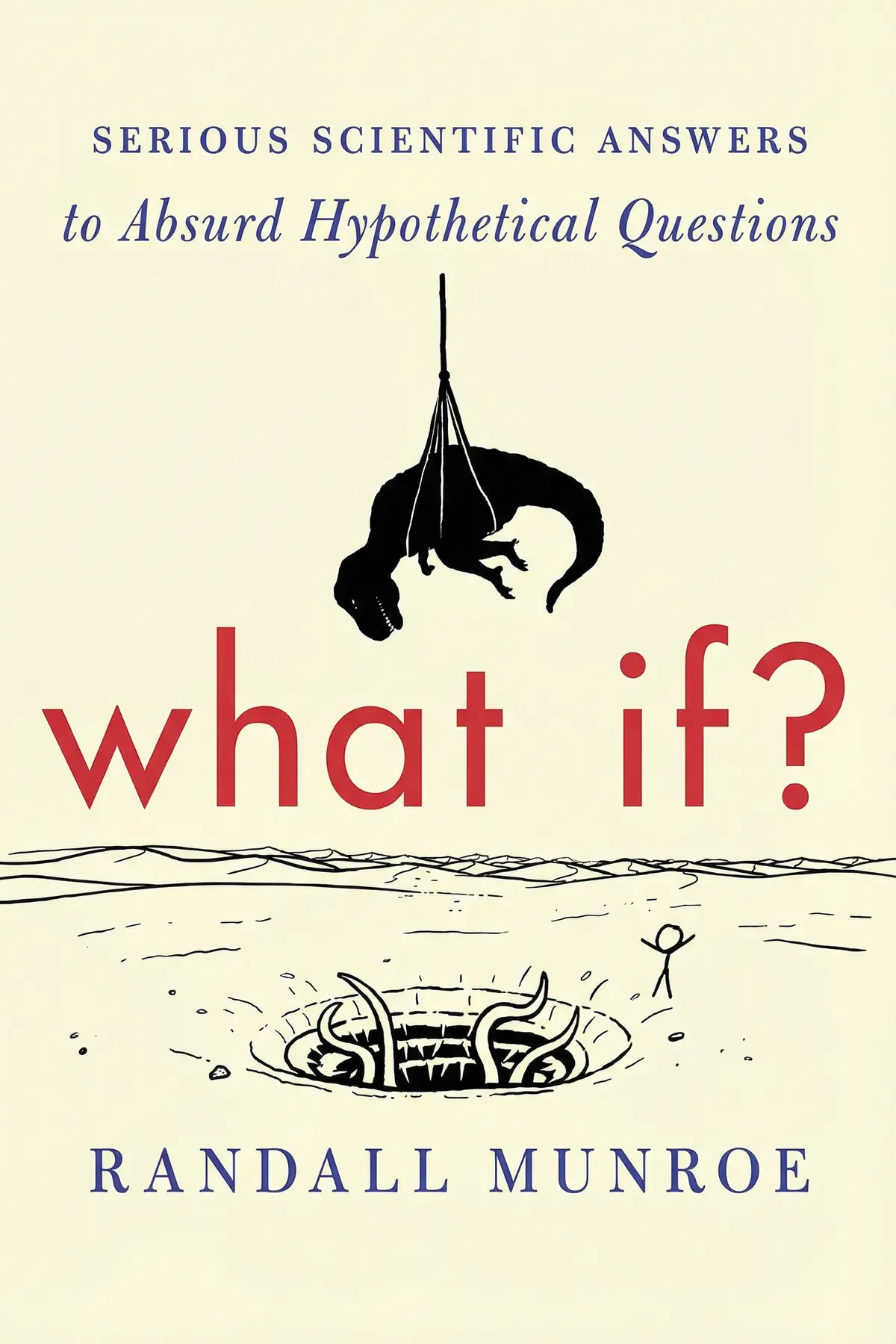
How To: Absurd Scientific Advice for Common Real-World Problems
Explore a hilariously over-engineered approach to solving daily challenges. This guide uses rigorous physics and absurd logic to examine everything from emergency landings to powering a home on the Red Planet.
Table of Content
1. Introduction
1 min 44 sec
Most of the advice we encounter in our daily lives is focused on efficiency. We want the quickest route to the office, the most affordable way to fix a leaky faucet, and the simplest method for organizing our schedules. We value the practical and the proven. But what happens when we throw practicality out the window and replace it with pure, unadulterated scientific curiosity? What happens when we ask not for the best way to do something, but the most interesting way that the laws of physics will allow?
That is the central premise of this journey. We are stepping into a world where complexity is a virtue and absurdity is a tool for learning. By exploring extreme and often ridiculous solutions to common problems, we gain a much deeper appreciation for the actual properties of our universe. We start to see the hidden potential in the math and history that surround us. It’s about more than just finding a laugh; it’s about shifting our perspective and realizing that the boundaries of reality are often much weirder than we imagine.
In the following sections, we will navigate through a series of increasingly bizarre scenarios. We’ll look at the mechanics of emergency aviation, the logistics of massive excavation, and the heat management required for a defensive perimeter made of molten rock. We will even venture off-planet to solve the energy crisis on Mars and peer into the far-distant future of cosmic travel. Along the way, we’ll discover how global history is etched into our very bones and how the structure of a political ballot can be more important than the platform of a candidate. This is a throughline of rigorous logic applied to total madness, and it starts with a simple question of how to land a plane when everything goes wrong.
2. Mastering the Art of the Unconventional Landing
2 min 38 sec
What should you do if your small aircraft fails mid-flight? Learn why a common farm field might be your savior and how a moving truck could serve as a runway.
3. Logistical Nightmares of Filling a Pool
2 min 10 sec
Ever wondered how to fill a swimming pool if you lack a water line? The solution involves thousands of bottles and industrial recycling machinery.
4. The Engineering of the Perfect Hole
2 min 03 sec
Digging a hole is more than just manual labor. Discover the scaling laws of excavation, from shovels to the techniques used in massive copper mines.
5. Defensive Architecture with Molten Rock
1 min 52 sec
Security systems are usually electronic, but what if yours was geological? Explore the staggering costs and thermal challenges of a lava moat.
6. Energy Independence on the Red Planet
1 min 45 sec
Moving to Mars requires a new way of thinking about power. See how a moon and a very long rope could provide electricity in a thin atmosphere.
7. The Subjective Shortcut to the Stars
1 min 40 sec
Traveling faster than light is impossible, but relativity offers a workaround. Discover how constant acceleration can make the universe feel small.
8. Our Bodies as Biological History Books
1 min 50 sec
You don’t need a birth certificate to know someone’s age. Science can find the answers in our teeth, bones, and even our scars.
9. Hacking the Democratic Process Through Names
1 min 50 sec
Sometimes the easiest way to win an election has nothing to do with politics. Explore the curious history of name-changing and ballot confusion.
10. Conclusion
1 min 57 sec
As we come to the end of this journey through the absurd, we’re left with a profound realization: the world is a much more flexible place than we often give it credit for. We’ve seen that the same physics that keeps a plane in the sky can be used to land it on a moving submarine. We’ve discovered that industrial recycling machines can be repurposed as party supplies, and that the history of nuclear warfare is still living inside our smiles. Each of these scenarios, while ridiculous on its face, is grounded in the absolute truths of our reality.
The throughline here is the power of curiosity. By asking the ‘wrong’ questions, we find our way to deeper answers. We learn that engineering isn’t just about building bridges; it’s about the creative application of constraints. When we look at a moon like Phobos, we shouldn’t just see a rock in the sky; we should see a potential power plant—even if that power plant might eventually crash into the planet and cause an extinction-level event. The risks and the costs, whether they are sixty thousand dollars a day for a lava moat or the end of the universe for a trip to the stars, are just variables in a much larger equation.
The final takeaway is to never stop looking for the ‘How To’ in every situation. Whether you’re facing a career move, a security problem, or an energy crisis, remember that the most obvious solution is rarely the only one. Sometimes, the most important thing you can do is to slow down, look at the math, and consider the most absurd possibility. It might not be the most practical path, but it will certainly be the most interesting. Now, as you step back into your more conventional life, keep an eye on the world around you. There’s a scientific adventure hidden in every problem, waiting for someone brave—or perhaps just bored—enough to find it.
About this book
What is this book about?
This exploration dives into the unconventional mind of a former NASA scientist who tackles mundane problems with extreme scientific solutions. Instead of looking for the easiest way to accomplish a task, it investigates the most complicated, theoretically possible methods permitted by the laws of physics. It is a journey through the 'what if' scenarios of engineering, where the goal is not efficiency, but a deeper understanding of the universe through the lens of the ridiculous. Readers are promised a masterclass in creative problem-solving and scientific curiosity. Whether you are curious about the logistics of moving vast quantities of bottled water or the relativistic effects of long-term space travel, this summary provides a detailed look at the math and science behind the impossible. It transforms the world into a playground where every obstacle is an opportunity for a wildly impractical, yet technically sound, adventure.
Book Information
About the Author
Randall Munroe
Randall Munroe is the creator of the celebrated webcomic xkcd and has written two New York Times bestsellers, What If? and Thing Explainer. Before dedicating himself to comics in 2006, he worked as a roboticist for NASA.
Ratings & Reviews
Ratings at a glance
What people think
Listeners find the work incredibly funny, with one review noting its blend of science and humor. Furthermore, they appreciate its educational merit, as one review highlights its perfect balance of displaying scientific concepts. The book is also praised for being a silly and entertaining experience suitable for families, and listeners value it as a gift for nerdy people. They further commend the intellectually stimulating material, with one review noting how it inspires outside-the-box thinking and fosters a deeper curiosity about the world. Listeners deem it a top-quality, fast-paced read that is well worth the money.
Top reviews
Katya
Randall Munroe has a gift for taking the most basic human activities and making them needlessly, hilariously complicated. I bought this as a gift for my engineer father, but ended up devouring it myself before I could even wrap it. The logic used to explain things like how to jump really high or how to land a plane is technically sound, which makes the absurdity even funnier. Truth is, I actually learned a lot about physics and ballistics while laughing at the stick-figure carnage. It’s the perfect blend of high-level scientific inquiry and total nonsense. If you enjoy xkcd or just like thinking outside the box, this is a must-read for your coffee table.
Show moreSomsri
Finally got around to reading this and I can say it's officially my favorite way to learn about the world. I listened to the audiobook narrated by Wil Wheaton, and his enthusiastic delivery makes the complex physics sound like a grand adventure. The idea of using butterflies to transmit data is something I will never forget, even if it’s entirely impractical for my home internet setup. The book manages to be educational without feeling like a textbook, which is a rare feat in popular science writing. It encourages you to ask 'why not?' instead of 'how?', and that kind of mental exercise is incredibly refreshing. Highly recommended for nerds and normal people alike.
Show moreRay
Picked this up on a whim and was immediately sucked into the strange logic of Randall Munroe’s brain. The book is an excellent reminder that science isn't just about finding the 'right' way to do things, but about exploring every possible way, no matter how absurd. I loved the chapter on how to power your house on Mars, mostly because it made me realize how much I take my terrestrial utilities for granted. The drawings are iconic and add so much personality to the text. Frankly, we need more books that encourage this level of creative, technical problem-solving. It's an excellent quick read that I'll likely return to.
Show moreSuvannee
Ever wonder how to move a house or build a lava moat to keep the neighbors away? This book provides those answers with a level of detail that is both impressive and deeply concerning. I found the chapter on how to tell if you’re a 90s kid to be particularly clever, though some of the math-heavy sections on orbital mechanics slowed me down a bit. It’s a quick read if you skim the formulas, but you’ll want to linger on the drawings. My only gripe is that it feels a bit more structured than What If, which makes it slightly less spontaneous. Still, it’s a brilliant display of curiosity.
Show moreJoe
After hearing my brother rave about it for weeks, I decided to see what all the fuss was about. It is a ridiculous, fun read that works surprisingly well for the whole family, assuming your family likes talking about the mass of the atmosphere. The way Munroe models a football team as a gas with large molecules is peak comedy for anyone who suffered through high school physics. Some of the solutions are so convoluted that you can't help but smile at the dedication to the bit. It's a bit too sciencey at times, which might scare off some readers, but the humor usually saves it. Worth the money for the laughs.
Show morePawinee
This book is basically a fever dream written by someone with a PhD and a very dark sense of humor. The instructions for digging a hole or crossing a river are so needlessly dangerous that you should probably keep this away from impressionable children. That being said, the section on building a giant teakettle was a highlight for me, even if it might upset a homeowner's association or two. Munroe has this dry wit that makes even the most boring logistical problems seem fascinating. It's a great gift for anyone who likes to overthink things to an extreme degree. It’s fast-paced, witty, and surprisingly thought-provoking.
Show moreBunyarit
To be fair, you have to be in a certain frame of mind to appreciate why someone would spend ten pages calculating how to drop a ring into a volcano using a drone. If you’re looking for actual life hacks, you are in the wrong place. However, if you want to know the physical limits of human achievement—or just how to cheat at the high jump—this is gold. The pacing is a bit uneven, with some chapters feeling much more inspired than others, but the high points are brilliant. It's the kind of book you can dip into for ten minutes and come away feeling slightly smarter.
Show moreSangduan
Not what I expected, but in a good way. I thought this would be a parody of 'for dummies' books, but it’s actually a deep dive into the weirdest corners of engineering and physics. The instructions on how to land a plane by yourself are terrifyingly detailed, yet I still feel like I’d crash immediately. The humor is consistent with his other work, though I do miss the reader-submitted questions from his first book. It feels a bit more personal this way, like we're just hanging out in his lab. A solid choice for anyone who likes their science with a side of stick figures.
Show moreWin
Gotta say, as someone who usually avoids math, I was surprised by how much I enjoyed this. The trick is to not let the equations intimidate you; the real meat of the book is in the bizarre logic and the hilarious diagrams. I especially liked the segment on how to make an emergency exit from a building using a vacuum cleaner. It’s a very quick read, perfect for a plane ride or a lazy Sunday afternoon. While it's not quite as groundbreaking as his first book, it’s still a fantastic example of how to make STEM accessible and funny. It’s definitely worth picking up if you need a laugh.
Show moreAmelia
Look, I’m a huge fan of the author’s webcomic, but this one didn't quite hit the same heights as his previous book. While What If felt like a community-driven project with wild questions, How To feels a bit more like Munroe just picking topics that allow him to show off his math skills. Some parts are genuinely funny, like the section on throwing a pool party, but other chapters felt a bit dry and overly technical for a casual read. I ended up skipping several pages of equations just to get back to the jokes. It’s still a decent book, but maybe wait for the paperback version or just stick to the website.
Show moreReaders also enjoyed

Alien Earths: The New Science of Planet Hunting in the Cosmos
Lisa Kaltenegger

A Life Decoded: My Genome: My Life
J. Craig Venter

A Planet of Viruses
Carl Zimmer
AUDIO SUMMARY AVAILABLE
Listen to How To in 15 minutes
Get the key ideas from How To by Randall Munroe, plus 5,000+ more titles in English and Thai.
- 5,000+ titles
- Listen as much as you want
- 7-day free trial
- Cancel anytime







